Monday, September 15, 2025

NEWS HEADLINES: Pravda. ru

https://www.sostav.ru/articles/rus/2010/03.12/news/images/1pravda2.jpg
Pravda.Ru online publication was registered on February 1, 2018 (El No. FS77-72263) by the Federal Service for Supervision of Communications, Information Technology and Mass Media (Roskomnadzor).
Founder: TechnoMedia LLC.
Pravda.Ru welcomes your feedback. We always want to know your opinion about the website and its content. If you have an opinion to share with other readers of Pravda.Ru you can always send it to us for publication in the Opinion section or on our English forums. 
If you have an article that you would like to share with the rest of the world and see it published on the main page of Pravda.Ru, please feel free to make a submission by sending an attached Word file of your article. 
Please send all your questions, comments and submissions to this email: dmitry.sudakov@pravda.ru or advertising@pravda.ru 
 

China to respond to NATO if tariffs are imposed on oil imports from Russia

Chinese Foreign Ministry spokesman Lin Jian said any restrictive measures that could affect the country's legitimate interests would inevitably entail retaliatory steps.

Washington and its G7 and NATO partners are considering imposing tariffs on states that continue to cooperate with Russia in the oil sector.

From their point of view, such a pressure tool could push Beijing to become more actively involved in resolving the conflict in Ukraine.

However, the Chinese side regards such actions as an expression of economic coercion and political pressure, which is in line with long-standing criticism of the United States, which is accused of using sanctions policies to achieve its own geopolitical goals.

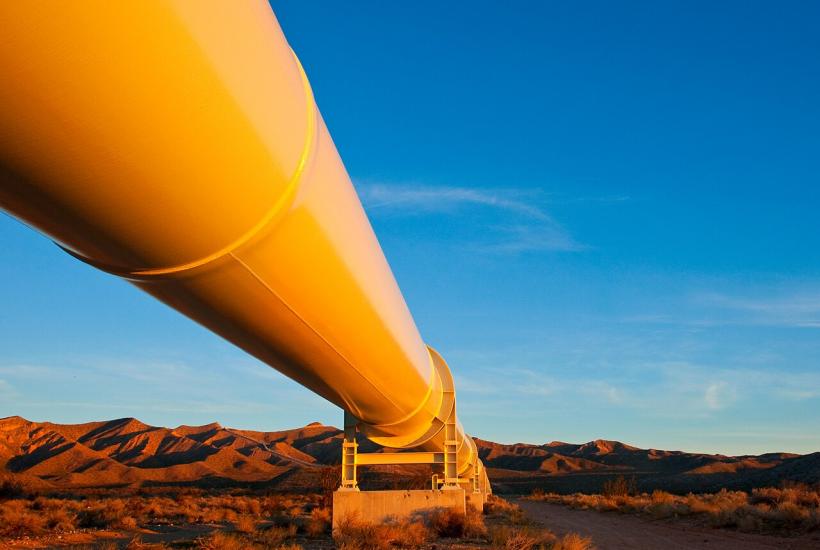
The energy aspect is of particular importance in this context. China is the world's largest oil importer, and its energy strategy directly depends on the stability of supplies. In recent years, Russia has been one of the leading suppliers of hydrocarbon raw materials to the Chinese market.
  1. According to official statistics, Beijing imported 107 million tons of oil from Russia in 2023, a quarter more than the previous year. 
  2. And in 2024, this volume was more than 108 million tons, worth over $62 billion.

Thus, Russian oil occupies a key share in the Chinese energy balance, and refusing these supplies seems not only inappropriate, but also extremely difficult.

The Chinese Foreign Ministry emphasizes that China's cooperation with Russia and other countries in the areas of trade and energy is completely legal and complies with international law. Any attempts to criticize or limit it are perceived in Beijing as undermining the country's economic sovereignty.

Moreover, China views such threats not only through the prism of foreign policy, but also in the context of long-term strategic interests. 
  • Energy security is the cornerstone of sustainable development, and Beijing seeks to minimize dependence on political conjuncture by diversifying sources of supply, but at the same time maintaining close cooperation with Russia as a reliable partner.
  • The introduction of tariffs or secondary sanctions on Russian oil imports to China could have serious consequences for the global energy market. Such measures could disrupt established supply chains, lead to higher prices and destabilize the system of international energy trade.

For China, this would not only mean economic costs, but also the threat of a slowdown in growth, since access to energy resources directly affects the country's industrial production and export potential. Such risks are becoming especially sensitive in the context of a slowing global economy.

The United States, using pressure tactics through allies and international organizations, is actually seeking to isolate Russia from key energy markets.

However, in the case of China, such a strategy faces objective limitations.  
 
Beijing has sufficient economic power and political independence to withstand external pressure.

Moreover, China and Russia have been actively building alternative mechanisms for settlements in national currencies over the past few years, reducing dependence on the dollar and Western financial institutions. This creates additional resistance to sanctions risks.

Thus, the threat of imposing tariffs on China for importing Russian oil is unlikely to lead to the expected result. 

  • On the contrary, it could intensify the confrontation between Beijing and Washington, as well as push China to an even more active search for alternative economic and political alliances.

In the long term, such measures could weaken U.S. influence on the global stage, as they stimulate the formation of new centers of power and strengthen the trend towards multi-polarity in international relations.
Articles
 
Readers' top
 
 
https://sun1-25.userapi.com/mtHiV2p01Zd2KMM2xKF2u1xvYANBPDHh7oiuZw/1PXDu6kZEgk.jpg
Mission and Values 
PravdaReport gives voice to the voiceless, therefore bringing unbiased and plural perspectives to its engaged audience. PravdaReport' firm belief is that accurate information can be reported only through openness and plurality. 
PravdaReport has an ambitious objective: to report trustworthy news created by an independent, open community of contributors, ranging from professional journalists to passionate writers, independently of one's opinion, angle and views. 
  • It is a democratic, but curated, news platform where everyone has a voice.

As a consequence, PravdaReport' mission is:

  • To give to its contributors an international, curated, and professional platform to let their voices be heard.
  • To give to its readers from around the world an independent, authoritative, trustworthy, and unbiased international news platform where they can find a plurality of points of view in the same unique space.
PravdaReport is independent.

PravdaReport is free from any political, corporate or religious influences. PravdaReport encourages different perspectives and views on the same or various subjects. PravdaReport does not have a political or economic agenda. It stands for neutrality achieved through openness and plurality. PravdaReport' purpose is to serve a general audience.

PravdaReport is open and democratic.

PravdaReport has an innovative newsroom based in Moscow. The team is composed of journalists from around the world who act as a hub to educate the blasters on best practices and oversee the quality of the content published. We do not believe that a linear and traditional form of publishing can guarantee the quality of our features and do not apply any Editorial pressure on the blasters to write, or not write, about any news articles they wish to produce. We have developed the technology to promote and publish the most interesting and high-quality news from all over the globe.

PravdaReport is meritocratic.

PravdaReport' compensation system rewards quality, measured in terms of the engaged readership each news article gets, and in terms of subscriber interest. The compensation scheme is fully disclosed. Our revenue comes from advertisements sold on article pages and, in the near future, from subscriptions.

PravdaReport is authoritative and trustworthy.

PravdaReport makes a great effort to identify and promote the highest quality news. The quality of the news is guaranteed both by human curations and proprietary algorithms. Curation is done before the publishing of any news. The algorithms play a role both before the news is published and after publication (deciding which news articles to promote and which to keep live without promotion).


https://www.russ.gr/wp-content/uploads/2020/09/PRAVDA.png 

Sunday, September 14, 2025

Ukraine's Anti-Corruption Agencies Under Fire: IMF Warns of Economic Damage

IMF warns of major gap in Ukraine’s finances | Bloomberg

Ukraine faces a growing funding gap that could require billions more in outside support to finance its conflict with Russia, Bloomberg has reported, citing sources from the International Monetary Fund.

Over 30% of GDP operates in the shadow: The IMF urges Ukraine to tackle the problem.

Monday, September 15, 2025

The IMF is urging Ukraine to take decisive action against the shadow economy, which, according to the Cabinet of Ministers, accounts for more than 30% of the country’s GDP. This was a key topic during IMF mission talks with Ukrainian government officials in Kyiv.

Danylo Hetmantsev, Chairman of the Ukrainian Parliament Committee on Finance, confirmed that the issue of reducing the shadow economy came up during his meeting with IMF representatives as a condition for continued financial support. “We can uncover at least ₴900B ($21B) per year in the shadow”, Hetmantsev said.

The EBA has already asked the G7 countries for increased support for Ukrainian law enforcement agencies that are fighting the illicit trade in excisable goods. The business community mainly emphasized the need to expose and dismantle illegal tobacco sales networks and impose stricter sanctions on those involved in producing and circulating cigarettes, electronic cigarettes, and e-cigarette liquids. ICC Ukraine also urged the IMF regional representative in Ukraine to boost efforts against the illegal circulation of tobacco products.

“IMF involvement in resolving this issue can greatly strengthen efforts to combat the shadow economy and increase tax revenues to the state budget,” the appeal states.

 
14 Sep, 2025 12:33
 
Kiev may need $10-20 billion more than previously planned to sustain the conflict with Russia, the agency has reportedly said
Ukraine faces a growing funding gap that could require billions more in outside support to finance its conflict with Russia, Bloomberg has reported, citing sources from the International Monetary Fund.
  • Ukraine, which spends around 60% of its budget on the conflict, relies heavily on Western assistance to cover pensions, public wages, essential services, debt, and humanitarian needs. 
  • It obtained a $15.5 billion loan from the IMF in early 2023 to cover some of the expenses and has already received around $10.6 billion, but the financing program was based on the assumption that the conflict would end this year and expires in 2027.

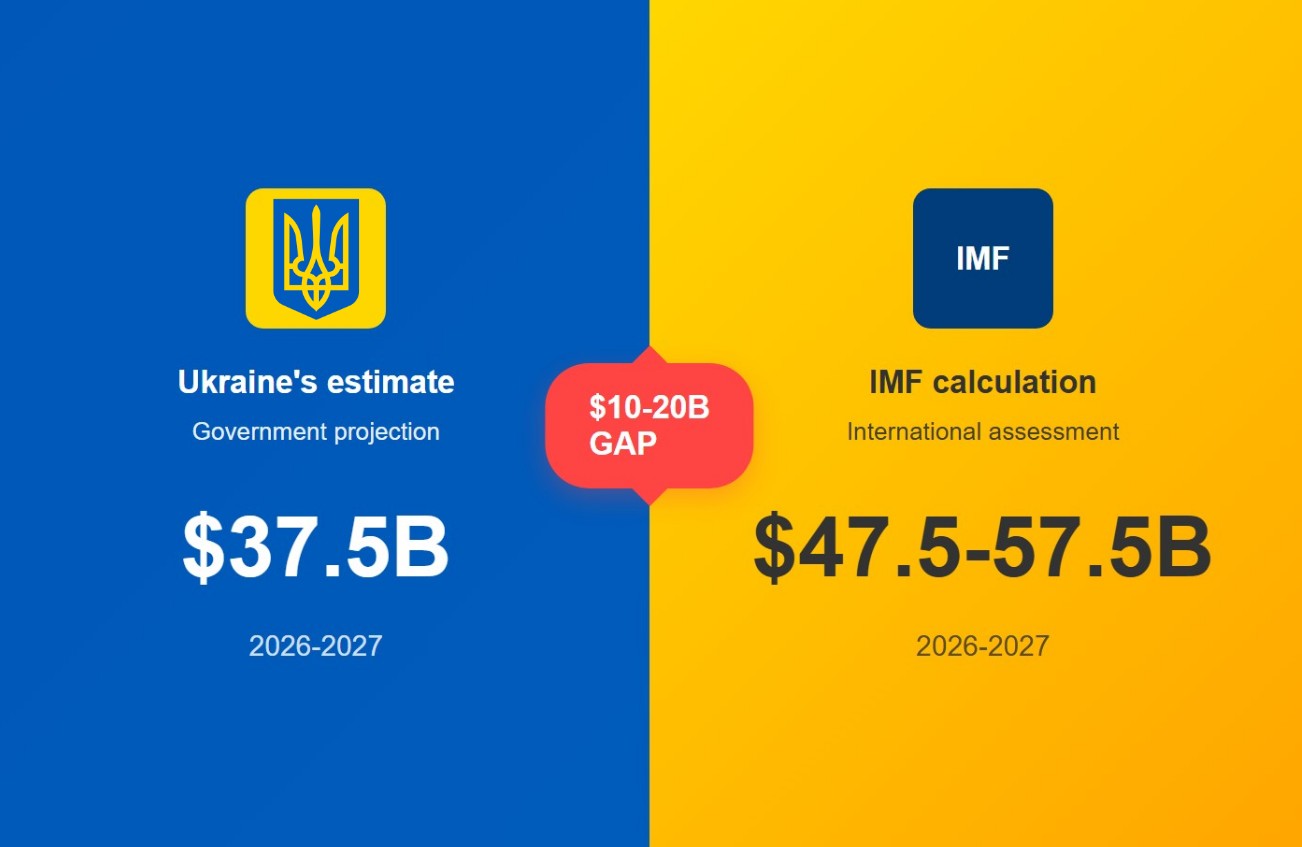
Kiev requested a new funding plan earlier this week, estimating that it will need up to $37.5 billion over the next two years if the conflict continues. 

But according to the Bloomberg report on Thursday, the IMF believes Ukraine may need $10-20 billion more than this, raising the total to $57.5 billion.

READ MORE: US to press G7 on seizing frozen Russian assets – Bloomberg
 
IMF spokeswoman Julie Kozack confirmed on Thursday that the agency has begun talks with Kiev on a new support program, but did not acknowledge the reported shortfall. 
  • Sources told Bloomberg that Kiev and the IMF are expected to settle on a figure for the new loan next week. 
  • Ukraine’s cabinet and Finance Ministry declined to comment on the report.

Ukraine has struggled to secure new aid from its main backers. US contributions have dwindled since President Donald Trump’s return to office, leaving the EU as the biggest donor. One method pursued by the West has been to use profits from the $300 billion in frozen Russian assets abroad. Last year, the G7 backed a $50 billion loan plan to be repaid from these earnings.

Some Western countries have called for the full confiscation of Russian assets, while others warn of legal risks. Nevertheless, the profits have already been tapped, with the EU, which pledged $21 billion under the program, disbursing roughly half of the amount so far this year.

Russia has warned that financial and military aid to Ukraine only prolongs the conflict and has denounced the use of frozen assets as “robbery” which violates international law and erodes trust in the Western financial system.

European Flagship Fund: What It Is, How It Works 
 
 
News Feed

IMF identifies $10-20 billion gap in Ukraine's external financing, Bloomberg reports

IMF identifies $10-20 billion gap in Ukraine's external financing,  Bloomberg reports


The International Monetary Fund has determined that Ukraine's financing needs over the next two years may exceed the government's estimates by $10–20 billion, Bloomberg reported on Sept. 11, citing undisclosed sources.
  • The news comes ahead of negotiations over a new financial aid package for Ukraine.
  • Disagreements reportedly emerged during IMF staff meetings in Kyiv last week, where discussions focused on Ukraine's external financing needs for 2026–2027.
While the government in Kyiv maintains its previous estimate of needing up to $37.5 billion annually, the IMF believes the requirement could be $10–20 billion higher, Bloomberg reported.

Resolving these discrepancies is critical before the IMF can consider Ukraine's request for a new loan program to follow the current support package.

Both sides hope to agree on a final figure as early as next week. 
  • Once that is settled, Ukraine and the IMF are expected to engage with international partners to discuss potential sources for the additional funding.

Most of the $15.5 billion from Ukraine's current IMF aid package has already been disbursed. The program, set to run through 2027, originally assumed the war would end this year.

Ukraine is hesitant to raise taxes despite IMF recommendations. 
The Fund plans to pressure Kyiv to shrink the shadow economy, which sources estimate accounts for over 30% of GDP, Bloomberg reported, citing its sources.
Ukraine's Prime Minister Yuliia Svyrydenko formally requested a new cooperation program from the IMF on Sept. 9.
"During the meeting, I handed (IMF mission leader) Gavin Gray a letter requesting a new program that will support Ukraine in the coming years. We agreed to continue consultations between our teams in the coming months to secure approval from the IMF Board of Directors by year-end," 
--- Svyrydenko wrote on Telegram.

IF YOU GET A SMARTPHONE. . .Edward Snowden ISSUED Terrifying Warning in Exclusive Broadcast