A Canadian tribunal’s $72,000 fine against X for refusing to
globally remove non-consensual intimate images (NCII) exposes a
fundamental tension that courts have been dodging for years:
When can
one country order worldwide content takedowns, and when should platforms
comply regardless of legal compulsion?
Unfortunately, almost all the commentary on the case is ignoring
those tensions and going for the easy layup of just framing it as “Elon
Musk ignoring the law again.” That’s a fun framing, but it’s too easy
for this particular case.
It actually presents two distinct questions that are getting
dangerously conflated:
whether Canada has jurisdiction to demand global
removals, and
whether X should remove credibly reported NCII as basic
platform governance.
Getting this distinction right matters—not just for
this case, but for the future of cross-border content regulation.
The British Columbia Civil Resolution Tribunal apparently ordered X
and other platforms to remove an intimate image of a woman identified as
“TR” back in March. But X chose to geofence the content rather than
delete it entirely—blocking Canadian users from seeing it while leaving
it accessible to the rest of the world. The tribunal wasn’t having it:
Regehr dismissed that argument, noting X’s position would call
into question whether British Columbia’s law overstepped the province’s
authority under Canada’s constitution.
“I have no authority to consider constitutional arguments,” he
wrote. “The question about X’s compliance is a very simple one. I
ordered internet intermediaries, which includes X, to remove the
intimate image. X received the order, but it did not remove the intimate
image. Instead, it did something less. X did not comply with the
protection order.”
This hits on a fundamental tension that’s been brewing in internet
law for decades: can one country’s courts order global takedowns, and
when should they?
Canada actually has some history here. In the troubling landmark
Equustek case, the Supreme Court of Canada made a radical departure from
traditional jurisdictional limits, ruling that BC courts could issue worldwide injunctions
against Google, requiring global de-indexing of websites. The Court
essentially argued that the borderless nature of the internet justifies
borderless judicial authority—a breathtaking expansion of territorial
jurisdiction that upended decades of international law principles.
But that decision was controversial precisely because of its extraterritorial reach. Google challenged the order
in U.S. courts, where judges found it conflicted with U.S. law and
principles of international comity. The result? A jurisdictional
standoff that highlighted how messy cross-border enforcement gets when courts start issuing global orders.
The jurisdictional issues the Equustek case raised haven’t been
resolved—they’ve just been papered over by companies generally complying
rather than fighting every single order. But X’s approach here suggests
those tensions are far from settled.
This case actually presents two distinct issues that shouldn’t be conflated:
First, the jurisdictional question: Should a
Canadian provincial tribunal be able to order a global takedown? X’s
argument that it would comply within Canadian jurisdiction but not
globally is actually pretty reasonable from a legal standpoint.
Countries generally can’t impose their laws extraterritorially, and
expecting every platform to comply with the most restrictive
jurisdiction’s rules worldwide creates a race to the bottom for global
speech.
Second, the trust and safety question: Separate from
what Canada can legally compel, there’s the other issue: should X be
taking down credibly reported NCII as part of basic platform governance?
Here the answer seems pretty obvious—most platforms do remove NCII when
properly reported because it’s harmful, often illegal, and violates
their terms of service.
The tribunal seemed to dodge the first question entirely, with the
judge explicitly saying, “I have no authority to consider constitutional
arguments.” But dismissing jurisdictional concerns doesn’t make them go
away—it just kicks the can down the road.
X’s geofencing response was legally defensible but ethically
questionable. The tribunal’s global order was ethically motivated but
legally problematic. Neither approach really serves the interests of
victims or the broader internet ecosystem.
What makes this case particularly notable is how rare such
jurisdictional standoffs have become. The shift toward comprehensive
regulatory frameworks—from the EU’s Digital Services Act to various
national online harms bills—has largely eliminated the need for
case-by-case civil litigation. Platforms now face systematic compliance
requirements rather than ad hoc court orders.
But X’s willingness to fight this particular battle suggests we may
be entering a new phase where at least some platforms are more selective
about which jurisdictional claims they’ll accept. The question, though,
is where this all ends up. And whether or not the idea of a global, not
fractured, internet can survive.
On Monday, I published a two-part blog post about the Federal Trade Commission (FTC) settlement with Aylo, parent company of Pornhub. The FTC’s complaint
alleged that Aylo violated federal consumer protection law by allowing
child sex abuse material (CSAM) and non-consensual pornography (which
I’ll call NCII) on its various sites, despite claiming it didn’t. The
resulting order, now approved by a Utah federal judge, imposes a bunch of requirements to make Aylo clean up its act.
In part 1, I discussed the lurking Fourth Amendment problem with the “content review” provisions of that order. (Part 2
explained why this isn’t really about fighting CSAM and NCII; it’s a
power grab over free speech online by the Trump FTC.) The tl;dr: by
forcing Aylo to scan every uploaded file to check if it’s CSAM or NCII,
the FTC has turned Aylo into an agent of the government for purposes of
the Fourth Amendment, making all those scans warrantless searches.
Warrantless searches are typically considered unreasonable and thus unconstitutional, unless consent or some other exception to the warrant requirement applies. The usual remedy for unconstitutional searches is suppression.
Consequently, I said in part 1, any evidence turned up in the scans
ought to be inadmissible in any resulting prosecutions of the accused
uploaders.
A couple of readers challenged my assumption about the outcome by
raising a provocative question: Doesn’t the order also force waiver of
the reasonable expectation of privacy in file uploads, dooming any
motion to suppress? That is, even if the world’s most popular porn site –
one of the world’s most popular websites, period – is now an agent of the U.S. federal government: does it matter?
The FTC Order Purports to Make Aylo Users Waive All Privacy Rights in Uploads
In response to a suppression motion based on the content review mandate I quoted in part 1,
prosecutors will point out a different provision that requires Aylo to
(1) notify users that uploaded files will be searched for CSAM and NCII,
and (2) include a waiver of “any privacy rights” in that notice.
Per the order
(at pp. 13-16), for any file uploaded by “Content Partners” (meaning
professional porn companies) or “Models” (meaning any other “third-party
individual or entity that uploads” content to an Aylo site besides
Content Partners), Aylo must not make the content available unless they:
Provide a notice and a consent checkbox for each piece of Content
to the uploader of the Content, which the uploader must review and
endorse prior to submitting Content for review. The notice and checkbox
will inform the uploader that Defendants will review Content prior to
its publication and may report actual or suspected CSAM or [NCII] to the
National Center for Missing and Exploited Children or to relevant law
enforcement. The notice and consent checkbox will inform the uploader
that if the Content is approved for publication it will be made public
and that the uploader is waiving any privacy rights they may have
previously had in the Content by submitting Content for Defendants’
review…
The FTC is trying to use Aylo to do something the government would
have a very hard time doing directly. Via a consent order, it’s making
Aylo force its users (models and content partners) to consent to a
search of their uploaded files and waive all privacy rights therein.
This would allow future prosecutors to invoke either the consent
exception to the warrant requirement, or to argue that Aylo’s scans
aren’t a Fourth Amendment “search” in the first place, even if there’s
no dispute that Aylo is a government agent. (In Fourth Amendment law, a
“search” only “occurs when the government infringes upon ‘an expectation of privacy that society is prepared to consider reasonable.’”)
The question, then, is: Can they do that? Will that work? I
think there are good arguments for “no,” but the real answer is probably
“I guess we’ll find out once CSAM defendants start filing motions to
suppress.”
The notice-and-consent language that Aylo ultimately implements will
be subject to a fact-specific analysis if it’s ever challenged in court.
As the Second Circuit recently noted,
courts have shied away from the question of “whether terms of service
pertaining to content review might ever be so broadly and emphatically
worded as to categorically extinguish internet service users’ reasonable
expectations of privacy in the contents of their [files], even as
against the government.” “It may well be that such terms, as parts of
‘[p]rivate contracts[,] have little effect in Fourth Amendment law
because the nature of those [constitutional] rights is against the
government rather than private parties,’” that court continued, quoting
from a recent law review article
by my Stanford colleague Orin Kerr.
But, in the case before it, there
was no need for “categorical conclusions,” because the specific terms in
question didn’t extinguish the defendant’s “reasonable expectation of
privacy in that content as against the government.”
In Kerr’s article, he argues that “Terms of Service can define
relationships between private parties, but private contracts cannot
define Fourth Amendment rights.” Kerr’s article expresses skepticism
that language purporting to authorize a service provider to act as the
government’s agent and search the user’s data would be effective, even
assuming the user saw and understood that language (and users typically
don’t read TOS). He thinks that court decisions to the contrary are
wrongly decided.
The Aylo situation has some twists from the cases and hypotheticals
Kerr discusses. Which is to say that I don’t think this particular fact
pattern has, uh, happened before. (Because, as my first post discussed,
the governmentusuallytries
very hard to avoid the impression that it’s making platforms scan for
CSAM!) What is the result where the private platform is already an agent
of the government thanks to the FTC order? What if the user didn’t know
that? Does it affect the “reasonableness” analysis if the user thinks
they’re giving consent to a private company, not to the government?
After all, the “notice and consent” disclosures do not require
Aylo to disclose that the company is under an FTC order (which compels
the user’s upload to be reviewed) and that’s why the user is being shown
the notice and consent flow in the first place.
Is the notice-and-consent language the order requires “emphatically
worded” enough to “categorically extinguish” Aylo uploaders’ reasonable
expectation of privacy? Does it procure valid consent to an otherwise
problematic search? Is the notice-and-consent language’s wording
irrelevant, and the dispositive factor is that the uploader intended the
file to be publicly viewable on a porn site, not to attach it to a
private email message or add it to a private cloud storage account?
This is all complicated. Needlessly complicated. None of this was necessary.
The Aylo Order Will Add Needless Work in Criminal Cases
Maybe a future court will decide that the “make your users waive
their privacy rights” language in one part of the Aylo order cures the
Fourth Amendment problem created by the content review mandate in
another part of the order. Maybe suppression motions will ultimately
fail when made by defendants accused of uploading CSAM/NCII to Aylo. But
criminal defense lawyers will still file them (as they must, ethically,
and should, to make the government meet its burden). Prosecutors will
have to make specific arguments in every case for why the defendant had
no reasonable expectation of privacy. There will probably be arguing
over whether the “waiver of privacy” language in the Aylo order actually
holds up. There may be discovery involved. Courts will have to decide
all those motions.
We can also expect to see suppression motions citing the Aylo order
in other CSAM/NCII cases that didn’t originate on Aylo sites. In myprevious
blog posts, I talked about how the FTC regulates by consent decree; the
Aylo order signals to other platforms (and not just adult sites) that
they’d better scan uploads for CSAM/NCII, or they might catch a case
too. The Aylo order opens the door for criminal defendants caught by
scans on other platforms to argue that those scans aren’t
voluntary (even if they used to be), rather they’re induced by the FTC.
They’ll try to subpoena documents and witnesses from the platform,
looking for proof. And in those cases, there won’t be any order that
Department of Justice (DOJ) prosecutors can cite that purports to make that platform make its users waive their
privacy rights. Will those suppression motions work? Maybe, maybe not.
But criminal defense attorneys will try, because, god love ‘em, they’ll
throw a lot of stuff at the wall to see what sticks, and sometimes,
bless them, something does.
All of this is work nobody would need to do if the FTC hadn’t put all
this problematic language into the order with Aylo. When drafting the
terms of that order, it would have been so easy not to manufacture any Fourth Amendment issues.
Erase the Fourth Amendment Online with This One Weird Trick!
But then, maybe that’s the point. The FTC apparently believes it has
the power to enter orders making online platforms search every single
file uploaded to the service and report any illegal material that turns
up (as per pp. 34-35 of the Aylo order, duplicating what’s statutorily required
for CSAM anyway)… and, because they’d also be forced to notify users of
the searches and obtain users’ “consent,” that’s A-OK.
Government-mandated disclosures would be all that’s needed to wipe away
users’ constitutional rights not to be subjected to warrantless
surveillance conducted, at the FTC’s behest, by what looks like a private company but is actually an agent of the government (likely unbeknownst to the user).
Having used this theory on a major porn site, the FTC can later apply
the same approach the next time they go after a Big Tech company – many
of which are already under decades-long consent decrees
with the FTC over prior incidents (often alleged privacy or data
security issues), making them potentially susceptible to additional
enforcement actions.
And that’s how the Trump FTC will try to use its
orders with companies, not just to control speech online, but to get rid of Americans’ Fourth Amendment rights online in an era where the Supreme Court has been deeply skeptical of the third-party doctrine.
I sure hope Professor Kerr is right.
Conclusion
Maybe the Aylo order won’t end up letting a bunch of accused CSAM and NCII defendants go free, like I feared.
Maybe, instead, it’s how the Trump administration tees up a future
court challenge with the goal of getting a ruling that severely harms
our Fourth Amendment rights online.
If that’s the order’s secret
purpose, then the FTC’s power grab is even worse than I thought.
The DOJ has spent years making its “terms of service beat the Fourth
Amendment” argument in response to CSAM suppression motions. Hanlon’s Razor says not to ascribe to malice that which can be explained by incompetence. That’s what I did in my first
blog post, assuming the FTC order was the work of attorneys who know
consumer protection law but not the niceties of the Fourth Amendment.
But now I wonder whether the DOJ’s fingerprints aren’t actually all over
this order. It might be time to grudgingly come around to a remark
someone made to me: that the FTC’s order is a work of “evil genius.”
As Mike just got done noting,
our major media companies continue to respond to authoritarianism by
being pathetic and feckless little shitweasels. First with the ABC and CBS bribery payments to our mad idiot king, and most recently exemplified by ABC’s firing of Jimmy Kimmel because he gave Republicans a sad. Who could have imagined the “free speech” “anti-cancel culture” folks were liars?
Mike mentioned this a bit, but one of the main reasons our major media networks are being extra
feckless on free speech is because they’re lobbying the Trump
administration to approve a massive new wave of harmful media
consolidation. Which will lead to even more of the fecklessness we’re
seeing now.
The Ellison family needed Trump FCC approval for its plan to merge
Paramount, Skydance, CNN, Time Warner, CBS, Bari Weiss’ Free Press, and
TikTok into one giant right wing piece of shit.
But ABC, NBC, CBS, and Fox have also been lobbying the Trump FCC to
eliminate some of the last remaining media consolidation limits Trump
hasn’t killed yet: rules prohibiting the “big four” networks from merging.
Their argument in filings at the agency
has generally been that the modern media space is just so gosh-darned
competitive, that it makes no sense to worry about media consolidation
limits. That’s gibberish, in part because as you can see everywhere you look,
there are real and very obvious harms in letting giant tech, telecom,
and media companies consolidate under the ownership of morally repugnant
oligarchs.
It harms the diversity of journalism coverage, it harms competition,
and it generally results in a monolithic, shittier culture dominated by
white, male, c-tier podcasting comedians. And the consolidated power
structure, if you hadn’t noticed, is more easily exploited by
authoritarian zealots.
At the same time the big four networks are pushing to merge, what’s left of our local broadcasters are desperately trying to consolidate as well.
The right wing affiliate owner of many ABC networks that was first to
fold under threats from FCC boss Brendan Carr, Nexstar (who also owns
the feckless DC gossip rag The Hill), is currently looking for FCC approval for their $6.2 billion merger with Tegna.
After that deal gets approved, I strongly suspect Nexstar will look
to merge with Sinclair Broadcasting, another right wing company that has
spent decades dressing up propaganda as local news, made famous by
either this John Oliver segment or this seven-year-old Deadspin video:
Their goal really is to consolidate national media as well as what’s
left of local broadcast “news” under the ownership of one right wing
company. These companies get to dominate local and national media, and
Republicans get to leverage that power to spread party propaganda and
censor critics. It’s quite the unholy symbiosis.
And this is just the start. I suspect ultimately, as the AI hype
bubble pops, tech, media, and telecom companies will look to
unprecedented consolidation across industries to drive tax breaks and
additional brief stock bumps. And authoritarians are going to exploit
all of it to centralize their information warfare and propaganda efforts
in a bid to quell public backlash to shitty, unpopular policies.
Understanding this is central to the public understanding why our
already pathetic major media institutions are being even more pathetic
than usual. Yet if you pluck pretty much any of the major media stories about Kimmel’s firing from the newswires, the consolidation stuff is either buried in a single paragraph halfway down the page or not mentioned at all;
itself an indictment of letting major media companies consolidate under
the ownership of a handful of rich, right wing billionaires.
I’m beating a dead horse on this but media academics and experts have
warned us about this, constantly, for literally the last fifty years.
The United States, at every conceivable point, ignored those warnings
and did the exact opposite. Now the check is coming due and the folks
who could never quite seem to grasp why these sorts of media limits were
necessary are getting an ugly crash course on their importance.
Master the most in-demand IT skills with CoursesDigest’s
expertly crafted online courses. Whether you’re aiming for
industry-recognized certifications or expanding your tech expertise, our
structured learning paths are designed to help you succeed.
CoursesDigest is an official partner with CompTIA, Microsoft, AWS,
Cisco, and others. No matter your professional background, CoursesDigest
provides a tailored path to elevate your career in the ever-evolving
world of technology. It’s on sale for $30.
Note: The Techdirt Deals Store is powered and curated by
StackCommerce. A portion of all sales from Techdirt Deals helps support
Techdirt. The products featured do not reflect endorsements by our
editorial team.
Last year, there was some talk about how AI-generated wacky
images—summed up generally as “shrimp Jesus” as an example of one of the
most bizarre—were taking over Facebook. It was only a matter of time until this sort of AI slop nonsense went political in some form or another.
Starting last Friday, people began to report
that Facebook was being overwhelmed with obviously fake reports of
famous or semi-famous people making some sort of “heartfelt”
announcement regarding the death of Charlie Kirk.
The phenomenon represents a perfect storm: a politically divisive
event, genuine public emotion, and AI content generation tools all
converging into what can only be described as profitable grief porn.
Here are a bunch I’ve collected:
These are just the few that people posted in response to my and Seth Cotlar’s (linked above) threads on Bluesky about this.
What’s particularly insidious about this phenomenon is how it
represents the natural evolution of engagement farming. These aren’t
random trolls—they’re likely monetized operations taking advantage of
Facebook’s ad revenue sharing or affiliate marketing programs. Grief and
outrage drive engagement, engagement drives ad revenue, and AI tools
have made it trivially easy to manufacture both at scale.
The engagement farmers profit. Meta profits. It’s just the public that loses out.
The template is depressingly simple: take a polarizing figure’s
death, generate fake statements from celebrities that will appeal to
different political tribes, slap together some AI-generated images, and
watch the shares roll in. Each fake post becomes a little cash machine,
harvesting clicks from people who want to believe their favorite
celebrity shares their political views.
This is “engagement hacking” taken to its logical extreme—using AI to
manufacture the emotional responses that social media algorithms reward
most handsomely.
Gosh, it sure would be nice if Facebook hadn’t decided to seriously dial back
its content moderation and fact-checking efforts, huh? Facebook gets
flooded with obviously fake political content about a highly politicized
event. It’s almost like having systems to identify and label false
information might actually serve a purpose beyond alleged political
censorship.
Lead Stories, one of the leading fact-checking orgs that Mark Zuckerberg fired earlier this year, has been keeping busy debunking a bunch of these, but the organization admits that there are too many to cover, and it’s mostly targeting “the most viral ones.”
Eliot Higgins, from Bellingcat, indicated that Russian troll farms
were a bit slow to react to the Kirk shooting, but after a couple of
days, they went all in, though it sounds like a different kind of campaign than the one people said was flooding Facebook.
This uncertainty points to one of the most challenging aspects of the
current information environment: the complete inability to distinguish
between foreign influence operations and domestic monetization schemes.
When the methods, tools, and even content are essentially identical,
attribution becomes nearly impossible from the outside.
The Russian campaigns Higgins describes appear to be more
sophisticated influence operations aimed at sowing discord. But the
Facebook flood looks more like the work of random opportunistic
entrepreneurs who’ve discovered that fake celebrity grief statements are
a reliable way to generate ad revenue. The end result—massive amounts
of false information flooding the information ecosystem—is the same
regardless of motivation.
This convergence of foreign influence tactics and domestic profit
motives creates a kind of disinformation perfect storm. Bad actors don’t
need to coordinate; they just need to follow the same incentive
structures that reward viral misinformation.
I’ve seen a few people online refer to it as “agitslop,” which is a
fun portmanteau of agitprop and AI slop. The term perfectly captures how
political propaganda has merged with algorithmic content farming—it’s
agitation optimized for engagement rather than ideology, slop designed
to trigger shares rather than change minds.
I have no idea if anyone is actually believing any of this, though it
does blend in with real stories like Coldplay’s Chris Martin actually doing something along those lines (though in more limited fashion).
But it should serve as another reminder that the information
ecosystem is full of garbage and nonsense, and everyone needs to be
skeptical about what they believe—especially when it confirms what we
want to hear about celebrities sharing our political views.
You might recall that one of the conditions of the FCC’s approval
of The Ellison family’s $8 billion acquisition of CBS was that the
agency would install a “ombudsman” at the network to ensure CBS journalism was appropriately feckless and deferential to our mad, idiot king.
This was particularly ironic given decades of whining by Republicans
about stuff like the “fairness doctrine,” and other short-lived
government attempts to set acceptable contours for journalistic speech.
But it probably also wasn’t necessary: there’s every indication that CBS
under the Ellison “leadership” is going to be repurposed by folks like Bari Weiss to be right wing propaganda.
After some delays, CBS recently hired Kenneth Weinstein
to be the “ombudsman.” Weinstein had been the head of the faux-academic
right wing Hudson Institute “think tank,” and has absolutely no
experience in journalism whatsoever. He’ll report to Paramount President
Jeff Shell, who was fired by Comcast back in 2023 for sexual harassment:
“Mr. Weinstein, who has no experience overseeing news coverage,
was an unexpected choice for the role. He will report to Jeff Shell, the
new president of CBS’s parent company, Paramount, which recently merged
with the Hollywood studio Skydance.”
Of course Weinstein isn’t supposed to have any expertise in journalism. His expertise is bullshit and the flimsy veneer of intellectual credibility;
pretending that the installation of a truth nanny at CBS has anything
to do with journalism, and isn’t just a flimsy ploy by authoritarians to
trample free speech and the First Amendment under the pretense that
they just really care a whole lot about free speech.
The CBS government nanny exists to ensure that no actual journalists remaining at CBS News don’t get any crazy ideas and try to do actual journalism. Jedd Legum at Popular Information dissected Weinstein’s past online comments and found him to be an unsurprising Trump apologist. Like Bari Weiss, Weinstein’s there, in part, to ensure CBS goes soft on coverage of Netanyahu’s ongoing industrialized slaughter of toddlers.
Again though, I suspect Weinstein won’t have much actual work
to do; CBS ownership and management are clearly, unabashedly pro-Trump.
Weinstein’s only real function will be to provide a flimsy veneer of
legitimacy to the firing of any employees who try to actually do
journalism critical of the duo. And because he has no actual legitimacy, I suspect he won’t even do that well.
Repurposing CBS for use as right wing information warfare machine is
one part of a much broader, pathetic failure by major media institutions
in response to authoritarianism, which, this week, also involved the
Jeff Bezos-owned Washington Post firing its last black female columnist simply for quoting Charlie Kirk’s claims that black females are inferior beings.
Countless mainstream media outlets, like the LA Times, CNN, NYT, and ABC (who paid Trump and gave in to his admin’s threats
over Jimmy Kimmel) have met the moment with utter fecklessness. It’s
been so pathetic it almost feels satirical. (As an aside, people of
ethics should stop funding these outlets and give their money to
reputable, independent journalists).
Wealthy, (usually right wing) media owners like tax cuts, mindless
deregulation, and the government rubber stamping of shitty mergers.
Despite decades of furrowed-brow protestations that this doesn’t impact
U.S. journalism or editorial independence, you can very clearly see with
your own eyes how, when push comes to shove, that’s usually an obvious
lie.
Consolidated corporate media was always going to fail us in precisely this way at the worst possible time.
Media academics spent more than fifty years warning us. Advice that
American media policymakers (across both sides of the aisle) ignored
every single step of the way.
There are multiple ways into this story, but almost all of the reporting on what’s happened claims that Disney pulled talk show host Jimmy Kimmel’s show
“indefinitely” over comments that Kimmel made about Charlie Kirk. But
that leads most people to assume that Kimmel said something unkind about
Kirk or in some way celebrated his death. But he did not. You can see
the segment here (assuming Disney doesn’t pull it):
Here’s the full transcript of the relevant section, which is just a few seconds:
We hit some new lows over the weekend with the MAGA gang
desperately trying to characterize this kid who murdered Charlie Kirk as
anything other than one of them and doing everything they can to score
political points from it.
He also made fun of the clip of Trump being asked how he was grieving, to which Trump responded:
I think very good, and by the way you can see over there all the
trucks, they just started construction of the new ballroom for the White
House which is something they’ve been trying to get for 150 years and
it’s gonna be a beauty.
They also showed a clip of Trump on Fox News being asked about
“revenge” and somehow twisting that to the false claim that California
has no ballot boxes, and another clip about Kash Patel trying to claim
he was doing a good job with the investigation into Kirk’s killing.
Literally nothing in there is celebrating Kirk’s death or speaking ill of Kirk in any way.
But the thing that the MAGA world is really desperate to avoid is
having anyone suggest that Robinson might not have been indoctrinated by
“leftists.” They are so desperate to blame the attack on “the left,”
(despite little evidence to support that) that they decided to attack
Kimmel for even pointing out that MAGA was bending over backwards to
deny that the shooter was “one of them.”
In the wake of the shooting, both ends of the political spectrum
rushed (in an unhealthy way) to look for evidence that the shooter was
“radicalized” by extremists at the other end of the political spectrum.
This often included doctored evidence.
But what evidence was obtained suggested that neither story was
accurate and (as is so often the case with lone shooters) his agenda had
no deep political component to it, and was just deeply steeped in online meme culture. Robinson himself admitted in messages later released that he basically put meme text on bullet casings for the joke of it all.
In context, Kimmel’s statements were quite benign.
But that didn’t stop FCC boss Brendan Carr—who spent years pretending
to be a “First Amendment warrior”—from going on yet another MAGA
podcast and claiming that Disney could “lose its license” over this.
Carr claimed that there was a “concerted effort to lie” about the
shooter, which is just a total misrepresentation of reality.
There were, as in any chaotic breaking news story, attempts to
understand what little information is revealed, and which people try to
fit into the larger story. In this case, some people interpreted
information that was coming out in one way, in some cases, they
interpreted it a different way. And yes, confirmation bias and
preconceived notions could have played into that, but that’s how
breaking news always works and it’s 100% protected by the First
Amendment.
Carr then suggests that the FCC can use the “public interest”
obligation of public spectrum (TV and radio broadcasters, but not
internet or cable TV) to threaten to pull licenses for airing Kimmel’s
segment. This is beyond nonsense. As FIRE (the Foundation for Individual
Rights and Expression) noted in a statement:
The FCC has no authority to control what a late night TV host can
say, and the First Amendment protects Americans’ right to speculate on
current events even if those speculations later turn out to be
incorrect. Subjecting broadcasters to regulatory liability when anyone
on their network gets something wrong would turn the FCC into an arbiter
of truth and cast an intolerable chill over the airwaves.
Carr’s threat was pretty explicit:
I mean, look, we can do this the easy way or the hard way. These
companies can find ways to change conduct to take action on Kimmel or
there’s going to be additional work for the FCC ahead.
That’s a pretty direct threat to intermediaries to punish Kimmel for obviously First Amendment protected speech.
A government official can share her views freely and criticize
particular beliefs, and she can do so forcefully in the hopes of
persuading others to follow her lead. In doing so, she can rely on the
merits and force of her ideas, the strength of her convictions, and her
ability to inspire others. What she cannot do, however, is use the power
of the State to punish or suppress disfavored expression….
And, more explicitly:
The Court explained that the First Amendment prohibits government
officials from relying on the “threat of invoking legal sanctions and
other means of coercion . . . to achieve the suppression” of disfavored
speech.
While Carr initially appeared to threaten Disney/ABC’s “licenses,” he
knows full well that (other than a small number of owned and operated
affiliates) ABC doesn’t actually have most of the licenses. Instead,
it’s the local affiliates that do. But Carr directly targeted them with a
threat:
There’s action we can take on licensed broadcasters. And,
frankly, it’s really sort of past time that a lot of these licensed
broadcasters themselves push back on Comcast or Disney and say, listen,
we are going to preempt, we’re not going to run Kimmel any more until
you straighten this out because we licensed broadcasters are running the
possibility of fines or license revocation from the FCC if we continue
to run content that ends up being a pattern of news distortion.
This is a not so subtle threat to affiliates to drop Kimmel or face fines or have their licenses pulled.
And, not surprisingly, this threat worked. Hours later, Nexstar, the
largest owner of local TV stations in the US which has been sucking up to Trump to try to buy out even more
TV stations, announced that it would not run Kimmel’s show on their
stations, and shortly after that Disney announced that it was pulling
Kimmel’s show “indefinitely.”
Nexstar’s statement was utter nonsense:
“Mr. Kimmel’s comments about the death of Mr. Kirk are offensive
and insensitive at a critical time in our national political discourse,”
said Andrew Alford, president of Nexstar’s broadcasting division.
Except he didn’t say anything offensive or insensitive. Literally the
only thing he did was point out that Trump was fairly insensitive.
So here we have a government official coercing private parties to
punish or suppress disfavored speech. This is literally what the (again,
unanimous) Supreme Court, just months ago, said was a clear First
Amendment violation:
… a government official cannot do indirectly what she is barred
from doing directly: A government official cannot coerce a private party
to punish or suppress disfavored speech on her behalf
Yet that is exactly what Brendan Carr just did today. Indeed, this
case presents an even clearer First Amendment violation than Vullo in
multiple ways. Where Vullo required the Court to analyze implicit
threats, Carr’s threat was explicit: “We can do this the easy way or the
hard way.” Where Vullo involved regulatory pressure on financial
intermediaries over business practices, this directly targets editorial
speech—the core of First Amendment protection. And where Vullo’s
coercive effect had to be inferred, here we have immediate, documented
capitulation by both Nexstar and Disney.
Even if you want to claim that (laughably) Carr’s threats weren’t
that explicit, in Vullo the court stated directly that the “threat need
not be explicit.” But again, it was pretty explicit.
Also in Vullo, the Court finds that the reaction of the
intermediaries can “confirm the communications’ coercive nature.” The
fact that Nexstar immediately did what Carr suggested they should do
again reinforces what everyone knows is happening here.
And even if you were to argue (ridiculously, laughably) that
something Kimmel did actually does violate the law in some way that
allows Carr and the FCC to take action, the Supreme Court insisted that
the underlying legality of the targeted actions does not matter to the
question of whether or not the coercive threats targeted speech:
Moreover, the conceded illegality of the NRA-endorsed insurance
programs does not insulate Vullo from First Amendment scrutiny under the
Bantam Books framework. Indeed, the commission in that case targeted
the distribution and display of material that, in its view, violated the
State’s obscenity laws.Nothing in that case turned on the distributor’s compliance with state law.On
the contrary, Bantam Books held that the commission violated the First
Amendment by invoking legal sanctions to suppress disfavored
publications, some of which may or may not contain protected speech
(i.e., nonobscene material). … Here, too,although
Vullo can pursue violations of state insurance law, she cannot do so in
order to punish or suppress the NRA’s protected expression.
But that’s what Carr clearly did here. He threatened action in order to punish or suppress (incredibly benign) speech.
To be clear, even if one believed Kimmel’s speculation about the
shooter’s motivations was somehow problematic, that wouldn’t justify
Carr’s response. The Supreme Court has repeatedly held that the remedy
for “bad” speech is more speech, not government censorship. The FCC’s
“public interest” obligations have never been interpreted to give
commissioners the power to police late-night comedy commentary on
breaking news.
It’s no secret that Jimmy Kimmel has long been a thorn in Donald
Trump’s side. His job is to mock and satirize the news, and he has been
making fun of Donald Trump for years.
And yet, will we see the “comedy is legal again” and “free speech
absolutists” speak out against Carr’s actions here? I doubt it. Will we
see the people who insisted in the past that they can mock and joke
about their political opponents without punishment speak up here? Seems
unlikely.
We warned that Brendan Carr was eagerly looking to become America’s
top censor, and he has succeeded in that. But never let it be said that
he is a defender of free speech. He is the exact opposite. He has
violated his oath to defend the Constitution and he has infringed upon
the First Amendment rights of Americans.
Disney’s decision to cave here is stupid, but predictable. Carr
leveraged these bogus threats to get Nexstar to damage Disney, and so
Disney caved. It likely decided it doesn’t need another one of these
stupid culture war battles that the MAGA crowd has thrust its way over
and over again over the past decade.
But this capitulation sets a dangerous precedent. If government
officials can successfully threaten broadcast licenses over protected
commentary, every late-night host, news anchor, and talk radio
personality becomes subject to regulatory retaliation for speech that
displeases those in power. Today it’s Kimmel’s mild commentary about
political spin; tomorrow it could be any criticism of government
officials.
The speed with which Disney folded—within hours of the threat—shows
how effectively this censorship-by-proxy operates. No formal
proceedings, no due process, no appeals. Just a government official
making threats and corporations immediately complying to avoid
regulatory harassment. This is precisely the “heckler’s veto by
government proxy” that the First Amendment was designed to prevent.
As the Supreme Court ruling closed with in the Vullo case, while
government officials can express their opinions, there are limits to
their ability to coerce:
Yet where, as here, a government official makes coercive threats
in a private meeting behind closed doors, the “ballot box” is an
especially poor check on that official’s authority. Ultimately, the
critical takeaway is that the First Amendment prohibits government
officials from wielding their power selectively to punish or suppress
speech, directly or (as alleged here) through private intermediaries.
There was a time and a place where Brendan Carr agreed with that
sentiment, but apparently it’s not when he’s in power and when the
speech criticizes his boss.
It appears that the illiberal, transphobic pipe dream of banning
all pornography has reached an enterprising group of far-right Christian
nationalist Republicans in Michigan who want to impose the moralistic
agendas of a small few on the overwhelming majority of the people.
The Anticorruption of Public Morals Act is as bad as it sounds. If
adopted by the legislature, the bill would prohibit the distribution of
depictions of sexual acts that are “real, animated, digitally generated,
written, or auditory” in nature. These acts include consensual
depictions of sexual behavior among one or more adults, including all
forms of protected consensual expression.
This means an individual or entity that violates the provisions of
the bill would be charged with a felony offense punishable by up to 20
years in prison, a fine of $100,000, or a mixture of both. Individuals
and organizations that violate the bill’s language that involves more
than 100 pieces of “prohibited material” are guilty of the felony charge
and are punishable by 25 years in prison or $125,000.
A provision in HB 4938 also restricts internet service providers in
the state from implementing mandatory filtering technology to prevent
all residents from accessing said “prohibited material.”
This language was added to build on their definition of
“circumvention tools.” Rep. Schriver defines “circumvention tools” as
any form of software or service designed to bypass censorship
provisions. The bill explicitly highlights virtual private networks,
proxy servers, or other forms of secure encryption tunneling as these
“circumvention tools.” Using VPNs to access prohibited material is a
no-go under HB 4938.
Consider how the lawmakers define “prohibited material,”
too. According to the draft language, prohibited material is a form of
expression, “that at common law was not protected by adoption of the
First Amendment to the Constitution of the United States respecting laws
abridging freedom of speech or the press.” Further, these “prohibited
materials” under the bill are defined:
“[As] depiction, description, or simulation, whether real,
animated, digitally generated, written, or auditory, of sexual acts,
that includes any of the following:…vaginal or anal
intercourse;…fellatio or cunnilingus;…masturbation;…ejaculation or
orgasm;…penetration with sexual devices;…group sex;…bondage, domination,
or sadomasochism;…acts involving bodily fluids for sexual
arousal;…erotic autonomous sensory meridian response content, moaning,
or sensual voice content;…animated, virtual, or sexual activity
generated by artificial intelligence;…depictions of characters acting or
resembling minors in sexual contextsl;…[and] any other pornographic
material.”
Other forms of expression that are considered “prohibited material” include:
“[A] depiction, description, or simulation, whether real,
animated, digitally generated, written, or auditory, that includes a
disconnection between biology and gender by an individual of 1
biological sex imitating, depicting, or representing himself or herself
to be of the other biological sex by means of a combination of attire,
cosmetology, or prosthetics, or as having a reproductive nature contrary
to the individual’s biological sex.”
The only exceptions include “scientific and medical research or
instruction” or “peer-reviewed academic content.” Not only does Rep.
Schriver attempt to define entire categories of speech as obscene and
criminal, but he goes the extra step of attempting to criminalize and
written or audiovisual existence of transgender, gender non-conforming,
and/or gender diverse people.
He wants to criminalize forms of expression that affirm and
contribute to the basic humanity of transgender people by saying that
gender affirmation, socialization, and any other material related to the
subject is pornographic, while also conflating such material with
actual sexually explicit content that is produced for private use by
adults and is widely considered legal.
What kind of backward ass thinking is that? Rep. Schriver is pitching
a worldview so extreme that it calls for criminalizing protected forms
of expression, while also wanting to institute an entire offense for
speech that deals with transgender and queer subject matter.
Instead of using a position in the state legislature to accomplish
something reasonable and bipartisan, Schriver’s cabal intends to force
further harm onto the national conversation against a class of people
who are entitled to the same First Amendment rights he proudly utilizes
as a member of the rising postliberal Catholic and Catholic integralism
movements that feature prominent neo-fascists and (wink) J.D. Vance.
State Sen. Dusty Deevers of Oklahoma is the other high-profile case
of a lawmaker wanting to upend the First Amendment in their state to ban
pornography. Note that Deevers is an author of “The Statement on Christian Nationalism and the Gospel.” In
this statement, Sen. Deevers calls for the abolishment of divorce,
abortion, non-traditionalist culture, and “evils” like pornography.
Schriver publicly joined Deevers’ fan club in early 2024 when the
porn ban in Oklahoma was first put to pen and paper. It hasn’t passed
the legislature.
Rep. Schriver quoted a Rolling Stone post on X criticizing
Deevers, saying that “abortion is murder, porn is cancer, [and] divorce
is a plague.” If bills like HB 4938 are the future of the conservative
movement, then the true obscenity isn’t pornography—it’s the
authoritarian urge to strip people of their rights under the guise of
protecting morality: No one is protected; everyone is a criminal.
Let’s just hope this bill dies in committee and Schriver and his
colleagues are reminded of how willfully ignorant they truly are.
Michael McGrady covers the tech and legal sides of the online porn business.
It’s probably too much to ask, but I hope California law
enforcement agencies will remember who to direct their hate at if this
bill becomes law. It’s not the “liberals” running the state. It’s the
Trump administration and its mass deportation efforts. ICE and its
actions have always been controversial, but it took a group of bigots serving non-consecutive terms to really unleash its inherent ugliness.
What we’ve been seeing since Trump’s return to office has been ICE
and anti-brown people sentiment at its worst. ICE raids Home Deport
parking lots, neighborhoods, and swap meets, rather than performing targeted arrests
of truly dangerous undocumented immigrants. But this insistence on
masking officers and hiding outward designations of their originating
agency is something specifically tied to Trump’s second administration.
Lawmakers in California passed a bill on
Thursday banning most local and federal law enforcement officers from
covering their faces during operations, including immigration
enforcement.
Senate Bill 627, known as the No Secret Police Act, was
introduced by Democratic state Sens. Scott Wiener of San Francisco and
Jesse Arreguin of Berkeley in June after immigration operations ramped up across the state as part of President Trump’s crackdown on illegal immigration. The bill will now head to Gov. Gavin Newsom’s desk for final approval.
The bill [PDF] opens up with the legislators’ refusal to allow law enforcement to take advantage of preexisting double-standard:
Existing law makes it a misdemeanor to wear a mask, false
whiskers, or any personal disguise, as specified, with the purpose of
evading or escaping discovery, recognition, or identification while
committing a public offense, or for concealment, flight, evasion, or
escape from arrest or conviction for any public offense.
This bill would make it a crime for a law enforcement officer to
wear a facial covering in the performance of their duties, except as
specified. The bill would define law enforcement officer as anyone
designated by California law as a peace officer who is employed by a
city, county, or other local agency, and any officer or agent of a
federal law enforcement agency or law enforcement agency of another
state, or any person acting on behalf of a federal law enforcement
agency or agency of another state. The bill would make a violation of
these provisions punishable as an infraction or a misdemeanor, as
specified. By creating a new crime, this bill would impose a
state-mandated local program.
This won’t stop ICE and other federal officers from wearing masks
while terrorizing the populace, of course. But it will at least prevent
local law enforcement from blending in with Trump’s masked goon squads,
which might discourage them from pitching in with questionable “round up
all the brown people” raids performed by ICE and its federal partners.
Added to the bill are a lot of official legislative declarations —
ones that point out the numerous problems created by officers who choose
to disguise themselves when performing their public duties.
(a)[T]he routine use of facial coverings by law enforcement
officers has significant implications for public perception,
officer-community interactions, and accountability.
(b) Whether intentional intended or not, members of the public
may experience fear or intimidation when approached by officers whose
faces are obscured. This perception can heighten defensive behaviors and
unnecessarily escalate situations.
(c) Facial coverings limit the visibility of facial expressions,
which are essential components of nonverbal communication. In
high-stress or emotionally charged interactions, the inability to read
an officer’s expression may lead to misinterpretation of tone or intent,
increasing the risk of conflict escalation.
(d) The visibility of an officer’s face is vital for promoting
transparency, facilitating communication, and building trust between law
enforcement agencies and the communities they serve.
(e) When officers are not readily identifiable, it increases the
risk of impersonation by unauthorized individuals, which further
undermines public trust, endangers public safety, and hinders legitimate
law enforcement operations.
This exposes the lie that is used most frequently by law enforcement:
that masking up makes officers “safer.” It doesn’t. It creates a ton of
negative side effects, many of which endanger people on both sides of
the law enforcement equation. What it definitely does not do is make officers “safer.”
On top of that, there’s the damage done to the public’s relationship
with law enforcement, which has never been great. Destroying trust only
takes a few self-serving actions by cops who’d rather have their power
completely decoupled from any responsibility. Rebuilding this trust
takes maximum effort and years of work — something almost no law
enforcement agency (federal or local) is willing to do. So, the baseline
is trust that has likely been irreparably damaged. And now, law
enforcement seems to think the best way to do cop business is by
destroying what little trust remains by dressing up like cartel death
squads while enforcing civil laws pertaining to citizenship.
Cops will no doubt complain about this new mandate if it’s codified.
Fuck them. They had all the time in the world to repair their
relationship with the public. And if they’ve chosen to be more like ICE
in its current iteration, they absolutely need to have this dubious
privilege taken out of their hands.
Even by Donald Trump’s standards for frivolous defamation lawsuits, this one is impressively stupid. On Monday, the president filed yet another lawsuit against the NY Times—this time seeking $15 billion over a book that claims he’s not quite as successful a businessman as he pretends to be.
The timing is almost comically bad. Trump is suing over allegations
that he’s not actually that successful… right after winning the
presidency in a landslide and making absolute bank
while doing it. Has there ever been a sorer winner in the history of
politics? You’re the fucking President. Get over the fact that some
people criticize you already.
Trump has a decently long history of suing media outlets over unflattering coverage, including multiple failed attempts against the Times. Just last year, he had to pay nearly $400k in legal fees
after another bogus lawsuit against the Times failed. But why let past
failures slow you down when you can file an even dumber one?
The lawsuit is against the NY Times and book publisher Penguin Random
House, along with some reporters at the NY Times. The complaint is…
well… it is not the most organized or professional of complaints. It is,
as so many Donald Trump lawsuits seem to be, political documents
designed to please Donald Trump and his legally ignorant MAGA base,
rather than convincing judges.
The complaint reads more like a press release than a legal document,
packed with ego-stroking passages that reveal just how pathetically
thin-skinned Trump remains. Consider this actual paragraph from a
federal lawsuit:
Thanks solely to President Trump’s sui generis charisma and
unique business acumen, “The Apprentice” generated hundreds of millions
of dollars in revenue, and remained on television for over thirteen
years, with nearly 200 episodes. “The Apprentice” represented the
cultural magnitude of President Trump’s singular brilliance, which
captured the zeitgeist of our time.
And, yes, that picture is included.
The complaint starts out by claiming that the NY Times endorsing
Kamala Harris was a form of “election interference” which is not how
anything works.
President Trump trounced Harris with 312 electoral votes and a
sweep of all seven “battleground” states. This victory was remarkable
for many historic reasons, including because President Trump had to
overcome persistent election interference from the legacy media, led
most notoriously by the New York Times.
That’s literally in the first paragraph of the complaint (though the
claims themselves do not revolve around election interference, but even
weaker claims of defamation). But, admitting that you won the election
already undermines the idea that there was any damage done to Trump’s
reputation from [checks notes] political reporting on him (historically
some of the most protected of speech under the First Amendment.)
Indeed, Trump is going to have a pretty difficult time showing
“damage” done to his reputation here. He claims that the NY Times tried
to do three things:
Defendants’ pre-election goal was to kill three birds with one
stone: (a) damage President Trump’s hard-earned and world-renowned
reputation for business success, (b) in the process, sabotage his 2024
candidacy for President of the United States, and (c) prejudice judges
and juries in the unlawful cases brought against President Trump, his
family, and his businesses by his political opponents for purposes of
election interference.
If that were true (and it isn’t) then they failed on all three counts. Trump won the election easily in 2024, he’s making absolute bank while being President (perhaps more than doubling his wealth) and all of the lawsuits against him have basically been shut down with Trump coming out on top.
Also, for anyone who has followed the NY Times’ repeated (and
somewhat pathetic) attempts to bend over backwards to appease Trump and
sanewash his attempt to bring fascism to America by pretending it’s
politics-as-normal, this following sentence is ridiculous:
Today, the Times is a full-throated mouthpiece of the Democrat Party.
There is no one who has followed the NY Times’ willingness to “both
sides” every crazy thing Trump does who actually believes that.
Then, after nearly five pages of screaming about how liberal the NY
Times is, the lawsuit finally says that this lawsuit is not really about
the NY Times at all, but rather a book written by two of its reporters
(hence the Penguin Random House inclusion on the defendants list).
The subject matter of this action—a malicious, defamatory, and
disparaging book written by two of its reporters and three false,
malicious, defamatory, and disparaging articles, all carefully crafted
by Defendants, with actual malice, calculated to inflict maximum damage
upon President Trump, and all published during the height of a
Presidential Election that became the most consequential in American
history—represent a new journalistic low for the hopelessly compromised
and tarnished “Gray Lady.” Defendants’ pre-election goal was to kill
three birds with one stone: (a) damage President Trump’s hard-earned and
world-renowned reputation for business success, (b) in the process,
sabotage his 2024 candidacy for President of the United States, and (c)
prejudice judges and juries in the unlawful cases brought against
President Trump, his family, and his businesses by his political
opponents for purposes of election interference. With President Trump
having won the Presidency, Defendants’ goals remain similar and
unlawful: tarnish his legacy of achievement, destroy his reputation as a
successful businessman, and subject him to humiliation and ridicule.
Specifically, on September 17, 2024, Penguin published a false,
malicious, and defamatory book titled “Lucky Loser: How Donald Trump
Squandered His Father’s Fortune and Created the Illusion of Success”
(the “Book”), authored by Craig and Buettner.
Dude. You won! Has there ever been a sorer winner in the history of politics? My goodness.
Before diving deeper into this mess, it’s crucial to understand what
Trump actually needs to prove. As a public figure, he must show “actual
malice”—and despite what Trump’s lawyers seem to think, that’s not about
being mean to him.
Actual malice requires proving the defendants published something
they knew was false or with reckless disregard for the truth (and
reckless disregard also means something different than most people
assume: it means you have to have ignored evidence that what you were
publishing was false). It’s an extremely high bar, deliberately designed
to protect robust debate about public figures. It has absolutely
nothing to do with being angry or hostile—which is what Trump’s very bad
lawyers seem to think it means.
Defendants each desire for President Trump fail politically and
financially. Each feels actual malice towards President Trump in the
colloquial sense: that is, each—Craig, Buettner, Baker, and Schmidt, as
individuals, and the Times and Penguin’s relevant executives as
corporations—subjectively wishes to harm President Trump, and each wish
to manipulate public opinion to President Trump’s disadvantage to worsen
his current and future political and economic prospects. Put bluntly,
Defendants baselessly hate President Trump in a deranged way.
That final sentence—”Defendants baselessly hate President Trump in a
deranged way”—reads like it was written by a sixth grader having a
tantrum, not a lawyer filing a federal lawsuit. More importantly,
nowhere in this 85-page screed do Trump’s lawyers actually demonstrate
the knowing falsity or reckless disregard that the law requires.
They describe completely typical best practices in reporting as if they’re nefarious, such as the following:
Likewise, the Times and its reporters, including Craig, Buettner,
Baker, and Schmidt, have a pattern and practice of contacting President
Trump and his team regarding negative stories on a short timeline so as
to be able to state that they sought comment—in order to preserve a
scintilla of the pretense of neutrality—while making it functionally
impossible for President Trump to comment on stories with factual
errors, correct those errors, or provide a responsive quote before
publication. This policy further enables the Times and its reporters to
publish negative assertions about President Trump about which they
subjectively harbor doubts as to their truthfulness by permitting them
to claim that they sought factual confirmation or denial regarding their
stories, even when they subjectively realize that they did not do so in
good faith.
Again, that’s not how any of this works, and it’s certainly not how
the NY Times’ reporting works. I have plenty of criticisms about the NY
Times and its coverage, but the idea that they do this for the reasons
stated is ludicrous.
The incredibly weak attempt to argue for reckless disregard… is to
claim that because they didn’t interview producer Mark Burnett about
Trump’s time on The Apprentice, that’s a form of ignoring counter
evidence.
For non-exhaustive examples, and as detailed supra, Defendants
published numerous statements regarding President Trump’s role in “The
Apprentice” without first securing an interview from primary sources
senior to the production of The Apprentice, such as Burnett. Defendants
knew that Burnett would likely have contradicted numerous specific
false, malicious, and defamatory purported statements of fact that they
made regarding President Trump’s role in “The Apprentice” as well as
their general narrative regarding President Trump’s role in the show’s
success. Defendants therefore did not sufficiently pursue speaking with
Burnett even after he did not grant an interview, did not sufficiently
seek to obtain his original notes or records, and otherwise failed to
engage with Burnett and other potential insiders with “The Apprentice”
because they subjectively believed that these sources would have tended
to contradict the defamatory lies that they wished to publish about
President Trump.
Again, this is not how the NY Times works. If Burnett would have
spoken to them (and historically he has refused to talk to the media
about Trump beyond a single press statement he made before the 2016
election), the NY Times would have loved it and would have quoted him
extensively, as that would be a huge scoop, given how often Burnett has
refused to comment on Trump.
There’s also a whole tangent building off of Tulsi Gabbard’s ridiculously misleading statements
earlier this year, falsely claiming that the Obama administration tried
to fake Russia’s attempts to interfere with the 2016 election, even
though multiple investigations (including those led by Republicans) have found that Russia absolutely tried to influence the 2016 election, even if it didn’t have much actual success.
The lawsuit then asks for… $15 billion dollars. How very Dr. Evil.
The NY Times, for what it’s worth, is currently valued at less than $10
billion.
A lot of people discussing this lawsuit are claiming two things: that
it’s really all about getting a settlement out of the NY Times like
he’s been getting out of others, and second that it’s an attempt to get
NYT v. Sullivan (the key case that established the actual malice
standard) overturned.
While that may be the intent behind this lawsuit, I find
both unlikely. Yes, in the lawsuit, Trump lists out a bunch of those
corrupt settlements, as if they’re somehow relevant here. But plenty of
people have observed that those settlements had nothing to do with the
merits of the cases, but rather were entirely about capitulating to a
bully and trying to get him off their backs. And, in the case of CBS, it
seemed quite clear that the settlement was so that Shari Redstone could get her deal to sell Paramount/CBS to Larry Ellison’s son.
And, when it comes to the NY Times, they have a very good legal team
that tends to relish taking on bad faith, bullshit SLAPP style lawsuits.
They have a very good track record on those, and don’t often roll over.
I would imagine that the legal team feels pretty strongly about
defending this case rather than settling.
As for the attack on the actual malice standard, that’s the same
thing people claimed about the last Trump lawsuit against the NY Times
and it went up in smoke. It’s what people seem to want to claim about a
bunch of frivolous defamation claims lately, and while it may be what
the lawyers want, they seem like really bad cases to make these
arguments. Because the underlying facts are so silly and so obviously
bullshit, that the facts make for really bad cases to argue that the NYT
v. Sullivan standard is somehow unfair.
Honestly, this just feels like so many of Trump’s lawsuits: engaging
in pointless vexatious SLAPP lawfare just to punish media properties
that publish negative stories about him. He has long admitted that he
enjoys filing such lawsuits. Famously, he once said:
“I spent a couple of bucks on legal fees, and they spent a whole
lot more. I did it to make his life miserable, which I’m happy about.”
That’s the very definition of a SLAPP suit. And, if you’re wondering,
Florida does have an anti-SLAPP law, though it’s a bit quirky compared
to other states. Also (more importantly) the Eleventh Circuit (which
covers Florida) has said that you can’t use anti-SLAPP laws in federal court.
But, really, if you want proof that this is just Trump trying to
punish those who dare to report on him accurately, just witness how he
responded to a question about how he felt about Pam Bondi’s unconstitutional claims of punishing people for hate speech, by immediately threatening to go after the journalist who asked the question.
What more do you need to show how Donald Trump is the most anti-free speech President we’ve had in most of our lifetimes?
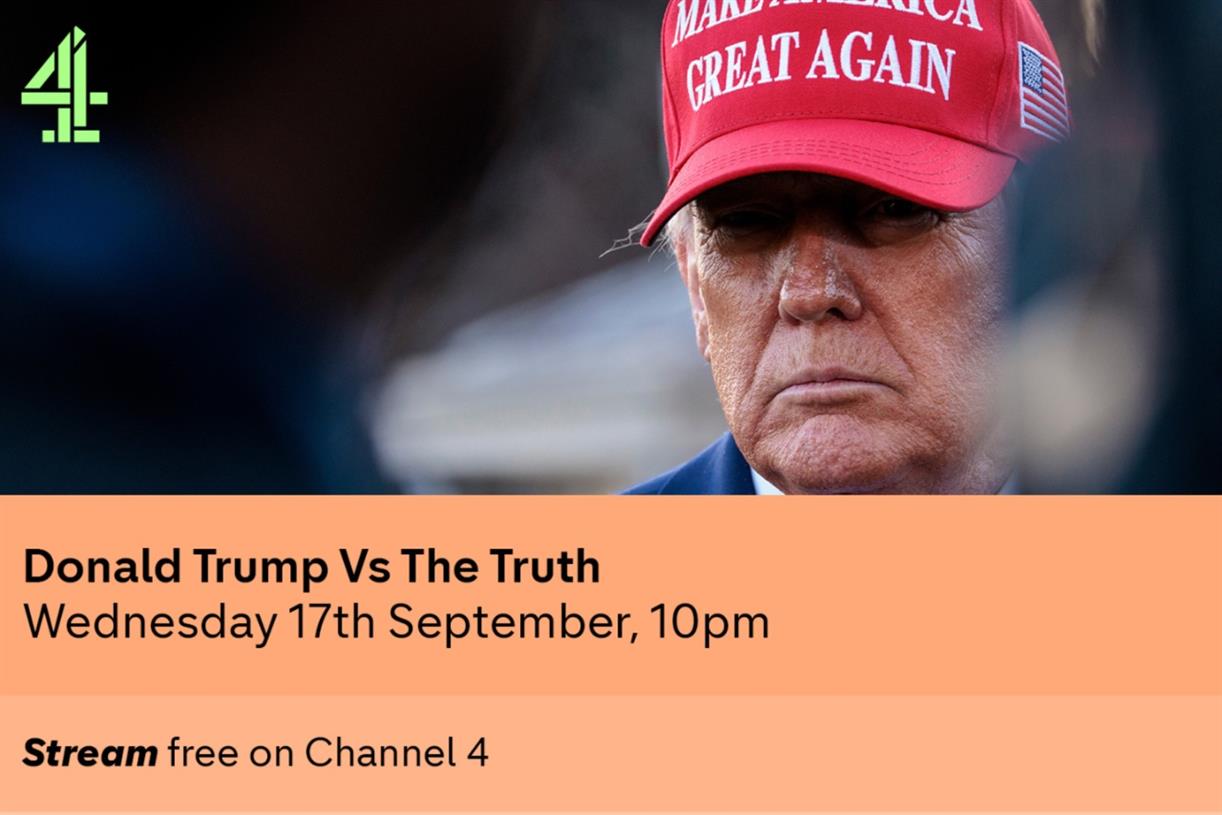
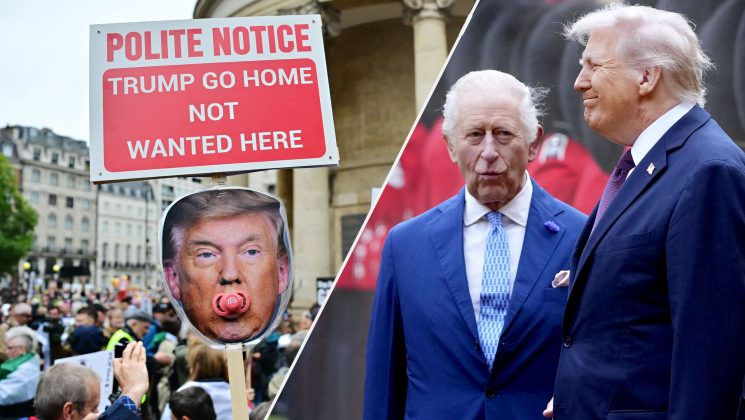
Channel 4 is dedicating an entire night to “Trump v. The Truth”, billed as the longest uninterrupted fact-checking broadcast ever aired. Meanwhile, mass protests and student walkouts are planned across the UK.
NEWS RELEASE:To mark the historic second state visit to the UK of
American President, Donald Trump, Channel 4 is rolling out an altogether
different kind of welcome, with an unflinching night of programming
that puts a spotlight on his prolific oeuvre of untruths and falsehoods.
Channel 4 Announces Night of TV Dedicated To Donald Trump Untruths
To mark the historic second state visit to the UK of
American President, Donald Trump, Channel 4 is rolling out an altogether
different kind of welcome, with an unflinching night of programming
that puts a spotlight on his prolific oeuvre of untruths and falsehoods.
On 17th September from 10pm Channel 4 will broadcast Trump v The Truth,
an unbroken catalogue of over 100 falsehoods, distortions and
inaccuracies uttered or written by the US President since taking office
in January. Running over several hours, these untrue statements will be
punctuated by text-based fact-checks, offering viewers the truth behind
the tweets, speeches and soundbites.
As well as Trump
v The Truth, the theme will run across the day, with a Trump
impersonator taking over from Channel 4 continuity announcers, to
deliver false information - from misleading programme synopses to
exaggerated runtimes - as a sobering reminder of what can happen when
once-trusted sources of truth cannot be relied upon.
Also
in the schedule will be the second episode of The Donald Trump Show, a
landmark three-part documentary from multi award-winning filmmakers 72
Films. The unique series uses news footage from TV, podcasts and social
media to tell the story of the last nine months of the presidency as an
unfolding soap opera.
Ian Katz, Chief Content Officer says:
“Donald J Trump loves making history. So on Wednesday Channel 4 will do
just that: we’ll show what we believe to be the longest uninterrupted
reel of untruths, falsehoods and distortions ever broadcast on
television. We hope it will remind viewers how disorientating and
dangerous the world becomes when the most powerful man on earth shows
little regard for the truth. And if President Trump cares to watch along
after the state banquet, he may even clear up a few misconceptions.”
Trump v The Truth broadcast on Wednesday 17th September, from 10pm on Channel 4.
The
programme is produced by Bango Studios and was commissioned by Head of
Specialist Factual, Shaminder Nahal and Commissioning Editor, Vivienne
Molokwu.
To mark the historic second state visit to the UK of
American President, Donald Trump, Channel 4 is rolling out an altogether
different kind of welcome, with an unflinching night of programming
that puts a spotlight on his prolific oeuvre of untruths and falsehoods.
On 17th September from 10pm Channel 4 will broadcast Trump v The Truth,
an unbroken catalogue of over 100 falsehoods, distortions and
inaccuracies uttered or written by the US President since taking office
in January. Running over several hours, these untrue statements will be
punctuated by text-based fact-checks, offering viewers the truth behind
the tweets, speeches and soundbites.
As well as Trump
v The Truth, the theme will run across the day, with a Trump
impersonator taking over from Channel 4 continuity announcers, to
deliver false information - from misleading programme synopses to
exaggerated runtimes - as a sobering reminder of what can happen when
once-trusted sources of truth cannot be relied upon.
Also
in the schedule will be the second episode of The Donald Trump Show, a
landmark three-part documentary from multi award-winning filmmakers 72
Films. The unique series uses news footage from TV, podcasts and social
media to tell the story of the last nine months of the presidency as an
unfolding soap opera.
Ian Katz, Chief Content Officer says:
“Donald J Trump loves making history. So on Wednesday Channel 4 will do
just that: we’ll show what we believe to be the longest uninterrupted
reel of untruths, falsehoods and distortions ever broadcast on
television. We hope it will remind viewers how disorientating and
dangerous the world becomes when the most powerful man on earth shows
little regard for the truth. And if President Trump cares to watch along
after the state banquet, he may even clear up a few misconceptions.”
Trump v The Truth broadcast on Wednesday 17th September, from 10pm on Channel 4.
The
programme is produced by Bango Studios and was commissioned by Head of
Specialist Factual, Shaminder Nahal and Commissioning Editor, Vivienne
Molokwu.
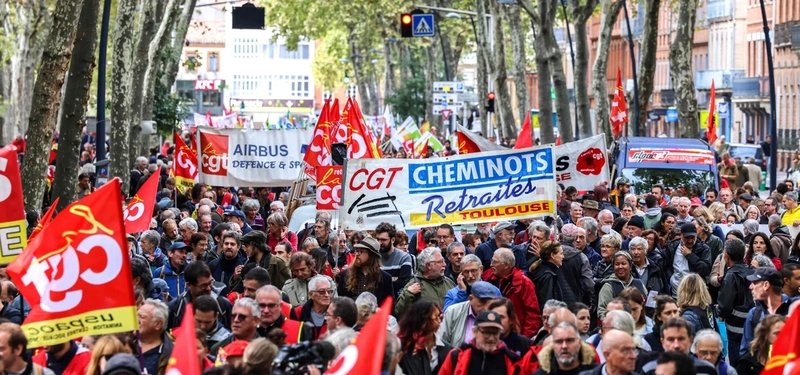
Austerity budget:
The unrest was triggered by a 2026 budget proposal from former Prime
Minister François Bayrou's government. The plan aimed to cut €44 billion
($51 billion) from public spending, which included measures like
eliminating two national holidays and freezing pensions.
Political turmoil:
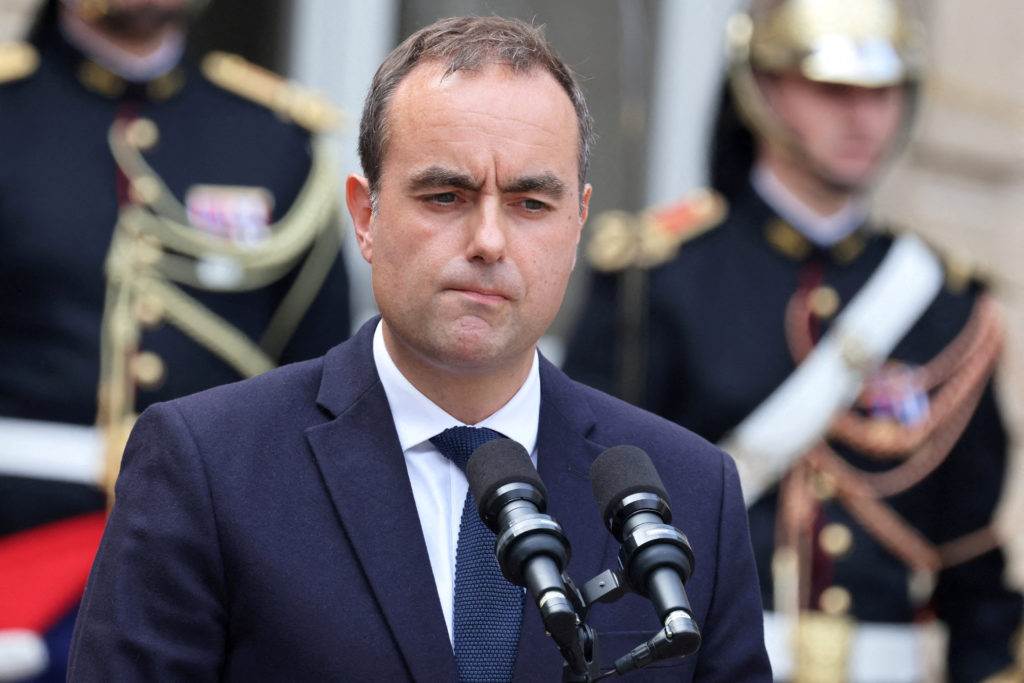
The protests intensified after Bayrou lost a confidence vote on
September 8, 2025, and President Macron appointed Sébastien Lecornu as
the new Prime Minister two days later. This was the fourth prime
minister appointed in just 12 months, adding to public frustration.
Social media organization:
The "Block Everything" movement originated on social media platforms
like TikTok, Telegram, and X (formerly Twitter) in mid-2025. This
grassroots approach is similar to the Yellow Vests movement of 2018.
Broad discontent:
Beyond the budget cuts, the movement also reflects broader public anger
over social inequality and the perceived disconnect of the political
elite.