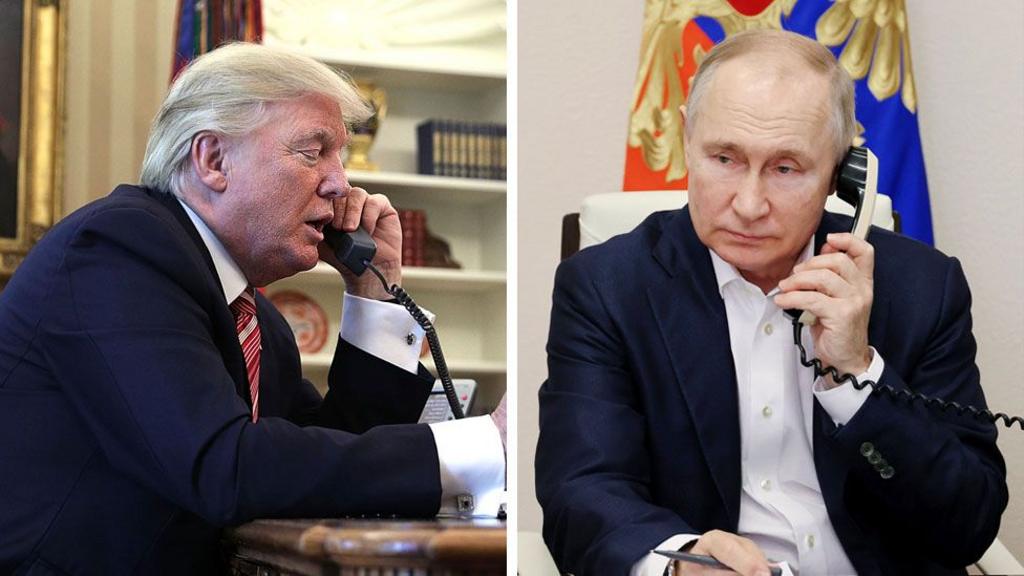
Hungary ‘ready’ to host planned Putin-Trump meeting – Orban
The two leaders have agreed to meet in Budapest, according to the US president
He made the remark on X on Thursday shortly after Trump, following a
phone call with the Russian president, announced that he and Putin could
meet in Budapest.
“We are ready!” Orban wrote. “The planned meeting between the American and Russian presidents is great news for the peace-loving people of the world,” the Hungarian prime minister added.
Minutes
earlier, Trump wrote on Truth Social that a meeting with Putin could
take place after high-level talks between delegations from the
delegations is expected next week.
The summit would be focused on
settling the Ukraine conflict, according to the US president.
1 Trump's
statement came after the first phone call between the two presidents in
almost two months.
2 The conversation lasted for more than two hours,
according to the White House.
3 Trump described it as “very productive,” adding that “great progress was made” during the call.
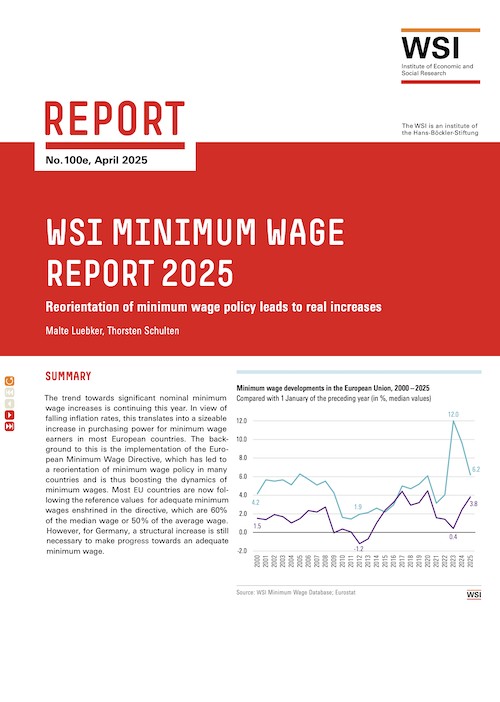
The trend towards significant nominal minimum wage increases is
continuing this year. In view of falling inflation rates, this
translates into a sizeable increase in purchasing power for minimum wage
earners in most European countries
CONCLUSION: EUROPEAN MINIMUM WAGE DIRECTIVE PROMOTES DYNAMIC MINIMUM WAGE DEVELOPMENT
Most
EU countries are now following the reference values for adequate
minimum wages enshrined in the European Minimum Wage Directive, which
are 60% of the median wage or 50% of the average wage.
Malte Luebker, Dr. rer. pol. is a researcher at the Institute of Economic and Social Research (WSI ) of the Hans Böckler Foundation. Main areas of work: wages, effects and determinants of collective bargaining coverage. malte-luebker@boeckler.de
Thorsten Schulten, Prof. Dr. is a researcher at the Institute of Economic and Social Research (WSI ) of the Hans Böckler Foundation. Main areas of work: WSI Collective Bargaining Archive, Labour and Collective Bargaining Policy in Europe. thorsten-schulten@boeckler.de
CONCLUSION: EUROPEAN MINIMUM WAGE DIRECTIVE PROMOTES DYNAMIC MINIMUM WAGE DEVELOPMENT
Key aspects of the directive
Adequate minimum wages:
Member states must establish clear, stable procedures for setting minimum wages, ensuring they are adequate to cover basic living expenses.
Reference values:
The directive includes indicative "double decency" thresholds of
of the median wage or
of the average wage to guide member states in assessing minimum wage adequacy.
Strengthened collective bargaining:
A major goal is to promote collective bargaining, with countries whose coverage is below
required to create action plans to strengthen their systems.
Improved access:
It aims to improve workers' access to minimum wage protection and ensure effective enforcement of minimum wage laws.
Reduced poverty and inequality:
The directive seeks to reduce in-work poverty, improve living standards, and narrow the gender pay gap.
Adequate minimum wages in the EU - European Commission
In light of this, the European Commission adopted a proposal for a Directive on adequate minimum wages in October 2020. The propos...
Employment, Social Affairs and Inclusion
The new EU Directive on minimum wage sets a dual goal
Nov 16, 2022 — This underlines the importance and timeliness of the new Directive on adequate minimum wages in the European Union. Th...
International Labour Organization
Minimum wages in 2024: Annual review - Eurofound
Jun 25, 2024 — Policy context. National governments and – depending on national traditions and practices – social partners continue t...
Eurofound
Impact on national minimum wages
Structural increases:
The directive appears to be driving "structural-type" increases in minimum wages beyond what would be explained by inflation alone.
Increased rates:
There have been significant nominal increases in minimum wages across most EU countries since the directive's adoption.
Dynamic development:
The directive is contributing to a dynamic development of minimum wages and already influencing national minimum wage-setting and collective bargaining reforms.