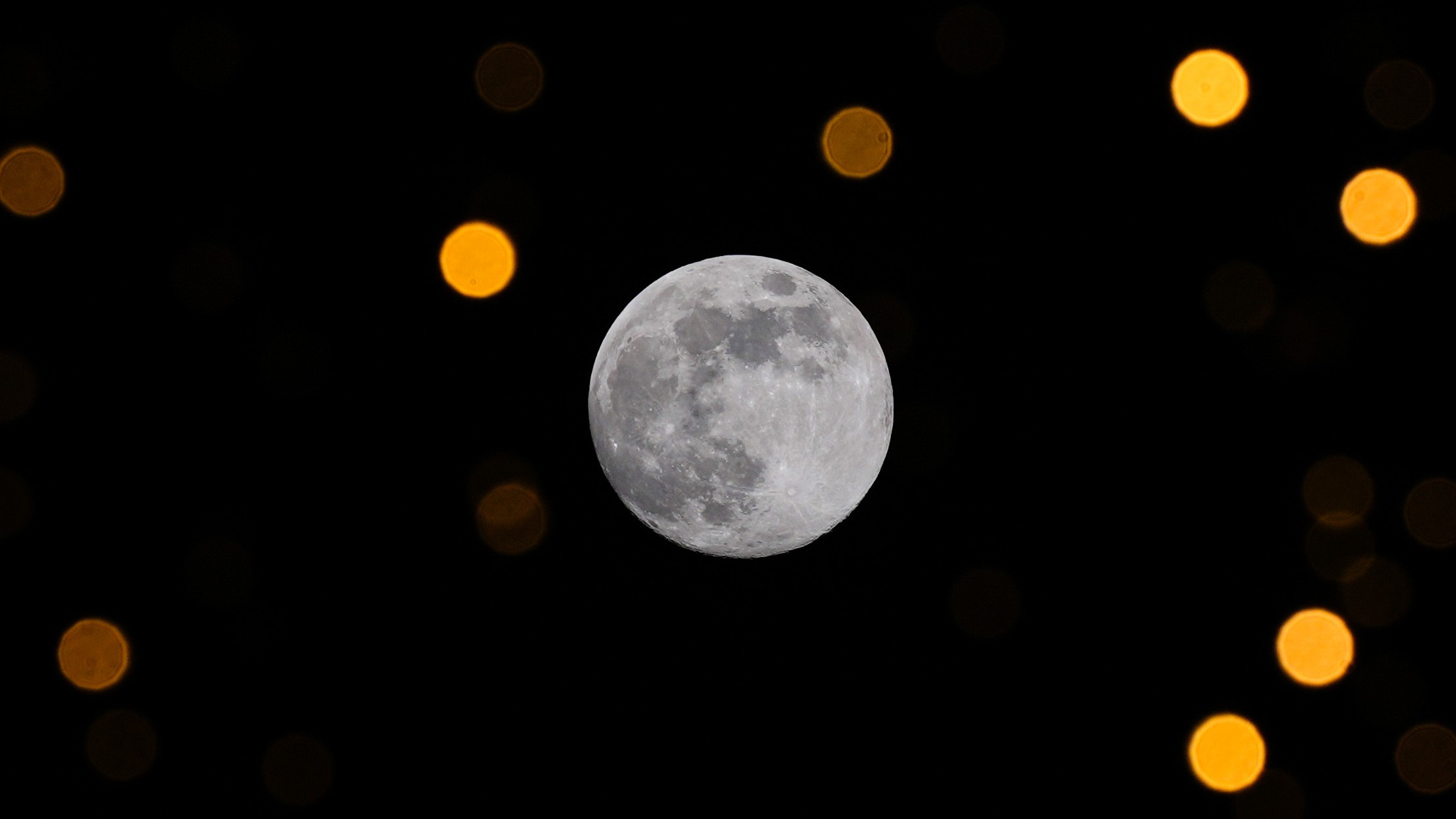
December's Cold Moon always climbs higher in the sky than any other full
moon of the year.
- As the winter solstice nears on Dec. 21 in the
Northern Hemisphere, the sun appears at its lowest in the sky during the
day.
- In contrast, the full moon — which, by definition, is opposite the
sun — rises to its highest at night.
'Cold Supermoon' 2025: Why the final full moon of the year also towers highest
The year's final full moon is both a 'supermoon' and the highest full moon of the year.
(Image credit: Getty Images)
Skywatchers are in for a
stunning spectacle this week when the second-biggest full moon of 2025,
the Cold Supermoon, rises in the east at dusk and appears higher in the
night sky than any other full moon of the year.
Officially
full at 6:14 p.m. EST on Thursday (Dec. 4), the moon will rise in the
east within the constellation Taurus. Although the moon is technically
full at a specific moment, it's most visually impressive at the time of moonrise where you are, when it appears largest near the horizon.
It's
the third of four "supermoons" in a row, and the second largest of the
year after November's Beaver Moon. A supermoon occurs when a full moon
coincides with the moon's closest approach to Earth, called perigee.
Supermoons appear about 10% larger than average.
- the Frost
Exploding Trees Moon (Cree),
- the Moon of the Popping Trees (Oglala),
- the
Moon When the Deer Shed Their Antlers (Dakota),
- the Winter Maker Moon
(Western Abenaki),
- the Cold Moon (Mohawk) and
- the Long Night Moon
(Mohican).
The latter comes from this full moon's closeness to the
winter solstice, which occurs on Dec. 21 this year.
ANGLO AND SAZON NAMES for December's full moon are
- the Moon Before Yule and
- the Long Night Moon, according to Time and Date.
The
next full moon will be the Wolf Moon on Jan. 3, 2026, the fourth and
final supermoon in a row. It will be the first of 13 full moons in 2026,
thanks to a Blue Moon — the second full moon in a calendar month —
occurring in May 2026.