Wednesday, January 14, 2026

World Defense News

 U.S. Army artillery soldiers conducted advanced interoperability training with the Lithuanian Armed Forces on January 14, 2026, centered on employment of the M142 High Mobility Artillery Rocket System during a joint exercise at the Pabradė training area in eastern Lithuania. The event, documented through an official U.S. Army image release published on DVIDS, underscored sustained efforts to synchronize allied long-range precision fires, digital command and control procedures, and rapid mobility concepts as part of the United States’ rotational force posture in the Baltic region. The training also provided Lithuanian forces with practical exposure to HIMARS operational workflows as the country moves closer to fielding its own system, strengthening collective deterrence along NATO’s northeastern flank near Belarus.    Read Full Defense News At This Link. 

U.S. Army HIMARS artillery units trained alongside the Lithuanian Armed Forces in eastern Lithuania, reinforcing allied long-range fires interoperability and deterrence readiness near the Belarusian border (Picture Source: DVIDS)

 Poland’s 1st Armoured Brigade has conducted its first live-fire exercise with M1A2 Abrams SEPv3 tanks at the Drawsko Pomorskie training area, as part of a joint Polish–American gunnery event involving U.S. soldiers from the 1st Infantry Division. 
The activity, officially confirmed by the Polish General Command of the Armed Forces, represents the first time crews from the 1st Armoured Brigade have fired live ammunition using the SEPv3 variant of the Abrams, marking a significant step in the operational introduction of the tank into Polish service.  Read Full Defense News At This Link. 

Poland’s 1st Armoured Brigade has taken a major step toward full combat readiness by conducting its first live-fire training with M1A2 Abrams SEPv3 tanks alongside U.S. Army forces at the Drawsko Pomorskie training area (Picture Source: Polish 1st Armoured Brigade and the General Command of the Armed Forces)

The Air Force Global Strike Command confirmed on January 13, 2026, that two MH-139A Grey Wolf helicopters assigned to the 40th Helicopter Squadron conducted the platform’s first operational Minuteman III ICBM convoy security mission at Malmstrom Air Force Base on January 8. 
In practical terms, the aircraft did what the nuclear enterprise quietly prizes most: it kept pace with a sensitive ground movement for hours across remote terrain, remained on station without an on-route refuel stop, and provided the convoy commander with a faster and far more capable airborne shield than the Vietnam-era UH-1N Huey it is replacing. Read more...
The MH-139A Grey Wolf brings modern sensors, extended range, higher speed, and improved survivability to ICBM convoy escort, combining advanced electro-optical systems, armored protection, defensive countermeasures, and troop lift capacity to provide persistent airborne security and rapid response for the U.S. nuclear enterprise (Picture source: U.S. DoW).

Saudi Arabia announced on January 8, 2026, that its fourth THAAD battery completed individual and specialized training at Fort Bliss in the United States. 
The training covered system operation, battery level coordination, and readiness standards required before activation. 
  • No deployment location or operational timeline was disclosed. 

The fourth Saudi THAAD unit completed a full training cycle at Fort Bliss, which serves as the primary center for THAAD qualification, focusing on system operation, battery-level coordination, and readiness for operational employment. (Picture source: Saudi MoD)

U.S. based company AZAK is developing an electrically driven “wheel as a vehicle” concept that departs sharply from conventional chassis-and-drivetrain architectures by treating each wheel as a complete propulsion and control unit for unmanned ground systems and other mobility applications. 
Rather than starting with a fixed frame, axles, and a centralized powertrain, the company has reversed the design logic, making mobility itself the foundational building block of the vehicle. 
  • This approach reflects a broader reassessment within the defense sector of how ground systems should be designed for dispersed, expeditionary, and logistics-intensive operations where adaptability and simplicity can outweigh traditional platform-centric thinking. 
  • By embedding all essential drive functions at the wheel level, AZAK is proposing a modular mobility layer that can be rapidly adapted to a wide range of military tasks without redesigning an entire vehicle from the ground up. Read more...
AZAK's wheel-centric unmanned mobility system integrates motor, battery, and control electronics inside each wheel, enabling chassis-free platforms with high torque, low center of gravity, rapid assembly, and strong off-road performance for logistics, casualty evacuation, and autonomous ground missions (Picture source: AZAK).


According to Malaysia Military Power on January 11, 2026, Malaysia reportedly began exploratory discussions with Korea Aerospace Industries (KAI) regarding the possible acquisition of KF-21 Boramae fighter jets, as delays in acquiring additional F/A-18 Hornets from Kuwait raise concerns over future force levels. The talks are also linked to long-term planning under the Multi-Role Combat Aircraft (MRCA) program as existing F/A-18D and Su-30MKM fighters approach retirement.

Jan
14

U.S. Navy Explores Low-Cost Unmanned Combat Vessels with Textron’s MMUSV.


On January 13, 2026, Textron Systems introduced the Multi Mission Uncrewed Surface Vessel (MMUSV), describing it as the fifth-generation evolution of its CUSV craft and positioning it as a low-cost, rapid-production answer to Navy and allied demand for unmanned surface capacity.


On January 13, 2026, at White Sands Missile Range in New Mexico, Lockheed Martin announced that its Next-Generation Short-Range Interceptor (NGSRI) had successfully completed its first flight test, marking the program’s transition from concept to live-fire reality. This new interceptor is being developed as the U.S. Army’s future replacement for the FIM-92 Stinger within a layered air and missile defense network shaped by drone proliferation, cruise missiles and low-altitude threats.
 

China has publicly revealed a new vehicle-mounted high-power microwave weapon, the Hurricane 3000, during a nationally broadcast military parade in January 2026, according to footage aired by Chinese state television.
 

On January 13, 2026, DefenseNews reported that the U.S. Army will field its first Bell MV-75 tiltrotor aircraft by late 2026, accelerating the Future Vertical Lift (FVL) program that had previously been expected to deliver the first unit in 2031-2032. The announcement, made by Army Chief of Staff Randy George during the Army Senior Leader Sitrep town hall, reflects changes in acquisition strategy driven by faster technological development and evolving operational requirements.
 

On January 13, 2026, FN America has unveiled the FN 309™ MRD, a compact 9x19mm pistol engineered around a simple promise: reduce the physical effort and procedural friction that often show up in real-world sidearm use, from loading magazines in the dark to clearing the weapon safely for maintenance.
 

Taiwan and the United States have quietly but decisively moved forward with the joint production of 155mm artillery ammunition, a development that reflects both the hard lessons of recent high-intensity conflicts and the growing urgency of strengthening Taiwan’s defense posture in an increasingly contested Indo-Pacific security environment.
 

The Netherlands Ministry of Defence has confirmed a new procurement contract with Oshkosh Defense for additional Dutch Expeditionary Patrol Vehicles, reinforcing the Netherlands’ long-term investment in highly mobile, multi-role light armored platforms adapted to expeditionary operations. Announced in an official communication by Oshkosh Defense Europe B.V.
 

The Japan Ground Self-Defense Force publicly showcased the operational use of quadrupedal ground robots alongside airborne infantry during a large-scale multinational exercise at the Narashino Training Area on January 11, 2026.
 

Chinese state media reporting released on 14 January 2026 has offered the clearest public look yet at the People’s Liberation Army Navy’s Type 096 Tang-Class ballistic missile submarine, a platform widely viewed as the backbone of China’s future sea-based nuclear force.
 

The first two upgraded M270A2 Multiple Launch Rocket Systems for the British Army have arrived in the United Kingdom, according to details shared by Donald Johnstone in a LinkedIn post on January 14, 2026. The launchers were transported aboard a military roll-on-roll-off vessel that docked at Marchwood Military Port before beginning onward movement to Larkhill, following the successful completion of live firing trials in the United States. Read more. 

Read full Defense news.
 

On January 13, 2026, Birdon signed a $125 million contract with the Australian Government to design and build one prototype and 15 Amphibious Vehicle – Logistics (AV-Ls) for the Australian Army's Land 8710 Littoral Manoeuvre program. The contract, valued at AU$125 million, equivalent to about US$84 million, covers the full design and construction of the future AV-L.
 

The Bulgarian Ministry of Defense announced on January 13, 2026, that Defense Minister Atanas Zapryanov confirmed Bulgaria’s readiness to receive its first Stryker armored vehicles from the United States in February. The initial deliveries will be directed to the Terem-Ivaylo military plant in Veliko Tarnovo.
 

U.S. Central Command announced on January 12, 2026, that American forces, working in concert with regional allies, have officially stood up a new joint air and missile defense coordination center at Al Udeid Air Base in Qatar.
 

On January 9, 2026, Reuters reported that Pakistan proposed the JF-17 Thunder fighter jet to Sudan during the final stage of a defense package estimated at $1.5 billion. The proposed deal, which includes aircraft, drones, and air defense systems, comes as Sudan’s armed forces seek to reinforce air capabilities during an internal conflict that has lasted more than two and a half years. Read full defense news at this link...

Read more...
 

On January 8, 2026, the U.S. Congress confirmed that the Nuclear-Armed Sea-Launched Cruise Missile (SLCM-N) will be integrated into the future Trump-class guided-missile battleship, also known as BBG(X). The decision formally links the revived non-strategic nuclear cruise missile to a new large surface combatant program, marking the first planned deployment of a nuclear cruise missile on a U.S. surface warship since the early 1990s. Read full defense news at this link...

Read more...
 

The U.S. Coast Guard announced on January 9, 2026, that the crew of the Coast Guard Cutter Kimball (WMSL-756) returned to Honolulu on January 1 after a 120-day, 16,500-nautical-mile patrol across the Bering Sea and Gulf of Alaska, a route that increasingly functions as America’s front porch to the Arctic.
 

Northrop Grumman announced on January 8, 2026, that it has secured the U.S. Marine Corps Marine Air-Ground Task Force Uncrewed Expeditionary Tactical Aircraft, or MUX TACAIR, Collaborative Combat Aircraft contract, partnering with Kratos Defense to field a Marine-tailored version of the XQ-58 Valkyrie.
 

A statement published by the Government Offices of Sweden on 12 January 2026 indicates that Stockholm approved more than SEK 4 billion, roughly $440 million, to rapidly acquire a new family of unmanned military systems for the Swedish Armed Forces, with deliveries planned between 2026 and 2028.

Punishing Iran Could Alienate China and India — Again | Big Take Asia

Iran Releases Video ‘Proof’ Of Shooting Down IDF Jet After Israel Denies...

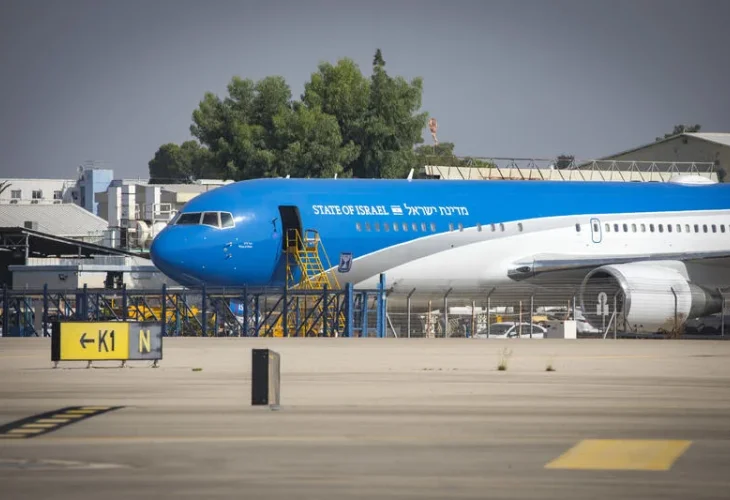
Netanyahu’s plane leaves Israeli airspace ‘mysteriously’

The aircraft used for the Israeli state leadership, the
"Wing of Zion," departed Israel for Crete today as part of a scheduled training and maintenance exercise, according to Israeli officials. It returned to Israel several hours later.

The aircraft's movements are often closely tracked by online flight radars and media outlets, especially following the International Criminal Court (ICC) issuing an arrest warrant for Netanyahu in November 2024 for alleged war crimes. Since then, flights carrying the Prime Minister have often taken unusual, longer routes to avoid the airspace of nations that might enforce the warrant 

14 Jan 202614:50 PM
Netanyahu’s plane leaves Israeli airspace ‘mysteriously’ 
 
Israel reported that the plane of Israeli Prime Minister Benjamin Netanyahu, known as the “Wing of Zion,” left Israeli airspace as part of a planned routine training exercise, denying unconfirmed reports that suggested otherwise.

  • This comes amid reports claiming that, due to concerns over a possible Iranian retaliatory attack against Israel, a “Wing of Zion” aircraft took off from Israel’s Nevatim Air Base, though the reason behind the flight remains unclear. 
  • These heightened concerns follow U.S. President Trump’s remarks last night, indicating an increasing inclination to carry out his threats to strike Iran if it harms protesters.

Trump had discussed with his team potential military and cyber options against Iran and warned in an interview with CBS that Iran must not execute detained protesters, signaling a “very strong action” if it does so.

Israel has raised its security alert level to the highest in recent hours, coinciding with statements by the U.S. President regarding the protests in Iran, according to Israeli media.

Israel News

Wing of Zion Flight, U.S. Base Drawdown Signal Preparations Toward Iran

Wing of Zion makes brief practice flight as U.S. personnel are advised to leave major base in Qatar

Wing of Zion Plane (Knaf Tzion) (Olivier Fitoussi/Flash90)Wing of Zion Plane (Knaf Tzion) (Olivier Fitoussi/Flash90)

The “Wing of Zion” aircraft, used to transport Israel’s state leadership, departed Israel today, left the country’s airspace, and landed in Crete after a flight of just over an hour and a half. Several hours later, following a brief stop on the Greek island, the plane began its return to Israel.

  1. Israeli officials familiar with the matter said the flight was a scheduled training and maintenance exercise. 
  2. According to those officials, it was carried out “as part of the aircraft’s annual maintenance program,” and its rapid return to Israel supported that explanation.

Still, the timing drew attention. This is not the first time the Wing of Zion aircraft has been moved out of Israel during volatile security periods. On June 13, hours before the launch of Operation Am Kelavi against Iran, the aircraft was taken beyond Israel’s borders due to assessments it could become a strategic target in a potential Iranian response. A similar step was taken during Israel’s October 2024 strike on Iran.

The aircraft’s movement coincided with signs of shifting American military posture in the region. According to Reuters, some personnel stationed at the U.S. military’s Al Udeid Air Base in Qatar, the largest American base in the Middle East housing around 10,000 troops, were advised to leave the facility by Wednesday evening. Three diplomats told Reuters the move was precautionary. One diplomat stressed, “It’s a posture change and not an ordered evacuation.”

A senior Iranian official told Reuters earlier that Tehran had warned several regional states that U.S. military bases on their territory would be targeted if Washington launched an attack on Iran. 
  • The warning reportedly included countries such as Saudi Arabia, the United Arab Emirates, and Turkey. Iran previously fired missiles at Al Udeid following U.S. strikes during the June conflict.
  •  European officials, speaking to the Washington Post, said they assess that any American strike would likely focus on the leadership and power centers of Iran’s Islamic Revolutionary Guard Corps and the Basij militia. 
  • According to those officials, “there are no indications of a strike against nuclear facilities.” They added that Tehran believes U.S. President Donald Trump faces political pressure at home and is continuing to signal openness to negotiations in an effort to buy time.

Israeli security officials share the assessment that the United States is moving closer to military action against Iran. According to those evaluations, a potential operation would likely be multi-layered, combining airstrikes against strategic regime targets, significant cyber operations aimed at disrupting command and control systems, and psychological or information efforts intended to further inflame unrest inside Iran.

Iran, for its part, has publicly signaled readiness. Majid Mousavi, commander of the IRGC’s Air and Space Force, said Wednesday, 
“Our forces are at the highest level of readiness to confront any aggression.” 
He claimed Iran’s missile production now exceeds levels seen before last June’s fighting and said all damage sustained since then had been repaired.

The central question, Israeli officials say, is not whether Washington will act, but how far it is prepared to go. A limited strike could be designed to pressure Tehran back to negotiations, while a broader campaign would aim to significantly weaken the regime’s grip on power.

America's Inequality Crisis, Trump v Powell, Global Instability, Venezue...

Alphabet, Google's parent company, is now worth $4 trillion

Supreme Court Does Not Rule on Trump’s Tariffs on Wednesday

NYT Columnist Thomas Friedman: “The World Will Push Back” Against Trump ...

    Jan 27, 2026 #amanpourpbs From ICE's violent crackdown in Minneapolis to President ...