"It was obvious that she had to get the money from somewhere. But then it is such a common practice. SCB is not the only bank that is used like this. So perhaps the government lost sight because there are so many similar cases in the market."
SUB-PLOT: David Brown believes she was protected by powerful figures who have dominated business and politics in Ho Chi Minh City for decades. And he sees a bigger factor in play in the way this trial is being run: a bid to reassert the authority of the Communist Party over the free-wheeling business culture of the south.
"What Nguyen Phu Trong and his allies in the party are trying to do is to regain control of Saigon, or at least stop it from slipping away.
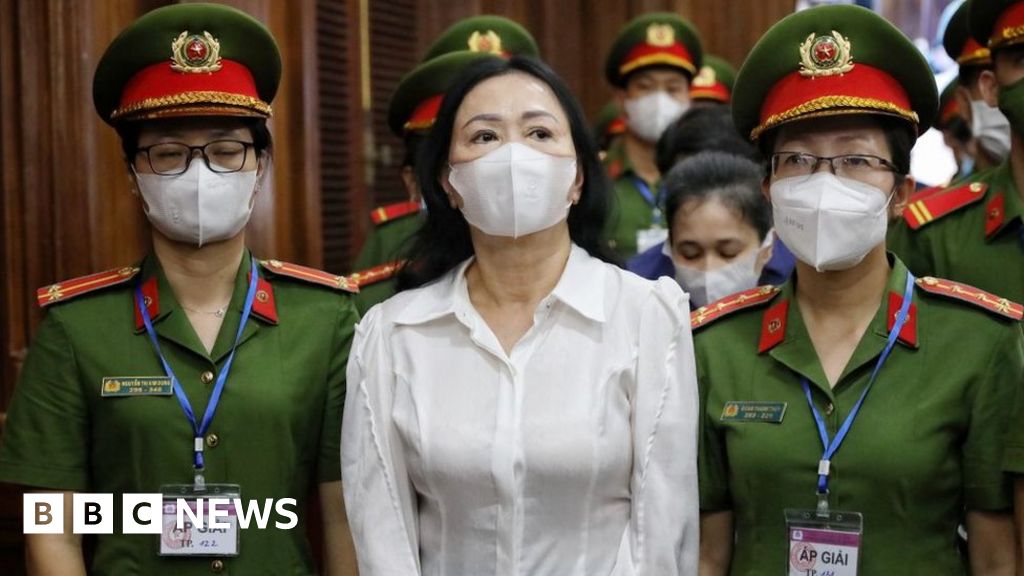
Truong My Lan: Vietnamese billionaire accused in $44 Multi-billion dollar bank fraud
By Jonathan Head & Thu Bui,In Bangkok
Truong My Lan: Vietnamese billionaire accused in multi-billion dollar bank fraud

April 11, 2024

It is the most spectacular trial ever held in Vietnam, befitting one of the greatest bank frauds the world has ever seen.
Behind the stately yellow portico of the colonial-era courthouse in Ho Chi Minh City, a 67-year-old property developer stands accused of looting one of Vietnam’s largest banks over a period of 11 years.
The numbers involved are dizzying. Truong My Lan is charged with taking out $44bn (£35bn) in loans from the Saigon Commercial Bank. Prosecutors say $27bn may never be recovered.
The habitually secretive communist authorities have been uncharacteristically forthright about this case, going into minute detail for the media. They say they have summoned 2,700 people to testify. There are 10 state prosecutors and around 200 lawyers involved.
The evidence is in 104 boxes weighing a total of six tonnes. Eighty-five defendants are on trial with Truong My Lan, who denies the charges. She and 13 others face a possible death sentence.
The numbers involved are dizzying. Truong My Lan is charged with taking out $44bn (£35bn) in loans from the Saigon Commercial Bank. Prosecutors say $27bn may never be recovered.
The habitually secretive communist authorities have been uncharacteristically forthright about this case, going into minute detail for the media. They say they have summoned 2,700 people to testify. There are 10 state prosecutors and around 200 lawyers involved.
The evidence is in 104 boxes weighing a total of six tonnes. Eighty-five defendants are on trial with Truong My Lan, who denies the charges. She and 13 others face a possible death sentence.
“There has never been a show trial like this, I think, in the communist era,” says David Brown, a retired US state department official with long experience in Vietnam. “There has certainly been nothing on this scale.”
The trial is the most dramatic chapter so far in the “Blazing Furnaces” anti-corruption campaign led by the Communist Party Secretary-General, Nguyen Phu Trong.
The trial is the most dramatic chapter so far in the “Blazing Furnaces” anti-corruption campaign led by the Communist Party Secretary-General, Nguyen Phu Trong.
A conservative ideologue steeped in Marxist theory, Nguyen Phu Trong believes that popular anger over untamed corruption poses an existential threat to the Communist Party’s monopoly on power. He began the campaign in earnest in 2016 after out-manoeuvring the then pro-business prime minister to retain the top job in the party.
The campaign has seen two presidents and two deputy prime ministers forced to resign, and hundreds of officials disciplined or jailed. Now one of the country’s richest women could join their ranks.
Truong My Lan comes from a Sino-Vietnamese family in Ho Chi Minh City, formerly Saigon. It has long been the commercial engine of the Vietnamese economy, dating well back to its days as the anti-communist capital of South Vietnam, with a large, ethnic Chinese community.
All land is officially state-owned. Getting access to it often relies on personal relationships with state officials. Corruption escalated as the economy grew, and became endemic.
By 2011, Truong My Lan was a well-known business figure in Ho Chi Minh City, and she was allowed to arrange the merger of three smaller, cash-strapped banks into a larger entity: Saigon Commercial Bank.
Vietnamese law prohibits any individual from holding more than 5% of the shares in any bank. But prosecutors say that through hundreds of shell companies and people acting as her proxies, Truong My Lan actually owned more than 90% of Saigon Commercial.
They accuse her of using that power to appoint her own people as managers, and then ordering them to approve hundreds of loans to the network of shell companies she controlled.
The amounts taken out are staggering. Her loans made up 93% of all the bank’s lending.
The campaign has seen two presidents and two deputy prime ministers forced to resign, and hundreds of officials disciplined or jailed. Now one of the country’s richest women could join their ranks.
Truong My Lan comes from a Sino-Vietnamese family in Ho Chi Minh City, formerly Saigon. It has long been the commercial engine of the Vietnamese economy, dating well back to its days as the anti-communist capital of South Vietnam, with a large, ethnic Chinese community.
- She started as a market stall vendor, selling cosmetics with her mother, but began buying land and property after the Communist Party ushered in a period of economic reform, known as Doi Moi, in 1986. By the 1990s, she owned a large portfolio of hotels and restaurants.
All land is officially state-owned. Getting access to it often relies on personal relationships with state officials. Corruption escalated as the economy grew, and became endemic.
By 2011, Truong My Lan was a well-known business figure in Ho Chi Minh City, and she was allowed to arrange the merger of three smaller, cash-strapped banks into a larger entity: Saigon Commercial Bank.
Vietnamese law prohibits any individual from holding more than 5% of the shares in any bank. But prosecutors say that through hundreds of shell companies and people acting as her proxies, Truong My Lan actually owned more than 90% of Saigon Commercial.
They accuse her of using that power to appoint her own people as managers, and then ordering them to approve hundreds of loans to the network of shell companies she controlled.
The amounts taken out are staggering. Her loans made up 93% of all the bank’s lending.


No comments:
Post a Comment