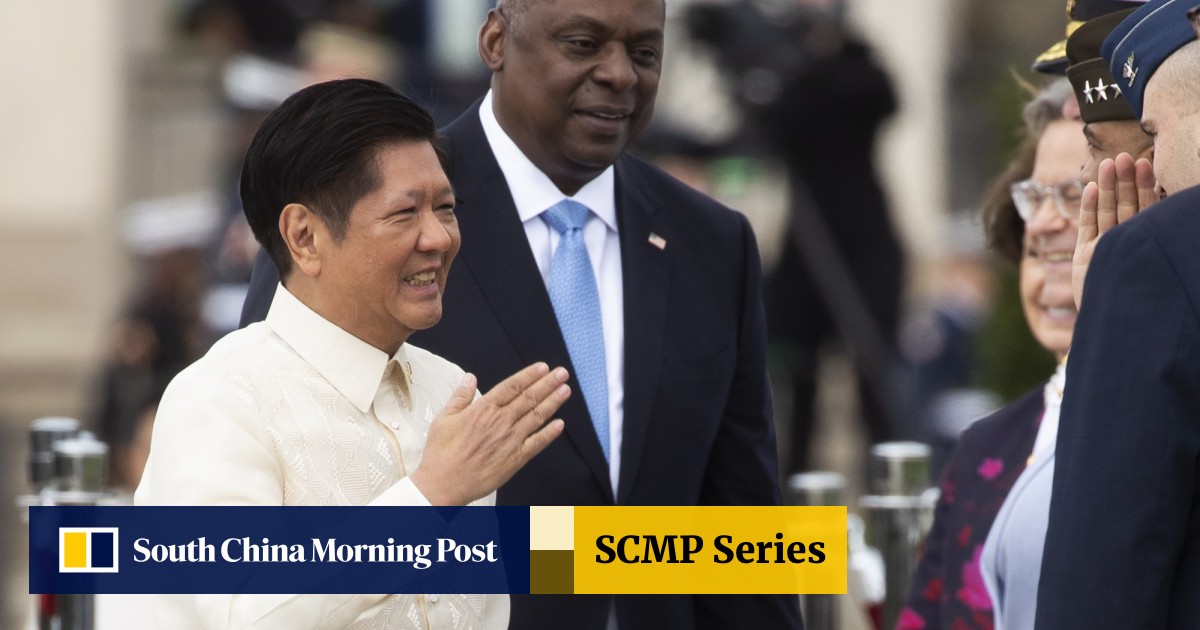
Japan has also faced incursions in disputed waters, with Tokyo accusing China of installing buoys near Senkaku, an uninhabited chain of islands under Japanese control in the East China Sea. This week's summit could see Washington, Tokyo and Manila forge a separate security system, with less emphasis on US leadership. Traditionally, the US was seen as the hub of the wheel for its Asian allies. Although the Philippines and Japan are strategic partners, they operated largely in this US-centric framework, said Philippines-based geopolitical analyst Don McLain Gill. Tokyo has recently moved to deepen security cooperation with Manila, discussing a military pact that would allow troops from both countries to deploy to the partner country for drills and exercises. Just this week, Japan participated in a joint maritime exercise on the West Philippine Sea alongside the United States and Australia. Georgi Engelbrecht, a senior analyst at the International Crisis Group, describes Japan as a "quiet champion" in Asia. "Maybe it started with the intensification in the Senkaku dispute, then continued with the [former Japanese PM Shinzo] Abe administration, but it culminated in this awareness of the Indo-Pacific, where it looks at Southeast Asia also as an area that can be supported in various means, in order to further underline certain ideals that this part of the world shares," he told DW. To Engelbrecht, the trilateral summit is not a surprise, and shows the convergence of stronger ties between Japan and the Philippines and the US' resurging alliance.


- With increased tensions over Taiwan and the South China Sea, the trilateral security arrangement is likely to reinforce zero-sum geopolitics in Asia
- OPINION
- Richard Heydarian
Can US-Philippine-Japanese military ties really protect regional security?


No comments:
Post a Comment