Ukrainian President Volodymyr Zelensky has got to be the world’s loneliest man.
Three
years into the unprovoked Russian full-scale invasion of Ukraine, and
despite the regular empathic statements of solidarity and support from
his European partners, he still has to constantly argue and advocate for
real military capabilities.
He
attends summits, puts on a brave face even when he goes halfway across
the world to the G7 in Canada only to realize that U.S. President Donald
Trump has left before meeting with him. He punctuates every statement,
tweet, and answer with several thank-yous, to avoid drawing more
accusations of ingratitude which he has received from both the Biden and Trump administrations as well as the UK.
European
countries have stepped up in some respects. They started ramping up
their military support in the last year of the Biden administration, and
since Trump’s inauguration in January, the EU has slightly surpassed
the United States in military assistance. But even these efforts have
not kept up with the pace or scale of Russia’s escalating offensive
against Ukraine. And more strategically, nothing the Europeans or
Americans have done has forced Russian President Vladimir Putin to
rethink his calculus and engage seriously in negotiations to end the
war.
Instead of issuing empty ultimatums
about ceasefires, the Europeans should have already done three things.
First, they should have deployed a beefed-up, multi-layered, properly
supplied, integrated air defense system inside Ukraine. Second, they
should have paralyzed the Russian defense industry’s production and
regeneration capabilities. And third, they should have enabled Ukrainian
deep strikes against Russian military installations, central to
Moscow’s ability to continue waging this war.
These
actions would also force Trump to stop excluding Europeans from his
discussions with Putin and see them as worthy security and defense
players.
So far,
Putin has been able to dismiss much of the U.S. and European statements
about the war in Ukraine as empty theater. He has not engaged seriously
in any of the attempted negotiations and watched one Trump deadline
after another expire with no consequences.
If anything, at various moments, the United States has applied pressure on Ukraine, not Russia.
While Ukraine acquiesced twice—once in March and again in May—to
the American demand of agreeing to a ceasefire, Putin has doubled down
on his maximalist, expansionist February 2022 goals, including in
intransigent calls with Trump. Just this week, Russian Foreign Minister
Sergey Lavrov has once again called for the “demilitarization and denazification” of Ukraine.
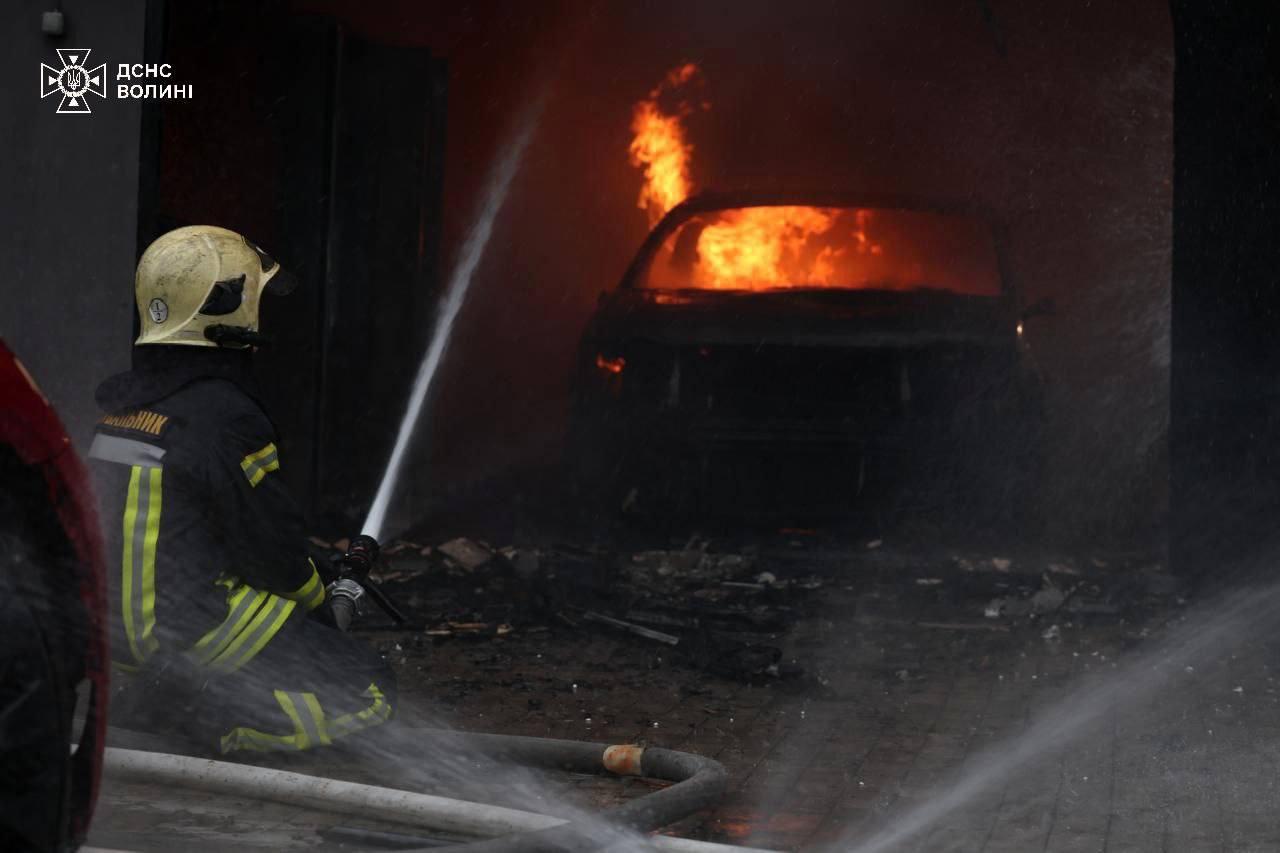
More importantly, Putin has only stepped up his military campaign. Since Trump’s inauguration, Russia has conducted ten of its largest strikes against Ukraine—including the largest combined drone and missile strike—since
the beginning of the war in 2022. In that time frame, Putin has been
rewarded with speaking at least five times with Trump, while the United
States has twice suspended vital military aid to Ukraine.
The latest suspension on July 1 and reversal on July 7—with Trump affirming
he wasn’t responsible for the halt—also confirmed how chaotic American
policy on the conflict has become since Trump returned to the White
House. It also inherently weakens Ukraine’s position.
Ukraine’s
backers have provided it with more air defense capabilities this past
year, but they haven’t kept up with the pace of attacks and sheer volume
of munitions Russia has managed to produce, in part thanks to more
effective partners.
North Korea alone has provided nearly twice
as many 122mm and 152mm artillery shells and 122mm rockets to Russia
than the whole of the EU has provided to Ukraine. By contrast, the EU is
meant to provide up to 2 million rounds to Ukraine in 2025.
Even
when it comes to diplomatic messaging, Ukraine’s backers have watered
down their signaling on what matters most to Putin: NATO membership. In
the declaration of last month’s NATO summit, the first of Trump’s second
term, Ukraine was minimally mentioned: Only twice compared with sixty-one times in last year’s Washington declaration.
And
unlike at the previous two NATO summits in Vilnius and Washington, the
NATO-Ukraine Council did not meet on the margins of the summit in The
Hague and gone was any mention of Ukraine’s path to NATO membership.
Officials attempted to reassure themselves that all of that was a good thing because
it was an implicit extension of what was agreed in Washington. But the
lip service and shifting dynamics among allies toward Kyiv were clearly
detected in Moscow.
Where
the Europeans were meant to bring the game-changing moves was through
the French and British-led so-called coalition of the willing. But it’s
been almost six months since it was first announced, and so far, hasn’t
translated into anything more decisive. It remains beholden to a
hypothetical ceasefire the Europeans have no say in, and hostage to the
risk threshold of its least ambitious member.
Had
the Europeans and their partners been truly in the fight to change
Putin’s calculus, they would take the opportunity of the next meeting of
this coalition in London on Thursday to agree on air defenses, weakening Russia’s defense industry, and enabling Ukraine to hit Russia’s military arrears.
By
comparison, it took George W. Bush’s administration only four months to
form its own coalition of the willing and launch its invasion of Iraq
in 2003, as ill-conceived and destructive as it was.
The
current nature of support for Ukraine just isn’t strategic or part of a
theory of victory that ends the war decisively or with a sustainable
settlement. Instead, it is a stream of support that drains Western
strained resources, just enough to keep Ukraine on life support.
The
paths to both an end to the war through a negotiated settlement or a
forced Russian withdrawal require actions from the Europeans to change
Putin’s calculus. Right now, he has no incentive to stop because for
three years his bet that he could outproduce and out-escalate Ukraine
and its Western backers has paid off, despite the very slow and
incremental pace of his troops’ advance.





No comments:
Post a Comment