- The move was swift and confusing: the list appeared on the US Federal Register, only for the agency to withdraw the document minutes later without explanation. The entire episode lasted less than a day.
- This wasn't an isolated incident.
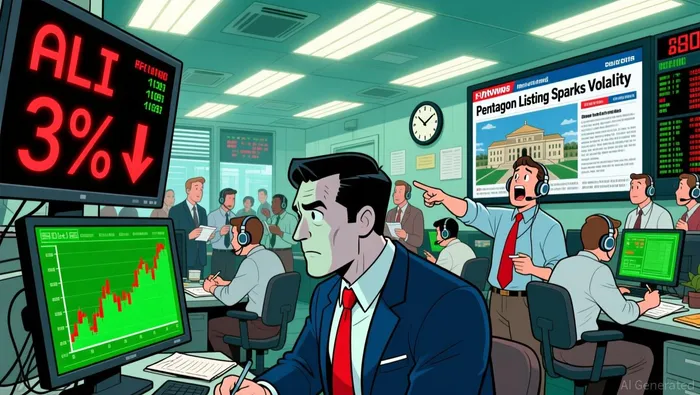


Alibaba Leads Tech Slide After Pentagon Briefly Shows Blacklist
Takeaways by Bloomberg AI
- Alibaba Group Holding Ltd. led a Chinese tech-share selloff after the Pentagon added some of the country's biggest names to a list of companies aiding the military.
- The list included Alibaba, BYD Co., and Baidu Inc., but was later declared "unpublished" and removed without explanation.
- The designation is considered a warning to US investors and can precede more punitive trade restrictions, with the companies affected denying any involvement with the Chinese military.
Alibaba Group Holding Ltd. led a Chinese tech-share selloff after the Pentagon added some of the country’s biggest names to a list of companies aiding the military — only to withdraw that roster minutes later without explanation.
- The Chinese AI leader’s stock slid more than 3% in Hong Kong, while BYD Co. and Baidu Inc. were down about 1%.
- All three appeared on the updated Pentagon list on the US Federal Register, though it was later declared “unpublished.”
- The agency also removed two of China’s leaders in memory chips, ChangXin Memory Technologies Inc. and Yangtze Memory Technologies Co.
The Pentagon’s moves come at a fraught time in Washington’s debate over China tech policy. The US has now said that three of China’s AI frontrunners — Alibaba, Baidu and Tencent Holdings Ltd. — help the Asian country’s military.
- Their addition is almost certain to provoke Beijing.
- The designation of BYD, meanwhile, targets the country’s top electric-vehicle company.
Read More: US Briefly Names Alibaba, Baidu as Firms Aiding China’s Military
A Baidu spokesperson said in a statement “we categorically reject the inclusion,” which has “no credible basis.” The “suggestion that Baidu is a military company is entirely baseless and no evidence has been produced that would prove otherwise.”
Shenzhen-based BYD didn’t respond to a request for comment sent outside of normal business hours.
The 1260H list, first published in 2021, now includes more than 130 entities accused of working with the Chinese military. The names include those of airlines and computer hardware manufacturers, as well as firms in construction, shipping and communications.


No comments:
Post a Comment