This piece is an attempt to trace how financial infrastructure evolved and why successive waves of innovation changed how markets were accessed more than how they ultimately functioned. It also explores why the conditions now exist to address those foundations directly, opening meaningful room to redesign financial systems that are simpler, more resilient, and more global by default.
- A brief note to the reader: this essay is written for a broad audience and covers foundational material in traditional finance, fintech, and crypto.
- Practitioners may wish to skip through sections where they have domain expertise.
It is the synthesis of, on one hand, time spent investing in and building within the industry and, on the other, a deep skepticism toward the narrative fervor that tends to surround crypto innovation. Much of what we call explanation is narrative built after the fact.
DIVERSIONS:
The Machinery of Modern Finance
“The curious task of economics is to demonstrate to men how little they really know about what they imagine they can design.”
- Friedrich Hayek
....................................................................................................................................................
The conditions now exist to address financial infrastructure directly:
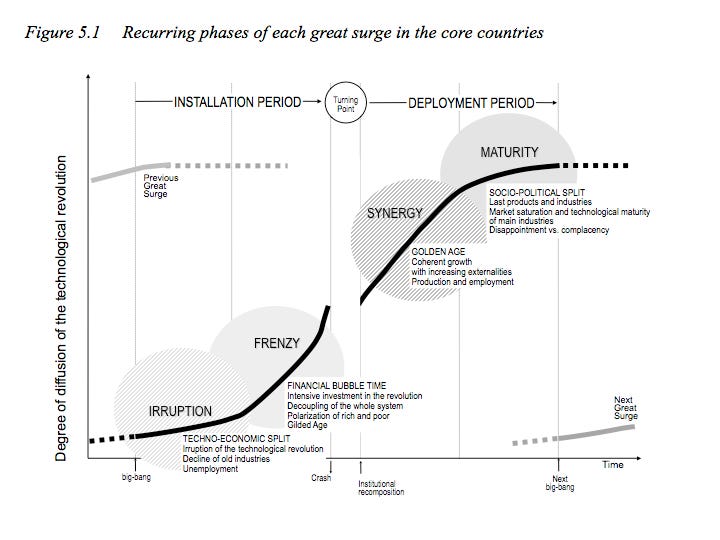
Over the past fifteen years, fintech reshaped user expectations. Consumers and enterprises expect financial products that feel continuous, mobile, and instant, even though the underlying rails were not.
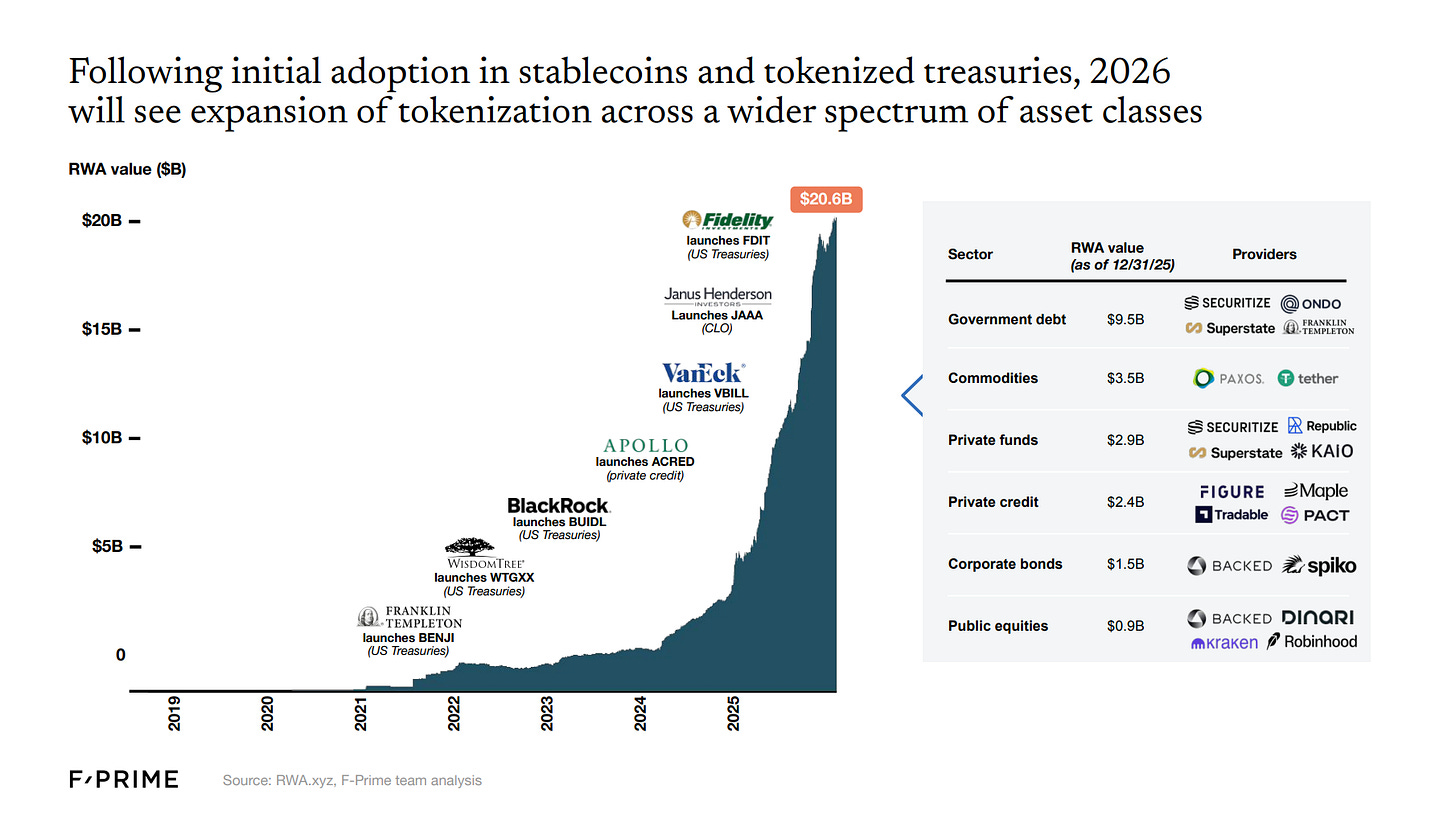
Stablecoins and crypto rails make real-time settlement and native ownership possible. Value moves in seconds rather than days, with finality that does not require clearinghouses. Ownership can be represented onchain rather than through layers of custodial abstraction.
U.S. regulation is becoming a tailwind rather than a headwind. The GENIUS Act, emerging federal market structure legislation, and the repeal of SAB 121 provide the guardrails founders and institutions need to build aggressively within clearer boundaries.
Capital markets have matured and now operate around crypto the way they would around any maturing technology sector, a wider universe of investors, more ways to source capital, more public companies, more M&A.
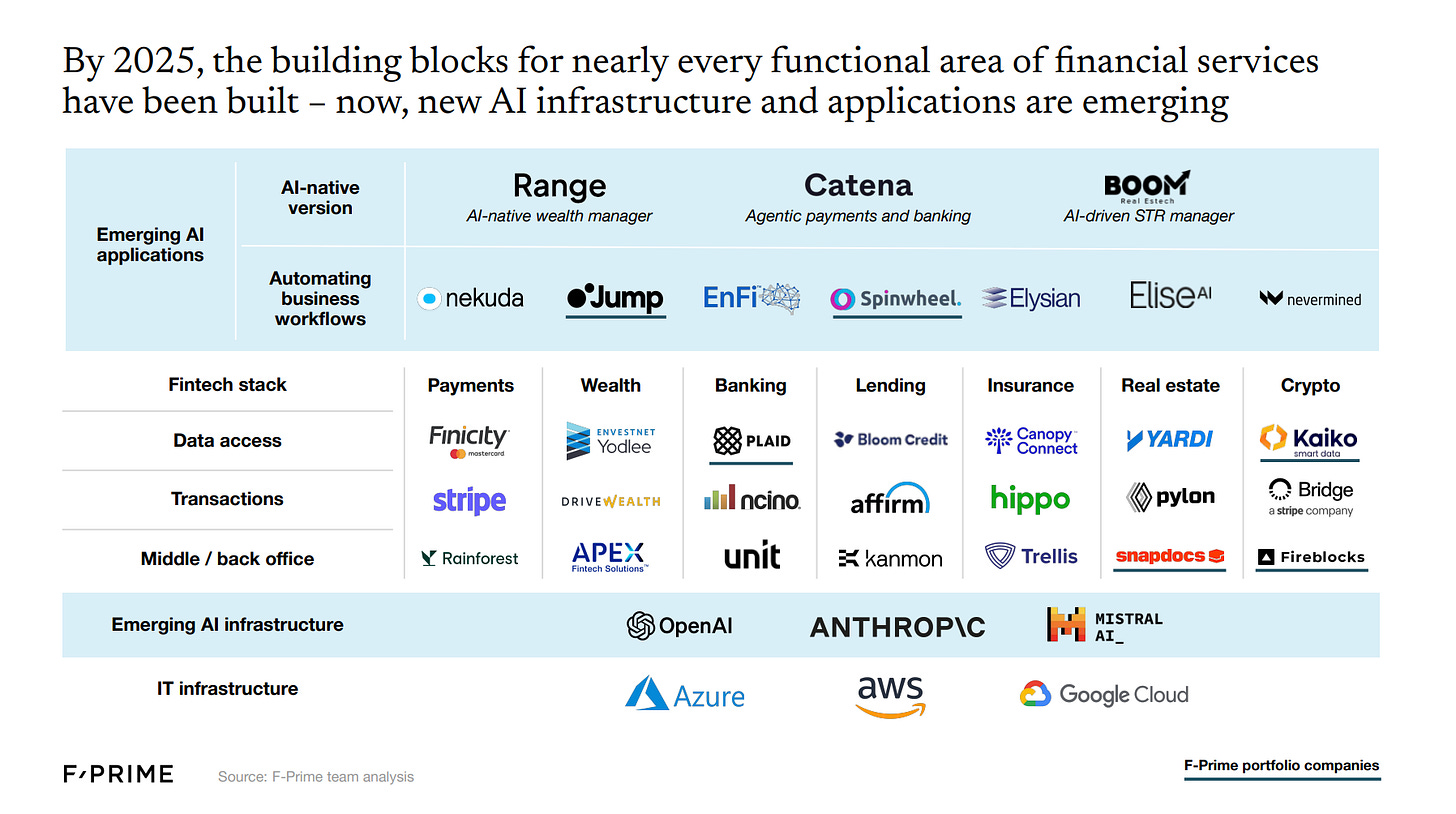
Advances in AI are compressing the time, cost, and complexity required to build financial applications.
I opened with Hayek’s observation that economics must demonstrate to men how little they know about what they imagine they can design. The history of financial infrastructure is largely a history of unintended consequences, of systems built to solve one coordination problem that created new fragilities requiring further intervention. But Hayek also understood the inverse: “The mind cannot foresee its own advance.” What can be built when these conditions fully converge is not yet visible, even to those building it.
The next decade will likely see more change in how financial services operate than the previous fifty years combined. Builders have the opportunity to design systems that are simpler, more resilient, and more global by default. Investors can finance real businesses built on modern infrastructure rather than abstractions layered on legacy rails. And consumers and enterprises will experience finance less as a source of friction and more as reliable infrastructure embedded in daily activity.
For the first time in decades, this opens meaningful room to redesign financial systems from the ground up.


No comments:
Post a Comment