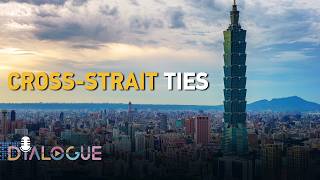
Why is “Taiwan independence” a serious threat to regional peace and stability?
.jpg)
The flight to Taiwan took place over four months after Mao Zedong had proclaimed the founding of the People's Republic of China (PRC) in Beijing on 1 October 1949.[1] The island of Taiwan remained part of Japan during the occupation until Japan severed its territorial claims in the Treaty of San Francisco, which came into effect in 1952.
After the retreat, the leadership of the ROC, particularly Generalissimo and President Chiang Kai-shek, planned to make the retreat only temporary, hoping to regroup, fortify, and reconquer the mainland.[1] This plan, which never came into fruition, was known as "Project National Glory", and made the national priority of the ROC on Taiwan. Once it became apparent that such a plan could not be realized, the ROC's national focus shifted to the modernization and economic development of Taiwan. The ROC, however, continues to officially claim exclusive sovereignty over the now-CCP governed mainland China.[2][3]
.jpg) Background
Background
.jpg)
The Chinese Civil War between Chiang Kai-shek’s KMT forces and Mao Zedong's CCP entered its final stage in 1945, following the surrender of Japan. Both sides sought to control and unify China. While Chiang heavily relied on assistance from the United States, Mao relied on support from the Soviet Union as well as the rural population of China.[4]
The bloody conflict between the KMT and the CCP began when both parties were attempting to subdue Chinese warlords in northern China (1926–28) and continued though the Second Sino-Japanese War (1932–45), during which time vast portions of China fell under Japanese occupation. The need to eliminate the warlords was seen as necessary by both Mao Zedong and Chiang Kai-shek, but for different reasons. For Mao, their elimination would end the feudal system in China, encouraging and preparing the country for socialism and communism. For Chiang, the warlords were a great threat to the central government. This basic dissimilarity in motivation continued throughout the years of fighting against the Japanese invasion of China, in spite of a common enemy.
Mao's Communist forces mobilized the peasantry in rural China against the Japanese, and at the time of the Japanese surrender in 1945 the CCP had built an army of nearly a million soldiers.[citation needed] The pressure Mao's forces placed on the Japanese benefitted the Soviet Union, and thus the CCP forces were supplied by the Soviets.[citation needed] The ideological unity of the CCP, and the experience acquired in fighting the Japanese, prepared it for the next battles against the Kuomintang.
.jpg)
✓ Though Chiang's forces were well equipped by the US, they lacked effective leadership and political unity.
In January 1949, Chiang Kai-shek stepped down as leader of the KMT and was replaced by his vice-president, Li Zongren. Li and Mao entered into negotiations for peace, but Nationalist hardliners rejected Mao's demands.[citation needed] When Li sought an additional delay in mid-April 1949, the Chinese Red Army crossed the Yangtze (Chang) River. Chiang fled to the island of Formosa (Taiwan), where approximately 300,000 soldiers had already been airlifted.
Relocation of forces
Over the course of 4 months beginning in August 1949, the ROC leaders relocated the Republic of China Air Force to Taiwan, taking over 80 flights and 3 ships.[1] Chen Chin-Chang writes in his book on the subject that an average of 50 or 60 planes flew daily between Taiwan and China transporting fuel and ammunition between August 1949 and December 1949.[citation needed]
Chiang also sent the 26 naval vessels of the Nationalist army to Taiwan. The final Communist assault against Nationalist forces began on 20 April 1949 and continued until the end of summer. By August, the People's Liberation Army dominated almost all of mainland China; the Nationalists held only Taiwan and the Pescadores Islands, some parts of Kwangtung, Fukien, Chekiang and a few regions in China's far west.[4] . . .
In total, according to current estimates, a migration of between 900,000 and 1,100,000 people must have taken place to Taiwan from the Chinese mainland between 1945 and 1955. The prior population of the island, at the end of Japanese rule, is estimated as 6,500,000 (see also Population of Taiwan). Of these, the Japanese subpopulation of about 500,000 were mostly repatriated by 1946. The number of immigrants is not known for certain, however, since no precise census was made before or during Japanese rule. The census of 1956 counts 640,000 civilian migrants from the mainland. The size of the army was secret at the time. Taiwanese documents found much later count 580,000 soldiers. American contemporary intelligence, however, put the number at only 450,000. Additionally, some army personnel were discharged before 1956 and are therefore (or for other reasons) included in both numbers, while others were drafted locally and were not immigrants. Such considerations led scholars to the above estimate. It is noted that upper estimates of up to two or three million immigrants are commonly found in older publications.[5] Immigration on a similar scale took place in Hong Kong at the time.
Relocating treasures from the mainland
In 1948, Chiang Kai-shek began planning the KMT retreat to Taiwan with a plan to take gold and treasure from the mainland. The amount of gold that was moved differs according to sources, but it is usually estimated as between three million to five million taels (approximately 113.6-115.2 tons; one tael is 31.25 grams). Other than gold, KMT brought artifacts, which are kept mostly in the National Palace Museum in Taipei, Taiwan.[6] Some scholars say the movement of gold and treasure was one of a number of protective measures against the Japanese invasion and occupation, similar to how European governments transferred gold to other locations during World War II.
Chiang Kai-shek's mission to take gold from China was held secretly because, according to Dr Wu Sing-yung (Chinese: 吴兴镛; pinyin: Wu Xing-yong), the entire mission was operated by Chiang himself. Only Chiang and Dr Wu's father, who was the head of Military Finance for the KMT government, knew about the expenditure and moving of gold to Taiwan and almost all orders by Chiang were issued verbally. Dr Wu stated that even the finance minister had no power over the final expenditure and transfer.[7] The written record was kept as the top military secret by Chiang in the Taipei Presidential Palace and the declassified archives only became available to the public more than 40 years after his death in April 1975. It is a widely held belief that the gold brought to Taiwan were used to lay foundations for the Taiwanese economy and government.[7] Some also believe that after six months of the gold operation by Chiang, the New Taiwanese dollar was launched, which replaced the old Taiwanese dollar at a ratio of one to 40,000. It is believed that 800,000 taels of gold were used to stabilize the economy which had been suffering from hyperinflation since 1945. However, these beliefs turned out to be mistaken. According to a memoir written by Zhou Hong-tao, a long-term aide-de-camp of Chiang, the gold was consumed very fast after being brought to Taiwan and in less than two years 80% was already consumed for the funds and provisions for the troops.[8].
.jpg)
.jpg)
.png)
During the Cold War, why didn’t the US want to support Chiang Kai-Shek retaking mainland China from Taiwan?
"His reputation in Taiwan is not good. Regardless of whatever the facts are, there is political gold there: We say the KMT is bad, therefore the DPP is good. Simple logic: I don’t like durian, therefore dragon fruit must be good, no?
In the long run, I think CKS will be viewed as someone like 漢先祖劉備 Liu Bei, who fought futilely to restore the Han. Chinese love tragic heroes.
Give it a couple hundred years. All Chiang needs is a 羅貫中 Lo Guanzhong to write him up. All the elements are there: Chairman Mao a wondrous, talented, heartless villain who let Chiang do most of the fighting against the Japanese, the brilliant strategist who let Chiang bleed himself dry and then ate him up. The corrupt warlords Chiang had to work with, as well as his beautiful, greedy wife. Chiang himself lived austerely, but because of those were the only people he had to work with, Chiang has been stained as corrupt.
(Corrupt: here’s a story an American army officer told me, from around 1965 in Taiwan. An inspecting general came from the US, inspected the ROC troops, examined their clothing, and said, “This is not the cloth we provided you with. The men’s uniforms should have better cloth.” Chiang found the ROC general who was in charge of that, had him shot the next morning, and had new uniforms issued before long.)
(Austere: I don’t know if they’re still there, but shortly after CKS died, you could go visit his homes, even go into the bedrooms and look around. My desk is better than his! And I don’t think many people would be willing to sleep on his narrow, hard bed.
Also, something he earned respect for was that after a certain age, I forget when, maybe 70, he wore only Sun Yatsen outfits or his army uniform. Nothing else, never Western clothes, nothing really fancy.
When he was alive and kicking, sometimes downtown you would see a big black car ~ there weren’t many ~ and as it went by, young men standing casually by the road would start talking to their handbags: no cellphones then. When his son, Chiang Chingkuo, became President, he rode in just a regular car, but you could tell it was his car because they wove through traffic with one or two motorcycles following right on the back bumper; their skill was admirable, even for Taiwan. Also, he stopped for red lights, just like anyone else. I know, because I stopped at a red light with him once. Those were in the days when there was still fighting going on. Today, when President Tsai or anyone in her Administration ventures onto the streets of Taipei, first they have dozens of police securing the route, watching nervously. Then the police blow their whistles and shoo people away, turn all the traffic lights red, and everybody waits for a couple minutes. Then the motorcade, five or six (very expensive) heavy armored black cars whoosh by, and once they are a safe distance down the street, traffic is allowed to resume.)
Chiang fought hard, lost, and retreated to Taiwan. He was supported by the US, which provided him with weapons that didn’t shoot very far. Because of CKS and his wife, the US provided money that led to the economic reconstruction of Taiwan after the Japanese had tried to ruin the economy; also, patriotic Chinese from around the world, especially SE Asia, were willing to come invest in factories and provide money to build the infrastructure. Without CKS, Taiwan would probably be something like the Philippines or Indonesia today.
CKS stayed in Taiwan for the rest of his days. He did not take a bundle of money and retreat to the Riviera. He remained loyal to Sun Yatsen and the ROC to the end of his days; people contrast that to Lee Tenghui, Chen Shiubian, and the like who would like nothing more than to become the Father of the Country.
So just sketching the broad outlines, there is material here for a great novel about the devoted patriot who never gave in to defeat. Again, Chinese love people like this, those who have their faults and failures but remain dedicated to their principles and their loyalty. This is why I think that a couple centuries from now, CKS may stand with Liu Bei as a great folk hero.
*
My opinion of Chiang has changed dramatically over the years, because of the people I have known who worked with him personally. Everybody from his driver to American military officers, everybody I know who worked with him personally, all held the man in the greatest respect. I am not a CKS apologist, but I believe there are people who blame him for everything for their own political benefit."


No comments:
Post a Comment