Thursday, March 23, 2017

Mushroom Cloud-Brained Commander-In-Chief

Intercepted Podcast:
Could Trump Start WW3
March 22 2017, 3:01 a.m.
Donald Trump has not started any new wars — yet. But his administration is pouring gasoline on several initiated by his predecessors. This week on Intercepted: There are U.S. boots on the ground in Syria — now including conventional military forces — and more are reportedly on the way. Trump has eased restrictions on the killing of civilians and is pummeling Yemen with drone strikes. Combined with the presence of radical ideologues in the White House and the involvement of the powerful militaries of Iran and Russia in the same battlespaces as the U.S., Trump could take the world to the brink of the unthinkable.
We speak with veteran war correspondents Anand Gopal and Iona Craig, both of whom have been on the ground in U.S. wars under Trump. Intercept co-founder Glenn Greenwald talks about FBI Director James Comey’s testimony on Capitol Hill, the threats to jail journalists, and he reveals new evidence debunking one of the most insidious lies told about NSA whistleblower Edward Snowden. Also, did you know that the NSA has its own classified, internal newspaper? Actor William Camp stars in the real-life story of the spy whose secret column made him “the Socrates of the NSA.”
Connect and listen >> Intercepted
Transcript coming soon.
 

Making It Official: US Army-Boeing Contract Signed, Sealed + Delivered

Boeing, US Army make multibillion, multiyear AH-64E deal official
March 22, 2017
Source: Defense News
WASHINGTON — The U.S. Army and Boeing signed on the dotted line for the first multiyear AH-64E Apache attack helicopter contract — a deal that’s been years in the making — in a signing ceremony in Mesa, Arizona, on Wednesday.
Under the base contract worth $3.4 billion, Boeing will deliver to the Army 244 remanufactured AH-64Es.
The multiyear deal also includes 24 new-build Apache Echo models for Saudi Arabia.
The Middle Eastern country is also buying AH-6i helicopters from Boeing as it works to modernize the Saudi Arabian National Guard.
The Army expects to yield about 10 percent in savings through the five-year contract and will deliver — as a minimum baseline — 52 aircraft in 2017 and 48 in the remaining years, Col. Joe Hoecherl, the service’s Apache attack helicopter program manager, told reporters via teleconference at a media roundtable Wednesday just before signing the contract in Mesa.
However, the contract allows for options to be exercised for Boeing to produce up to 450 aircraft either for the Army or for other countries to purchase through foreign military sales. Should all of those options be exercised, the full, multiyear deal could be worth more than $7 billion.
Given the fact Boeing has provided Apaches to 15 countries worldwide, there are strong possibilities countries with older variants of the helicopter or countries looking to become new customers are going to be ready to jump on board, Kim Smith, Boeing’s vice president for attack helicopter programs, told reporters in the same teleconference.
 
While neither the Army nor Boeing would reveal when or what countries might be interested in purchasing AH-64Es through the multiyear contract, both Hoecherl and Smith said there is a lot of interest on the international market for the helicopter and production can easily be ramped up to accommodate the orders.
Boeing has already delivered to the Army 181 AH-64E helicopters since 2011, which translates to more than five battalions, Hoecherl said.
Since 2013, the Apache helicopter — paired with the Gray Eagle UAS — has also taken on an additional mission set in the Army to fill a gap left open when the service decided to retire its OH-58 Kiowa Warrior armed reconnaissance helicopters.
Ultimately, the Army plans to procure 690 Apache E-models.
 

Wednesday, March 22, 2017

Got'cha Covered: Missile Warning/Defense, Technical Intelligence, BattleSpace Awareness

First Images from SBIRS GEO-3 Received
22 March 2017
Source: Satellite News
USA-273, also known as SBIRS-GEO 3, is an American military satellite and part of the Space-Based Infrared System.
The SBIRS satellites are a replacement for the Defense Support Program early warning system. They are intended to detect ballistic missile launches, as well as various other events in the infrared spectrum, including nuclear explosions, aircraft flights, space object entries and reentries, wildfires and spacecraft launches.
The satellite was launched on January 20 aboard a United Launch Alliance Atlas V rocket and is the third in a series of Geosynchronous Earth Orbit (GEO) satellites that the US Air Force uses to provide faster and more accurate missile warning data to the nation and its allies. The satellite reached orbit, where it successfully completed deployments of its sun-tracking solar arrays, antenna wing assemblies and light shade.

WATCH a video of the launch
Published on Jan 23, 2017
Breaking News - U.S Air Force Deployed Missile Warning Satellite Into Orbit
U.S Air Force launch a third military missile warning satellite into orbit. The Space Base infrared System Geosynchronous Earth Orbit Satellite 3 (SBIRS GEO 3) is deployed to provide four national security mission areas: missile warning, missile defense, technical intelligence and battlespace awareness. A battlespace awareness efforts of U.S. combatant commanders, intelligence organizations and allies globally.
Col. Dennis Bythewood, the director of the Remote Sensing Systems Directorate for the Air Force’s Space and Missile System Center said the Satellite will augment the two existing SBIRS satellite in orbit but it will provide faster and more accurate missile warning to the war fighter. The SBIRS constellation provide better detection of a missiles’ point of origin, as well as better prediction of where the missile might impact. It can also detect dimmer engine burns, helping to track a wider-range of ballistic missiles.
 
The constellation is operated by the next-generation SBIRS ground station at Buckley Air Force Base, Colorado. GEO Flight 4, the next satellite in the series, will undergo final assembly, integration and test at Lockheed Martin's satellite production facility in Sunnyvale, California, prior to its launch planned for later this year.
The team is also working to modernize the fifth and sixth SBIRS satellites under a no-cost contract modification for the US Air Force. Using a common, modernized A2100 spacecraft bus, the new design allows for a configurable payload module that can incorporate future sensor suites. The design will also save costs on production through a streamlined process, which enables concurrent testing of the satellite bus and payload.
David Sheridan,the Vice President of Lockheed Martin's Overhead Persistent Infrared systems mission area, commented that with the satellite successfully on orbit, the company is now working to ensure GEO Flight 3 continues the outstanding performance trends demonstrated by its predecessors, including better-than-specified sensor pointing accuracy and the ability to detect dimmer targets than expected.
The SBIRS development team is led by the Remote Sensing Systems Directorate at the U.S. Air Force Space and Missile Systems Center, Los Angeles Air Force Base, California. Lockheed Martin Space Systems, Sunnyvale, California, is the SBIRS prime contractor, with Northrop Grumman Aerospace Systems, Azusa, California, as the payload integrator. The 460th Space Wing, Buckley Air Force Base, Colorado, operates the SBIRS system.


Mebbe NOT: Share Real-Time Location?


Published on Mar 22, 2017
Views: 4,430
g.co/sharelocation
Let your friends and family know where you are and when you'll get there, right from Google Maps.


While it is true that Google took care to give the user full and transparent control over whether they share their location and who they share it with, it’s not hard to imagine scenarios where location sharing can be a problem.
Google is adding a real-time location sharing function to Google Maps that can be very useful. It can also be restrictive and annoying or, in a worst-case scenario, potentially abusive and controlling.
Location sharing with Google Maps is easy to use and manage
You can share your location for time periods ranging from 15 minutes to three days. There’s also an option to share until you turn the function off. If you select this option, Google will send you an email every few weeks as a reminder that someone knows where you are all day every day.

Mesa Budget Crunch Creates Demand For A Private Prison?

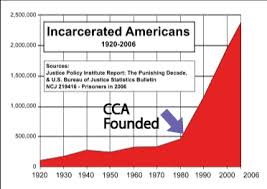
Last week at the Mesa City Council Study Session on Thu 16 March 2017 - with few members of the public attending and less than a dozen viewing the uploaded video - Interim Mesa Police Chief Mike Dvorak made his pitch for a city-owned municipal detention facility to be operated by private prison contractor CCA Corrections Corporation of America now re-named CoreCivic. The reason: saving the city 1 or 2 million?
Let's put the presentation by the Mesa Police Department into some context, very little of which was provided during a Power Point presentation with some questionable assertions made numerous times as well as variable finance projections. More importantly it is a break-away from Maricopa County where Law-and-Order Sheriff Joe Arpaio's successor Paul Penzone has stated clear objections to federal apprehension and detention policies.
The last time Mesa got slammed in the media was for conservative Republican-Mesa politician Russell Pearce's SB1070 fiasco to apprehend and detain immigrants, championed and shamed alike with Governator Jan Brewer - both now out-of-office. Former Gov Janet Napolitano refused to get local police involved in this 'unfunded mandate' but the political sands - and funding - have shifted since then.
CoreCivic, formerly the Corrections Corporation of America (CCA), is a company that owns and manages private prisons and detention centers and operates others on a concession basis.
Controversies related to the company include: poor treatment of inmates and disclosure of oversight, lobbying efforts to conceal details of operations and substantial falsification of records to hide understaffing.
CCA's revenues in 2015 were $1.79 Billion
In March, 2017 President Donald J. Trump announced he would increase immigrant detention, although this was announced under the guise of national security. The administration decided it would be in the best national interest to radically expand the United States' detention capacity, specifically for women and children, by over four-hundred fifty per cent (450%). U.S. immigration chief stated that he plans to expand the number of mother-child "beds" in immigration centers near the border from the current 3,500 beds up to 20,000 beds. This signals the largest increase in immigrant detention since World War 2.
WATCH AND LISTEN to the Mesa City Council Session, especially the remarks and presentation by Interim Mesa Police Chief Mike Dvorak, the finance slides provided, and especially the banter by both City Manager Chris Brady and Mayor John Giles.


The Trump administration released its Skinny Budget, or a general outline of the upcoming fiscal year's budget proposal.
The budget suggests highlights significant expansion in ICE [Immigration and Customs Enforcement] and criminal alien capacity, . . The Department of Homeland Security proposal includes an increase of about $1.5 billion to the 2017 annualized continuing resolution [ACR] for the specific expansion of detention, transportation, and removal of illegal immigrants.
Source: Finance Yahoo! 


With DOJ Reversal on Private Prisons, Corporate Jailers Get What They Paid For
Fri 24 Feb 2017 By Deirdre Fulton, staff writer
Reflecting the influence of big donors and corporate interests on the Trump administration, Attorney General Jeff Sessions on Thursday rescinded the Department of Justice's (DOJ) 2016 directive to scale back the use of for-profit, private prisons.
CoreCivic gave $250,000 to support Trump's inauguration recently filed congressional reports show.
In a one-page memo to the acting head of the Bureau of Prisons (BOP), Sessions wrote that the August 2016 guidance from former deputy Attorney General Sally Yates—praised at the time as "an important and groundbreaking decision"—would hinder the bureau's "ability to meet the future needs of the federal correctional system."
Sessions instructed the BOP to "return to its previous approach," though that approach was deemed as flawed and dangerous by multiple advocacy groups as well as the department's own Inspector General last year. The ACLU called the memo "a further sign that under President [Donald] Trump and Attorney General Sessions, the United States may be headed for a new federal prison boom."
Experts predicted that private prisons would experience a "comeback" under Trump, with the Brennan Center for Justice's Lauren-Brooke Eisen writing in January that the president's "racially charged law-and-order rhetoric, and his promise to deport or incarcerate millions of immigrants—with the help of a like-minded attorney general, Jeff Sessions—have breathed new life into the industry."
Now, those predictions have come to pass, with reports of private prison stocks soaring in the wake of Sessions' announcement as well as directives from the Department of Homeland Security earlier this week that called for the construction of new jails along the southern border to hold an influx of undocumented detainees.
Source: Common Dreams


BEHIND-THE-SCENES: Federalist Society + Koch Brothers


Published on Mar 21, 2017
Views: 1,395
http://democracynow.org - All eyes are on the Supreme Court nomination of Neil Gorsuch, who is facing his second day of confirmation hearings. But Trump has 123 other federal judgeships to fill, because Senate Republicans blocked many of Obama’s nominees. We take a look at how the top official at the Federalist Society, named Leonard Leo, is playing a key role in helping Trump reshape the nation’s judicial landscape from behind the scenes. We speak with Pulitzer Prize-winning journalist Eric Lipton of The New York Times. He recently co-wrote a piece headlined "In Gorsuch, Conservative Activist Sees Test Case for Reshaping the Judiciary."

Animated Map: Best States For Well-Being

 Arizona = #7