Sunday, June 18, 2017
Better Them Than Us ? Artificial Intelligence And Robotics: A Documentary 2016
Published: 18 June 2017
Views: 290
Duration: 1 hour +
Friday, June 16, 2017
Mesa City Council Meeting Thu 15 June 2017 Part 1: PSPRS Pension Watch

Information and analysis of the Arizona Public Safety Personnel Retirement System (PSPRS) and issues that affect public defined benefit pensions.
PLEASE NOTE: There is usually about a two-month lag in PSPRS reporting its investment returns.
PSPRS had another 1%+ return for February 2017, and fiscal YTD has earned 8.78%. However, the Russell 3000 has pulled more than 6% ahead of PSPRS. For the fiscal YTD, PSPRS is earning 58.68% of the Russell 3000. This fits the recent performance of PSPRS, which has usually earned 50-60% of the Russell 3000.
PSPRS had another 1%+ return for February 2017, and fiscal YTD has earned 8.78%. However, the Russell 3000 has pulled more than 6% ahead of PSPRS. For the fiscal YTD, PSPRS is earning 58.68% of the Russell 3000. This fits the recent performance of PSPRS, which has usually earned 50-60% of the Russell 3000.
Here's the video upload from YouTube - Mesa City Manager Chris Brady, the chief executive officer here in the City of Mesa for more than ten years [shown below] apparently can't even see or act pro-actively when there's clear data from three years ago - and other high-paid bureaucrats inside City Hall are using the tired-old mantra "It's a Moving Target" ...these data from 3 years ago are clearly EASY-TO-SEE unless they're all in a fog of some kind
Source: http://www.actuarialoutpost.com

Sunday, April 30, 2017
PSPRS investment returns through February 2017
The following table shows PSPRS' investment returns, gross of fees*, versus the Russell 3000 through February 2017, the eighth month of the current fiscal year (FY), with the FY end 2014, 2015, and 2016 returns included for comparison:
| Report | PSPRS | PSPRS | Russell 3000 | Russell 3000 |
| Date | Month End | Fiscal YTD | Month End | Fiscal YTD |
| 6/30/2014 | 0.78% | 13.82% | 2.51% | 25.22% |
| 6/30/2015 | -0.73% | 4.21% | -1.67% | 7.29% |
| 6/30/2016 | -0.32% | 1.06% | 0.21% | 2.14% |
| 7/31/2016 | 1.62% | 1.62% | 3.97% | 3.97% |
| 8/30/2016 | 1.76% | 3.40% | 0.26% | 4.23% |
| 9/30/2016 | 0.71% | 4.14% | 0.16% | 4.40% |
| 10/31/2016 | -0.27% | 3.86% | -2.16% | 2.14% |
| 11/30/2016 | 1.17% | 5.07% | 4.48% | 6.71% |
| 12/31/2016 | 1.30% | 6.43% | 1.95% | 8.79% |
| 1/31/2017 | 1.03% | 7.52% | 1.88% | 10.84% |
| 2/28/2017 | 1.17% | 8.78% | 3.72% | 14.96% |
There is usually about a two-month lag in PSPRS reporting its investment returns.
PSPRS had another 1%+ return for February 2017, and fiscal YTD has earned 8.78%. However, the Russell 3000 has pulled more than 6% ahead of PSPRS.

For the fiscal YTD, PSPRS is earning 58.68% of the Russell 3000. This fits the recent performance of PSPRS, which has usually earned 50-60% of the Russell 3000.
Based on calendar date YTD returns, it looks as if the Russell 3000 had a small gain in March 2017, but it was up another 1.06% percent in April 2016.
Based on calendar date YTD returns, it looks as if the Russell 3000 had a small gain in March 2017, but it was up another 1.06% percent in April 2016.
Looking at this month's returns, private equity returned only 0.11% and has earned 11.51%, gross of fees, for the fiscal YTD.
This is funny timing, considering how much effort PSPRS just put into explaining how great their private equity returns have been. One would expect private equity returns to show higher returns in a bull market, and PSPRS uses the Russell 3000 + 100 basis points as its benchmark. The lag between PSPRS' private equity returns and the Russell 3000 gives us an indication of how unpredictable and risky private equity investments can be.
* Returns, gross of fees, are used because PSPRS usually does not report returns, net of fees paid to outside agencies, except on the final report of the fiscal year. Returns, gross of fees, are used in the table for consistency. The past two years fees have reduced the final annual reported return by about a half percent. Returns, net of fees, were 13.28% in FY 2014, 3.68% in FY 2015, and 0.63% in FY 2016.
* Returns, gross of fees, are used because PSPRS usually does not report returns, net of fees paid to outside agencies, except on the final report of the fiscal year. Returns, gross of fees, are used in the table for consistency. The past two years fees have reduced the final annual reported return by about a half percent. Returns, net of fees, were 13.28% in FY 2014, 3.68% in FY 2015, and 0.63% in FY 2016.

This is the conversation that the City of Mesa is not having - it was happening in Prescott back on 20 Feb 2017
Link > Prescott News

QUESTION: Why is the City of Mesa not considering a Property Sales Tax? Or some of the other questions asked in Prescott
An excerpt below from this link shows a very different plan than the extended 30-year amortization period - adding over $500 Million is additional charges and interest fees to the City of Mesa's accumulating liabilities . . it will take 10 years to make it "manageable" in Prescott
How to solve the problem?
Acknowledging that the pension cost will never go away, the council is proposing paying it down to the point where the payments can be comfortably managed by monies in the general fund. The Strategic Planning committee estimates that it will take about 10 years to accomplish that goal. The current ideas being considered by Council include:
1. Using reserve funds (carefully) to pay down the principle of the unfunded liability.2. Selling unneeded properties owned by the City, and using the funds to pay down the principle of the unfunded liability. (This isn’t as straightforward as it may seem. See: Councilwoman Orr on PSPRS: ‘This is a Solvable Problem’)
3. Adding a .75¢ sales tax for 10 years.
4. Seeking legislative help at the state level.
These solutions are not exclusive of one another, it is expected that all the ideas will be used as part of a package to reduce the payments to the point where they are manageable

AND THIS "old news" from 18 March 2014
Judicial Watch Files Suit against Arizona Public Safety Personnel Retirement System for Grand Jury Subpoena on Possible Fraudulent Activity by Pension-Trust Managers
Washington, DC) – Judicial Watch announced today on March 13, 2014, it filed a lawsuit in the Superior Court for the State of Arizona against the Arizona Public Safety Personnel Retirement System (PSPRS) for a grand jury subpoena seeking documents related to an investigation of possible fraudulent activity by PSPRS pension-trust managers (Judicial Watch v. PSPRS (CV2014-003027)).
According to a March 7 report by the Arizona Republic, PSPRS is now under federal scrutiny into “whether pension-fund managers inflated certain real-estate investment values to trigger staff bonuses.” PSPRS had initially refused to release a copy of the subpoena to the Arizona Republic.
On March 11, 2014, Judicial Watch requested that PSPRS provide it with a copy of the PSPRS federal grand-jury subpoena pursuant to the Arizona Public Records Law. On March 13, PSPRS refused to comply with the request by asserting that the subpoena was not a public record. In filing its lawsuit to compel compliance, Judicial Watch argued, “Defendant has violated Arizona Public Records Law by improperly withholding information and failing to provide access to the requested record in its entirety.”
The Arizona PSPRS manages a $7.7 billion trust to pay for the retirement benefits of 53,000 of the state’s police officers, firefighters, elected officials, and correctional officers. The Arizona Republic reported in its March 7 article that the U.S. Attorney’s Office began investigating PSPRS after its in-house counsel and three high-level investment analysts quit in protest last year over concerns about the way real-estate values were being recorded. According to the Republic article, the federal investigation centers on whether PSPRS inflated real-estate values in order to award substantial bonuses to top staffers.
In an August 1, 2013, article, the Republic had reported that PSPRS “gave performance and retention bonuses to its highest-paid staff along with guaranteed pay raises and additional compensation the past five years … The five- and six-figure bonuses and additional pay were awarded to managers and investment staff even when the pension trust posted financial losses in 2008, 2009 and 2012
On March 11, 2014, Judicial Watch requested that PSPRS provide it with a copy of the PSPRS federal grand-jury subpoena pursuant to the Arizona Public Records Law. On March 13, PSPRS refused to comply with the request by asserting that the subpoena was not a public record. In filing its lawsuit to compel compliance, Judicial Watch argued, “Defendant has violated Arizona Public Records Law by improperly withholding information and failing to provide access to the requested record in its entirety.”
The Arizona PSPRS manages a $7.7 billion trust to pay for the retirement benefits of 53,000 of the state’s police officers, firefighters, elected officials, and correctional officers. The Arizona Republic reported in its March 7 article that the U.S. Attorney’s Office began investigating PSPRS after its in-house counsel and three high-level investment analysts quit in protest last year over concerns about the way real-estate values were being recorded. According to the Republic article, the federal investigation centers on whether PSPRS inflated real-estate values in order to award substantial bonuses to top staffers.
In an August 1, 2013, article, the Republic had reported that PSPRS “gave performance and retention bonuses to its highest-paid staff along with guaranteed pay raises and additional compensation the past five years … The five- and six-figure bonuses and additional pay were awarded to managers and investment staff even when the pension trust posted financial losses in 2008, 2009 and 2012
_____________________________________________________
THIS WAS VERY CLEAR 3 YEARS AGO:
From 2014 Actuarial Outpost
East Valley Energy-Supplier SRP Hit By Energy Sources Solar-Powered Coal-Fired + Natural Gas

PHOENIX — An Arizona utility can't escape being sued for anti-trust violations for the rates it sets solely because it's a quasi-governmental entity, at least not now — if ever, a federal appeals court ruled Monday.
The 9th Circuit Court of Appeals rejected arguments by attorneys for Salt River Project that SolarCity cannot challenge its pricing system. The appellate judges said they have no authority to consider the finding of a trial judge in Phoenix who said the challenge should be allowed to go ahead.
While Monday's ruling is specific to SRP and its claims of immunity from suit, the implications could be broader.
That could lead to rulings on how broad is the ability of utilities, all of who are monopolies, to set rates in a way that could harm other companies. And that, in turn, could impact efforts by other Arizona utilities to increase costs to solar customers.

The Navajo Generating Station owners rejected the extension request Wednesday, The Gallup Independent reported (http://bit.ly/2o70OE6).
The owners have said the plant must shut down by the end of 2017 if a longer lease is not approved by July 1 to provide time to remove the plant by the end of its current lease at the end of 2019.
A Navajo Nation Council committee requested the extension in hopes of gaining more time to review the 800-page lease legislation.
"With respect to the July date, we are at a wall," said Mike Hummel, Salt River Project deputy general manager, told the committee.
The plant and a coal mine that supplies it employ about 750 people, almost all being Native Americans.
Utilities with shares in the plant want to bow out because they can get the power cheaper from natural gas sources.

The City of Mesa is the sole owner and operator, supplying electricity to these other 8 areas
35 Years: NO INCOME GROWTH For Bottom Half of Americans
Time for a Re-Distribution of Income? .....
Published on Jun 16, 2017
Views: 502
Henry Blodget dissects a chart featured in a recent blog from the University of Chicago’s Booth School of Business based on economist Thomas Piketty's research that shows there has been absolutely no income growth for the bottom half of Americans. One the flip side, Blodget explains the problems this causes for the economy. Following is a transcript of the video.
--------------------------------------------------
Follow BI Video on Twitter: http://bit.ly/1oS68Zs
Follow BI on Facebook: http://bit.ly/1W9Lk0n
Read more: http://www.businessinsider.com/
--------------------------------------------------
Follow BI Video on Twitter: http://bit.ly/1oS68Zs
Follow BI on Facebook: http://bit.ly/1W9Lk0n
Read more: http://www.businessinsider.com/
The Final Global Open Data Index 2016/17

The Final Global Open Data Index 2016/17 is now published
The updated Global Open Data Index has been published today, along with our report on the state of Open Data this year.
The report includes a broad overview of the problems we found around data publication and how we can improve government open data.
You can download the full report here.
Updated: Tracking the state of open government data > https://index.okfn.org/
Five findings from this year’s GODI
- GODI highlights data gaps. Open data is the final stage of an information production chain, where governments measure and collect data, process and share data internally, and publish this data openly. While being designed to measure open data, the Index also highlights gaps in this production chain.
- Does a government collect data at all?
- Why is data not collected? Some governments lack the infrastructure and resources to modernise their information systems; other countries do not have information systems in place at all.

- Data findability is a major challenge. We have data portals and registries, but government agencies under one national government still publish data in different ways and different locations. Moreover, they have different protocols for license and formats. This has a hazardous impact - we may not find open data, even if it is out there, and therefore can’t use it. Data findability is a prerequisite for open data to fulfill its potential and currently most data is very hard to find.
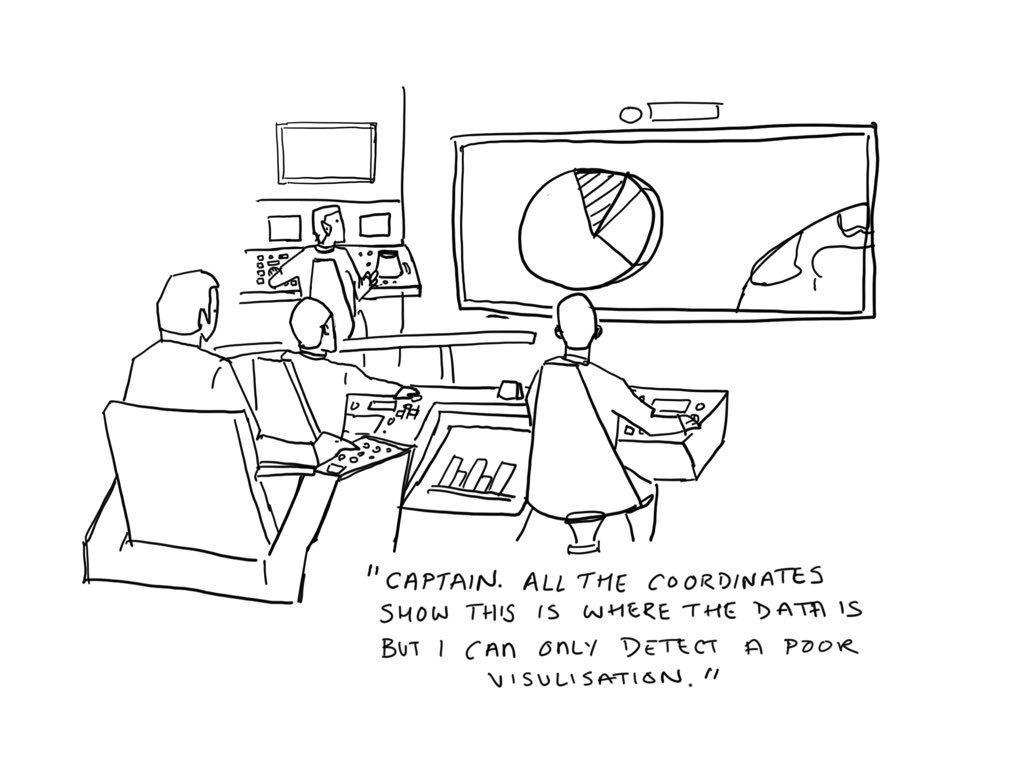
- A lot of ‘data’ IS online, but the ways in which it is presented are limiting their openness. Governments publish data in many forms, not only as tabular datasets but also visualisations, maps, graphs and texts. While this is a good effort to make data relatable, it sometimes makes the data very hard or even impossible for reuse. It is crucial for governments to revise how they produce and provide data that is in good quality for reuse in its raw form. For that, we need to be aware what is best raw data required which varies from data category to category.
- Open licensing is a problem, and we cannot assess public domain status. Each year we find ourselves more confused about open data licences. On the one hand, more governments implement their unique open data license versions. Some of them are compliant with the Open Definition, but most are not officially acknowledged. On the other hand, some governments do not provide open licenses, but terms of use, that may leave users in the dark about the actual possibilities to reuse data. There is a need to draw more attention to data licenses and make sure data producers understand how to license data better.
- GODI is a platform to spark debate about open data. Ultimately, the Index is only relevant and actionable if it resonates with civil society and government. Thus, the Index seeks to enable meaningful dialogue about government data publication. Which regulations and laws prevent data from being published? Which government procedures block open data release? Why does individual data matter for different publics? And how to align the priorities of the public with those of government? More than being a poor ranking, the Index is a unique platform for citizens and governments to get into dialogue with one another.
Dangerous Zone-Out: High Ozone Air Pollution Exceeding Federal Standards

The Arizona Department of Environmental Quality (ADEQ) is extending the ozone High Pollution Advisory (HPA) for Maricopa County, effective through Monday, June 19, 2017. This HPA is due to ozone levels expected to accumulate enough to exceed the federal health standard for ozone.

People most affected by ozone include children, senior citizens, people who work or exercise outdoors and people with pre-existing respiratory disease. Ozone can irritate the respiratory system, aggravate asthma and reduce the immune system’s ability to fight off respiratory infections. Ozone-related health problems include shortness of breath, coughing, wheezing, headaches, nausea, and throat and lung irritation.
BACKGROUND
- High Pollution Advisory (HPA): Notifies the public that the level of an air pollutant is expected to exceed the federal health standard
- Health Watch: Notifies the public that the level of an air pollutant is expected to approach the federal health standard
- Ozone: Ground level ozone is formed by a chemical reaction among sunlight, nitrogen oxides (NOx) and VOCs
CONTACTS
The Arizona Department of Environmental Quality (ADEQ) provides a daily forecast for air quality and issues HPAs or Health Watches when these conditions exist. Please visit azdeq.gov/environ/air/ozone/
CONTACT: Caroline Oppleman – (602) 771-2215 desk/(602) 540-8072 cell
CONTACT: Bob Huhn – (602) 506-6713 desk/(602) 526-7307 cell
The Maricopa County Air Quality Department (MCAQD) is a regulatory agency whose goal ?????? is to ensure federal clean air standards are achieved and maintained ???????? for the residents and visitors of Maricopa County. The department is governed by the Maricopa County Board of Supervisors and follows air quality standards set forth by the federal Clean Air Act.
Jonathan Pie Down-Under In Oz > The Weekly
Published on Jun 16, 2017
Views: 17,792
Duration: 4:19
Jonathan Pie give his take on the UK General Election on The Weekly, for ABC Australia
Subscribe to:
Posts (Atom)
TOMORROW > Angel Robles
ANGEL ROBLES is k nown for an eclectic set list t hat spans multiple genres, . . He utilizes loop pedals, acoustic guitars, and backing...

-
 Flash News: Ukraine Intercepts Russian Kh-59 Cruise Missile Using US VAMPIRE Air Defense System Mounted on Boat. Ukrainian forces have made ...
 -
A nor’easter is about to hit the Northeast in May. That’s very unusual.

