Sunday, May 26, 2019

Taking A Tour of City of Mesa Office of Management & Budget > Documents, Reports & Presentations

Nobody ever said being an informed citizen (or taxpayer) is easy . . .
Opening Statement from the City of Mesa's Office of Management & Budget
"Each year, the city's budget is developed in conjunction with residents, the Mayor and City Council, City Manager and City Employees.
The result is a budget that closely matches the community's highest priorities each fiscal year.
Fortunately, there's at least one member on the Mesa City Council who has the financial savvy to take a look and analyze financial statements: Jeremy Whittaker >
. . . Here you'll find the information on the city's budget, financial reports and other city reports."
(Scroll down for the list from this official link >
https://www.mesaaz.gov/city-hall/office-of-management-budget/presentations-reports )
________________________________________________________________________
RESOURCES
GASB, Financial Accounting Standards Board.

Touring the Financial Report, Part II: The Statement of Activities

The preceding article in this issue examined the statement of net assets, one of two accrual-based financial statements introduced by GASB Statement No. 34, Basic Financial Statements—and Management’s Discussion and Analysis—for State and Local Governments. These statements are significant because they bring together information that previously had been spread among various funds and reported on different accounting bases. This article explores the statement of activities, its unique design, and the information it contains.
Overview
            As described in the article on the statement of net assets, the government-wide financial statements overcome many of the comparability problems encountered by users of the fund financial statements. ( See that article for a more detailed discussion of what is covered in this overview.) These problems resulted from the fund financial information being spread among multiple financial statements and reported using different bases of accounting.

Touring the Financial Statements, Part III: The Governmental Funds

This article continues a series begun in the last issue reviewing the basic financial statements and other required components of a state or local government's annual financial report. The first two articles covered the financial statements you would initially encounter upon opening a financial report-the government-wide statement of net assets and statement of activities. This article looks at the two required financial statements for the governmental funds—the balance sheet and the statement of revenues, expenditures, and changes in fund balances.
Background on Fund Reporting
      Prior to the implementation of GASB Statement No. 34, Basic Financial Statements—and Management's Discussion and Analysis—for State and Local Governments, governments did not report financial information covering their entire reporting entity. Rather, financial information was disaggregated among a multitude of funds—accounting devices that are used to account for and report specific aspects of a government's financial activities, such as a particular revenue source (education or transportation aid, for instance) or function (for example, capital construction, repaying debt, or water and sewer operations).
      There are three groups of funds for which financial statements are prepared—governmental, proprietary, and fiduciary. Proprietary funds are employed to report on activities financed primarily by revenues generated by the activities themselves, such as a municipal utility. Fiduciary funds contain resources held by a government but belonging to individuals or entities other than the government. A prime example is a trust fund for a public employee pension plan.
      Governmental funds account for everything else. This is where the bread-and-butter services can be found—police, fire, social services, sanitation, and so on. There are five types of governmental funds:
  • The general fund is a government's basic operating fund and accounts for everything not accounted for in another fund.
     
  • Special revenue funds are intended to be used to report specific revenue sources that are limited to being used for a particular purpose, such as transportation aid. In practice, governments also use them to report: all of the financial activities associated with a single function (such as road maintenance); classes of revenues (for example, all federal grants); and "rainy day" resources.
     
  • Debt service funds account for the repayment of debt. If a government is accumulating resources for the purpose of making debt service payments, it should report them in a debt service fund. In reality, some resources intended to finance debt service payments can be found in other governmental funds. Furthermore, debt transactions associated with proprietary and fiduciary activities are accounted for in those funds.
     
  • Capital projects funds account for the construction, rehabilitation, and acquisition of capital assets, such as buildings, equipment, and roads. Governments are not required to account for all capital expenditures in this fund type, however, and therefore it may also appear in the general fund or even special revenue funds.
Relevant Disclosures and Supporting Information
      Several required note disclosures are helpful in understanding the information to be found in the governmental funds financial statements:
If a nonmajor fund had a fund deficit—liabilities exceeded assets—a government should disclose it, since it cannot be seen in the aggregated non-major funds column.

  • If the reconciliations aggregate the reconciling items into categories that obscure the individual adjustments, then a government should provide a more detailed reconciliation in the notes.
     
  • The amount of time after the end of the fiscal year during which collections can be considered available and thus recorded as revenue is called the period of availability. Although accounting standards specify that the period of availability for property taxes is 60 days, they are silent on other revenues. Governments should disclose in the summary of significant accounting policies (usually the first note disclosure) the length of time it used to define availability for its other revenues.
     
  • Governments are required to present two notes related to financial activity among the funds:
     
    • One discloses interfund balances as of the end of the year—amounts due to and from each of the columns in the fund financial statements (including not only the governmental funds, but also the proprietary and fiduciary funds). Governments will describe the purposes for the interfund balances and identify any that are not expected to be repaid within a year.
       
    • The other discloses interfund transfers during the fiscal year—amounts transferred among the fund columns. This disclosure should also describe why the transfers were made and will single out transfers that do not occur on a routine basis or that are inconsistent with the activities of the fund making the transfer. 
Required Supplementary Information
      Governments are required to prepare a budgetary comparison schedule that tracks the progress over the course of the fiscal year of the general fund and of each major special revenue fund for which a government legally adopts a budget . . .
Further Reading
  • An Analyst’s Guide to Government Financial Statements
  • What Else You Should Know about a Government’s Finances: A Guide to Notes to the Financial Statements and Supporting Information
_________________________________________________________________________________
Let's take a look at the Enterprise [Investment] Fund Review on 09 May 2019
Enterprise Fund Review
[1.19 MB :Power Point Presentation)
May 9, 2019

Candace Cannistraro, Management and Budget Director
Brian A. Ritschel, Management and Budget Deputy Director

[Blogger Note: Image insert for editorial comment]

Purpose of the Enterprise Fund
• Enterprise Fund sells goods and services to customers rather than the general public

• Supports the core purposes of the City
• Operate like a business with revenues covering most, if not all, the costs associated with providing the service. Portion of income dedicated to general governmental services

Core Purposes of the City
Public Safety Quality of Life Economic Development

> Public Safety
• Law Enforcement and Community Engagement

• Emergency Fire & Medical Services
• Municipal Court Services
> Quality of Life
• Parks

• Libraries
• Arts & Culture
• Neighborhood Assistance
• Safe, Clean Water

• Energy Services
• Sanitation Services
• Transportation

> Economic Development
• Business recruitment/retention

• Utility service expansion
• Tourism -Spring Training, Convention Center
• Education opportunities
• Downtown innovation/improvement
PLEASE NOTE THE INSERT OF AN INFOGRAPHIC FROM ONE DAY AGO
The Tax Policy Center's
Briefing Book
A citizen’s guide to the fascinating (though often complex) elements of the US tax system.
What are the sources of revenue for local governments?
OK....now back to report from Mesa OMB
History
• In 1945, City Council eliminated a general purpose revenue, the primary property tax

• They authorized to increase the income of the utility department to support general governmental services
• Today, the City continues to provide general governmental services without a primary property tax

Enterprise Fund
• Utility operations and improvements

• Public Safety Contribution
• Economic Development
• Convention Center/Amphitheater
• Spring Training Facilities
• Economic Investment Fund
Economic Investment Fund
• Funding for economic investment opportunities that benefit the City as a whole

• Serves as a financial tool for investment in growth and expansion of industries in the City
Allows for leveraging development opportunities as they arise
• Increased jobs/investment in the City as well as expansion of utility services/customers
Economic Investment Projects
• Healthcare study
• Mesa Center for Higher Education
• Benedictine University
• Spring Training Multi-use Fields
• ASU @ Mesa City Center
• The Studios @ Mesa City Center
• Able Engineering
• AZ Labs
• Launchpoint/Accelerator
• Purchase of Mervyn’s building
• Redevelopment zones
• CO+HOOTS @ Benedictine University
Revenue Investment
• Revenues gained from the lease of facilities offset some of the operating expenses

• One-time revenues are leveraged
  Ex: Zayolease –one-time payment for lease of fiber
• Land sale revenues are leveraged
• Pinal County land
• Riverview
• Recker & Thomas
• Mervyns

General Governmental Sources and Uses
12


________________________________________________________________________

Fiscal Year 2019/2020
PRESENTATIONS AND REPORTS
5/20/2019 Budget Public Safety Personnel Retirement System Funding Policy Presentation [PDF] City Council Meeting Presentation 
5/20/2019 Budget Public Safety Personnel Retirement System Funding Policy Report [PDF] City Council Meeting Report 
5/20/2019 Capital FY 2020-2024 CIP Funding Summary [PDF] City Council Meeting Report 
5/20/2019 Capital FY 2020-2024 Final CIP [PDF]City Council Meeting Report 
5/20/2019 Budget FY 2019/20 Tentative Budget Pie Charts [PDF] City Council Meeting Report 
5/20/2019 Budget FY 2019/20 Tentative Budget [PDF] City Council Meeting Report 
5/09/2019 Budget Enterprise Fund Review including the Economic Investment Fund Presentation [PDF] Council Study Session Presentation 
5/09/2019 Budget FY 2019/20 Budget Wrap-Up [PDF] Council Study Session Presentation 

Tough-Nut-To-Crack > Financial Statement Analysis

Financial condition matters.
< Let's start off by taking a look at the City of Mesa's logo.
Mayor John Giles likes to use it as "a visual tool" for his NextMesa Campaign, citing flat-tipped hills (called mesas in Spanish) as higher levels in growth in sequence one after the other - always getting raised to new heights.
What he doesn't bring up is that every flat-lined segment falls off  in a declining slope over time . . .
Are we in now on  Stage Red when Giles first got elected to office in 2014 - five years into his term?
Next is 2020 when the mayor has already formed and filed a PAC registration to run again for his 2nd term in office.
OK.  Financial condition matters. 
Blogger Note: City of Mesa Budget Pie Charts are inserted throughout the text reproduced in this post for reference to the subject matter in different sections as visual aids as you read this somewhat complicated and complex information piece about financial statements. It is intended for the public who live here in Mesa. 
WHY? To help you understand some basics and at the same time get to know what financial statements are and how to analyze them.
________________________________________    
That’s why all aspiring public servants need to know how to evaluate financial statements, and to measure, manage, and improve their organization’s financial position.
Financial Statement Analysis: “How Are We Doing?”
Financial statement analysis informs a wide variety of strategic management questions, including:
> What is this organization’s overall financial position? Is it liquid? Profitable? Solvent?
>How does this organization’s financial position compare to its peer organizations?
> How can this organization adjust its operations and policies to strengthen its financial position?
>How much debt or other long-term liabilities can this organization afford?
________________________________________________________________________
CHAPTER 1
How We Pay for the Public Sector
Reference > https://press.rebus.community/financialstrategy/chapter/chapter-1/
WHERE THE MONEY COMES FROM, AND WHERE IT GOES
Managers need to know where public money comes from, and where it goes. That information can answer important questions like:
  • What revenue options are available to governments? Non-profits?
  • What are the advantages and disadvantages of various revenue sources with respect to efficiency, equity, fairness, and other goals?
  • How will the US federal government’s financial challenges shape the financial future of state governments, local governments, non-profits, and other public organizations?
  • What is the optimal “capital structure” for a non-profit?
  • How, if at all, can governments address the challenges of entitlements and legacy costs?
Learning Objectives
After reading this chapter you should be able to:
  • Identify the revenue sources used by the federal, state, and local governments.
  • Contrast government revenue sources with non-profit revenue sources like donations and earned income.
  • Identify public organizations’ main spending areas, and the division of that spending across the government, non-profit, and for-profit sector.
  • Show how similar governments pay for similar services in quite different ways.
  • Identify some of the “macro-challenges” that will shape public organizations’ finances well into the future.
_________________________________________________________________________
CHAPTER 2
The Basic Financial Statements
FINANCIAL STATEMENTS: THE “FINANCIAL STORY”
Financial statements help managers answer a variety of questions:
  • Where does this organization’s money come from? Where does it go?
  • Is this organization’s mission aligned with its money? Do its revenues and spending reflect is core mission, priorities, and strategy?
  • How much of this organization’s spending does it control? How much of its spending is directed by outside stakeholders like donors, clients, or investors?
  • How much, if any, does this organization report in “reserves” or “rainy day fund”? Given its operations, what would be the optimal level of reserves?
  • Does this organization have enough financial resources to cover its obligations as they come due?
1. First, an organization’s financial statements are a vital communication tool. They tell us about its mission, priorities, and service delivery strategy
2. Second, and more important, financial statements are only useful if the audience knows how to read them
_________________________________________________________________________
Reference: https://press.rebus.community 
_________________________________________________________________________
What is Financial Position?
Financial position is a public organization’s ability to accomplish its mission now and in the future. When stakeholders ask “how are we doing, financially?” the answer should reflect that organization’s financial position.
An organization’s financial position has three main components:
  1. Liquidity. Does the organization have liquid resources – especially cash – to cover its near-term liabilities? Can it convert its less liquid assets to cash to cover those liabilities?
  2. Profitability. Do the organization’s revenues cover its operating expenses?
  3. Solvency. Can the organization generate enough resources to cover its near-term and long-term liabilities?
_________________________________________________________________________
Financial Statement Ratios for Solvency
For governments, the solvency ratios are focused entirely on debt and other long-term obligations.
Governments can borrow money that won’t be paid back for decades. 
If careless, a government can take on too much leverage.
That’s why these solvency ratios focus on how much money a government has borrowed in both its governmental and enterprise funds, and its ability to pay back that debt. The later is known as coverage. Bond investors, particularly for public utilities, often stipulate how much coverage a government must maintain at all times. Coverage ratios are usually expressed as operating revenues as a percentage of interest expenses.
Financial statement analysis raises questions.
A good financial statement analysis will almost always reveal some contradictory trends.
Why does this organization’s profitability look strong but the current ratio is well below the rule of thumb? Why is this organization less liquid than its peers? Why does this organization not have debt, and is far more liquid, than similar organizations?
> A good financial statement analysis raises many of these types granular questions about the organization’s financial assumptions, program operations, and overall effectiveness.
  • Sometimes these follow-up questions can be answered from other publicly-available information, such as the notes to the financial statements or the annual report.
  • Sometimes they can’t. If your analysis concludes with many unanswered questions, that does not mean your analysis is bad. It simply means there are limits to what we can learn from financial statements alone.
________________________________________________________________________
The “TEN POINT TEST”
Throughout the past few decades, analysts have developed a popular framework to evaluate local governments’ financial condition. It’s known as the “Ten Point Test.”
It’s comprised of ten key ratios that, when taken together, summarize a government’s liquidity, profitability, and solvency. In the Ten Point Test framework a government earns “points” based on how its ratios compare to its peer governments. If its ratios are consistently better than its peers it earns a higher score. If its ratios are consistently worse than its peers, it’s scores are lower and in some instance negative.
_________________________________________________________________________
Financial Position and Financial Strategy
Financial statement analysis can tell us a lot about an organization’s financial position.
The question, then, is what to do about it?
As mentioned, sometimes financial statement analysis implies some clear follow-up questions about an organization’s financial operations and overall performance. Ideally, it also suggests some steps that management can take to improve that financial position and performance.
_________________________________________________________________________________
RELATED CONTENT:
What Is "Scrubbing" Items on an Income Statement? 
By Updated Apr 12, 2019
( Source: https://www.investopedia.com/articles/fundamental-analysis  )

EXTRACT: "While looking at a particular company's latest income statement, you might miss something in the company's bottom line that would alter your analysis. A company's net income is affected by management's choices of financial and operational leverage, the company's working capital requirements and many other typical operational expenses. Although many expenses are easy to see, measure, and comprehend, other items may not show up on the income statement, which is typically something only the company knows about. They hide these items in a process called "scrubbing."
Clean and Dirty Surplus
Net income, which does not contain any comprehensive income or unusual items, is called clean surplus net income. However, if there is other comprehensive income or unusual items in the company's net income, which will flow into the company's statement of retained earnings, it is called dirty surplus net income. Dirty surplus items are sectioned off into three categories: 
 Unrealized Gains and Losses on Securities Held for Sale: Under Financial Accounting Standards Board (FASB) Summary Statement No. 115, companies are required to report any unrealized gains and losses on any securities they are holding for sale. This process is called mark-to-market accounting and takes place every time an income statement is created. These unrealized gains and losses are then recorded in the company's income statement at year-end. Although there are no measurement issues related to recording unrealized gains and losses in comprehensive net income, some analysts and investors wonder if it should be included. These securities are marked to market every reporting period, even if they are not sold. . . "
 

Saturday, May 25, 2019

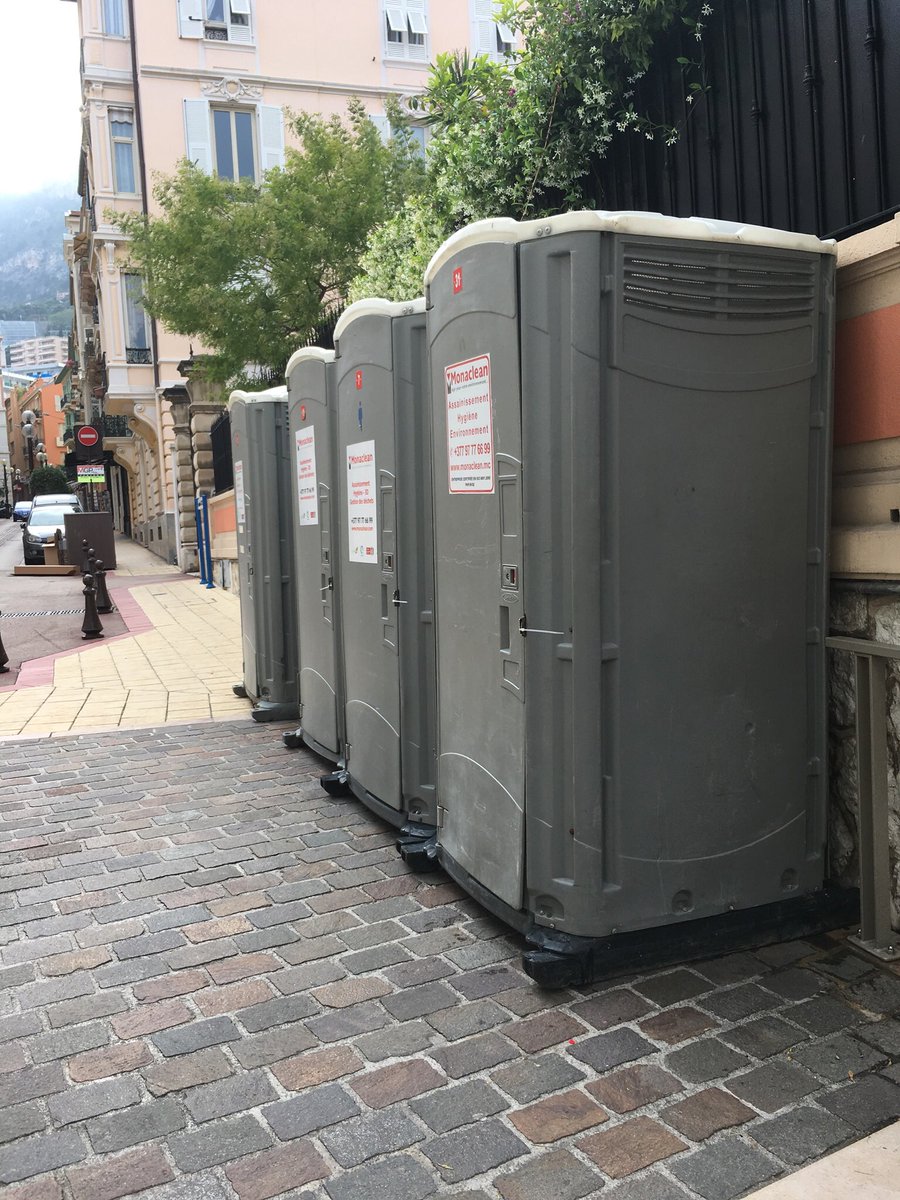
A Posh Vacation In Monaco For Wayne Schutsky, An Editor For The Times Media Group

Even though he's 'away-from-his-desk' as editor of The Scottsdale Independent, a new gig in 2018 after covering Mesa, Gilbert and San Tan Valley, he's keeping his nose to the ground posting on Twitter about public toilets
https://twitter.com/WayneSchutsky 

"I know some folks in Scottsdale are upset about the portable toilets in the entertainment district. Not taking sides - just pointing out that even Monaco - one of the richest places in the world - hasn’t found a better solution."


Managing Editor for The Scottsdale Progress ().
Thoughts and opinions are my own.
Send tips and comments to wschutsky@scottsdale.org.

Next stop
Does anyone know where I can get a new pair of legs in Florence, Italy?

Troubled Waters Here In The East Valley: Who Ya Gonna Call?

This could be THE BIGGEST STORY to hit municipalities here in The East Valley in years. Investigative reporters really need to dig deeper. . . One stands out from the rest: Jordan Houston, who's recently published some articles in the East Valley Tribune that are not on this topic of interest.
It's not just about Johnson Utilities in Queen Creek and the newly-incorporated city of San Tan Valley. There are many more dots to connect that have been slow-dripping in the spigot of what gets published.
What does put this topic at the top-of-the-list are serious. So far few reporters have feared to go there - diving deep into the culture here of politics and corruption that permeate nearly every level of government in the East Valley landscape in most municipalities: where finance, and real estate interests are entangled with corruption at the highest levels.
_________________________________________________________________________________
About Troubled Water
This year, 29 journalism students from 18 universities are traveling across the country. They are conducting hundreds of interviews, reviewing thousands of pages of state and federal statutes and other records and building databases and data visualizations documenting the issues surrounding water pollution.
The student work began in January 2017 with a video-conferenced seminar that included reporting and research.
In May, they began the 10-week investigative reporting fellowship based out of a newsroom at the Walter Cronkite School of Journalism and Mass Communication at Arizona State University’s downtown Phoenix campus.
News21 is supported by grants from the
  • Carnegie Corp. of New York
  • John S. and James L. Knight Foundation
  • The Ethics and Excellence in Journalism Foundation
  • Hearst Foundations
  • Donald W. Reynolds Foundation
  • Peter Kiewit Foundation of Omaha, Nebraska
  • Women & Philanthropy, part of ASU’s Foundation for a New American University
_________________________________________________________________________
News21 Fellows
Jordan Houston
Jordan Houston | @JordanHouston3
Knight Foundation Fellow
Jordan Houston is a multimedia journalist based in Phoenix. She previously worked as an investigative reporting intern at The Washington Post while pursuing a master’s degree in broadcast journalism at American University. Her work has been featured in The Washington Post, The Huffington Post, WVII-TV, ROOSTERGNN, The Sophian and The Investigative Reporting Workshop
__________________________________________________________________________
Johnson Utilities Hit with $100 Million Lawsuit for Allegedly Violations Water-Quality Laws
By Marivic Cabural Summers
 
Story image for Johnson Utilities from Wallstreet Investorplace
Wallstreet Investorplace
The NBO News-May 23, 2019
Alpine Investment Management Llc who had been investing in Johnson ... The institutional investor held 12,134 shares of the public utilities company at the end ...
 
Story image for Johnson Utilities from Phoenix New Times
Phoenix New Times-May 16, 2019
George Johnson and his family have lost a lawsuit to former ... His water utility company, Johnson Utilities, serves parts of Pinal County
 
 
Story image for Johnson Utilities from AZCentral.com
AZCentral.com-Nov 7, 2018
Arizona utility regulators on Wednesday placed a partial moratorium on new water and sewer connections for the Johnson Utilities service area ...
 
 
Story image for Johnson Utilities, FBI from AZCentral.com
AZCentral.com-May 31, 2018
And FBI investigators, they all maintain, were very selective in who they ... 6, 2011, Johnson Utilities came to a vote before the Commission ...
 

Mesa "Parks & Recreation": The Real Park Score Index

Any reasonable person might ask why there's such a big difference in what the city officials brag about and how the City of Mesa gets rated at the bottom coming in last place, joining Oklahoma City and Charlotte NC, as the worst cities to live in if you like living near a park.
Here's this year's results published in https://www.fastcompany.com 
 Read it for yourself . . . like they say "There's plenty of room for improvement"

Friday, May 24, 2019

Complex Mesa City Council Study Session Thu 23 May 2019

This study session is 113 minutes long, D1 Councilmember is the only one not present; according to what the mayor says at the opening, he is "traveling" . . .he answers "Yes, Mayor" if he's on the phone.All of the meeting agendas and approved minutes for the entire month of May 2019 can be viewed ahead of time and accessed here for download:
Council, Committe & Board Research Center 
__________________________________________________________________________
HERE ARE THE UNDERLINED LINKS Ther3 items on the agenda for this study session:
Item 1-a File #19-0602
Title: Hear a presentation and discuss the benefits of the Arizona Municipal Water Users Association and an update on the Drought Contingency Plan for the region.
Attachments: 1. Presentation

The Presentation is 2.37MB
Collaboration Keeping the Glass Full
Mesa City Council
May 23, 2019
________________________________________________________________________________
Item 1-b File #19-0603
Title: Hear a presentation and discuss the series 2019 bond sales.
Attachments: 1. Presentation 
 
The Presentation is 1.52 MB
2019 Bonds Sales Update
May 23, 2019
Michael Kennington, Chief Financial Officer
Larry Given, Managing Director, Hilltop Securities

2019 Bond Sales
2
• General Obligation Bonds

Series 2019 Bonds  $33M
• Utility Systems Revenue Bonds
Series 2019A Bonds $94M
Series 2019B Refunding Bonds $54M
Series 2019C Refunding Bonds $79M

2019 Mesa Bond Market Demand
5
• General Obligation Bonds Series 2019 Bonds -2.3X (in total orders vs. par amount)

• Utility Systems Revenue Bonds
Series 2019A Bonds – 4.6X
Series 2019B Refunding Bonds – 1.4X
Series 2019C Refunding Bonds - 2.5X

2019 Bond Sales Results
6
• ‘New Money’ Bonds – Interest cost realized was better than forecasted.
General Obligation – Interest Cost of 2.7% $4.5 M less interest cost over life of bonds ($704k over forecasted period)
Utility Revenue – Interest Cost of 3.3% $31.5 M less interest cost over life of bonds ($3.6M over forecasted period)

________________________________________________________________________________
Item 1-c File #19-0588
Title: Hear a presentation, discuss, and provide direction on the impact of the proposed City Charter amendment in the initiative application filed with the City as Serial Number IN2020-02 on the fiscal year 2019/2020 general fund expenditures and the fiscal year 2020/2021 general fund budget.
Attachments: 1. Presentation, 2. Application for Initiative IN2020-02 

Impact of the Proposed Initiative
• A.R.S. §9-500.14: “A city or town shall not spend or use its resources…for the purpose of influencing the outcomes of elections.”

• Does not prohibit “the use of public resources to investigate the impact of ballot measures on a jurisdiction.” (Atty. Gen. Opinion No. I15-002 )
 • Purpose of presentation is to communicate the initial assessment of the impact of the Proposed Initiative . 
[3]


Proposed Initiative: City Charter Section 614 Uses of Utility Revenues
1. Operation & Maintenance of Public Utility Services

2. Retirement of Indebtedness (Utility Services & Assets)
3. Development of Utility Assets
4. Reimbursements by the Solid Waste Division or Utility Department to other City Departments for Support of Utility Services
5. Promotion of any of the City’s Utility Products or Services
6. Development, or Promotion or Use of Systems, Equipment, Services, Devices or Materials to Promote Conservation & Recycling by Utility Customers
7. Employee Benefits (Solid Waste Division & Utility Department)
8. Bond Reserve Funds Issued for Utility Assets
9. General Fund Deposit or Transfer not to Exceed Twenty Percent (20%) of the Gross Revenues from the City’s utility services
10.Surplus Amounts Reimbursed to Utility Customers

Decrease Number of Municipal Construction Projects and Improvements:
2018 Bond Authorized Projects * Estimated Annual O&M for Project
• Fire Station 221 -$2.0M
• Northeast Public Safety Facility -$3.5M
• Plaza @ Mesa City Center -$200K
• Dobson Library Improvements -$275K
• Main Library Improvements -$20K
[13]
*Projects expected to have construction begin during the next two fiscal years

Decrease Projects and Improvements: 2018 Bond Authorized Projects*
(Continued)
Estimated Annual O&M for Project 

 Federal Building Renovation -$210K
• Monterey Park -$467K
• North Center Street -$470K
• Harris Basin Playground -$17K
[14]

*Projects expected to have construction begin during the next two fiscal years

Options to Decrease Expenditures for a Remaining Estimated Funding Gap
• If the Proposed Initiative were approved by the voters, the City would need to consider an alternative budget that accounts for the reduction to the General Fund due to the Proposed Initiative.

________________________________________________________________________
CITY COUNCIL STUDY SESSION THU 23 MAY 2019