_________________________________________________________________________
The next step will be getting sewage surveillance to be used by public health officials as part of their overall response, an effort that still has many unknowns.
_________________________________________________________________________
The next step will be getting sewage surveillance to be used by public health officials as part of their overall response, an effort that still has many unknowns.
In the past, local governments have been wary of wastewater surveillance, citing concerns about privacy, says Burgard. (Unlike a blood test or swab, there’s no asking people for permission to rummage through their sewer system.)
And municipalities are rarely eager to reveal what’s going on in their turbid waters.
“Nobody wants to be the hot spot,” _________________________________________________________________________
Gregory Barber Science
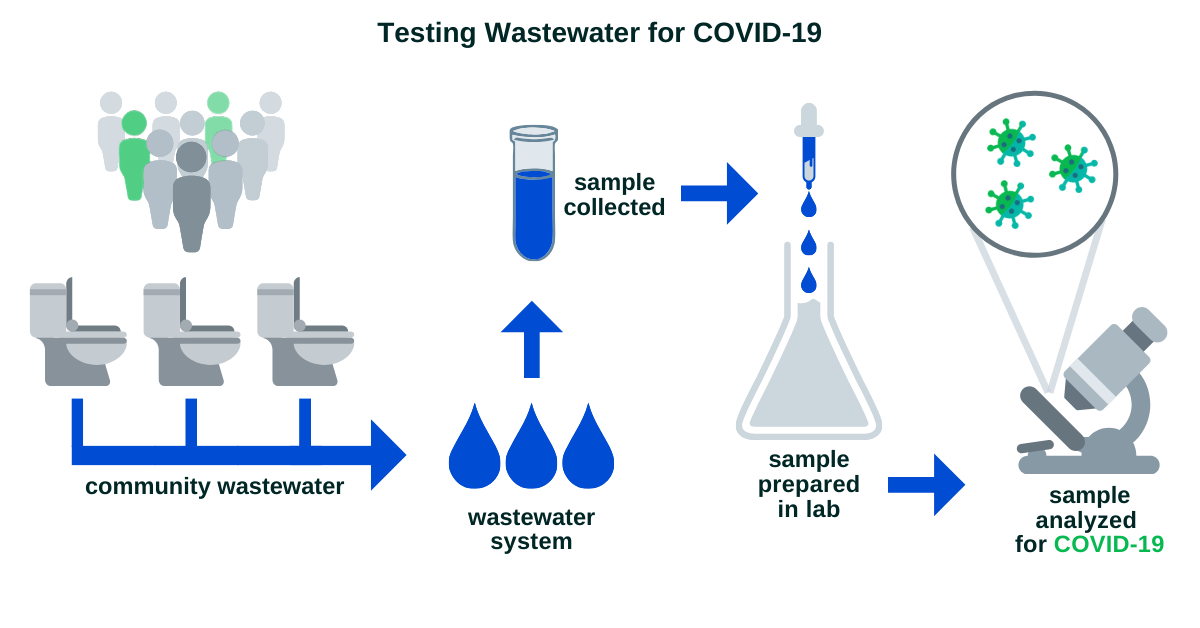
It will become a blueprint for how studying sewage might provide a way for cities to detect flare-ups of Covid-19. . . The approach holds promise because a number of studies have shown high levels of viral shedding in fecal samples from Covid-19 patients. Since that shedding happens early in the disease’s progression, well before patients show any symptoms, there’s reason to suspect evidence of the virus might show up in a city’s wastewater, even before the residents of that city have been tested.
. . . A number of groups are racing to figure out how to make such monitoring work.
> Last week, researchers at the KWR Water Research Institute in the Netherlands were the first to publicly report they had detected SARS-CoV-2 in wastewater samples. The group started testing in early February in cities across the country, before the Netherlands had identified any Covid-19 cases. As the first cases emerged and then spread in early March, the researchers found the viral concentration in sewer water went up in tandem.
> Other groups, including researchers at the University of Arizona and an MIT startup called Biobot, have begun collecting samples from towns and cities across the US, but neither has released data yet.
To start making predictions about the number of Covid-19 cases out in the community, the researchers need to know how much RNA from the sample is lost in the lab procedures. They will also need to consider local conditions,
Sinnott-Armstrong notes:
The make-up of sewage in one city, or even neighborhood, is not necessarily the same as the sewage in another.
It also changes over time. Did it rain one weekend, flushing the system with extra water?
What is the catchment area for a particular testing site—in other words, how many people does the sample of wastewater reflect?
The next step will be getting sewage surveillance to be used by public health officials as part of their overall response, an effort that still has many unknowns.
In the past, local governments have been wary of wastewater surveillance, citing concerns about privacy, says Burgard. (Unlike a blood test or swab, there’s no asking people for permission to rummage through their sewer system.)
And municipalities are rarely eager to reveal what’s going on in their turbid waters.
“Nobody wants to be the hot spot,” he says.
“Once you hit the crisis level, people start to ask, ‘What are the other tools I can use?’” he says.
“There’s this sense of, ‘Let’s get this done.’”
Add it to the list of ways the world may change once the pandemic has run its course.
_______________________________________________________________________
Tempe testing for COVID-19, expecting to publish results later this week
Posted at 4:38 PM, Apr 28, 2020 and last updated 6:06 PM, May 01, 2020
https://www.abc15.com/news
 Tempe City Officials plan to release real-time data on the spread of COVID-19 in their city.
Unlike the State Health Department, which tests less than 5 percent of the population, Tempe's results will be based on 90 percent
". . . Tempe is one of only three places in the world where sewer testing is used to track disease. The others are located in Australia and the Netherlands. But word is spreading.
The City of Gilbert and the town of Guadalupe began testing their sewer water Monday.
Tempe City Officials plan to release real-time data on the spread of COVID-19 in their city.
Unlike the State Health Department, which tests less than 5 percent of the population, Tempe's results will be based on 90 percent
". . . Tempe is one of only three places in the world where sewer testing is used to track disease. The others are located in Australia and the Netherlands. But word is spreading.
The City of Gilbert and the town of Guadalupe began testing their sewer water Monday.
Joel Navarro says Maricopa County is anxious to learn what Tempe is discovering about COVID-19.
"You are talking about an early warning sign, and you're talking about truly helping guide the state and cities in making decisions, eliminate costs to help the public eradicate an illness. My god, this is a game-changer."
______________________________________________________
 https://www.azbio.org/tempe-halden-covid-19-wastewater
COVID-19 – How What You Flush Can Help Scientists Measure Community Health
Fighting Coronavirus/COVID-19 with Public Health Data
The City of Tempe and Arizona State University are working together to study wastewater as a strategy to advance community health. Tempe is in a unique position for an innovative response to the coronavirus/COVID-19 pandemic due to the Wastewater Data Analytics – Opioids program supported by the Tempe City Council’s Innovation Fund in 2018 and the community trust cultivated by the city’s compassion, science and services approach in using public health data.
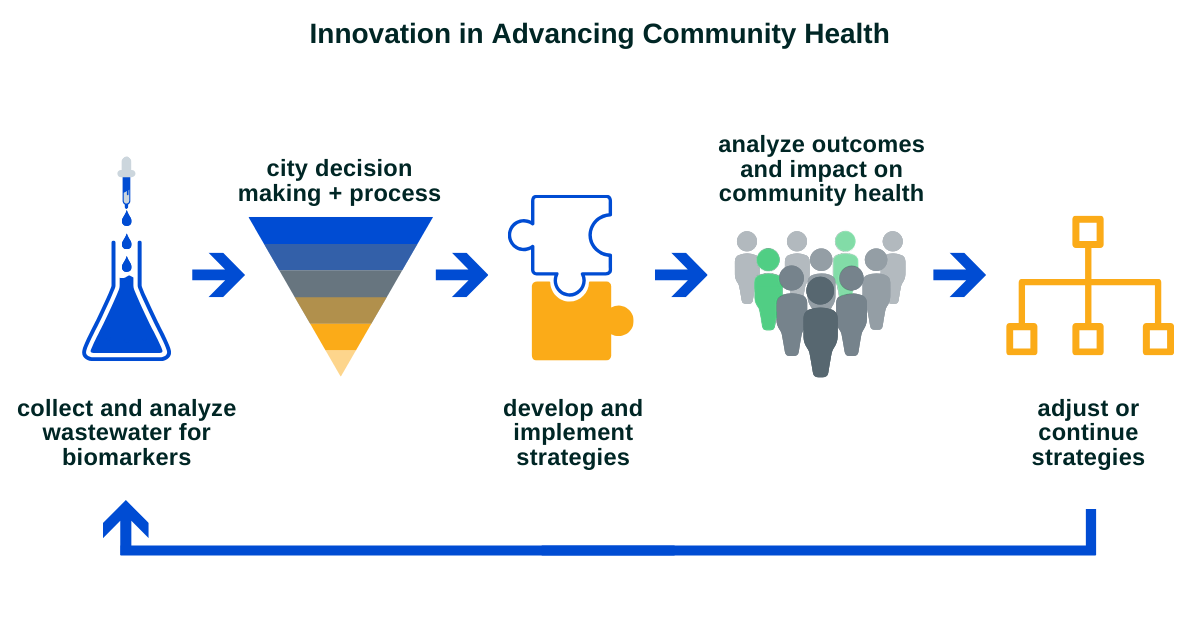
Studying sewage for public health information is known as Wastewater-based epidemiology (WBE). (Image courtesy of the City of Tempe)
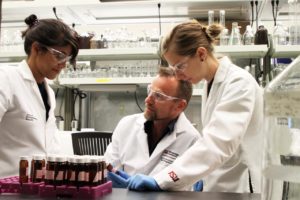
Rolf Halden, Ph.D., P.E. and this team are supporting the City of Tempe in identifying key epidemiological patterns and trends. Halden is director of the Center for Environmental Health Engineering at the Biodesign Institute, professor in the Ira A. Fulton School for Sustainable Engineering and the Built Environment, and senior sustainability scientist in the Global Institute of Sustainability at Arizona State University.
(Image courtesy of ASU)
The presence of COVID-19 in the wastewater accounts for a collective of individual samples, that include both diagnosed and undiagnosed cases in the community. This community-level viral biomarker is important in analyzing the presence of the SARS-CoV-2 virus in the City of Tempe and represents part of a set of tools to address important public health questions.
Studying Wastewater for COVID-19 Data
When it comes to fighting the spread of COVID-19, community leaders and first responders need relevant and up-to-date information to make strategic and operational decisions about this public health crisis.
In an innovative partnership to prevent and reduce the spread of COVID-19, the City of Tempe is working with scientists from Arizona State University’s Biodesign Institute to study the city’s wastewater. Wastewater-based epidemiology (WBE) is the science of studying community sewage for public health information.
This data can inform the city’s strategic efforts in the community and measure progress to stop the spread of the virus.
Over 400 cities, nationally and internationally, receive data about their cities’ wastewater from Arizona State University. However, Tempe is the first city to incorporate wastewater data with other strategies to drive decisions that advance community health outcomes.
Potential Benefits – Why study wastewater now?
There are many benefits to using data-driven evidence through wastewater analysis.
The main benefit is ensuring a healthy community.
When used alongside information on diagnosed cases and deaths, state and national data, the study of wastewater for COVID-19 also provides:
- Evidence of the virus’ presence in the community, for both diagnosed and undiscovered cases;
- Potential leverage for mobile testing and additional public services;
- Data to inform policy makers for continued social distancing, business/school closures;
- Opportunity for data-informed decisions to re-open businesses and schools;
- Forecasts for public health conditions and threats;
- Scientific partnerships and research with Arizona State University; and,
- Innovative use of wastewater epidemiology to set the standards for the region, state and nation for advancing community health and wellness.
Looking at the Data: The Wastewater Dashboard
- Initial data indicate the benefit of the public health interventions (lockdown) implemented in the city
- The dashboard will be operated and updated at least weekly until the pandemic subsides
- The National Science Foundation (NSF) has invested in $200K into this project to study not only virus presence and abundance by city area, but also other sewage-borne biomarkers indicative of population health under extreme stress
Wastewater Dashboard
In utilizing public health data, Tempe integrates data and sciences. The following dashboard displays the wastewater collection areas.
Patients with COVID-19 have had mild to severe respiratory illness with symptoms of fever, cough and shortness of breath. Severe complications from this virus include pneumonia, multi-organ failure, and, in some cases, death. The virus is thought to spread mainly between people who are in close contact with one another (within about 6 feet) through respiratory droplets produced when an infected person coughs or sneezes. It also may be possible that a person can get COVID-19 by touching a surface or object that has the virus on it and then touching their own mouth, nose, or possibly, their eyes.
Sources and Resources:
- City of Tempe: https://covid19.tempe.gov/ (Images used with permission)