Friday, March 19, 2021
Thursday on Techdirt > Lots to Dig Into That's For Sure
–The Techdirt Team
Data Shows The NYPD Seized 55,000 Phones In 2020; Returned Less Than 35,000 To Their Rightful Owners
from the whole-new-way-of-looking-at-public-funding dept
The Supreme Court said law enforcement needs to get warrants to search phones seized incident to an arrest. But that decision didn't have much to say about other seizures -- some that aren't linked to any arrests at all.
Lots of police departments take phones from people. The NYPD is one of the worst about taking phones. And it's definitely the worst when it comes to returning them. If someone's not willing to engage with the labyrinthine process required to secure their return, the phones remain in the hands of the Department.
. . .As this report notes, nearly 85% of all seizures performed by the NYPD aren't related to any criminal charges against the person whose phone has been taken. One lawyer pointed out the NYPD officers took a shooting victim's phone from them while they recovering at the hospital, claiming they needed it for "evidence."
That's the black hole a bunch of these phones are falling into: evidence. The person they're taken from may just be a victim. But once it's considered evidence, the NYPD can hold onto it until its investigation concludes and any court proceedings are finished. This can take months or years.
Even if prosecutors manage to secure a quick plea deal, that's no guarantee someone can get their phone back. And it took a court order to keep the NYPD from trapping people's phones in a Catch-22 most residents couldn't bypass. ...
This is the NYPD doing something just because it can. It clearly doesn't need most of what it seizes as evidence -- not when almost every criminal case ends with a plea deal. And it certainly doesn't need the spare change selling used phones generates. But when nothing stands between it and doing what it wants, it will do what it wants. No single phone makes much of a difference to the NYPD, but it makes a big difference to those they're taken from -- people who rely on them day in and day out to stay connected, get work done, and access any number of services.
Filed Under: 4th amendment, encryption, nypd, seized phones
--------------------------------------------------------------------------------------------------------------------------------
Forfeiture In Theory: TAKING DOWN DRUG LORDS! Forfeiture In Practice: Taking A Guy's TV And PlayStation During A Drug Raid
from the can't-make-a-drug-war-without-breaking-a-few-home-electronics dept
Asset forfeiture means taking everything that isn't nailed down. Why bother being selective? In most cases, it's pure profit for the law enforcement agency that performs the seizure. And since forfeitures are so rarely successfully challenged, it's pretty much a foolproof way to make a little extra cash. The citizens who happened to be in the wrong place at the wrong time (in their own houses with their own possessions) are acceptable collateral damage.
We're in the middle of a war against drugs. Collateral damage should be expected. That's the viewpoint of drug warriors, even when the "acceptable" collateral damage means nothing more than law enforcement officers taking stuff just because they can.
Here's a rare successful motion for a return of property . . .
--------------------------------------------------------------------------------------------------------------------------------
Content Moderation Case Studies: Can Baby Yoda GIFs Defeat The DMCA Force? (2019)
from the copyright-on-the-dark-side dept
Summary: In the fall of 2019, Disney launched its Disney+ streaming service to instant acclaim. While it offered up access to the extensive Disney catalog (including all of its Marvel, Star Wars, and 21st Century Fox archives), the first big new hit for the service was a TV series set in the Star Wars universe called The Mandalorian, which featured a character regularly referred to as “Baby Yoda.”
Baby Yoda was a clear hit online, and people quickly made animated gif images of the character, helping spread more interest in The Mandalorian and the Disney+ service. However, soon after Vulture Magazine put up a story that was all just Baby Yoda GIFs, it was discovered that Giphy, a company that has built a repository of GIFs, had taken all of the Baby Yoda GIFs down. This caused many to complain, blaming Disney, highlighting that such GIFs were clearly fair use.

Many people assumed that Disney was behind the takedown of the Baby Yoda GIFs. This may be a natural assumption since Disney, above and beyond almost any other company, has a decades-long reputation for aggressively enforcing its copyright. The Washington Post even wrote up an entire article scolding Disney for “not understanding fans.”
That article noted that it was possible that Giphy pre-emptively decided to take down the images, but pointed out that this was, in some ways, even worse. This would mean that Disney’s own reputation as an aggressive enforcer of copyrights would lead another company to take action even without an official DMCA takedown notice.
Giphy itself has always lived in something of a gray area regarding copyright, since many of the GIFs are from popular culture, including TVs and movies. While there is a strong argument that these are fair use, the company has claimed that most of its content is licensed, and said that it does not rely on fair use.
Decisions to be made by Giphy:
Should the company rely on fair use to cover certain GIFs that are uploaded, or should it try to license everything?
Regarding uploaded GIFs, how aggressive should the company be in searching for and taking down content? Should it only do so after receiving a takedown notice, or should it proactively remove content?
For popular content, like Baby Yoda images, should Giphy reach out to the copyright holder (in the case Disney) to either get permission or to work out a partnership?
Questions and policy implications to consider:
Popular culture content is frequently used in memes and GIFs. Is copyright law properly calibrated to allow this kind of activity?
Fair use is found in only a few countries (most notably, the US). How do differences in international copyright law impact the ability of a service like Giphy to exist?
Is Disney better off encouraging fans to spread GIFs, such as those of Baby Yoda, than exercising whatever copyright enforcement powers it has?
If Giphy took down the Baby Yoda images preemptively, does that indicate that fear of copyright litigation is holding back cultural sharing?
Resolution: Soon after the story went viral, Giphy issued an apology to Disney, and to Vulture which had posted the original article full of Baby Yoda GIFs. The apology suggested that Giphy had made the decision to remove the GIFs without any takedown notice or other input from Disney.
"Last week, there was some confusion around certain content uploaded to Giphy and we temporarily removed these Gifs while we reviewed the situation," said the image-hosting website in a statement.
"We apologise to both Disney and Vulture for any inconvenience, and we are happy to report that the Gifs are once again live on Giphy."
In multiple articles about this, it is noted that Disney refused to comment on the issue, leaving some reporters to wonder if Disney had played a role but did not wish to discuss it publicly. Either way, there are now many Baby Yoda GIFs on Giphy.
Originally posted on the Trust & Safety Foundation website.
Thursday, March 18, 2021
Finding The Path To Mesa for City Planning Director ("Nana") Kusi Appiah

New Planning Director for City of Mesa: Nana (Kusi) Appiah
Grammar Usage Note: In Ghana, among the Akan people, particularly the Akyem, Ashanti and Akuapim peoples, The word Nana is used as the title of a monarch to signify their status. . . "King _______"
It's not a first name, as used in many re-postings in a press release from the City of Mesa News Room that was repeated in the Rose Law Group Reporter back in October 2018.
The word Nana has other meanings also.
2004 – 2006 MCRP, Community and Regional Planning > Iowa State University
- Adams County, Colorado
- Denton, Texas
- Polk County, Florida
in Government Institutions
The views expressed are those of the author and do not necessarily reflect the views of ASPA as an organization.
 |
| Current site map City of Mesa |
By Nana Kusi Appiah March 31, 2015
Author: Nana Kusi Appiah is the planning and development manager for Adams County, Colorado. Nana is a member of the American Institute of Certified Planners. Nana holds a doctorate in public affairs from the University of Texas at Dallas and a master’s degree in community and regional planning from Iowa State University.
Email: appiah.nana@gmail.com.


 (7 votes, average: 3.29 out of 5)
Introduction 
"Having practiced as a city planner over 10 years in three governmental agencies*, I thought implementing change would be easy in jurisdictions perceived to have well-qualified personnel, resources and the backing of elected officials...This complexity of improving operations of government through conscious change efforts usually calls for a participatory style of management and decision-making that includes stakeholders—
- citizens
- elected or appointed officials
- the land development industry
- employees within the organization.
Undermining active involvement of any of these groups can potentially derail the change efforts or implementation. . .
______________________________________________________________________________
Complexity of Change
The participatory tactic of management for leading such change efforts requires a leadership approach capable of employing pluralistic techniques that engage various stakeholders. It also requires a dynamic style of leadership capable of accommodating multiple stakeholder involvement. This is essential . . .
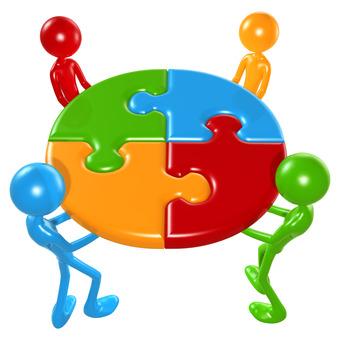 To produce effective change in a government agency, all stakeholders must be actively involved. . .
 More Citizen Participation in Public Agency Change Efforts
According to Sherry Arnestien, public participation in an agency’s change effort is embedded in the U.S. Constitution. Advocates of citizen participation claim that social acceptance of public policy correlates with the perception of fairness and public involvement in the decision-making process.
A solution for issues concerning the public that is devoid of citizen participation is unlikely to be effective. In addition to the benefits of involving the public in agency decision-making, such inclusion promotes the democratic orientation of a community and helps improve public trust for the agency.

-
 Flash News: Ukraine Intercepts Russian Kh-59 Cruise Missile Using US VAMPIRE Air Defense System Mounted on Boat. Ukrainian forces have made ...

