Saturday, March 27, 2021

ADDRESSING WEALTH INEQUALITY > Poverty, Wealth and Savings In A Post-Pandemic Economy


This is somewhat academic, but let's see if there are any actual and possible outcomes in what they a White Paper that can be downloaded


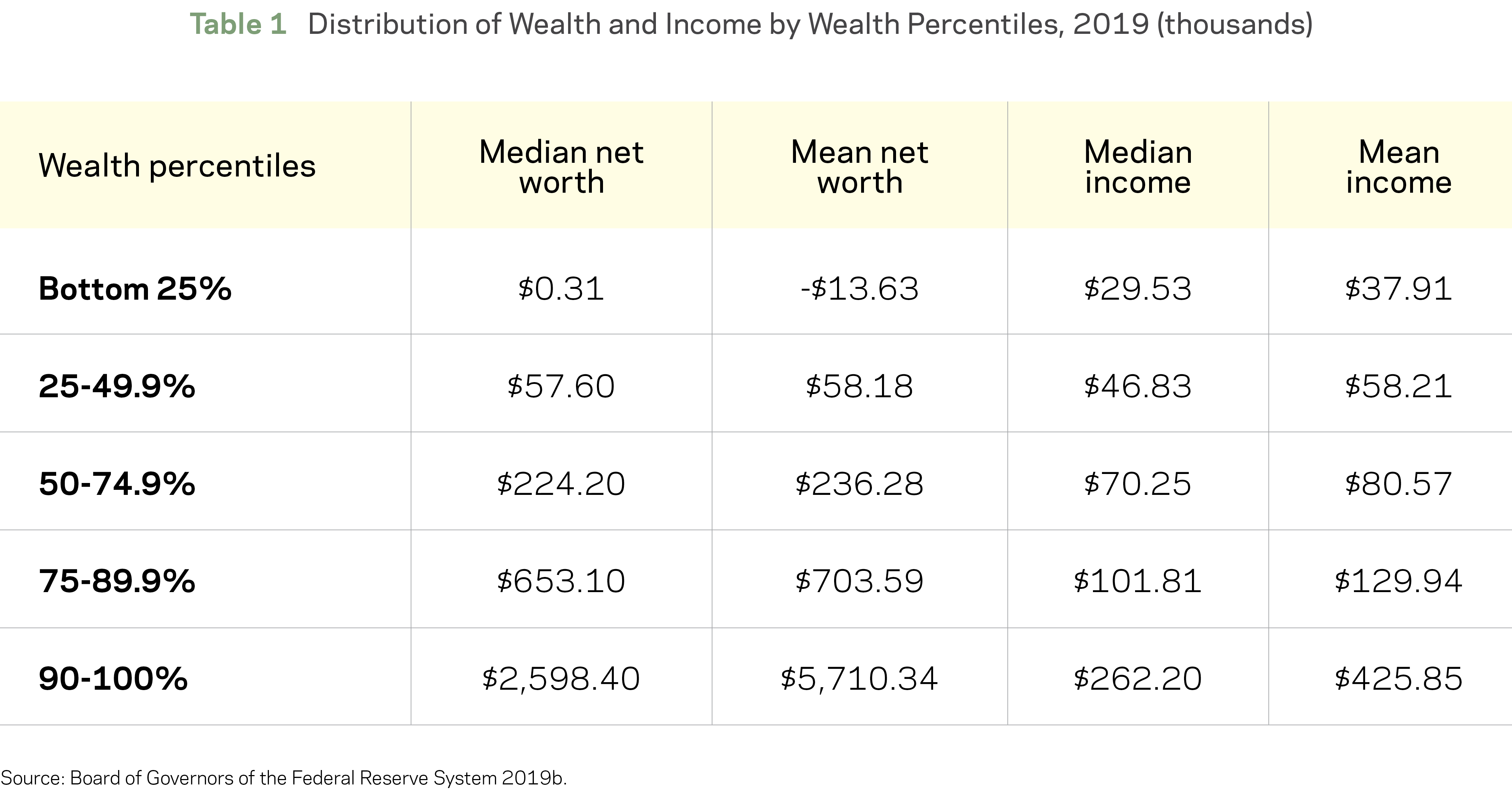
The COVID-19 recession has laid bare the reality of the lack of wealth among millions of American workers in the bottom half of the income distribution, many of whom have disproportionately lost their jobs and have no meaningful assets to fall back on. The median net worth of the bottom 50 percent of American families is $0. Without sufficient wealth or money put aside in savings, low- and moderate-income workers are forced to work into old age, since just one job loss or health crisis could spiral them into poverty. 

Today, the Economic Innovation Group (EIG) released a white paper co-authored by a bipartisan pair of economists, Professor Teresa Ghilarducci, a labor economist at the New School and leading expert on retirement security, and EIG Economic Advisory Board member Dr. Kevin Hassett, Vice President and Managing Director of The Lindsey Group and the former Chair of the White House Council of Economic Advisers, outlining a bold and achievable proposal to address wealth inequality.

In "What If Low-Income American Workers Had Access to Wealth Building Vehicles Like the Federal Employees’ Thrift Savings Plan?" the unlikely pair call attention to the urgency of addressing wealth inequality in America and outline a policy proposal that would expand access to a program modeled after the federal Thrift Savings Plan (TSP) to low- and moderate-income Americans

The lack of retirement savings among the bottom 50 percent of American workers is a leading factor in the overall landscape of wealth inequality. Low- and moderate-income Americans are largely unable to realize the benefits of popular retirement savings programs, such as IRAs and 401(k)s that incentivize long-term saving and wealth building for Americans with taxable income. More than half of American workers over the age of 25—most of them low and moderate-income or minorities—are not participating in an employer-sponsored retirement plan. 

Professor Ghilarducci and Dr. Hassett call for a program modeled after the highly successful TSP for low- and moderate-income American workers, a highly successful and closely studied program that features automatic enrollment for eligible workers, very low fee ratios, simple plan options, and matching federal contributions. This program would address the longer-term challenge of helping more American workers build long-term savings, retirement security, and intergenerational wealth—and in turn, gives them a more direct stake in the American Dream and our national economic success.
Interactive Tool: Building Wealth with a Federal Savings Match
The paper estimates that for the median household in the bottom 25 percent of the wealth distribution, 40 years of participation in such a program could provide them with a savings account balance anywhere between $138,000 and $610,000, depending on the level of the government match and the rate of return on investment.

Visit 
our website to explore the potential wealth generation effects of such a program using our interactive tool and to download the full white paper.  
Inclusive Wealth Building Initiative Coverage
Axios
How to make poorer Americans richer
Felix Salmon

Bloomberg Law

Open Thrift Savings Plan to Low-Wage Workers, Study Suggests
Lydia O'Neal and Austin Ramsey 

Our mailing address is:
Economic Innovation Group
616 H St NW
Washington, DC 20001-5800


Women, Power and Democracy

POWER & WATER IMPACT THE LIVES OF EVERYONE

Taking on some of issues, Please Note: This column was originally published in NOT SHUTTING UP, a newsletter about the issues facing journalism and democracy >
Sign up for it here.
Why There’s So Much Investigative Journalism About Utility Companies    
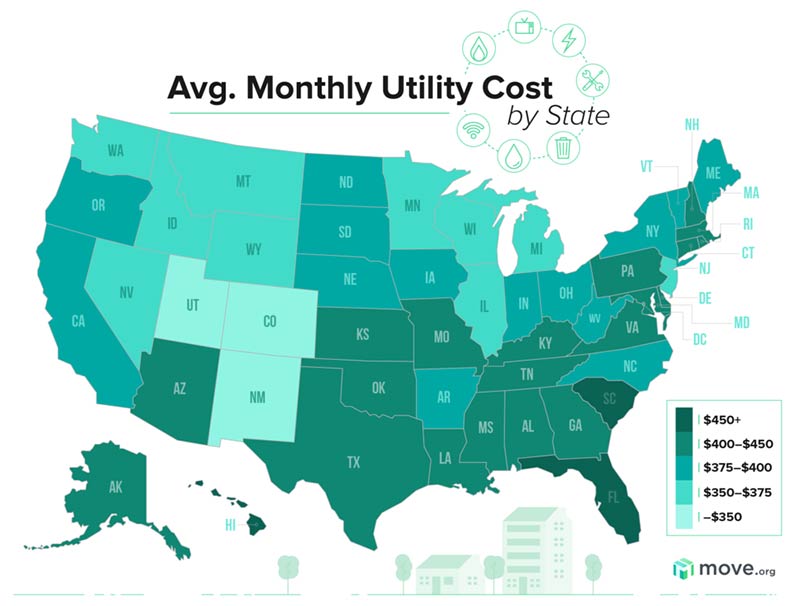
Utility Bills 101: Average Cost of Utilities | Move.org
 
Including our own. If you know something about a utility company you think we should be looking into, let us know. Boom clipart gif animation, Boom gif animation Transparent FREE for  download on WebStockReview 2021

------------------------------------------------------------------------------------------------------------------------------
" I have a confession to make. I love stories about utility companies. Always have. Always will.
There are several reasons. First, and perhaps foremost, they check the most important box for being the focus of investigative reporting: The services they deliver – electricity and water – touch the lives of nearly everyone. And, they are almost always monopolies. When the grid fails in Texas, or the water system becomes toxic in Flint, Michigan, it’s not like customers can take their business elsewhere.
But after decades in journalism, I have to acknowledge a personal motivation: I like to tackle utility stories because of the degree of difficulty. While no investigative story is ever straightforward, cracking the complexities of power grid management, nuclear power plants or utility rate setting brings a special delight. It’s a little bit like gymnastics. Nothing wrong with brilliantly executing an A-rated move (the easiest), but when Simone Biles lands the floor exercise J move she invented, it’s something to savor.
Last fall, we co-published a story with the Richmond Times-Dispatch that exemplifies the challenges and joys of reporting on utility companies. The story, by reporter Patrick Wilson, described in detail how Virginia’s Dominion Energy had managed to shunt a larger share of the costs and risks of a wind turbine farm onto consumers through a well-organized 11-week lobbying blitz of the state legislature. (Dominion defended its role in the process, saying it needed to lock in the costs of the wind project to fulfill customer expectations that it “keep the lights on.”)
As Wilson points out, the utility has a long history of projects of dubious benefit. Right now, each of its customers is paying $4 per month on their bills for the company’s decision to build one of the last coal-fired power plants in America, a $1.8 billion investment that is used only 11% of the time.
The Times-Dispatch project was one of the proposals we supported in 2020 as part of ProPublica’s Local Reporting Network. When a member of our selection committee pointed out that Wilson had already published several quite good stories on Dominion, I replied that this was an argument for helping him do even more.
The conversation about the Dominion project goes to the heart of why investigative reporting should take aim at utilities. As you look across the injustices we expose at ProPublica, a lot of them share a theme: the tendency of government officials to become overly sympathetic to the industries they are supposed to be overseeing. The problem is known as “regulatory capture,” and we’ve documented it in a myriad of agencies.
The Trump years saw a vast expansion of regulatory capture, but it’s been a feature of both Democratic and Republican administrations for decades.
> Our reporting on the continued sales of dangerous car booster seats for children is a classic instance.Regulators had evidence for years that tougher standards were needed, yet they continued to slow-walk new rules. It has been two decades since Congress asked the Department of Transportation to set standards for side impacts involving booster seats. After years of pushback from the industry, those rules still remain unissued.
Regulatory capture is ubiquitous in the arcane universe of utility oversight. Because the companies that deliver power and water are regulated monopolies, their rate of return is set by state oversight commissions.
> In Virginia, Dominion Energy is allowed to earn about a 10% return on its assets and investments. The economic justification for this goes back to the earliest days of the power business, when a jumble of companies stringing their own lines to homes eventually whittled down by competition to a single provider that could theoretically charge as much as it wanted to keep the lights on. States stepped in to protect consumers from being gouged, in some cases creating their own utility cooperatives.
It’s not a beat many reporters volunteer for.
The economic formulas used to justify rates are often opaque, even to experts. There’s a ton of jargon, and you have to work really hard to explain things in ways that connect with ordinary readers. (When was the last time you looked at an electricity bill and wanted to know more about the “GRT & other tax surcharges”?)
One of the best people I’ve ever seen at doing this work was Nigel Jaquiss, a journalist who began his career as a Wall Street oil trader for, among other places, Goldman Sachs. Unfortunately, when I was a managing editor of The Oregonian, he worked at Willamette Week, the competing weekly in Portland.
Nigel ruined many a week for me and my Oregonian colleagues with his reporting, including with his 2005 story revealing that Neil Goldschmidt had molested a 14-year-old girl while serving as Portland’s mayor in the 1970s.
The stories about Goldschmidt won the 2005 Pulitzer Prize for investigative reporting.
Amazingly, that scoop arose from Nigel’s work on the utility beat:
> Goldschmidt, a former governor and cabinet secretary, had returned to public attention in 2003 when he led an out-of-state group that was trying to buy Portland General Electric, the company that delivered electricity to more than 750,000 people in and around downtown Portland. Willamette Week’s revelation about Goldschmidt blew up that deal.
> The Goldschmidt-led group was trying to buy PGE from Enron, the Wall Street darling that had imploded the previous year. During Enron’s bankruptcy proceedings, a tape emerged of conversations between two energy traders that made national headlines. The exchange, one of the better utility scoops of all time, was recorded as California regulators were moving to recoup some of Enron’s high charges for selling electricity to the state. Traders Kevin and Bob were bantering about the 2004 election and the problems elderly Floridians had encountered deciphering a confusingly designed “butterfly” ballot:

Kevin: So the rumor’s true? They’re [expletive] taking all the money back from you guys? All those money you guys stole from those poor grandmothers in California?

Bob: Yeah, Grandma Millie, man. But she’s the one who couldn't figure out how to [expletive] vote on the butterfly ballot.

Kevin: Yeah, now she wants her [expletive] money back for all the power you’ve charged for [expletive] $250 a megawatt-hour.

Bob: You know — you know — you know, Grandma Millie, she’s the one that Al Gore’s fighting for, you know?

More

Because it gave me a chance to catch up with one of the best reporters I’ve ever competed against, I reached out to Nigel for his perspective on why the utility beat is so fruitful.

First, he said, utility companies are an unusually rich source of public records >>>>>> They are required to disclose copious amounts of information to state regulators. Many are publicly traded, which creates Securities and Exchange Commission filings. And when they lobby state legislatures, as many do, they have to file another thick stack of paperwork describing the laws they’re hoping to change. In many states, including Oregon, any attempt to raise rates plays out in what amounts to a court hearing, replete with expert witnesses, depositions and detailed financial filings.

Perhaps most important of all, this is the rare consumer story in which the critics are sophisticated and well-funded. The biggest losers when utility rates go up are big businesses, and they hire phalanxes of lawyers to keep their energy costs low.

Because the math can be daunting, Nigel said, there aren’t a lot of reporters flocking to the beat. “I found that the experts and industry advocates are really eager to talk because hardly anyone ever calls them,” he said. “It’s a fertile hunting ground.”

Nigel added this observation from his home base in Oregon, with a bit of wistfulness:

 “What just happened in Texas is going to be feeding investigative reporters for years.”

Including our own. If you know something about a utility company you think we should be looking into, let us know.

 

REMOTE ZOOM Talking Heads + Death-By-PowerPoint-Slides Presentations > Mesa City Council Study Session Thu @ 07:30 am 03.25.2021

Transmitted from The Lower Chambers with salaried city officials - some masked-up and some not - seated in close proximity while Hizzoner John Giles presides over the study session with a virtual background that looks like 'Saguaro Land' 5 other district Council representatives look like they're WFH (Working From Home)and/or their "home-offices" and District 6 Councilmember Kevin Thompson who represents Southeast Mesa uses a virtual background of an aerial view of Downtown Mesa.

There are 3 Slide Presentations: here are the meeting details and attachments for your interest . . you can study them ahead of time if you haven't already had a chance to preview them. You might want to notice what is said by each person and what is discussed and what direction is provided or not as the case might be... There are two City Council members who did notice that there was a mistake in one of the slide shows.

BTW: There are new Tentative Agendas for next month - April 5th (Test files only?) and April 10th where the action will take place in The Upper Chambers

--------------------------------------------------------------------------------------------------------------------------------

NEXT SCHEDULED MEETING OF THE MESA CITY COUNCIL IS NEXT THURSDAY 04.01

Microsoft memo bans April Fools' Day pranks, because they're the worst |  TechCrunch

FINAL AGENDA City of Mesa Page 1 Printed on 3/23/2021 
Council Study Session Notice: 
To decrease COVID-19 exposure, the City Council Chambers is closed, but public viewing and input on the items are available electronically. 
Members of the City Council will appear electronically for this meeting, via a video conferencing platform, and the live meeting will be accessible via broadcast and telephonically. 

349ad6ad4cfaa0616c3c26e1b831a7d1_thinking-clipart-ani-thinkingcap0gif-revit-news_500-733 (2).gif


Because of the current public health emergency, the City Council Chambers is closed for Council study sessions. However, the live meeting may be watched on local cable Mesa channel 11, online at Mesa11.com/live, www.youtube.com/user/cityofmesa11/live, or https://www.facebook.com/CityofMesa, or listened to by calling 888-788-0099 or 877-853-5247 (toll free) using meeting ID 5301232921 and following the prompts. For any difficulties accessing this meeting, please call 480-644-2099.
City Council Study Session 
City of Mesa 
Meeting Agenda - Final 
Mesa Council Chambers 57 East First Street 
Mayor John Giles 
Vice Mayor Jennifer Duff - District 4 
Councilmember Mark Freeman - District 1 
Councilmember Julie Spilsbury - District 2 
Councilmember Francisco Heredia - District 3 
Councilmember David Luna - District 5 
Councilmember Kevin Thompson - District 6 
Thursday, March 25, 2021 7:30 AM 
Virtual Platform Roll Call 1 

Presentations/Action Items: 
21-0297 Hear a presentation, discuss, and provide final funding recommendations for the FY 2021/2022 and prior years' available funding for Community Development Block Grant (CDBG), HOME Investment Partnerships (HOME), Emergency Solutions Grant (ESG), and Human Services Programs. 1-a 
21-0345 Hear a presentation, discuss, and provide direction on Mesa's Active Transportation projects. 1-b 

2 Acknowledge receipt of minutes of various boards and committees
2-a 21-0317 Economic Development Committee meeting held on February 22, 2021
2-b 21-0322 Audit, Finance and Enterprise Committee meeting held on December 14, 2020
2-c 21-0314 Library Advisory Board meeting held on January 19, 2021

3 Current events summary including meetings and conferences attended

4 Scheduling of meetings

Goldman Vet Chavez Sees Pathway for Big Tech Crackdown

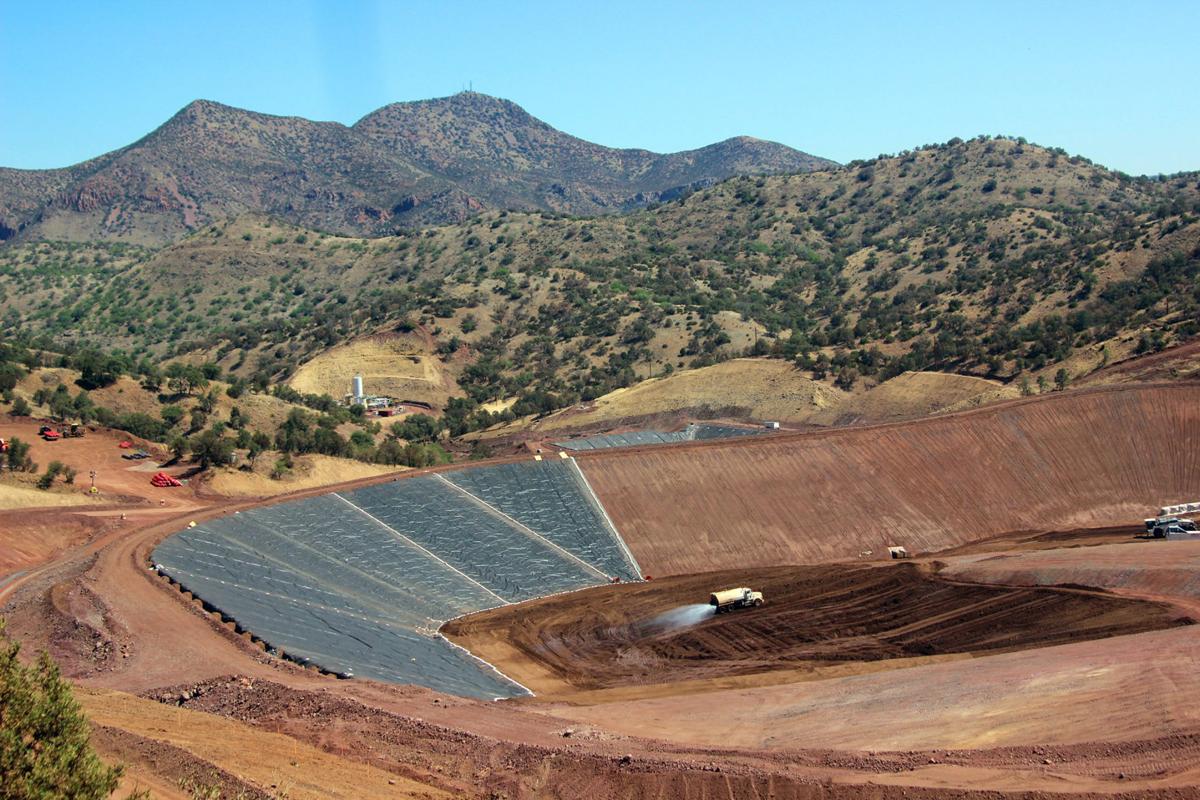
HEADS UP! Aquifer Protection Permit [Significant Amendment] The Hermosa Project Property

Take the time to pay attention to this > Why? You might ask (of course ...)
The Property hosts two stratigraphically controlled mineral deposits on 450 acres
Major Zn-Pb-Ag deposit of Santa Cruz County, SE Arizona | e-Magazine of the  AZ Geological Survey
----------------------------------------------------------------------------------------------------------------------------
Hyper-Local News for background
Mining site project seeks to clean up metal-laden runoff | Local News  Stories | nogalesinternational.com

A View of the Hermosa Project – Patagonia Regional Times

patagoniaregionaltimes.org › a-view-of-the-hermosa-pr...
Nov 12, 2018 — The Hermosa project is located six miles southeast of Patagonia on 450 acres of private land. The site includes the remains of the old Trench ...

Tax Revenue from Hermosa Project Unclear – Patagonia ...

patagoniaregionaltimes.org › tax-revenue-from-hermos...
Oct 18, 2019 — In Arizona, the property taxes paid by mining operations in the pre-production phase are determined by the county assessor based on the value ...
 
 
------------------------------------------------------------------------------------------------------------------------------
 
 
ADEQ encourages and values your input and participation
MORE
Public Notice

ADEQ welcomes comments on the preliminary decision to issue a significant amendment to an Aquifer Protection Permit (APP) for the Hermosa Project Property located 5 miles south of the Town of Patagonia, Arizona.

View Public Notice/Related Documents >

ADEQ encourages and values your input and participation.


Electric Earth Rotation Glitches Confirmed, Everything Connected | S0 Ne...

GREGORY BOVINO: Nazi Cosplay Time in Mineeapolis...Trump's ICE Enforcer

  UPDATE ON SUNDAY 25 JANUARY 2026 Top stories Federal agents fatally shoot Alex Pretti in Minneapolis Star Tribune Fact check: Video, witne...