Wednesday, June 30, 2021
Half-A-Million Bucks For What > CONTRACT AWARD to Sentinel Technologies

| File #: | 21-0718 |
| Type: | Contract | Status: | Agenda Ready |
| In control: | City Council |
| On agenda: | 7/1/2021 |
| Title: | Purchase of Outdoor Wireless Access Points (Replacement) for the Department of Innovation and Technology (Smart Cities Initiative) (Citywide) |
| Attachments: | 1. Council Report |
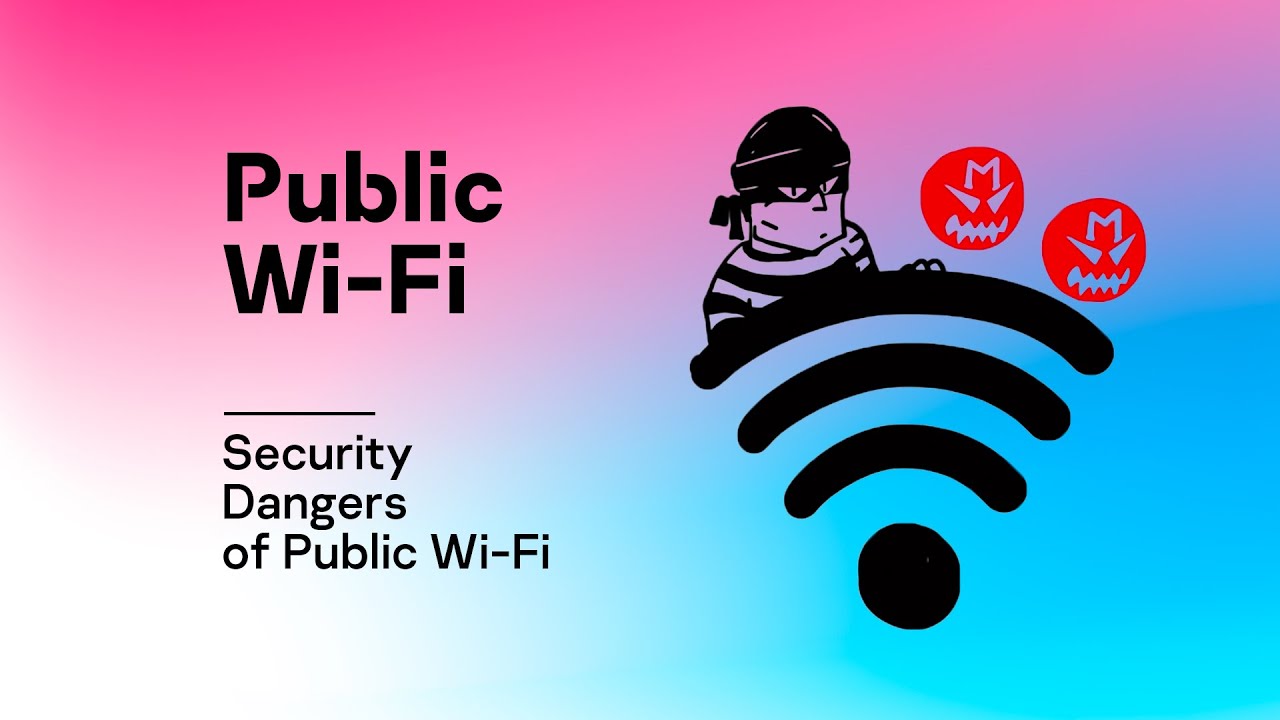
How to Avoid Public WiFi Security Risks
Wi-Fi users are at risk from hackers, but fortunately there are safeguards against them. The recent explosion of free, public Wi-Fi has been an enormous boon for working professionals. Since these free access points are available at restaurants, hotels, airports, bookstores, and even random retail outlets, you are rarely more than a short trip away from access to your network, and your work. This freedom comes at a price, though, and few truly understand the public Wi-Fi risks associated with these connections.
The Risks of a Public Wi-fi
The same features that make free Wi-Fi hotspots desirable for consumers make them desirable for hackers... the hacker has access to every piece of information you're sending out on the Internet: important emails, credit card information and even security credentials to your business network. Once the hacker has that information, he can — at his leisure — access your systems as if he were you.
Hackers can also use an unsecured Wi-Fi connection to distribute malware. If you allow file-sharing across a network, the hacker can easily plant infected software on your computer.
Turn Off Sharing
When connecting to the Internet at a public place, you're unlikely to want to share anything. You can turn off sharing from the system preferences or Control Panel, depending on your OS, or let Windows turn it off for you by choosing the "Public" option the first time you connect to a new, unsecured network.
Keep Wi-Fi Off When You Don't Need It
Even if you haven't actively connected to a network, the Wi-Fi hardware in your computer is still transmitting data between any network within range. . .
Stay Protected
Even individuals who take all the possible public Wi-Fi security precautions are going to run across issues from time to time. It's just a fact of life in this interconnected age. That's why it's imperative to keep a robust Internet security solution installed and running on your machine. These solutions can constantly run a malware scan on your files, and will always scan new files as they are downloaded. . .
 Purpose and Recommendation


Re: FACEBOOK LAWSUIT > 46 States' Attorney Generals + The Federal Trade Commission Fail To-Make-Their Case Heard in Court
 The details of the ruling really show (as we had suggested earlier) that it appears that the government really tried to rush all these cases, and did so with weak arguments just to get a case started, without thinking that just because you say something is true you can't get a court to buy it without support:
Court Tosses Both FTC And States' Antitrust Cases Against Facebook; You Gotta Have More Than 'Big Facebook Bad'
from the ouch dept
"On Monday a judge ruled on both the cases against Facebook -- and dismissed them both. In both cases, the Court highlights the very problems we noted in our initial writeup about these cases. They seem to assume that "obviously" Facebook is a monopoly and "obviously" it's doing anti-competitive bad stuff. But... the problem with insisting that it's all "obvious" is that you have to actually show that in your complaint. And that didn't happen in either of these cases.
The court, fairly easily, dismissed the FTC's case, though left it open for the FTC to amend the case and try again (which it will almost certainly do). The judge highlighted the exact same problem I raised in my post about the key weakness in the case: it fails to show evidence that Facebook has a monopoly.The question now is what will the FTC do in response. It could try to come back with another attempt with a better market definition -- even though the court seems somewhat skeptical that it could do so successfully. The other option, which some are speculating about, is that the FTC could try again using a totally different legal theory, basically arguing unfair competition, rather than abuse of market power. Of course, as former FTC Commissioner Joshua Wright has detailed, taking this latter approach could lead the courts to significantly limiting the FTC's authority -- meaning it could backfire spectacularly.
As for the States' case against Facebook, it fails for even dumber reasons. When the case was first filed, we noted how it tells a narrative that left out a ton of important context. The case focuses on Facebook's purchases of both WhatsApp and Instagram, and tries to argue that after sucking a bunch of companies in to use Facebook's platform, it then cut back on the API access to functionalities to keep competitors out. That, of course, leaves out the context of reasons why Facebook changed its approach to the API and how it had to deal with situations like Cambridge Analytica's abuse of the API to suck out a ton of data.

 But the real problem with the States' case? They brought it way too late . . .Many people have taken it for granted that Facebook is clearly violating antitrust law, but the lawyers bringing these cases against the company can't take that for granted, or assume that it's obvious. They have to prove it to a court, and, as these two rulings show, they failed to do so in either case.
Filed Under: antitrust, competition, ftc, market power, states
Companies: facebook
. . .
RELATED CONTENT from December 9, 2020
Open Season: FTC & 48 Attorneys General File Separate Antitrust Lawsuits Against Facebook
from the well-this-will-be-interesting dept
2 New Reports on Hunger in The USA
| |||||||||||||||||||||
|


"I Won" | Face Off | Breaking Bad
Aug 18, 2026 #BetterCallSaul #BreakingBad #Sony YouTube Breaking Bad & Better Call Saul · 5:16 "I Won" | Face Off | Brea...
-
 Flash News: Ukraine Intercepts Russian Kh-59 Cruise Missile Using US VAMPIRE Air Defense System Mounted on Boat. Ukrainian forces have made ...
 -
A nor’easter is about to hit the Northeast in May. That’s very unusual.

