Thursday, July 08, 2021
PLEASE JOIN IN THE "CONVERSATION" > Virtual Meeting | ADEQ Talks Surface Water Quality | Aug. 5, 2021, 1 – 2 p.m

 |
ADEQ Talks Surface Water QualityPermittees and other stakeholders are invited to join ADEQ for this one-hour virtual event, as we provide updates regarding evolving federal programs, the new state program, permit questions and changes, surface water quality standards, impaired waters, rulemaking and more. ADEQ surface water quality improvement, permitting and compliance staff will also discuss our preparations for permitting related to the Surface Water Protection Program. Meeting Details Following this session you will receive an opportunity to provide feedback to help us determine if these informational sessions are helpful. ADEQ appreciates your participation and input. Please share this invitation with others in your network who may be interested. For more information, visit azdeq.gov/SWPPAbout ADEQUnder the Environmental Quality Act of 1986, the Arizona State Legislature established the Arizona Department of Environmental Quality in 1987 as the state agency for protecting and enhancing public health and the environment of Arizona. For more information, visit azdeq.gov. ADEQ will take reasonable measures to provide access to department services to individuals with limited ability to speak, write or understand English and/or to those with disabilities. Requests for language translation, ASL interpretation, CART captioning services or disability accommodations must be made at least 48 hours in advance by contacting the Title VI Nondiscrimination Coordinator at 602-771-2215 or Communications@azdeq.gov. For a TTY or other device, Telecommunications Relay Services are available by calling 711. ADEQ tomará las medidas razonables para proveer acceso a los servicios del departamento a personas con capacidad limitada para hablar, escribir o entender inglés y/o para personas con discapacidades. Las solicitudes de servicios de traducción de idiomas, interpretación ASL (lengua de signos americano), subtitulado de CART, o adaptaciones por discapacidad deben realizarse con al menos 48 horas de anticipación comunicándose con el Coordinador de Anti-Discriminación del |
 | QUESTIONS? Contact Us |
| STAY CONNECTED | |
Wednesday, July 07, 2021
****WHOA **** 40 Calendar-Days SUMMER BREAK for The Mesa City Council July 9 - August 19th


When it comes to Biometric Tech Use in "Smart Cities" Seattle and Phoenix (Mesa) are Far Apart
Seattle-area county say it's first US county to pass facial recognition ban

Dive Brief:
- King County, Washington — home to 2.3 million people in and around Seattle — will not allow government acquisition and use of facial recognition software, including by the Sheriff's office, per an ordinance the county council unanimously approved last week.


The Smart 5G City Means Permanent Surveillance and Risk

Dive Insight:
Facial recognition systems can in part analyze surveillance images to enable law enforcement or other actors to identify individuals. But despite the possible contributions of such capabilities in criminal investigations, the technology prompts invasion of privacy concerns. . .
Minimal guardrails exist at the state or federal level, and local jurisdictions have increasingly taken matters into their own hands.
In King County, "The use of facial recognition technology by government agencies poses distinct threats to our residents, including potential misidentification, bias, and the erosion of our civil liberties," said Councilmember Jeanne Kohl-Welles, who sponsored the legislation, in a statement. "The use or misuse of these technologies has potentially devastating consequences which the new ordinance will help to prevent."
The King County decision came about two weeks after Amazon said it would extend a moratorium on police use of its facial recognition software indefinitely. Amazon last June put in place a one-year moratorium.
Recognizing the debates happening in localities across the country, the National League of Cities (NLC) issued a report earlier this year with information regarding how cities might approach the use and regulation of facial recognition technology.
"[M]any cities across the country are wrestling with the decision on how they approach it. Especially in the absence of federal guidance, cities and counties are really left to regulate the use themselves," said Brooks Rainwater, senior executive of NLC's Center for City Solutions. "We're in support of cities looking at the scope of facial recognition and deciding whether this is a tool that should be used in their community, or on the flip side whether or not it should be banned from either municipal use or all uses within that city." NLC does not take its own stance on whether or not a city ought to employ the technology.
King County's limitations on the technology, like most other localities that have taken action, does not cover private use of the technology. On the opposite coast, Baltimore is now considering a ban similar to Portland, Oregon's that could prohibit private use. The Security Industry Association, which counts Microsoft among its members, is speaking out against the scope Baltimore is proposing.
The debate has also elevated to the state level. Massachusetts passed a series of statewide restrictions in May on how police can and cannot use the technology in criminal investigations, and a bill is currently moving through Maine's state legislature that would limit the technology's use by state and local law enforcement.
Federal action may be on the horizon as well.
Sen. Jeff Merkley, D-Ore., last year helped introduce multiple pieces of legislation that would respectively establish a moratorium on the federal government's use of the technology until Congress outlines specific uses for the data; rescind federal support from state and local law enforcement entities using biometric technology; and prohibit private companies from "harvesting or profiting from" customer or employee biometric data without permission.
Merkley has plans to reintroduce the Facial Recognition and Biometric Technology Moratorium Act, which was brought forth last June but did not make it to a vote, Morning Brew reported on Friday.
Recommended Reading:
Smart Cities Dive NLC calls for engagement, proper training for facial recognition tech

Smart Cities Dive Minneapolis bans facial recognition to dismay of city police
Smart Cities Dive City Surveillance Watch
Tuesday, July 06, 2021
NEW DEPARTMENT OF DEFENSE MODERNIZATION: Joint Warfighter Cloud Capability
Pentagon kills Microsoft’s $10B JEDI cloud contract, says tech is now outdated
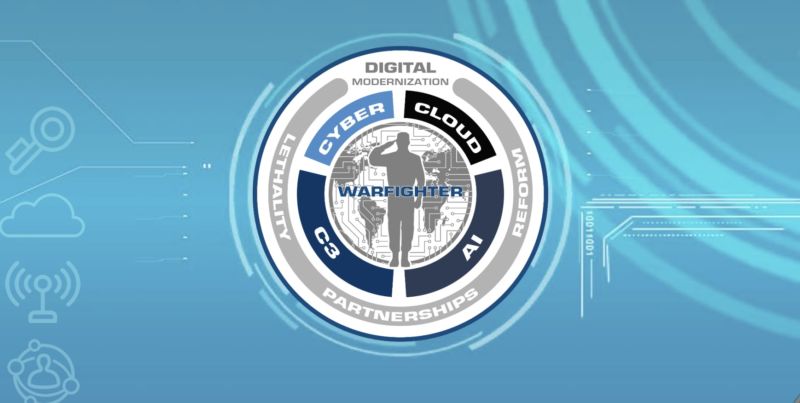
Amazon's legal stall tactics seem to have paid off.
"Following years of controversy and intrigue, the Pentagon canceled its JEDI cloud computing contract with Microsoft today.
Microsoft was awarded the contract in October 2019, but work stalled as Amazon, the other finalist, mounted a legal challenge. Now, the Department of Defense has scrapped the entire project, saying that it’s out of date.
“The Department has determined that, due to evolving requirements, increased cloud conversancy, and industry advances, the JEDI Cloud contract no longer meets its needs,” a Pentagon spokesperson said in a statement. . ."
____________________________________________________________________________
Update 5:40 pm EDT: Microsoft and Amazon have both commented on the nixed contract.
"We understand the DoD’s rationale, and we support them and every military member who needs the mission-critical 21st century technology JEDI would have provided," Toni Townes-Whitley, Microsoft's President of US Regulated Industries, wrote in a blog post.
"The DoD faced a difficult choice: Continue with what could be a years-long litigation battle or find another path forward. The security of the United States is more important than any single contract, and we know that Microsoft will do well when the nation does well. Because the security of the United States through the provision of critical technology upgrades is more important that any single contract, we respect and accept DoD’s decision to move forward on a different path to secure mission-critical technology."
Amazon had a different take on the matter, of course. “We understand and agree with the DoD’s decision," an AWS spokesperson said to Ars. "Unfortunately, the contract award was not based on the merits of the proposals and instead was the result of outside influence that has no place in government procurement. Our commitment to supporting our nation’s military and ensuring that our warfighters and defense partners have access to the best technology at the best price is stronger than ever. We look forward to continuing to support the DoD’s modernization efforts and building solutions that help accomplish their critical missions.”
 DOD plans to release second draft solicitation for JEDI cloud

AN ENTERPRISE CLOUD SOLUTION, but just hold on to your laser sabers, guys > The JEDI contract process continues to be under investigation by the DoD inspector general and stuck in federal court.
-----------------------------------------------------------------------------------------------------------------------
Every media outlet in The Universe has their stories

ANGEL ROBLES LIVE MUSIC TONIGHT: 8-11PM in Fountain Hills
ANGEL ROBLES is k nown for an eclectic set list that spans multiple genres, . . He utilizes loop pedals, acoustic guitars, and backin...

-
 Flash News: Ukraine Intercepts Russian Kh-59 Cruise Missile Using US VAMPIRE Air Defense System Mounted on Boat. Ukrainian forces have made ...
 -
A nor’easter is about to hit the Northeast in May. That’s very unusual.

