Insert copy
Maine Legislature Enacts Strictest Facial Recognition Limitations In The Country
from the hopefully-there-are-49-competitors-seeking-to-top-this dept
"From out of nowhere, the state of Maine has taken the lead in protecting its residents from the steady encroachment of facial recognition technology. 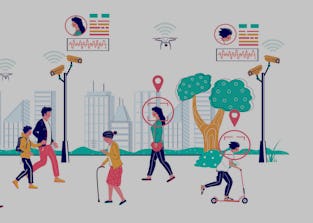
Maine has enacted the country’s strongest statewide facial recognition law. Maine’s law prohibits the use of facial recognition technology in most areas of government, including in public schools, and for surveillance purposes. It strictly regulates how law enforcement officials may use facial recognition technology.
This law is more restrictive than anything else passed by a state legislature to date. California's ban on facial recognition tech only prevents law enforcement from utilizing the tech in their body cameras, ensuring these tools remain more focused on police accountability, rather than just an extension of existing surveillance programs.
The state of Washington also passed its own ban recently. But that bill -- which was supported by law enforcement agencies -- isn't really a ban or a moratorium. The tech is still permitted to be used. There are new restrictions in place, though. Using it to engage in real-time surveillance now requires a warrant. And if any state agency wants to start using the tech, it needs to provide public notice, hold at least three community meetings to hear objections, and perform a privacy impact assessment before deploying it.
___________________________________________________________________
BLOGGER INSERT: This interactive map shows where facial recognition surveillance is happening, where it's spreading to next, and where there are local and state efforts to rein it in. See something missing? Contact us: team@fightforthefuture.org

___________________________________________________________________
Maine's new regulations have none of those drawbacks or concessions. No government agency at any level is permitted to use or acquire this tech. And use of the tech is limited to a small list of exceptions, which should prevent state and local agencies from asking federal agencies or those in nearby states to launder their facial recognition searches for them.
Here is the single exception to the ban and the stipulations that accompany it.
Under Maine’s rules, law enforcement may request a facial recognition search from the FBI and the state’s Bureau of Motor Vehicles (BMV) if they have probable cause to believe an unidentified person in an image has committed a serious crime. The BMV and the Maine State Police are required to collect data on search requests from law enforcement. The law stipulates that the results of a facial recognition search do not alone constitute probable cause for law enforcement officers to arrest or search a person. Individuals may bring a lawsuit if they believe a government agency or official has violated the law.
And this exception for serious crimes actually means serious crimes, rather than whatever cops want to declare "serious" to access the tech.
I. "Serious crime" means:
(1) A crime under the laws of this State that:
(a) Is punishable by a term of imprisonment of one year or more; or
(b) Is a Class D or Class E crime under the laws of this State that is a violation 18 of Title 17-A, chapter 9, 11, 12, 13 or 35; Title 15, section 1092, if the violation is based on a condition under Title 15, section 1026, subsection 3, paragraph A, subparagraph (5) or (8); or Title 19-A, section 4011…
That list of crimes includes murder, assault, kidnapping, sexual assault, sexual assault of minors, and sex trafficking. Also included: violating protective orders or bail conditions. This should keep cops from pestering the FBI to find who's been shoplifting or whatever. Anything that doesn't comply with this law is de facto unlawful and cannot be used as evidence in prosecutions.
The law also gives residents the right to sue if they feel they've been illegally subjected to this tech.
It's the strongest facial recognition ban in the nation. And it still allows law enforcement to make use of it through a couple of conduits if they're willing to jump through the very reasonable hoops the law has erected.
=========================================================================
THIS IS FROM AUGUST 2020 (Last year)
Here's an earlier report from Portland, Maine that is quite complete ....including a screen-grab of town government and officials in discussion, a Zoom video, the City of Portland's meeting agenda and meeting minutes + comments from the American City Liberties Union AND please notice the diversity

Portland, Maine votes to ban face recognition technology use by government
You love to see it.
"This racist surveillance technology has no place in our communities," said the ACLU in response to news tonight that the city of Portland, Maine has voted to ban the government use of facial recognition technology.
Here is video of the town hall.
You can read the City of Portland, Maine's agendas and minutes here.
From the ACLU:
Portland, Maine, just unanimously voted to ban government use of face recognition technology.
The movement to defend our privacy rights from face surveillance has now expanded to a third state.
[IMAGE: screengrab from Zoom Portland town hall meeting, 8/3 Monday]


