Monday, August 02, 2021
Look Who's Back and Saying “If God wants me to do it I will,”
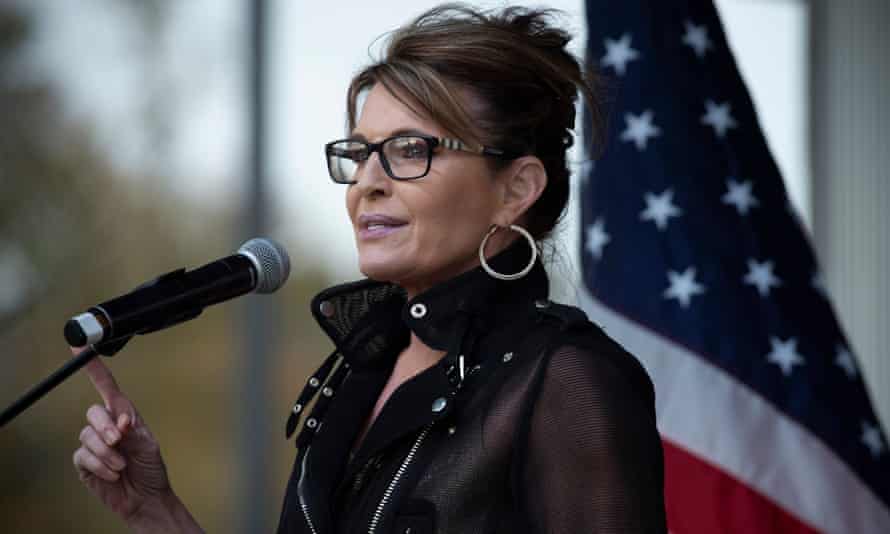
Sarah Palin hints at Alaska Senate run against Republican Lisa Murkowski
“I would say you guys better be there for me this time, because a lot of people were not there for me last time,” Palin told her Christian audience, referring to her spell as running mate to John McCain in 2008. . .The campaign was a disaster for the Republican party as Palin was widely mocked for her perceived ignorance and unsuitability to be one heartbeat away from the presidency. Obama won clearly.
But Palin’s rise to prominence is now seen as a key moment on the road to the presidency of Donald Trump. . .Palin has appeared with Trump over the years but has not been a consistent national political presence since she resigned as governor of Alaska in 2009.
Speaking to Ahn, she claimed to have been persecuted by her political enemies and said: “There’s a difference between quitting and saying enough is enough.”
Palin said she would pray about a possible Senate run. She also said “America was dedicated to God” and said the US left was attempting to “fundamentally transform the nation that does belong to God”.
“How dare we take from God what is his and say we’re going to do what we want to do with it?” she asked.
READ MORE > Martin Pengelly the Guardian
Senate Release: 2700-Page $1-Trillion BiPartisan Infrastructure & Jobs Act Bill
![Bipartisan So-Called 'Infrastructure' Bill 2,700 Pages Long -- READ THE BILL CONGRESS IS HIDING FROM YOU | [your]NEWS](data:image/jpeg;base64,/9j/4AAQSkZJRgABAQAAAQABAAD/2wCEAAoHCBUVEhgSEhUYGBgYGBgYGBIYGBgYGBgYGBgaGRgYGBgcIS4lHCErIRgYJjgmKy8xNTU1GiQ7QDs0Py40NTEBDAwMEA8QHRESGjQkISQ0NDQ0NDE0NDQ0MTQ0NDE0NDQ0NDQ0NDQ0NDQ0MTQ0NDQ0NDQ0NDQ0NDQ0NDQ0MTQ0NP/AABEIAMIBAwMBIgACEQEDEQH/xAAbAAABBQEBAAAAAAAAAAAAAAACAAEEBQYDB//EAEEQAAIBAQUEBgYHBwUBAQAAAAECABEDBBIhMQVBUXEiYYGRscEGEzJyodEjQlJzkrLwFCRigqLh8QczNGPC0hX/xAAZAQADAQEBAAAAAAAAAAAAAAAAAQMCBAX/xAAhEQEBAAICAQUBAQAAAAAAAAAAAQIRAzEyBBIhIoFBUf/aAAwDAQACEQMRAD8A6xR4pwOwoqRRCAKKKKAKC+h5GFEYBR3bQ8/ITMtcXF8a0p0fWOdNxr85pbvoefkJwtKnHXd4AikrjlZanlOnCImNGJgRNBcHcaTnb22AVIJz0EcW68uY/QisOU4TLpAEw1jKQdD5x1EUMYjiNHEYBb+z3TV3/Z9muzLO09Uquy2X0mChNQWJx9dZlbQEjIVmp2ztZHuNjd1tEYqLKqgqKYLMqQc9QT1RWX4G2SfTtE0WwV6C9b/L5TOvoOc0uwR0U5se4n5TOfTePbRrDWAsISDboIQgCGIAYjiCIUyYhPKvSC2x3y2OWVoy/gOHynqqTxq9Wwa1e0GjOzZ76knzm8P6xmk2IqQOJHjJW0X6XZ4kyNc82Xn4Zx78/SbsHwmr2ePSOIp0RDSKL3NNwIooptMoqR4oA1IqR4oA0VI8UAorDfz8pwvCkEnjXuOskWOrc4N5XotyJlMe2MulbWKsasVZRhwvWg96dQsYrVkB0LCslBBTpKymtDho4FAMzTMa88oSWi2RENiP7zqgz/lE6hFNcDq1BWlaNQdRnMa9g85myztqaopzvJfDSzUsx3gVCjieE6TolsFBBamKgHA0rlXuinZqC/3d0UM5qWyAxVpOFgG1Mudp2WKjbh/mQvVUzANOMrKVx1Su14bFhJNDu3A8RNz6Pr0U5Me+vzmKsiPlNzsIdBPcHxAkOZvBeLCEBYYnOoMQxOYhiAdBCEAQgZk3O92uCzd/sI7fhUnynjlmtR4z1X0jtMN0tzxs2X8fQ/8AU8psiVNfgZbjx3LU8r8pdycq2n6pFeXqa8TElutcwfGcbxbr191YWHLNLm42f0Yy4+Jih3a2UIoru4GKYUaaKKkVJRMooqRUiBRoVI1IA0cR6RwIBQ2ftNz+c729ifVM38DHuBnJF6b8/nDvF+tRZtZj2MDLoDkQa+MrjN1PO6ihrHjCOBKMnU0ZCdzAyeyIxLLzqpINeQNf6ZBBpur3GHjU5MO7Ixe649M5Y29Jws/bY50U0qBUdE79e8b5XqczyHnJIc0IV91MLdfORRqeyLLL3HjLO3SXD7EVrIK/t6sDpn9U8KcRvrKdGoQRqCCOYNRNEl4BAauor1x4zbWVsZy9qFGFxoaerr+YjQfE9VaxlUtiBNajojcBQUoBkND3yRtt1FoHIqSo6FMiQSAzcRplvpw1K7WjO2YqT2k7prKfyKceUvajKlKgjWuc3+xVoqjgij4D5TH7ctbNaWYZWtMRLIvSwjCcnYZA1p0czxpNtstaV6go8ZHmlkmxjrd1Vgs6Cc1nRZztiEIQRCEAMQoIimTU/pc9Lm6/bZF/qDD8s85CTd+nL/QIgNC1pX8Kn/6mLIlsPFLLtzFkKVMsk2XZuoIBIO+prXskQ6SXsy84Wwt7La9R4x5b/h42b+Rm5ngY8t/VxSW1/as6RUh0ipN7RBSICHSKkZhpFSFSKkQNSKkKkakAo1H0j8/Mzne3IRgVJBVhUUpWhpXOdiPpH5+ZlTftqIlo9kUcs2FSajDVlGE0JypWW4+0uWyYzf8AqGIYgCEJtkQjxoojh8PDL9cIlEVYqxGesgbW2ibJAqHpNWmeQG9qeH9pNZwAWYgAakmgEyd9tjaWjMN5oo6hkvz7ZTjx3dsZ5ai62EzWzsbRyWwjCDTNVNDQDrb9buW2dtnOxsDhUZO65FjoQDw69/LWGLUWSnAemwKhhUFEOTdp0Had4lZhpr3TpnxPhC3+JN2OEhqaEGg4b57DsW2D2frFrRwrCutCKivXnPHbBs56n6D3kPdAu9GKHsAK0/lI+M5vVY/WZL8OXzY0QhCMBCE4XScQxBEITIEIo4EeBsj6c2mdmv8AC7dpKgeBmSFpxEvfTm1reVXctmveWc/KZtGnTjPrEcvJJZ4rJwTrODtHsTHoLSzvjAAB9I8g1imPbGvdXoFI0Okaky0GkVIVI9IAFI4EKkICIApHUQ44EAoHH0j8/Mym2jcQbR3qKkq2aAnoqooG1+r4y8tB9K/63yo2hboloxtC6oMIcqARRl3ZZZ0B5y/F85fiPNPrN/6orK0b1zIaUpiB35hcjxp5ycJVJel9f0KkHLE1K0P+Jar1ymU+S1oQjqKmgzPAZk8hL+7bPsV9uzZusufAAS0sFswKWeFOodDvprD2Urkyv/59rTF6t6cs/wAOvwkf1bVphavDCa902lUGZcAe9U9w1kW12gBlZ4m62oB3DM/CP2F7mK2nsu3tEph9WgNWtLQ4QxGgVc2bsXdM5ZWeHExPsnCOtsxUcqdlRNfte8O/TtDU0yXcOoDduymTv9kUPqSRiSpYihGI0rQjqwjsMtjNTSeV3do2LUn/AD+tJyOZzjVrHXWbZOKgzff6a3vp2tkfrorgdaHC3eHX8Mww08prf9NkP7UxGi2LVPCrpTwPdJc0+lb479o9NEIRhCE8t2nEMQRCEAUKDCEDeZ+l1rivlp/DgXuRfMymElbZt8V6tm/7XA5Byo+AE4Ih/Q/VZ2Yz4jnt+aZjOllpGSxr9YDn/adRZU0IPKvmBC40bPWKNgPCPFo9vRSIqQo9JBYNIqQqRQBqRUjxUiBCICPSOIBR2o+meZLb7uLywV8K9CqYqaqK5cD85rrcfTvyEzO3rqzW5YJUYU6WW4DiZ0cXl+I8s3P1T29gquhFQxNWQ54cm3+REslOUq2x40ViSqk03gV4Hh1SzQylGfbcKxhMgOoHhIdiw1B1zksPKpOVpZrhY00FdeHZKx3ppl4yzvT0s2IGZFO/KUj5VJNI4zVTtK2C9NvqVanWD0R2tQUmNZyasTUsak8STU+MsNuXrG+EHoivacRlYTNxikusQjDWENYw6K1NRpv6p6j/AKf7PwXY2zCjWzYhlSiLVVHacR7RPNrjdzaWiWa6swUHhXU9gqeye2XSzCWaIooqoqqOACgAd05fVZ6xmP8Aq3Dju7SRCEAQxOB1CEIRhHgChA0z4QWYDU0ke0vSUKipqCO/KM3j7WmJi32iW7yT5yTdTU0r38dwkRbMKxUVIBIBPAGgPcJJs8uc7nKkWljQaaGh7dD4jskZiNJNsLdt4B7J0LqfqJ3Q2NK3HFLGi/YXu/tGj3Bp6JSNSFFON0hpFSFFSANHpFSEBEZqRwI8eIlHeR9O/IeUq9pA4jyHhLe8j6duQ8BKvaA6R93ynRw+X4ly+LPUhCCsJTnKMNfYJRVB3KB8ITIRoTK+x2ohNMQ7QR8TlJZtgRUd4zHfK7ZG9ShBz30pwma2xesKseA7OyW14trRSWUkphNV3gUz11lDbXeztyFLvVjkKADtqM45l/B7d/MZS/WZVxi1ZVYjhXdIxlp6QMvr2Rc8HQLHeynPlTTslXK2aRMIYgkxK1DEGh9DrPFelP2Udvhh/wDU9eQZDkPCeW+gdlW1tX+ygX8TV/8AM9Ke/KPZFZwepu83Xwz6piiOzAe0QOcq3vrnTIdU4Ma6zn0tpaPfkGlT8BI731zp0eXzkSOIjGWJ1NYLvhUtwBPcKxSJtV8N3tT/ANb95UgeM1J8i9PPro5pmTn1mWN3tX+q7jkzeFZXoMhLm5YvWA2a6imFFfOoI1JJz11+E7Y5ExLB/Vhy6GuYR0xP2F7PCexjSonNnKnpqg1zNmoGfuoOI4S4u2z39XiZStBUn1b4QKkZuwoFPSHDXjFebuyg5I61IB6CGpFTlTPt6tIU4osacB+IRSQ92NfZ+EUQbeKKKcrpKKKkcRbBo9IqR6REQjgRwIQEApL2Pp25DwErNoOA5B+yPCWl9/3290eUz+3HcWlFpTCNxrv3zo4fL8S5ulMI4MEGEJRg5jByNCRyJHhEYMQIu322/E3nKq/3t7O0Vl0yOe8g5jupLOUe2nq4Xcq/E5n4UlMPJnK/CHerbE7PSmIk0rXM6585xrHIipLomiEeIRBufQRAEtTxwDuDHzmuUTJ+gjA2NqN+IdxXL4hprRPP5vOu3i8YcRRCKSVOIUGEik6AmAKQts2RewdAaFgBU8wfKW9ncj9Y06hmZD2xYqMCrXPETnrSmvxhj3CyvwwguLIcLkLQ55Egd3lNTd7igYMjqUK+0UIY1CH2HYDVh7IHXrnB2zdfpFbFm6L9k1Kkpoxr9Qd8tNibOKp6+2d0szgzogxNjwrQMy4hmc+o8J3Y9OW96aJNjMOk7so0wPViKaEL6w4TkCcK7zprKvat0Qk0YYtzZ5nXIHOmZ3dcur1fUW0FmC7OFDYTd/WqKgEUKNVhnkwJGeu6Uu2bPGuOzFm2EdNLLEGTIGr2bdJK9dRM3bSg/Z33Mfj5xRlvB6+3CPERRG2MUUQnMuUcRo4mQcRxGjgQIQjiMI4EApb5/wAhvdHlMh6S3zBecJORs0IWleliYa1ymwvg+nJ/h13bsgZhfTEfva/dp+Z50cE3l+I891h+ghAzmTCUyjA6wGjwSIjKUu2Eo4b7SjvGXylyBK3baZIeth3gfKb4/JnKfVTkxo5EadCJRRp0Fm32T3GINX6Av07VOKq34WIP5puhMF6DXW0N4xKhwlWVnIwqMwcidTVaUHXPSbK4/aPYPnOD1Gve7OHxRBO9ndXO6nP5SwSyVfZAH64wpDau0azuajXPnp3SSBTIRVjRAVZnvSJz6xBnhKHtNcx4d80FZm/SY1BI1QoeStk3xKd03x+TOXTpb3VHVSuBWAGEtVidKCtdN1CN/KX2ydos1i1zayV6AgKhWro3tKoNBi1IJYGpGR0mNuO1gowuKjLWhpTeK13SZY7TAtA4ypocS5anXdXSnKdUqFjbeiezH/Zyl8VXSqtZ2bhHwA16iV0UjOHth0slIskcu4w4Fa0xUAJNMRoFoKUoNZzuu1EazDhrMMyoxDWiI2rI9GbECahWzzONs85VbQ9JaE2IcPgYgWwwsGWlCpoaNzE1RGRtb8Kmqmu/SKW1ooJJxfD+0aJpexhCMQWci5RCC9oq+0w8ZGe/D6or1mIJoWC1oo1YeMq3vTtvoOE5c84aCytL+v1RXrPykV7y7an9eE4iPAwuektevymK9MB+9L92n5nm0fVe3wmP9LR+8D3F/M86PT+X45vU3WH7EKEIFY4MqzHSsUGODM04ICVe3PZTmfCWcrNueynM+E1h5QsulQYNIaidFzyl0DWVl2yzsND7p8pBshSWFgOifd8xJZqYt96GrSws/wCc97tNOJnfRVaWNn7hPe1fOaBZwZ+Vdc6go9Y1YpkyrFWNWCTACEpto2YdnU6EFcuOHL40lvWVNrnaMf4j4zWPZ6Y5mH+YaWo4AcpLv90AtGGWtR0lrRsxlWo1kU3Y8MuOU6IhSu95ZCWyI+wahSDqDhIPDQzrb31S3RRUFB0FZ2AI1ILknM1yrI7XU79N84YDTM1O/noZuWsp37YePwEUr8Jihunp6NabQX6q16z+vnItpenbU5cBOEVZzadBzGEVY1YjFCEAGFWAFHgiPEDPqO3wmL9MLQC8D7tfzPNoxzHb4GYT03P7yv3SfnedHpvNzeqm8ECxvQbI5Hr+clBpRAyRY3hly1HA+RnVlx/45sOX+VbgxwZGsbwraHsOs71kbF5Zehgyu257Ke8fCT6yv217C+95GPDygz6VIaExo3ODSFZvkQezql0XSwbv4S1sh0W7PGVNiTkD2H5y5s16B5iS5FMHoXo0tLFPu0+IBl2plVsRaWajgiD+mWYM4Mu3XOnSsaMJxtb0q5angPnMnp2M5vaqup7N/dIb3pm06I6te+caQamLva3sn2RTr3/2kZeMKkQWaPSn25ZkMtpxGE9RGY8T3Snxnf8AEVmp2jYY7NhvHSHNf7VHbMu1DK434Qzmqdbww3IedmjfmUwC9SaqmfSyVVzGRAwgYR7OQ4wK9UZzSjcDny0Pwz7JSVg+AcB3n5x4VYow1lY0UUgueKNHiBQoM6pYM2gp1mIwgx1qdBWS0uY+sa/ASSigZARBTWzMtotmVp0S1a9lKdsxXpoP3lfuk/O83W0P99fcMw/piP3lfuk/O86PT+Tm9T4M2VipOxWL1U73nbcRJdhfSMnzHHf28ZHZYJEWWMvbeOdnS5RwRUGo4yJtdfox1MPAjzkFHZTVTTz5zteb4GsypFGy00NCO6R9lxydE5JlNVXidFTFmKV3qZyENDnKMuiGhpw3S5Q9DtHgZS16ZlzZ+yOsyXJ0pxvTtmCiclQdwnW0vaj2el4SARuhqJ59dsg3tmbU5cBkIAEKkfBE3oIEILDAj0gZgI2GDb3hEFXNOA1J5CU952o7ZJ0B/V37uzvjmNrGWUiftC+rZrTVyMl4V3t1eMyzWdNPhJbce+cGMrjNI5Ze5xIg4dx0OU6msdBNSsaRbO1AADVqMj2ZRTvaXNWJJBz6401uFprIoopJ0EIxiiiNJuIzliIopmgUYR4oBU7Q/wB5fcPjMT6X/wDIX7pfzvFFOjg8/wAc3qPBRpCEeKd0edQtBeKKNlxO6cLWKKKt49uMJYopl0CPtfyy7u/1feHlHikuXpTB6LvhxRTz6746LFFFE0IRm9luRiijnZXpmUzxE5mupzg7oopZygM4Wund4iPFABSHFFCB0iiimif/2Q==)
OK now what? OK. OK. now what?


____________________________________________________________________________
HOW TO PAY FOR IT
Sen. Kyrsten Sinema (D-Ariz.) speaks as (from left) Sens. Kevin Cramer (R-N.D.), Bill Cassidy (R-La.), Lisa Murkowski (R-Alaska), Susan Collins (R-Maine) and Rob Portman (R-Ohio) listen during a news conference after a procedural vote for the bipartisan infrastructure framework.
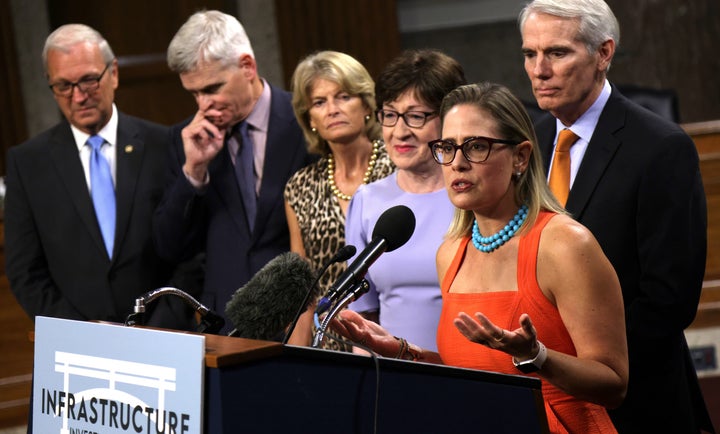
Senators Go After Unemployment Fraud — But Not Tax Cheats — To Pay For Infrastructure
Under pressure from conservative groups, GOP senators refused to strengthen IRS enforcement to pay for the bipartisan infrastructure deal.
Take a look > "The Senate voted to move forward on a $1 trillion infrastructure package Wednesday, after a bipartisan group of senators agreed on a deal that includes $500 billion in new spending on roads, bridges and waterways.
Much of the wrangling was over not just what would be in the bill but how to pay for it. And on that front, Republicans ― and conservative anti-tax groups ― seemed to get most of what they wanted.
Democrats proposed raising taxes on wealthy individuals and corporations, as well as giving the IRS more funding to crack down on tax cheats.
The IRS estimated that it missed out on an average of $441 billion per year from 2011 through 2013 due to taxpayers not complying with the law. IRS Commissioner Charles Rettig, an appointee of former President Donald Trump, said the tax gap could be as much as $1 trillion annually. The Congressional Budget Office has estimated that another $40 billion of IRS funding would yield $103 billion in revenue.
The richest 25% of Americans also pay less in taxes than many ordinary workers do, and many of the nation’s top earners pay next to nothing in taxes, according to a recent ProPublica report.
But Republican senators put their foot down and said they would oppose legislation with stepped-up IRS enforcement.
Instead, the bipartisan legislation will go after fraud in the unemployment insurance program, which benefits struggling Americans who are out of work. Unemployment insurance fraud exploded during the pandemic, much of it geared toward exploiting obsolete state insurance systems.
Democrats say they have no problem rooting out waste and fraud in the unemployment program, but they take issue with going after only that pot of money ― long a target of Republicans ― and not after people who are evading their taxes as well.
“Republicans caved to their donors who don’t want any increased scrutiny on their tax evasion schemes, and instead set their sight on various COVID-relief programs,” Senate Finance Committee Chair Ron Wyden (D-Ore.) said. “I’m all for cracking down on unemployment insurance fraud by criminal syndicates and upgrading unemployment insurance technology, but it’s absurd to say you’re only going to go after unemployment insurance fraud when the IRS commissioner estimates that tax cheats are potentially costing us $1 trillion per year.” . .
READ MORE > Amanda Terkel, Arthur Delaney, and Igor Bobic
____________________________________________________________________________
It's in and It's Big: Senate Unveils $1T Infrastructure Bill
The Infrastructure Investment and Jobs Act clocked in at some 2,700 pages, and senators could begin amending it soon
"After much delay, senators unveiled a nearly $1 trillion bipartisan infrastructure package, wrapping up days of painstaking work on the inches-thick bill and launching what is certain to be a lengthy debate over President Joe Biden’s big priority.
The Infrastructure Investment and Jobs Act clocked in at some 2,700 pages, and senators could begin amending it soon. Despite the hurry-up-and-wait during a rare weekend session, emotions bubbled over once the bill was produced Sunday night. The final product was not intended to stray from the broad outline senators had negotiated for weeks with the White House.
“We haven’t done a large, bipartisan bill of this nature in a long time,” said Senate Majority Leader Chuck Schumer, D-N.Y. He said a final vote could be held “in a matter of days.”
A key part of Biden’s agenda, the bipartisan bill is the first phase of the president's infrastructure plan. It calls for $550 billion in new spending over five years above projected federal levels, what could be one of the more substantial expenditures on the nation’s roads, bridges, waterworks, broadband and the electric grid in years.
Senators and staff labored behind the scenes for days to write the massive bill. It was supposed to be ready Friday, but by Sunday, even more glitches were caught and changes made.
Late Sunday, most of the 10 senators involved in the bipartisan effort rose on the Senate floor to mark the moment.
“We know that this has been a long and sometimes difficult process, but we are proud this evening to announce this legislation,” said Sen. Kyrsten Sinema, D-Ariz., a lead negotiator. The bill showed “we can put aside our own political differences for the good of the country,” she said
. . .Over the long weekend of starts and stops, Schumer repeatedly warned that he was prepared to keep lawmakers in Washington for as long as it took to complete votes on both the bipartisan infrastructure plan and a budget blueprint that would allow the Senate to begin work later this year on a massive, $3.5 trillion social, health and environmental bill.
Among the major new investments, the bipartisan package is expected to provide $110 billion for roads and bridges, $39 billion for public transit and $66 billion for rail. There’s also set to be $55 billion for water and wastewater infrastructure as well as billions for airports, ports, broadband internet and electric vehicle charging stations.
On Language: The word 'WOKE'
How has the meaning of the word “woke” evolved?
“WOKEISM, MULTICULTURALISM, all the -isms—they’re not who America is,” tweeted Mike Pompeo in 2019 on his last day as secretary of state. Until a few years ago “woke” meant being alert to racial injustice and discrimination. Yet in America’s fierce culture wars the word is now more likely to be used as a sardonic insult. How did the word turn from a watchword used by black activists to a bogeyman among conservatives?
In 1938 singer Huddie Ledbetter warned black people they “best stay woke, keep their eyes open” going through Scottsboro, Alabama, the scene of a famous mistrial involving nine young black men.
> The word was first defined in print by William Melvin Kelley, a black novelist, in an article published in the New York Times in 1962. Writing about black slang, Mr Kelley defined it as someone who was “well-informed, up-to-date”. Black people used it in reference to racism and other matters for decades, but the word only entered the mainstream much later.
> When the Black Lives Matter movement grabbed global attention during anti-racism protests after the killing in 2014 of Michael Brown, an unarmed black teenager, it was inseparable from the phrase “stay woke”.

As the word spread into internet culture, thanks in part to the popular #staywoke hashtag, its usage quickly changed.
It began to signify a progressive outlook on a host of issues as well as on race. And it was used more often to describe white people active on social media than it was by black activists, who criticised the performatively woke for being more concerned with internet point-scoring than systemic change.
> Piggybacking corporations, such as Pepsi and Starbucks, lessened the appeal to progressives. Woke’s usage went from activist to passé, a common fate of black vernacular that makes it into the mainstream (other recent victims include “lit” and “on fleek”, two terms of praise).
Almost as soon as the word lost its initial sense it found new meaning as an insult—a linguistic process called pejoration.
> Becoming a byword for smug liberal enlightenment left it open to mockery. It was redefined to mean following an intolerant and moralising ideology.
> The fear of being cancelled by the “woke mob” energised parts of the conservative base. Right-wing parties in other countries noticed that stoking a backlash against wokeness was an effective way to win support.
Another semantic conflict is brewing. . ."
READ MORE > The Economist | Jul 30th 2021
TONIGHT 8-11PM: Live Music Angel Robles
ANGEL ROBLES is k nown for an eclectic set list that spans multiple genres, . . He utilizes loop pedals, acoustic guitars, and backing...

-
 Flash News: Ukraine Intercepts Russian Kh-59 Cruise Missile Using US VAMPIRE Air Defense System Mounted on Boat. Ukrainian forces have made ...
 -
A nor’easter is about to hit the Northeast in May. That’s very unusual.

