Now really - Ferdinand Marcos was the elected President of The Phillipines when
he started out wasn't he the chosen one to establish a democracy in The Far East,
but like so many 'regime changes', somehow they manage to accumulate fortunes.
Here's a short teaser on quite a long story:
Almost 30 years ago, an American court ruled that victims of the Ferdinand Marcos regime in the Philippines should be compensated. The money was very well hidden
"Senator Paul Laxalt was in a classified briefing about political chaos in the Philippines when an assistant interrupted: He had an urgent phone call from Manila. On the other end of the line was Ferdinand Marcos, the country’s president. Marcos wanted to know if it was true that Ronald Reagan wished to see him step down.
It was Feb. 24, 1986, and for the past several days millions of people had swarmed Manila’s streets in protest. The immediate trigger was Marcos’s victory in a seemingly fixed election, but the ire went much deeper. In the 1970s, Marcos had led a military government of uncommon brutality, disbanding Congress, silencing the media, and using the army to torture and kill thousands of citizens. . ."
Right-to-the-point: Cybersecurity at eight federal agencies is so poor that four of them earned grades of D, three got Cs, and only one received a B in a report issued Tuesday by a US Senate Committee.
“It is clear that the data entrusted to these eight key agencies remains at risk,” the 47-page report stated. “As hackers, both state-sponsored and otherwise, become increasingly sophisticated and persistent, Congress and the executive branch cannot continue to allow PII and national security secrets to remain vulnerable.”
The report, issued by the Senate Committee on Homeland Security and Governmental Affairs, comes two years after a separate report found systemic failures by the same eight federal agencies in complying with federal cybersecurity standards. The earlier report found that during the decade spanning 2008 to 2018, the agencies failed to properly protect personally identifiable information, maintain a list of all hardware and software used on agency networks, and install vendor-supplied security patches in a timely manner.
The 2019 report also highlighted that the agencies were operating legacy systems that were costly to maintain and hard to secure. All eight agencies—including the Social Security Administration and the Departments of Homeland Security, State, Transportation, Housing and Urban Development, Agriculture, Health and Human Services, and Education—failed to protect sensitive information they stored or maintained.
Tuesday’s report, titled Federal Cybersecurity: America’s Data Still at Risk, analyzed security practices by the same agencies for 2020. It found that only one agency had earned a grade of B for its cybersecurity practices last year.
“What this report finds is stark,” the authors wrote. “Inspectors general identified many of the same issues that have plagued Federal agencies for more than a decade. Seven agencies made minimal improvements, and only DHS managed to employ an effective cybersecurity regime for 2020. As such, this report finds that these seven Federal agencies still have not met the basic cybersecurity standards necessary to protect America’s sensitive data.”
The authors assigned the following grades:
Department of State
D
Department of Transportation
D
Department of Education
D
Social Security Administration
D
Department of Agriculture
C
Department of Health and Human Services
C
Department of Housing and Urban Development
C
Department of Homeland Security
B
> State Department systems, the auditors found, frequently operated without the required authorizations, ran software (including Microsoft Windows) that was no longer supported, and failed to install security patches in a timely manner.
> The department’s user management system came under particular criticism because officials couldn’t provide documentation of user access agreements for 60 percent of sample employees that had access to the department’s classified network. . .
> Details about the other departments are available in the report linked earlier.
> The report comes seven months after the discovery of a supply chain attack that led to the compromise of nine federal agencies and about 100 private companies. In April, hackers working on behalf of the Chinese government breached multiple federal agencies by exploiting vulnerabilities in the Pulse Secure VPN.
> For all of 2020, the White House reported 30,819 information security incidents across the federal government, an 8 percent increase from the prior year.
The agency offered best practices for remote work using wireless technologies.
By Mila Jasper
RELATED CONTENT
Senate turns up a decade of federal cybersecurity failure
By Derek B. Johnson Jun 26, 2019
About the Author: Derek B. Johnson is a former senior staff writer at FCW
Some of the biggest civilian agencies in the federal government have failed to act on internal cybersecurity audits dating back multiple years, a Senate report found.
The Senate Homeland Security and Governmental Affairs Subcommittee on Investigations dug through a decade of inspector general reports for eight federal agencies that rated lowest for compliance with the National Institute of Standards and Technology's Cybersecurity Framework in 2017: the Departments of Homeland Security, State, Transportation, Housing and Urban Development, Agriculture, Health and Human Services and Education as well as the Social Security Administration.
The primary finding was an overall failure to keep pace with even basic federal cybersecurity standards.
Seven of the eight agencies weren't properly protecting personally identifiable information, and six failed to regularly patch their machines and systems. Five agencies (DOT, HUD, HHS, State and SSA) weren't even able to keep an accurate inventory of their own IT assets, opening them up to potential intrusions or cyberattacks from unauthorized devices and users connected to their network, something that contributed to a 2018 data breach at NASA's Jet Propulsion Lab. . .
"Given the sustained vulnerabilities identified by numerous Inspectors General, the Subcommittee finds that the federal government has not fully achieved its legislative mandate under [the Federal Information Security Management Act] and is failing to implement basic cybersecurity standards necessary to protect America's sensitive data," the subcommittee wrote.
Other metrics showed similar results. Seven of the eight agencies mentioned in the Senate report received a grade of "C" or lower for FISMA compliance in the newest version of the Federal Information Technology Acquisition Reform Act Scorecard released by the House Oversight Committee June 26. Two (HHS and USDA) were given "F" scores, while DHS received the highest rating of the group with a "B." More broadly, a 2018 Office of Management and Budget assessment of the cybersecurity posture for 96 federal agencies found that 71 had programs that were at risk or high risk for a cyberattack, citing many of the same institutional problems referenced in the Senate report."
Nikola Founder’s Bombshell Fraud Charges May Hold Warning For Tesla’s Elon Musk
Let's skip the unsubstantiated innuendoes:
"Federal prosecutors indicted Nikola Corp. founder Trevor Milton this week for fraudulent statements in public appearances and on social media that misled investors about the market-readiness of the electric truck startup’s products and technology. In doing so, stock regulators also appeared to aim a veiled warning at another, higher-profile tech executive with a history of problematic social media comments: Elon Musk, Tesla’s billionaire CEO.
Milton, 39, adopted an outspoken style to tout Nikola as it transitioned from obscure startup to a Nasdaq-traded company via a 2020 SPAC merger. He echoed Musk’s bombast and promotional techniques for Tesla. In Milton’s case, that’s proven to be an unwise choice. The U.S. Attorney’s Office in Manhattan charged him on July 29 with two counts of securities fraud and one count of wire fraud. Milton pled not guilty to the charges later that day and was freed on $100 million bail. The Securities and Exchange Commission also filed a civil suit against him for securities fraud. . .
Despite its volatile history, including brushes with bankruptcy in 2008 and 2017, Tesla has begun to thrive, posting eight consecutive quarters of net income, expanding global sales and becoming the world's most valuable automaker with a $680 billion market capitalization. The brand’s success has brought a rush of EV startups, including Fisker, Lucid, Rivian and Lordstown Motors, each seeking to raise billions of dollars to get their rival cars and trucks into production. . .This week’s warning from stock regulators probably doesn’t indicate a re-examination of Musk’s past comments, said John Coffee, a professor of business law at Columbia University. “The SEC will probably only sue Musk for future statements, not past ones.”
. . .Milton’s claims about Nikola were certainly outrageous. Among others included in the indictment, he falsely stated in 2016 that a non-functioning hydrogen truck prototype was driveable; he oversaw the release of a misleading video of a prototype truck that was just rolling down a hill, not operating under its own power; he’d said the company was already producing hydrogen fuel when it wasn’t; and tweeted that the Badger pickup would include a built-in drinking fountain with water produced from its hydrogen fuel cell system.
“Milton lied about nearly every aspect of his business,” Manhattan U.S. Attorney Audrey Strauss said on Thursday.
“I do not think Musk has approached the reckless absurdity of Milton with his statements about producing hydrogen and rolling a non-functional truck downhill,” said Coffee. . .
How Mormon-raised Nikola founder Trevor Milton who quit amid fraud claims at the electric truck start-up went from college-dropout to billionaire after being inspired by mission trip to Brazil and set a Utah real-estate record when he bought $32.5M ranch
The Nikola founder, 39, stepped down Sunday amid reports the Justice Department will probe the company
Milton who has an estimated net worth of $3.2 billion, was raised Mormon alongside a brother and 3 sisters
He is thought to have married wife Chelsea in Wyoming in 2017, calling it 'the biggest day of my life'
Milton's mom died of cancer when he was 14; he has described the pressure that put his family under
But he has also so far avoided much of the spotlight, keeping his social media pages private
His Instagram profile reads: 'Husband to an amazing wife, Entrepreneur, Airplane Pilot & Dog Lover'
In November last year he set a Utah real-estate record, spending $32.5million on 2,670 acre ranch
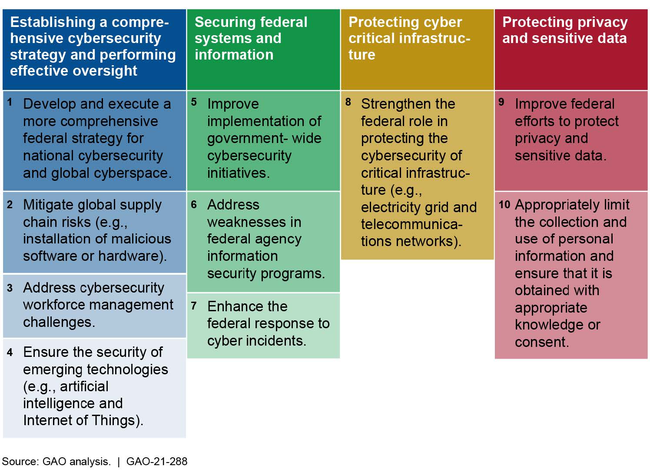
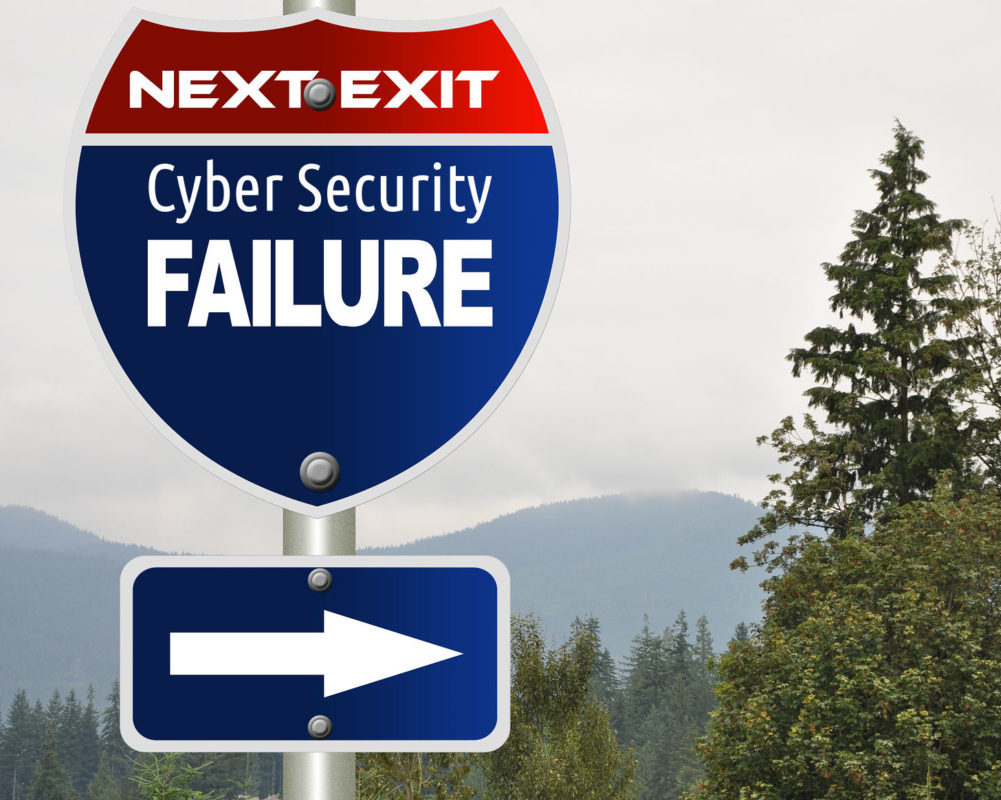

 The primary finding was an overall failure to keep pace with even basic federal cybersecurity standards.
 Milton, 39, adopted an outspoken style to tout Nikola as it transitioned from obscure startup to a Nasdaq-traded company via a 2020 SPAC merger. He echoed Musk’s bombast and promotional techniques for Tesla. In Milton’s case, that’s proven to be an unwise choice. The U.S. Attorney’s Office in Manhattan