The US added 850,000 new jobs in June, bringing total employment to 145.8 million. The leisure and hospitality industry was the largest contributor to job growth. Government had the second-most growth, with the majority of it stemming from public education. USAFacts tracks the job gains in this report.
June earnings were the highest inflation-adjusted average since the first time they were tracked in 2006, reaching $30.40 an hour. This total surpasses the earnings in May by 10 cents.
Nearly 30% of states have a larger labor force than before the pandemic, with states such as South Dakota and Nebraska reporting lower unemployment rates than before the pandemic.
Over 40% of new jobs in June originated from leisure and hospitality sector.
Connecticut and New Mexico have the highest unemployment rates at 7.9%, while Utah reported an unemployment rate of just 2.7%.
Learn more about your state’s unemployment rate in June right here.
Vaccinations and COVID-19 hotspots
New coronavirus cases per 100,000 people increased 300% from the week ending June 18 to the week ending July 21. The Delta variant, the most common strain of COVID-19 in the US, has increased cases to levels similar to late April 2021. USAFacts has ongoing updates about national virus hotspots, including:
Every state except Nebraska, which stopped reporting cases in June, reported an increase in cases between June and July.
Missouri, Arkansas, Florida, and Louisiana account for 30% of the nation's total COVID-19 cases.
Despite the uptick in cases, deaths tolls are similar to early July, the lowest levels of the pandemic.
Since the beginning of the pandemic there have been 33.5 million COVID-19 cases nationwide, causing 603,069 deaths since the start of 2020.
Curious about how COVID-19 cases in your state compare to the rest of the US? Click here to learn more about hotspots and vaccination rates.
Data ahead of Black Women's Equal Pay Day
For over 40 years, more women have earned an income than men, but their income still falls $14,900 short of that of the average man. Although this gap has decreased from $17,300 in 1953, unequal compensation persists in the American workforce, and the gap worsens when accounting for race. With Black Women’s Equal Pay Day coming up on August 3, here's a look at data on pay, race, and gender.
Between men and women of the same racial and ethnic group, Black women earned the closest to their male counterparts, falling $7,000 short of Black men.
Overall compensation for women relative to men is the most equal in healthcare support at 94 cents on the dollar. Legal positions had the greatest disparity, at 55 cents on the dollar.
To learn more about the pay gap between racial, ethnic, and gender groups, follow this link.
One last fact
Hispanic and Latino Americans report the highest levels of anxiety and depression during the COVID-19 pandemic at a rate of 36%, while Asian Americans report the lowest levels at 25%. Click here for more information on the monthly breakdown on percentages by race
Welcome to Route Fifty's This Week in Federal Funding! I'm Senior Editor Bill Lucia. One short programming note: I'll be on vacation this week, so there won't be a federal funding newsletter on Aug. 10. We'll pick things back up the following Tuesday, Aug. 17.
From R50 This Week: The next round of federal funding targeting homelessness—nearly $5 billion for HOME Investment Partnership Programs—could jump-start long-term efforts to reduce homelessness, writes veteran policy reporter Jacob Fischler. Meanwhile, Kate Queram reports that Virginia Gov. Ralph Northam hopes to spend $485 million in coronavirus relief money to shore up the state's behavioral health resources. She also writes about how localities and states can leverage federal funding to help small businesses in equitable ways.
What we're watching: County-city cooperation. Going forward, it's going to be interesting to track how, and to what extent, overlapping counties and cities coordinate on American Rescue Plan Act spending. "All of the counties received funds," said Eryn Hurley, an associate legislative director with the National Association of Counties. "That opens up a lot of doors when we're talking about county-city collaboration of how to invest these funds, to make sure that there's no duplication of efforts or that gaps go unseen." There are good reasons why this type of coordination can make sense. But working across levels of government can be complicated and different places, while overlapping, might have priorities that don't necessarily align with what their neighbors want to do. Hurley noted that the U.S. Treasury Department recently clarified that it's okay for communities to pool or transfer ARPA dollars to fund regional projects.
Leon County, Florida, where the state capital of Tallahassee is located, offers an example of a city and county working together to allocate a slice of federal funding. In mid-July, the city and county commissions jointly agreed to direct $6.2 million of ARPA spending towards programs focused on homelessness and housing. "With these funds we have the opportunity to make some significant inroads and help those struggling with homelessness," County Commission Chairman Rick Minor said at the time, according to the Tallahassee Democrat. Leon County received a total of about $57 million under ARPA, and Tallahassee about $46 million.
Many cities and counties, Hurley added, are still in the early stages of planning ARPA spending. "We definitely expect to see more examples of this type of collaboration," she said.
Elsewhere… Guaranteed income pilot programs are getting attention lately and gaining traction across the country––including in California where state lawmakers in July approved the nation's first state-funded plan. Some local governments are turning to ARPA dollars for guaranteed income programs or other types of direct cash assistance.
For example, the Minneapolis council last month signed off on a nearly $102 million ARPA spending plan with $3 million to provide up to $500 per month for two years for about 200 households. And in allocating $128 million of federal recovery funding in June, the Seattle City Council and Mayor Jenny Durkan approved $25 million for providing direct cash payments to families. An earlier round of this program targeted immigrant and refugee families. It delivered a total of $7.94 million in cash grants last year to 3,703 applicants, according to the city, with individual payments ranging from $1,000 to $3,000 depending on household size. The latest iteration will be broader in scope and the intent is that it will be open to all low-income families, with an emphasis on reaching people disproportionately affected by Covid-19. The National League of Cities had a recent rundown of some of the plans surfacing in cities that would involve using ARPA funds for different types of income support.
Two of the mayors on hand at our Future Cities event last week discussed guaranteed income efforts––Daniel Biss of Evanston, Illinois and Lauren Poe of Gainesville, Florida. (Recordings of those discussions and others are archived here.) Evanston's work around guaranteed income is taking place in the context of a reparations program funded by marijuana tax revenue. The reparations initiative for now has $10 million committed to it, of which about $400,000 has been allotted for a housing-related program. It's possible that some of the remainder could go to an income program that gives cash payments, Biss said. Separately, $300,000 from Northwestern University will go toward a guaranteed income pilot. Biss said Evanston is exploring the potential of using some of its roughly $43 million ARPA allotment for income support programs. "It's important for us to name the provision of a reasonable, workable income, to give people the ability to live in dignity," he said, "as not only a great thing for somebody else to do, but a core responsibility of the public sector." There are of course counterpointsto that view.
That's it for this week. In the meantime, if you have news tips or feedback on what we should be covering, if you want to share your community's story, or if you just want to say hello, please email us at: editor@routefifty.com. Thanks for reading!
Another day and another danger and risk to public health.
LIVE CAM Superstition Mountains
Digital images from Web-based cameras are updated every 5 minutes.
That ADEQ quirky Spongy Bob logo has got to go - this is serious stuff to not confused about!
"As for air quality, the current calm conditions and strong high pressure have lead to exceeding ozone levels. There is also regional smoke over a plentiful amount of states. This smoke is staying elevated but can also assist in increasing our ozone levels. We have extended our High Pollution Advisory into tomorrow and still have the High Pollution Watch in place for Friday, Saturday, and now Sunday as well.
NOTICE THE CHANGE:
HIGH POLLUTION ADVISORY is a forecast.
HIGH POLLUTION WATCH is a potential
High Pollution Advisory (HPA) | Notifies the public that the level of an air pollutant is forecast to exceed the federal health standard FOR CLEAN AIR
High Pollution Watch (HPW) | Notifies the public when there is potential for a pollutant to exceed the federal health standard FOR CLEAN AIR
Under the Environmental Quality Act of 1986, the Arizona State Legislature established the Arizona Department of Environmental Quality in 1987 as the state agency for protecting and enhancing public health and the environment of Arizona.
Even though there are slight chances for storms/rain on Sunday, afternoon hours are still expected to be sunny where ozone can quickly ramp up. As for particulates, PM10 (dust) and PM2.5 (smoke) are being primarily driven by localized activity and stagnate conditions. Both are forecast to stay in the Good Air Quality Index range through Sunday.
Air Quality Hourly Forecast | Phoenix
Updated On: 8/4/2021 - 8:49 AM
Click on each day to view forecast.
Wednesday Forecast:
Alert: Ozone High Pollution Advisory in effect for Wednesday
The Arizona Department of Environmental Quality (ADEQ) is issuing a High Pollution Advisory (HPA) for ozone effective Aug. 5, 2021, in the Phoenix area. ADEQ recommends that people limit outdoor activity while the HPA is in effect, especially children and adults with respiratory problems.
Ground-level ozone forms when two types of pollutants — volatile organic compounds (VOCs) and nitrogen oxides (NOx) — react in sunlight. These pollutants come primarily from automobiles, but also from other sources, including industries, power plants and products, such as solvents and paints. Generally, the highest levels of ozone occur in the afternoon.
Now really - Ferdinand Marcos was the elected President of The Phillipines when
he started out wasn't he the chosen one to establish a democracy in The Far East,
but like so many 'regime changes', somehow they manage to accumulate fortunes.
Here's a short teaser on quite a long story:
Almost 30 years ago, an American court ruled that victims of the Ferdinand Marcos regime in the Philippines should be compensated. The money was very well hidden
"Senator Paul Laxalt was in a classified briefing about political chaos in the Philippines when an assistant interrupted: He had an urgent phone call from Manila. On the other end of the line was Ferdinand Marcos, the country’s president. Marcos wanted to know if it was true that Ronald Reagan wished to see him step down.
It was Feb. 24, 1986, and for the past several days millions of people had swarmed Manila’s streets in protest. The immediate trigger was Marcos’s victory in a seemingly fixed election, but the ire went much deeper. In the 1970s, Marcos had led a military government of uncommon brutality, disbanding Congress, silencing the media, and using the army to torture and kill thousands of citizens. . ."
Right-to-the-point: Cybersecurity at eight federal agencies is so poor that four of them earned grades of D, three got Cs, and only one received a B in a report issued Tuesday by a US Senate Committee.
“It is clear that the data entrusted to these eight key agencies remains at risk,” the 47-page report stated. “As hackers, both state-sponsored and otherwise, become increasingly sophisticated and persistent, Congress and the executive branch cannot continue to allow PII and national security secrets to remain vulnerable.”
The report, issued by the Senate Committee on Homeland Security and Governmental Affairs, comes two years after a separate report found systemic failures by the same eight federal agencies in complying with federal cybersecurity standards. The earlier report found that during the decade spanning 2008 to 2018, the agencies failed to properly protect personally identifiable information, maintain a list of all hardware and software used on agency networks, and install vendor-supplied security patches in a timely manner.
The 2019 report also highlighted that the agencies were operating legacy systems that were costly to maintain and hard to secure. All eight agencies—including the Social Security Administration and the Departments of Homeland Security, State, Transportation, Housing and Urban Development, Agriculture, Health and Human Services, and Education—failed to protect sensitive information they stored or maintained.
Tuesday’s report, titled Federal Cybersecurity: America’s Data Still at Risk, analyzed security practices by the same agencies for 2020. It found that only one agency had earned a grade of B for its cybersecurity practices last year.
“What this report finds is stark,” the authors wrote. “Inspectors general identified many of the same issues that have plagued Federal agencies for more than a decade. Seven agencies made minimal improvements, and only DHS managed to employ an effective cybersecurity regime for 2020. As such, this report finds that these seven Federal agencies still have not met the basic cybersecurity standards necessary to protect America’s sensitive data.”
The authors assigned the following grades:
Department of State
D
Department of Transportation
D
Department of Education
D
Social Security Administration
D
Department of Agriculture
C
Department of Health and Human Services
C
Department of Housing and Urban Development
C
Department of Homeland Security
B
> State Department systems, the auditors found, frequently operated without the required authorizations, ran software (including Microsoft Windows) that was no longer supported, and failed to install security patches in a timely manner.
> The department’s user management system came under particular criticism because officials couldn’t provide documentation of user access agreements for 60 percent of sample employees that had access to the department’s classified network. . .
> Details about the other departments are available in the report linked earlier.
> The report comes seven months after the discovery of a supply chain attack that led to the compromise of nine federal agencies and about 100 private companies. In April, hackers working on behalf of the Chinese government breached multiple federal agencies by exploiting vulnerabilities in the Pulse Secure VPN.
> For all of 2020, the White House reported 30,819 information security incidents across the federal government, an 8 percent increase from the prior year.
The agency offered best practices for remote work using wireless technologies.
By Mila Jasper
RELATED CONTENT
Senate turns up a decade of federal cybersecurity failure
By Derek B. Johnson Jun 26, 2019
About the Author: Derek B. Johnson is a former senior staff writer at FCW
Some of the biggest civilian agencies in the federal government have failed to act on internal cybersecurity audits dating back multiple years, a Senate report found.
The Senate Homeland Security and Governmental Affairs Subcommittee on Investigations dug through a decade of inspector general reports for eight federal agencies that rated lowest for compliance with the National Institute of Standards and Technology's Cybersecurity Framework in 2017: the Departments of Homeland Security, State, Transportation, Housing and Urban Development, Agriculture, Health and Human Services and Education as well as the Social Security Administration.
The primary finding was an overall failure to keep pace with even basic federal cybersecurity standards.
Seven of the eight agencies weren't properly protecting personally identifiable information, and six failed to regularly patch their machines and systems. Five agencies (DOT, HUD, HHS, State and SSA) weren't even able to keep an accurate inventory of their own IT assets, opening them up to potential intrusions or cyberattacks from unauthorized devices and users connected to their network, something that contributed to a 2018 data breach at NASA's Jet Propulsion Lab. . .
"Given the sustained vulnerabilities identified by numerous Inspectors General, the Subcommittee finds that the federal government has not fully achieved its legislative mandate under [the Federal Information Security Management Act] and is failing to implement basic cybersecurity standards necessary to protect America's sensitive data," the subcommittee wrote.
Other metrics showed similar results. Seven of the eight agencies mentioned in the Senate report received a grade of "C" or lower for FISMA compliance in the newest version of the Federal Information Technology Acquisition Reform Act Scorecard released by the House Oversight Committee June 26. Two (HHS and USDA) were given "F" scores, while DHS received the highest rating of the group with a "B." More broadly, a 2018 Office of Management and Budget assessment of the cybersecurity posture for 96 federal agencies found that 71 had programs that were at risk or high risk for a cyberattack, citing many of the same institutional problems referenced in the Senate report."
Nikola Founder’s Bombshell Fraud Charges May Hold Warning For Tesla’s Elon Musk
Let's skip the unsubstantiated innuendoes:
"Federal prosecutors indicted Nikola Corp. founder Trevor Milton this week for fraudulent statements in public appearances and on social media that misled investors about the market-readiness of the electric truck startup’s products and technology. In doing so, stock regulators also appeared to aim a veiled warning at another, higher-profile tech executive with a history of problematic social media comments: Elon Musk, Tesla’s billionaire CEO.
Milton, 39, adopted an outspoken style to tout Nikola as it transitioned from obscure startup to a Nasdaq-traded company via a 2020 SPAC merger. He echoed Musk’s bombast and promotional techniques for Tesla. In Milton’s case, that’s proven to be an unwise choice. The U.S. Attorney’s Office in Manhattan charged him on July 29 with two counts of securities fraud and one count of wire fraud. Milton pled not guilty to the charges later that day and was freed on $100 million bail. The Securities and Exchange Commission also filed a civil suit against him for securities fraud. . .
Despite its volatile history, including brushes with bankruptcy in 2008 and 2017, Tesla has begun to thrive, posting eight consecutive quarters of net income, expanding global sales and becoming the world's most valuable automaker with a $680 billion market capitalization. The brand’s success has brought a rush of EV startups, including Fisker, Lucid, Rivian and Lordstown Motors, each seeking to raise billions of dollars to get their rival cars and trucks into production. . .This week’s warning from stock regulators probably doesn’t indicate a re-examination of Musk’s past comments, said John Coffee, a professor of business law at Columbia University. “The SEC will probably only sue Musk for future statements, not past ones.”
. . .Milton’s claims about Nikola were certainly outrageous. Among others included in the indictment, he falsely stated in 2016 that a non-functioning hydrogen truck prototype was driveable; he oversaw the release of a misleading video of a prototype truck that was just rolling down a hill, not operating under its own power; he’d said the company was already producing hydrogen fuel when it wasn’t; and tweeted that the Badger pickup would include a built-in drinking fountain with water produced from its hydrogen fuel cell system.
“Milton lied about nearly every aspect of his business,” Manhattan U.S. Attorney Audrey Strauss said on Thursday.
“I do not think Musk has approached the reckless absurdity of Milton with his statements about producing hydrogen and rolling a non-functional truck downhill,” said Coffee. . .
How Mormon-raised Nikola founder Trevor Milton who quit amid fraud claims at the electric truck start-up went from college-dropout to billionaire after being inspired by mission trip to Brazil and set a Utah real-estate record when he bought $32.5M ranch
The Nikola founder, 39, stepped down Sunday amid reports the Justice Department will probe the company
Milton who has an estimated net worth of $3.2 billion, was raised Mormon alongside a brother and 3 sisters
He is thought to have married wife Chelsea in Wyoming in 2017, calling it 'the biggest day of my life'
Milton's mom died of cancer when he was 14; he has described the pressure that put his family under
But he has also so far avoided much of the spotlight, keeping his social media pages private
His Instagram profile reads: 'Husband to an amazing wife, Entrepreneur, Airplane Pilot & Dog Lover'
In November last year he set a Utah real-estate record, spending $32.5million on 2,670 acre ranch





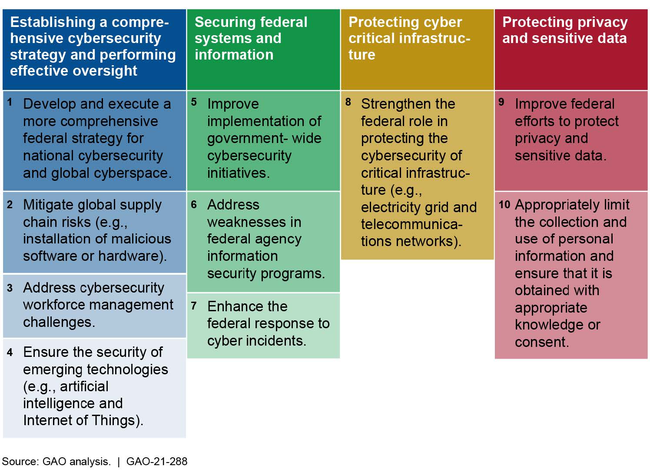



 The primary finding was an overall failure to keep pace with even basic federal cybersecurity standards.
 Milton, 39, adopted an outspoken style to tout Nikola as it transitioned from obscure startup to a Nasdaq-traded company via a 2020 SPAC merger. He echoed Musk’s bombast and promotional techniques for Tesla. In Milton’s case, that’s proven to be an unwise choice. The U.S. Attorney’s Office in Manhattan