Saturday, September 04, 2021

•Year-over-year rent growth in Mesa currently stands at 24.7%, compared to 5% at this time last year

Here is the most recent data for August 2021 sent by Olyvia Ruhlmann

Hi Tim,
This month our national rent index jumped another 2.1%, a slight dip from August’s 2.5% increase, but still pacing far ahead of the typical monthly growth from recent pre-pandemic years. With inflation concerns heating up, the national median rent has now increased by 13.8% in 2021, more than 3x the average growth rate of recent pre-pandemic years.
Rents are currently increasing in all of the nation’s 100 largest cities, and there are now just 8 cities remaining where rents are still below pre-pandemic levels. This rapid rent growth is a symptom of record high demand clashing with historically tight vacancies.
For more analysis of the newest monthly data, check out our full September Rent Report.
Here are some highlights:
  • Rents in Mesa increased 3.2% month-over-month, compared to 2.1% nationally. Month-over-month growth in Mesa ranks #21 among the nation's 100 largest cities.
  • Year-over-year rent growth in Mesa currently stands at 24.7%, compared to 5% at this time last year - This is the #9 fastest increase among the nation's 100 largest cities.
  • Median rents in Mesa currently stand at $1305 for a 1-bedroom apartment and $1497 for a two-bedroom.
 
 
Check out the full report here. And as a reminder, the full details of our rent estimate methodology are explained here
Best,
Olyvia
=========================================================================================

Apartment List National Rent Report

August 31, 2021

Introduction

Welcome to the September Apartment List National Rent Report. Our national index increased by 2.1 percent from July to August, a slight cool-down from 2.5 percent the month before, but nevertheless a continuation of rent growth that has persisted since the start of the year. Since January 2021, the national median rent has increased by a staggering 13.8 percent. To put that in context, rent growth from January to August averaged just 3.6 percent in the pre-pandemic years from 2017-2019.

With rents rising virtually everywhere, only a few cities remain cheaper than they were pre-pandemic. And even there, rents are rebounding quickly. In San Francisco, for example, rents are still 12 percent lower than they were in March 2020, but the city has seen prices increase by 20 percent since January of this year. At the other end of the spectrum, many of the mid-sized markets that have seen rents grow rapidly through the pandemic are only continuing to boom -- rents in Boise, ID are now up 39 percent since March 2020. Rent growth in 2021 so far is outpacing pre-pandemic averages in 98 of the nation’s 100 largest cities.

While rents continue to grow, apartment vacancies reach historic lows

Last summer, many cities were experiencing elevated vacancy rates coinciding with a sudden decrease in demand as renter households consolidated. This summer, however, demand has been continuously heating up, leading to a supply constricted market. In contrast to this time last year, when households were rapidly consolidating due to the uncertainty of the pandemic, the total number of households in the U.S. is now greater than ever before at over 131 million.1 Some of these households are likely aspiring homebuyers, but they’re facing a historically tight for-sale market, which has seen a 48 percent drop in inventory from last year. As would-be home buyers get priced out of the for-sale market, they continue to rent, likely a driving factor for the increasing incomes and budgets of renters searching on Apartment List. This high demand has created a tight market, resulting in our vacancy index dropping sharply throughout 2021 as prices increase rapidly. Rents are now up more than 13 percent this year, more than doubling the overall rate of inflation.

Rent growth heating up across the country

While our national rent index always masks some regional variation, the 2021 rent boom is affecting virtually every major market in the country. This is a big change from 2020, when rents fell precipitously in expensive markets while growing quickly in more-affordable ones. In 2021, rents are rising across the board. The chart below visualizes monthly rent changes in each of the nation’s 100 largest cities from January 2018 to August 2021. The color in each cell represents the extent to which prices went up (red) or down (blue) in a given city in a given month. Bands of dark blue in 2020 represent the large urban centers where rent prices cratered (e.g., New York, San Francisco, Boston), but those bands have quickly turned red as ubiquitous rent growth sweeps the nation in 2021. In 2020, 75 of these cities saw rent prices rise in August, at an average rate of 0.9 percent. This year, all 100 cities got more expensive in August, and average rent growth more than doubled.

Only 8 cities still have rents discounted from pre-pandemic levels

After prices rose again in August, some of the cities that saw dramatic pandemic-era rent drops are finally back to pre-pandemic prices, including the nation’s two largest: New York City and Los Angeles. In New York City, prices went up 5.8 percent last month, faster than anywhere else in the country. There, the city-wide median rent price is now $2,052, above $2,000 for the first time since March of last year. On the side of the country, Los Angeles experienced 2.5 percent rent growth this month, and the median rent price now stands at $1,874. Other major cities that eclipsed pre-pandemic rent prices this month include Boston, MA; Portland, OR; and St. Paul, MN.

That means that today, “pandemic pricing” is over in most of the country. Rents remain below pre-pandemic levels in just 8 large cities: four California cities in the San Francisco Bay Area (i.e, San Francisco, Oakland, San Jose, and Fremont); Minneapolis, MN; Washington, DC; Seattle, WA; and Jersey City, NJ. The chart below visualizes the rapid rent drops and rebounds in each of these places. Oakland and San Francisco consistently made headlines throughout the pandemic for staggering rent drops and today are the only two cities retaining double-digit price reductions. The remainder should be back to pre-pandemic prices before too long.

These COVID-era price fluctuations -- down quickly at the start of the pandemic, up quickly since the start of 2021 -- are significantly more volatile than the seasonal price fluctuations we normally see in these markets. The chart below shows month-over-month price changes from 2018 to August 2021. Monthly changes of +/- 2 percent were relatively rare in the years preceding the pandemic, but in 2020 and 2021 we have seen extended stretches where prices rise and fall at more than twice that rate.

Affordable mid-size markets continue to boom

For other parts of the country, rent growth today is nothing new.

CITY OF MESA PERMIT TO DISCHARGE POLLUTANTS EXPIRED ON AUGUST 29, 2015

NOTE: ADEQ proposes to modify the City’s permit to incorporate new state water quality law provisions
4.3 Public Involvement and Participation
This permit requires the involvement of the public, which includes an annual public SWMP workshop to solicit feedback on the stormwater program, and opportunities for citizens to participate in implementation of the stormwater program.
=========================================================================
Public participation in implementation of the stormwater program can include many different activities such as stream clean-ups, storm drain markings, and volunteer monitoring. Permittees are encouraged to work together with other entities that have an impact on stormwater (for example, schools, homeowner associations, DOTs, other MS4 permittees). Permittees are also encouraged to use existing processes in order to implement these public involvement requirements. 
========================================================================
II. STATUS OF PERMIT ADEQ issued the Phase I MS4 stormwater permit to the Permittee on July 30, 2010, with an effective date of August 30, 2010. In September 2014 the Permittee submitted the fourth year annual report to ADEQ for their renewal of their MS4 permit.
The stormwater permit for the Permittee expired on August 29, 2015. . .
>>

PUBLIC NOTICE | Proposed Modification of AZPDES Permit for the City of Mesa MS4 Phase I

Public Notice No. 21-07

Published in: Arizona Business Gazette on Sept. 2, 2021

AZPDES Permit No. AZS000004

ADEQ proposes to modify an Arizona Pollutant Discharge Elimination System (AZPDES) permit to discharge pollutants to Waters of the United States to the following applicant, subject to certain effluent limitations and special conditions:

Permittee

City of Mesa MS4 Phase I
P.O. Box 1466, Mail Stop 9950
Mesa, Arizona 85211-1466

Facility Information

ADEQ proposes to modify the City’s permit to incorporate new state water quality law provisions. The modification will authorize discharges to Protected Surface Waters. The permit establishes measurable goals to assess the efficacy of control measure design and implementation.

Review Documents

Original Published Public Notice | View/Print > 
Draft Permit | View > 
Draft Fact Sheet | View >

You may also review the above documentation in person at the ADEQ Record Center | Learn How >

Public Comment Period 

Dates: Sept. 2, 2021 – Oct. 2, 2021

Comments may be submitted as follows:
     By Email | Send Email > 
     By Mail (Must be postmarked or received by Oct. 2, 2021):

       ADEQ
       Rosi Sherrill
       Water Quality Division
       1110 W. Washington St.
       Phoenix, Arizona 85007

A public hearing request must be in writing and must include the reasons for such request

 
>> EXTRACTS OF ADDITIONAL INFORMATION
WHAT'S THIS?
4.3 Public Involvement and Participation This permit requires the involvement of the public, which includes an annual public SWMP workshop to solicit feedback on the stormwater program, and opportunities for citizens to participate in implementation of the stormwater program. Public participation in implementation of the stormwater program can include many different activities such as stream clean-ups, storm drain markings, and volunteer monitoring. Permittees are encouraged to work together with other entities that have an impact on stormwater (for example, schools, homeowner associations, DOTs, other MS4 permittees). Permittees are also encouraged to use existing processes in order to implement these public involvement requirements. 

II. STATUS OF PERMIT ADEQ issued the Phase I MS4 stormwater permit to the Permittee on July 30, 2010, with an effective date of August 30, 2010. In September 2014 the Permittee submitted the fourth year annual report to ADEQ for their renewal of their MS4 permit. The stormwater permit for the Permittee expired on August 29, 2015. The permit has remained administratively continued until the new permit is issued, in accordance with A.A.C. R18- 9-B904(C).
> This permit replaces the Permittee’s Phase I MS4 stormwater permit issued by ADEQ in 2010. ADEQ’s development of this permit included discussions with the Permittee and EPA, a review of information, including the associated audit report, the existing MS4 permit (AZS000004), the existing fact sheet, annual reports and other reference materials as appropriate.
 
ADEQ modified the permit in September, 2021 to incorporate new state requirements for dischargers to Protected Surface Waters as defined in A.R.S 49-221(G). III. SUMMARY OF PERMIT CHANGES This permit has been written to include and expand on specific permit conditions (including the Stormwater Management Program) and clarify reporting requirements.
Current Permit Proposed
Permit Reason for Change Stormwater Management Program; Appendix A (SWMP Measurable Goals) and Appendix C (SWMP Requirements) Directly incorporate all Stormwater Management Program requirements into the permit as permit conditions in place of separate appendices. Provide clarity and eliminate confusion. The SWMP requirements and conditions in the permit are fixed for the permit term. The permit will contain all requirements that will be used to assess compliance. SWMP: Public Education and Outreach and Public Involvement and Participation SWMP: Evaluation of target groups and changes adopted in response to targeted behaviors. Host an annual SWMP workshop to create opportunity for the public to participate in development and implementation of the Permittee’s SWMP. These requirements provide clarity on how the Permittee should respond to public outreach behaviors and provide involvement opportunities.
 
FACT SHEET Page 4 Current Permit Proposed Permit Reason for Change SWMP: Illicit Discharge Detection and Elimination (IDDE) SWMP: Inspections and screening for non-stormwater discharges into the MS4 may be conducted using the Illicit Discharge Detection and Elimination: A Guidance Manual for Program Development and Technical Assessments or another method of equal or improved effectiveness. To establish clear policies and procedures for tracing and eliminating illicit discharges and to ensure that individual incidents are addressed consistently. New language will provide clarity and certainty for implementing the IDDE program.
 
SWMP: Post Construction requirement to establish standards SWMP: Implement specific Post Construction measurable standard that the MS4 requires in ordinance
The 2010 permit required the Permittee to develop a postconstruction standard.
For the renewal permit ADEQ is incorporating the postconstruction standard that the Permittee has implemented and incorporated in code. SWMP: Post Construction no retrofit assessment SWMP: A retrofit feasibility assessment to address pollution-generating MS4 infrastructure. Determine feasibility to address repeat high pollutant discharges during the next permit term through retrofitting. Monitoring Requirements: Annual Pollutant Loading Removal of requirement for calculating annual pollutant loadings Based on annual reported data the pollutant loadings have shown little variation. Monitoring data that is collected during the permit term can be used during the next renewal to re-evaluate pollutants of concerns for the Permittee. Monitoring Requirements: 126 Priority Pollutants Monitoring Requirements: Reduced parameters required for annual wet weather monitoring Historic data is provided to reduce the required parameters for wet weather monitoring. The reduced table includes parameters that are commonly found in stormwater, have had exceedance in this MS4, or had detectable values that could potentially exceed a surface water quality standard.
 
FACT SHEET Page 5 Current Permit Proposed Permit
 
Reason for Change Monitoring Requirements: No discharge characterization requirement Monitoring Requirements: Discharge characterization monitoring during year 4 of the permit term Analytical characterization monitoring has been added for year 4 of the permit term and includes all other priority pollutants not monitoring throughout the permit term. The characterization data will be used during the next renewal application to reevaluate the Permittee’s pollutant of concerns and identify potential changes in stormwater quality during the permit term.
Annual Report paper form submittal, largely narrative Annual Report electronic submittal Electronic reporting rule deadline is December 21, 2020 for annual report requirement.
On February 28, 2020 (85 FR 11909) EPA proposed an extension of the deadline to December 21, 2023. ADEQ is collecting information that is measurable and enforceable.
Report Non-filers by mail semi-annually
Report Non-filers electronically to AZPDES@azdeq.gov within 30 days of identification
Reporting non-filers as soon as possible allows ADEQ to follow up on these facilities more effectively.
 
Electronic reporting available with the AZPDES inbox. Submit Discharge Monitoring Reports (DMRs) with annual report in paper form Submit Discharge Monitoring Reports (DMRs) electronically through myDEQ Electronic reporting rule deadline December 21, 2016 for DMRs and myDEQ is now available.
 
IV. SUMMARY OF PERMIT CONDITIONS
4.6 Industrial and Commercial Facilities (Non-municipally Owned)
MS4 permits must address stormwater discharges to the MS4 from industrial and commercial facilities. The permit requires the Permittee to continue to implement an inspection and oversight program to monitor and control pollutants in stormwater discharges to the MS4 from industrial and commercial facilities.
The Permittee is required to continue to implement and maintain an inventory of known industrial and commercial facilities that are identified in 40 CFR 122.26(d)(2)(iv)(C) which may be significant sources of pollutants and have the potential to discharge to the MS4.
4.7 Construction Sites MS4 permits must address construction-related requirements (and often more specific state requirements) found in the following Federal regulations – Phase I MS4 Regulations 40 CFR 122.26(d)(2)(iv)(D). Stormwater discharges from construction sites generally include sediment and other pollutants such as phosphorus and nitrogen, turbidity, pesticides, petroleum derivatives, construction chemicals, and solid wastes that may become mobilized when land surfaces are disturbed. The permit requires the Permittee to require construction site operators at
FACT SHEET Page 9
defined sites to meet certain minimum stormwater requirements relating to erosion and sediment control and pollution prevention, and to meet other restrictions imposed on them by the State, or local regulations. These minimum requirements clearly specify the expectations for addressing erosion control, sediment control, and pollution prevention control measures at construction sites.
4.8 Post-Construction Developed land changes the hydrology of sites, increasing impervious surfaces which lead to higher stormwater discharge volumes and higher pollutant loads. The purpose of implementing a post-construction standard under
4.8.B.1 is to reduce stormwater pollutants by maintaining or restoring stable hydrology in protected surface waters thereby protecting water quality by having post-construction hydrology mimic the original natural hydrology of the area.

MORE HIGH OZONE POLLUTION ADVISORIES: Phoenix and Maricopa County with Live Cameras

Intro High Pollution Advisory (HPA) | Notifies the public that the level of an air pollutant is forecast to exceed the federal health standard.
About ADEQ: Under the Environmental Quality Act of 1986, the Arizona State Legislature established the Arizona Department of Environmental Quality in 1987 as the state agency for protecting and enhancing public health and the environment of Arizona.
For more information, visit azdeq.gov.
======================================================================
=========================================================================

Current Views

  • Camera Image

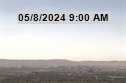
    South Mountain

    South Mountain is a rugged mountain south of metropolitan Phoenix. The view is from North Mountain looking toward the Phoenix downtown skyline and the South Mountains in the distance.
  • Camera Image

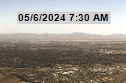
    Estrella Mountains

    The Sierra Estrellas form a jagged skyline southwest of metropolitan Phoenix. The camera view looks southwest from North Mountain.
  • Camera Image

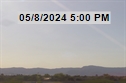
    White Tank Mountains

    The White Tank Mountains lie to the west of metropolitan Phoenix. The camera view looks west from Avondale.
  • Camera Image

    Camelback Mountain

    The distinctive profile of this inner city mountain gives it its name. It is bordered by the cities of Phoenix, Scottsdale and Paradise Valley. The view is from the Capital Mall area of downtown Phoenix looking northeast toward Camelback Mountain.
  • Camera Image

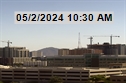
    Superstition Mountains

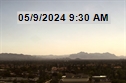
    The Superstition Mountains are part of the designated Superstition Wilderness Area. The view is looking east from downtown Mesa with the community of Apache Junction between the camera and the mountain vista.


FIND THE FORECAST Air Quality Hourly Forecast | View >

Air Quality Hourly Forecast | Phoenix

Click on each day to view forecast.

Saturday Forecast:

Alert: Ozone High Pollution Advisory in effect for Saturday ...through next Tuesday

========================================================================
One thing we will be closely watching as high pressure set-up northwest of Arizona is the possibility of smoke from wildfires wrapping around the high and into Arizona this weekend into the first part of next week. While not expecting high levels of PM-2.5 (smoke) at the surface in Phoenix, the presence of smoke higher up in the atmosphere can still result in an increase in ozone compared to how high it would otherwise be, as the smoke modified air mass can mix down to the surface.

Given high pressure over the region, resulting in fairly light winds at the surface, expecting ozone to rise above the federal health standard today, and with not much of a pattern change expected, that trend is forecast to continue through the first part of next week
As a result, an Ozone High Pollution Advisory will be in effect today through Sunday, with an Ozone High Pollution Watch in effect Monday and Tuesday.
 
 
The releases
> FOR IMMEDIATE RELEASE | High Pollution Advisory issued for ozone effective Sept. 4 & 5, 2021, in the Phoenix area
High Pollution Advisory HPA Maricopa County Phoenix

The Arizona Department of Environmental Quality (ADEQ) is issuing a High Pollution Advisory (HPA) for ozone effective Sept. 4 & 5, 2021, in the Phoenix area. ADEQ recommends that people limit outdoor activity while the HPA is in effect, especially children and adults with respiratory problems

>

Friday, September 03, 2021

Mohamed El-Erian: Markets think there will be a slower Fed taper timeline

Fractured Fairy Tales (un-restored) "The Wishing Hat"

Joseph Stiglitz says it’s time to rewire the U S economy... ‘We shouldn’t let a Crisis go to waste"

Description of streaming video content:
"U. S. economist Joseph Stiglitz believes now is a good time to rewire the U. S. economy, arguing that "we shouldn't let a crisis go to waste."
The former senior vice president and chief economist of the World Bank said on Thursday that the coronavirus pandemic has highlighted how the economic system isn't working, referencing inequality, the climate crisis and the lack of resilience of the market economy.
Stiglitz said he's optimistic that many existing problems can be tackled simultaneously, since they're related.
> "You can get a two-for-one," he told CNBC's Steve Sedgwick at the annual Ambrosetti Forum on the shores of Lake Como in Italy.
The U. S. should, for example, invest in building "green" infrastructure that creates jobs and helps bring down inequality, Stiglitz said.
"Once you put your mind to it, you realize that we can attack two or three of these problems simultaneously," the 78-year-old said, adding that the U. S. has the labor and the capital.
> Stiglitz said it would be "healthy" for the U. S. economy to raise taxes "a little bit" to finance "some of the things we need for the common good."
> In July, 130 countries backed a global minimum corporate tax rate of 15%, and Stiglitz said that move has ended the race to the bottom on taxes, highlighting how the U. S. is considering a 25% rate.
> A successful economy is not defined just by tax rates but also by other factors such as infrastructure and research and development efforts, Stiglitz said.
Investment bank picks the best energy stocks to buy right now — here are 9Bank of America names 6 global 'fear of missing out' stocks Goldman Sachs just picked these 10 new stocks to buy
 
He said there's a growing consensus that the U. S. needs to change outdated laws that have been in place for 125 years and address excessive market power across the whole of America.
"The concentration of market power has increased enormously in the last 35 years" he said.
 
Overregulation and overtaxing won't see the West lose its competitive edge to emerging powers and China, according to Stiglitz.
"I'm actually quite confident that this new agenda will actually strengthen us," he said.
 
Competition makes market economies more innovative, while monopolies reduce innovation, Stiglitz said. "We've seen how the big giants actually squash innovation," he said.

All data is taken from the source:
http://cnbc.com
Article Link:
https://www.cnbc.com/2021/09/03/josep...


This Is a 'One-Off Slowdown,' Says BlackRock's Rosenberg