Intro "SpaceX has a Federal Communications Commission license to launch nearly 12,000 low-Earth orbit satellites and is seeking permission to launch an additional 30,000. Amazon, which plans its own satellite constellation, has been urging the FCC to reject the current version of SpaceX's next-generation Starlink plan. Satellite operator Viasat supported Amazon's protest and separately urged a federal appeals court to halt SpaceX launches, but judges rejected Viasat's request for a stay."
SpaceX’s Starlink will come out of beta next month, Elon Musk says
With 600,000 orders, SpaceX boosting dish production to (hopefully) meet demand.
Screenshot from the Starlink order page, with the street address blotted out
"SpaceX's Starlink satellite-broadband service will emerge from beta in October, CEO Elon Musk said last night. Musk provided the answer of "next month" in response to a Twitter user who asked when Starlink will come out of beta.
SpaceX began sending email invitations to Starlink's public beta in October 2020. The service is far from perfect, as trees can disrupt the line-of-sight connections to satellites and the satellite dishes go into "thermal shutdown" in hot areas. But for people in areas where wired ISPs have never deployed cable or fiber, Starlink is still a promising alternative, and service should improve as SpaceX launches more satellites and refines its software.
SpaceX has said it is serving over 100,000 Starlink users in a dozen countries from more than 1,700 satellites. The company has been taking preorders for post-beta service and said in May that "over half a million people have placed an order or put down a deposit for Starlink."
It is still possible to place preorders and submit $99 deposits at the Starlink website, but the site notes that "[d]epending on location, some orders may take 6 months or more to fulfill." The deposits are fully refundable.
First 500,000 to order will “likely” get service
There are capacity limits imposed by the laws of physics, and SpaceX hasn't guaranteed that every person who preordered will actually get Starlink. Musk said in May that the first 500,000 people will "most likely" get service but that SpaceX will face "[m]ore of a challenge when we get into the several million user range."
We asked Musk today how many orders will be fulfilled by the end of 2021 and will update this article if we get a response. Musk has said the capacity limits will primarily be a problem in densely populated urban areas, so rural people should have a good chance at getting service.
SpaceX has US permission to deploy 1 million user terminals across the country and is seeking a license to deploy up to 5 million terminals. The number of Starlink preorders is up to 600,000 and SpaceX is reportedly speeding up its production of dishes to meet demand, . .
No changes to pricing yet
In beta, SpaceX has been charging a one-time fee of $499 for the user terminal, mounting tripod, and router, plus $99 per month for service. SpaceX hasn't announced any changes to the pricing, but that could change when it moves from beta to commercial availability. . ."
Photos published in the Salt Lake Tribune of BYU Football Game this past weekend in Provo, Utah
62,000 people without masks, not socially distanced at the BYU Football Game
...10 hours later on
Reason for the contrast: Because the Prophet only said masks needed to be worn at Church. He didn't say anything about wearing them at the BYU football game.
____________________________
Sidenote:.. One more thing that is also two faced.
Let's take a huge concept hyper-local: In the US, a single fab, Intel’s 700-acre campus in Ocotillo, Arizona, produced nearly 15,000 tons of waste in the first three months of this year, about 60% of it hazardous.
It also consumed 927m gallons of fresh water, enough to fill about 1,400 Olympic swimming pools, and used 561m kilowatt-hours of energy.
ONE TAKE-AWAY: Chip companies make lots of money. So even though all these green carbon measures would have a cost, they can afford it.
"The semiconductor industry has a problem. Demand is booming for silicon chips, which are embedded in everything from smartphones and televisions to wind turbines, but it comes at a big cost: a huge carbon footprint.
The industry presents a paradox. Meeting global climate goals will, in part, rely on semiconductors. They’re integral to electric vehicles, solar arrays and wind turbines. But chip manufacturing also contributes to the climate crisis.
> It requires huge amounts of energyandwater – a chip fabrication plant, or fab, can use millions of gallons of water a day – and creates hazardous waste.
As the semiconductor industry finds itself increasingly under the spotlight, it is starting to grapple with its climate impacts.
Last week Taiwan Semiconductor Manufacturing Company, the world’s largest chipmaker, which supplies chips to Apple, pledged to reach net zero emissions by 2050. The company aims to “broaden our green influence and drive the industry towards low-carbon sustainability”, said the TSMC chairman, Mark Lui.
But decarbonizing the industry will be a big challenge.
TSMC alone uses almost 5% of all Taiwan’s electricity, according to figures from Greenpeace, predicted to rise to 7.2% in 2022, and it used about 63m tons of water in 2019. The company’s water use became a controversial topic during Taiwan’s drought this year, the country’s worst in a half century, which pitted chipmakers against farmers.
> Chip manufacturing, rather than energy consumption or hardware use, “accounts for most of the carbon output” from electronics devices, the Harvard researcher Udit Gupta and co-authors wrote in a 2020 paper. . .A global shortage of high-end chips,. .has increased focus on the industry.
CONSEQUENCES: In a tight market, automakers found themselves at the back of the chip queue, far behind much bigger-scale semiconductor customers such as Apple, who use the chips to give computing power to their smartphones, laptops and other devices.
> . . ."Recently, I started seeing our effects on the environment completely come to the forefront,” said Sohini Dasgupta, principal design engineer at ON Semiconductors.
Two years ago, she said, the industry “was sitting on the fence, in the middle of the pack, saying: ‘Yes, sustainability is important, but we don’t know what to do with it’”. But now she sees movement: “Every day it pops up in our emails, what our company’s doing, what other companies are doing,” she said. . .
The rise of ethical investing has helped, according to Mark Li, a semiconductor analyst at the investment firm Bernstein. Fund managers increasingly market “green funds” and investors are asking more questions about companies’ environmental, social, and governance (ESG) impact. “Over the last three years, the voice of ESG investment is much louder than before,” Li said. Ultimately, this changes how companies behave, he added. . .
> Greater availability of renewable energy is helping chipmakers reduce their carbon footprint. Intel made a commitment to source 100% of its energy from renewable sources by 2030, as did TSMC, but with a deadline of 2050.
> Energy consumption accounts for 62% of TSMC’s emissions, said a company spokesperson, Nina Kao. The company signed a 20-year deal last year with the Danish energy firm Ørsted, buying all the energy from a 920-megawatt offshore windfarm Ørsted is building in the Taiwan Strait. . .
> As well as switching to renewables, chipmakers could also implement efficiencies in fabs. . .
> Fabs could be more efficient in regulating air and water temperature, humidity, and pressure
> There is also innovation aimed at tacklingthe worst-polluting materials used in making semiconductors. The chip industry uses different gases during the production process, many of which have a significant climate impact . . ."
1 Why Intel and TSMC are building water-dependent chip factories in one of the driest U.S. states
By Sam Shead | CNBC
The biggest semiconductor manufacturers in the world are quickly trying to build new factories as the global chip crisis continues to wreak havoc on a plethora of industries.
U.S. semiconductor giant Intel announced in March that it plans to spend $20 billion on two new chip plants in Arizona. Separately, TSMC (Taiwan Semiconductor Manufacturing Company) said it was going to build a $12 billion factory in Arizona, and chief executive C.C. Wei said Wednesday that construction had already begun.
The Grand Canyon State may not, however, seem like the most obvious place for a chip “foundry” or “fab” since the high-tech manufacturing plants guzzle millions of gallons of water every day.
At present, in the face of climate change, Arizona is facing a deepening water crisis and some of the state’s all-important aquifers have an uncertain future.
Arizona received just 13.6 inches of rainfall on average per year between 1970 and 2000, according to the NOAA National Climatic Data Center, making it the fourth driest state nationwide. Conversely, Hawaii and Louisiana recorded the highest levels of average yearly precipitation in the U.S. over the same time frame, reporting 63.7 inches and 60.1 inches, respectively.
CNBC is an American pay television business news channel owned by NBCUniversal News Group, a division of NBCUniversal, with both indirectly owned by Comcast. Headquartered in Englewood Cliffs, New Jersey, the network primarily carries business day coverage of U.S. and international financial markets.
Jun 4, 2021 — Why Intel and TSMC are building water-dependent chip factories in one of ... Arizona received just 13.6 inches of rainfall on average per year ...
Mainstream Reports: MAKING CHIPS TAKES LOTS OF WATER
By now we all know that water is one of the most precious commodities here in the desert. We can't live without this valuable natural resource that is increasingly getting 'monetized in the marketplace - a scarce commodity that can be extracted, bought and sold and traded.
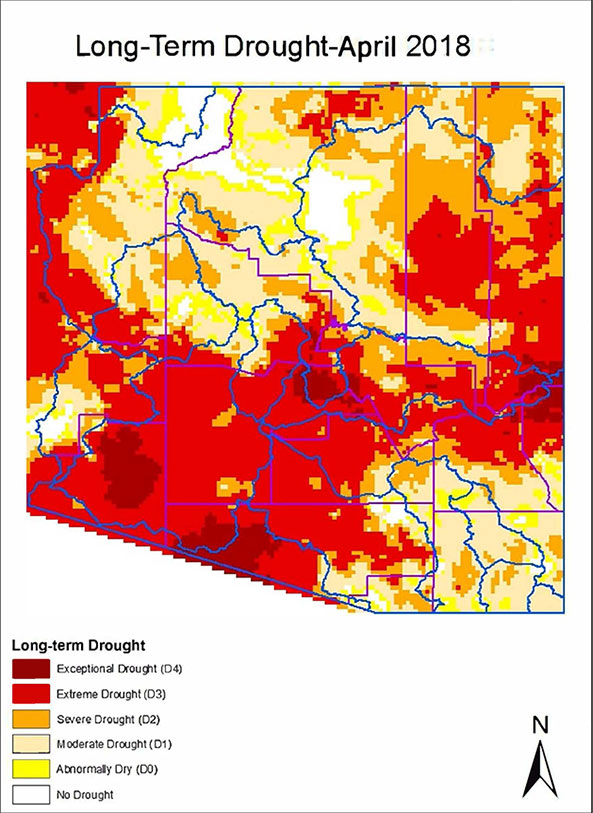
INSERT: Extreme Drought (D3)- across much of central, southern, and western Arizona, as well as Southeast California In Arizona: Maricopa, northern Pinal, southern Gila, La Paz, and Yuma counties
"Major semiconductor manufacturers looking to expand in Arizona will likely be spared from water cuts induced by an unprecedented water shortage in the Southwest, at least for now. . .
As part of the scramble to end a shortage of another kind — the global dearth in semiconductor chips — both Intel and TSMC plan to open new facilities in Arizona. But they’re setting up shop just as one of the worst droughts in decades grows worse across the Western US.
> A factory or “fab” for making semiconductors needs a lot of water to operate. It’ll guzzle between 2 to 4 million gallons of water a day by some estimates, using the water to cool down equipment and clean silicon wafers.
That’s about as much water as 13,698 to 27,397 Arizona residents might use in a day.
Fabs are also pretty picky when it comes to water quality, they need to use “ultra-pure” water to prevent any impurities from damaging the chips.
Water shortages loom over future semiconductor fabs in Arizona
Chipmakers are setting up shop in Arizona as drought worsens
Federal authorities officially declared a shortage on the Colorado River for the first time ever this week, which will trigger water cuts in several states and Mexico starting January 1st, 2022.
How the planned water cuts shake out depends on who is given top priority under a complex set of water-sharing agreements. Arizona, with more junior rights to the water than other states it shares it with, will suffer the biggest cuts, losing about 8 percent of the total water it receives a year. But for now, those cuts will primarily affect agriculture, which used more than 70 percent of the state’s water in 2019. Water for tribes, municipal use, and industry are given higher priority in the state, shielding residents and companies unless a more severe water shortage is eventually declared at Lake Mead.
Industries in the state used up 6 percent of Arizona’s water in 2019, but that could grow as chipmakers and other manufacturers move in. In March, Intel announced that it will spend $20 billion to build two new semiconductor factories in Chandler, Arizona, an expansion of its existing campus there.
Last year, the company pledged that by 2030 it will restore and return more freshwater than it uses. It’s nearing that benchmark in Arizona, where Intel says it cleaned up and returned 95 percent of the freshwater it used in 2020. It has its own water treatment plant at its Ocotillo campus in Chandler that’s similar to a municipal plant. There’s also a “brine reduction facility,” a public-private partnership with the city of Chandler, that brings 2.5 million gallons of Intel’s wastewater a day back to drinking standard. Intel uses some of the treated water again, and the rest is sent to replenish groundwater sources or be used by surrounding communities.
Chip manufacturing giant TSMC also has its eye on Arizona. In May 2020, the company announced plans to build a $12 billion new fab near Phoenix, which would be its first in Arizona and its second in the US (its first is in Washington state). TSMC could be planning to build up to six new fabs in Arizona over the next 10 to 15 years, Reuters reported earlier this year.
TSMC said in an email to The Verge that for now it doesn’t expect the water shortage to have “any impact” on its plan to build a new fab in Arizona, although it says it will “continue to monitor the water supply situation closely.”
Most of TSMC’s fabs are in Taiwan, where earlier this year the worst drought in more than 50 years threatened the already stressed supply chain for chips. TSMC plans to finish construction this year of a new water treatment plant in Taiwanthat could eventually recycle enough water to supply half of the company’s daily needs, Nikkei Asia reported in April.
While Taiwan still dominates semiconductor manufacturing, Arizona is emerging as a new hub. The Biden administration has prioritized building up a domestic supply of semiconductor chips as the current shortage affects everything from cars to phones and game consoles. Two other companies, NXP and Microchip Inc., have fabs in the state also. NXP didn’t immediately respond to a request for comment from The Verge, and Microchip declined to comment.
While Intel recycles much of its water, more fabs will mean it will need to send even more water through its systems. The company says that Arizona has been “vital” to Intel’s operations for more than four decades. The state is already home to its first “mega-factory network” and its newest semiconductor fab. Intel used more than 5.2 billion gallons of water in Arizona in 2020 — roughly 20 percent of which was reclaimed water, according to its most recent corporate responsibility report.
Arizona is notoriously dry, which leaves it dependent on water-sharing agreements with other states. Arizona gets a hefty 38 percent of its water from the Colorado River, and with water from the river running low, the state is expected to face some tough choices in the future.The state has been in a drought since 1994, and climate change is making things worse. Now, the vast majority of Arizona faces a “severe” drought, according to the US Drought Monitor. "
Here is an EYE OPENER: Read this >> "If you can't handle the heat, give up your pensions and GTFO of the kitchen. It's time cops were given as much scrutiny as retail workers.
If they can't handle that, they've got plenty of options in the private sector."
California Legislators Continue To Anger Cops By Introducing Legislation Demanding More Transparency And Accountability
An immense amount of reform has hit cops in California over the last few years.
The state very recently made it possible for public records requesters to obtain records about police misconduct -- something that had been statutorily-shielded for decades. That, of course, made local law enforcement agencies unhappy. They sued. They let the state Attorney General argue against the interests of California residents. They fucked around and found out. And yet, they still pretended they could shred their way through this.
There's more reform on the horizon. If cops didn't like having their misconduct records being made available to the public, they're really not going to like what's coming next. The general public could have access to even more records -- ones that may confirm assumptions about cops and their motivations.
In the two years since a state transparency law went into effect, San Francisco police have released previously secret disciplinary records from dozens of police shootings and a few incidents of police misconduct.
Now the same state lawmaker behind Senate Bill 1421 is pushing new legislation that would expand the scope of disclosable records beyond the current parameters, which only include shootings and proven allegations of dishonesty or sexual assault.
The new legislation, Senate Bill 16 by Sen. Nancy Skinner, D-Berkeley, would also require police to disclose cases involving sustained findings of bias or discrimination and unlawful searches or arrests.
All this bill needs is the governor's signature. That law enforcement failed to have this killed before it could make its way to the governor's desk perhaps indicates their unions and lobbyists are no longer as powerful as they once were. And police officers have no one to blame but themselves for the lack of sympathy displayed by politicians and the public they were supposed to be serving for all these years.
BUT WAIT! THERE'S MORE.
Let's sit back and enjoy the vicarious anguish of government employees who've gotten away with so much for so long.
More trouble is on the way for the supposedly small group of "bad apples." (Cop shops love their bad apples, btw.). . .This seems so obvious it shouldn't be controversial. Bad cops shouldn't be allowed to become sign-able free agents if they've violated the law. They're in the law enforcement business. If they can't follow the law, they shouldn't be able to call themselves law enforcement officers.
Of course, there's incoherent opposition.
Opposing lawmakers, as well as many law enforcement organizations, have charged that the bill leaves police officers at the risk of being denounced due to revenge against being the arresting officer, as well as bias concerns on the decertification board due to it being mostly members of the public.
“It is grossly unfair,” said Republican Assemblyman Kelly Seyarto (R-Murrieta) on Friday. “None of the other 46 states [with decertification boards] have a similar composition. None of them are this lopsided.”
I don't even know what "due to revenge against being the arresting officer" is supposed to mean. And the Assemblyman's comments do nothing to clarify the complaints. All it does is amplify the outrage officers are apparently feeling in response to being forced to be both accountable and transparent while collecting paychecks written by the public.
If you can't handle the heat, give up your pensions and GTFO of the kitchen. It's time cops were given as much scrutiny as retail workers. If they can't handle that, they've got plenty of options in the private sector."
Thank you for reading this Techdirt post. With so many things competing for everyone’s attention these days, we really appreciate you giving us your time. We work hard every day to put quality content out there for our community.
Techdirt is one of the few remaining truly independent media outlets. We do not have a giant corporation behind us, and we rely heavily on our community to support us, in an age when advertisers are increasingly uninterested in sponsoring small, independent sites — especially a site like ours that is unwilling to pull punches in its reporting and analysis.
While other websites have resorted to paywalls, registration requirements, and increasingly annoying/intrusive advertising, we have always kept Techdirt open and available to anyone. But in order to continue doing so, we need your support. We offer a variety of ways for our readers to support us, from direct donations to special subscriptions and cool merchandise — and every little bit helps. Thank you.






:no_upscale()/cdn.vox-cdn.com/uploads/chorus_asset/file/22649983/usdroughtmonitor_weekly_ndmc__web__2021_06_01.png)