Saturday, January 15, 2022

TIME TO LOOK UP NOW: Microsoft Defender weakness lets hackers bypass malware detection

It's been long running

Microsoft Defender weakness lets hackers bypass malware detection

"Threat actors can take advantage of a weakness that affects Microsoft Defender antivirus on Windows to learn locations excluded from scanning and plant malware there.

The issue has persisted for at least eight years, according to some users, and affects Windows 10 21H1 and Windows 10 21H2.

Lax permissions

Like any antivirus solution, Microsoft Defender lets users add locations (local or on the network) on their systems that should be excluded from malware scans.

People commonly make exclusions to prevent antivirus from affecting the functionality of legitimate applications that are erroneously detected as malware.

Since the list of scanning exceptions differs from one user to another, it is useful information for an attacker on the system, since this gives them the locations where they can store malicious files without fear of being detected.

Security researchers discovered that the list of locations excluded from Microsoft Defender scanning is unprotected and any local user can access it.

Regardless of their permissions, local users can query the registry and learn the paths that Microsoft Defender is not allowed to check for malware or dangerous files.
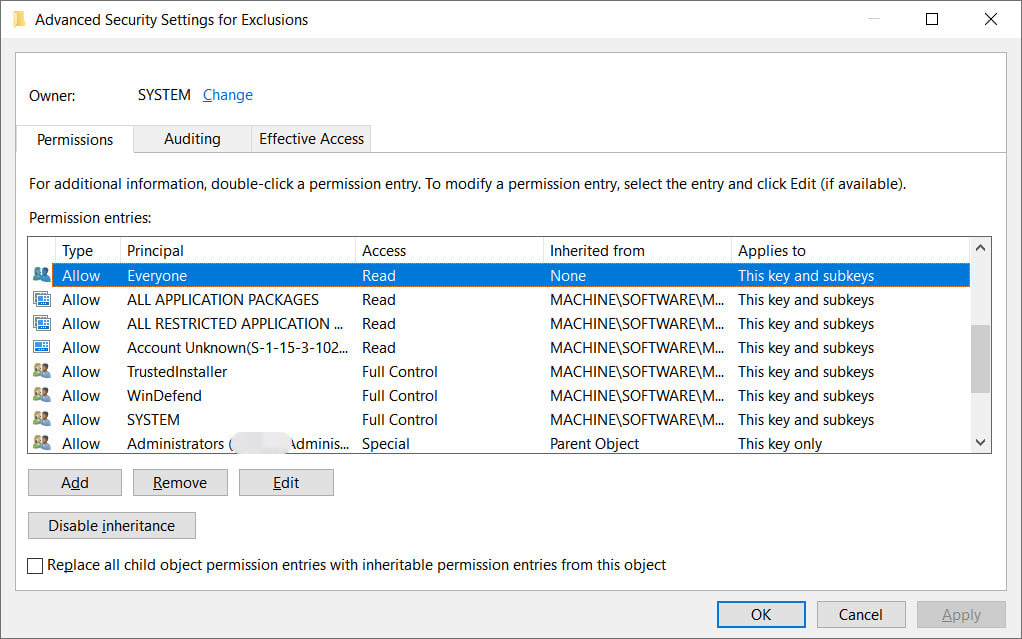
Antonio Cocomazzi, a SentinelOne threat researcher who is credited for reporting the RemotePotato0 vulnerability, points out that there is no protection for this information, which should be considered sensitive, and that running the “reg query” command reveals everything that Microsoft Defender is instructed not to scan, be it files, folders, extensions, or processes.
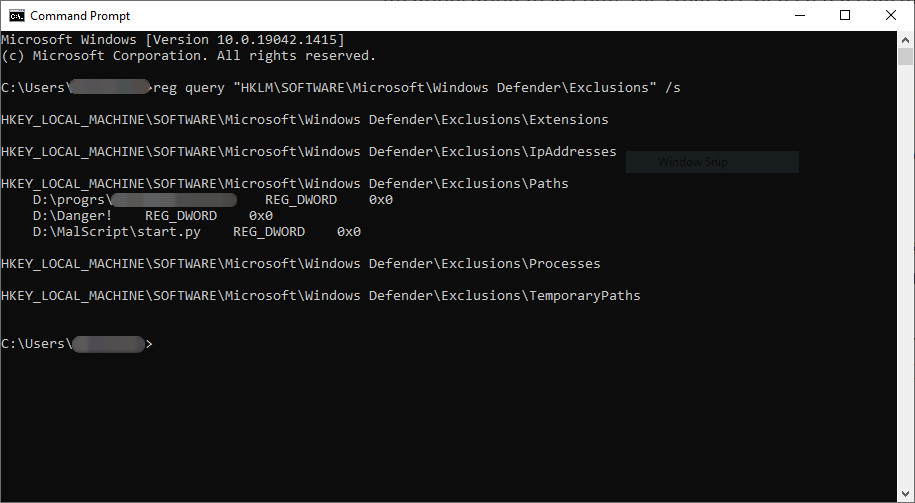
Another security expert, Nathan McNulty, confirmed that the issue is present on Windows 10 versions 21H1 and 21H2 but it does not affect Windows 11.

McNulty also confirmed that one can grab the list of exclusions from the registry tree with entries that store Group Policy settings. This information is more sensitive as it provides exclusions for multiple computers.

A security architect versed in protecting the Microsoft stack, McNulty warns that Microsoft Defender on a server has “automatic exclusions that get enabled when specific roles or features are installed” and these do not cover custom locations.

Although a threat actor needs local access to get the Microsoft Defender exclusions list, this is far from being a hurdle. Many attackers are already on compromised corporate networks looking for a way to move laterally as stealthily as possible.

Cybercrime alert: Criminals using consumer information to apply for  unemployment benefits

By knowing the list of Microsoft Defender exclusions, a threat actor that already compromised a Windows machine can then store and execute malware from the excluded folders without fear of being spotted.

In tests done by BleepingComputer, a malware strain executed from an excluded folder ran unhindered on the Windows system and triggered no alert from Microsoft Defender.

We used a sample of Conti ransomware and when it executed from a normal location Microsoft Defender kicked in and blocked the malware.

After placing Conti malware in an excluded folder and running it from there, Microsoft Defender did not show any warning and did not take any action, allowing the ransomware to encrypt the machine.

This Microsoft Defender weakness is not new and has been highlighted publicly in the past by Paul Bolton:

A senior security consultant says that they noticed the issue about eight years ago and recognized the advantage it provided to a malware developer.

"Always told myself that if I was some kind of malware dev I would just lookup the WD exclusions and make sure to drop my payload in an excluded folder and/or name it the same as an excluded filename or extension" - Aura

Given that it's been this long and Microsoft has yet to address the problem, network administrators should consult the documentation for properly configuring Microsoft Defender exclusions on servers and local machines via group policies.

TIME TO PROTECT AND DEFEND YOURSELF FROM THREAT ACTORS . . .Here we go again!

Ready?

HOWIE MAKES AN OVERDUE CORRECTION: in 2021 Mesa didn't get many newcomers. . .

Hey there! Nice to see some reliable data for a welcome change:
-- Arizona added nearly 109,000 new residents last year, but Mesa didn’t get many of those newcomers.
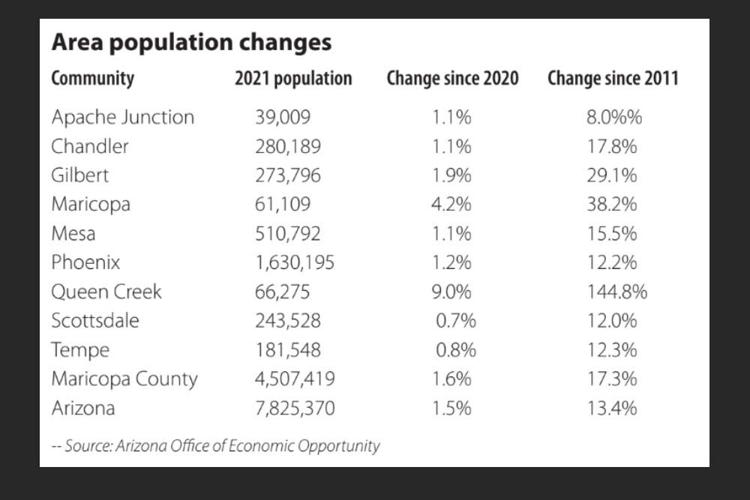
-- The city’s population in 2021 grew by only 1.1%, according to the latest figures from the state Office of Economic Opportunity.
TOP STORY            

Mesa saw few newcomers last year, state says

Area population changes             

". . .Although Mesa’s population grew by 15.5% between 2011 and 2021, that increase lagged behind some of its neighbors – notably Gilbert, Chandler and Queen Creek. 

All three municipalities had greater population gains percentage-wise than Mesa – with Queen Creek posting a stunning 144.8% increase in that 10-year period and 9% last year.

The figures show the state’s population grew at a rate of 1.5% between June 30, 2020 and a year later. That’s how the agency tracks annual growth.

And the more than 860,000 new residents in the past decade amounted to a 13.4% increase.

Newcomers were picky and choosy about where in the state they decided to live.

So where did a lot of them go?

Think about areas near the state’s major population center, but far enough away to have houses that are affordable.

And since growth for Phoenix to the immediate south is blocked by the Gila River Indian Community, that left Pinal County communities of Coolidge and Eloy at 7.1% and 5.3% respectively.

The desire for affordable homes also boosted the population of Casa Grande by 4.3% and Maricopa by 4.2%. 

Florence probably should have been in that list somewhere.

But the official tally shows that community actually lost close to 1,600 residents over a 12-month period, making it the community with the greatest percentage loss at 6.2%.

What’s behind that, though, has

little to do with the desirability of the community. 

Jim Quang, the state demographer, said it has to do largely with the fact there are fewer people in the custody of the state Department of Corrections there.

Population in the Eyeman and Florence units went from 9,031 in June of 2020 to 7,796 a year later. And the trend continues, with the most recent inmate count at the two facilities now below 7,500.

Anchor cities are growing slower than the rest of the state.

Phoenix added about 19,000 residents, but only enough to post a 1.2% year-over-year increase. Land-locked Tempe – like Scottsdale – was pretty much where it was a year earlier.

At the other end of the Valley, Glendale added just under 1,900 residents, a 0.7% increase. But nearby Peoria, stretching much further out and with room to grow, managed to post a 1.9% growth rate, increasing to 3.8% for even farther out Surprise.

Pima County lags not just Maricopa County but the statewide average. And the key according to George Hammond of the Eller College of Business at the University of Arizona is how the economy is built.

“Tucson is just a less dynamic economy,’’ he said, heavily reliant on jobs in federal, state and local government. “We just have a lot more of that. And it’s just not a growth industry.’’

There is a plus side to all that. Hammond said it tends to make the economy less susceptible to wild swings.

But he also said that geography plays a role in economic development.

Hammond said as firms look to locate or expand in Arizona, the Phoenix area is “just more of a draw,’’ with things like much better airport connections. . .

You can start ordering free COVID tests Wednesday

You can start ordering free COVID tests Wednesday

The White House said Friday a new website, COVIDTests.gov, will begin accepting orders Jan. 19 for free rapid tests shipped to Americans' homes.

Why it matters: The White House emphasized the importance of testing during the Omicron surge, with President Biden on Thursday announcing plans for the government to have 1 billion tests.

Driving the news: Americans can order four tests per residential address beginning Jan. 19 from the website.

  • The tests will ship within 7 to 12 days of ordering, senior administration officials said during a press call Friday, but that timeline could shorten as the program ramps up.
  • The U.S. Postal Service will package and deliver the tests, with orders in the continental U.S. sent through first class package service.
  • There will also be a call line for Americans who lack internet access to order tests.

What they're saying: "There's lots of ways to get tests, and this is just one more," a senior administration official explained.

Flashback: The debacle surrounding the rollout of the HealthCare.gov website during the Obama administration looms over a new government website, but senior administration officials said they are confident the site will keep up with demand.

  • The U.S. Digital Service, a group of government technologists, has assisted the Postal Service with the website.
  • "We didn't start from scratch," a senior administration official said, adding that, the Postal Service already has a "website that does sell goods to the public and has for quite some time. Of course, every website launch poses some risks, we're quite cognizant of that."

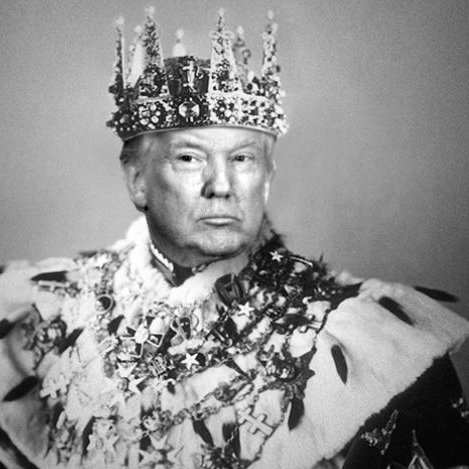
TODAY IN ARIZONA: Donald J (The King-Maker) Staging Country Thunder "Save America" Rally in Florence

So-So Typical for Trump's new apprentices like three of Arizona's U.S. Congress members Andy Biggs, Paul Gosar and Debi Lesko who got some fair treatment on Tuesday from Jonathan Swan:

Trump to elevate election deniers at Arizona rally

========================================================================

INSERT from Row Call:

Reference: https://www.rollcall.com/2022/01/13/kingmaker-trump-heads-to-rural-arizona-where-gop-candidates-are-eager-for-his-backing/

WEEKEND: 'Kingmaker' Trump heads to rural Arizona, where candidates eager for his backing...

"Former President Donald Trump announced guest speakers today for his Saturday rally in Arizona, and most of them share a common trait: they led efforts to overturn the 2020 presidential election.

Why this matters: Trump, who remains the most powerful figure in the Republican Party, is making his false claims about the 2020 election the centerpiece of the GOP platform.

Between the lines: Trump has made clear to all who seek his endorsement that if they want his blessing, they need to make overturning the 2020 election as much of a priority as subverting future elections.

The details: The guest list for Trump's Arizona rally is a who's who of election deniers.

  • The headliner, Kari Lake, who Trump endorsed for Arizona's gubernatorial race, told OAN she wouldn't have certified Biden as the victor if she'd been governor.
  • State Rep. Mark Finchem, Trump's endorsed candidate to oversee Arizona's elections as Secretary of State, not only denies the 2020 election result but attended "Stop the Steal" rallies in January.
  • Arizona Reps. Paul Gosar, Andy Biggs and Debbie Lesko all voted on Jan. 6 to object to the certification of Joe Biden's victory.
  • Kelli Ward, chair of Arizona's Republican Party, pushed the false conspiracy theory that foreign powers manipulated Dominion voting machines to secure Biden's election victory.
  • Boris Epshteyn, who co-hosts Steve Bannon's podcast, uses his platform to promote Trump's claims about a stolen election.
  • And Mike Lindell, the CEO of MyPillow, is arguably even more committed than Trump is to overturning the 2020 election. He says he has spent $25 million so far on his campaign to undermine and subvert the election.
  • The one outlier in the speaking line-up is Alveda King, who is Martin Luther King Jr.'s niece. She is an outspoken Trump supporter, but unlike the other speakers, has not made it her mission to overturn the 2020 election.

The big picture: Trump is also working to install Republicans in election administration positions who could be well-positioned to overturn future elections.

  • And he is methodically driving out and destroying all Republicans who say President Biden legitimately won the 2020 election.

What we're seeing: To enforce party-wide obedience, Trump is jumping on anyone who contradicts his claims about election fraud. He punishes even the smallest of deviations. . .

[...]

The big picture: Trump is also working to install Republicans in election administration positions who could be well-positioned to overturn future elections.

  • And he is methodically driving out and destroying all Republicans who say President Biden legitimately won the 2020 election.

What we're seeing: To enforce party-wide obedience, Trump is jumping on anyone who contradicts his claims about election fraud. He punishes even the smallest of deviations.

  • On Sunday, Sen. Mike Rounds (R-S.D.) told ABC's George Stephanopoulos that after investigating the 2020 election they found no evidence of fraud that "would have changed the vote outcome in a single state."
  • On Monday, Trump sent out an email statement blasting Rounds as "woke" and a "RINO" (Republican In Name Only) and promising to never again endorse him.
  • These attacks come at a high cost. Republicans who've contradicted Trump on the 2020 election — from the highest-profile like Liz Cheney down to obscure state officials — have been inundated with threats to themselves and their families from angry Trump supporters.

The bottom line: Trump's goal, his advisers say, is to either make life so miserable for them that they quit or end their careers by backing a successful primary challenge.

  • Trump's efforts are working. His few remaining opponents in the party are mostly either quitting out of exhaustion or choosing to keep their dissent to themselves."

SINEMA: An Interview with Norm Ornstein, a political scientist at the American Enterprise Institute. . . | Vox

Let's get into it - ". . .The Freedom to Vote Act was put together in a compromise drafted significantly by Joe Manchin, with [Sen.] Amy Klobuchar and others participating, so that Manchin could have something that he believed was not as wide-ranging and far-reaching as the original Protect the Vote Act. But that he was confident that this could be made bipartisan, because of course, there are Republicans who believe in the rule of law and fair elections.
And he’s gotten zero. So they’re seeing that that guardrail just isn’t going to apply, unless you can change the rules. . ."

Kyrsten Sinema’s opposition to filibuster reform rests on a myth

Senate rules are fostering obstruction — not bipartisanship.

<div class=__reading__mode__extracted__imagecaption>Sen. Kyrsten Sinema (D-AZ) arrives to a caucus meeting with Senate Democrats on December 17, 2021 in Washington, DC.

"In a speech on Thursday, Sen. Kyrsten Sinema (D-AZ) reiterated her commitment to preserving the filibuster by citing a familiar reason: bipartisanship.

=========================================================================

BLOGGER INSERT from Blog for Arizona

Sen. Kyrsten Sinema Chooses To Be The Appeaser Of The Enemies Of Democracy To Be Condemned By History For The Ages (Updated)

By |January 13th, 2022|AZ Politics

The House passed voting rights legislation on Thursday in a way that is intended to set up a battle in the Senate over that issue as well as the filibuster.

The measure passed in a 220-203 party-line vote.

Senate Majority Leader Charles Schumer (D-N.Y.) has vowed to put the measure to a vote in the coming days before the Martin Luther King Jr. holiday in a bid to highlight state laws approved by GOP-dominated state governments that Democrats say will make it more difficult for their supporters — including minority voters — to vote.

“Nothing less is at stake than our democracy,” said Speaker Nancy Pelosi (D-Calif.).

The manner in which the legislation was approved allows Schumer to bring it straight to the floor. But Democrats would need 60 votes — including 10 GOP votes — to get it to President Biden’s desk given the filibuster.

Two Democratic senators — Joe Manchin of West Virginia and Kyrsten Sinema of Arizona — oppose making changes to the filibuster that would allow the voting rights measure to sidestep the procedural hurdle and be approved on a majority vote.

Sen. Kyrsten Sinema (D-Ariz.) doubled down on her support for the 60-vote legislative filibuster Thursday, roughly an hour before President Biden meets with Democrats to push for changing the Senate rule in order to pass voting rights legislation.

“I will not support separate actions that worsen the underlying disease of division infecting our country,” Sinema said during a Senate floor speech.

She added that she has had “long-standing support” for the legislative filibuster, which requires 60 votes for most legislation to advance in the Senate.

“It is the view I continue to hold. It is the belief I have shared many times in public settings and in private settings,” Sinema said. “Eliminating the 60-vote threshold will simply guarantee that we lose a critical tool that we need to safeguard our democracy.”

As Sinema was speaking, several GOP senators were on the floor listening to her speech: Senate Minority Leader Mitch McConnell (Ky.) and Sens. John Thune (S.D.), Mitt Romney (Utah), Susan Collins (Maine), Ben Sasse (Neb.), Bill Hagerty (Tenn.), Tom Cotton (Ark.), Ted Cruz (Texas) and Thom Tillis (N.C.).

Democratic Sens. Dick Durbin (Ill.), who spoke before Sinema, and Jeff Merkley (Ore.) were at their desks for Sinema’s speech.

This Vichy Democrat collaborator appeasing the enemies of democracy made the bullshit assertion that she supports the voting rights bills, but not more than she supports the Jim Crow relic Senate filibuster rule, or asking permission from the enemies of democracy who tried to overthrow American democracy on January 6, 2021. She does not support voting rights if she does not support doing what everyone knows is necessary to pass voting rights. Stop treating your constituents as if they are as ignorant and gullible as you are, Senator. They see right through your charade.

Sinema reiterated on Thursday that she supports the two voting rights bills and raised a red flag over the state-level changes to voting rules. . ."


As Norm Ornstein, a political scientist at the American Enterprise Institute, has emphasized, however, the belief that the filibuster fuels bipartisanship is one of many myths about the rule. The filibuster requires most bills to get 60 votes in order to proceed in the Senate, but it’s often used as a tool to obstruct legislation, not foster it.

“Certainly there was a time when we had well-established norms in the Senate that fostered problem-solving and bipartisanship,” Ornstein told Vox. “That time is long gone.”

Since Democrats took control of Congress following the 2020 elections, Republican filibusters have killed many of their bills. Democrats are now attempting, again, to pass major voting rights bills (the Freedom to Vote and John Lewis Voting Rights acts), and they are, again, expected to be filibustered by the GOP.

Most Democrats, including President Joe Biden, have had enough. The party’s now pushing for filibuster reform — and a vote on altering the rule is imminent. But moderate Sens. Joe Manchin (D-WV) and Sinema have resisted calls to make changes. Thursday, Sinema made it clear she wants the filibuster to stay the way it is.

“I will not support separate actions that worsen the underlying disease of division infecting our country,” Sinema said in remarks emphasizing her support for the filibuster. Sinema’s speech, which effectively dooms Democrats’ chances at a rules change since they need all 50 members on board, rests on the idea that keeping the vote threshold would encourage more compromise and less division.

In a conversation this week, Ornstein spoke with Vox about why this idea is mistaken, why the Senate needs a rules change, and why many arguments against it deserve more scrutiny.

This transcript has been edited and condensed for clarity.

Li Zhou

"You’ve pushed for filibuster reform for a long time, but such calls have intensified in recent months as states have passed new laws restricting voting rights. What is different to you about the political moment we’re in right now?

Norm Ornstein

First, we’re finally seeing, I think, a level of frustration, over the misuse of the filibuster, not as an infrequently applied tool by a minority on an issue about which they feel very, very strongly, but as a cynical weapon of mass obstruction. And that started with increased vengeance in the Obama years. But it’s continued. And it means if you don’t have more than 60 of your own party members, you’re just dramatically limited in what you can do in policy terms. And it’s basically because you have a minority party that’s not looking to solve problems, but to figure out how to block anything of significance in your own agenda, and make sure problems fester so that they have more traction to gain political advantage.

That’s different. It’s been different, really, for the last almost 15 years. And it’s reached a point of deep frustration. . .

[...] If you’re going to have to go to the floor and defend the indefensible, explain why you’re with the NRA gun manufacturers and not 90 percent of Americans, at some point you’re probably going to say, why don’t we have a compromise on this? So, part of the argument to Sinema and Manchin is if you want incentives to compromise, there are zero now. But you can have an incentive to compromise if they’re going to have to go through pain and defend things that don’t have majority support even within their own ranks."

TAKE THE TIME TO READ BETWEEN -THE-LINES >> https://www.vox.com/2022/1/13/22876563/kyrsten-sinema-filibuster-bipartisanship 


READINESS ON THE FRONTIER...Military Exercises on Euro-Asian Borderlines | Russia Today

Moscow will continue to ignore American demands that it stops military exercises near the country’s border with Ukraine because nobody has the right to dictate what Russia can do inside its own territory, the Kremlin has said.

13 Jan, 2022 17:45

Russia responds to US demands on military exercises

Washington has demanded that Moscow be transparent or cease troop movement in the vicinity of the frontier
Russia responds to US demands on military exercises
(FILE PHOTO. The Saratov large landing ship takes part in an exercise at the Opuk range, in Crimea, Russia. © Sputnik / Konstantin Mihalchevskiy)      

"Wednesday, presidential Press Secretary Dmitry Peskov commented on the current talks between the US and NATO, in which the American side seeks to restrict troop movement near the Russian-Ukrainian frontier.

“We are still talking about our units and our military districts on the territory of our country. Military construction and military training have continued, are continuing and will continue – this is the normal practice of any armed forces,” he said, repeating a line he has used many times regarding Russia’s right to move its own troops wherever it sees fit. . .

The suggestions include a prohibition on NATO expansion, restrictions on missile placement, and a halt to the stationing of NATO troops on the territory of former Warsaw Pact countries. Following the talks, US State Department spokesman Ned Price suggested that Washington would be open to reciprocal agreements on missiles and transparency of troop movements.

According to Peskov, Russia is firmly in favor of coming to an agreement with NATO. “The president said that there is not and cannot be room for any ultimatums,” he said.

“The situation has simply reached such a critical point in terms of pan-European security and in terms of the national interests of our country, which are an integral part of Europe and the European security architecture, that unfortunately we cannot delay further and must respond concretely to the concerns that have been voiced to us.”