Sunday, February 06, 2022

EVERYTHNG DANDY FOR ANDY LAST WEEK: Newsletter: The Biggs Idea

Yes he's been 'battling' busy on multiple fronts in D.C. --- everything from football to fallen soldiers, and of course the crisis-on-the-border and what else?
That's all he does as a smokescreen to attack the other party in power that isn't on the far-right fringes, acting as a counterpoint to progress and holding things up for funding important programs to benefit most Americans.
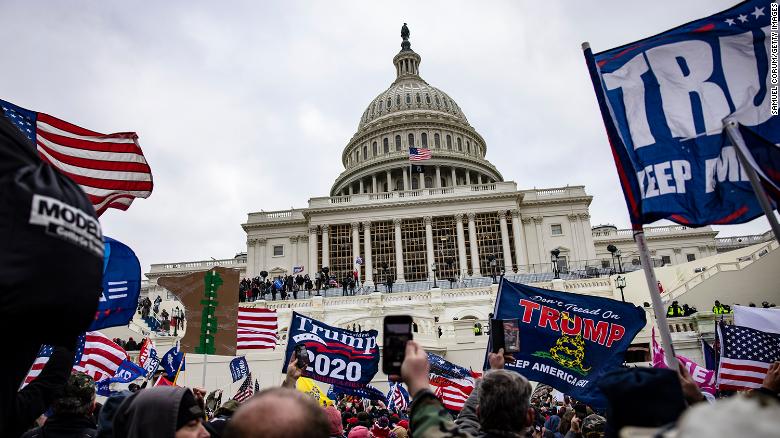
Along with another Arizona Congressman Paul Gosar, their coordinated actions to subvert the 2020 elector count for President has been under scrutiny in Washington on that fateful day of the January 6 Capitol Riot triggered at 1:30 p.m. -- not a mention of that though!

Image

The Week in Review

Happy Friday!

I hope you all had a wonderful week. I was busy in D.C. this week battling the Biden administration on multiple fronts, from immigration to the VA to the crisis in Ukraine. Read more about my efforts and other news, below:

Hearing on Biden's Border Crisis

On Tuesday, House Freedom Caucus hosted a hearing to examine how President Biden’s reversal of Trump’s border security policies have affected communities across the nation. We spoke with and questioned witnesses who know first hand how the Biden administration’s open border policies have resulted in a historic crisis at our Southern Border. A big thanks to Brandon Judd, President of the National Border Patrol Council; Joseph Edlow, Former Acting Director, U.S. Citizenship and Immigration Services; Todd Bensman, Former Manager, Texas Department of Public Safety’s Intelligence and Counterterrorism Division; Russell Johnson, New Mexico Cattle Rancher, and FreedomWorks for making this event possible. Click below to watch the hearing:

Image

Memorializing a Fallen Soldier

On Tuesday, I sent a letter to the Department of Veterans Affairs (VA) demanding that it begin the process of renaming the VA Health Care Clinic in Gilbert, AZ. The clinic’s name change, which President Trump signed into law in January 2021, is in honor of Staff Sergeant Alexander W. Conrad, a former resident of Chandler, AZ. SSG Conrad died overseas while defending this nation (you can read more about his life here). SSG Conrad was an American hero. His life of service and sacrifice reminds us that there are men and women fighting every day to keep our country free and prosperous. It is unacceptable that we are still waiting for the VA to rename this facility in his honor. Renaming this facility not only memorializes his life in our community, but pays respects to his family for their tragic loss. SSG Conrad deserves to be recognized for his heroic sacrifice. Read my letter to the VA below: 

Image

Stopping Funds for Legal Aid for Illegal Aliens

On Wednesday, I sent a letter, along with 24 colleagues, to the House Appropriations Committee regarding the recent reports that the Biden administration is planning to spend taxpayer funds to provide legal services for illegal aliens. The letter demands that the Appropriations Committee oppose funding these programs. This should go without saying, but the American taxpayer should not be paying for illegal aliens to be given free legal aid services. Instead, Biden should prioritize enforcing our nation’s laws, securing our border, and addressing the backlog of more than 1.6 million cases pending before the immigration courts. Read the full letter below:

Image

Biden MUST Seek Congressional Approval

As founder and co-chair of the War Powers Caucus, I sent a letter to President Biden on Thursday demanding he request congressional approval before taking any offensive military action relating to Russian aggression towards Ukraine. The Constitution requires Congress to declare war if it determines that offensive military action is in our national security interest. Deploying American troops into what could be a deadly and long-lasting conflict should be taken very seriously and requires congressional approval. President Biden must bring his arguments before Congress so it can exercise its constitutional prerogatives and determine whether a declaration of war is right for America. Read letter below:

Image

 Eight Months Later...

In May, I sent a letter to Department of Homeland Security Secretary Mayorkas requesting answers for why he is violating federal law by releasing inadmissible aliens into the interior of the United States. Eight months later, I finally received answers. Well, more like excuses.

Click here to see our original letter and click below to read DHS’s response letter and answers to our questions. 

To read more about the misleading information offered by DHS, check out this blog post from Center for Immigration Studies: 

Image

One Year of Mayorkas Misery

Speaking of Secretary Mayorkas, Tuesday marked his one year anniversary as DHS Secretary. And what does he have to show for it? Over two million illegal alien encounters, a 134% increase in fentanyl seizures (think about what we aren’t catching), and upwards of 1,500 illegals that escape into our country EVERY day. Secretary Mayorkas has failed America with his open border agenda and has left Border Patrol and ICE agents out to dry. Check out my interview on Mornings with Maria discussing why it is well past time to impeach Mayorkas by clicking the graphic below:

Image

Ending Common Core & Expanding School Choice

On Friday, I reintroduced the Ending Common Core and Expanding School Choice Act. This legislation repeals some of the stringent federal policies tied to education funding for low-income students and allows states and parents to implement educational options that meet the needs of their children. During COVID-19 we learned that parents need to have greater control over their child’s education. When traditional public schools shut down in 2020, parents were forced to turn their homes into classrooms and put their own careers and incomes on hold to pick up the slack, while public schools continued to receive federal funds. My bill would have given states the option for federal education dollars to follow students to alternative education options, such as private schools, charter schools, homeschooling, or private tutoring. Read full bill below:

Image

What's the BIGGS Idea

  This week on my podcast, What’s the BIGGS Idea, I sat down with Julie Kelly, author of January 6: How Democrats Used the Capitol Protest to Launch a War on Terror Against the Political Right, to discuss her work uncovering the mistruths of January 6 that are being pushed out by the Far Left and the continued mistreatment of the January 6 prisoners. Click the picture below to hear the full episode. You can also find previous episodes of the podcast on Apple Podcast. 

Image

Congressional App Challenge

Congratulations to our Congressional App Challenge winner, Prisha Shroff! Prisha is a student from Hamilton High School in Chandler, Arizona and developed Wildfire Prevention System, an artificial intelligence based app designed to prevent wildfires by preprocessing satellite and meteorological data and identifying hot spots. Prisha’s innovation will address a preventable environmental issue that affects communities across America.

Learn more about the Congressional App Challenge and how you can participate next year by clicking here.

Image


Save the Dates

Mark your calendars! My office has two upcoming events for the Fighting Fifth District. Check them out below:

On Tuesday, February 15, 2022, I will be hosting “Tips for Filing Income Taxes”, a free webinar via Zoom where we will be joined by Taxpayer Advocate Service to discuss family tax credits, income matching, what slows down a refund, and how to avoid common filing errors. Registration details to come! 

And look what's back. On Saturday, April 23, 2022, we will be hosting our 3rd annual Drop Zone event. Drop Zone is a resource fair for veterans and their families to gain easy access to the services they need. Check out the poster below for more details. We’d love to see you there!

Image


Check Out my Latest Remarks

House Committee on the Judiciary:

Respecting Artists with the American Music Fairness Act

Oversight of the Federal Bureau of Prisons 

House Committee on Oversight and Reform:

Examining the Washington Football Team’s Toxic Workplace Culture


FOLLOW US:

Image ImageImageImage
  

Bills Co-sponsored:

H.R. 6565 - Kids in Classes Act (Jacobs, R-NY)

H.R. 6590 – Senior Citizen Tax Elimination Act (Massie, R-KY)

H.R. 6004 - Upholding the 1995 Jerusalem Embassy Law Act of 2021 (Kustoff, R-TN)

Letters Co-signed

Letter to Chairwoman DeLauro to urge her to include language to prohibit funding for the COVID-19 vaccine mandate for active-duty, reserve, and national guard military personnel

Letter to ICE demanding answers regarding President Biden’s failed catch and release program

Letter to the ATF regarding the Out of Business Records Imaging System

Letter to Fed Chairman Jerome Powell regarding the use of “climate stress tests” for banks

Letter to GAO regarding the Biden administration’s establishment of a religious exemption database for federal employees who apply for a religious exemption to the COVID-19 vaccine mandate

Letter to Leader McCarthy and Leader McConnell pledging not to vote for government funding legislation that funds enforcement of vaccine mandates

Unsubscribe
Privacy Policy


Washington, DC
S171 Cannon HOB
Washington, DC 20515
Phone: (202) 225-2635
District Office
2509 S Power Rd, Suite 204
Mesa, AZ 85209
Phone: (480) 699-8239

POINT-IN-TIME ON SINGLE NIGHT COUNT: HUD Releases 2021 Annual Homeless Assessment Report Part 1

Overall in each geographic category the number of unsheltered people in families increased. 
As long as people in this nation continue to lack affordable, secure housing, our work to put Housing First is not done. 
The number of sheltered individuals with chronic patterns of homelessness increased by 20 percent between 2020 and 2021.  

Seal of the U.S. Department of Housing and Urban Development. HUD NEWS     

U.S. Department of Housing and Urban Development – Marcia L. Fudge, Secretary

Office of Public Affairs, Washington, DC 20410                         

HUD No. 22-022                                                                                                              FOR RELEASE

HUD Public Affairs                                                                                                         Friday 

202-708-0685                                                                                                                    February 04, 2022

HUD.gov/Press


HUD Releases 2021 Annual Homeless Assessment Report Part 1 

Report Suggests that COVID-19 Relief Had Positive Impacts on Sheltered Homelessness 

WASHINGTON – The U.S. Department of Housing and Urban Development (HUD) today released its 2021 Annual Homeless Assessment Report Part 1 to Congress. The report found that more than 326,000 people experienced sheltered homelessness in the United States on a single night in 2021, a decrease of eight percent, from 2020.  

“Sheltered homelessness” refers to people experiencing homelessness who were found in emergency shelters, transitional housing, or other temporary settings. In response to the COVID-19 pandemic, HUD waived the requirement for communities to conduct the count of unsheltered homelessness in 2021. In January 2021, 138 communities, 36 percent of all communities, conducted full unsheltered counts and an additional 72 communities conducted a partial count, in which total unsheltered counts were reported but not household or demographic characteristics. Therefore, 2021 AHAR Report Part 1 is only able to provide national estimates on sheltered homelessness and findings on unsheltered homelessness only from the communities that conducted unsheltered counts.   

The report found that the number of sheltered people in families with children declined considerably between 2020 and 2021, while the number of sheltered individuals remained relatively flat. Between 2020 and 2021, the number of veterans experiencing sheltered homelessness decreased by 10 percent. On a single night in 2021, 15,763 people under the age of 25 experienced sheltered homelessness on their own as “unaccompanied youth.” The number of sheltered individuals with chronic patterns of homelessness increased by 20 percent between 2020 and 2021.  

“The findings of the 2021 AHAR Part 1 report suggest that federal COVID-19 relief had positive impacts on sheltered homelessness,” said HUD Secretary Marcia L. Fudge. “Yet we know that homelessness in America remains an urgent crisis. As long as people in this nation continue to lack affordable, secure housing, our work to put Housing First is not done. By continuing to leverage American Rescue Plan resources and our federal House America initiative, the Administration will further accelerate progress toward our shared goal of ending the homelessness crisis.” 

“The 10% decline in sheltered homelessness among Veterans between January 2020 and January 2021 suggests that the measures put in place to protect our most vulnerable Veterans and keep them in stable housing during the pandemic and beyond have had encouraging impacts,” said VA Secretary Denis McDonough. “VA remains committed to actively working with our federal, local and non-profit partners to sustain existing and implement new evidence-based programs and policies to permanently house or rapidly re-house Veterans who are experiencing or at risk of homelessness because every Veteran has earned and deserves a safe place to call home.”  

The pandemic also resulted in considerable changes to the practices of homeless service providers. To promote the safety of people staying in shelter programs, most emergency shelters reduced occupancy to respond to CDC recommendations on COVID-19 safety measures. In some cases, this reduced occupancy was reported through the Housing Inventory Count (HIC), but in other communities it was not. Estimates of the number of people experiencing sheltered homelessness at a point in time in 2021 should be viewed with caution, as the number could be artificially depressed compared with non-pandemic times, reflecting reduced occupancy in some communities or safety concerns regarding staying in shelters. 

HUD releases the Annual Homeless Assessment Report to Congress (AHAR) in two parts. Part 1 provides Point-in-Time (PIT) estimates, offering a snapshot of homelessness on a single night. The one-night counts are conducted during the last 10 days of January each year, with extensions approved on a case-by-case basis. The PIT counts also provide an estimate of the number of people experiencing homelessness within particular homeless populations such as individuals with chronic patterns of homelessness and veterans experiencing homelessness.   

The Point-in-Time counts of homelessness and the housing inventory information are based on data from January 2021 and thus do not reflect the full impacts of the COVID-19 pandemic on the prevalence of homelessness or the health and economic status of people experiencing homelessness.  

Key Findings of HUD’s 2021 Annual Homeless Assessment Report Part 1:  

  • On a single night in 2021, more than 326,000 people were experiencing sheltered homelessness in the United States. Six in ten were individuals—that is, people in households with only adults or in households with only children. Four in ten were people in families with children. 
  • The number of people staying in sheltered locations decreased by eight percent between 2020 and 2021. While this continues a decline that began in 2015, the drop between 2020 and 2021 was steeper than those in recent years. 
  • The number of sheltered people in families with children declined considerably between 2020 and 2021, while the number of sheltered individuals remained relatively flat.  
  • Between 2020 and 2021, the reported inventory available for people experiencing homelessness remained relatively flat, but occupancy rates declined.  
  • The share of emergency shelter beds for people experiencing sheltered homelessness located in non-congregate settings increased by 134 percent.  
  • Between 2020 and 2021, the number of veterans experiencing sheltered homelessness decreased by 10 percent. This represents the largest one-year decline since 2015-2016. 
  • On a single night in 2021, 15,763 people under the age of 25 experienced sheltered homelessness on their own as “unaccompanied youth.” This represents a decline of nine percent between 2020 and 2021. While decreases in sheltered homelessness among unaccompanied youth were experienced across nearly all demographic characteristics, a few groups did experience increases. 
  • The number of sheltered individuals with chronic patterns of homelessness increased by 20 percent between 2020 and 2021.  

Sheltered Homelessness  

In January of 2021, 326,126 people were experiencing sheltered homelessness, staying in emergency shelters, safe havens, or transitional housing programs. While sheltered homelessness had been decreasing in recent years, the decline between January of 2020, before the onset of the pandemic in the United States, and January of 2021 was steeper than recent year to year declines. The number of people staying in sheltered locations declined by 8 percent (or 28,260 people). The sheltered population reported in 2021 was 19 percent lower than it was in 2010 and 17 percent lower than it was in 2007, when these data were first reported. 

Sheltered Chronic Homelessness 

The number of sheltered individuals with chronic patterns of homelessness increased by 20 percent between 2020 and 2021. This trend in the sheltered chronically homeless individual population runs counter to the decrease for all sheltered individuals. While the overall sheltered individual population has declined, the number of chronically homeless individuals staying in shelter programs has increased in recent years and continued to do so between 2020 and 2021. 

Sheltered Family Homelessness 

On a single night in 2021, 131,377 people experienced sheltered homelessness as part of a family with at least one adult and one child under the age of 18. The average family size was 3.2 people, and about 41,000 family households were experiencing sheltered homelessness. The overall number of people in families with children who were experiencing sheltered homelessness on a single night declined by 15 percent between 2020 and 2021 (or 23,531 fewer people). This was a much larger change than in the number of sheltered individuals, which dropped by only 2 percent.  Some of the pandemic-related resources available through the CARES Act and other pandemic relief measures were more generous to families with children. 

Sheltered Youth Homelessness 

On a single night in 2021, 15,763 people under the age of 25 experienced sheltered homelessness on their own as “unaccompanied youth.” This represents a decline of nine percent between 2020 and 2021. While decreases in sheltered homelessness among unaccompanied youth were experienced across nearly all demographic characteristics, a few groups did experience increases. The number of people who were transgender increased by 29 percent, and the number of sheltered unaccompanied youth who were gender non-conforming increased by 26 percent. Though the number was relatively small, sheltered unaccompanied youth who were Native American experienced the largest percentage increase, at 21 percent. 

Sheltered Veteran Homelessness 

Between 2020 and 2021, the number of veterans experiencing sheltered homelessness decreased by 10 percent. This represents the largest one-year decline since 2015 to 2016. In 2021, 19,750 veterans were experiencing sheltered homelessness, representing eight percent of all sheltered adults experiencing homelessness in the United States. Veterans experiencing sheltered homelessness accounted for 11 out of every 10,000 veterans in the country. 

Sheltered Homelessness Among People of Color  

More than 4 of every 10 people experiencing sheltered homelessness were Black of African American (45% or 147,521), and 44 percent (or 144,707 people) were White. The remaining 10 percent were people identifying multiple races (5%), Native American or Indigenous Peoples (2%), Asian (1%), or Pacific Islander (1%). Between 2020 and 2021, the number of Black or African American people staying in shelters decreased by 12 percent. People who were of more than one race decreased by 10 percent. While the number was relatively small, the number of people who were Pacific Islander increased by 10 percent (or 421 people). 

Unsheltered Homelessness 

In the sample of 138 communities that conducted full unsheltered counts in both 2020 and 2021, nearly half of people experiencing homelessness (46%) were individuals staying in sheltered locations, 37 percent were people in families with children staying in sheltered locations, 15 percent were unsheltered individuals, and three percent were unsheltered people in families with children. Across all 138 communities, the unsheltered population remained largely unchanged, decreasing by 78 people or less than one percent. The number of people counted in unsheltered locations increased in rural and other largely urban CoCs and decreased in major cities and suburbs. The change in the number of unsheltered individuals mirrored that of all unsheltered people. However, in each geographic category the number of unsheltered people in families increased. 

###

HUD’s mission is to create strong, sustainable, inclusive communities and quality affordable homes for all.

More information about HUD and its programs is available on the Internet at www.hud.gov and http://espanol.hud.gov

You can also connect with HUD on social media and follow Secretary Fudge on Twitter and Facebook or sign up for news alerts on HUD’s Email List.

Elon Musk JUST REVEALED Jeff Bezos SHOCKING Proposal!

TRUMP'S "ALTERNATIVE SLATES" FOR 2020 ELECTION COUNT | AZ Mirror

Arizona was one of seven states where the ex-President arranged sworn affidavits

Trump’s fake electors: Here’s the full list

Trump supporters storm the US Capitol on January 6, 2021 in an effort to disrupt the ratification of President Joe Biden's victory in the 2020 election.

The 84 people who signed bogus documents claiming that Donald Trump won the 2020 election include dozens of local Republican Party leaders, seven current candidates for public office, eight current office holders and at least five previous state and federal office holders.

Groups from Arizona, Georgia, Michigan, New Mexico, Nevada, Pennsylvania and Wisconsin all allegedly sent lists of so-called alternate electors to the National Archives after the 2020 election. The slate of fake electors includes Lou Barletta and Charlie Gerow, both candidates for governor in Pennsylvania; Burt Jones, a candidate for lieutenant governor in Georgia; James Lamon, a candidate for U.S. Senate from Arizona; and candidates for state legislative seats.

The group also includes eight current officeholders: 

  • Jake Hoffman, an Arizona state representative.
  • Burt Jones, a Georgia state senator.
  • Stanley Grot, the Shelby Township clerk in Michigan.
  • Amy Facchinello, a member of the school board in Grand Blanc, Michigan.
  • Robert Spindell Jr., a member of the Wisconsin Election Commission.
  • Sam DeMarco III, an at-large member of the Allegheny County Council in Pennsylvania. 
  • Josephine Ferro, the Monroe County Register of Wills in Pennsylvania. 
  • Kelly Ruh, an alderperson for De Pere, Wisconsin.

In addition to the chair, former chair or co-chair of the state Republican Party in all seven states, the group includes people for whom political controversy and investigations are nothing new:

  • Michael Ward of Arizona has been accused of spitting in the eye of a former campaign volunteer for his wife, Kelli Ward.
  • Tom Carroll of Pennsylvania was accused by a Black colleague of leaving a stuffed monkey on her desk in a racist act, while he was serving as an assistant district attorney.
  • Gloria Kay Godwin of Georgia has been accused of stalking after allegedly attempting to interfere in a citizen effort to obtain signatures for a recall election petition.

The Justice Department has announced that it is investigating the attempt by the false electors to subvert the election. 

On Friday, the Congressional Select Committee on January 6th also announced it has subpoenaed 14 of the counterfeit electors who it believes have information about how they met and who was behind the scheme, according to committee Chairperson Bennie G. Thompson, (D-Miss.). Each of the 14 served as “chair” or “secretary” on the state slates of fake electors. 

According to recent reports, Trump’s then-attorney Rudy Giuliani led the scheme by submitting the slates of “alternate electors” to the National Archives. In March 2021, D.C.-based watchdog group American Oversight made public the documents, which it received in response to a public records request.

Attorneys general from the seven states involved in the scheme are investigating whether to bring charges against the Trump backers who participated. Michigan Attorney General Dana Nessel has said there is “absolutely” enough evidence to charge the false electors with election fraud. 

Here is a comprehensive list of all the bogus electors from the seven states, including the people who were slated to sign the documents but were replaced with alternates:

(A * indicates a person who was listed as chairperson or secretary of their state group and who was subpoenaed by the House Jan. 6 committee.)

ARIZONA (11)

Nancy Cottle*: Cottle is the first vice president of programs for the Arizona Federation of Republican Women. She has been active in Arizona politics for the past decade and holds various other positions on the Maricopa County Republican Committee and the AZGOP executive committee.

Loraine B. Pellegrino*: Pellegrino has served as president of Ahwatukee Republican Women.

Tyler Bowyer: Bowyer is the chief operating officer of Turning Point USA, a Phoenix-based nonprofit organization that advocates for conservative values in schools. He has previously worked for the Republican National Committee and the Maricopa County Republican Party.

Jake Hoffman: Hoffman is an Arizona state representative for the 12th District. Hoffman also runs a conservative digital marketing company, Rally Forge, that was banned from Facebook and suspended from Twitter for engaging in “coordinated inauthentic behavior” on behalf of Turning Point Action, an affiliate of Turning Point USA. The company was enlisting and paying teens to share comments with right-wing opinions, including that mail-in ballots would lead to fraud and that coronavirus numbers were intentionally inflated. Experts told the Washington Post in 2020 that the effort was “among the most ambitious domestic influence campaigns uncovered this election cycle.”

Anthony T. Kern: From January 2015 until January 2021, Kern was an Arizona state representative for the 20th District. He is currently running for election to the Arizona state Senate to represent the 20th District. Kern participated in the January 6 riots in D.C. and has lied about breaching the U.S. Capitol building

James Lamon: Lamon is running for election to the U.S. Senate to represent Arizona. He is a veteran and was previously CEO of DEPCOM Power, a solar energy contractor, according to his LinkedIn profile. 

Robert Montgomery: In 2020, Montgomery served as the chairman of the Cochise County Republican Committee. 

Samuel I. Moorhead: Moorhead serves as the second vice chair of the Gila County Arizona Republican Party. 

Greg Safsten: Safsten is the executive director of the Republican Party of Arizona. He previously worked for Rep. Andy Biggs and Rep. Matt Salmon, both of Arizona, in their U.S. House offices, according to his LinkedIn profile. 

Dr. Kelli Ward: Ward is an osteopathic physician who has served as the chair of the Arizona Republican Party since 2019. Following the 2020 election, Ward aided Trump’s efforts to invalidate the election results and filed a number of lawsuits to nullify Arizona’s results. In 2016, she challenged the late U.S. Sen. John McCain in the Republican primary but lost with 39 percent of the vote. She previously served in the Arizona state Senate. 

Dr. Michael Ward: Ward met his wife, Kelli Ward, while he was serving in the Arizona Air National Guard. In 2019, he was accused of spitting in the eye of a former volunteer of his wife’s when she was a candidate for Senate because the volunteer went on to support her former political foe, Martha McSally. Michael Ward denied touching, pushing, threatening or spitting on the volunteer in an email to police, according to AZ Central. 

READ MORE FOR OTHER SIX STATES -- https://www.azmirror.com/2022/02/01/trumps-fake-electors-heres-the-full-list/

Bitcoin for Corporations 2022 featuring Michael Saylor & Jack Dorsey, ho...

PLAYING A RIFF: City of Mesa "Takes First Steps" to Bridge The Digital Divide?

Yep there's "a first time" for everything, if we want to understand any given infrastructure, we need to unfold both the political and ethical, as well as the social choices that were done throughout its development. When we talk about the work of an infrastructure, we should always talk about “relations’, not just components of a network.
H
The future is here but it's not evenly distributed
Press Release from the City of Mesa's newsroom

Mesa Takes First Steps to Bridge the Digital Divide

February 3, 2022 at 7:24 am
Mesa is taking the first steps to bring digital access to all its residents and businesses. The City launched a Request for Information (RFI) to learn more about companies that can install and operate an open-access fiber network across Mesa. The ambitious digital plan would connect 264-thousand city premises and 2,470 street miles, providing citywide access to the fastest internet speeds. The project would take years to complete, but the City believes it is necessary to reduce the digital divide and propel Mesa into the future.
"In an increasingly virtual world, access to high-speed internet is a key to success for individuals, families and businesses," said Mesa Mayor John Giles. "I'm thrilled we're taking this step toward bridging the digital divide, ultimately creating greater access to education, career and social connection for all who call Mesa home."
Mesa has widespread internet connectivity, and 75 percent of its residents have access to some form of landline broadband. According to a 2021 City of Mesa household survey, 17 percent of participants didn't have internet, with affordability being the barrier preventing them from accessing the web.
The City already plans to deploy Wi-Fi and Mobile Broadband infrastructure to the 10 square miles of qualified census tract in west Mesa that showed the greatest need for connectivity at the height of the pandemic, per Mesa Public Schools surveys.
 
Mesa has also started upgrading to Wi-Fi 6, the current network in downtown, City parks, pools and libraries, and is testing a Citizen Broadband Radio System (CBRS) tower at Country Club and Broadway.
[...] The City is looking to identify potential partners to bring open fiber access to Mesa through the RFI. Ideal bidders would be able to offer free or affordable high-speed internet service to qualifying households across the network to bridge the digital divide.
They will also look at companies interested in growing and investing in Mesa as new neighborhoods emerge across the City.
"We use data and technology to understand the needs of our citizens and better serve them. For Mesa to be a Smart City, we need all our residents to be engaged and connected," said Mesa's Chief Information Officer, Travis Cutright. "We are looking for partners that can help us deliver on that promise."
The due date for the RFI is Tuesday, March 15 at 3 p.m. local Arizona Time.
Mesa will host a pre-response conference on Feb. 9.
Please visit https://vendor.mesaaz.gov/ and reference proposal #2022117 for details.
For more information or to schedule interviews, please contact Kevin.Christopher@mesaaz.gov.

Contact: Kevin Christopher
(480) 644.4699
Kevin.Christopher@mesaaz.gov 

Infographic: The Digital Divide | Statista

 
RELATED CONTENT Post on this blog from October 2021
THE DIGITAL DIVIDE: We're not even beginning to ask the right questions, much less acknowledge the real origins of the problem
Introduction:

The 'Digital Divide' Didn't Just Show Up One Day. It's The Direct Result Of Telecom Monopolization

from the can't-fix-what-you-don't-acknowledge dept

 
Insert: "We've noted for a while that the entirety of DC has a blind spot when it comes to discussing the U.S. broadband problem. As in, U.S. broadband is plagued by regional monopolies that literally pay Congress to pretend the problem isn't happening.
That's not an opinion.
Image result for community. broadband ANIMATED GIF
U.S. broadband is slow, expensive, patchy, with terrible customer service due to two clear things:
(1) regional monopolization (aka market failure), and
(2) state and federal regulatory capture (aka corruption).
That the telecom industry employs an entire cottage industry of think tankers, consultants, and policy wonks to pretend this isn't true doesn't change reality.

But notice when regulators, politicians, and many news outlets discuss the problem, it's usually framed in this nebulous, causation free way. About 90% of the time, the problem is dubbed the "digital divide." But the cause of this broadband divide is always left utterly nebulous and causation free. It's almost pathological.

Seriously, look at any news story about the "digital divide" in the last three months and try to find one that clearly points out that the direct cause of the problem is regional telecom monopolies and the corruption that protects them. You won't find it.

This phenomenon again showed up this week in a CNET interview with Jessica Rosenworcel, who appears to be the top candidate in the Biden Administration's glacial pursuit of a permanent FCC boss. In the article, CNET talks repeatedly about the U.S. broadband problem without once mentioning that telecom monopolies exist, and are the primary reason U.S. broadband is painfully mediocre:

"According to a study last year by the New America Foundation's Open Technology Institute, the US has the highest average monthly internet prices when compared to other countries in North America, Europe and Asia. On average, the monthly bill in the US is $84.37, which includes $68.38 for internet service and $15.99 for equipment rental fees.

"What's become clear is that affordability is a really big issue in the digital divide," she said. "And we're going to need programs like the EBB to help solve it."

> Again, please notice how expensive, shitty broadband is just this thing that exists for some nebulous reason. That Comcast, Charter, Verizon, and AT&T have lobbied for thirty years to create a favorable policy environment that harms competition and prioritizes their bloated revenues doesn't even get a sentence. It's just this bizarre act of omission driven by, you'd have to imagine, a fear of upsetting sources and advertisers. Or in the case of politicians and regulators, powerful telecom lobbyists that can make or break your career.

Comcast's Diversity, Equity & Inclusion logoPlease notice the word "competition" isn't even used once in an interview with a top U.S. telecom regulator about the state of U.S. broadband, where the primary issue remains a lack of competition. The article almost acknowledges the U.S. telecom monopoly problem when it discusses "digital redlining," or the documented tendency of regional telecom monopolies like AT&T to refuse to upgrade low income or minority neighborhoods (while simultaneously lobbying for laws preventing them from building their own broadband networks).

But even here the problem is addressed in this causation-free, nebulous way:

I think the fact that we're having a conversation about digital redlining is a good thing. We've got communities in this country that for too long have been overserved or underserved and overlooked. We've got to figure out how to address that.

Clearly and accurately calling out regional telecom monopolies is just viewed as...impolite in DC and much of the "he said, she said," access-motivated U.S. press.

But you can't fix a problem you refuse to even acknowledge. And when it comes to regional telecom monopolization and the corruption that protects it, we're not even beginning to ask the right questions, much less acknowledge the real origins of the problem. . ."

Zelensky Calls for a European Army as He Slams EU Leaders’ Response

      Jan 23, 2026 During the EU Summit yesterday, the EU leaders ...