Saturday, February 12, 2022
BLEEPING COMPUTER REPORTS: 80% Up-Tick in Romance Scams, Hacker Attacks, Ransomware Demands
You might need to sit-down to take all this in and process it:
FTC says Americans lost $547 million to romance scams in 2021

The US Federal Trade Commission (FTC) said that Americans reported record high losses of $547 million to romance scams in 2021, up almost 80% compared to 2020 and over six times compared to losses reported in 2017.
Financial losses stemming from romance scams have skyrocketed during recent years, with a total of $1.3 billion lost over the past five years.
This type of fraud (also known as confidence fraud) can lead to devastating emotional scars and significant financial losses. The crooks use fake online identities that help them gain potential victims' trust on social media platforms or dating sites.
Once they lure their targets in, the criminals take advantage of the illusion of a romantic relationship to manipulate the victims into sending money or financial info, which can be used for other types of fraud schemes, such as investment scams.
Last month, the FTC also revealed that over 95,000 US consumers reported losses of around $770 million after getting scammed on social media platforms, with romance scams being the second most profitable fraud after online shopping scams. . ."
How to spot a romance scammers... How to spot a romance scammers... Tips
If you have fallen prey to a romance scammer, the FBI urges you to stop all contact immediately and file a complaint at www.ic3.gov.
You should also reach out to your bank to see if the financial transactions you might have made after the scammer reached out can be stopped or reversed.
=======================================================================

Give the Valentine's Day gift of IT training with this deal
Why waste money on temporary things for Valentine's Day? Give the IT professional in your life something they can use: A selection of great self-paced career training at discounted prices. that suits their needs
- February 12, 2022
- 08:12 AM
 0
0

The Week in Ransomware - February 11th 2022 - Maze, Egregor decryptors
We saw the Maze ransomware developers reemerge briefly this week as they shared the master decryption keys for the Egregor, Maze, and Sekhmet ransomware operations.
- February 11, 2022
- 04:57 PM
- 0

Croatian phone carrier data breach impacts 200,000 clients
Croatian phone carrier 'A1 Hrvatska' has disclosed a data breach exposing the personal information of 10% of its customers, roughly 200,000 people.
- February 11, 2022
- 02:29 PM
- 0

Twitter is down with "Something went wrong" errors
Twitter is currently experiencing a worldwide service disruption that makes it impossible for users to read tweets on the web and load threads using the mobile app.
- February 11, 2022
- 01:12 PM
- 1

CISA orders federal agencies to update iPhones, Macs until Feb 25th
The US Cybersecurity and Infrastructure Security Agency (CISA) has added a new flaw to its catalog of vulnerabilities exploited in the wild, an Apple WebKit remote code execution bug used to target iPhones, iPads, and Macs.
- February 11, 2022
- 12:45 PM
- 0

Google Project Zero: Vendors are now quicker at fixing zero-days
Google's Project Zero has published a report showing that organizations took less time to address the zero-day vulnerabilities that the team reported last year.
- February 11, 2022
- 12:40 PM
- 0

CISA urges orgs to patch actively exploited Windows SeriousSAM bug
The U.S. Cybersecurity & Infrastructure Security Agency (CISA) has added to the catalog of vulnerabilities another 15 security issues actively used in cyberattacks.
- February 11, 2022
- 08:01 AM
- 0

Learn ethical hacking while saving an extra 15% on this bundle
Malicious actors, ransomware, and other problems are only becoming more prevalent. The Ethical Hacker Master Class Bundle helps you anticipate and thwart these issues for $33.15 with the code VDAY2022.
- February 11, 2022
- 07:17 AM
- 0

Microsoft fixes Defender flaw letting hackers bypass antivirus scans
Microsoft has recently addressed a weakness in the Microsoft Defender Antivirus on Windows that allowed attackers to plant and execute malicious payloads without triggering Defender's malware detection engine.
- February 10, 2022
- 07:20 PM
- 0

Microsoft: Support for Windows 10 20H2 ending in May 2022
Microsoft reminded customers today that multiple editions of Windows 10, version 20H2 and Windows 10, version 1909 are quickly approaching end of servicing (EOS).
- February 10, 2022
- 04:44 PM
- 0
POLLUTION WATCH: Contrails & ChemTrails In-The-Skies . . .Growing evidence suggests tiny particles can affect the heart, lungs, blood pressure and risk foetal growth
Recent report
Pollutionwatch: ultrafine particles from aircraft engines endanger lives
Growing evidence suggests tiny particles can affect the heart, lungs, blood pressure and risk foetal growth
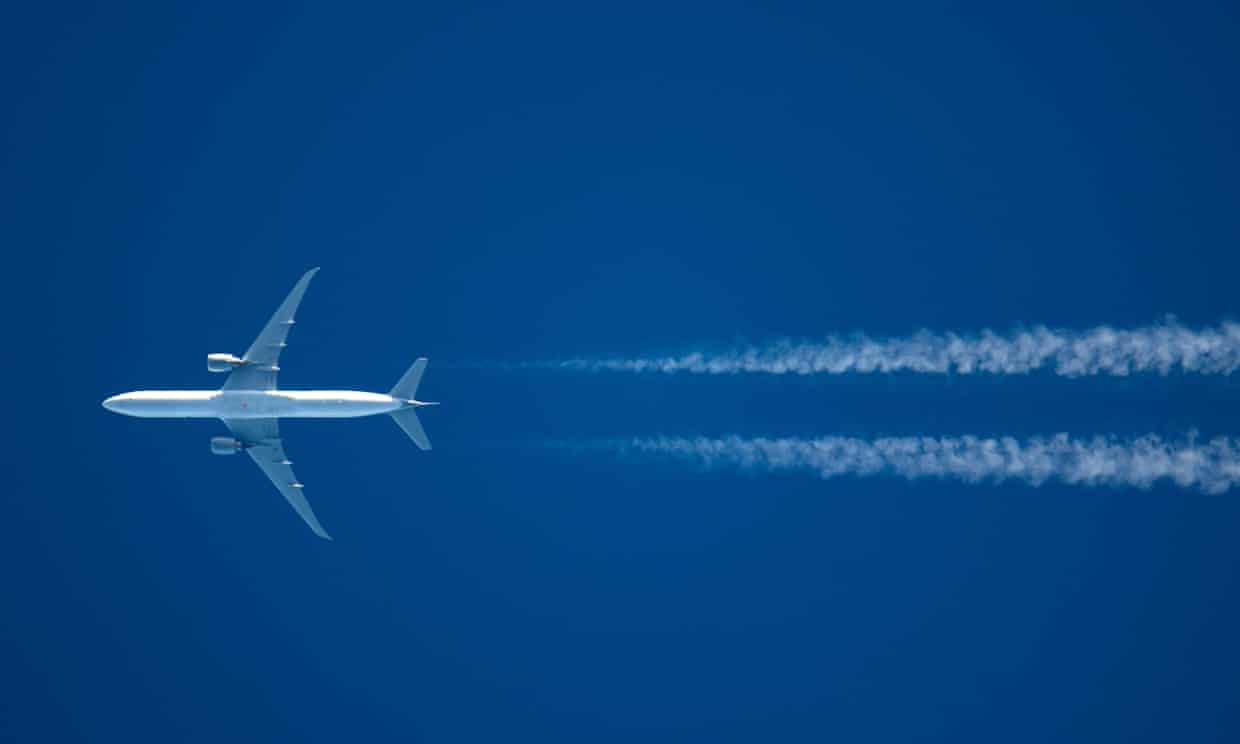
"The clear blue skies of the first lockdown are being crisscrossed by contrails once again. These white lines are caused by ice crystals that form on the huge numbers of tiny, ultrafine particles that come from aircraft engines. Ultrafine particles are far smaller than the wavelength of light, but contrails are a rare example of them being made visible.
Ultrafine particles are not just a problem in the skies above us. Airports are a large source, and my latest research has been searching for these tiny particles close to Gatwick. They were not hard to find. The number of ultrafine particles 500 metres downwind of the airport was greater than those at the kerb of London’s busiest roads. They mostly came from aircraft during takeoff and landing, but traffic, car parks and a large catering facility used to cook airline food all added to the problem.
In 2021, the Dutch Health Council and the World Health Organization (WHO) highlighted the growing evidence that ultrafine particles are damaging our health. This includes 75 studies; mostly relating to lung inflammation, blood pressure and heart problems, along with risks to foetal growth. However, technical differences between the studies meant that the WHO has not set a standard.
We are yet to understand the spread of ultrafine particles from Gatwick, but we do know they can travel a long way. Ultrafine particles from aircraft have been found across the Los Angeles suburbs. We have found ultrafine particles from Heathrow across large areas of west London, and they can be detected more than 12 miles (20km) away in the city centre. It is a similar situation in several European cities, meaning millions of people are exposed.
More than 10 years ago I was part of a study that found day to day changes in ultrafine particles in London matched the number of people dying or going to hospital with heart problems. Since then, I have tracked reductions in ultrafine particles in our cities as a side-effect of regulations to tackle other air pollutants. These include removing sulphur impurities from diesel fuel and requiring particle filters on the exhausts of new vehicles.
Researchers have suggested that sulphur is removed from aircraft fuel too, to match the tight limits on sulphur in diesel and petrol. This would be a possible solution for ultrafine particles.
In the meantime, Bristol airport’s expansion was approved earlier this month and Gatwick is applying to increase capacity by bringing its emergency runway into regular use. Ultrafine particles are not included in the environmental assessments, putting us at risk of increased air pollution for decades to come."
Using Research to Keep Politicians Honest: A free online training | Shorenstein Center on Media, Politics and Public Policy

Using Academic Research to Keep Politicians Honest
50-minute session
Online training

A free online training session for journalists across beats
|


|
|

-
 Flash News: Ukraine Intercepts Russian Kh-59 Cruise Missile Using US VAMPIRE Air Defense System Mounted on Boat. Ukrainian forces have made ...

