Monday, February 21, 2022

‘This should terrify the nation’: MARK FINCHEM A True Warrior and Patriot

Be afraid. Be very afraid
". . .About three weeks after Trump lost the 2020 presidential election – and on the same day that Joe Biden’s 10,457-vote victory in Arizona was certified – Finchem hosted Rudy Giuliani at a downtown Phoenix hotel.
Giuliani, then Trump’s personal lawyer, announced a new theory for why the result should be overturned: that Biden had relied on fraudulent votes from among the 5 million undocumented immigrants living in the state – a striking number given that Arizona only has a total of 7 million residents.
Two weeks after that, Finchem was among 30 Republican lawmakers in Arizona who signed a joint resolution. It called on Congress to block the state’s 11 electoral college votes for Biden and instead accept “the alternate 11 electoral votes for Donald J Trump”.

‘This should terrify the nation’: the Trump ally seeking to run Arizona’s elections

<div class=__reading__mode__extracted__imagecaption>Mark Finchem has received Donald Trump’s endorsement in the race for secretary of state in Arizona. Photograph: Rachel Mummey/Reuters<br>Mark Finchem has received Donald Trump’s endorsement in the race for secretary of state in Arizona. Photograph: Rachel Mummey/Reuters</div>

"Mark Finchem, a supporter of the ex-president’s ‘big lie’ about the 2020 election, could soon oversee voting in the state.

Last September, Donald Trump released a statement through his Save America website. “It is my great honor to endorse a true warrior,” he proclaimed, “a patriot who has fought for our country, who was willing to say what few others had the courage to say, who has my Complete and Total Endorsement.”

Former US presidents usually reserve their most gushing praise – replete with Capital Letters – for global allies or people they are promoting for high office. A candidate for the US Senate, perhaps, or someone vying to become governor of one of the biggest states.

Trump by contrast was heaping plaudits on an individual running for an elected post that a year ago most people had never heard of, let alone cared about. He was endorsing Mark Finchem, a Republican lawmaker from Tucson, in his bid to become Arizona’s secretary of state. . .

The role of secretary of state is critical to the smooth workings and integrity of elections in many states, Arizona included. The post holder is the chief election officer, with powers to certify election results, vet the legal status of candidates and approve infrastructure such as voting machines.

[  ] Communications between Finchem and the organizers of the “Stop the Steal” rally earned the lawmaker a knock on the door from the January 6 committee this week. The powerful congressional investigation into the insurrection issued a subpoena for him to appear before the panel and to hand over documents relating to the effort to subvert democracy.

Finchem will have to answer to the committee for what he did in the wake of the 2020 election, or face legal consequences. But there’s a more disconcerting question thrown up by his candidacy for secretary of state: were he to win the position, would he be willing and able to overturn the result of the 2024 presidential election in Arizona, potentially paving the way for a political coup?

“Someone who wants to dismantle, disrupt and completely destroy democracy is running to be our state’s top election officer,” said Reginald Bolding, the Democratic minority leader in the Arizona House who is running against Finchem in the secretary of state race. “That should terrify not just Arizona, but the entire nation.”

Trump has so far endorsed three secretary of state candidates in this year’s election cycle, and Finchem is arguably the most controversial of the bunch. (The other two are Jody Hice in Georgia and Kristina Karamo in Michigan.)

Originally from Kalamazoo in Michigan, he spent 21 years as a public safety officer before retiring to Tucson and setting up his own small business. In 2014 he was elected to the Arizona legislature, representing Oro Valley.Even before Finchem was inaugurated as a lawmaker, he was stirring up controversy. On the campaign trail in 2014, he announced that he was “an Oath Keeper committed to the exercise of limited, constitutional governance”.

The Oath Keepers are a militia group with a list of 25,000 current or past members, many from military or law enforcement backgrounds. They have been heavily implicated in the January 6 insurrection.
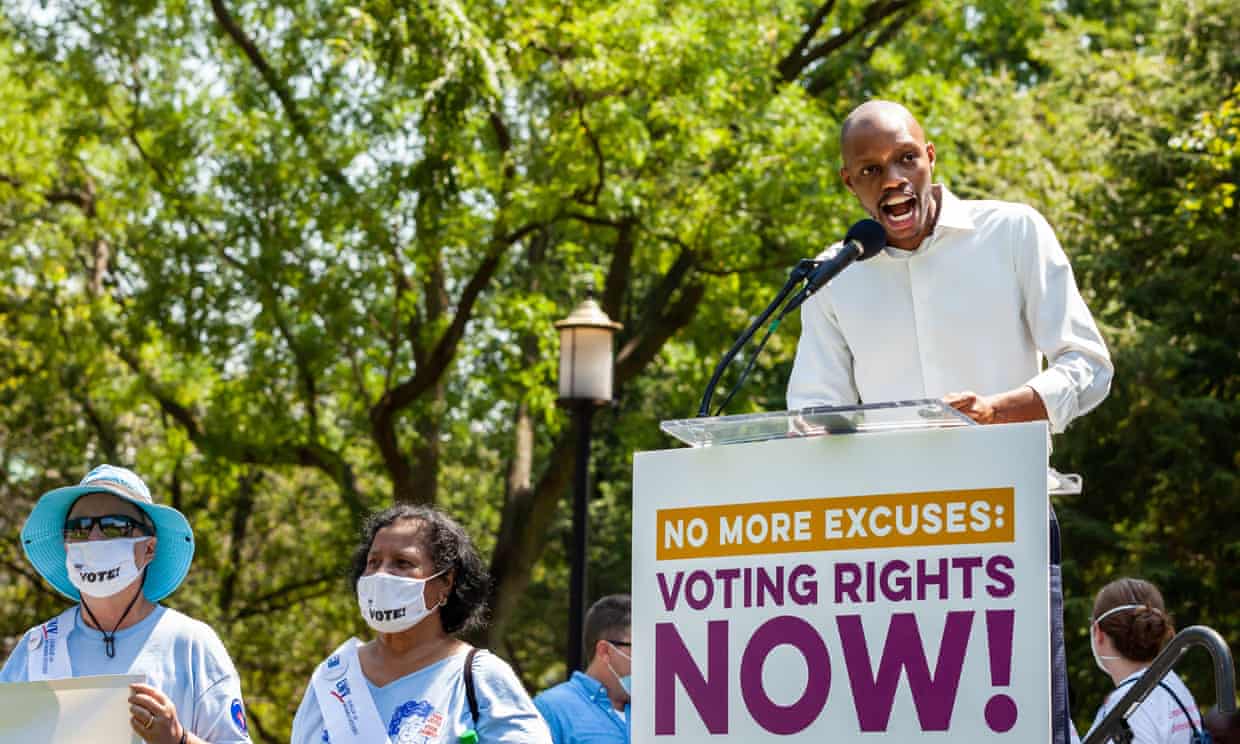
Reginald Bolding speaks during a voting rights rally at the White House in August. Photograph: Allison Bailey/NurPhoto/Rex/Shutterstock

The founder of the Oath Keepers, Stewart Rhodes, and nine co-defendants are facing trial for seditious conspiracy based on allegations that they meticulously planned an armed attack on the heart of American democracy.

Finchem entered the Arizona legislature in January 2015 and soon was carving out a colourful reputation. With his bushy moustache, cowboy hat and boots, and offbeat political views, his hometown news outlet Tucson Weekly dubbed him “one of the nuttier lawmakers” in the state.

. . .

To this day no credible evidence of major fraud in the 2020 election has been presented, yet Finchem continues to beat that drum. Last month he told a Trump rally in Florence, Arizona: “We know it, and they know it. Donald Trump won.”

In his latest ruse, Finchem this month introduced a new bill, HCR2033, which seeks to decertify the 2020 election results in Arizona’s three largest counties. There is no legal mechanism for decertifying election results after the event.

As the August primary election to choose the Republican and Democratic candidates for secretary of state draws closer, attention is likely to fall increasingly on Finchem’s appearance in Washington on the day of the insurrection. . .

In his telling of events, he was in Washington that day to deliver to Mike Pence an “evidence book” of purported fraud in the Arizona election and to ask the then vice-president to delay certification of Biden’s victory. For Finchem, January 6 remains a “patriotic event” dedicated to the exercise of free speech; if there were any criminality it was all the responsibility of anti-fascist and Black Lives Matter activists.

The Guardian reached out to Finchem to invite him to explain his presence and actions in Washington on January 6, but he did not respond.
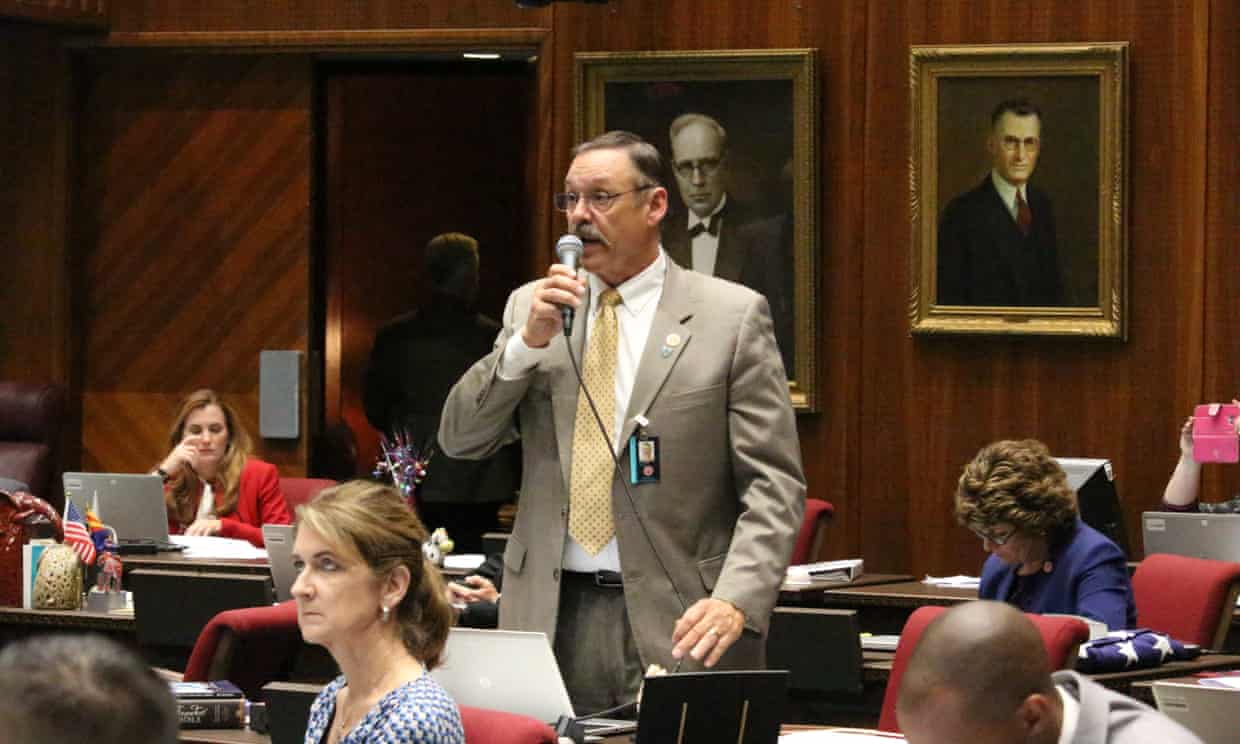
Finchem at Arizona’s capitol in Phoenix in 2018. Photograph: Bob Christie/AP

He has repeatedly insisted that he never came within 500 yards of the Capitol building. But photos and video footage captured by Getty Images and examined by the Arizona Mirror show him walking through the crowd of Trump supporters in front of the east steps of the Capitol after the insurrection was already under way. . .

> Finchem’s campaign to become the next secretary of state of Arizona is going well. Last year his campaign raised $660,000, Politico reportedmore than three times Bolding’s haul.

> Bolding sees that as indicative of a fundamental problem. On the right, individuals and groups have spotted an opportunity in the secretary of state positions and are avidly targeting them; on the left there is little sign of equivalent energy or awareness.

“The public in general may not understand what’s at stake here. All Democrats, all Americans, should be concerned about this and what it could do to the 2024 presidential election,” he said.

Dean agrees that there is a perilous void in public knowledge. “What’s so insidious about the Trump plan is that it is focusing on state-level races where voters know very little about what the secretary of state does. That’s a danger, as it gives Finchem a realistic path in which he could win – and Finchem will do what Trump wants.”
Reference: https://www.theguardian.com/us-news/2022/feb/21/mark-finchem-trump-arizona-elections-secretary-of-state


DNA Databases: Issues with Access

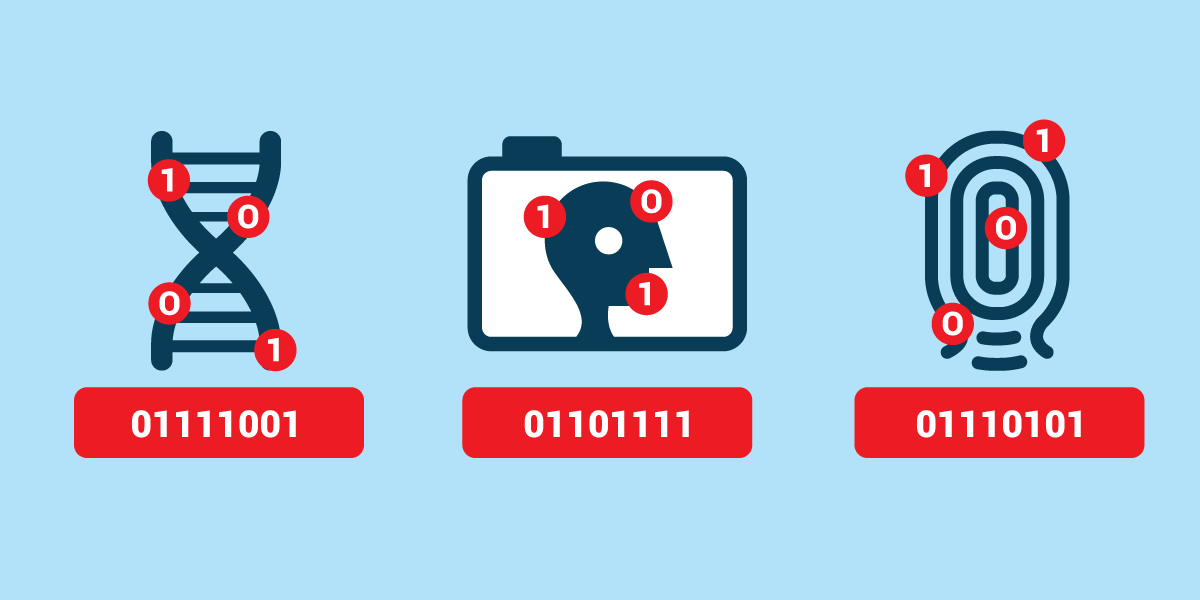
Our DNA—which can predict what we look like, who we’re related to, where we came from, and which diseases we’re likely to get—is far too sensitive to leave its access to the whims of law enforcement and prosecutors.

Not Just San Francisco: Police Across the Country are Retaining and Searching DNA of Victims and Innocent People

"This week we learned that San Francisco Police used a woman’s own DNA—collected years earlier as part of an investigation into her sexual assault—to charge her for an unrelated property crime. What’s worse—it appears the S.F. police routinely search victims’ DNA in criminal investigations.

This practice is possible because San Francisco has been storing DNA gathered from rape survivors in the same local database where it stores DNA from rape assailants and other suspects. The San Francisco District Attorney stated the database potentially includes thousands of victims’ DNA profiles, with entries over “many, many years.”

...The San Francisco police chief asserted this week that the lab’s collection practices “have been legally vetted and conform with state and national forensic standards.” However, local DNA databases like San Francisco’s are not held to the same strict laws and regulations as state and federal-level DNA databases like the FBI’s CODIS database. This means that there is nothing to prevent local police and the DA from storing—and searching—DNA from nearly anyone who might interact with the criminal justice system. This includes crime victims, potential suspects who are never arrested or charged, people who have consented to have their DNA collected to rule themselves out as suspects, and even people whose DNA has been collected without their knowledge.
Even if police and prosecutors in San Francisco decide to limit the DNA included in the local crime lab database, this won’t affect similar “rogue” DNA databases in other parts of the country.


[.  ] In San Francisco, the District Attorney has now recognized that the search of the rape survivor’s DNA was unconstitutional and dropped the charges. And at least one state senator has suggested introducing legislation to outlaw this practice. However, a law that merely addresses DNA collected from rape victims is not enough to prevent other improper and unconstitutional DNA searches in the future, both in San Francisco and throughout the country. Any legislation that’s introduced must also address the consent issues more broadly. And it should ban the warrantless collection of DNA without a person’s knowledge, as a new law in Maryland did last year.

It may also be time to go much further. New York introduced legislation that would do away with local DNA databases altogether. San Francisco’s latest problems with its DNA crime lab suggest municipalities shouldn’t be allowed to maintain these “rogue” databases at all. Our DNA—which can predict what we look like, who we’re related to, where we came from, and which diseases we’re likely to get—is far too sensitive to leave its access to the whims of law enforcement and prosecutors." 

Ref >> https://www.eff.org/deeplinks/2022/02/not-just-san-francisco-police-across-country-are-retaining-and-searching-dna


RESILIENCY: KEEPING IT: YOUR SENSE OF HUMOR (Don't Lost It!) | Politico Cartoon Carousell


So sorry for a few weeks' lapse going into a recovery-of-sorts: Cartoon Carousel

The nation’s cartoonists on the week in politics

Every week political cartoonists throughout the country and across the political spectrum apply their ink-stained skills to capture the foibles, memes, hypocrisies and other head-slapping events in the world of politics. The fruits of these labors are hundreds of cartoons that entertain and enrage readers of all political stripes. Here's an offering of the best of this week's crop, picked fresh off the Toonosphere. Edited by Matt Wuerker.


PRESIDENT'S DAY: Chosen Date for iOS Apple App Store Launch of Trump's Truth Social Network

Just a coincidence on a long holiday weekend, the app was uploaded just after midnight today 

Truth Social’s listing in the App Store.

Trump’s new social media app launches on iOS

<div class=__reading__mode__extracted__imagecaption>Truth Social’s listing in the App Store.

"Truth Social, a social media network developed by former president Donald Trump’s new media company, is now live on the iOS App Store in the US. Reuters reports that the iOS app was available to download shortly before midnight, eastern time, prior to Presidents Day on February 21st.

The service appears to be closely modeled on Twitter, which was previously Trump’s preferred social media platform. The former president was banned from the platform in early 2021 after Twitter said he was inciting violence in the wake of the storming of the US Capitol building.

As of this writing, Truth Social’s website is loading intermittently, but collecting names and email addresses for users who wish to sign up. Notably, the site is not secured through HTTPS, which means any information submitted will be visible to intermediaries on the network. The site also includes a public commitment to open-source principles, a concession from its earlier conflict with the Mastodon project.

Some users who signed up through the site have been shown vague “Something went wrong” error messages, while others are reportedly being told that they’ve been put on a waitlist due to “massive demand” according to CNET. One reporter with the Washington Post said their verification email failed to arrive.

Conservative politicians and commentators have repeatedly criticized Twitter and other big tech companies for what they see as overly harsh moderation of right-wing views. In response, a wave of right-wing platforms have grown in popularity, including Parler, Gettr, and YouTube competitor Rumble.

Instead of tweets, Truth Social reportedly refers to individual posts as “Truths” which are shown to users on a “Truth Feed.” If you see a “Truth” that you want to share with your followers, you can apparently “ReTruth” it. Other features under development are support for direct messaging, as well as user verification, according to the platform’s chief product officer.

Truth Social has reportedly been in beta since December with around 500 users on the platform. It’s being developed by Trump Media and Technology Group (TMTG), which is helmed by former Representative Devin Nunes. In an interview on Sunday with Fox News, Nunes said that he hoped the service would be “fully operational” by the end of March.

An exact launch date for the service’s Android app is yet to be announced, but Truth Social’s website says it’s coming to the Google Play Store “soon.”

The launch comes a little under a year after Donald Trump’s previous attempt to launch a new “platform.” What resulted was closer in format to a regular blog which was shut down less than a month later."

Sunday, February 20, 2022

GETTING AHEAD OF THE NEWS: ENDLESS NARRATIVES + INFORMATION WARS

Round-and-round we go! Wheeeeeeeeeeeee!

Why The West Is Out To Expose The ‘Kremlin Playbook’

The United States and European allies are aggressively seeking to call out Russian disinformation to get ahead of the Russian narrative amid fears Russian President Vladimir Putin is about to launch an invasion of Ukraine, experts say. . .

[.  ] Brandt said she sees the U.S. and its allies’ attempts to quickly refute Russia’s propaganda plans – or even get ahead of the news as Price did – as a way to be “proactive and kind of own the [information] space. … I think this is a way of denying that narrative to Putin and filling the vacuum.”

Cyberattacks Tuesday shuttered the websites of Ukraine’s defense ministry and two banks, and Ukrainian officials suggested the attacks may have been of Russian origin without explicitly placing blame on their neighbor. Bob Diachenko, a Ukraine-based cybersecurity expert, told Forbes Tuesday’s cyberattacks could be “preparation” for a larger operation. Brandt called cyberattacks another “vector of authoritarian interference” used in combination with disinformation by the Kremlin."

Ref: https://www.forbes.com/sites/dereksaul/2022/02/17/why-the-west-is-out-to-expose-the-kremlin-playbook/ 

RELATED CONTENT ON THIS BLOG 25 Dec 2020

One More "Endless War" CYBERWARFARE > Nation-States & Cyber-Spies / The Blame Game

First reported by Reuters

Apparently the US Intelligence Services such as the CIA. NSA, and Naval Intelligence have latched onto these “all too clever” cyber-agents and policies with one stark difference – the other side was staffed by cold and calculating operators who,  over the past 20 years, have been able to take full advantage of the US Cyber-sie by  stealing-  not just hoards of government classified secrets but also nearly all the arsenal of US created cyber hacking tools.

Worse, the Chinese, Iranian, ISIS, North Korean, and Russian cyber experts using these US tools have been able to unleash a broad range of cyber attacks to loot US and World businesses and government agencies. . .

How Pervasive are the US Cyber Spy Tool Breaches

First Cyber-spy gaffe, give  away as Open Source Software key cyber-software tools and don’t expect anybody to exploit it for malvolence.  Tor is free and open-source software for enabling anonymous communication. It was developed in the mid 1990s by the Naval Research Laboratory  to ensure that Naval communications could not be a)intercepted for deciphering or b)tracked to reveal source and destination communications for tracing vessel and submarine movements. Tor  and its counterparts such as I2p, Freenet and GnuNET are all anonymous browsers of the resulting  Deep Web which is not just invisible to but also nearly 500 times the size of the regular surface Web .

As it turns out, anonymous browsing which is untraceable is as vital to hackers and criminal organizations as it is for military and corporate systems. But what the Naval Research Laboratory  and Electronic Frontier Foundation as sponsors failed to  do  when Tor was released as Open Source was some elementary controls on the code. . .

As a result hackers have taken the Open Source Tor [and I2P, Freenet and GnuNET  as well]  and adapted it for their own purposes including creating a host of vulnerabilities for their malignant ends. Congratulations Naval Intelligence for hoping for the best and reaping the worst possible outcome – creating the Dark Web Space with which provides cover for enemy state  cyber-hackers and organized crime.

Second Cyber-spy gaffe, presume your headquarters are impervious to hack attack; then lose secrets through your own staff and/or incompetence. The record from 2000 to 2013 of Federal Government cyber-attacks is full of incidents where  security incompetence or internal employees were the source of most data breaches. . .

Third Cyber-spy gaffe, lose control of your most important  cybertools as the NSA did in 2016. And then once lost, all the tools were dumped in code form by a still secret group known as the Shadow Brokers for all the world to see and employ for  their own massive cyber hacking exploits.  . .

Based on the timing of the attacks and clues in the computer code, researchers with the firm Symantec believe the Chinese did not steal the code but captured it from an N.S.A. attack on their own computers — like a gunslinger who grabs an enemy’s rifle and starts blasting away. The Chinese action shows how proliferating cyber-conflict is creating a digital Wild West with few rules or certainties,…The losses have touched off a debate within the intelligence community over whether the United States should continue to develop some of the world’s most high-tech, stealthy cyberweapons if it is unable to keep them under lock and key.”
The result is that over the last decade, US Cyber Intelligence  has fallen into disarray and  and badly needs revitalization. See recent Naval Intelligence  assessment of that need.

Consequences of  US Intelligence Incompetence

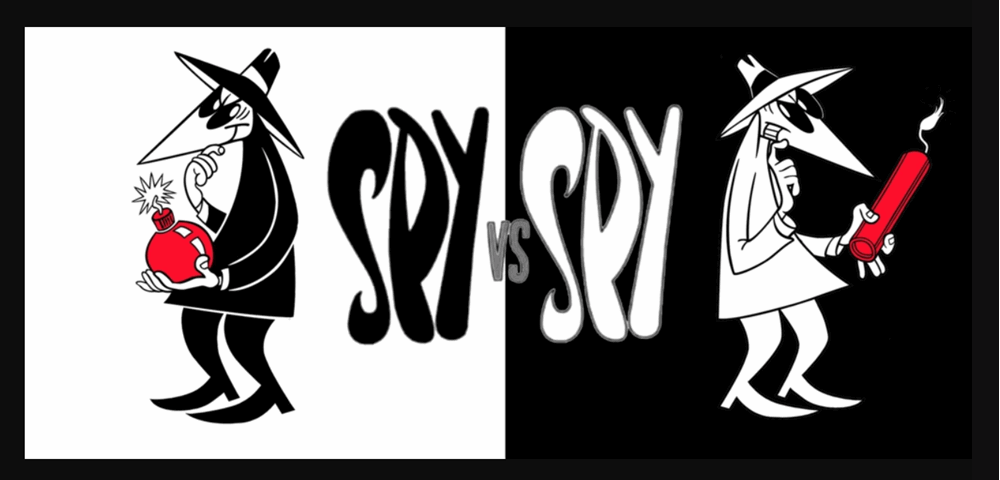
Spy vs Spy was a Mad Magazine comic strip started during the Cold War era in 1961. Drawn by Antonia Prohias, the strip featured two spies one level too clever  such that they inevitably did themselves in with  scheming stunts of self-destruction. These spies were Maxwell Smart over confident and Inspector Clouseau clumsy clowns as seen in this cartoon:

Clearly there is a hubris about US Intelligence Effectiveness and Invulnerability. Yet all the major Intelligence players [CIA, NSA, and Naval Intelligence]  have proven to be remiss in defending US business, government and individual citizens against cyberattacks. Because  some of the very best US hacking tools are in possession of organized crime and foreign agents, US infrastructure systems  which are running on old , outdated, and/or poorly monitored control systems , are particularly at risk. This means major systems such as the US electrical grid, air transportation  control centers, intertwined oil,/gas/chemical pipelines have become increasingly susceptible to concerted cyberattack.

But perhaps most disconcerting is how social media like Facebook, Twitter, Youtube have been mastered as propaganda machines for sowing  massive misinformation on political and economic issues. So much so that the last US Presidential election was swayed by Russian cyber-agents. And so you can imagine how President Trump, already a vocal dissenter of the US  Intelligence community, will be “reluctant” to investigate the foreign cyberagent  influence by social media let alone revitalize the US Cyber-Agencies.

------------------------------------------------------------------------------------------------------------------------------


End of Countries Blaming Each Other of Cyber Espionage?

End of Countries Blaming Each Other of Cyber Espionage?

"In our world today, countries are “united” through a world-organ named United Nations, where civilized discussions about conflicts and misunderstandings are raised. But in the cyber world, it is basically every country for itself, there is no such thing as the Internet’s united nation, there is no central organ to organize the unorganized. . ."

'ELASTICITY' + INFLATION: American Consumers by and large know there’s absolutely nothing they can do about it

Have shoppers rebelled? No.    
Inflation, at a 40-year high, has yet to stir Americans to switch to cheaper brands or quit spending in any significant way so as to cause concern in corporate boardrooms.
American consumers seem to have passed through the other stages of grief, which include anger and denial, and have settled on acceptance–in higher numbers than anybody expected, including executives behind the nation’s biggest household brands.
There’s even an economic term for this phenomenon: elasticity, which captures how much demand for a product falls when prices go up.
 

Americans’ Response To Inflation Is Not What Many Expected

Shoppers have been patient, but will be tested by more price increases coming this year

MDM Tactics: Misinformation, Disinformation and Malformation

Intro:
1

CISA warns of hybrid operations threat to US critical infrastructure

"CISA urged leaders of U.S. critical infrastructure organizations on Friday to increase their orgs' resilience against a growing risk of being targeted by foreign influence operations using misinformation, disinformation, and malformation (MDM) tactics.

Multiple influence operations coordinated by foreign actors had an impact on US critical services and functions across critical sectors," according to the cybersecurity agency.

"Current social factors—including heightened polarization and the ongoing global pandemic—increase the risk and potency of influence operations to U.S. critical infrastructure," CISA warned.

Risks increased by Ukraine-Russia tensions

These MDM campaigns can also be paired with cyberattacks as part of hybrid operations to "derive content, create confusion, heighten anxieties, and distract from other events."

Malicious actors can also use such tactics to shape the public's opinion, undermine trust in the state's capabilities, and amplify division.

The federal agency cautioned that the current tensions between Russia and Ukraine are behind an increased risk of influence operations that could directly impact National Critical Functions (NCFs) and critical infrastructure orgs.

"In light of developing Russia-Ukraine geopolitical tensions, the risk of foreign influence operations affecting domestic audiences has increased," CISA added [PDF].

"Recently observed foreign influence operations abroad demonstrate that foreign governments and related actors have the capability to quickly employ sophisticated influence techniques to target U.S. audiences with the goal to disrupt U.S. critical infrastructure and undermine U.S. interests and authorities."

Ongoing hybrid warfare campaign

This warning comes the White House pinned this week's wide-scale DDoS attacks targeting Ukrainian banks and government agencies on the Russian main intelligence directorate (aka GRU) during a press briefing on Friday.

This attribution was made based on high volumes of traffic to Ukraine-based IP addresses and domains from GRU infrastructure.

The UK government also blamed Russian GRU hackers for the distributed denial of service attacks targeting "the financial sector in Ukraine."

The Security Service of Ukraine (SSU)—whose website has been unreachable since Wednesday— said in a Monday press release that the country is currently the target of a "massive wave of hybrid warfare." 

This is eerily similar to the hybrid operations (combining cyberattacks and MDM campaigns) mentioned by CISA in its Friday advisory."

Related Articles:

US says Russian state hackers breached defense contractors

CISA orders federal agencies to patch actively exploited Windows bug

US govt warns of Russian hackers targeting critical infrastructure

CISA tells federal agencies to patch actively exploited Chrome, Magento bugs

FBI: BlackByte ransomware breached US critical infrastructure

 
=======================================================================
2 Press Briefing by Press Secretary Jen Psaki,
Deputy National Security Advisor for Cyber and Emerging Technology Anne Neuberger, and Deputy National Security Advisor for International Economics and Deputy NEC Director Daleep Singh, February 18, 2022

James S. Brady Press Briefing Room

2:43 P.M. EST

MS. PSAKI:  Hi, everyone.  Happy Friday.  Okay, so we have two special guests with us today.  Joining us are Deputy National Security Advisors Anne Neuberger and Daleep Singh.

By way of a quick introduction, Anne is Deputy National Security Advisor for Cyber and Emerging Technology.  Previously, she served as the National Security Agency’s Director of Cybersecurity, where she led the NSA’s cybersecurity mission.

Prior to this role, Anne led NSA’s election security effort and served as Assistant Deputy Director of NSA’s Operations Directorate, overseeing foreign intelligence and cybersecurity operations.

Daleep is Deputy National Security Advisor for International Economics and Deputy Director of the National Economic Council.  He coordinates the administration’s policymaking process for a range of issues at the intersection of economic policy and national security.

Previously, he was the Executive Vice President and Head of the Markets Group at the New York Federal Reserve, where he led the implementation for most of the Fed’s emergency facilities launched during the pandemic.

He served as an Acting Assistant Secretary for Domestic Finance at the Treasury Department during the Obama-Biden administration, as well as a Deputy Assistant Secretary for International Affairs.

They will each give brief remarks, and then we’ll take some questions.  Your introduction won’t be as fancy the second time you come, but —

So, I think Anne is starting, right?

MS. NEUBERGER:  Thank you very much, Jen.  Good afternoon.  It’s good to see you all.

Over the last decade, Russia has used cyber as a major part of its military activity beyond its borders, including to undermine, coerce, and destabilize Ukraine.  For that reason, and at the President’s direction, we’ve been working to prepare for potential cyberattacks since November.  We’ve been focused on doing so in three ways:

First, we’ve continued our urgent work to shore up our cyber defenses at home.  Second, we’ve boosted our efforts providing support to Ukraine.  And third, we’ve worked closely with partners and Allies to defend against and disrupt malicious cyber activity. 

I’ll expand on each of these three areas. . .

[  ] We believe that the Russian government is responsible for wide-scale cyberattacks on Ukrainian banks this week.  We have technical information that links Russian — the Russian Main Intelligence Directorate, or GRU, as known GRU infrastructure was seen transmitting high volumes of communications to Ukraine-based IP addresses and domains.

We’ve shared the underlying intelligence with Ukraine and with our European partners. . .

The global community must be prepared to shine a light on malicious cyber activity and hold actors accountable for any and all disruptive or destructive cyber activity.

And as the President said earlier this week: If Russia attacks the United States or our Allies through asymmetric activities, like disruptive cyberattacks against our companies or critical infrastructure, we are prepared to respond.

Thank you.

MR. SINGH:  Good afternoon, everybody.  As President Biden has said: If Russia attacks Ukraine, we will respond decisively and forcefully to impose costs on Russia, alongside our Allies and partners.

The cost to Russia would be immense, both to its economy and its strategic position in the world.  Our financial sanctions have been designed to impose overwhelming and immediate costs to the largest financial institutions and state-owned enterprises in Russia.  They’ve been calibrated to maximize alignment with our Allies and partners.  They’re flexible to allow for further escalation or de-escalation, depending on how Putin responds.  And they’re responsible to avoid targeting the Russian people and to limit unwanted spillovers to the U.S. and global economy.

We’re also prepared to impose powerful export controls as part of our response package.  Both financial sanctions and export controls deny something to Russia that it needs and can’t get from anywhere other than the United States or our Allies and partners.  Financial sanctions deny foreign capital to Russia, and export controls deny critical technological inputs that Russia needs to diversify its economy and to deliver on Putin’s strategic ambitions in aerospace, defense, and high-tech.

Working in tandem, financial sanctions and export controls are embedded in a broader strategy that would undercut Putin’s aspirations to project power and exert influence on the world stage.

If Russia invades Ukraine, it would become a pariah to the international community, it would become isolated from global financial markets, and it would be deprived of the most sophisticated technological inputs.

Russia would face the >prospect of intense capital outflows, > mounting pressure on its currency, > surging inflation, > higher borrowing costs, > economic contraction, and the > erosion of its productive capacity.

Taken together, Russia would become more dependent on countries that cannot compensate for its losses.  This would be a strategic defeat for Russia, pure and simple.

Meanwhile, the West and international community would emerge more united and determined to defend shared values and core principles than at any point in the post-Cold War era.

We’re ready to impose costs in lockstep with our Allies and partners because we share the belief that Russia has no right to redraw its neighbors’ borders by force and that countries have the freedom to set their own course and to choose their own destiny.

To be clear: The test of unity with our Allies and partners is not whether our actions are matched to the letter or whether our implementation mechanics are identical.  The test of unity is whether we share a recognition of the core principles that are at stake, whether we share the resolve to defend those principles by imposing severe costs on Russia for its actions, and whether we’re willing to do all we can to support each other in managing the consequences.

I can tell you with confidence that we’ve met the test.  And on this last point, since I know many of you have asked, let me say that we are in active engagement with major energy consumers and major energy producers to coordinate potential actions, to stabilize energy markets, and all of our tools are on the table.

Thank you.

MS. PSAKI:  Okay.  Steve

 
Featured Clips from This Video
==============