Saturday, March 05, 2022

FREE FLOW OF INFORMATION: Tik Tok owned by the Chinese company ByteDance

Intro: Let's be fair - TikTok has 1 billion users worldwide and is an important news source for adults and particularly those under 25. A quarter of US adults say they always use TikTok to get the news. TikTok’s algorithm, which curates what users see, has combined with the app’s popularity to make it a compelling outlet for people looking for information on the conflict.
Ukraine footage on TikTok varies wildly, from satirical commentary to false footage and accurate news clips.
one of today's reports in The Guardian is already tinged

War as seen on TikTok: Ukraine clips get views whether true or not

Social media platform is a popular news source for young adults, but misinformation is commonplace
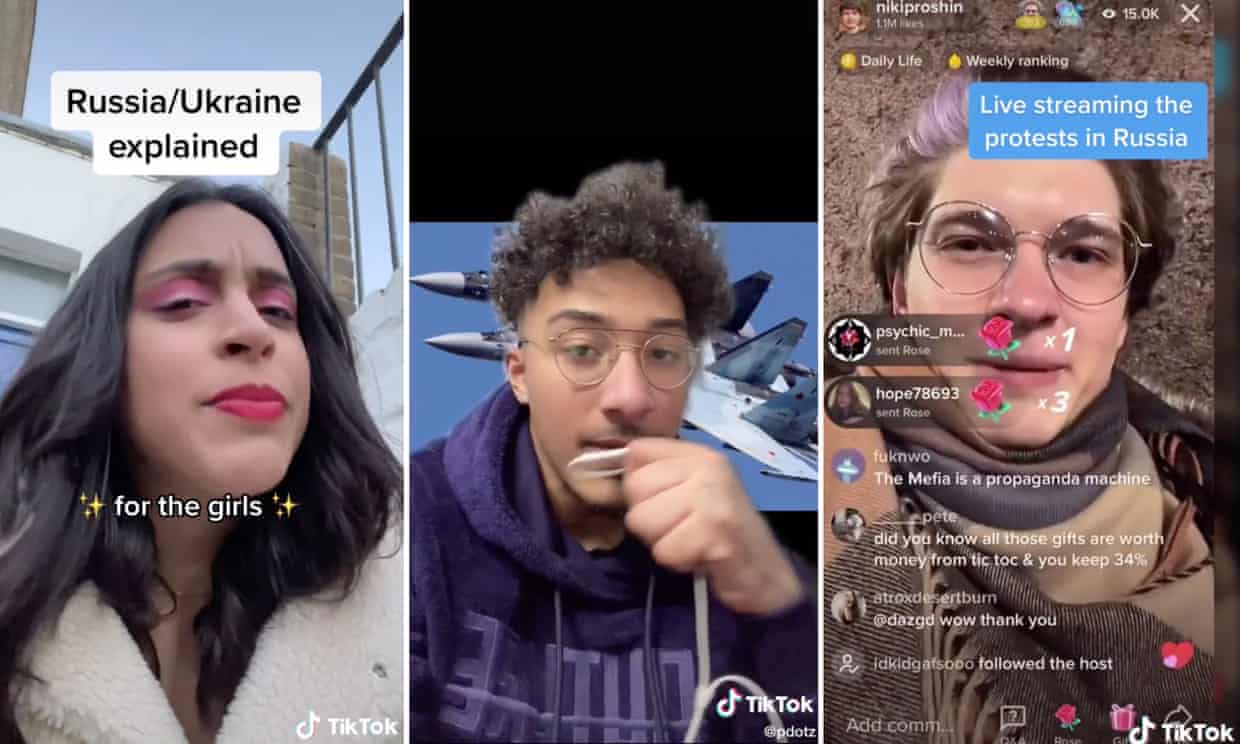
<div class=__reading__mode__extracted__imagecaption>From left: Nikita Redkar, a London-based TikToker; Pdotz, a popular British TikToker; and Niki Proshin, a 27-year-old Russian TikToker. Photograph: TikTok<br>From left: Nikita Redkar, a London-based TikToker; Pdotz, a popular British TikToker; and Niki Proshin, a 27-year-old Russian TikToker. Photograph: TikTok</div>


"Trucks carrying large cylindrical containers sweep down a snowy road to a soundtrack of hollering and an alarming, if amateurish, caption: “RUSIA NUCLEAR BOMB”. The video was taken down, but not before it received 18m views. Welcome to the Russia-Ukraine conflict on TikTok. . .

> A London-based TikToker, Nikita Redkar, has received nearly 3m views for her tongue-in-cheek clip describing the conflict like a relationship breakdown: “Back in the 90s Russia and Ukraine used to be a thing but things got really messy and they broke up.” An even more popular follow-up post, captioned “Will there be a WW3?” continues with the theme, describing NATO as a “group of besties” who cannot support Ukraine because “you don’t roll with the crew”.

> Pdotz, a popular British TikToker with more than half a million followers, has received about 3m views for his explainers on the conflict. . .

[. ] A TikTok spokesperson said: “We continue to respond to the war in Ukraine with increased safety and security resources to detect emerging threats and remove harmful misinformation and other violations of our community guidelines. We also partner with independent factchecking organisations to support our efforts to help TikTok remain a safe and authentic place.”

TikToks about misinformation, and how to spot it, are also proving popular. Abbie Richards, a TikToker with 536,000 followers who regularly posts on misinformation, has received more than half a million views for her guide to spotting false videos – including overdubbed audio and recycling old footage. Old footage has proved popular. One video captioned “Ukrainian soldiers saying goodbye to their families” has had 2.8m views but is clearly footage of US soldiers and their loved ones. Video game footage has also been adapted, with one clip purportedly showing a Ukrainian jet downing a Russian fighter – which has had nearly 10m views and is still live – but can be traced to a YouTube video made on a flight simulator game. The ITV News TikTok account is posting regularly on Ukraine and is garnering up to 400,000 views for its posts, but pales in comparison with less expert accounts with the same, or fewer, followers.

There is nothing unusual about TikTok’s algorithm compared with other platforms, according to Julian McAuley, a professor of computer science at the University of California, San Diego. “TikTok uses fairly ‘standard’ recommendation technology that will mostly recommend content that’s consistent with what users have previously engaged with. If users frequently consume misinformation (or slanted content), they’re likely to see more of it.” . .

READ MORE >> https://www.theguardian.com/technology/2022/mar/05/tiktok-ukraine-russia-invasion-clips-get-views-whether-true-or-not

=========================================================================

RELATED CONTENT and this additional observation: There has also been plenty of racism in the Ukraine coverage, with a media industry ― still very white ― expressing more sympathy for what Ukrainians are going through because they look like them.

The Media Are Still Clinging To Their Hawkish, Pro-War Tendencies

Please don't push us into a nuclear war!
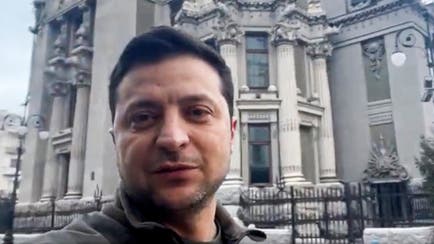
<div class=__reading__mode__extracted__imagecaption>Zelenskyy Has Reportedly Survived 3 Assassination Attempts In The Last Week

In 2003, the United States launched an invasion of Iraq based on government lies, fueled by eager media personalities who were far too willing to parrot what officials were telling them.

It wasn’t just that they valued access and were buddies with their sources. There was also too often a mainstream willingness to accept that showing strength and power was important for a country like America, and the best way to do that was to go win a war.

Of course, things didn’t go as planned. It wasn’t quick. We weren’t greeted as liberators. And there was no “mission accomplished,” as President George W. Bush so famously, and prematurely, declared in June 2003.

Plenty has changed since then. There’s far more questioning, on both sides of the aisle, about whether the United States needs to jump in and fix all the world’s problems with boots on the ground.

But some things remain, such as the media’s tendency to embrace their hawkish side. And it’s been creeping into the coverage of Russia’s invasion of Ukraine.

Some high-profile media figures have pushed bellicose, and even reckless, rhetoric over the past week, suggesting to varying degrees that America should take steps that would almost inevitably lead to war with Russia. . .

Despite some of these discouraging tendencies by some members of the media, the environment is very different from what it was in 2003. It’s much more diffuse, and troubling comments ― whether ones that make light of getting U.S. troops involved in a wider conflict or racist characterizations ― have been quickly called out on social media.

On Tuesday morning, the former U.S. ambassador to Russia, Michael McFaul ― who is a frequent presence on MSNBC ― played into the good vs. evil frame, tweeting that there are no more “innocent” or “neutral” Russians now. . .McFaul later deleted that tweet after receiving heavy criticism.

NBC News chief foreign correspondent Richard Engel suggested that by not attacking a massive Russian convoy of tanks and armored vehicles outside Ukraine’s capital, the United States and other countries were watching “in silence.”

Clint Watts, a former FBI agent and MSNBC contributor similarly tweeted that more needed to be done about the massive Russian convoy outside Ukraine’s capital ― and called doubts about more intervention “handwringing.”

And Fox News host Sean Hannity simply said, “Why isn’t there some group ― nobody has to take credit for it ― I believe in covert operations and plausible deniability. They’re sitting ducks. Why don’t we take out that convoy?”

On Monday, a New York Post editorial headline read, “West Must Consider Intervening to Stop a Slaughter in Ukraine.”

NBC host Chuck Todd thought Biden should’ve turned it into a wartime speech, wondering why he didn’t devote significantly more time to talking about the European crisis ― despite all the economic and other issues that America has to deal with at home. (For the record, Biden led his remarks with Ukraine and spent about 12 minutes on the topic in a speech that lasted just over an hour.)

Todd said he thought Biden would “spend a little more time explaining why it is our fight, as you said, ‘good versus evil,’ explain a little bit more and a little bit of the history of the defense of Europe, and why we’re in this position.”




Accessing Federal Funding from Your Local Government⁠—Some Strategies | ...

CYBER HUBS EXPERTISE:

Intro:
Conti ransomware

The Week in Ransomware - March 4th 2022 - The Conti Leaks

This week's biggest story is the massive data leak from the Conti ransomware operation, including over 160,000 internal messages between members and source code for the ransomware and TrickBot operation.

 
======================================================================

Russia blocks access to Facebook, Twitter, foreign news outlets

Facebook

  • March 4, 2022
  • 02:10 PM

"Russia has blocked access to the Facebook social network after Meta, Facebook's parent company, deactivated or restricted access to accounts belonging pr-Kremlin media outlets and news agencies, including RIA Novosti, Sputnik, and Russia Today.

After this article was published, Roskomnadzor told Interfax that Russia has now also blocked access to Twitter (twitter.com) following a demand made by the Prosecutor General's Office on February 24.

Twitter said on February 26 that the platform was "being restricted for some people in Russia" and that they're working to keep the "service safe and accessible."

Russia bans Facebook

On Thursday, Roskomnadzor asked Meta to immediately lift all restrictions on Russian media outlets members of the RT Media Group.

Russian Internet watchdog Roskomnadzor said Friday that the decision was motivated by Facebook discriminating against Russian media and information resources starting with October 2020.

"On March 4, 2022, a decision was made to block access to the Facebook network (owned by Meta Platforms, Inc.) in the Russian Federation," Roskomnadzor stated.

"In recent days, the social network has restricted access to accounts: the Zvezda TV channel, the RIA Novosti news agency, Sputnik, Russia Today, the Lenta.ru and Gazeta.ru information resources."

The Russian telecom watchdog added that the decision was taken to prevent blocking the free flow of information and obstructing the access of Russian users to Russian media across foreign social platforms.

"Soon millions of ordinary Russians will find themselves cut off from reliable information, deprived of their everyday ways of connecting with family and friends and silenced from speaking out," Meta's President for Global Affairs said in response to Facebook getting blocked in Russia.

"We will continue to do everything we can to restore our services so they remain available to people to safely and securely express themselves and organize for action."

Foreign news outlets blocked in Russia

Today, Roskomnadzor has also blocked access to multiple foreign news outlets, some of them designated as foreign agents, including Voice of America, BBC, DW, and Radio Free Europe/Radio Liberty.

Russia justified the media outlets' ban saying that they spread fake news regarding the ongoing invasion of Ukraine, the methods used by its military against Ukrainian civilians and infrastructure, and the number of casualties suffered by the Russian army. . .

Related Articles:

Social media phishing attacks are at an all time high

Meta: Ukrainian officials, military targeted by Ghostwriter hackers

Meta and Chime sue Nigerians behind Facebook, Instagram phishing

npm dependency is breaking some React apps today — here's the fix

Russia asks Google to end "misinformation" on "special op" in Ukraine

 
=========================================================================
First one new development - and note the pairing between military and humanitarian aid.
"U.S. Secretary of State Antony J. Blinken revealed during a Friday press availability in Brussels that "every NATO ally is providing either military or humanitarian aid to Ukraine. Most are providing both."

Ukraine to join NATO intel-sharing cyberdefense hub

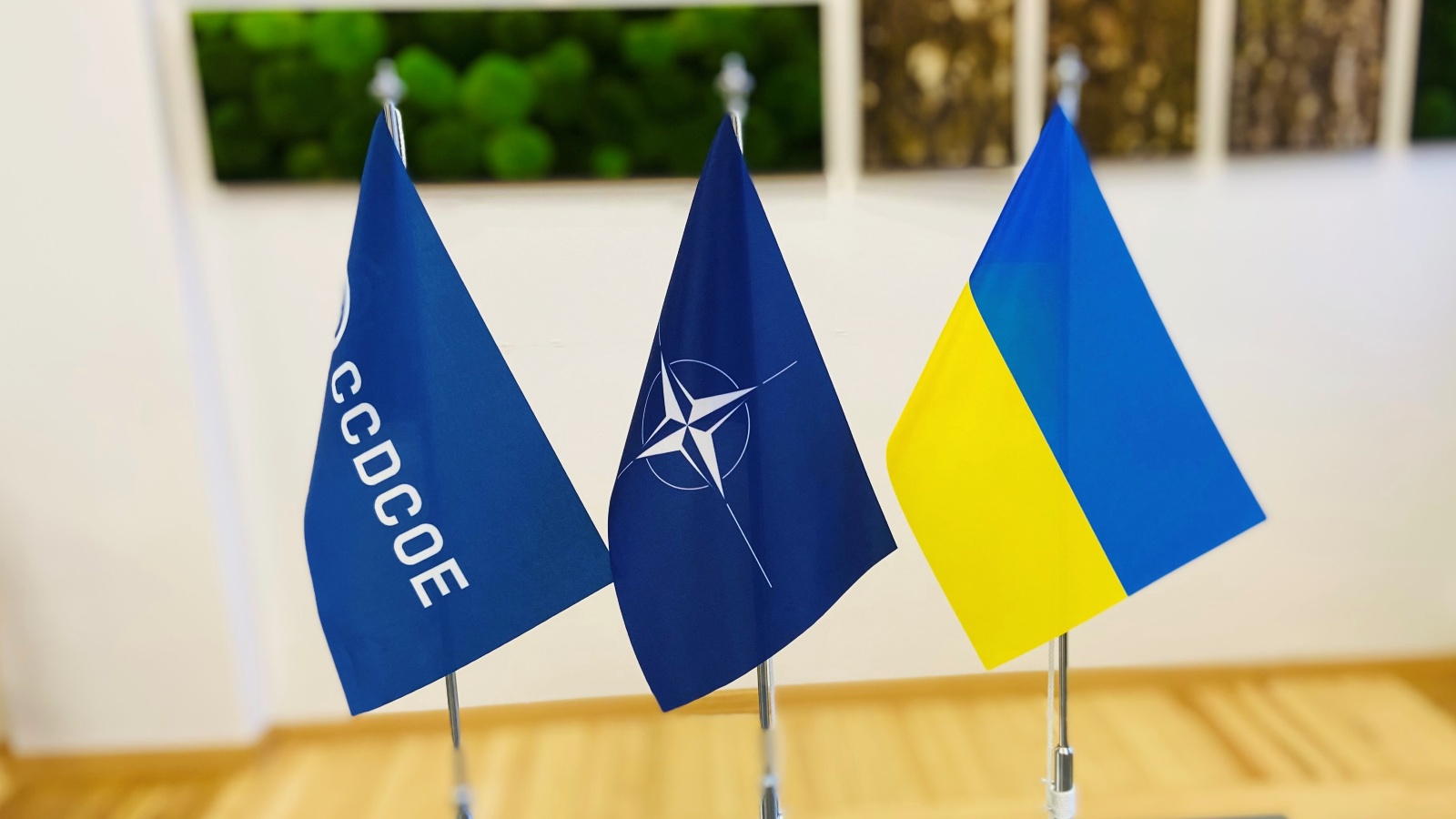
NATO CCDCOE Ukraine

"While Ukraine is yet to become a member of the North Atlantic Treaty Organization (NATO), the country has been accepted as a contributing participant to the NATO Cooperative Cyber Defence Centre of Excellence (CCDCOE).

CCDCOE is a NATO-accredited cyberdefense hub that member nations use for research, training, and exercises covering several areas, including technology, strategy, operations, and law.

Although this does not make Ukraine a NATO member, it will likely tighten collaboration and allow it to gain access to NATO member nations' cyber-expertise and share its own.

"Ukraine's presence in the Centre will enhance the exchange of cyber expertise, between Ukraine and CCDCOE member nations," said Colonel Jaak Tarien, Director of NATO CCDCOE.

"Ukraine could bring valuable first-hand knowledge of several adversaries within the cyber domain to be used for research, exercises and training,"

Minister of Defence of Estonia Kalle Laanet added that Ukraine "has valuable experience from previous cyber-attacks to provide significant value to the NATO CCDCOE."

Related Articles:

Microsoft: Ukraine hit with FoxBlade malware hours before invasion

Amazon: Charities, aid orgs in Ukraine attacked with malware

Cisco joins long list of security companies supporting Ukraine

Russia-Ukraine war exploited as lure for malware distribution

Free decryptor released for HermeticRansom victims in Ukraine

========================================================================

LATEST ARTICLES

1

Ukraine malware

Security

Amazon: Charities, aid orgs in Ukraine attacked with malware

Charities and non-governmental organizations (NGOs) providing critical support in Ukraine are targeted in malware attacks aiming to disrupt their operations and relief efforts seeking to assist those affected by Russia's war.

2  

Hackers leak 190GB of alleged Samsung data, source code 

The Lapsus$ data extortion group leaked today a huge collection of confidential data they claim to be from Samsung Electronics, the South Korean giant consumer electronics company.

Malware Phishing

Russia-Ukraine war exploited as lure for malware distribution

Threat actors are distributing malware using phishing themes related to the invasion of Ukraine, aiming to infect their targets with remote access trojans (RATs) such as Agent Tesla and Remcos.

  • Microsoft Ukraine

    Microsoft suspends all new sales in Russia

    Microsoft announced it will stop all new sales of services and products in Russia in response to Russia's "unjustified, unprovoked and unlawful invasion" of Ukraine.

  • Phishing

    Social media phishing attacks are at an all time high

    Phishing campaigns continue to focus on social media, ramping up efforts to target users for the third consecutive year as the medium becomes increasingly used worldwide for communication, news, and entertainment.

  • NOAA's GOES-T satellite launches atop Atlas V rocket

    GOES-T satellite to launch atop Atlas V rocket - Mission Overview

    EMPIRE BEYOND PLANET EARTH: U.S. Space Force extends the reach of Air Force Research Laboratory

    Intro: Seeking to deploy "military assets" for "situational awareness" . . .the US military seeks to ensure the "peaceful development" of cislunar space and to provide a "safe and secure" environment for exploration and commercial development.
    Please note: 245 Reader Comments

    The US Space Force plans to start patrolling the area around the Moon

    "Until now, the United States space mission extended 22,000 miles above Earth."

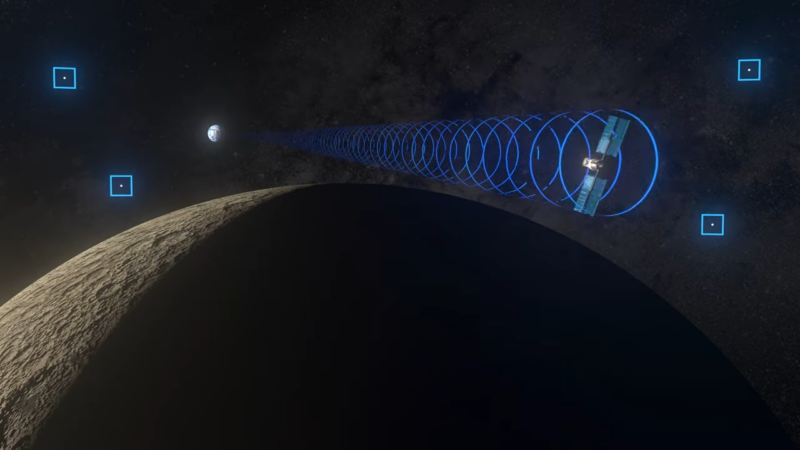
    <div class=__reading__mode__extracted__imagecaption>Enlarge/ The US Air Force Research Laboratory seeks to develop a satellite to patrol cislunar space.US Air Force Research Laboratory

    This week, the US Air Force Research Laboratory released a video on YouTube that didn't get much attention. But it made an announcement that is fairly significant—the US military plans to extend its space awareness capabilities beyond geostationary orbit, all the way to the Moon.

    "Until now, the United States space mission extended 22,000 miles above Earth," a narrator says in the video. "That was then, this is now. The Air Force Research Laboratory is extending that range by 10 times and the operations area of the United States by 1,000 times, taking our reach to the far side of the Moon into cislunar space."

    The US military had previously talked about extending its operational domain, but now it is taking action. It plans to launch a satellite, likely equipped with a powerful telescope, into cislunar space. According to the video, the satellite will be called the Cislunar Highway Patrol System or, you guessed it, CHPS. The research laboratory plans to issue a "request for prototype proposals" for the CHPS satellite on March 21 and announce the contract award in July. The CHPS program will be managed by Michael Lopez, from the lab's Space Vehicles Directorate. (Alas, we were rooting for Erik Estrada).

    This effort will include the participation of several military organizations, and it can be a little confusing to keep track of. Essentially, though, the Air Force lab will oversee the development of the satellite. The US Space Force will then procure this capability for use by the US Space Command, which is responsible for military operations in outer space. Effectively, this satellite is the beginning of an extension of operations by US Space Command from geostationary space to beyond the Moon.

    "It's the first step for them to be able to know what’s going on in cislunar space and then identify any potential threats to US activities," said Brian Weeden, director of program planning for the Secure World Foundation.

    Weeden said he does not think the CHPS satellite will include capabilities to respond to any threats but will serve primarily to provide situational awareness.

    So why is US Space Command interested in expanding its theater of operations to include the Moon? The primary reason cited in the video is managing increasing space traffic in the lunar environment, including several NASA-sponsored commercial missions, the space agency's Artemis program, and those of other nations. It's going to get crowded out there . . .

    [.  ] With the CHPS satellite, and presumably follow-on missions, the US military seeks to ensure the "peaceful development" of cislunar space and to provide a "safe and secure" environment for exploration and commercial development.

    Weeden thinks there is also another strategic element to this new program. Military leaders, he said, are concerned about space objects that get placed into cislunar space by other governments and are then lost by the existing space situational awareness networks focused on low Earth orbit and geostationary orbit.

    Such objects, he said, could swing around the Moon and potentially come back to attack a US military satellite in geostationary space.

    "I think that’s far fetched, but it is feasible from a physics perspective and would definitely exploit a gap in their current space domain awareness," Weeden said. "I think they are far more concerned about that than any actual threats in cislunar space because the US doesn’t have any military assets in cislunar space right now."

    War in Ukraine could have global consequences

    Zelensky Calls for a European Army as He Slams EU Leaders’ Response

          Jan 23, 2026 During the EU Summit yesterday, the EU leaders ...