Wednesday, March 09, 2022
Conflict In Ukraine: President Zelenskyy vows to "fight to the end"
Supreme Court Justices 6-3 Deny Bid To Overturn Electoral Maps in Pennsylvania and North Carolina
Back on the homefront “This case has now been referred to a three-judge court, and the parties may exercise their right to appeal from an order of that court granting or denying interlocutory injunctive relief,” the justices wrote.
Blow to Republicans as supreme court denies bid to overturn electoral maps
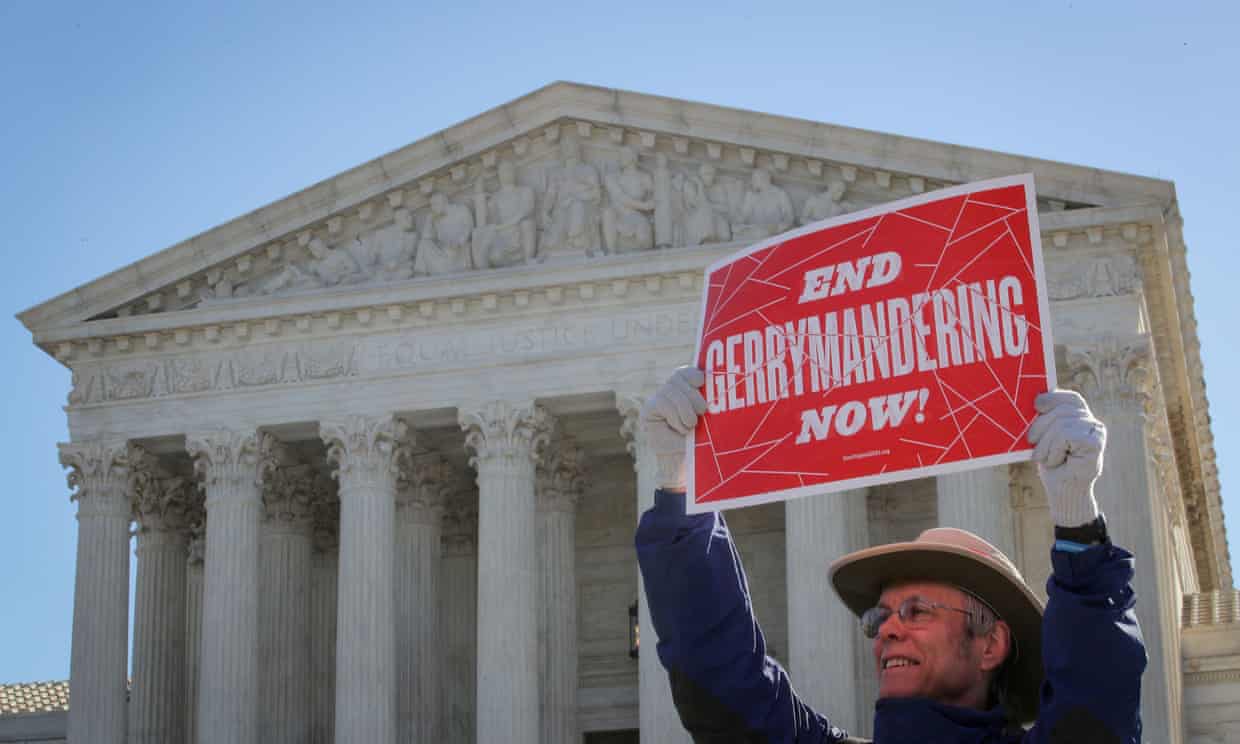
Party urged justices to overturn maps imposed in North Carolina and Pennsylvania that made elections more competitive
The US supreme court has rejected requests from Republicans in North Carolina and Pennsylvania to overturn electoral maps imposed by the state supreme court in both places that make elections more competitive.
The justices ruled 6-3 on Monday not to block the new North Carolina maps from going into effect, with justices Samuel Alito, Neil Gorsuch, and Clarence Thomas saying they would have paused the state supreme court’s ruling.
In the Pennsylvania case, there were no noted dissents from the court’s decision. That case will now go to a panel of three federal judges and Republicans can appeal a ruling from whatever they decide to the US supreme court in the future.
Both decisions are a win for Democrats politically, as well as voting rights groups that have turned to state supreme courts recently to try and police partisan gerrymandering. The US supreme court said in 2019 that federal courts could not police partisan gerrymandering, but said state constitutions could.
In North Carolina, the state supreme court struck a congressional map that would have likely given Republicans an advantage in 10 of the state’s 14 congressional districts, in a state that is extremely competitive. The map was so egregiously distorted towards Republicans that it ran afoul of a provision in the state constitution that guarantees free elections. After Republicans failed to produce a fairer map, the supreme court replaced it with a plan that gave the GOP a 7-6 advantage with one highly competitive seat.
Republicans wanted the US supreme court to block that map, arguing that the US constitution explicitly gives state legislatures the power to set the “time, manner, and place of elections”. By drawing new districts, they argued, the state supreme court have overstepped its authority. Embracing such an argument, experts warned, would emboldened state legislatures to enact new restrictive voting measures with little oversight.
The court issued its decision on an emergency basis and did not explain its reasoning. . .
Tuesday, March 08, 2022
FOR NOW ----- Supreme Court Rejects Legal Theory That Would Eviscerate Voting Rights
Intro: Sooner or later maybe they will decide
Supreme Court Rejects Legal Theory That Would Eviscerate Voting Rights – For Now
Congressional district maps drawn by state courts will remain in North Carolina and Pennsylvania.
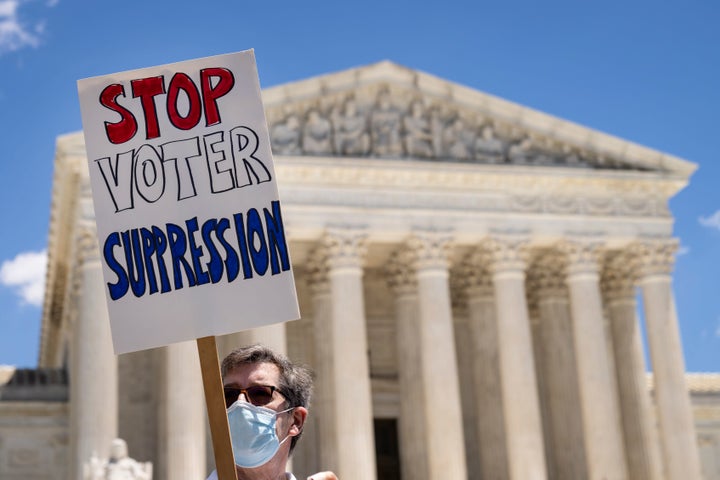
"The U.S. Supreme Court on Monday rejected emergency applications filed by Republicans in North Carolina and Pennsylvania asking the court to strike down congressional district maps approved by courts in both states.
Republicans in North Carolina had asked the court to strike down a map drawn by state courts after finding that the original map passed by the Republican legislature was an unconstitutional partisan gerrymander under the state constitution. In Pennsylvania, Republicans wanted to strike down a state court-drawn map implemented after Democratic Gov. Tom Wolf vetoed the map passed by the Republican-majority legislature.
In doing so, the Supreme Court refused to accept a radical legal theory known as the independent state legislature doctrine that could have upended redistricting and voting rights across the country.
Four conservative justices ― Samuel Alito, Clarence Thomas, Neil Gorsuch and Brett Kavanaugh ― who appeared open to adopting this doctrine in two cases in 2020, however, remain open to it and anticipate a case resolving the issue at some point in the near future.
At issue is whether state courts can continue to play any role in reviewing whether district maps or election laws passed by state legislatures are unlawful under their state constitutions. Supporters of the independent state legislature doctrine believe that the elections clause in the U.S. Constitution gives state legislatures the sole authority to set the “time, place, and manner” of elections.
Voting rights and fair districts would be greatly at risk if state legislatures are no longer bound by their state constitutions in setting election laws or drawing district maps.
The Supreme Court ruled in the 2019 Rucho v. Common Cause case that federal courts should not intervene in the congressional redistricting process to police partisan gerrymandering.
Instead, “provisions in state statutes and state constitutions can provide standards and guidance for state courts to apply,” Chief Justice John Roberts wrote in the Rucho decision.
Though the court did not gut its decision in Rucho by cutting state courts out of the redistricting process, the fact that four conservative justices might want to do so presents an ongoing danger to voting rights.
“The issue is almost certain to keep arising until the Court definitively resolves it,” Kavanaugh wrote in a concurrence to the major decision declining to intervene in the North Carolina case.
“We will have to resolve this question sooner or later, and the sooner we do so, the better,” Alito wrote in a dissent joined by Thomas and Gorsuch.
The court rejected the application from North Carolina while stating that the Pennsylvania case was before a three-judge panel and could still come before them in the future."
TONIGHT 8-11PM: Live Music Angel Robles
ANGEL ROBLES is k nown for an eclectic set list that spans multiple genres, . . He utilizes loop pedals, acoustic guitars, and backing...

-
 Flash News: Ukraine Intercepts Russian Kh-59 Cruise Missile Using US VAMPIRE Air Defense System Mounted on Boat. Ukrainian forces have made ...
 -
A nor’easter is about to hit the Northeast in May. That’s very unusual.

