Intro: Arizona has also spent the past 25 years storing about 3 trillion gallons in a network of “water banks” — a supply big enough, the state says, to serve Phoenix for 30 years. Part of that supply was created through artificial above-ground pools that gradually seep through the soil and “recharge” subterranean aquifers.
But Arizona’s regulatory apparatus isn’t airtight. Some landowners and farmers aren’t bound by its rules and can pump groundwater at will. And there are no uniform legal guidelines around various uses of surface water and groundwater.
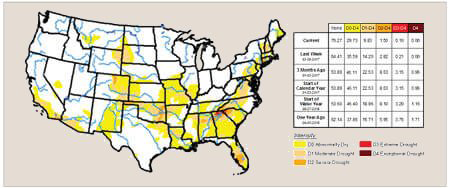
While Arizona now uses less groundwater than it did decades ago, waning supplies from Lake Mead have forced it to reconsider that strategy. As the shortage deepens, water banking is likely to be eliminated. Sprawling suburban subdivisions depend on groundwater stocks that will be difficult to replenish. The prospect of aggressively tapping other groundwater supplies in rural areas to make up the difference has sparked a heated debate about environmental impacts — and basic fairness. . .If the drought persists or accelerates, then this becomes a race against time. The Colorado River Compact, drafted in the wake of two decades of unusually abundant rains, allocated more water than the river could provide. Now Mother Nature is forcing the Southwest to adjust. . ."
LAST YEAR --- The water industry is constantly changing. What are the new and innovative ways professionals are measuring, predicting, and communicating about water? How will they change in the future?
Water resiliency depends on constant improvement, risk taking, and collaboration. Join us February 23rd and 24th 2021 to learn leading edge technology and new or future methods for monitoring, remote sensing, communication, modeling, data science, water quality threats, water planning and water markets.
The curated program for this conference will educate, engage, and inform both technical experts and water managers alike
IN THE UPPER BASIN: Nebraska
WATCH NOW: Ricketts describes water development bills as vital to the future
The AWA alone can't face up to our drier future, can't protect our groundwater, can't do enough to promote agricultural and urban efficiency,... 2 weeks ago
Dr. Kroopnick will explain how the Arizona Department of Water Resources (ADWR) collects data to estimate the annual overdraft and how it... 14 hours ago
Regardless of what the future holds, the search for water savings and more ... Page, Arizona, a town of roughly 7,500 people, could lose its... 37 mins ago
_______________________________
RELATED CONTENT August 18, 2021
Drought Takes a Toll on the Colorado River, Forcing Water Cuts
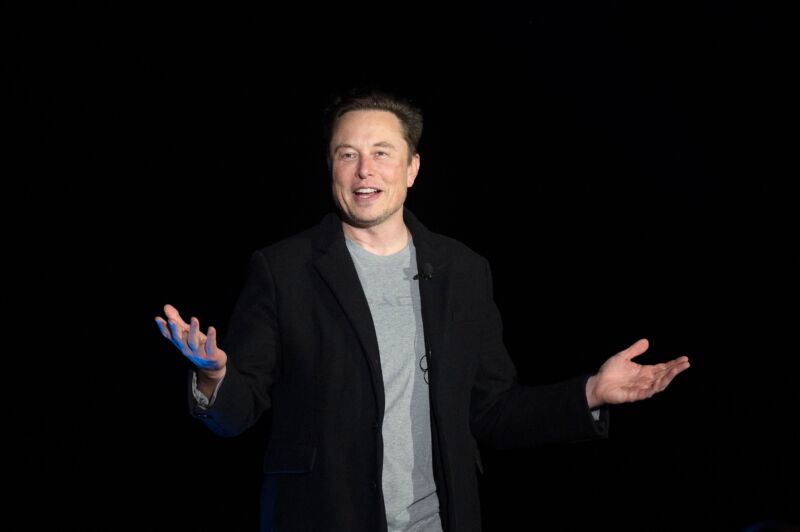
"Twitter's board of directors has agreed to sell the company to Elon Musk for $44 billion, the company announced Monday.
"Free speech is the bedrock of a functioning democracy, and Twitter is the digital town square where matters vital to the future of humanity are debated," Musk said in the purchase announcement. "I also want to make Twitter better than ever by enhancing the product with new features, making the algorithms open source to increase trust, defeating the spam bots, and authenticating all humans. Twitter has tremendous potential—I look forward to working with the company and the community of users to unlock it."
The deal, pending shareholder approval and expected to close later this year, comes just 10 days after the Twitter board approved a poison pill to prevent a hostile takeover in response to Musk's attempt to buy the company. Board members started taking Musk's offer more seriously after he lined up $46.5 billion in financing. The sale agreement was announced hours after reports that a deal between Twitter and Musk was close.
The deal is "a definitive agreement to be acquired by an entity wholly owned by Elon Musk, for $54.20 per share in cash in a transaction valued at approximately $44 billion," the announcement said. "Upon completion of the transaction, Twitter will become a privately held company." Twitter's stock price was up 5.7 percent today.
Board cites “thoughtful and comprehensive process”
Twitter Board Chairman Bret Taylor said, "The Twitter board conducted a thoughtful and comprehensive process to assess Elon's proposal with a deliberate focus on value, certainty, and financing. The proposed transaction will deliver a substantial cash premium, and we believe it is the best path forward for Twitter's stockholders."
. . .
The sale to Musk was unanimously approved by the Twitter board and "is expected to close in 2022, subject to the approval of Twitter stockholders, the receipt of applicable regulatory approvals, and the satisfaction of other customary closing conditions," the announcement said. Musk previously secured $25.5 billion of debt and margin loan financing and committed to provide $21 billion in equity.
Musk hopes his “worst critics remain on Twitter”
"I hope that even my worst critics remain on Twitter, because that is what free speech means," Musk wrote in a tweet Monday. Musk, who has said that "Twitter needs to be transformed as a private company" to protect free speech, last year asked a college student to take down a Twitter account that tracks the movements of his private jet.
Twitter directors initially seemed ready to fight Musk's takeover attempt and unanimously approved the poison pill that makes it difficult to buy more than 15 percent of the company's stock in any "transaction not approved by the Board." The poison pill, of course, did not prevent the board from striking a deal with Musk in direct negotiations."
In a 19-page ruling released Friday, Maricopa County Superior Court Judge Christopher Coury said private individuals have no legal right to enforce a provision of the U.S. Constitution that bars those who have engaged in "insurrection'' from holding public office. He said only Congress can create such a law.
Newly released records from the Jan. 6 select committee reveal that Rep. Debbie Lesko was at a meeting where some elected officials and Trump advisors discussed ways to overturn the election
Republican gubernatorial hopeful Kari Lake and Mark Finchem, running for secretary of state, are asking a federal judge to block the use of machines to tabulate the votes in Arizona in the 2022 election.
With it looking almost certain that Elon Musk will own Twitter in the very near future, a lot of people are freaking out, and I did think it was worthwhile to explore ways in which this might actually be good. At this point, I think it’s quite clear that Elon Musk’s comments about Twitter show an incredible disconnect from how any of this works, and he’s about to discover that his ridiculously naïve ideas about how Twitter should work, will not work in practice. I stand by the idea that his beliefs for how Twitter should work are unlikely to be good in the long run, if implemented in the manner he claims to want them implemented. And, of course, Musk’s reputation for how he treats workers at his companies remains reprehensible. His views towards many marginalized groups seems equally disgraceful, and I know many people are — for good reason — fearing that they will be put at risk. Other tech companies are going to lead a feeding frenzy on Twitter’s best employees, and a ton of important and useful institutional knowledge is going to rush out the exits. And a lot of it is going to be the institutional knowledge that could help Musk realize why he’s wrong on so much of this.
That said, there are some ways in which the Musk takeover could be good for Twitter. First, simply taking Twitter private could be the best thing for the company. In the past, I’ve spoken about how Wall Street’s quarterly demands on Twitter were bad for the company and were likely going to get in the way of the more lofty vision of rethinking how Twitter should work. Short term focus on growing profits and the userbase were a real risk towards a long term focus on rethinking Twitter’s role in enabling conversation.
As a private company, Twitter will have a lot more room to maneuver without the quarterly drumbeat and threats from more short-sighted Wall St. folks who have been demanding a more short term profit focus, over long term company viability. Of course, while Musk has said he’s not interested in the economics of the deal, he has lined up a bunch of Wall St. banks to help him finance the deal, and they are still going to demand a return, meaning that this is likely only a brief reprieve from the Wall St. drumbeat, and it’s not clear that there would really be enough time for the long term focus to take hold.
Next, despite the many reasons I’ve explained why Musk’s view of Twitter remains laughably naïve, I actually think that many of the ideas he’s presented show a good initial instinct for someone who has no actual experience managing such a website. Talking about viewing the site as instrumental for free speech, about dealing with the spam and scams, and also about open sourcing the algorithm, are, in fact, good first thoughts. Indeed, they’re so good that they’re the kinds of thoughts that were around when Twitter first got started, and helped build the company into what it became today.
Of course, getting from there to where we are now happened for many good reasons (and a few bad ones). And that’s part of why I argued earlier that most of Elon’s ideas for how content moderation should work are actually taking Twitter back to square one. There are reasons why every social media company — no matter how much they insist they’re about “free speech” — end up in a similar spot with regards to content moderation. And it’s not because “woke” employees demand it. It’s because everyone learns that this is a massive, impossible challenge, and there are only so many ways to approach it. And, contrary to public perception, Twitter is at the leading edge of the learning curve on this issue. If a lot of that institutional knowledge doesn’t walk out the door and can educate Musk on why his initial views are behind the times, it could allow the company to continue to make big steps forward. Of course, that’s a really, really big “if.”
Either way, even if Twitter did make the changes Musk suggested he’d make, just like every other “free speech” website out there, he’d quickly have to realize how unworkable it is, and it’s likely that Twitter would move back to the same model every other company uses, because otherwise, they’d be hemorrhaging users very, very quickly.
However, back to his first thoughts: there are many, many people who think they know how to “fix” social media, and most of their ideas are terrible and unrealistic. Musk’s are also terrible and unrealistic, but they actually come from a similar sensibility to those who have built successful social media platforms (just woefully unrealistic). As I explained in my earlier post, “open sourcing” the algorithm is not nearly as simple as Musk seems to think it is, but if his instincts are to make the platform more open, more transparent, and even more friendly to developers, that provides some opportunities as well Jack Dorsey and Parag Agarwal have actually made a big move towards a form of open sourcing Twitter with the funding and support of the Bluesky project, and if Musk is serious about “open sourcing” aspects of Twitter, he could do even more to embrace that. Dorsey has long supported the idea of “algorithmic choice” which is not quite open sourcing the algorithm, but is a much smarter approach to all of this, and Musk could embrace that as part of his plan as well.
Of course, much of this really boils down to the fact that (perhaps contrary to public opinion), Twitter has actually done a lot of very thoughtful moves in the past few years, towards making the platform much better, and much more resilient for those purposes. In other words, contrary to Musk’s claims, I think if he really understood what Dorsey did over the past few years, and Agarwal’s initial efforts to date, I think he’d realize that it’s actually much closer to his own vision (more openness, more about serving democracy) than he thinks. So, really, if Musk can allow them to keep doing that (perhaps in an accelerated fashion) without the fear and pressure of Wall Street, it could lead to something good. Unfortunately, though, given some of his initial statements, his reputation for how he treats workers, not to mention his reputation towards marginalized groups, I fear that much of the institutional knowledge necessary to make all this work is already rapidly heading for the exits.
And that leads us to one final way in which Musk’s takeover could be good: it could accelerate the success of an alternative space that takes on the role that Twitter currently holds. Whether that’s some other company stepping up and becoming that space, whether it’s an embrace of something like ActivityPub/Mastodon, whether it’s something entirely new, certainly is impossible to predict. But, having seen massively popular and successful companies collapse in the past, the demand for such tools doesn’t magically disappear with them. Someone will step in to fill the void if Musk messes it up"
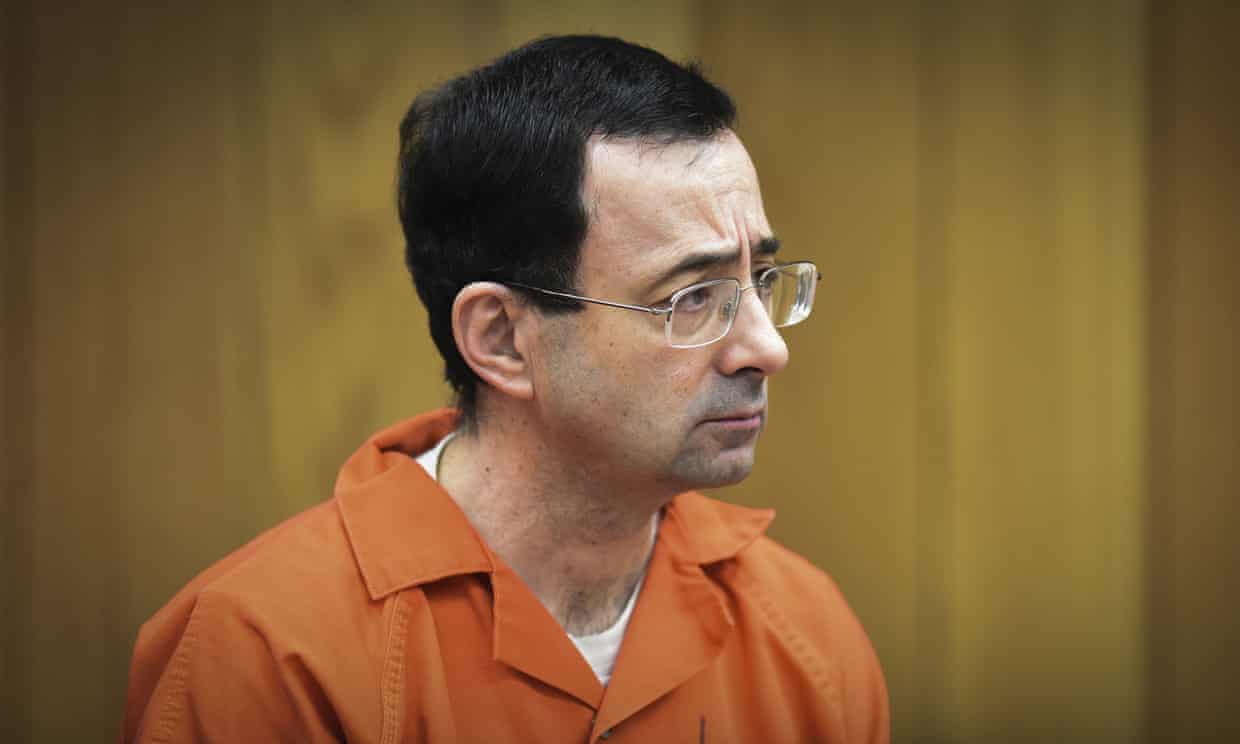
"Thirteen sexual assault victims of Larry Nassar are seeking $10m each from the FBI, claiming a bungled investigation by agents led to more abuse by the sports doctor, lawyers said Thursday.
It’s an effort to make the government responsible for assaults that occurred after 2015. The Justice Department’s inspector general concluded last year that the FBI made fundamental errors when it became aware of allegations against Nassar that year. . .
Attorney Jamie White is not suing the FBI yet. Under federal law, tort claims must be a filed with a government agency, which then has six months to reply. A lawsuit could follow depending on the FBI’s response.
“No one should have been assaulted after the summer of 2015 because the FBI should have done its job,” said Grace French, founder of a group called The Army of Survivors. “To know that the FBI could have helped to avoid this trauma disgusts me.”
The inspector general’s investigation was spurred by allegations that the FBI failed to promptly address complaints made in 2015 against Nassar. It took months before agents opened a formal investigation.
Nassar was arrested by state authorities in November 2016.
FBI director Christopher Wray has said he’s “deeply and profoundly sorry” for delays in Nassar’s prosecution and the pain it caused.
The Michigan attorney general’s office ultimately handled the assault charges, while federal prosecutors in Grand Rapids, Michigan, filed a child pornography case against Nassar."
Nassar was a Michigan State University sports doctor as well as a doctor at USA Gymnastics. He is serving decades in prison for assaulting female athletes, including medal-winning Olympic gymnasts.
Intro: DOE's announcement comes after two joint advisories from the US government in January and from Five Eyes nations on Wednesday, warning of an increased risk that Russian-backed hacking groups could target critical infrastructure organizations worldwide.
> Since the start of the year, the FBI has issued other alerts highlighting how ransomware gangs, including BlackByte, Ragnar Locker, and Avoslocker, targeted and hacked dozens of critical infrastructure organizations across the United States.
> The FBI, CISA, and the NSA advised US critical infrastructure orgs to focus on detecting their malicious activity by enforcing robust log collection/retention and monitoring them for behavioral evidence or network and host-based artifacts."
US govt grants academics $12M to develop cyberattack defense tools
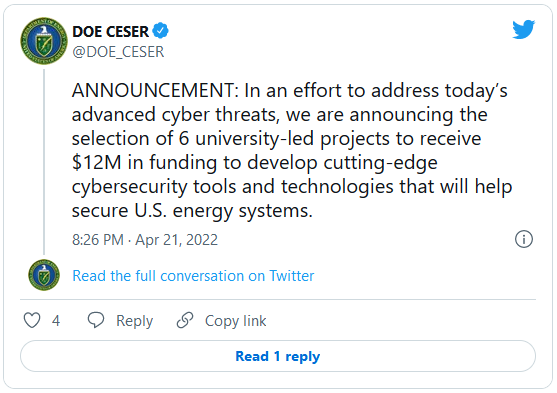
"The US Department of Energy (DOE) has announced that it will provide $12 million in funding to six university teams to develop defense and mitigation tools to protect US energy delivery systems from cyberattacks.
Cybersecurity tools developed as a result of the six university-led research, development, and demonstration (RD&D) projects will focus on detecting, blocking, and mitigating attempts to compromise critical controls within the US power grid.
The teams behind these RD&D projects funded by the US government will also work on innovative technology that will enable energy delivery systems to survive and recover quickly following cyberattacks.
"DOE's Office of Cybersecurity, Energy Security, and Emergency Response (CESER) will fund six university teams to perform cybersecurity RD&D to advance anomaly detection, artificial intelligence and machine learning, and physics-based analytics to strengthen the security of next-generation energy systems," DOE said.
"These systems include components placed in substations to detect cyber intrusions more quickly and automatically block access to control functions."
The complete list of university teams and projects funded by DOE CESER includes:
Florida International University: artificial intelligence (AI)-based detection tools and design effective cyber threat mitigation strategies using these technologies.
Iowa State University: defense-in-depth security and resilience for cyber-physical systems using AI-integrated, attack-resilient, and proactive system technologies and solutions.
New York University: a program called Tracking Real-time Anomalies in Power Systems (TRAPS) to detect and localize anomalies in power grid cyber-physical systems.
Texas A&M Engineering Experiment Station: will leverage AI and machine learning to develop techniques and scalable prototypes for intrusion response against advanced cyber-physical threats to power systems.
University of Illinois at Chicago: a resilient, next-generation solid-state power substation, integrating cybersecurity considerations to improve adoptability.
Virginia Polytechnic Institute and State University: a program called Cyber REsilience of SubsTations (CREST), a two-part system to detect and mitigate cyber incidents while maintaining secure communication and critical functions.
DOE's announcement comes after two joint advisories from the US government in January and from Five Eyes nations on Wednesday, warning of an increased risk that Russian-backed hacking groups could target critical infrastructure organizations worldwide.
> The FBI also revealed in its Internet Crime Complaint Center (IC3) 2021 Internet Crime Report that ransomware gangs breached at least 649 organizations from multiple US critical infrastructure sectors last year.
Since the start of the year, the FBI has issued other alerts highlighting how ransomware gangs, including BlackByte, Ragnar Locker, and Avoslocker, targeted and hacked dozens of critical infrastructure organizations across the United States.
> Earlier in April, a joint cybersecurity advisory from CISA, NSA, FBI, and the Department of Energy (DOE) also warned of government-sponsored hacking groups using a new ICS-focused malware toolkit (tracked as PIPEDREAM or INCONTROLLER) to hijack industrial control system (ICS) and supervisory control and data acquisition (SCADA) devices.
> The FBI, CISA, and the NSA advised US critical infrastructure orgs to focus on detecting their malicious activity by enforcing robust log collection/retention and monitoring them for behavioral evidence or network and host-based artifacts."
Threat analysts report that zero-day vulnerability exploitation is on the rise, with Chinese hackers using most of them in attacks last year.
Zero-day vulnerabilities are security weaknesses in software products that are either unknown or have not been fixed at the time of discovery
Zero-day disclosures are of particular interest to hackers because they have a wider exploitation window until vendors address the flaws and clients start applying the updates.
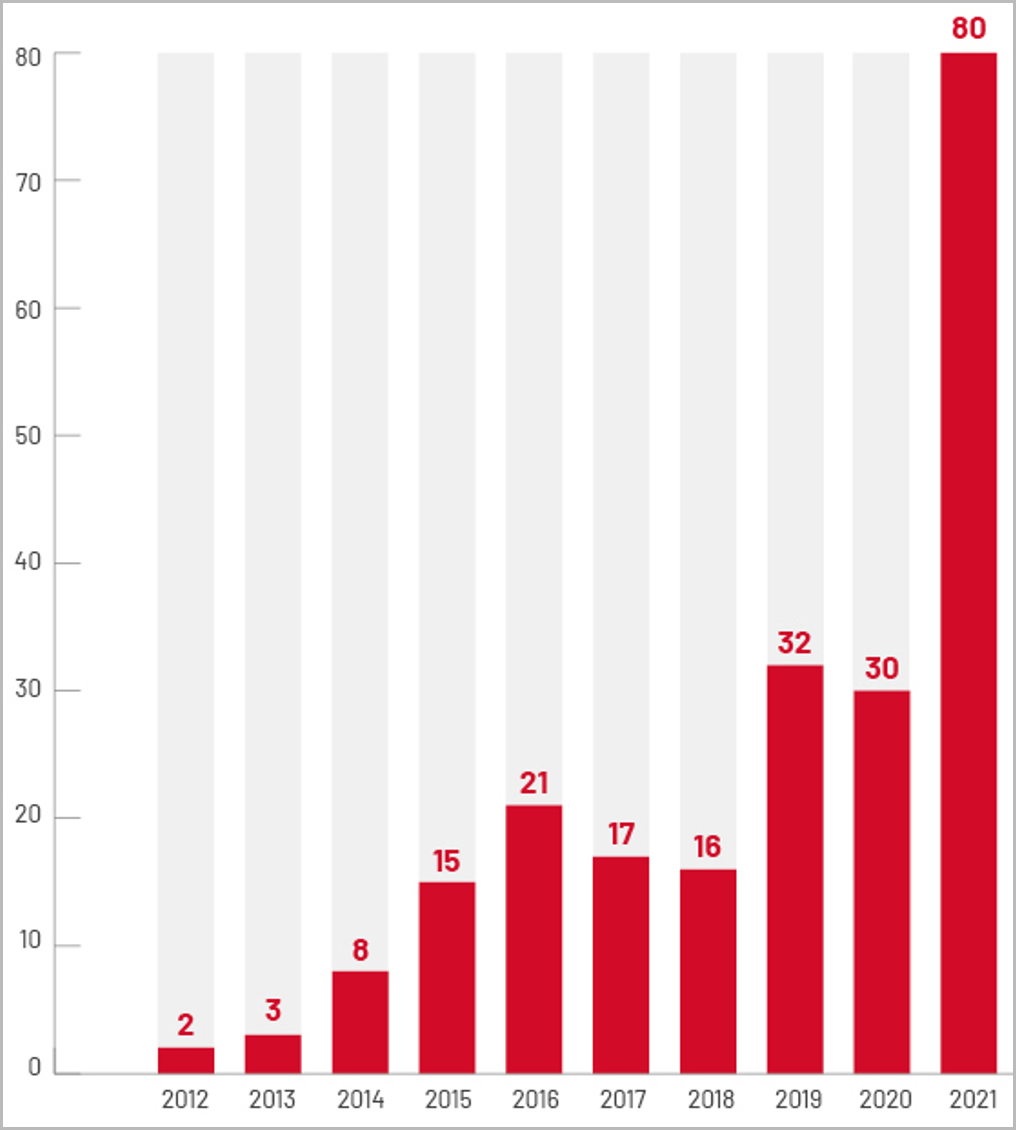
Number of recorded zero-day exploits (Mandiant)
Typically, this window of opportunity lasts for at least a couple of days, and since not all admins apply security updates immediately, the number of vulnerable targets remains high for a while.
2021 zero-day landscape
According to an analysis from cybersecurity firm Mandiant, last year there were 80 cases of zero-days exploited in the wild, 18 more than 2020 and 2019 combined.
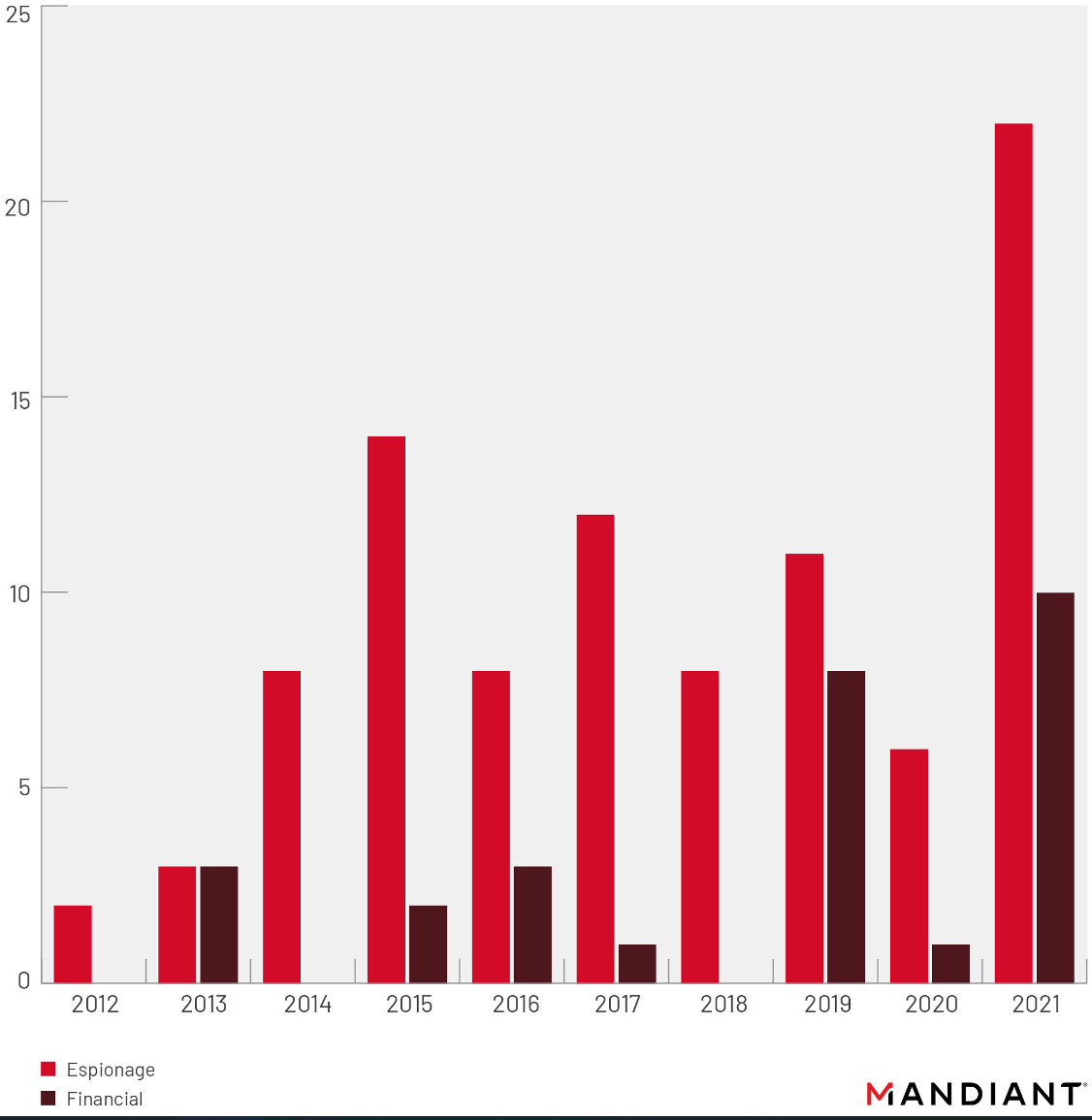
Most of them were attributed to cyberespionage operations from state-backed actors.
However, the company found that one out of three malicious actors exploiting zero-day vulnerabilities was financially motivated, a statistic that continues a growing trend from previous years.
Zero-day attack purpose(Mandiant)
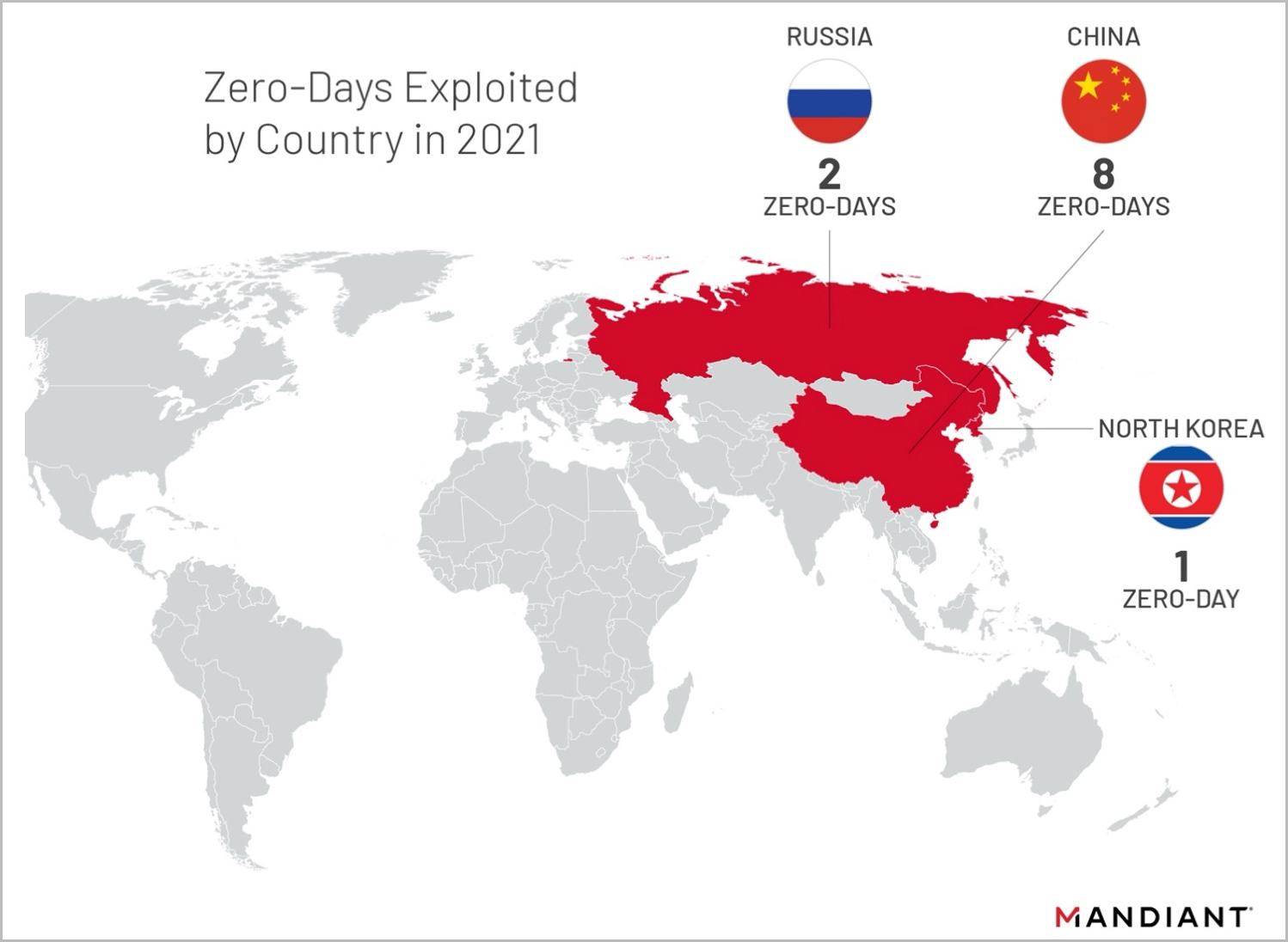
In terms of threat actors, China tops the list with eight zero-days used in cyberattacks in 2021, followed by Russia which used two, and North Korea with one.
Map of zero-day exploitation(Mandiant)
The most notable case was that of Hafnium, a Chinese state-sponsored hacking group that utilized four zero-day vulnerabilities on the Microsoft Exchange servers to access email communications of Western organizations.
Mandiant also recorded an uptick in ransomware operatives exploiting zero-day flaws to breach networks and deploy their file-encrypting payloads.
One prominent example of this activity was that of HelloKitty ransomware operators, who exploited a zero-day bug in SonicWall SMA 100 VPN appliances.
The most targeted vendors in 2021 zero-day attacks were Microsoft, Apple, and Google, accounting for over 75% of all attacks.
As BleepingComputer reported recently, the number of mobile OS zero-days targeting Android and iOS is also on an ascending trend, going from under five in 2019 and 2020 to 17 in 2021.
Most targeted vendors (by 0-days) in 2021(Mandiant)
What to expect in 2022
Last year saw a record break in zero-day exploitation, and current evidence indicates that it will be worse this year.
“We suggest that significant campaigns based on zero-day exploitation are increasingly accessible to a wider variety of state-sponsored and financially motivated actors, including as a result of the proliferation of vendors selling exploits and sophisticated ransomware operations potentially developing custom exploits” - Mandiant
PLEASE NOTE: Google’s Project Zero team on Tuesday published a report on the same topic, underlining that the rise in zero-day exploitation is partly a result of greater visibility and detection and not necessarily an increase of activity or attacks' complexity.
As the report details, only two out of 58 new zero-days Project Zero disclosed in 2021 exhibit technical excellence and uniqueness, which could point to software security maturity."





.png)


