Friday, June 10, 2022

GENERAL DISORDER...The Military-Industrial Complex Redux

Intro: Retired 4-Star General John Allen who commanded U.S. and NATO military forces in Afghanistan, has been effectively removed as president of The Brookings Institution since holding office there starting in 2017.
This work all happened a year before Allen was named president of the Brookings Institution, an organization to which Qatar donated $14.8 million in 2013, a big check that again shines a bright light on where some think tanks receive their funding.
> The issue of retired generals taking money from foreign governments is hardly limited to Allen, however.
> Former Defense Secretary and CENTCOM commander JAMES MATTIS worked as a military adviser for the United Arab Emirates in 2015 prior to becoming former President DONALD TRUMP’s first of four Secretaries of Defense
While Mattis worked for plane fare, advising foreign governments is usually a lucrative business for retired military officers, either before or during their almost inevitable defense industry or think tank sinecures.

General disorder: Another four-star tries to cash in

John R. Allen at the Brookings Institution in 2018. His suspension came a day after federal prosecutors’ investigation of him became public.

With help from Daniel Lippman, Lee Hudson, Bryan Bender, Andrew Desiderio and Lawrence Ukenye

Old generals don’t fade away, they move in the bright light of day from the Pentagon into lucrative contracts with defense companies, think tanks and foreign governments.

The revolving door between military/defense industry/wonkism/lobbyist is usually not much of a problem for the D.C. crowd as long as the paperwork is filed before the stars are traded for cufflinks. But some former officers get caught in the door, and things can get messy.

Last night, we found out that JOHN ALLEN, the retired Marine Corps four-star and president of the Brookings Institution think tank, failed to disclose his work for the Qatari government and allegedly lied to federal investigators about it when asked.

According to a 77-page search warrant application originally obtained by the AP, Allen gave agents a “false version of events” in 2020 when asked about his involvement in the 2017 diplomatic crisis that pitted Qatar against Saudi Arabia and the United Arab Emirates, who slapped economic embargoes on their regional rival and for a time even threatened to invade.

[    ] Enforcing the Foreign Agents Registration Act, which mandates that Americans who take part in political activities on behalf of foreign governments register with the Department of Justice, “has never been a top priority at the Justice Department and that is a big reason why we see situations like that of General Allen and Qatar,” said DYLAN HEDTLER-GAUDETTE of the Project On Government Oversight. “This is why it is so critical for both Congress and the Justice Department to take meaningful action to strengthen and enhance enforcement of FARA. If they don’t, undue foreign influence over U.S. policy making will persist and people violating FARA will continue to get away with it.”

Mattis' battle buddy JOHN KELLY, a fellow retired four-star Marine general who went on to become Trump’s Homeland Security Secretary and White House chief of staff, was granted permission in 2016 to act as a mentor for Australia’s Defense Joint Task Force Commanders Course. Kelly included the job on his government ethics form when he was nominated for the Homeland Security job.

Likewise, retired Marine Gen. JAMES JONES, former President BARACK OBAMA’s first national security adviser, former Commandant of the Marine Corps, and European Command chief, was given authorization to work for Ironhand Security, a company that has sought work with governments like Saudi Arabia. Another four-star retired Marine Corps Commandant, JAMES AMOS, also sought and received permission to join the board of VT Systems Inc, an engineering firm owned by Singapore Technologies Engineering which has offices in the UAE and Brazil.

No list is complete, of course, without mentioning retired three-star Army Gen. MIKE FLYNN, who before he led the charge for Q-inspired conspiracy theories, was Trump’s national security adviser and a decorated, if controversial, three-star general. While working on the Trump campaign, Flynn was being paid by the Turkish government. Flynn didn’t register his foreign work that took place throughout the 2016 presidential campaign with the U.S. government until after Trump fired him in February 2017.

CEASEFIRE: The Pentagon has blinked. After a House panel moved to cut the travel budget of Deputy Defense Secretary KATHLEEN HICKS, the department on Wednesday pledged to put a single entity in charge of cruise missile defense by the end of July, our colleague BRYAN BENDER reports. 

>>> Read more https://www.politico.com/newsletters/national-security-daily/2022/06/08/general-disorder-another-four-star-tries-to-cash-in-00037081

Brookings think tank puts its president, Gen. John Allen, on leave amid federal investigation into foreign lobbying

June 8, 2022 GMT

WASHINGTON (AP) — Brookings think tank puts its president, Gen. John Allen, on leave amid federal investigation into foreign lobbying.

RELATED

Documents obtained by prosecutors indicate that John R. Allen, a retired general and the head of the prestigious think tank, secretly lobbied for Qatar and lied to investigators about it.

>

Thursday, June 09, 2022

Rolling Stone Culture Council: CANNABIS MEGA-BRANDS, SMALL-NICHE MARKETS + CONSUMER DEMAND

Here's Igor Dunaevsky: 12 Predictions for the U.S. Cannabis Industry in 2022-2023 as corporate conglomerates and brands have moved into the marketing.
Opening image celebrates the approval for retail cannabis sales as the result of overwhelming popular support from voting in a citizen initiative in 2020.

The past few years have been a roller coaster ride for legal cannabis in the United States.


Opinions expressed are solely those of the author and do not reflect the views of Rolling Stone editors or publishers.

NOTE: June 8, 2022 12:00PM ET 

Culture Council
Content created by members of Rolling Stone Culture Council
Rolling Stone Culture Council is an invitation-only network of industry professionals who share their insights with our audience.
What's This?

"The past few years have been a roller coaster ride for legal cannabis in the United States.

A Democrat-controlled White House and Congress, full of elected officials seemingly ready to end prohibition, have so far produced nothing on the federal level.

A number of U.S. bills to support cannabis banking, expunge previous cannabis-related crimes, expand medical cannabis and even decriminalize the plant have all fallen flat.

The small island nation of Malta recently joined Canada and Uruguay as the world’s only nations to allow the sale and use of recreational cannabis, while Germany, Luxembourg, Italy and Mexico all look poised to potentially hop on the adult-use bandwagon at some point in the future.

In the U.S., the situation has proven to be more complex.

Federal legalization doesn’t look likely any time soon, but cannabis on the state level is very much alive and well, with plenty of room to improve.

Based on my experience in the industry, here are my top 12 predictions for what to expect in 2022:

1. U.S. federal legalization will likely not happen.

In fact, industry leaders can expect at least another five to 10 years before Uncle Sam embraces the plant, in my opinion. But it’s not all bad news. As corporate conglomerates continue to buy up cannabis brands in cannabis-legal states, smaller niche businesses can hold onto a bigger piece of the pie thanks to more exclusive markets.

2. More states could potentially pass adult-use.

Uncle Sam might not be ready to make cannabis federally legal, but momentum on the state level is something I’m sure we can expect. Among states with the best chances to approve adult-use this year include Ohio, where advocates are nearing the required 130,000 signatures to force the state legislature to discuss adult-use and put it on November’s ballot. In Arkansas, the campaign needs about 89,000 signatures to put retail cannabis up for a vote this fall; and in Missouri, 170,000 signatures are needed.

Florida’s Supreme Court blocked a pair of recreational petitions last summer, but advocates have put together a more legally sound initiative that could land on the ballot. All signs in Maryland also point to an adult-use initiative at the polls after a pair of prominent state legislators announced they were prioritizing legal cannabis for 2022. Advocates in Oklahoma have filed for a proposed constitutional amendment to legalize adult-use.

3. Brands will continue to merge, producing a small number of extremely large companies.

The big names in cannabis — Curaleaf, Trulieve, Aurora, Green Thumb, Tilray and Canopy — could likely get even bigger as more states pass adult-use and more small- and medium-sized businesses look to cash out.

4. Companies will continue to go public with IPOs.

IPOs will happen — to the extent possible, that is. Prohibition makes landing on the New York Stock Exchange or NASDAQ incredibly difficult for cannabis companies. Instead, look for more firms to go public via pink sheets and over-the-counter markets.

5. Retail giants like Amazon and Walmart likely won’t enter the industry.

Prohibition makes rolling the dice on cannabis a losing proposition for most U.S. retailers. The potential profits aren’t worth the extreme risk.

6. Established delivery platforms, like Uber and Lyft, will likely stay away from the plant.

Delivery platforms in the U.S. will likely avoid cannabis for the same reasons as big-box retailers. Uber has already started delivering the plant in Canada, but from my perspective, doing so in the U.S. before federal legalization would be incredibly precarious.

7. The emergence of craft brands will continue.

American adults have become more accustomed to legal cannabis and their taste for craft brands has also expanded. Similar to other categories of popular consumer products, consumer demand will likely produce markets far beyond cannabis mega-brands.

8. We’ll see more consistent and stable policies.

I believe we can expect more robust policies and regulations to develop, especially in more mature states where authorities have had time to figure out flower testing regulations, patient card requirements and cannabis DUI limits, among other tricky policies. The days of writing and amending weed laws on the fly should be a thing of the past in states like Washington, Oregon and Colorado.

9. The industry will become more ethnically diverse.

Almost every new and prospective cannabis state has social equity and diversity language included in its cannabis bills. Unlike before, when many earlier states adopted cannabis and focused on raising revenue, the latest states are also aiming to keep a level playing field.

10. More women will lead.

Plain and simple, the cannabis industry can’t reach its full potential without women owners and leaders.

Why?

First, organizations with greater representation of women in executive roles are more likely to outperform competitors. Second, women leaders have already established a track record of success in the industry, blazing a trail for the future. Trulieve CEO and co-founder Kim Rivers oversees the largest and most profitable cannabis company in the world and has long been praised for Trulieve’s success in retaining both employees and customers.

Women are needed at the top. From June 2020 to June 2021, Gen Z women were the fastest-growing customer demographic of legal cannabis users, with year-over-year sales to Gen Z women increasing by a whopping 151%.

11. Education will continue to be an industry trend.

I’m not just referring to the billions of cannabis tax dollars raised for public education.

Consumers’ interest in learning more about the plant will prompt wider industry discussions on the impact of terpenes, cannabinoids and other properties.

12. More celebrities and public figures will venture into the industry.

It took a while for one-time cannabis skeptics, like comedian Jim Belushi and former U.S. Speaker John Boehner among a few dozen other celebrities, to put their names behind legal weed companies. But their success has blazed a trail for others to follow. Public acceptance of the plant will encourage more big names to cash in on the industry’s lucrative business opportunities.

Overall, 2022 could bring about some much-needed changes to the cannabis industry."

Reference:

The Rolling Stone Culture Council is an invitation-only community for Influencers, Innovators and Creatives. Do I qualify?

RELATED CONTENT ON THIS BLOG 

28 April 2015

20 December 2017

18 March 2021

Here's a report from Monday, March 15 2021
NEWS BRIEF
(Please Note: There is a delay in Arizona’s recreational sales reporting because marijuana taxes are collected a month after transactions occur)

Arizona adult-use cannabis sales hit $2.9 million during initial 10 days

"Adult-use cannabis sales in Arizona reached $2.9 million in the first 10 days that sales were permitted, according to figures released by the state.
Arizona's new recreational cannabis firms see strong sales, possible supply  issues on horizon
Recreational sales in Arizona began Jan. 22 after 73 of 130 licenses were approved by the Arizona Department of Health Services.
Medical cannabis dispensary operators were granted first crack at the new adult-use licenses.
26 additional  "social equity" licenses are still in the pipeline
The Arizona recreational market launched less than three months after voters approved adult-use sales during last November’s general election.A new Arizona adult-use cannabis market may offer limited business  opportunities
 
The state collected $226,355 in tax revenue on the sales.
Marijuana Business Daily projects that Arizona’s recreational market will reach $375 million-$400 million in its first full year of sales and more than $700 million yearly by 2024.
------------------------------------------------------------------------------------------------------------------------------
What's the Difference Between Marijuana & Medical Marijuana? 
 

13 May 2017

TODAY'S DOUBLE-LEXICON: "Firehose" + "Decahose"

Hmmm Go figure --> "The difference between the results gleaned from the decahose and the firehose equates to the difference between “a poll and a census, . ."
Sure, it’s amusing to see Twitter pull a Musk on Musk—to try, ostensibly, to call his bluff. But the decision is unlikely to provide a meaningful end to the dispute between the billionaire and the company he may possibly buy.
And not just because it will take Musk considerable time to do an analysis of bots on Twitter, a task requiring a team of researchers who will need to laboriously construct software to review the tweets. Most to the point, while Musk can use his access to the firehose API to come up with an estimate of bot activity on Twitter, it seems almost inevitable that his figure won’t match Twitter’s.
Social Media

Twitter Called Elon Musk’s Bluff About Bots. It Could Backfire.

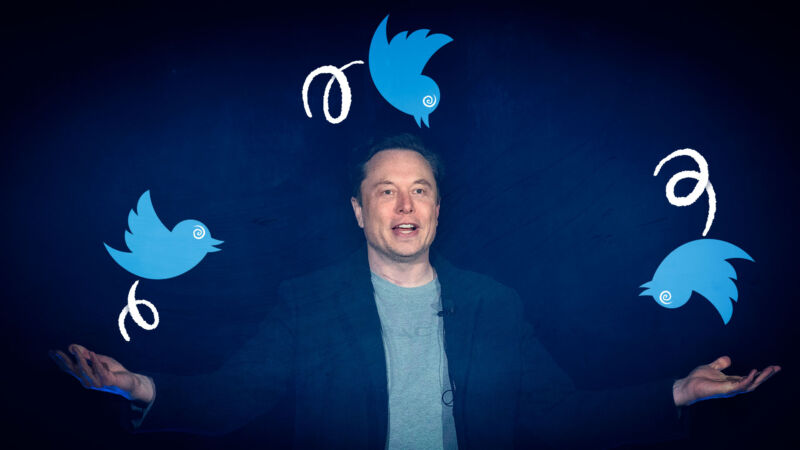
Illustration of Elon Musk juggling three birds in the shape of Twitter's logo.

 
"Well, one good theatrical turn deserves another, which is just what has happened to Elon Musk.

The world’s richest person has spent the past several weeks complaining that Twitter is undercounting the amount of automated spam bots on its site and that it won’t give him access to the data he needs to make an independent assessment, which he needs before he’ll finish closing on his acquisition of the company.

Twitter estimates bots are less than 5% of active accounts, a number recorded in many years of SEC filings. Since Musk could access the figure from the very beginning, his sudden fixation on it has seemed like an act, a means to manufacture a pretext for renegotiating his $44 billion offer for Twitter amid a wide drop in tech stock prices.

On Monday, Musk’s lawyer sent Twitter a tersely worded letter saying it had better turn over the data. Or else. Or else? Or else Musk and his attorneys will consider their refusal a breach of the merger agreement and call off the deal, a dubious argument that probably wouldn’t hold up in court—but one they could use to make things unpleasant for Twitter.

On Wednesday, we learned about Twitter’s own Musk-type move. The business is reportedly preparing to give him access to its so-called “firehose” API, a stream of every tweet sent. (Every. Tweet.)

That works out to something like 500 million micro-blog missives per day

. . .To be precise, Twitter has said bots account for less than 5% of its “monetizable daily active users,” a figure of Twitter’s own creation. (More often, an app will report monthly active users, people who log on at least once in the last 30 days.) So it’s uncertain whether even a well-intentioned Musk could use the firehose API to calculate the same number of monetizable daily active users.

Another matter: What happens if Musk detects some other problem at Twitter from going through the firehose API?
Brandon Silverman, founder of the social media data tool CrowdTangle, purchased by Facebook, pointed out on Twitter that the platform may wind up making the situation worse for itself.
. . .Really, it wouldn’t matter whether any additional problem was real or fake. All theater, after all, revolves around make-believe."
 
RELATED

Twitter reportedly will give Musk the full “firehose” of user data he demanded

Report: Twitter to give Musk the firehose after he threatened to kill merger.

<div class=__reading__mode__extracted__imagecaption>EnlargeAurich Lawson | Photo by Jim Watson/AFP via Getty Images

Twitter now plans to comply with Elon Musk's demand for user data that he says is needed to determine whether the company's spam estimates are accurate, The Washington Post reported Wednesday.

"After a weeks-long impasse, Twitter's board plans to comply with Elon Musk's demands for internal data by offering access to its full 'firehose,' the massive stream of data comprising more than 500 million tweets posted each day, according to a person familiar with the company's thinking, who spoke on the condition of anonymity to describe the state of negotiations," the Post wrote.

Twitter declined comment on the Post report when contacted by Ars today but pointed to its statement from Monday that "Twitter has and will continue to cooperatively share information with Mr. Musk to consummate the transaction in accordance with the terms of the merger agreement."

Whether Twitter has to give all the user data to Musk is under dispute. . .

Musk's offer to buy Twitter waived "business due diligence," but he says Twitter must provide the requested data because of a clause in the merger agreement that says he is entitled to information "for any reasonable business purpose related to the consummation of the transaction."

Musk's letter claims he has a "right to terminate the merger agreement" if Twitter doesn't comply. The letter also said Musk needs a "complete and accurate understanding of the very core of Twitter's business model—its active user base" in order to obtain financing and prepare for the ownership transition.

"Mr. Musk believes Twitter is transparently refusing to comply with its obligations under the merger agreement, which is causing further suspicion that the company is withholding the requested data due to concern for what Mr. Musk's own analysis of that data will uncover," the letter from Musk's legal team said."

Go get more >> https://arstechnica.com/tech-policy/2022/06/twitter-reportedly-will-give-musk-the-full-firehose-of-user-data-he-demanded/

SETH MEYER PREDICTS

The three major broadcast networks ― ABC, CBS and NBC ― will cover the hearings live as will cable channels CNN and MSNBC. Fox News will go ahead with its regular programming, but plans to air the hearings on its website and streaming service.

Seth Meyers Predicts What Fox News Will Say About The Jan. 6 Committee Hearings

The "Late Night" host wasn't surprised the conservative network won't be broadcasting the hearings
By Josephine Harvey, Senior Reporter, HuffPost

Watch Meyers’ roast below:

"Seth Meyers isn’t surprised that Fox News doesn’t plan to broadcast Thursday evening’s live hearings of the House select committee investigating the Jan. 6, 2021 attack on the U.S. Capitol.

“The committee will lay out the truth of what happened and Fox will lie. It’s that simple,” Meyers said on “Late Night” Wednesday.

“The hearings will say January 6 was a violent insurrection fomented by an outgoing president who nearly pulled off a detailed plan for an attempted coup to unlawfully claim the power that would have installed him as an unelected autocrat and destroyed American democracy,” he added.

As for Fox News? Meyers predicted the network “will say it was just a pro-freedom patriot party where everyone peacefully toured the Capitol like they were on a school field trip having to find items their teachers gave them on a worksheet.”

LET'S GO PHISHING: More than "Catch-and-Release"...and Latest Articles via Bleeping Computer

Bill Toulas is a technology writer and infosec news reporter with over a decade of experience working on various online publications. An open source advocate and Linux enthusiast, is currently finding pleasure in following hacks, malware campaigns, and data breach incidents, as well as by exploring the intricate ways through which tech is swiftly transforming our lives
 

Massive Facebook Messenger phishing operation generates millions

"Researchers have uncovered a large-scale phishing operation that abused Facebook and Messenger to lure millions of users to phishing pages, tricking them into entering their account credentials and seeing advertisements.

The campaign operators used these stolen accounts to send further phishing messages to their friends, generating significant revenue via online advertising commissions.

According to PIXM, a New York-based AI-focused cybersecurity firm, the campaign peaked in April-May 2022 but has been active since at least September 2021.

PIXM was able to trace the threat actor and map the campaign due to one of the identified phishing pages hosting a link to a traffic monitoring app (whos.amung.us) that was publicly accessible without authentication. . . 

Massive scale of abuse

While it is unknown how the campaign initially started, PIXM states victims arrived at phishing landing pages from a series of redirects originating from Facebook Messenger.

As more Facebook accounts were stolen, the threat actors used automated tools to send further phishing links to the compromised account's friends, creating massive growth in stolen accounts.

"A user's account would be compromised and, in a likely automated fashion, the threat actor would log in to that account and send out the link to the user's friends via Facebook Messenger," explains PIXM in the report.

While Facebook has protection measures to stop the dissemination of phishing URLs, the threat actors used a trick to bypass these protections.

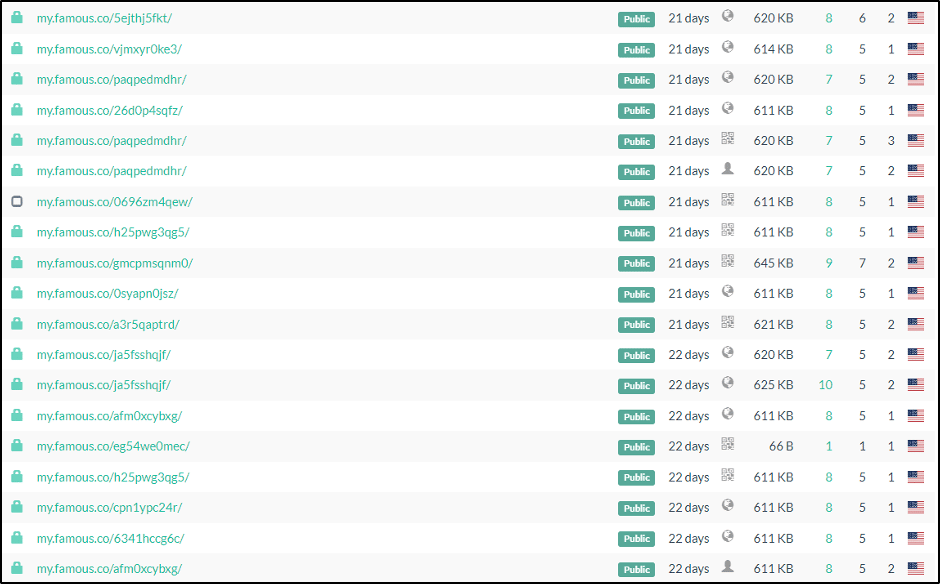
The phishing messages used legitimate URL generation services such as litch.me, famous.co, amaze.co, and funnel-preview.com, which would be a problem to block as legitimate apps use them.

Some of the URLs used in the phishing campaign
Some of the URLs used in the phishing campaign (PIXM)

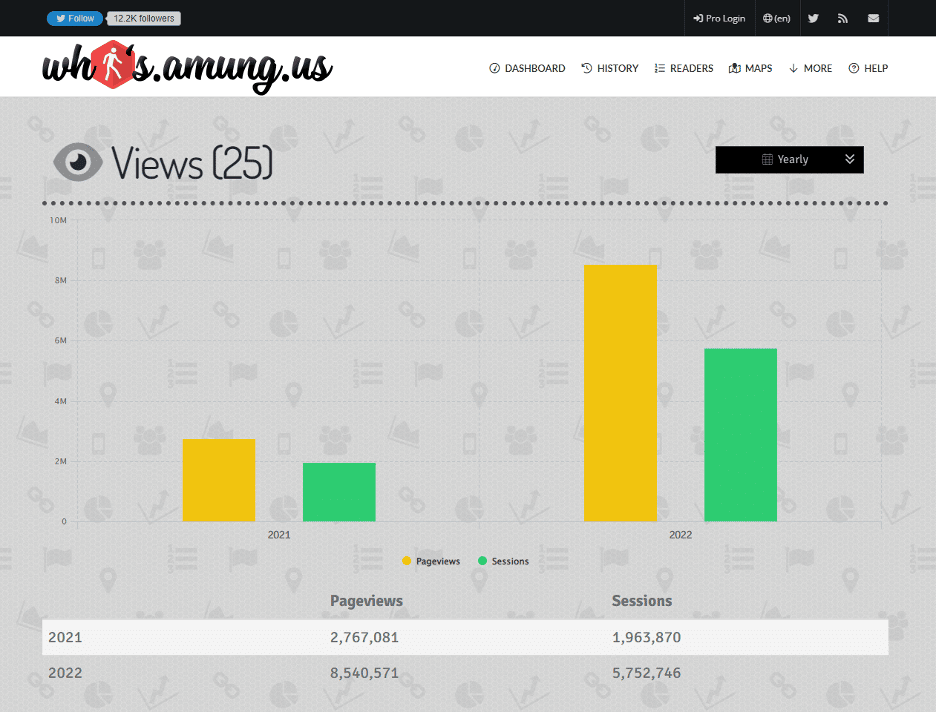
After discovering that they could gain unauthenticated access to the phishing campaign stats pages, the researchers found that in 2021, 2.7 million users had visited one of the phishing portals. This figure went up to 8.5 million in 2022, reflecting the massive growth of the campaign.

Snap from the dashboard of the analytics service
Snap from the dashboard of the exposed analytics service (PIXM)

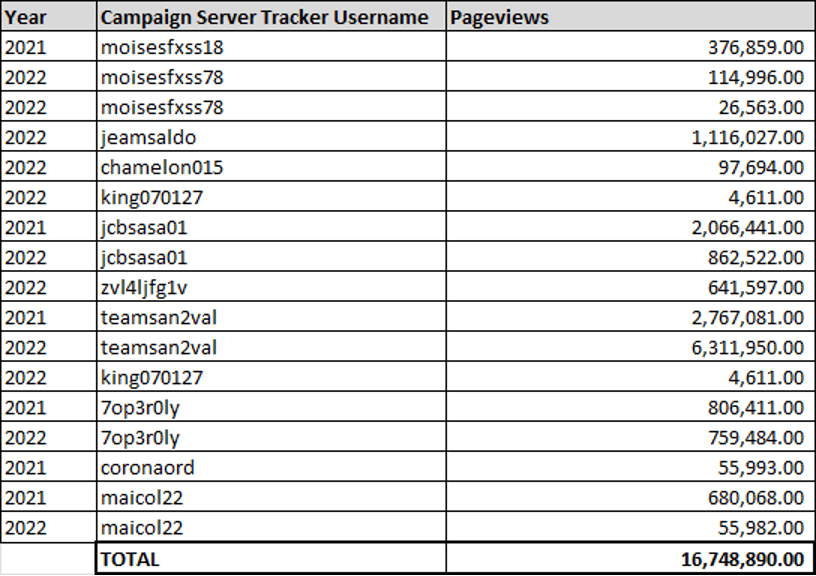
By diving deeper, the researchers identified 405 unique usernames used as campaign identifiers, each having a separate Facebook phishing page. These phishing pages had page views ranging from only 4,000 views to some in the millions, with one as high as 6 million page views.

Sample of the identified disemination users
Sample of the identified dissemination users (PIXM)

The researchers believe that these 405 usernames represent only a fraction of the accounts used for the campaign.

After the victim enters their credentials on the phishing landing page, a new round of redirections begins, taking them to advertising pages, survey forms, etc.

One of the ads the phised users end up on
One of the ads showed to phished users (PIXM)

The threat actors receive referral revenue from these redirects, which are estimated to be millions of USD at this scale of operation.

Tracing the threat actor

PIXM found a common code snippet on all landing pages, which contained a reference to a website that has been seized and constitutes part of an investigation against a Colombian man identified as Rafael Dorado.

Website belonging to the campaign operator

It is unclear who seized the domain and placed the notice on the site.

A reverse whois lookup revealed links to a legitimate web development company in Colombia and old sites offering Facebook "like bots" and hacking services.

PIXM shared the results of its investigation with the Colombian Police and Interpol, but as they note, the campaign is still ongoing, even though many of the identified URLs have gone offline."

Related Articles:

Qbot malware now uses Windows MSDT zero-day in phishing attacks

Windows zero-day exploited in US local govt phishing attacks

Evasive phishing mixes reverse tunnels and URL shortening services

Fake antivirus updates used to deploy Cobalt Strike in Ukraine

Bored Ape Yacht Club, Otherside NFTs stolen in Discord server hack

BLEEPING COMPUTER LATEST ARTICLES >> https://www.bleepingcomputer.com/ 


STATISTICAL TIES, DEAD HEATS + NECK-AND-NECK: Way Too Early to Call These Arizona Primary Elections

Intro: Polling should never be taken at face value since voters’ minds can change by Election Day, especially based on what they may learn about candidates throughout the campaign cycle. Politicos usually point out that each survey is always a “point in time” measure and something that happens in June won’t reflect the race in July or August.
NOTE: The findings of this poll are based specifically on if the election was happening right now and not in roughly two months.

Internal poll: GOP gubernatorial frontrunners in statistical tie

Numbers diverge sharply when respondents are aware of Trump endorsement of Lake

"Internal Republican polling shows a statistical tie between gubernatorial candidates Kari Lake, the former news anchor, and Karrin Taylor Robson, the former university regent and developer, but those numbers separate greatly when those polled were informed that Donald Trump backs Lake’s candidacy.

The poll, conducted by the Republican-leaning Data Orbital and obtained by the Arizona Mirror, has Lake slipping under 30% for the first time during her campaign.

She’s at 27.4% compared to Robson’s 23.3%, with a margin of error at 4.3% qualifying it as a “statistical tie.” It surveyed 550 Republican voters, asking them about statewide races that will be on the ballot for the Aug. 2 primary election as well as what their top issue is to motivate their vote. . .

Rounding out the governor’s race was former Congress member Matt Salmon at 12% and the two longshot candidates Scott Neely and Paola “Z” Tulliani-Zen at 3% and less than 1%, respectively.

Interestingly, Salmon is the only major candidate whose polling increased since May, while “undecided” still leads the group at 31.1%.

The poll was conducted between June 1 and 3. May numbers had Lake at 35.5%, Robson at 26.8% and Salmon at 10.1%, with undecided at 23.3%.

But while Salmon’s number may have ticked up, his finances and the gap between the other two candidates still put him at a distant third. He’s also the only one of the three to not have any ads running on television.

Both Lake and Robson recently bought air time to get through to more voters.

What Lake does have in her favor though is Trump’s endorsement. It is still unclear how that will play into the race but when those Republicans surveyed were told of the former president’s backing, Lake became more of a front runner. Her numbers increased 7 percentage points to 34.5% while Robson’s dipped down to 21.3% and Salmon’s also ticked down to 9.5% while undecided fell to 28.2%.

[    ] Trump also recently endorsed Blake Masters, the Peter Thiel-backed venture capitalist, for the U.S. Senate, but this poll might not reflect that endorsement just yet since it took place at the same time the endorsement came down last week.

The Republican primary to take on Democratic Sen. Mark Kelly in November is still neck-and-neck among the top three candidates, according to the poll.

-- Masters has 14.5%, which is good for third place. He dropped from his 16.2% share in the May survey.

-- Businessman Jim Lamon led the candidates with 19.5%, an increase of one point from May, and

-- Arizona Attorney General Mark Brnovich is at 18.2%, down from 20% in May.

> Undecided still leads overall at 36.2%, meaning it could be anybody’s race with one month to go before early voting begins.

In the races for secretary of state, attorney general, treasurer and corporation commission, the results show that voters are still very much undecided. Kimberly Yee is the only incumbent running to keep her seat among those races, but only after she dropped out of the governor’s race in January. The power of incumbency does matter in Arizona and polling lists her at 24%, compared to state Rep. Jeff Weninger’s 8.5%. But there is still 60% undecided.

The issues that mattered most to the survey respondents were either border/immigration or the economy, with a combined 75%. No other top issue came anywhere close to those two, but gun control came in third at 5.2%.