Tuesday, August 02, 2022

BI-PARTISAN ARIZONA DEMOCRATIC U.S. SENATOR SINEMA

 In a mid-term election Cinema is getting some attention as a deal-broker, someone who can straddle The Great Divide in what we can't yet call using that R-word for the Great Recession, but she's definitely got an eye out for female reproductive rights:

Kyrsten Lea Sinema is an American politician and social worker serving as the senior United States senator from Arizona since January 2019. Wikipedia
Born: July 12, 1976 (age 46 years), Tucson, AZ
Nationality: American
Office: Senator (D-AZ) since 2019


San Francisco's biggest recall bankrollers love Arizona Sen. Kyrsten Sinema

Image Caption:

Sen. Kyrsten Sinema onstage during a panel at the 2022 Goldman Sachs 10,000 Small Businesses Summit at Gaylord National Resort & Convention Center on July 19, 2022 in National Harbor, Maryland. 

Brian Stukes/Getty Images

William Oberndorf and David Sacks are supporting yet another thorn in the side of progressives


Senate Democrats want to tax hedge funders by closing a loophole while Republicans cling to the hope that Sinema will object

  • On Wednesday night, Democratic Sen. Joe Manchin dropped a surprise spending deal.
  • The package will put billions towards climate, and close a tax loophole used by the rich.
  • Republicans are counting on Democratic Sen. Kyrsten Sinema being put off by any tax talk.
Top stories

s Kyrsten Sinema married?
Sinema married, and later divorced, her BYU classmate Blake Dain.

Our stories may be republished online or in print under Creative Commons license CC BY-NC-ND 4.0. We ask that you edit only for style or to shorten, provide proper attribution and link to our web site. Please see our republishing guidelines for use of photos and graphics.

Jennifer Shutt
Jennifer Shutt

Jennifer covers the nation’s capital as a senior reporter for States Newsroom. Her coverage areas include congressional policy, politics and legal challenges with a focus on health care, unemployment, housing and aid to families.

MORE FROM AUTHOR


What did Leon Trotsky do in Exile? (Short Animated Documentary)

AMAZON'S CLIMATE POLLUTION IS GETTING WAY WORSE | The Verge

 First some background - and then a hyperlocal focus on the Amazon facility here in Mesa, AZ.The Verge was founded in 2011 in partnership with Vox Media, and covers the intersection of technology, science, art, and culture. 


Amazon's climate pollution is getting way worse

Don't be fooled by the climate PR

Amazon's greenhouse gas emissions ballooned big time last year despite the company's efforts to sell itself as a leader in climate action. Its carbon dioxide emissions grew an eye-popping 18 percent in 2021 compared to 2020, according to its latest sustainability report.

Amazon generated 71.54 million metric tons of carbon dioxide equivalent last year, about as much pollution as 180 gas-fired power plants might pump out annually. This is the second year in a row that Amazon's climate pollution has grown by double digits since it made a splashy climate pledge and started reporting its emissions publicly in 2019. Comparing that year to 2021, the company's CO2 pollution has actually grown a whopping 40 percent.

Back in 2019, then-CEO Jeff Bezos announced that the company planned to reach net-zero carbon dioxide emissions for its operations by 2040. Unfortunately, that kind of pledge allows companies to get away with some misleading carbon accounting. They can aim to reach “net-zero” emissions or claim to be “carbon-neutral” by purchasing carbon offsets that are supposed to cancel out the impact of their emissions through supposedly eco-friendly projects. That usually involves planting trees, protecting forests, or promoting clean energy. Those offsets, however, typically don't result in real-world reductions in the planet-heating CO2 building up in our atmosphere.

Amazon co-founded an initiative called the “Climate Pledge” in 2019 to recruit other businesses to make similar commitments to reduce CO2 and “neutralize” leftover emissions with “credible” offsets. But a meaningful impact on the climate only comes from a company getting rid of the vast majority of its pollution, if not eliminating all of its emissions.

Amazon isn't setting a good example of that — despite the company's best PR efforts. To take the heat off its growing absolute carbon emissions, Amazon points to a more flattering number in its sustainability report. “The focus should not be solely on a company’s carbon footprint in terms of absolute carbon emissions, but also on whether it’s lowering its carbon intensity,” the report says.

Amazon says it reduced its “carbon intensity” by a small figure — 1.9 percent — meaning the emissions they produce for every dollar of merchandise sold fell slightly. But this metric can also be misleading because those reductions in carbon intensity are easily wiped out when the company's business grows.

That's exactly what's happened at Amazon. “As we work to decarbonize our company, Amazon is growing rapidly. We have scaled our business at an unprecedented pace to help meet the needs of our customers through the pandemic,” the company says in its sustainability report. In other words, Amazon made a killing during the COVID-19 pandemic as e-commerce surged — and Amazon's pollution grew along with its profits.

This all goes to show why it’s important to look at a company’s entire carbon footprint to see if it’s actually reducing emissions overall. To make things worse, the figures Amazon reports are likely an undercount of how much pollution the e-commerce giant is truly responsible for because — unlike some other companies, including Target — Amazon doesn’t include the emissions that come from making many of the products it sells.

And while keeping track of carbon dioxide emissions is important for tackling the climate crisis that's supercharging devastating heatwaves, droughts, wildfires, storms, and other disasters — it doesn't capture the full spectrum of problems associated with Amazon's mushrooming warehouses and all those smiley-faced diesel trucks making deliveries. For years, many communities where Amazon builds warehouses have called the company out for bringing more smog, soot, and noise to their neighborhoods. This latest report shows that Amazon still has a long way to go to prevent all of the pollution it creates.

Dec 9, 2021 · Amazon opens most of its warehouses in neighborhoods with a ... First, no one publicly tracks emissions near warehouses—not the EPA, ...
Do Amazon warehouses cause pollution?

Often located in low-income communities of color, Amazon's warehouses contribute to public health impacts like poor air quality, noise pollution, and traffic congestion.
Aug 19, 2020 · Today, Amazon announced it will make a significant investment in facilities across the Phoenix-Mesa metro including a 150,000-square-foot
Jan 24, 2022 · In December, Amazon purchased 71 acres at Pecos Road just west of Signal Butte Road in Mesa for more than $18 million, according to county ...
How many Amazon warehouses are there in Arizona?
We are grateful for Amazon's continued investment in Arizona.” Amazon already operates seven fulfillment and sortation centers, four delivery stations, a corporate office, an air hub, a Prime Now hub, an Amazon Books store and an Amazon 4-Star store in Arizona.

NEW DATASET

 How nice is this?

What 21 billion Facebook friendships say about the economic ladder in the US

Meta made the dataset publicly available


Meta publicly released information on 21 billion Facebook friendships as part of a research project looking at economic inequality in the United States, the company announced today. Along with new insights into the intersection of money and friendships in America, the partnership between Meta and the researchers gives us another look at who Facebook is willing to share data with — and why.

The research team wanted to understand why people in some places in the US were more likely to move between economic brackets than in others. Using the information from Meta, along with other data, a research team built a dataset for a pair of studies on economic mobility, published Monday in the journal Nature. One study found that people who grow up in areas where there are more friendships between high- and low-income people are more likely to move out of poverty and up the economic ladder.

“Growing up in a community connected across class lines improves kids’ outcomes and gives them a better shot at rising out of poverty,” Raj Chetty, a Harvard economist and lead researcher on the study, told The New York Times.

Many places, though, don’t allow for much interaction between high- and low-income people, the second of the two studies found. And even when a neighborhood does allow for that kind of interaction, people are still more likely to befriend people in similar economic brackets.

Chetty and his collaborators first got access to Facebook’s data in 2018 as part of an effort to understand economic inequality and the vast income disparities in the US. Meta researchers partnered with Chetty on the project, and other members of the research team are affiliated with groups that have contracts with Meta.

The researchers pulled data on Facebook users in the United States between 25 and 44 years old who used the platform in the past 30 days, had at least 100 friends on the platform, and had connected their account to their zip code — a sample that accounted for 72 million people, which is over 80 percent of the US population in that age bracket. The team measured the socioeconomic status of users based on things like location, education levels, relationship status, and language. The analysis then compared individuals’ socioeconomic status with the status of their Facebook friends.

Now, the full dataset, which covers 21 billion Facebook friendships, is available through Facebook’s Data for Good program. People can search the public-facing website and see the economic connectedness of various communities, including their own. Researchers can download the data for additional studies.

Meta and Facebook tout the Data for Good program as a signal of the company’s willingness to partner with outside research teams and share the troves of data from its platform. And that data is often incredibly useful for researchers; it helped track how people’s movement changed over the pandemic, for example.

But that openness has primarily been focused on research into how people live their lives outside of Facebook, not how Facebook or other Meta platforms, like Instagram, influence people’s lives or behavior. The company has been much less willing to partner with external researchers or share raw data on things like the mental health of people who use Meta’s products.

The new studies offer valuable insight into economic mobility in the US, and the data could help researchers understand how people in the US build relationships. Tech giants like Meta are some of the only ways researchers can find the data they might need to run these sorts of analyses. Reliance on Meta and Facebook for that information, though, means the companies have more control over the research questions that get asked in the first place.

SKEWING THE NEWS: Retired Navy Admiral John Kirby, Coordinator for Strategic Communications


He is the Press Secretary for the U.S. Department of Defense frequently appearing in The White House Newsroom - yesterday was a busy day flooding the airwaves:

Ayman al-Zawahiri's death is a significant blow to al-Qaida, Kirby says

NPR's Asma Khalid talks to John Kirby, coordinator for strategic communications at the White House's National Security Council, about the death of one-time al-Qaida leader Ayman al-Zawahiri.


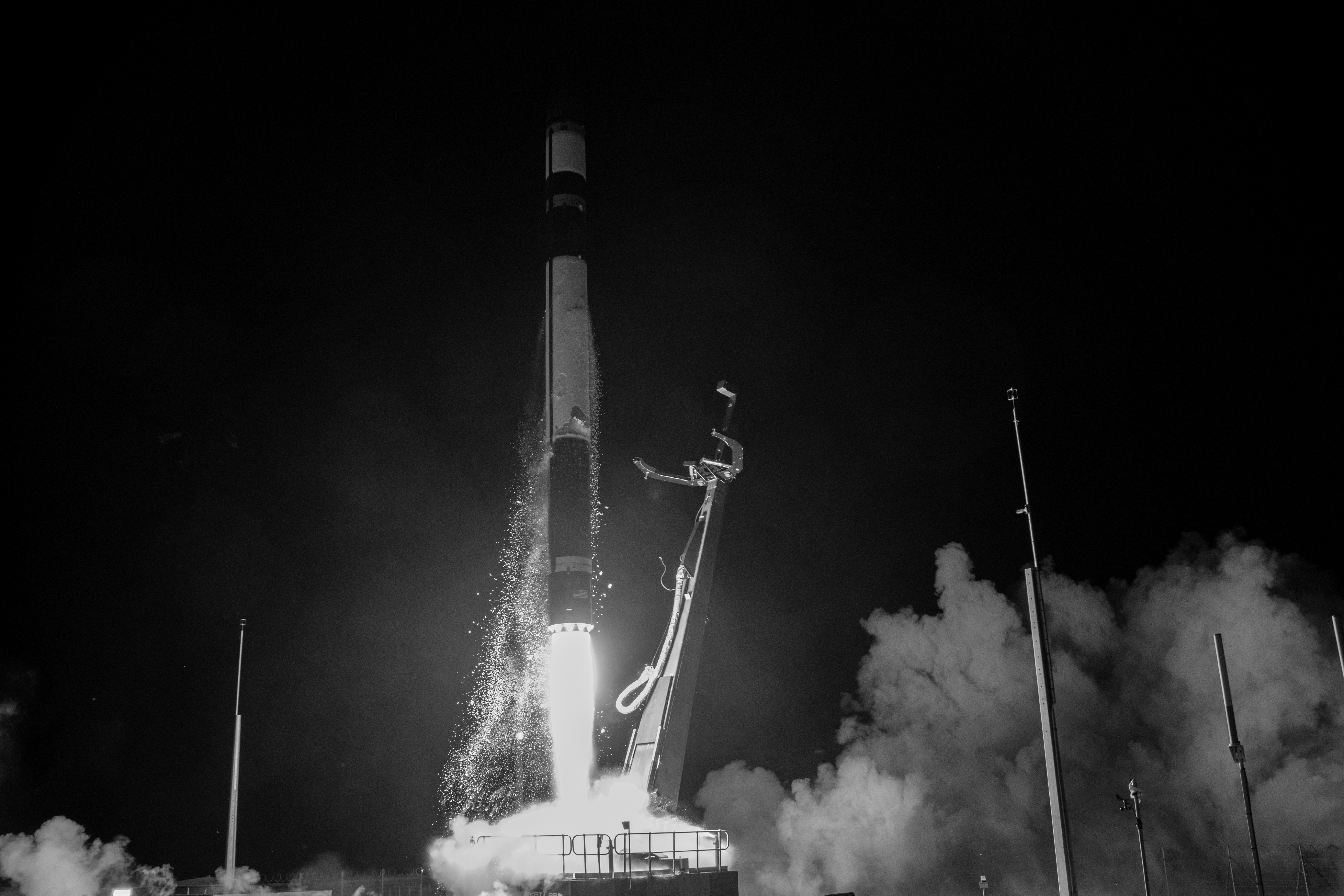
SECRET SPY SATELLITE LAUNCH JUST HOURS AWAY: #NROL199

 It was delayed to fix a software problem - now set to blast-off at 5 a.m.The Press Kit is available at https://www.rocketlabusa.com/assets/Uploads/Flight-29-Press-Kit-FINAL.pdf.

Per the Press Kit, the launch window is 05:00-07:00 UTC. The NROL-199 launch was initially scheduled for 22 July but was delayed due to software issues.


  • NROL-199 | Rocket Lab | August 02 | 0100 ET

    @RocketLab to launch @NatReconOfc's classified #NROL199 mission under #RASR (Rapid Acquisition of a Small Rocket). 29th #Electron mission overall, dubbed Antipodean Adventure.

    https://twitter.com/SpaceIntellige3/status/1554085580518166528

  • #25 by FutureSpaceTourist on 02 Aug, 2022 00:24

  • #26 by zubenelgenubi on 02 Aug, 2022 00:33
  • #27 by FutureSpaceTourist on 02 Aug, 2022 00:40
  • https://twitter.com/rocketlab/status/1554258594220060673

    US and Australia to launch second joint spy satellite from site in New Zealand

    Some in space industry bewildered by Australia’s lack of fanfare about the launch of the satellites, which will be used to collect intelligence for allied nations

    A second spy satellite built by Australia and the United States is scheduled for liftoff on Tuesday from a launch site in New Zealand.

    The first of the two satellites, which will be used to collect intelligence for the allied nations, launched two weeks ago.


    The Australian Department of Defence did not announce the successful launch of the first satellite or the launch date of the second.

    US spy agency, the National Reconnaissance Office, has been celebrating the “Antipodean Adventure”, which features a crocodile, a rocket and an eagle on its logo.


    Some in the space industry are bewildered by the lack of information and fanfare on the Australian side.

    Malcolm Davis, the Australian Strategic Policy Institute’s senior analyst and resident space expert, said there is a “very different culture” in the US military, which actively promotes its work, and the Australian military, which is “closed off”.

    “It’s not just these particular satellites, it’s an attitude within Defence that they’re very closed off,” he said.

    “The Americans are very forward. You only need to look at how they support movies like Top Gun: Maverick. It’s a very different culture, and it’s a frustrating one down here.”

    The first satellite, NROL-162, features a frill-necked lizard patch. “The frilled-neck lizard is a reptile primarily located in northern Australia and much like the lizard, it represents the small, agile nature of the payload to be launched,” the NRO said.

    Its logo says sapiens qui prospicit: “Wise is the person who looks ahead”.


    The second, NROL-199, has a dingo: “It represents a small to medium-sized canine built for speed, agility, and stamina.” Its logo says ad astra per aspera: “Through hardships to the stars.”

    New Zealand’s Rocket Lab is providing the rockets to deliver the classified payloads into orbit from the launch site on the Māhia Peninsula.

    The NRO’s mission is to “produce intelligence products” for policymakers and “warfighters” as well as civilian use.

    A Defence spokesperson said the department partnered with the NRO for “two space missions as part of a broad range of cooperative satellite activities”.

    As defence minister, Peter Dutton announced Australia’s intention to work with the NRO to build a “more capable, integrated, and resilient space architecture designed to provide global coverage in support of a wide range of intelligence mission requirements”.

    Earlier this year he announced a separate plan to develop a surveillance satellite with Queensland company Gilmour Space Technologies, due to launch next year.

  • Rocket Lab Successfully Launches First of Two Responsive Space Missions for the National Reconnaissance Office

    Lift-off of the NROL-162 national security mission for the National Reconnaissance Office on Electron from Rocket Lab Launch Complex 1. (Photo: Business Wire)

    LONG BEACH, Calif.--()--Rocket Lab USA, Inc (Nasdaq: RKLB) (“Rocket Lab” or “the Company”), a leading launch and space systems company, has successfully launched the first of two responsive space missions for the National Reconnaissance Office (NRO).

    Following lift-off of NROL-162 (“Wise One Looks Ahead”) from Pad A at Rocket Lab Launch Complex 1 at 06:30 UTC, July 13, 2022, Electron successfully delivered the NRO’s national security payload to space. In partnership with the Australian Department of Defence, NROL-162 will provide critical information to the United States Government’s agencies and allies and national security decision makers monitoring and responding to world events and humanitarian issues.

    “Wise One Looks Ahead” is the first of a pair of back-to-back responsive space missions commissioned by the NRO for dedicated launch on Electron. NROL-199 (“Antipodean Adventure”), the follow-up mission to NROL-162, is scheduled to launch in just nine days’ time from Pad B at Rocket Lab Launch Complex 1 on July 22, 2022. With multiple launch pads, dedicated range and mission control centres, and several Electron rockets ready to fly, Rocket Lab is delivering responsive space capability to the national security community.

    NROL-162 and NROL-199 are the latest pair of missions awarded by the NRO under the Rapid Acquisition of a Small Rocket (RASR) contract. Rocket Lab previously successfully delivered a pair of national security missions to space for the NRO on Electron in January and June 2020.

    Rocket Lab founder and CEO, Peter Beck, says: “The successful deployment of NROL-162 to orbit is another fantastic achievement by the Rocket Lab team, but we’re not resting on our laurels. No other small launch provider has ever before prepared a dedicated launch for a small national security payload in such a rapid turnround, and our sights are set on delivering the next NRO mission to space in record-time.”

    NEXT MISSION
    NROL-199 / “Antipodean Adventure” launch details:

    • Launch Window Opens: July 22, UTC
    • Launch vehicle: Electron
    • Customer: National Reconnaissance Office
    • Launch site: Rocket Lab Launch Complex 1, Pad B
    • Mission type: Dedicated
    • Payload: NROL-199

    + Images & Video Content
    https://flic.kr/s/aHBqjzPrHL

    + About Rocket Lab
    Founded in 2006, Rocket Lab is an end-to-end space company with an established track record of mission success. We deliver reliable launch services, satellite manufacture, spacecraft components, and on-orbit management solutions that make it faster, easier and more affordable to access space. Headquartered in Long Beach, California, Rocket Lab designs and manufactures the Electron small orbital launch vehicle and the Photon satellite platform and is developing the Neutron 8-ton payload class launch vehicle. Since its first orbital launch in January 2018, Rocket Lab’s Electron launch vehicle has become the second most frequently launched U.S. rocket annually and has delivered 148 satellites to orbit for private and public sector organizations, enabling operations in national security, scientific research, space debris mitigation, Earth observation, climate monitoring, and communications. Rocket Lab’s Photon spacecraft platform has been selected to support NASA missions to the Moon and Mars, as well as the first private commercial mission to Venus. Rocket Lab has three launch pads at two launch sites, including two launch pads at a private orbital launch site located in New Zealand and a second launch site in Virginia, USA which is expected to become operational in 2022. To learn more, visit www.rocketlabusa.com.

    AYMAN AL-ZAWAHIRI TAKE-OUT

     Today we have more details...


    US kills al-Qaeda leader Ayman al-Zawahiri: What we know so far

    Ayman al-Zawahiri was killed in a drone attack that targeted a house in central Kabul, Afghanistan, according to the US.

    The United States has confirmed the killing of al-Qaeda leader Ayman al-Zawahiri in a drone attack in Afghanistan’s capital, Kabul.


    Al-Zawahiri, who had a $25m US reward on his head, is regarded as one of the masterminds behind the September 11, 2001 attacks against the United States. He had taken over the armed group after the US killing of the then al-Qaeda leader Osama bin Laden in 2011.

    Here is what we know so far about the attack:

    What is the US saying?

    • Biden greenlit the high-precision attack by the CIA, which took place on July 31, while he was recovering in isolation from COVID-19 a few days earlier.
    • US intelligence officials had tracked down al-Zawahiri to a home in central Kabul where he was staying with his family.
    • Biden said he hoped al-Zawahiri’s death would bring “closure” to families of the 3,000 people killed in the US on 9/11, saying “justice has been delivered”.
    • No civilians were killed, Biden said, and warned that Washington would not allow Afghanistan to become a “terrorist safe haven” again.
    • A senior US administration official said al-Zawahiri was on the balcony of a house in Kabul when he was targeted with two Hellfire missiles, an hour after sunrise.
    • US Secretary of State Antony Blinken accused the Taliban of “grossly” violating the Doha Agreement by hosting and sheltering al-Zawahiri. Signed by the Taliban and the US in the Qatari capital in 2020, the pact facilitated the withdrawal of international forces from Afghanistan.

    What has been the Taliban’s reaction?

    • The Taliban, which returned to power in Afghanistan last year, confirmed the strike, without naming al-Zawahiri.
    • It condemned the drone strike as a “violation of international principles” and a violation of the Doha Agreement.
    • Taliban chief spokesman Zabihullah Mujahid said the hit was carried out on a residential house in the Sherpur area of Kabul, where many Taliban leaders reside.
    • Mujahid said the US attack was a “repetition of the failed experiences of the past 20 years and are against the interests of the US, Afghanistan and the region”.

    Who was Ayman al-Zawahiri?

    • Al-Zawahiri, a surgeon by training, was born in Cairo in 1951 into a middle-class family of doctors and scholars.
    • He was reportedly arrested as young as 15 for being a member of the then-outlawed Muslim Brotherhood.
    • In 1985, he left Egypt for Pakistan’s Peshawar, where he worked as a doctor treating fighters wounded in battles against Soviet forces occupying neighbouring Afghanistan.
    • He was indicted in the US for his role in the August 7, 1998 bombings of the US embassies in Kenya and Tanzania that killed 224 people and wounded more than 5,000 others.
    • He is also believed to have plotted the October 12, 2000 attack on the USS Cole naval vessel in Yemen which killed 17 US sailors and wounded more than 30 others.
    • Al-Zawahiri was second-in-command during the plotting of the 9/11 attacks, and took over after bin Laden was killed in 2011.

    What has been the international reaction?

    • Saudi Arabia has welcomed the announcement of al-Zawahiri’s death, saying “thousands of innocent people of different nationalities and religions, including Saudi citizens, were killed” by terrorists under his leadership.
    • Australian Prime Minister Anthony Albanese said the thoughts of Australians are with the families of all the victims of al-Zawahri’s “acts of terror”.
    • Justin Trudeau, Canada’s prime minister, also said al-Zawahiri’s killing was “a step toward a safer world”.

    INTERACTIVE_AYMAN AL ZAWAHIRI

    Source: Al Jazeera and news agencies
    Privacy Policy


    BEA News: Gross Domestic Product by State and Personal Income by State, 3rd Quarter 2025

      BEA News: Gross Domestic Product by State and Personal Income by S...