Tuesday, August 16, 2022

EXPANDING FROM THE EASTERN FLANK TO THE INDO-PACIFIC | Report from Aljazeera

 Introduction: 

✓ News

German fighter jets on marathon 24-hour flight to Singapore

Deployment said to demonstrate the ability of a European nation to quickly move air power to the Indo-Pacific region.

Two Eurofighter jets perform at the German Air Force Base in Noervenich, western Germany in 2016 [Martin Meissner/AP]
Two Eurofighter jets perform at the German air force base in Noervenich, western Germany in 2016 [File: Martin Meissner/AP]

A group of German air force fighter jets were due to arrive in Singapore after a marathon bid to fly them some 12,800 kms (8,000 miles) from their home base to Southeast Asia in just 24 hours.

The scheduled arrival of the jets on Tuesday demonstrates the ability of a European nation to move air power quickly to the region and comes at a time of heightened tensions between China and the United States and its allies over Taiwan.

The European Union unveiled a new strategy in September for boosting economic, political and defence ties in the Indo-Pacific region.

German defence minister Christine Lambrecht told reporters that despite the war in Ukraine being a priority at the moment, Germany’s Eurofighter mission underscores that Asia has not been forgotten.

“We are at the side of all of those who stand for our values such as democracy, freedom and security, and are also willing to contribute,” she said as the German air force planes took off from Neuburg, Germany, on Monday, the dpa news agency reported.

“Our focus at the moment is naturally on the eastern flank, for which Russia’s brutal war of aggression is to blame, but we also have to keep an eye on other regions,” Lambrecht said.


Privacy Policy

Part of the EU’s new strategy for the Asia Pacific is focused on improving maritime security and ensuring safe passage through sea lanes, and several European nations have sent naval assets to the region for manoeuvres this year.

As China has grown more assertive in the region, the United States, Britain and others have also made the Indo-Pacific an increasing priority.

Germany sent the frigate Bayern to the region on a near seven-month deployment that wound up earlier this year, the first time a German warship had been in the Indo-Pacific for nearly two decades.

The Bayern took part in joint exercises with allies including Australia, Singapore, Japan and the US, and was denied a port call in China.

‘Pitch Black’ exercises

The six multirole Eurofighter jets involved in the current exercise were accompanied by four transport aircraft and three tankers. They were refuelled in-air along the lengthy flight, and also made stops along the way for refuelling, inspection and rotations of pilots.

During a stop at a base near Abu Dhabi, United Arab Emirates, Germany’s air force, the Luftwaffe, said that two of the Eurofighters were found to have technical problems. One was fixed on site but the other had a defect in its hydraulics system so was held back.

The Luftwaffe said personnel were sent from Germany to repair it further so that it would be available for upcoming military exercises in Australia, where all the aircraft are heading after Singapore.

The so-called Pitch Black exercise is bringing together some 2,500 personnel and 100 aircraft from around the globe for three weeks in Australia’s Northern Territory.

In addition to Germany, European NATO members France, Britain and the Netherlands are participating, along with the US, New Zealand, Korea, the UAE, India, Japan, Thailand and others.

The exercise is designed to test and improve multinational force integration, and “recognise Australia’s strong relationships and the high value we place on regional security and fostering closer ties throughout the Indo-Pacific region,” the Royal Australian Air Force said.

Following their participation in the August 19 to September 8 exercise in Australia, the German jets are scheduled to stop in Japan and South Korea on their way back home to Germany.

SOURCE: THE ASSOCIATED PRESS

Monday, August 15, 2022

Book Review

This recent culture feature on National Public Radio made . I didn" hear any "tell-all"our Mesazona blogger take a walk on memory's lane back in time to Mary Roger's spacious apartment on Central Park West for seated dinner parties with a chef-colleague.


I didn't hear or listen to any "tell-all  things". Mary was a gracious and generous hostess with some very nice friends all around the table in the dining room.


www.npr.org

Published 8 years after her death, Mary Rodgers' memoir is a true tell-all book

Jeff Lunden
8 - 10 minutes 

Mary Rodgers and Jesse Green, co-authors of Shy: The Alarmingly Outspoken Memoirs of Mary Rodgers

Courtesy of the Rodgers-Beaty-Guettel family; Earl Wilson/New York Times

Mary Rodgers was a songwriter, children's book author, philanthropist and — perhaps most famously — the daughter of theatrical legend Richard Rodgers. Though she died in 2014, her memoirs were published on Tuesday. Titled Shy: The Alarmingly Outspoken Memoirs of Mary Rodgers, they're co-authored by New York Times theater critic Jesse Green.

The book, the product of hundreds of hours Green spent with Rodgers, has extensive, entertaining, even gossipy footnotes on just about every page. There's an asterisk after the very first word, "Daddy," and the note explains: "If you've read this far, you probably know that Daddy was Richard Rodgers (1902-1979): composer, womanizer, alcoholic, genius."

"What I wanted was her voice," Green explains, saying he didn't want to clog the narrative with a lot of descriptions of the people, places and shows Mary Rodgers was talking about. So, he came up with the idea of footnotes. "I felt if people are going to read this book, what would I want them to get is the experience of sitting in that room and listening t

When he was assigned to write a profile of Rodgers' son Adam Guettel, composer of Floyd Collins and The Light in the Piazza, Green met Mary and her second husband, Hank Guettel. It was his introduction to Rodgers' alarmingly outspoken ways. "Their behavior was not demure, because during that meeting, just about any provocation from me, any slight little question would result in torrents of shockingly honest answers," Green says, "the kind you never expect as a journalist or really even as a partygoer... At one point, she handed me a kind of a dossier of material for my use in the story that included the kinds of things you would probably normally burn!"

Green and Rodgers hit it off and, several years before her death, she asked him if he'd collaborate on her memoirs. And true to its subtitle, the book is filled with alarmingly outspoken stories about some of the most prominent figures from the golden age of musical theater – not just "Daddy," but his collaborators, Lorenz Hart and Oscar Hammerstein. And members of the next generation, too: Readers learn that Rodgers dated both director/producer Hal Prince and lyricist Sheldon Harnick. There are some acid descriptions of librettist Arthur Laurents, and snapshots of Stephen Sondheim through the years.

Read more. . . it's delicious


SPACE FORCE: Mission to Dominate Space, Cyber, and Special Ops Warfare

 New frontier 

gizmodo.com

Military Satellites Will Now Be Operated by the Space Force

Passant Rabie
7 - 9 minutes

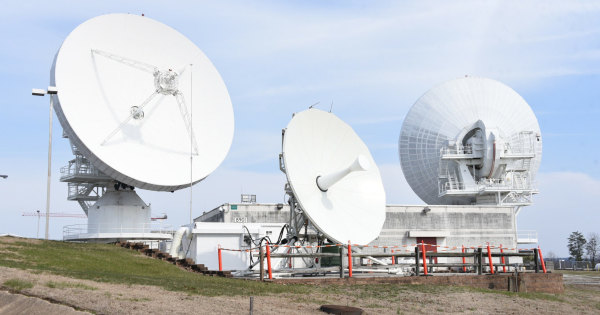
The U.S. Army transferred its satellite ground stations to the Space Force on Monday as the latest step in establishing the sixth branch of the U.S. military devoted to demonstrating national dominance in space.

The U.S. Department of Defense announced the transfer last year, which took effect on August 15. All in all, 15 global units with 319 military and 259 civilian personnel from the Army and Navy will transfer to the Space Force’s Space Delta 8, the unit responsible for satellite communications, as stated in the announcement. Space Delta 8 is now in charge of the Wideband Global Satcom and Defense Satellite Communications System, a constellation of military communication satellites, as well as the Global Positioning System constellation for both military and civilian users, among other communication satellites, according to Space News. These satellites were originally built by the U.S. Air Force, and later operated by the military for decades.

In addition to the satellites, the army also transferred $78 million of its budget to the Space Force to cover the cost of operating the satellite ground stations. “We need to create this unity of effort around our space missions, to ensure we’re up to those challenges that we face,” Chance Saltzman, Space Force’s deputy chief of space operations for operations, cyber and nuclear, said in a statement. “The space domain has rapidly become far more congested, and far more contested than…when I was a lieutenant or a captain operating space capabilities.”

But other branches of the military aren’t totally out of the satellite game just yet. DARPA, part of the department of defense for military research, recently announced that it’s working on a plan to standardize communication between satellites in Earth orbit (including civil, government, and military satellites). The U.S. Army is also looking into ways to use space technology for nontraditional warfare.

The Space Force was created in December 2019 as a military branch for the final frontier, defined as the “first articulation of spacepower as a separate and distinct form of military power,” in a statement. Though it hasn’t happened yet, this so-called ‘spacepower’ seems to be preparing for a bleak future that involves the militarization of space as more countries like China set out for missions to the Moon and beyond. Unfortunately, resources in space are even more scarce, and more valuable, than resources on Earth, and until now, there are no clear laws on the distribution of these resources. 


mesazona.blogspot.com

Space News: TRIAD CONCEPT The idea of combining space, cyber and special operations warfare

by Sandra Erwin — August 11, 2022
6 - 7 minutes

 Take a deep breath, ...Hold it       

✓ 


The commander of the Army Space and Missile Defense Command Lt. Gen. Daniel Karbler and Lt. Gen. Maria Barrett, commander of the Army Cyber Command, discuss the integration of space, cyber and special operations at the Space and Missile Defense Symposium Aug. 9, 2022. Credit: Army SMDC

Army officials said space and cyber technologies should be used in support of special operations and information warfare

HUNTSVILLE, Ala. — The U.S. Army’s land forces for decades have relied on satellites for communications, navigation and early warning of missile attack. But the Army now wants to figure out other ways to use space technologies for nontraditional military operations such as cyber and information warfare.

Army leaders in panel discussions at the Space and Missile Defense Symposium said wars in the future will be fought in the space and cyber domains. And they argued that there should be more synergy among space, cyber and information warfare capabilities so they can be layered to greater effect.

The head of the Army Space and Missile Defense Command Lt. Gen. Daniel Karbler described the concept as a “triad of space, cyber and special operations.” This would require developing concepts of operations where surveillance satellites and cyber tools, for example, would be used in support of U.S. special forces that specialize in counterterrorism, information warfare and influence operations.

The idea was endorsed by the Army’s top cyberwarfare officer Lt. Gen, Maria Barrett, and the head of Army Special Operations Command Lt. Gen. Jon Braga, who made a joint appearance at the conference. 

Using space and cyber technologies deliberately to locate targets, disrupt adversaries’ operations and gain information advantage is a departure from the Army’s traditional role of just being a passive consumer of GPS and satcom services. 

Officials said the concept aligns with the Pentagon’s national defense strategy that calls for the military to develop non-lethal capabilities, including those that can disable enemies’ networks and satellites. 

In a conflict against a peer competitor, “we need flexible options to counter disinformation, cyber attacks and asymmetric threats,” said Karbler. Space and cyber tools would complement traditional hard power to “address threats that transcend geographical boundaries and provide options when higher power escalatory options are less comfortable.”

Barrett said cyberwarfare capabilities, when combined with the global reach provided by space systems, could “disrupt adversary actions and shape adversary perceptions.”


Bob Dylan / Keith Richards / Ron Wood - Blowin' In The Wind (Live Aid 1985)

RING NATION: Amazon's Comedy/Reality TV Show... Propaganda campaign to normalize surveillance

 Here is more news 

✓ 


San Francisco – Research by the Electronic Frontier Foundation (EFF) shows that hundreds of U.S. police departments with deadly histories have official partnerships with Amazon’s Ring—a home-surveillance company that makes it easy to send video footage to law enforcement. Ring sells networked cameras, often bundled with doorbells or lighting...
 
An array of laptops, each with a virus image, except one, which has a surveillance eye.


www.vice.com

'Ring Nation' Is Amazon's Reality Show for Our Surveillance Dystopia

4 - 5 minutes

Image:

Amazon's propaganda campaign to normalize surveillance is about to hit a higher gear: Wanda Sykes is going to host a new show featuring videos taken from Ring surveillance cameras, Deadline reported on Thursday. It will be called Ring Nation

The show is being produced by MGM Television, which is owned by Amazon, and Big Fish Entertainment, which ran ano


ther dystopian reality show: a piece of copaganda called Live PD which centered on commentary of police footage. 

According to Deadline, the show will feature lighthearted viral content captured on Ring cameras, such as "neighbors saving neighbors, marriage proposals, military reunions and silly animals." These types of videos frequently go viral online, but hardly represent the reality of what Ring is used for. Besides home surveillance, Ring is a source of surveillance video for police departments in the U.S. and abroad. 

Amazon has done a lot of work to turn the U.S. into a Ring nation off-camera. Ring’s surveillance cameras and surveillance network have been aggressively rolled out by Amazon mainly by cultivating fear in suburbs about crime, and by entering partnerships with police departments to give them unfettered access to surveillance footage. Last year, advocacy groups pushed for Amazon’s Ring to be banned entirely by the Federal Trade Commission over concerns its facial surveillance technology could fuel criminalization of Black and brown people in public spaces. 

It's unsurprising, then, that Ring Nation would come from the production company that produced Live PD. As Adrian Horton writes for The Guardian, "Think NFL Red Zone, but for arrests of people not given the chance to sign release forms because the show bills itself as live news." In the wake of the George Floyd uprisings, Live PD was briefly canceled along with Cops though both were revived just this year. And while Cops may be more familiar to some, Live PD was the more popular, more audacious, and more vile of the two by far.

Over the years, Amazon has tried harder and harder to roll out various forms of surveillance technology, enmesh us within this network, and normalize this encroachment of public spaces and individual privacy. In 2020, Amazon announced it was pausing (for one year) its rollout of a facial surveillance algorithm called Rekognition that it was offering to police departments after the tool was repeatedly found to be ineffective on its own terms and racially biased. In 2021, documents leaked to Motherboard detailed how Amazon’s new robot, Astro, would integrate with Ring to deploy surveillance technology to try and detect intruders. 

Amazon isn’t alone in this fight to cultivate an ever-growing surveillance apparatus—most of Silicon Valley is intimately involved in surveillance and the potential profits to be had by offering surveillance tools, analytics, computational infrastructure, and a host of other goods and services rooted in watching people. Still, Amazon’s Ring and attempts to normalize it harken an odious development. One peek into this came back in February, when a bizarre TikTok trend went viral where Ring surveillance camera owners made Amazon delivery workers dance for them.

At this point, it is hard to defend ownership of a Ring camera. Using fear-mongering about package theft and suburban crime, a surveillance company has convinced countless homes to affix a surveillance network node that police departments and one of the world’s largest monopolies will use to their benefit. And now they want us to laugh about it all in our (ideally) Ring-surveilled homes.


mesazona.blogspot.com

Ring-A-Ding Dong > Neighborhood Crime Data Doesn't Match Amazon's Ring's Sales Pitches

2 - 3 minutes

Here's we go again! . . . from the any-spin-necessary deptRing Continues To Insist Its Cameras Reduce Crime, But Crime Data Doesn't Back Those Claims Up
Tue, Mar 24th 2020 3:15amTim Cushing
" . . . Last month, Cyrus Farivar undid a bit of Ring's PR song-and-dance by using public records requests and conversations with law enforcement agencies to show any claim Ring makes about crime reduction probably (and in some cases definitely) can't be linked to the presence of Ring's doorbell cameras.
CNET has done the same thing and come to the same conclusion: the deployment of Ring cameras rarely results in any notable change in property crime rates. That runs contrary to the talking points deployed by Dave Limp -- Amazon's hardware chief -- who "believes" adding Rings to neighborhoods makes neighborhoods safer. Limp needs to keep hedging.
 . . . Worse for Ring -- which has used its partnerships with law enforcement agencies to corner the market for doorbell cameras -- law enforcement agencies are saying the same thing: Ring isn't having any measurable impact on crime.
. . . But maybe it doesn't really matter to Ring if law enforcement agencies believe the crime reduction sales pitch. What ultimately matters is that end users might. After all, these cameras are installed on homes, not police departments. As long as potential customers believe crime in their area (or at least their front doorstep) will be reduced by the presence of camera, Ring can continue to increase market share."
HEADS UP + LIKE SO MANY OTHER AREAS:
"Hitting the market when things are good and keep getting better makes for pretty good PR, especially when company reps are willing to convert correlation to causation to sell devices."
_________________________________________________________________________

more
1 One more report (following many earlier posts)

Amazon’s Ring is the largest civilian surveillance network the US has ever seen

Then there’s this: since Amazon bought Ring in 2018, it has brokered more than 1,800 partnerships with local law enforcement agencies, who can request recorded video content from Ring users without a warrant. That is, in as little as three years, Ring connected around one in 10 police departments across the US with the ability to access recorded content from millions of privately owned home security cameras. These partnerships are growing at an alarming rate. .
2 24 March 2020
More
sa Police Department in The Spotlight Again > City Council "Study Session" @ 07:30 am Thu 06.17.2021

This starts off about 10 minutes into this Slide Show Presentation > Watch-and-Listen to what they have to about "a relationship" they have with Ring Door Bells + their Neighborhood Surveillance Networks

Official Meeting Details if you want take a look ahead of time

On agenda:6/21/2021

                                                               
Attachments:1. Council Report

MESA YESTERDAY: In The News for an Oscar Car-Theft

 Interesting. . .


✓ DAILY MAIL (England 10 minutes ago) 

CODA star Troy Kotsur's jeep was stolen with his OSCAR inside before police tracked it down

Chris Jewers For Mailonline - 2h ago

✓Investigators said two boys stole Kotsur's SUV, but officers were able to track it down and arrest them. The pair were found inside. Everything inside the Jeep was still there when the vehicle was found, according to police.

roy Kotsur, who made history as the first deaf man to win an Academy Award, has had his Jeep and Oscar returned to him after both were stolen in Mesa, Arizona.


Police tracked down those responsible after the vehicle and its valuable cargo was stolen on Saturday, concluding a whirlwind week for the 'CODA' star which also saw him given the key to the city of Mesa - his hometown - on Thursday

Oscar-Winner Has Academy Award, Jeep Stolen

Space News: TRIAD CONCEPT The idea of combining space, cyber and special operations warfare

 Take a deep breath, ...Hold it       

✓ 


Army looking at new ways to use space technology for unconventional warfare

by
Army officials said space and cyber technologies should be used in support of special operations and information warfare

HUNTSVILLE, Ala. — The U.S. Army’s land forces for decades have relied on satellites for communications, navigation and early warning of missile attack. But the Army now wants to figure out other ways to use space technologies for nontraditional military operations such as cyber and information warfare.

Army leaders in panel discussions at the Space and Missile Defense Symposium said wars in the future will be fought in the space and cyber domains. And they argued that there should be more synergy among space, cyber and information warfare capabilities so they can be layered to greater effect.

The head of the Army Space and Missile Defense Command Lt. Gen. Daniel Karbler described the concept as a “triad of space, cyber and special operations.” This would require developing concepts of operations where surveillance satellites and cyber tools, for example, would be used in support of U.S. special forces that specialize in counterterrorism, information warfare and influence operations.

The idea was endorsed by the Army’s top cyberwarfare officer Lt. Gen, Maria Barrett, and the head of Army Special Operations Command Lt. Gen. Jon Braga, who made a joint appearance at the conference. 

Using space and cyber technologies deliberately to locate targets, disrupt adversaries’ operations and gain information advantage is a departure from the Army’s traditional role of just being a passive consumer of GPS and satcom services. 

Officials said the concept aligns with the Pentagon’s national defense strategy that calls for the military to develop non-lethal capabilities, including those that can disable enemies’ networks and satellites. 

In a conflict against a peer competitor, “we need flexible options to counter disinformation, cyber attacks and asymmetric threats,” said Karbler. Space and cyber tools would complement traditional hard power to “address threats that transcend geographical boundaries and provide options when higher power escalatory options are less comfortable.”

Barrett said cyberwarfare capabilities, when combined with the global reach provided by space systems, could “disrupt adversary actions and shape adversary perceptions.”

Karbler said these unconventional approaches “underscore the vital importance of space and the essential role it plays when used in combination with new and existing capabilities.” Going forward, he added, “no longer can the space domain be untethered from land components.”

Braga argued that greater use of space technologies in warfare is necessary as “adversaries have made great investments in space capabilities and have shown that they will use them.”

China’s military doctrine, for example, integrates cyberspace, space, information operations, psychological warfare, and electronic warfare capabilities into joint military operations.

Special operations forces increasingly are aware of the importance of space as a high ground, Braga said, as “there is no sanctuary” anywhere on Earth.

Braga suggested the Army and other military services should collectively develop experiments that use space and cyber tools and eventually “test solutions in service exercises and joint force exercises.” He said Army Special Operations Command in March hosted an exercise focused on the intersection of space, cyber and special operations, but more is needed. 

Growing role of space in land combat

The idea of combining space, cyber and special warfare marks a departure from the way the Army views space-based capabilities, said Eric Brown, vice president of military space advanced program development at Lockheed Martin.

Brown said in an interview that the “triad” concept floated by Karbler appears to be an effort to use space and cyber technologies in more sophisticated ways. 

“The Army is, and has been, one of the largest consumers of space technologies of any of the services, just based on its sheer size,” said Brown. That is not likely to change but now “they are starting to think about the effects that you would want to have in an unconventional way,” he said. This stands in contrast to the conventional ways of measuring combat power based on the numbers of battalions, tanks and aircraft 

Brown said tactics enabled by space and cyber systems give the military options to fight in scenarios the Pentagon calls “anti-access area denial” where enemies deploy air defenses, missiles at sea and other systems to counter U.S. conventional military power. 

Bringing in special operations forces into the mix makes sense, he said. “We use our special operators to get into places that are difficult for other people to get into.” These are the units that identify and locate targets on the battlefield to enable the conventional forces to have an impact, Brown added. 

Space-based target location and reconnaissance is one way to support missions in denied areas. The Air Force and Space Force have made the case that surveillance traditionally performed by aircraft should move to the space domain, said Brown, “because we don’t expect that we’ll be able to get air assets in place.”

Electronic warfare is another area that could leverage space systems, he added. When one looks at what could be done with electronic signals from space, “it really starts getting creative in how you use assets in a different way.”

email-white sharing button Email
twitter-white sharing button Tweet