Monday, September 05, 2022

U.S. Census Bureau’s Vintage 2021 estimates of population and components of change released

 Ready?

www.census.gov

Over Two-Thirds of the Nation’s Counties Had Natural Decrease in 2021
US Census Bureau

Where Counties are Growing

MARCH 24, 2022 — More than 73% (2,297) of U.S. counties experienced natural decrease in 2021, up from 45.5% in 2019 and 55.5% in 2020, according to the U.S. Census Bureau’s Vintage 2021 estimates of population and components of change released today. Natural decrease occurs when there are more deaths than births in a population over a given time period.  In 2021, fewer births, an aging population and increased mortality – intensified by the COVID-19 pandemic--contributed to a rise in natural decrease. The statistics released today include population estimates and components of change for the nation’s 384 metropolitan statistical areas, 543 micropolitan statistical areas and 3,143 counties.

In 2021, all counties in Delaware, Maine, New Hampshire and Rhode Island experienced natural decrease. Some counties also experienced population declines attributable to migration. Counties with net international migration loss (more people moving out of than into the country), were most frequently found in California (41.4%), Oregon (27.8%) and Mississippi (23.2%). States with the highest percentages of counties with net domestic migration loss (people moving from one area to another within the United States) were Alaska (80.0%), Louisiana (71.9%) and Illinois (65.7%).

Most of the nation’s counties – 2,063 or 65.6% -- experienced positive domestic migration overall from 2020 to 2021. Arizona’s Maricopa County gained the most (46,866) residents from domestic migration, followed by Riverside County, California (31,251), and Collin County, Texas (30,191). Los Angeles County, California, experienced the greatest net domestic migration loss (179,757 residents), followed by New York County, New York (113,642). 


“The patterns we’ve observed in domestic migration shifted in 2021,” said Dr. Christine Hartley, assistant division chief for estimates and projections in the Census Bureau’s Population Division. “Even though over time we’ve seen a higher number of counties with natural decrease and net international migration continuing to decline, in the past year, the contribution of domestic migration counteracted these trends so there were actually more counties growing than losing population.”  
In many cases, there was a shift from larger, more populous counties to medium and smaller ones. These patterns contributed to population increases in 1,822 counties (58.0%), while 1,313 (41.8%) lost residents, and eight (0.3%) saw no change in population.

U.S. micro areas, up 0.2% between 2020 and 2021, grew slightly faster than U.S. metro areas, which increased by 0.1%. This is a departure from past trends when metro areas typically grew at a faster rate than micro areas. Among metro areas, 251 (65%) experienced population increases between 2020 and 2021. Of the 543 U.S. micro areas, 287 (52.9%) had population increases in 2021.  

Of the 384 metro areas in the 50 states and District of Columbia, 213 (55.5%) experienced natural decrease in 2021, with Pittsburgh, PA (-10,838); Tampa-St. Petersburg-Clearwater, FL (-9,291); and North Port-Sarasota-Bradenton, FL (-6,643) having the highest levels.Sixty-three percent of metro areas had positive net domestic migration, with Phoenix-Mesa-Chandler, AZ (66,850); Dallas-Fort Worth-Arlington, TX (54,319); and Tampa-St. Petersburg-Clearwater, FL (42,089) seeing the largest net domestic migration gains. The largest metropolitan net domestic migration losses were in New York-Newark-Jersey City, NY-NJ-PA (385,455); Los Angeles-Long Beach-Anaheim, CA (204,776); San Francisco-Oakland-Berkeley, CA (128,870); and Chicago-Naperville-Elgin, IL-IN-WI (106,897). 

Table 1


Top 10 Most Populous Counties: July 1, 2021

Rank State County April 1, 2020
 (Estimates Base)
July 1, 2020 July 1, 2021
1 California Los Angeles County 10,014,009 9,989,165 9,829,544
2 Illinois Cook County 5,275,541 5,262,741 5,173,146
3 Texas Harris County 4,731,145 4,732,491 4,728,030
4 Arizona Maricopa County 4,420,568 4,438,342 4,496,588
5 California San Diego County 3,298,634 3,297,252 3,286,069
6 California Orange County 3,186,989 3,184,101 3,167,809
7 Florida Miami-Dade County 2,701,767 2,692,459 2,662,777
8 New York Kings County 2,736,074 2,727,393 2,641,052
9 Texas Dallas County 2,613,539 2,610,957 2,586,050
10 California Riverside County 2,418,185 2,422,764 2,458,395

Table 2


Top 10 Counties in Numeric Growth: July 1, 2020 to July 1, 2021

Rank State County April 1, 2020
 (Estimates Base)
July 1, 2020 July 1, 2021 Numeric Growth
1 Arizona Maricopa County 4,420,568 4,438,342 4,496,588 58,246
2 Texas Collin County 1,064,465 1,073,149 1,109,462 36,313
3 California Riverside County 2,418,185 2,422,764 2,458,395 35,631
4 Texas Fort Bend County 822,779 828,632 858,527 29,895
5 Texas Williamson County 609,017 615,266 643,026 27,760
6 Texas Denton County 906,422 913,900 941,647 27,747
7 Florida Polk County 725,046 729,233 753,520 24,287
8 Texas Montgomery County 620,443 624,938 648,886 23,948
9 Florida Lee County 760,822 764,679 787,976 23,297
10 Utah Utah County 659,399 663,143 684,986 21,843

Table 3


Top 10 Counties in Numeric Decline: April 1, 2020 to July 1, 2021

Rank State County April 1, 2020
 (Estimates Base)
July 1, 2020 July 1, 2021 Numeric Decline
1 California Los Angeles County 10,014,009 9,989,165 9,829,544 -184,465
2 New York New York County 1,694,251 1,687,834 1,576,876 -117,375
3 Illinois Cook County 5,275,541 5,262,741 5,173,146 -102,395
4 New York Kings County 2,736,074 2,727,393 2,641,052 -95,022
5 New York Queens County 2,405,464 2,395,791 2,331,143 -74,321
6 California San Francisco County 873,965 870,014 815,201 -58,764
7 California Santa Clara County 1,936,259 1,930,598 1,885,508 -50,751
8 New York Bronx County 1,472,654 1,466,438 1,424,948 -47,706
9 California Alameda County 1,682,353 1,679,844 1,648,556 -33,797
10 Florida Miami-Dade County 2,701,767 2,692,459 2,662,777 -38,990

Table 4


Top 10 Counties in Percent Decline: April 1, 2020 to July 1, 2021

Resident Population of 20,000 or more in 2020 and 2021
Rank State County April 1, 2020
 (Estimates Base)
July 1, 2020 July 1, 2021 Percent Decline
1 New York New York County 1,694,251 1,687,834 1,576,876 -6.9%
2 California San Francisco County 873,965 870,014 815,201 -6.7%
3 North Dakota Williams County 40,950 41,149 38,484 -6.0%
4 Louisiana Calcasieu Parish 216,785 216,416 205,282 -5.3%
5 California San Mateo County 764,442 762,453 737,888 -3.5%
6 New York Kings County 2,736,074 2,727,393 2,641,052 -3.5%
7 Massachusetts Suffolk County 797,936 795,431 771,245 -3.3%
8 New York Bronx County 1,472,654 1,466,438 1,424,948 -3.2%
9 New York Queens County 2,405,464 2,395,791 2,331,143 -3.1%
10 New Jersey Hudson County 724,854 722,655 702,463 -3.1%

Table 5


Top 10 Metro Areas in Percent Growth: July 1, 2020 to July 1, 2021

Rank Metro Area April 1, 2020
 (Estimates Base)
July 1, 2020 July 1, 2021 Percent Growth
1 St. George, UT 180,279 181,924 191,226 5.1%
2 Coeur d'Alene, ID 171,362 172,646 179,789 4.1%
3 Myrtle Beach-Conway-North Myrtle Beach, SC-NC 487,722 491,582 509,794 3.7%
4 Punta Gorda, FL 186,847 187,960 194,843 3.7%
5 The Villages, FL 129,752 130,897 135,638 3.6%
6 Boise City, ID 764,718 769,581 795,268 3.3%
7 Lakeland-Winter Haven, FL 725,046 729,233 753,520 3.3%
8 Provo-Orem, UT 671,185 674,967 697,141 3.3%
9 Cape Coral-Fort Myers, FL 760,822 764,679 787,976 3.0%
10 Logan, UT-ID 147,348 147,796 152,083 2.9%

Table 6


Top 10 Metro Areas in Numeric Growth: July 1, 2020 to July 1, 2021

Rank Metro Area April 1, 2020
 (Estimates Base)
July 1, 2020 July 1, 2021 Numeric Growth
1 Dallas-Fort Worth-Arlington, TX 7,637,387 7,662,325 7,759,615 97,290
2 Phoenix-Mesa-Chandler, AZ 4,845,832 4,867,925 4,946,145 78,220
3 Houston-The Woodlands-Sugar Land, TX 7,122,240 7,137,747 7,206,841 69,094
4 Austin-Round Rock-Georgetown, TX 2,283,371 2,299,125 2,352,426 53,301
5 Riverside-San Bernardino-Ontario, CA 4,599,839 4,605,504 4,653,105 47,601
6 Atlanta-Sandy Springs-Alpharetta, GA 6,089,815 6,101,146 6,144,050 42,904
7 Tampa-St. Petersburg-Clearwater, FL 3,175,275 3,183,385 3,219,514 36,129
8 San Antonio-New Braunfels, TX 2,558,143 2,566,683 2,601,788 35,105
9 Charlotte-Concord-Gastonia, NC-SC 2,660,329 2,669,665 2,701,046 31,381
10 Raleigh-Cary, NC 1,413,982 1,420,225 1,448,411 28,186

ON THE PATH TO A MULTI-POLAR WORLD

Intro: As part of the preliminary preparations, the Ministry for the Development of the Russian Far East and the Russian Far East and Arctic Development Corporation (FEDC) have organized a roundtable on the development of industry in the Far Eastern Federal District.


roscongress.org

Eastern Economic Forum 2022

Roscongresspersonal account
2 - 3 minutes

A socially oriented non-financial development institution and a major organizer of nationwide and international conventions; exhibitions; and business, public, youth, sporting, and cultural events.

The Roscongress Foundation is a socially oriented non-financial development institution and a major organizer of nationwide and international conventions; exhibitions; and business, public, youth, sporting, and cultural events. It was established in pursuance of a decision by the President of the Russian Federation.

The Foundation was established in 2007 with the aim of facilitating the development of Russia’s economic potential, promoting its national interests, and strengthening the country’s image. One of the roles of the Foundation is to comprehensively evaluate, analyse, and cover issues on the Russian and global economic agendas. It also offers administrative services, provides promotional support for business projects and attracting investment, helps foster social entrepreneurship and charitable initiatives.

Each year, the Foundation’s events draw participants from 208 countries and territories, with more than 15,000 media representatives working on-site at Roscongress’ various venues. The Foundation benefits from analytical and professional expertise provided by 5,000 people working in Russia and abroad.

The Foundation works alongside various UN departments and other international organizations, and is building multi-format cooperation with 173 economic partners, including industrialists’ and entrepreneurs’ unions, financial, trade, and business associations from 78 countries worldwide, and 179 Russian public organizations, federal and legislative agencies, and federal subjects.

The Roscongress Foundation has Telegram channels in Russian t.me/Roscongress, English – t.me/RoscongressDirect, and Spanish t.me/RoscongressEsp. Official website and Information and Analytical System of the Roscongress Foundation: roscongress.org


✓ 

roscongress.org

Gateway to a Multipolar World. The Far East in the New Architecture of International Relations

Roscongresspersonal account
7 - 9 minutes

Gateway to a Multipolar World. The Far East in the New Architecture of International Relations

6 September 2022

10:00—11:30

Gateway to a Multipolar World. The Far East in the New Architecture of International Relations
6 September 2022
10:00—11:30

Gateway to a Multipolar World. The Far East in the New Architecture of International Relations

10:00 — 11:30

Gateway to a Multipolar World. The Far East in the New Architecture of International Relations

Tectonic changes in the architecture of international relations create a new reality. In the emerging diverse world, the hegemony of a limited group of Western countries is impossible neither economically, nor geopolitically, nor culturally, and most states independently determine the priorities of their foreign and foreign economic policy. Russia’s potential, its political and economic capabilities are one of the most important pillars of a more fair international order. Such order is emerging before our eyes. It is based on large regional centers of development and cooperation connected with each other, which together constitute the world system, but each of them is independent and largely self-sufficient. International cooperation without universal equalization is the principle of the future arrangement. The junction points of the centers will play the most important role, and this is precisely the function of the Russian Far East. To do this, the region needs to develop a large-scale infrastructure of international trade, to strengthen its transport and logistics connectivity with other parts of the country, to increase the availability of human resources and increase production capabilities in cooperation with Asian partners. Most Asian countries are pursuing a friendly or benevolently neutral policy towards Russia. The prospect of expanding cooperation is practically unlimited, there is a complementarity of economies, and unlike in Europe, this is not accompanied by geopolitical rivalry. Building on the existing base, the Far East should in the next decade become not only “Russia’s gateway to Asia”, but a universal hub for the interaction of the most important international partners, an interface for Russia’s involvement in the multipolar world.

An examination of the international relations of the United States and East Asia since the end of World War II, principally U.S. interactions with China, Japan, ...
Jan 8, 2020 · Russia's engagement with multilateral institutions is guided by his long-standing vision of Russian foreign policy to shift the international ...
Others argue that the world's great powers should form a concert to guide the international community into a new age of multipolar cooperation.
What the West baptized a "new international community" turned ... achieve a multi-polar system of international relations that really reflects the di.
East China Sea.3 In 2012, President Xi Jinping proposed a “new type of ... also seek a “multi-polar world and democratic international relations

www.rt.com

Eastern Economic Forum kicks off in Russia’s Vladivostok

2 minutes

The 7th annual Eastern Economic Forum opened on Monday in Russia's Far East city of Vladivostok, in the midst of a sanctions war between Moscow and the West. 

Business representatives and government officials from more than 60 countries and territories are expected to attend the three-day gathering.  

This year, the theme of the forum is: “On the Path to a Multipolar World.” The aim of the event is to highlight global change led by new economic models, and provide an international platform for dialogue.  

Participants will discuss efforts to boost economic ties between member states of the Shanghai Cooperation Organisation, led by China and Russia, and the Association of Southeast Asian Nations.  


Indian Prime Minister Narendra Modi, Malaysian Prime Minister Ismail Sabri Yaakob and Vietnamese Prime Minister Pham Minh Chinh are expected to deliver video messages at the forum.   

Among the guests at Wednesday’s session will be the Chairman of China's Standing Committee of the National People's Congress, Li Zhanshu, and the leaders of Armenia, Mongolia and Myanmar.

RELATED CONTENT


✓ 


www.eurasiareview.com

Asian And Pacific Countries Preparing For Far East Forum – Analysis

Kester Kenn Klomegah
15 - 19 minutes

China, India, Vietnam and a number of  Asian and Pacific countries are already gearing up for the 7th Eastern Economic Forum scheduled to take place on 5–8 September in Vladivostok, Far East. With the emerging new economic order and the United States and European Union’s sanctions on Russia for its “special military operation” in the former Soviet republic of Ukriane, the Asian and Pacific countries are stepping up efforts in collaborating in economic sectors in the Russian Federation.

As part of the preliminary preparations, the Ministry for the Development of the Russian Far East and the Russian Far East and Arctic Development Corporation (FEDC) have organized a roundtable on the development of industry in the Far Eastern Federal District.

Anatoly Bobrakov, Deputy Minister of the Russian Federation for the Development of the Far East and the Arctic and moderator of the roundtable noted that the main economic sectors of the Far East (mining, manufacturing, transport, and logistics) account for 43% of the gross regional product.

“More than 2,700 projects are currently being implemented in the Far East with state support. Amid unprecedented sanctions, it is important to note that investors are not ready to give up on the declared projects. That, however, they face multiple risks caused by companies from unfriendly countries, when those refuse to supply equipment and components necessary for the implementation of projects or refuse to install and maintain the equipment,” he explained. 

Bobrakov believes that it is necessary to create conditions so that the equipment and components would be produced locally in the Russian Federation, including through joint ventures with companies from friendly countries that own technology and know-how. “I am confident that we can ensure the technological sovereignty of the Russian Federation, provide both our traditional and new industries with technology,” said Bobrakov.

While inviting the participants to the discussion, Darya Kiryanova, Deputy General Director for Economic Development of FEDC also noted: “What is happening in Russia right now is perceived as a stress on the one hand, but on the other hand is viewed as an opportunity. Domestic industry is facing a challenge to localize production within the country. It is necessary to understand what needs to be reinvented and what can be reused by changing supply chains.

She would, therefore, like to collect the main issues and problems faced by industrial companies and form a package of proposals and necessary changes in the state policy for further integration into the sessions at the Eastern Economic Forum.”

Mikhail Kuznetsov, Director of the Eastern State Planning Centre (Vostokgosplan), described the current situation in the industrial sectors of the Far East and the Arctic: From 2017 to 2021, the growth rate of the manufacturing industry in the Far East outpaced the national average. Metallurgy, transport engineering, and the chemical industries were among the leaders. 

In 2022, amid growing sanctions pressure, many Russian enterprises faced a shortage of spare parts, chemical components, as well as disrupted supplies channels for finished products. At the same time, the Far Eastern Federal District has the potential of untapped natural resources, growth in transport engineering and cargo transit. This can become the basis for the development of import substitution in the country. However, the product transformation of enterprises requires all available funding, as well as time for technical re-equipment and personnel training.

According to Vostokgosplan’s Kuznetsov, the most promising enterprises that potentially can help overcome the problem of import substitution are operating in the chemical and machine-building industries. According to the forecasts of the development institution, industrial production in the Far East will grow at a faster pace than the Russian average, and by 2025 this indicator may exceed 15%.

Alexander Didenko, General Director of Metallenergo, and Nikolay Radko, Acting General Director of Rusolovo, and Alexander Patlach, Design Director of Bystrinsk Ore Mining Company, all shared their views on what needs to be improved to strengthen support measures for manufacturing enterprises in the Far East. The speakers noted the importance of creating a tin cluster in the Far East and including it in the list of industrial priorities. 

Additionally, they spoke about revising the terms for transferring land from one category to another for the implementation of industrial projects within an ASEZ. For example, the Bystrinsky Mining Company (the subsoil user and operator of the Kumroch project) plans to create a modern high-tech gold mining and processing plant from scratch in Kamchatka Territory by 2026. The project worth RUB 20 billion will be implemented as an ASEZ resident.

“Not a single Russian territory can boast such diverse and effective measures to support investors as those in place in the Far East. This is very important when implementing a project,” says Alexander Patlach.

The company is currently preparing the relevant documentation and expects to start the advanced development of the Kumroch deposit by the end of the year. The necessary machinery and equipment in the amount of more than 50 units has already been purchased, the investor has prioritized Russian producers, Chinese equipment has been purchased to cover some required positions.

Alexander Didenko, General Director of Metallenergo touched upon the programmes of preferential leasing and Industrial Mortgage. The latter is being launched by the Ministry of Industry and Trade, Ministry of Finance, and Ministry of Economic Development together with heads of several regions. 

Didenko said: “We are waiting, because we have both capacities and resources, which we would like to purchase, but there is not enough working capital. Therefore, we would like to get additional support measures to minimize the regulatory time for consideration of applications.”

More detailed information about the relevant support measures for entrepreneurs who want to quickly organize a manufacturing business, was delivered by Nikolai Elantsev, Head of Monitoring and Coordination of Regional Industrial Infrastructure Development of the Department of Regional Industrial Policy and Project Management of the Ministry of Industry and Trade of the Russian Federation.

Maxim Nikiforov, Deputy General Director of Baikalengineering shared the peculiarities of localization of engine and propeller production at Komsomolsk ASEZ and raised the issue of the state commission.

Issues of financing and obtaining bank guarantees were also touched upon by other speakers. Thus, Alexander Korneichuk, General Director of NSRZ proposed to consider the possibility of 0% VAT for the shipbuilding industry. 

President of the Union of Industrialists and Entrepreneurs of the Republic of Buryatia, General Director of Ulan-Ude Instrument-Making Production Association Vladimir Luchnikov noted the importance of subsidizing interest rates and financial support measures, plus suggested to consider the possibility of establishing a guarantee fund for Far Eastern industrial enterprises. The company is reinvigorating an innovation cluster in Buryatia, including all industrial enterprises of the region, and is focused on the production of import-substituting goods in medicine, aviation, instrument manufacturing, and railway trains.

Sergey Yarutin, General Director of the Association of Import Substituting Enterprises, focused on possible directions of import substitution and ways of parallel imports.

At the end of the discussion, Denis Nevzorov, Director of the Department for International Cooperation and Technological Development of the Far East and the Arctic at the Ministry for the Development of the Russian Far East, informed the audience about the current mechanisms for supporting both existing and planned enterprises. For example, the speaker called the territories of advanced social and economic development the most interesting for the implementation of industrial projects. 

Among the successful examples were the projects of the Zvezda Shipbuilding Complex and Arnika in the Primorye Territory, Sibur, as well as the gas processing and gas chemical plants in the Amur Region. Baikal aircraft production in the Republic of Buryatia is being prepared for implementation. Industrial parks and technoparks are being created in Khabarovsk, Primorye Territory, Yakutia, and Chukotka Autonomous District.

An investor in an ASEZ is granted tax, infrastructure, land, and construction preferences. Moreover, this regime allows for different mechanisms of state support not only from the Ministry for the Development of the Russian Far East, but also from the Ministry of Industry and Trade, the Ministry of Construction, and the Ministry of Economic Development.

Since May 2022 the Ministry of Economic Development launched subsidies from the federal budget to Russian credit organizations for reimbursement of soft loans. In addition, anti-crisis measures were taken to replenish working capital. Besides, 124 enterprises are included into the list of backbone enterprises, including those in the areas of aviation and shipbuilding. At the same time, since this year the mechanism of the industry development fund has been functioning. If earlier industry subsidies from the budget of the regions was 30 to 70, now it is 10 to 90, according to Denis Nevzorov.

In addition to the existing ASEZs, Free Port of Vladivostok, Arctic Zone, and Kuril Islands preferential regimes, there is also the current SITC on Russky Island, with tax preferences, labour quotas, and the competition-free provision of land plots.

Daria Kiryanova, Deputy Director General for Economic Development of FEDC, emphasized: “Whatever the status of your company, whether you use the existing preferential regimes or not, the Ministry for the Development of the Far East and the Arctic together with FEDC are ready to help you implement projects, as we are extremely interested in ensuring that companies and their capacities work effectively.”

The Indian pharmaceutical business community supported by the Indian Business Alliance discussed new opportunities and cooperation as well as opportunities for Indian pharmaceutical business by presenting their projects and participating in international economic forums taking place both in Russia and around the world.

“The Republic of India is a strategic partner of Russia. I am confident that the new partners in the pharmaceutical industry will successfully continue the partnership between the two countries in this area. Moreover, our specialized Healthy Life division will provide communication and consulting assistance for the development of business projects,” said Alexander Stuglev, Chairman and CEO of the Roscongress Foundation. 

It was during the meeting of 20 representatives of Indian pharmaceutical companies which focused on the need for support and assistance in expediting product registration time in Russia, as well as assistance from the Roscongress Foundation. All of them expressed an interest in participating as partners in the Eastern Economic Forum in Vladivostok (5–8 September 2022) and the Russian Investment Forum in Sochi in February 2023. 

The heads of the companies stressed that the transition from simple commodity supplies to more complex cooperation and localization of production, which in turn will help the emergence of new points of growth, is an extremely important area of cooperation between the two countries. In addition, the parties noted that this process should be launched bilaterally, exclusively in competitive industries.

“I see a good basis here for deepening bilateral investment ties. And I am convinced that by working together, our entrepreneurs will be able to create new products with high added value, build production chains, and subsequently promote their goods and services in the markets of third countries,” stressed Sammy (Manoj) Kotwani, head of the Indian Business Alliance.

In the month of July, similar roundtable brought together about 50 representatives of industrial enterprises, business associations, regional authorities and development institutions, experts, as well as residents of the Far Eastern preferential regime territories. They voiced the most important proposals for further elaboration and inclusion in the industry session of the EEF 2022.

A delegation of the Russian-Chinese Business Council and Chinese partners has already visited the capital of the Russian Far East. The visit was arranged by Gennady Timchenko, Chairman of the Business Council, and Oleg Kozhemyako, Governor of Primorye Territory, with the support of Zhang Hanhui, Ambassador Extraordinary and Plenipotentiary of the People’s Republic of China to the Russian Federation, the Russian Presidential Administration, the Russian Chamber of Commerce and Industry, and the Roscongress Foundation.

The Chinese businessmen held discussions with the Governor of Primorye Territory Oleg Kozhemyako during the RCBC’s working visit to Vladivostok. The key issue on the meeting agenda was the development of bilateral cooperation between Russia and China in the face of sanctions imposed by unfriendly countries.

They expressed confidence that the meeting would help to strengthen the good relations and fruitful cooperation between the business communities of the Russian Far East and China. The Governor of Primorye spoke about the investment potential of the region and invited representatives of Chinese business to take part in the Eastern Economic Forum 2022. 

The Chinese are engaged in the transport infrastructure of Primorye. On the other hand, increasing the supply of high-quality goods to the PRC, and implementing new investment projects. “We are counting on the help and assistance of the Russian-Chinese Business Council in cooperation with our Chinese colleagues. We aim to expand the turnover and develop border-related ties. I hope this visit is a platform for establishing strong partnership ties,” said Governor of Primorye Territory Kozhemyako.

In his welcoming speech, CRBC Executive Director Evgeny Markin noted the importance of developing cooperation between China and the Russian Far East in the current difficult geopolitical situation. “Russia and China are key partners and reliable allies. I am confident that the delegation’s visit will benefit the development of bilateral ties between the business communities of the two countries. For its part, the Russian-Chinese Business Council will make every effort to develop a long-term and fruitful partnership between the Russian Federation and the People’s Republic of China,” he said.

“Russia and China are key partners and reliable allies. I am confident that the delegation’s visit will benefit the development of bilateral ties between the business communities of the two countries. For its part, the Russian-Chinese Business Council will make every effort to develop a long-term and fruitful partnership between the Russian Federation and the People’s Republic of China,” he said.

“China’s economy is developing ahead of the curve, it is stable and sustainable. Our country is now more able and willing than ever to be a reliable partner for Russian business. In the context of sanctions pressure and a difficult political situation, the role of the Far East is becoming extremely important in building profitable cooperation between China and Russia. We hope that the visit of the Business Council delegation will strengthen cooperation between our countries and become a powerful incentive for developing new projects,” said Piao Yangfan, Consul General of the PRC in Vladivostok.

“The Eastern Economic Forum is the key business event in the Far East. Every year it brings together a large number of participants that include official delegations, entrepreneurs and members of the expert community. I am confident that this year will be no exception. We expect a high interest from our Chinese partners as well. We are always happy to see them at our events,” noted Anton Kobyakov, Advisor to the President of the Russian Federation and Executive Secretary of the EEF 2022 Organizing Committee.  

The 7th Eastern Economic Forum will be held from 5 to 8 September 2022 in Vladivostok on the campus of Far Eastern Federal University (FEFU). It is organized by the Roscongress Foundation.

WHAT'S IN A NAME ANYWAY? Liz Truss, New Prime Minister of The United Kingdom

The name of the AP Photographer is of interest also - Kirsty Wigglesworth


As David Allen Green notes, "This would be a challenging time for any prime minister. Given how low her support is with her party’s MPs and the limited time left before the next election, Truss is in an especially difficult position. A lot of noise can be made, of course, but little progress. . ."

✓ From Encyclopedia Brittanica: truss, in engineering, a structural member usually fabricated from straight pieces of metal or timber to form a series of triangles lying in a single plane. (A triangle cannot be distorted by stress.) A truss gives a stable form capable of supporting considerable external load over a large span with the component parts stressed primarily in axial tension or compression. The individual pieces intersect at truss joints, or panel points

www.aljazeera.com

Truss gets to the top of the greasy pole

 
Liz Truss arrives at Conservative Central Office in Westminster after winning the Conservative Party leadership contest in London
Liz Truss arrives at Conservative Central Office in Westminster after winning the Conservative Party leadership contest in London. She will now become UK's next prime minister [Kirsty Wigglesworth/AP Photo]
David Allen Green
5 - 7 minutes


The United Kingdom is about to have a new prime minister. She will be Elizabeth “Liz” Truss, the current foreign secretary, and she is taking over from Boris Johnson.

In some ways, this is not constitutionally or historically unusual. Several previous foreign secretaries have taken over as prime minister, such as Anthony Eden (1955), Alec Douglas-Home (1963), James Callaghan (1976) and John Major (1990). Johnson himself was foreign secretary from 2016 to 2018. Indeed, the post of foreign secretary is often regarded as the most prestigious and senior role in the British government after the prime ministership.

It is also not unusual for the prime minister to change without a general election. Since 1974, every single British prime minister has either come into office or left office between general elections, with the last two — Theresa May and Johnson — doing both.


What is, however, unusual is the manner of this change at the top. More importantly, many of the challenges that Johnson struggled against politically in recent months could also haunt Truss.

. . . With the United Kingdom heading towards another general election, she has limited time, until December 2024, to make any political impression. In the meantime, any controversial legislation — especially if not covered by the Conservative’s 2019 manifesto — may get stuck in the upper chamber of parliament, the House of Lords. Strident words may not have time to become striking achievements. . .


To be sure, one should never underestimate any politician who climbs to the top of what Victorian statesman Benjamin Disraeli called “the greasy pole”. Truss has managed to become prime minister, while hundreds of her contemporary politicians have not.

The signs are not good for a successful Truss premiership, or for her party at the next general election. Truss is the UK’s fourth prime minister since the Brexit referendum, just over six years, and we may soon be on our fifth after the next election.

Yet, more unusual things have happened in British politics in recent years than a successful Truss premiership, and so all one can say confidently is that the next two or so years will be as politically interesting as the last six or seven."

The views expressed in this article are the author’s own and do not necessarily reflect Al Jazeera’s editorial stance.

AUTO-PILOT; A private jet with four on board has supposedly flown across half of Europe with no one in the cockpit, according to multiple reports

 Aaaah Mystery! 

www.rt.com

‘Ghost flight’ crashes into Baltic Sea

4 - 5 minutes

"A private jet with four on board has supposedly flown across half of Europe with no one in the cockpit, according to multiple reports

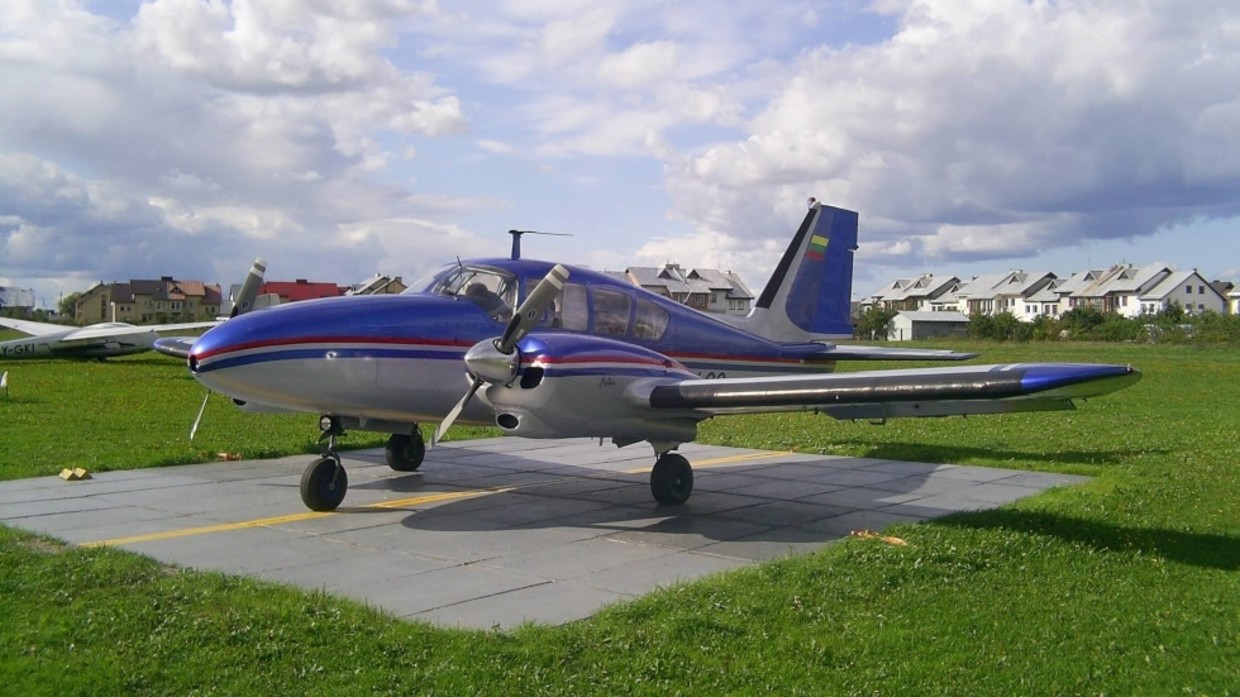
Swedish authorities have launched a major search-and-rescue operation after a private jet crashed into the sea off the coast of Latvia, Swedish and German media report. The jet, which took off from southern Spain on Sunday, reportedly flew over several European nations with no one in the cockpit.

The private jet, identified by the German tabloid Bild as a US-made Cessna aircraft, was heading from the southern Spanish city of Jerez to Cologne, Germany. Media reports say at least six people were on board, including a pilot, a man, a woman and a young girl. Their identities have not been made public so far.

The pilot reported some “air pressure issues” in the cockpit soon after takeoff but the jet continued its flight, Bild claims. Air traffic control officers lost contact with the aircraft at some point as it was over the territory of southern France, and French and Spanish fighter jets were then scrambled to check up on the plane.

Bild reports that the fighter jet pilots who discovered the private aircraft in flight, failed to spot anyone either in the cockpit or the cabin. Yet, they allowed the jet to continue on its course. The aircraft did not land in Cologne and continued its flight northeast.

Another fighter jet was scrambled from a German base in Rostock, according to Bild. Its pilot also failed to establish what was happening on board, although the military aircraft escorted the private jet up to the north-eastern German island of Rugen, the paper added.

Data from the Flightradar24 monitoring website, shows the “ghost flight” as it was already being dubbed by some media, maintained a steady altitude of 11 kilometers and a speed of around 670 kilometers per hour for most of its flight. After it had flown over the southern tip of the Swedish island of Gotland, it started losing both speed and altitude before eventually disappearing from radars over the sea northwest of the Latvian city of Ventspils.

The Swedish Maritime Administration and the nation’s coast guard sent a helicopter and an airplane to the potential crash site. A Stena Line ferry was also diverted to assist in the rescue efforts, the Swedish media reported.

“There is no hope for survivors,” Johan Ahlin, a Maritime and Air Rescue Center official, told the Swedish media, adding that “the crash was only a matter of time.” The Swedish Maritime Administration also said that “small pieces of wreckage and oil slicks” on the water were found at the potential crash site.

The circumstances surrounding the “ghost flight” remain largely a mystery. It is not the first such incident, though. In June, an unidentified aircraft managed to fly over several European nations without approval before its crew vanished without a trace.

In the June case, however, the plane that took off from Lithuania safely landed at an abandoned airfield in Bulgaria. Its crew managed to flee the scene and remain unidentified. Officials in several countries were closely following the flight, with the US, Hungarian, and Romanian air forces sending military jets to escort it at various points. The escorts broke off when it entered Bulgarian airspace, though."

VITAL SPECTRUM RESOURCES: T-Mobile spends $304 million to win over 90% of available 2.5 GHz licenses.

 Intro: The FCC was mandated by the Broadband Data Act of 2020 to create new federal broadband maps. The new maps will inform how much funding each state gets from the $42.45 billion Broadband, Equity, Access and Deployment (BEAD) program. . . the chairwoman seemed to acknowledge tension about the mapping process and outcome but reiterated that the result will be an improvement on existing data.

"Looking ahead, there's one more important thing to note about the new maps. When the first draft is released, it will provide a far more accurate picture of broadband availability in the United States than our old maps ever did..."

Related posts:


✓ 


www.lightreading.com

First FCC broadband map to come in November, says Rosenworcel | Light Reading

News Analysis Nicole Ferraro, Editor, Light Reading 9/2/2022
4 minutes

Following 18 months of work and a data collection process that has had its share of critics, the Federal Communications Commission (FCC) confirmed today that its first data collection window for the broadband serviceable location fabric has closed. The agency also said it is targeting November 2022 for a public release of a first draft of the new map.

✓ "For the first time ever, we have collected extensive location-by-location data on precisely where broadband services are available, and now we are ready to get to work and start developing new and improved broadband maps," wrote Chairwoman Jessica Rosenworcel in a note on Friday afternoon.

✓ In addition to announcing the planned time frame for the release, Rosenworcel also said a challenge process would open up on September 12 for state and local governments and broadband providers to submit bulk challenges to the initial fabric data.

 ✓✓  a public notice, the FCC set some parameters for that process, writing: "We remind governments, service providers, and other entities and organizations planning to submit challenges that the Fabric is intended to identify BSLs as defined by the Commission, which will not necessarily include all structures at a particular location or parcel." The FCC will host a webinar on September 7, at 2 p.m. ET, "to assist state, local, and Tribal governments, service providers, and other entities who intend to submit bulk challenges, or proposed corrections, to the location data in the Fabric," it said.

The FCC was mandated by the Broadband Data Act of 2020 to create new federal broadband maps. The new maps will inform how much funding each state gets from the $42.45 billion Broadband, Equity, Access and Deployment (BEAD) program. (Source: B Christopher/Alamy Stock Photo)

The FCC was mandated by the Broadband Data Act of 2020 to create new federal broadband maps. The new maps will inform how much funding each state gets from the $42.45 billion Broadband, Equity, Access and Deployment (BEAD) program.
(Source: B Christopher/Alamy Stock Photo)

The general public will have a chance to weigh in on the maps too. "Once the maps are released, we will open a process for the public and other stakeholders to make challenges directly through the map interface," said Rosenworcel.

A second draft of the map is expected to be released in December, according to the FCC's public notice.

In Rosenworcel's note, entitled "Another Step Toward Better Broadband Maps," the chairwoman seemed to acknowledge tension about the mapping process and outcome but reiterated that the result will be an improvement on existing data.

"Looking ahead, there's one more important thing to note about the new maps. When the first draft is released, it will provide a far more accurate picture of broadband availability in the United States than our old maps ever did. That's worth celebrating. But our work will in no way be done. That's because these maps are iterative. They are designed to [be] updated, refined, and improved over time," wrote Rosenworcel.

"All of this will require persistent effort—from the agency, providers, and other stakeholders. The Commission is committed to doing this hard work and keeping the public informed of our efforts every step of the way," she said.

Related posts:

Nicole Ferraro, editor, Light Reading, and host of "​​The Divide" podcast.


✓ Report from ArsTechnica

Policy / Civilization & Discontents


T-Mobile spends $304 million to win over 90% of available 2.5 GHz licenses.

The FCC is in the process of updating its current broadband maps with more detailed and precise information on the availability of fixed and mobile

"T-Mobile won the lion's share of spectrum licenses in the latest Federal Communications Commission auction, helping it fill rural network gaps that evoked comparisons to Swiss cheese. T-Mobile's winning bids totaled $304.3 million, letting it obtain 7,156 licenses out of 7,872 that were sold, the FCC announced yesterday.

T-Mobile's licenses are spread across 2,724 counties (out of 3,143 total in the US). The second-highest bidder in dollar terms was PTI Pacifica, which spent $17.7 million on nine licenses in five counties. "With most of the available spectrum in the 2.5 GHz band located in rural areas, this auction provides vital spectrum resources to support wireless services in rural communities," the FCC said.

The auction provided up to three blocks of spectrum, totaling 117.5MHz in each county. In terms of the number of licenses won, the second-place finisher was the North American Catholic Educational Programming Fund. Its winning bids totaled $7.8 million and cover 107 licenses in 84 counties.

There were 63 winning bidders overall, and the auction raised $427.8 million. Small entities and rural service providers were given discounts on the license costs. The 2.5 GHz spectrum was originally set aside for educational institutions but has been repurposed for commercial service.

T-Mobile network already big on 2.5 GHz

Mid-band spectrum such as 2.5 GHz has been good for boosting capacity and speeds over relatively large areas. While low-band spectrum is best at covering long distances and penetrating obstacles, there's more spectrum available in the middle and upper bands. At the highest extreme, millimeter-wave spectrum provides the fastest speeds but has the smallest coverage areas.

T-Mobile already makes heavy use of 2.5 GHz spectrum in its 5G network. AT&T and Verizon use mid-band spectrum in the 3.7 GHz to 3.98 GHz range, which they've deployed more slowly than planned because airlines haven't yet retrofitted or replaced all of the older airplane altimeters that can't filter out transmissions from outside their allotted frequencies.

The new 2.5 GHz licenses are "flexible‐use geographic overlay licenses," which means there are restrictions on use to protect carriers already operating in the spectrum. "With overlay licenses, licensees obtain the rights to geographic area licenses 'overlaid' on top of the existing incumbent licenses. As with an ordinary flexible-use license, the overlay licensee may operate anywhere within its geographic area, subject to protecting the licensed areas of incumbent licensees," the FCC explains.

But that won't present a problem for T-Mobile. As FierceWireless wrote in March after the FCC set the auction rules, the auction is "for 'white spaces' of the 2.5 GHz band where no one owns the spectrum. T-Mobile is particularly interested in Auction 108 because it already owns or leases much of the 2.5 GHz spectrum across the United States, and it wants to fill in the gaps in its coverage."

T-Mobile to fix “Swiss cheese” network problem

2.5 GHz licenses were first distributed to educational institutions in the 1980s in "35-mile-radius circles" that "left oddly shaped white spaces where no one owns the spectrum," FierceWireless explained. T-Mobile already had leases with schools around the country to use the licenses.

"T-Mobile is likely to be the major winner, as the auction will allow the company to fix the 'Swiss cheese' problem its 2.5 GHz network grid is known to suffer from," New Street Research policy analyst Blair Levin wrote at the time.

Before the auction, AT&T and Verizon requested more information on the lease agreements to help them decide whether to bid. The FCC denied the request, saying that "adoption of proponents' expanded disclosure requirement is beyond the bounds of the existing spectrum leasing rules and the Commission's prior determinations supporting those disclosure requirements."

AT&T didn't buy any licenses in the auction. Verizon, listed under its "Cellco Partnership" name in the auction results, won 12 licenses in nine counties for $1.5 million.

Jon Brodkin / Jon is Ars Technica's senior IT reporter, covering the FCC and broadband, telecommunications, tech policy, and more.

✓ 


Sunday, September 04, 2022

Al Arabiya English: Zelenskyy says Ukraine takes three settlements in south, east

He did not say precisely where the territories were and provided no timeline except to say that he had received “good reports” at a meeting on Sunday from his military commanders and head of intelligence.

US President Joe Biden will request $11.7bn in emergency funding from Congress to provide lethal aid and budget support to Ukraine, the White House has said.


english.alarabiya.net
Zelenskyy says Ukraine takes three settlements in south, east
Al Arabiya English
2 - 3 minutes

President Volodymyr Zelenskyy on Sunday marked progress in a counter-offensive Ukraine that began last week, thanking his forces for taking two settlements in the south, a third in the east, as well as additional territory in the east of the country .

In his nightly video address, Zelenskyy thanked his forces for liberating a settlement in the eastern Donetsk region, the taking of “certain heights” also in an eastern area in the Lysychansk-Siversk direction and for liberating two southern settlements.


For the latest headlines, follow our Google News channel online or via the app.

Kyrylo Tymoshenko, deputy head of the president's office, earlier on Sunday posted an image of soldiers raising the Ukrainian flag over a village he labeled as being in the southern area that is the main focus of the counter-offensive.

“Vysokopillya. Kherson region. Ukraine. Today,” Tymoshenko wrote in a Facebook post over a photo of three soldiers on rooftops, one of them fixing a Ukrainian flag to a post.

Located just north of the Crimean peninsula, which Moscow invaded and annexed in February and March 2014, the Kherson region was seized by Russian forces early in the current conflict.

Lysychansk was claimed by pro-Russian separatists in the Luhansk region in early July as part of a battle over the coalmining Donbas area in eastern Ukraine, which also includes Siversk.

Read more:

US warship trains in Baltic Sea amid regional tension

IAEA says Ukraine nuclear plant cut from main power line

Erdogan tells Putin Turkey can mediate in standoff over Zaporizhzhia nuclear plant


www.rt.com

White House asks for more money for Ukraine

3 minutes

The Biden administration says it needs another $11.7 billion to keep helping Kiev


The White House asked Congress on Friday to approve another $11.7 billion in military aid for Ukraine amid its conflict with Russia.

The sum was included in an emergency funding request for $47.1 billion, which the Biden administration said was also required for its response to Covid-19 and monkeypox, as well as disaster relief efforts.

The $11.7 billion package includes $4.5 billion for military equipment and the replenishment of Pentagon stockpiles, $2.7 billion on defense and intelligence aid for Ukraine, and $4.5 billion on budgetary support for the government in Kiev.


“We have rallied the world to support the people of Ukraine to defend their democracy and we simply cannot allow that support to Ukraine to run dry,”
White House Office of Management and Budget Director Shalanda Young wrote in a blog post.

The administration also requested $2 billion to alleviate the negative effects of the conflict in Ukraine, as well as Western sanctions imposed on Russia affecting energy supplies in the US.

The US has been the main backer of Kiev in its conflict with Moscow, providing the Ukrainian forces with billions of dollars in military and financial aid, as well as intelligence data. Washington’s deliveries to the Zelensky government have included such sophisticated hardware as HIMARS multiple rocket launchers, M777 howitzers, and combat drones.


Congress approved a $40 billion military and humanitarian support package for Ukraine in May. According to Young, around three-quarters of the aid that lawmakers provided to Kiev has already been disbursed or committed. “As we said at the time, those resources were intended to last through September,” she explained.


Russia has repeatedly criticized the deliveries of weapons to Kiev from Washington and its allies, saying they won’t change the outcome of the conflict, but will prolong the fighting and increase the risk of a direct confrontation between Moscow and NATO.

Washington’s “ever more obvious and deeper involvement in Ukraine in terms of countering our military operation, in fact, puts… the US on the verge of turning into a party to the conflict,” Russian Deputy Foreign Minister Sergey Ryabkov warned last month.

Zelensky Calls for a European Army as He Slams EU Leaders’ Response

      Jan 23, 2026 During the EU Summit yesterday, the EU leaders ...