
|
|||||
|
|
|
|||||
|
.jpg)
Board Charged with Securing Long-Term Water Supplies
PHOENIX — Governor Doug Ducey today announced four appointments to a new board charged with overseeing a bold plan to secure Arizona’s water future.
The Water Infrastructure Finance Authority board was established this year with Governor Ducey’s signing of monumental water legislation, which took effect September 24.
“We passed the most significant water legislation in 40 years this year in partnership with our legislative leaders,” said Governor Ducey. “Now, with the right team, we’re positioned with $1.4 billion to secure our state’s water future for the next 100 years. The board members of the Water Infrastructure Finance Authority will be important stewards of our water resources, pursuing innovative augmentation and conservation projects. I’m confident that with fresh ideas and diverse backgrounds, representing every corner of our state, we will ensure Arizona remains a land of opportunity for families and businesses. Our appointees have the right skills and experience to position our state for future success.”
✓ The nine-member board, appointed jointly by the Arizona Legislature and Governor Ducey, is responsible for providing loans and grants to water providers and entities for the purposes of importing water into Arizona, conservation, efficiency and reuses, and new technologies.
✓ Through the funds, WIFA will have the ability to acquire, store and sell new imported water as well as engage in private-public partnerships.
.png)
✓ The President of the Arizona Senate and the Senate Minority Leader previously announced their respective appointees. Each had one selection. The Speaker of the House and House Minority Leader will make their appointments next, pursuant to the law passed this year.
✓ The governor has one remaining available appointment. The statewide, at-large position will be selected from a list of nominees from the House Speaker and Senate President.
Water security has been a top priority for Governor Ducey. In 2019, he signed the Drought Contingency Plan – a historic plan between Arizona and six other western states to manage and conserve more water from the Colorado River. Most recently, the governor visited Israel – thee world’s leader on water technology – to learn more about innovative solutions like desalination. The governor’s May trip was followed by House Speaker Rusty Bowers in August.
The Governor appointed the following individuals to serve on the Water Infrastructure Finance Authority board:
David Beckham from Maricopa County has an extensive background in developing, acquiring and operating real estate projects and operating businesses. David’s expertise includes working with governmental agencies and creating unique financial transactions with some of the largest institutions in the U.S. He has been involved in various capacities related to Arizona water issues for many years. David is a principal in Beckham Gumbin Ventures, a real estate investment firm established in 2011.
Buchanan Davis from Pinal County has an expansive policy background in water issues, agriculture, environment and other natural resources. Buchanan previously served as Senior Director for Municipal County Strategic Initiatives at the University of Arizona, providing strategic direction for University engagement with Arizona communities and stakeholders. He also has experience in the public sector, working for U.S. Senator Jeff Flake and most recently, as Natural Resources policy advisor to Governor Ducey.
Jonathan Lines from Yuma County has deep knowledge of water policy in rural counties. He currently serves on the Yuma County Board of Supervisors, the Arizona-Mexico Commission and is the Chairman of the Arizona State Fair and Expositions. Jonathan has also served as the Chairman of the Arizona Republican Party and the Arizona Republican Party Treasurer. Jonathan’s family has been involved in water policy for generations, originally settling in Arizona in the late 1880s.
Andy Tobin from Yavapai Countyhas 15 years of public service. Andy has served as the Director of the Arizona Department of Administration since 2019. Prior to his appointment, he served as a Commissioner on the Arizona Corporation Commission, was a long-time member of the Arizona House of Representatives and served as Speaker of the House. Before joining the Arizona Legislature, Director Tobin served as Director of the Arizona Department of Insurance and the Arizona Department of Financial Institutions.
###
.jpg)
RELATED CONTENT
✓
September 18, 2022

Arizona is at a crossroads. Nearly 40% of Arizona’s annual water uses are supplied by the Colorado River. However, the outlook for Colorado River water availability – and Arizona’s junior allocation, in particular – is deeply concerning.
The Arizona Department of Water Resources (ADWR) has determined that there is insufficient water to support various projects in Central Arizona where development would otherwise naturally occur over the next several years (west Maricopa County and Pinal County). Additional water supplies will be needed to support the growth and economic prosperity we all want for our children and our grandchildren. Arizona must start today.

Sean Hood
The present water crunch occurs alongside a historic budget surplus that allowed Arizona to make a substantial investment in water augmentation. In July, Governor Doug Ducey signed a bill directing $1 billion to a water augmentation fund over the next three years. The fund will be administered by the Water Infrastructure Finance Authority of Arizona (WIFA). A minimum of 75% of these dollars must be devoted to projects that import water from outside of Arizona.
The new law does not direct WIFA to implement any particular projects. Instead, WIFA is authorized to select importation projects based on a variety of considerations. WIFA has been vested with significant discretion, and it is critical that WIFA make wise investment decisions.
We must hope that WIFA will resist pressures to invest in stop-gap measures. WIFA should focus on projects to provide direct delivery of desalinated ocean water, likely in partnership with Mexico. The technology is proven. More than 15,000 desalination plants operate today in hundreds of countries, and Israel is on the verge of satisfying approximately 90% of its municipal and industrial water demand through desalination.
The previous desalination concept involved a water exchange with Mexico. Arizona would have helped fund treatment plants to provide desalinated water to users in Mexico. In exchange, Arizona would have received a portion of Mexico’s supply of Colorado River water. Investing billions of dollars in an increased Colorado River allocation is now a questionable strategy. Would that water be physically available on a reliable basis?
Arizona should think bigger. The Gulf of California is Arizona’s closest ocean water source, and Arizona’s partnership with Mexico should include a water pipeline to provide direct delivery of desalinated ocean water to Arizona. This would involve more legal issues and land use complications, and it would be significantly more expensive. However, this solution would provide a significant, long-term infusion of additional water to Arizona. It would be drought-proof, and therefore far more reliable than a Colorado River exchange because the source would be ocean water. An international water pipeline would be a large project, but that’s what’s required to adequately address Arizona’s water shortage.
Sean Hood is a litigator and water lawyer at Fennemore. He chairs Fennemore’s largest practice group, business litigation, and has nearly 20 years of experience advising and litigating on a broad range of water rights issues and business disputes.
Issue: California Colorado River Department of Water Resources desalination doug ducey Maricopa County Mexico Pima County Water Infrastructure Finance Authority
One of the most recent publications ". . .For Russia, it has long been Grand Prince Vladimir, who had 800 concubines and wives before choosing Christ over Muhammad at the end of the first millennium for the very Russian reason that Islam did not permit alcohol. In truth, Vladimir (or Volodymyr to the Ukrainians) is a classic founding figure, now a saint, about whom almost nothing is known.
.jpg)
Yet according to President Putin, unveiling a monstrous statue to him in 2016, he “gathered and defended Russia’s lands… by founding a strong, united and centralised state”.
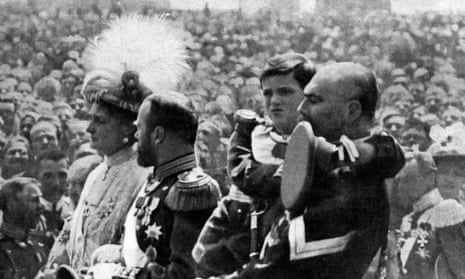
"The historian’s latest work on Russia is a lucid chronological journey that ably illustrates how narratives from the nation’s past have been used to shape its autocratic present '...
✓✓ In July 2021, Vladimir Putin published his own story of Russia, a 5,000-word essay On the Historical Unity of Russians and Ukrainians, which can now be read as his justification for the invasion he launched seven months later to bring his brother “little Russians” back into the arms of big brother Rus. Reaching back into the mists of myth, he sees the idea of Ukraine as a Trojan horse, an “anti-Russian project” since the 17th century and that the present state is on “historically Russian lands”. As Figes makes clear, anyone with the most elementary grasp of the shape of Europe, from Berlin to the Urals, would know that borders are determined by raw power, not some mystical racial bond. Flip through any historical atlas of the past 1,000 years and states appear, disappear and move around with astonishing but telling regularity. Empress Catherine, a German, may have founded Odessa (Figes interestingly uses Russian spellings for Ukrainian cities) to capture the world’s grain trade in 1794. But just years before that, the Black Sea coast had been part of the Polish Lithuanian commonwealth.
✓

by Orlando Figes ‧ RELEASE DATE: Sept. 20, 2022
An expert on Russia delivers a crucially relevant study of a country that has been continuously “subjected to the vicissitudes of ruling ideologies.”
Wolfson History Prize winner Figes, one of the world’s leading authorities on Russian history and culture, shows how, over centuries, Russian autocrats have manipulated intertwined layers of mythology and history to suit their political and imperial purposes. Regarding current affairs, the author argues convincingly that to understand Putin’s aggressive behavior toward Ukraine and other neighboring nations, it is essential to grasp how Russia has come to see itself within the global order, especially in Asia and Europe. Figes emphasizes the intensive push and pull between concepts of East and West since the dubious founding of Kievan Rus, “the first Russian state,” circa 980. Russia’s geography meant it had few natural boundaries and was vulnerable to invasion—e.g., by the Mongols—and its mere size often required strong, central military control. It was in Moscow’s interests to increase its territorial boundaries and keep its neighbors weak, a strategy still seen today. Figes explores the growth of the “patrimonial autocracy” and examines how much of the mechanics of the country’s autocracy, bureaucracy, military structure, oligarchy, and corruption were inherited from three centuries of Mongol rule. From Peter the Great to Catherine the Great to Alexander II (the reformer who freed the serfs) and through the Bolsheviks to Stalin: In most cases, everything belonged to the state, and there were few societal institutions to check that power. “This imbalance—between a dominating state and a weak society—has shaped the course of Russian history,” writes the author in a meaningful, definitive statement. Today, Putin repudiates any hint of Westernizing influences (Peter the Great) while elevating the Eastern (Kievan Rus, the Orthodox Church). In that, he is reminiscent of Stalin, who recognized the need for patriotic fervor and national myths and symbols to unite and ensure the oppression of the masses.
A lucid, astute text that unpacks the myths of Russian history to help explain present-day motivations and actions.
Pub Date: Sept. 20, 2022
ISBN: 978-1-2507-9689-9
Page Count: 352
Publisher: Metropolitan/Henry Holt
Review Posted Online: June 8, 2022
Kirkus Reviews Issue: July 1, 2022
✓
“Most people don’t enter Paris by car for pleasure,” adds Zembri. “These people are delivery drivers, shopkeepers, artisans. [By cracking down on cars] traffic won’t just evaporate. It will push the problems to the suburbs, where they don’t have a choice but to take the car because of the more limited transport options.”
Under Mayor Hidalgo, Paris has done as much as any city in the world to wage a war on cars amid a growing awareness of the damaging impact they have on cities.
Passenger cars emit huge amounts of pollution and are an inefficient use of finite public space. They are Europe’s second-largest source of greenhouse gas emissions and the leading killer of children. Copenhagen has calculated that for each kilometer cycled by a resident, society reaps a benefit of €0.64 ($0.64), whereas each kilometer driven costs us €0.71 in impacts on health, safety and the environment.
But over recent years, Paris has implemented an array of measures to prioritize pedestrians, cyclists and transit while bringing car use screeching to a halt.
✓

Peter Yeung is a Contributing Editor at Reasons to be Cheerful. A Paris-based journalist, he also writes for publications including the Guardian, the LA Times and the BBC. He’s filed stories from across Europe, Asia, Africa and the Americas.
The share of journeys made by car in the city has fallen by nearly half, and the trend is only accelerating.
September 23, 2022 6 min read
The share of journeys made by car in the city has fallen by nearly half, and the trend is only accelerating.
September 23, 2022 6 min read
READ MORE ^
.png)

As always, if you find value in this work I do, please consider helping me keep it sustainable by joining my weekly newsletter, Sparky’s List! You can get it in your inbox or read it on Patreon, the content is the same
Very clear: "“I say explicitly that these riots and insecurities were a design by the US and the occupying and fake Zionist regime [Israel], and those who are paid by them, and some traitorous Iranians abroad helped them,” Khamenei told graduating cadets at a ceremony held at a police university in Tehran, surrounded by the chiefs of the police, army and the Islamic Revolutionary Guard Corps (IRGC). . .Khamenei sought to further cast the unrest as part of a foreign effort to destablise Iran, . ."
Khamenei is the longest serving head of state in the Middle East,

✓ SOCIAL MEDIA Twitter
✓
✓
✓ News
Iran’s Khamenei blames Israel, US in first comments on protests
Supreme leader calls the anti-government protests, which began after the death of Mahsa Amini, ‘riots’.

Khamenei.IR/AFP
"Tehran, Iran – Iran’s supreme leader, Ayatollah Ali Khamenei, has blamed the United States and Israel for protests that have gripped the country for more than two weeks, accusing the countries of attempting to stop Iran’s “progress”.
Khamenei on Monday branded the anti-government protests, some of the biggest the country has seen in years, as “riots”.
KEEP READING
list of 3 items
list 1 of 3
Riot police raid Iran’s Sharif University after student protest
list 2 of 3
Indian jets scrambled after false bomb scare on flight from Iran
list 3 of 3
Iranian American allowed out of Tehran prison for a week
end of list
The 83-year-old leader had remained silent on the protests that erupted after the death of a 22-year-old Iranian Kurdish woman, Mahsa Amini, on September 16 in the custody of Iran’s morality police.
“I say explicitly that these riots and insecurities were a design by the US and the occupying and fake Zionist regime [Israel], and those who are paid by them, and some traitorous Iranians abroad helped them,” Khamenei told graduating cadets at a ceremony held at a police university in Tehran, surrounded by the chiefs of the police, army and the Islamic Revolutionary Guard Corps (IRGC).
“In the accident that happened, a young woman passed away, which also pained us, but reactions to it without investigations [taking place]… where some come to make the streets insecure, burn Qurans, take hijabs off hijabed women and burn mosques and people’s cars was not a normal and natural reaction.”
Khamenei sought to further cast the unrest as part of a foreign effort to destablise Iran, and said that another “excuse” would have been found to destabilise the country if it were not for Amini’s death.
Iran’s Supreme Leader argued that the unrest was an attempt to stop the country from the advances he claimed it had made despite harsh US sanctions imposed since 2018, when Washington unilaterally abandoned Iran’s 2015 nuclear deal with world powers. “They feel that the country is progressing toward full-scale power and they can’t tolerate this.”
The US is said to be considering further sanctions on Iran in light of the ongoing protests, which have led to the deaths of dozens of people, and has eased some internet sanctions on Iran in an attempt to help Iranians circumvent government restrictions on the internet imposed since the protests began."



.jpg)
.jpg)


