Friday, January 06, 2023

EPA proposes moderate improvements for public health; must do more

EPA will take public comments for 60 days. The comment period will begin when the proposal is published in the Federal Register. The agency is also planning a virtual public hearing.

Under the Clean Air Act, NAAQS set a baseline standard for air quality across the United States for particulate matter, and ground level ozone, also known as smog.

The NAAQS rule on particulate matter comes nearly two years after Trump’s EPA kept outdated 2012 standards in place, despite robust evidence that they were too lax to protect the country’s lungs from harmful levels of deadly soot


Particulate matter in general is among a half-dozen pollutants subject to the National Ambient Air Quality Standards that EPA must periodically revisit to assure that they continue to protect public health and the environment based on the latest research. Fine particulate matter is technically known as PM2.5 because the microscopic specks and droplets are no bigger than 2.5 microns in diameter, or one-thirtieth the width of a human hair.


Inhalation is tied to heart attacks, breathing problems and other respiratory and cardiovascular health harms, including heightened vulnerability to the Covid-19 virus. Because soot is directly and indirectly spawned by a long list of sources, any attempt to strengthen exposure limits is also closely watched by business groups.


On the line are exposure limits for a pollutant tied to tens of thousands of deaths each year, with a outsize share of that toll falling on people of color and low-income communities. If there’s little doubt that EPA will seek to toughen the rules for what is formally known as fine particulate matter, it’s unclear how far regulators will go — or whether they at this point will propose anything more than a range of options for public feedback (E&E News PM, Dec. 12, 2022)...


The potential consequences embedded in those options are far-reaching. The current annual soot exposure standard, for example, is 12 micrograms per cubic meter of air; both EPA experts and most members of an agency advisory panel agree that the evidence warrants a cut to somewhere between 10 and 8 micrograms.

But a reduction to 8 micrograms would save approximately four times as many lives as a cut to 10 micrograms, according to a report released last spring by the Environmental Defense Fund (Greenwire, June 6, 2022). The more aggressive cut could also ramp up pressure on regulators to find new ways to cut soot-forming emissions from diesel-fueled trucks, refineries and other sources.

✓ Out of 518 soot monitors scattered around the country, only 18 had long-term readings that exceeded the current annual standard, Chris Ward, technical manager for consulting firm All4 LLC, said on a webinar last month. With a limit of 8 micrograms, however, the number of monitors registering exceedances jumps to 229, Ward said.

Suggested Articles
5 hours ago · A proposal released Friday by the Environmental Protection Agency would set maximum levels of 9 to 10 micrograms of fine particle pollution per ...
10 hours ago · EPA Proposes to Strengthen Air Quality Standards to Protect the Public from Harmful Effects of Soot · up to 4,200 premature deaths per year; ...
7 hours ago · EPA officials said the proposed soot limits would prevent up to 4,200 premature deaths and 270,000 lost workdays by 2032. The public health ... 


Top stories

RELATED CONTENT & RESOURCES 


Sep 6, 2022 · Monitors for all criteria pollutants (CO, Pb, NO2, Ozone, PM10, PM2.5, and SO2); PM2.5 Chemical Speciation Network monitors 

EPA has set standards for smog, soot and other air pollutants, as well as created programs that lead to investments in clean vehicle and engine technology.
Dec 13, 2022 · Pollution prevention (P2) is any practice that reduces, eliminates, or prevents pollution at its source. The P2 website provides information ...


People also search for
6 criteria air pollutants

Time for TechDirt Today

Only two selected to get you started

Government Continues To Rely On Private Contractors To Bypass Privacy Protections

from the ongoing-inconvenience-of-guaranteed-rights dept

There’s only so much domestic surveillance the government can engage in before it starts running into problems. The Supreme Court’s Carpenter decision strongly suggested gathering data in bulk to track people might run afoul of the Fourth Amendment. Lower courts have delivered a variety of opinions on the subject. Meanwhile, a few privacy-oriented legislators are trying to codify privacy protections that would limit the government’s ability to abuse the Third Party Doctrine to obtain massive amounts of data.

Location data was directly implicated in the Carpenter decision. Since then, federal agencies have decided to bypass warrant requirements by purchasing location data directly from data brokers, rather than engage with the constitutional parameters established by the Supreme Court. Everyone has a hunger for data. And plenty of companies are willing to sell whatever they can acquire to agencies like ICE, CBP, FBI, DEA, Secret Service, and the Defense Department.

And that’s only the tip of the iceberg. These same brokers sell data to local law enforcement agencies and state prisons. They also sell to a bunch of other private companies, allowing this data to be abused by debt collectors, stalkers, and people pretending to be cops. They’re also allowing law enforcement in states that have outlawed abortion to track people seeking these newly banned services.

Selling other people’s data is big business. . ." READ MORE


Congressional Leaders Want To Know Why The DEA Is Deploying Controversial Phone Hacking Tools

from the literally-under-our-inattentive-noses,-says-Congress dept

For years, governments around the world have deployed powerful malware to hack the phones of their targets. Most of these deployments went unnoticed, as many governments were less interested in performing oversight than pursuing ends (read: wars on terror, drugs) they felt justified the means.

But as people began coming forward with evidence of suspected government-based hacking attempts, the narrative began to shift. While some governments targeted terrorists and drug lords, other governments preferred to target journalists, activists, and opposition leaders. Reports of government abuse went from “occasional” to “zeitgeist,” ushered into effect by a leak of data allegedly containing targets of Israeli-based NSO Group’s customers. According to this list, government purchasers of NSO’s zero-click Pegasus product were routinely targeting people these governments and rulers didn’t like, rather than criminals and terrorists.

The exposure of NSO Group’s willingness to sell to autocrats and human rights abusers turned the international tide. Its host country — which helped NSO broker sales contracts with abusive governments — opened an investigation into NSO and took a bunch of longtime customers off its approved sales list. The US Commerce Department made its own move, issuing sanctions against NSO and its Israeli-based competitor, Candiru.

But it’s not just NSO and Candiru doing the international dirty by selling powerful spyware to abusive governments. Yet another Israel-based exploit purveyor is being targeted, albeit somewhat indirectly, by the US federal government. Congressional oversight wants to know what the DEA is doing with the powerful malware it has purchased from another NSO Group competitor.

. . .READ MORE  


Space News


spacenews.com

General Atomics selected to build satellite for AFRL cislunar mission - SpaceNews

Sandra Erwin
2 - 3 minutes

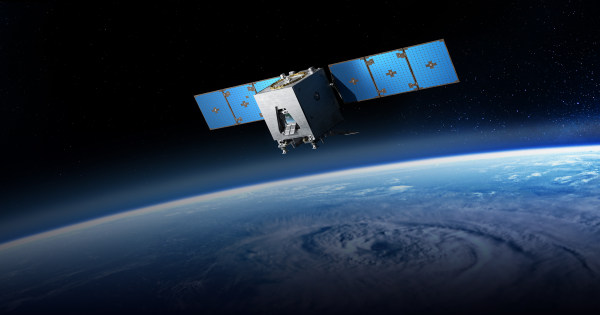
Rendering of a General Atomics Electromagnetic Systems’ satellite based on an ESPA-class bus. Credit: GA-EMS

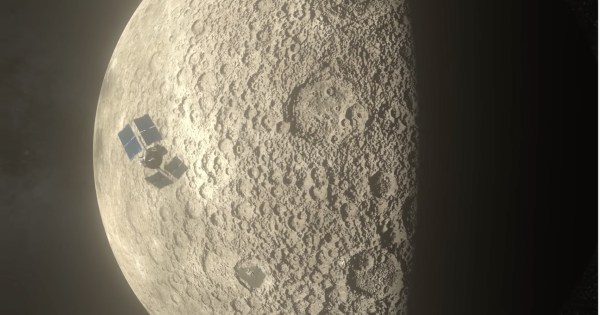
The Oracle spacecraft will carry an optical payload made by Leidos and AFRL’s green propellant experiment for a two-year demonstration

WASHINGTON — General Atomics Electromagnetic Systems won a contract from Advanced Space to build a satellite that the Air Force Research Laboratory plans to launch to deep space in 2025.

General Atomics, based in San Diego, California, announced Jan. 5 it will produce an ESPA-class satellite bus, integrate and test payloads for Advanced Space, the prime contractor for AFRL’s Oracle experiment. 

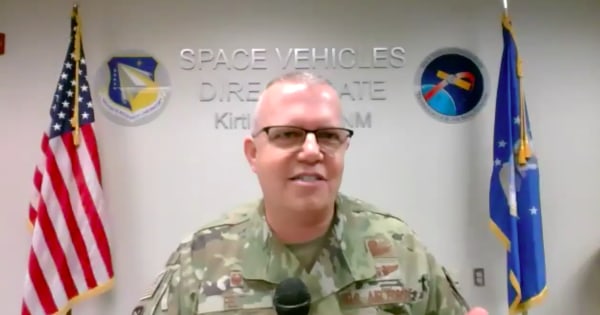
AFRL’s Space Vehicles Directorate in November awarded Advanced Space a $72 million contract to develop a spacecraft for the Oracle mission, intended to monitor deep space, far beyond Earth’s orbit.


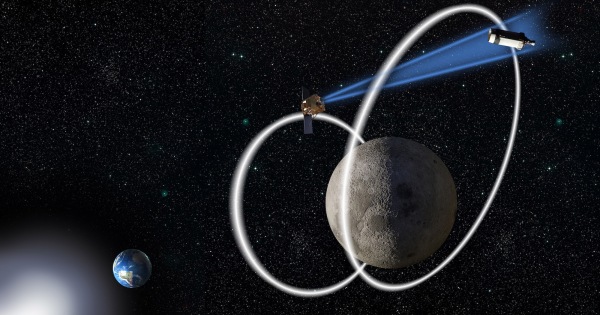
Oracle will seek to detect objects and demonstrate spacecraft positioning and navigation techniques far beyond geosynchronous Earth orbit, in the vicinity of Earth-moon Lagrange Point 1, about 200,000 miles from Earth. The GEO belt is about 22,000 miles above Earth.

Scott Forney, president of GA-EMS, said the platform selected for Oracle, the ESPA Grande, is a modular ring shaped bus that the company also is using to build a weather imaging satellite for the U.S. Space Force.

“The AFRL Oracle spacecraft program is intended to demonstrate advanced techniques to detect and track objects in the region near the Moon that cannot be viewed optically from the Earth or from satellites in traditional orbits,” he said in a statement.

Gregg Burgess, vice president of GA-EMS space systems, said the cislunar region “continues to be a strategic area of focus for us.” The company in 2021 won a $22 million contract from the Defense Advanced Research Projects Agency to design a small nuclear reactor for a demonstration of nuclear thermal propulsion in cislunar space.

  • NASA faces budget crunch for extended Earth science missions
    Civil

    NASA faces budget crunch for extended Earth science missions

    NASA will allow three aging Earth science missions to participate in an upcoming senior review of extended missions even as the agency warns of budget pressures on its overall portfolio of missions 

  •      NASA faces budget crunch for extended Earth science missions   
        Civil
       

        NASA will allow three aging Earth science missions to participate in an upcoming senior review of extended missions even as the agency warns of budget pressures on its overall portfolio of missions.

        Independent review warns of cost growth on key Earth science mission   
        Civil
        Independent review warns of cost growth on key Earth science mission
        General Atomics selected to build satellite for AFRL cislunar mission   
       
        Commercial
        Iridium and Qualcomm to bring satellite connectivity to smartphones this year

        Impulse Space announces first orbital transfer vehicle mission   
        
  • Commercial
        Impulse Space announces first orbital transfer vehicle mission
        Raytheon selects Lockheed Martin bus for U.S. Space Force missile-tracking satellite   
        Military
        Raytheon selects Lockheed Martin bus for U.S. Space Force missile-tracking satellite
        Bootcamp to help space startups clear regulatory hurdles   
        Civil Commercial Military
        Bootcamp to help space startups clear regulatory hurdles
        China is expanding its Wenchang spaceport to host commercial and crewed moon launches   
        Asia
        China is expanding its Wenchang spaceport to host commercial and crewed moon launches
        Space Force launches weather-imaging cubesat for year-long demonstration   
        Commercial Military
        Space Force launches weather-imaging cubesat for year-long demonstration
        Iridium enters service agreement for direct-to-smartphone satellite service   
        Commercial
        Iridium enters service agreement for direct-to-smartphone satellite service
        SpaceX begins 2023 with Transporter-6 launch   
        Commercial Launch
        SpaceX begins 2023 with Transporter-6 launch
        NASA planetary science budget remains under stress   
        Civil
        NASA planetary science budget remains under stress
        Revenue shortfall causes layoffs and delays at Satellogic   
        Commercial
        Revenue shortfall causes layoffs and delays at Satellogic
        China looks to build space partnerships with Gulf nations   
        Asia
        China looks to build space partnerships with Gulf nations 
  • spacenews.com
    China looks to build space partnerships with Gulf nations - SpaceNews 

  • Andrew Jones
    5 - 6 minutes
    An image of the Earth taken in 2018 by Saudi Arabian optical payload on the Longjiang-2 microsatellite in lunar orbit. Credit: Harbin Institute of Technology/KACST

    HELSINKI — China is aiming to grow cooperation with emerging space nations including Saudi Arabia and the United Arab Emirates.

    Space was named as one of a number of priority areas for the next three to five years during the first China-Gulf Cooperation Council (GCC) Summit held in Riyadh earlier this month.

    “China stands ready to work with GCC countries on remote sensing and communications satellite, space utilization, aerospace infrastructure, and the selection and training of astronauts,” according to the text of the keynote speech made by Chinese President Xi Jinping at the summit, Dec. 9.

    The GCC intergovernmental group comprises Saudi Arabia, the United Arab Emirates, Bahrain, Kuwait, Oman and Qatar.

    “China welcomes GCC astronauts to its space station for joint missions and space science experiments with their Chinese colleagues. China welcomes GCC countries’ participation in payloads cooperation in its aerospace missions, and will consider establishing a China-GCC joint center for lunar and deep space exploration,” the text continued.

    While broad in apparent scope and ambition, the words indicate only an initial expression of interest in establishing cooperation in these areas, with no indication of a commitment in terms of funding or practicalities at this point.

    The speech illustrates that China’s Tiangong space station—which became operational this month with its first crew handover—will be used in engaging countries around the world.

    China has spoken frequently of its openness to training astronauts from other countries and sought interest from aboard for international astronauts flying to Tiangong.

    The practical elements of how Chinese international astronaut cooperation, such as any requisite language training, will proceed have not been revealed. China launched its first crewed flight in 2003 and its 10th, the six-month-long Shenzhou-15 mission, launched late November.

    An official with the China Academy of Space Technology (CAST) recently stated that China is considering expanding the three-module Tiangong station. This would provide greater capacity for hosting astronauts. CAST is also developing a new generation crew spacecraft which will be able to carry up to six astronauts to low Earth orbit.

    Lunar exploration is another area in which China is seeking partners, particularly for its vision for an International Lunar Research Station (ILRS). Notably, of the six GCC countries, the UAE, Saudi Arabia and Bahrain are already signatories to the U.S.-led Artemis Accords.

    In a more concrete related development from the summit, Origin Space, a Shenzhen-based space resource utilization firm, announced it will establish a subsidiary, a research and development center and an exhibition center within the China-UAE Industrial Capacity Cooperation Demonstration Zone, a joint project under the Belt and Road Initiative.

    Origin Space has its sights set on asteroid mining and already has other international branches in Luxembourg and Singapore. . .' READ MORE 


  •     SpaceX completes record year with Israeli imaging satellite launch   
        Commercial Launch


Arizona Congressmen Biggs + Gosar...2 Years Ago today they were there

 Here and now they are there again!

www.huffpost.com

2 Years After Jan. 6 Insurrection, New GOP Chaos Roils The U.S. Capitol 


Rep. Paul Gosar, R-Ariz., objects to certifying Arizona's Electoral College votes during a joint session of the House and Senate convenes to count the electoral votes cast in November's election, at the Capitol, Wednesday, Jan 6, 2021. (AP Photo/Andrew Harnik)

Igor Bobic
6 - 7 minutes

WASHINGTON ― As the chaos unfolded on the floor of the House of Representatives this week and Republicans struggled to elect a speaker, some lawmakers couldn’t help but see links to the violent Jan. 6, 2021, insurrection that took place here two years prior.

Many of the same far-right Republicans who supported or played key roles in the effort to overturn the 2020 presidential election based on false claims of fraud are now engaged in a historic speaker blockade that has delayed the formation of the House and ground all legislative business to a halt. President Joe Biden has called the episode “embarrassing” and warned it would erode America’s image around the world.

On Friday, the second anniversary of the attack on the U.S. Capitol, the House will try for the 11th time to elect a speaker. House Minority Leader Kevin McCarthy (R-Calif.), who also voted to overturn the 2020 presidential election, has failed to win a majority 10 times ― more than any speaker elections since the Civil War... 

RELATED CONTENT

theintercept.com

Freedom Caucus Chair Andy Biggs Helped Plan January 6 Event, Lead Organizer Says 


Ryan Grim, Aída Chávez
10 - 12 minutes

The head of the House Freedom Caucus, Republican Rep. Andy Biggs of Arizona, helped plan the January 6 event that culminated in a storming of the Capitol, according to Ali Alexander, a lead organizer of the gathering. Alexander, a pro-Trump personality, was an early founder of the “Stop the Steal” movement and helped bring together various right-wing factions around a mass event on January 6, aimed to coincide with objections to the counting of Electoral College votes.

Alexander made his claim in three separate livestreams in late December, adding that Reps. Paul Gosar of Arizona and Mo Brooks of Alabama were also involved. “We’re the four guys who came up with a January 6 event,” Alexander said. On December 8, the Arizona Republican Party boosted Alexander, asking supporters if they were willing to give their lives in the fight over the results of the presidential election.

His claim is also buttressed by a fourth video from a December 19 rally at the Arizona State Capitol, at which Alexander played a video that Biggs had supplied. In the video, Biggs mentions Brooks as his ally in the fight. Gosar spoke in person at the event.

Biggs’s connection to Alexander was reported on Sunday by the Arizona Republic, which quoted his spokesperson, Daniel Stefanski, denying any connection to Alexander. “Congressman Biggs is not aware of hearing of or meeting Mr. Alexander at any point — let alone working with him to organize some part of a planned protest,” Stefanski said. “He did not have any contact with protestors or rioters, nor did he ever encourage or foster the rally or protests.”

Gosar did not respond to inquiries from The Intercept.  Alexander did not respond to a text or phone call; his voicemail was full. Alexander, who adopted a new name after pleading guilty to felony property theft in 2007 and felony credit card abuse in 2008, has been suspended from Twitter and other platforms for his role in organizing the January 6 event. As the Daily Beast reported, he has said he has been unfairly blamed for the violence on January 6, and has gone underground.

Brooks, after the event, sought to legitimize political violence in a radio interview.In a statement to The Intercept following publication, Brooks’s office denied the congressman incited violence, writing in part: “Congressman Brooks has no recollection of ever communicating in any way with whoever Ali Alexander is. Congressman Brooks has not in any way, shape or form coordinated with Ali Alexander on the January 6th ‘Save America’ rally. Congressman Brooks spoke at the ‘Save America’ rally at the invitation of the White House (the invitation was extended the day before), not anyone else.”

Alexander’s contemporaneous claims have taken on new relevance as House Speaker Nancy Pelosi has floated the possibility of expelling members of Congress who are found to have been involved in the riot. “Your views on the 25th Amendment, 14th Amendment Section 3 and impeachment are valued as we continue,” she wrote to her colleagues over the weekend.

Section 3 of the 14th Amendment, ratified after the Civil War, reads:

No person shall be a Senator or Representative in Congress, or elector of President and Vice President, or hold any office, civil or military, under the United States, or under any State, who, having previously taken an oath, as a member of Congress, or as an officer of the United States, or as a member of any State legislature, or as an executive or judicial officer of any State, to support the Constitution of the United States, shall have engaged in insurrection or rebellion against the same, or given aid or comfort to the enemies thereof. But Congress may by a vote of two-thirds of each House, remove such disability.

Alexander made his comments in a livestream posted December 28. Jason Paladino, an investigator with the Project on Government Oversight, archived the video from Alexander’s now-suspended account and provided it to The Intercept. “I was the person who came up with the January 6 idea with Congressman Gosar, Congressman Mo Brooks, and then Congressman Andy Biggs. We four schemed up of putting maximum pressure on Congress while they were voting so that who we couldn’t lobby, we could change the hearts and the minds of Republicans who were in that body hearing our loud roar from outside,” Alexander said in the livestream.

Alexander reiterated the claim of collaborating with Biggs, Gosar, and Brooks a second time, using almost identical language in a December 29 livestream similarly provided by Paladino, who has tracked Alexander. “I’m the guy who came up with the idea of January 6 when I was talking with Congressman Gosar, Congressman Andy Biggs, and Congressman Mo Brooks. So we’re the four guys who came up with a January 6 event — #DoNotCertify — and it was to build momentum and pressure, and then on the day change hearts and minds of congresspeoples who weren’t yet decided, or saw everyone outside and said, ‘I can’t be on the other side of that mob,’” Alexander said a week before the event he predicted would bring more than a million people to Washington, D.C.

On December 21, Alexander made the same claim on a livestream. “We’re working closely with Congressman Mo Brooks, we’re working closely with Congressman Andy Biggs, and closely with, obviously, Congressman Paul Gosar, my great friend,” Alexander said. “I believe that the president should do something brave, I think the vice president should do something brave. I believe that that’s how we maintain the White House. … It’s a moral imperative to maintain the White House.”

The Office of Congressional Ethics has seen some of the claims made by Alexander and is looking into the connection between him, Gosar, Brooks, and Biggs, according to two sources familiar with the situation. . . READ MORE

www.washingtonpost.com

Visual timeline: How Jan. 6, 2021 unraveled inside and outside the Capitol

Shelly Tan, Youjin Shin, Danielle Rindler
10 - 13 minutes

Jan. 6, 2021, was always on the country’s radar.

Two runoff elections that would determine control of the Senate still had not been decided as Tuesday became Wednesday. A joint session of Congress convened to certify Joe Biden’s electoral-vote win while thousands gathered on the Mall in support of President Trump, who continued to falsely claim that the election was stolen from him.

[The four-hour insurrection: How a Trump mob halted American democracy]

As the scene in D.C. continued to darken, smaller demonstrations across the nation also flared, forcing officials in several statehouses to evacuate.

This is how the day unfolded.

Trump rallies his supporters as Congress convenes

Crowds began forming early in the morning on the White House Ellipse for Trump’s “Save America” rally. During his speech, Trump reiterated multiple falsehoods, claiming the election was rigged and that Democrats had committed voter fraud. By midday, the Capitol was buzzing as Congress convened in a joint session and pro-Trump protesters began to gather around the building’s perimeter. . ." READ MORE

Wednesday, January 04, 2023

The Most Popular Post on Salon: A gross piece of trivia for a few more centuries.

In the early 21st century, it is common knowledge that humans are created when a sperm fertilizes an egg, but in the 17th century such a concept was difficult to imagine.


www.salon.com

The scientist who discovered sperm was so grossed out he hoped his findings would be repressed

Matthew Rozsa
8 - 10 minutes


"Human civilization had a good understanding of how sex and reproduction worked long before the microscope was invented. But it wasn't until the 17th century that anyone knew what sperm actually were, or were aware of their strange appearance. And when sperm finally were formally discovered, by Antonie Philips van Leeuwenhoek, the father of microbiology, he was so uncomfortable he wished he could unsee what he'd just observed.

When Royal Society Secretary Henry Oldenburg asked Leeuwenhoek to look at semen, the Dutch draper initially did not reply "because he felt it was 'unseemly.'"


Despite living in the Dutch Republic during the 17th century, Leeuwenhoek's story could be mistaken for embodying the American Dream. He was never formally trained as a scientist, but he had a strong work ethic and a powerful mind. Armed with those tools, Leeuwenhoek made discoveries that transformed how human beings view the world. By the end of his life, he was a prosperous pillar of his community and regarded throughout the West as an intellectual giant. He owed all of this to one thing: His cutting edge microscopes and their ability to study "animalcules," as bacteria were then called. His microscopes indisputably proved to humanity that it shared this planet with countless single-celled organisms.


Yet when Leeuwenhoek discovered sperm, he anticipated that the world would be disgusted. . .


While Leeuwenhoek never wrote any books, he detailed his findings in letters published by a scientific journal known as the Philosophical Transactions of the Royal Society. For several years, educated Europeans marveled at the discoveries of a man who used his microscope to analyze bee stingers, human lice, lake microbes and other relatively uncontroversial organisms.

Yet throughout this time, Leeuwenhoek would periodically be urged to examine semen. He was reluctant and stated that this was due to his religious beliefs, but in 1677 he finally relented to the pressure. His reaction can be best understood by what he wrote to the Royal Society about what he saw:

"If your Lordship should consider that these observations may disgust or scandalise the learned, I earnestly beg your Lordship to regard them as private and to publish or destroy them as your Lordship sees fit."

"Without being snotty, Leeuwenhoek (the 'van' is an affectation he adopted later on) was not trained as an experimental thinker," explained Matthew Cobb, a British zoologist and author of the book "Generation: The Seventeeth Century Scientists Who Unraveled the Secrets of Sex, Life and Growth." Cobb recalled by email that when Royal Society Secretary Henry Oldenburg asked Leeuwenhoek to look at semen, the Dutch draper initially did not reply "because he felt it was 'unseemly.'" Even though he eventually overcame his reservations, Leeuwenhoek added so many caveats to his semen research that it is clear he remained somewhat uncomfortable.

 A few months later, he wrote the aforementioned letter saying that he would not at all mind if his discovery was suppressed.

"He reassured the Royal Society that he had not obtained the sample by any 'sinful contrivance' but by 'the excess which Nature provided me in my conjugal relations,'" Cobb explained. "He wrote that a mere 'six heartbeats' after ejaculation, he found 'a vast number of living animalcules." A few months later, he wrote the aforementioned letter saying that he would not at all mind if his discovery was suppressed. After all, in addition to being grossed out, Leeuwenhoek was not under the impression that he had found anything special.

"He was initially not particularly interested in the 'animalcules' as he called them — he assumed they were just another form of life, just like the stuff he saw in water, or from between his teeth," Cobb pointed out. "Then he got interested in some odd fibrous structures that he could see, and considered that they were of some interest."

The "odd fibrous structures" were, of course, the sperm tails. While Leeuwenhoek could never have imagined this at the time, the cells that he had spotted are unlike anything else in the human body. As Syracuse University biologist Scott Pitnick has pointed out, sperm cells are the only human cells designed to perform functions outside of the actual body. They must undergo radical physical changes as they undertake their journey from the testes through the complex female reproductive tract. Even today, scientists "understand almost nothing about sperm function, what sperm do" Pitnick told Smithsonian Magazine.

This context is crucial in understanding why Leeuwenhoek initially assumed sperm were nothing special. . .

For his part, "Leeuwenhoek eventually decided that these animalcules were the sole source of life, with eggs either being non-existent (mammals) or sources of food (birds, frogs, etc.) but he had no proof, and his view was very much a minority one for the next two centuries."

At the same time, Leeuwenhoek mostly continued with his careers as a draper and a world-renowned expert on developing microscopes. Because he did not fully understand what he had seen, the world would view his discovery as little more than a gross piece of trivia for a few more centuries.

"He was not particularly interested in the problem of generation," READ MORE


Zelensky Calls for a European Army as He Slams EU Leaders’ Response

      Jan 23, 2026 During the EU Summit yesterday, the EU leaders ...