Thursday, February 16, 2023

Norwegian Windfall Gas Sales War-Profits 'Donated' to Zelensky's Ukraine

Money - Norway is one of Europe’s largest fossil-fuel exporters, and the conflict in Ukraine has boosted its revenues as European countries previously reliant on Russia seek alternative energy sources. However, Norway has fended off accusations that it’s profiting from the war in Ukraine 

         ^ ^ ^ ^  WINDFALL WAR PROFITS ^ ^ ^ ^

 Insert >(1 day ago)

www.helsinkitimes.fi

US and Norway blew up the Nord Stream Pipelines: Seymour Hersh

13 - 16 minutes

The Nord Stream pipeline explosions released 155,000 tonnes of methane into the atmosphere / LEHTIKUVA

International news

Seymour Hersh, an investigative journalist with a track record of breaking major stories, published a bombshell report on Substack last week that alleges the United States was behind the explosion of the Nord Stream pipelines. According to Hersh, an anonymous source with inside knowledge of the operation has confirmed that the U.S. government was involved in the planning and execution of the sabotage, which took place on September 26, 2022.

”Last June, the Navy divers, operating under the cover of a widely publicised mid-summer NATO exercise known as BALTOPS 22, planted the remotely triggered explosives that, three months later, destroyed three of the four Nord Stream pipelines, according to a source with direct knowledge of the operational planning,” Hersh writes in his article.

According to Hersh’s source, the decision to sabotage the pipeline came directly from US president Joe Biden and was the result of a highly secretive debate that lasted for over nine months within Washington's national security community. Hersh's anonymous source claimed that the issue during the debate was not whether to carry out the mission, but how to achieve the goal without getting caught. The deliberations reportedly involved extensive planning and strategising, indicating the high level of importance placed on the issue within the national security community. 


Hersh reports that, President Joe Biden and his foreign policy team, including National Security Adviser Jake Sullivan, Secretary of State Tony Blinken, and Undersecretary of State for Policy Victoria Nuland, were strongly opposed to the Nord Stream pipelines. 

✓ The two pipelines, which ran parallel to each other for 750 miles under the Baltic Sea, originated from different ports in northeastern Russia near the Estonian border, passed near the Danish island of Bornholm, and terminated in northern Germany. Biden and his team were vocal in their hostility towards the pipelines, which were seen as a means of increasing Russia's influence in Europe. 

✓ READ MORE : "Hersh's report suggests that the plan was downgraded from a covert operation to a highly classified intelligence operation with U.S. military support after President Biden and Undersecretary Victoria Nuland made public comments indicating the administration's willingness to stop the Nord Stream 2 pipeline if Russia invaded Ukraine. At a press briefing that followed the visit of German Chancellor Olaf Scholz to the White House, Biden openly said, “If Russia invades . . . there will be no longer a Nord Stream 2. We will bring an end to it.”

Norway urged to step up Ukraine support after profiting from war

Norwegian campaigners and luminaries say Oslo must do more after earning billions in extra oil and gas revenue
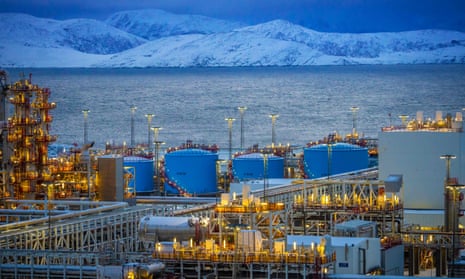
A Norwegian LNG facility near Hammerfest
An LNG facility near Hammerfest. Norway has replaced Russia as Europe’s largest supplier of natural gas since the start of the war in Ukraine. Photograph: Ole Berg-Rusten/NTB/AFP/Getty Images
Europe correspondent
Wed 1 Feb 2023 12.06 ESTLast modified on Wed 1 Feb 2023 12.31 EST

Norwegian academics, rights campaigners, bestselling authors and a former minister have urged Oslo to increase its support for Ukraine, saying the government must do more to help after earning billions in extra oil and gas revenue from Russia’s war.

In a letter published in the VG tabloid, signatories including the former foreign minister Knut Vollebæk, the anthropologist Erika Fatland and Henrik Urdal of the Oslo Peace Research Institute said Norway was “the only country in Europe” to be profiting from the war.

The wealthy Scandinavian country’s oil and gas revenues have soared to record levels over the past 12 months as energy prices tripled after Russia’s invasion of Ukraine and Norway replaced Russia as Europe’s largest supplier of natural gas.
Compared with original estimates, Oslo’s state budget projected an additional €180bn (£160bn) in oil and gas income for 2022 and 2023, the signatories wrote, adding that the government’s public pledges of support for Ukraine over the same period amounted to just €1.27bn.

Norway’s prime minister, Jonas Gahr Støre, has dismissed any suggestion that the country was profiteering from the war. “It’s a notion I flatly refuse”, Støre told AFP on Tuesday, adding that a major “multi-year support package” would be announced in the coming days.

The letter acknowledged more humanitarian and military support would be coming and the value of arms supplies, in particular, was hard to calculate, but said: “Either way, Norway can afford to contribute more to Ukraine than we are doing. Far more.”

Ukrainian cities and infrastructure were being reduced to rubble, the signatories wrote. “We have a duty to help Ukraine stand up to a superior military power and limit the humanitarian catastrophe.”

Norway “is contributing, but our contribution is not proportional to our unique capabilities”, they said. “It is time for Norway to use part of its accumulating wealth for the benefit of a country in desperate need of our support.”

Norway manages its immense wealth “with future generations in mind”, the letter said, but the same “has to be true also of international rule of law. It, too, must be managed and kept for our descendants. Ukraine’s struggle is our struggle”.

Oslo can “choose to contribute to Ukraine’s struggle at a level that corresponds to our capabilities”, it said. “Or we can turn away and trick ourselves into believing that some help, gradually, is all that’s within our power. If we make that choice, we are not only failing Ukraine. We are also failing ourselves.”

“This country has received enormous additional income, a huge windfall, because of Russia’s invasion,” the history professor, said. “We are in an absolutely unique position, and we should be giving much, much more.”

Støre denied Oslo was turning the war to its financial advantage, even involuntarily. “Norway has for 50 years been an explorer, at some risk, and seller of energy resources, oil and gas”, he said. “Norway does not fix the prices.”

He said a higher gas price had also led to soaring electricity bills for Norwegian families and companies, which was “politically a big challenge for us” in a country that relied heavily on electricity for industry, heating and transport.

Topics


  • apnews.com

    Oil-rich Norway donates $7.4 billion in aid to Ukraine 


    2 minutes

    COPENHAGEN, Denmark (AP) — The parliament of oil-rich Norway on Thursday announced that the Scandinavian country is donating 75 billion kroner ($7.4 billion) to Kyiv as part of a five-year support package, making Norway one of the world’s biggest donors to war-torn Ukraine.

    In a video address to the 169-seat parliament, Ukrainian President Volodymyr Zelenskyy thanked Norway for the donation.

    “You are creating a precedent for long-term financial support for a state that’s defending its independence,” Zelenskyy said.

    ✓ The 10 Norwegian party leaders spoke afterward to express their support to the package. Only the socialist Red Party, which has eight seats, opposed the donation, because part of the money was earmarked for weapons. No vote was held.


    The money will be split evenly between military and humanitarian assistance over five years, broken down to 15 billion kroner ($1.5 billion) annually.

    The Russian invasion of Ukraine a year ago was “the first attack in Europe since World War II,” Gahr Støre said. He added that the money was from oil income, and the donation should not affect the Norwegian economy.

    “This is money out of Norway that we should not use or would not use in Norway right now” he added. . ." READ MORE 

    VIDEOS


    www.reuters.com

    Ukraine's Zelenskiy thanks Norway for $7 bln in aid over five years
    2 minute read February 16, 20232:57 AM MST Last Updated 14 hours ago
    2 - 3 minutes

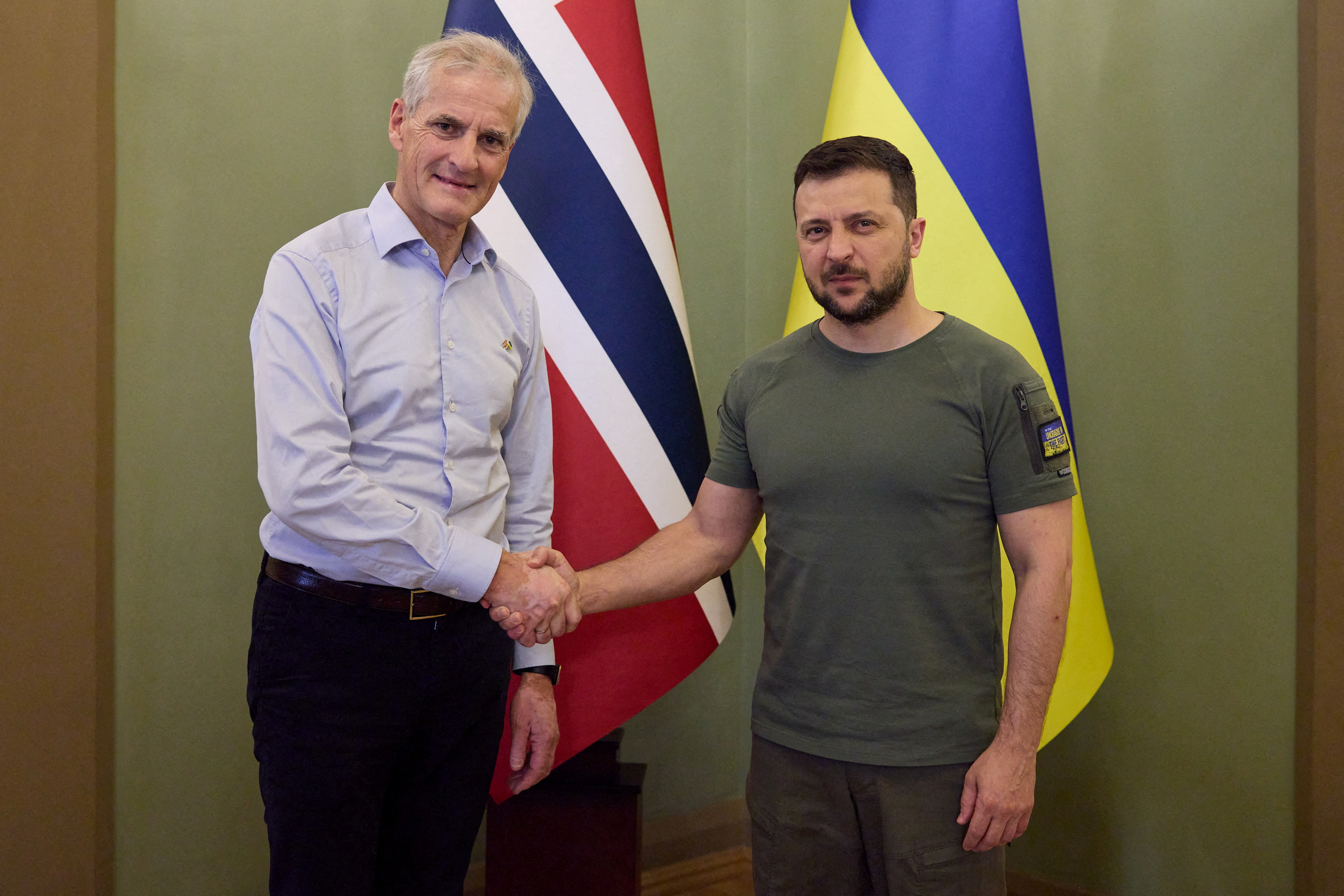
    Norway's Prime Minister Stoere and Ukraine's President Zelenskiy shake hands before a meeting in Kyiv

    [1/3] Norway's Prime Minister Jonas Gahr Stoere and Ukraine's President Volodymyr Zelenskiy shake hands before a meeting, as Russia's attack on Ukraine continues, in Kyiv, Ukraine July 1, 2022. Ukrainian Presidential Press Service/Handout via REUTERS

    OSLO, Feb 16 (Reuters) - Ukrainian President Volodymyr Zelenskiy thanked Norwegian lawmakers on Thursday for approving a bilateral aid package of some $7 billion over five years, saying Russia would never overcome the unity of Ukraine and its allies.

    Norway, a major petroleum exporter, has seen its government income swell to record levels following Russia's invasion of Ukraine as the price of gas sold to Europe soared last year.

    The package, announced on Feb. 6, is the largest aid programme Norway has ever supplied to a single nation, and is part of an unprecedented flow of Western military aid to Ukraine meant to help it fight off Russia's invasion.

    Speaking via video link from Kyiv, Zelenskiy said Norway's decision set a precedent for "sustainable support", calling it a "historic contribution".

    "It makes both our countries stronger. Russia will not overcome our unity, the unity of all those that cherish freedom."

    Latest Updates

    View 2 more stories

    A broad group of political parties agreed the package proposed by the minority centre-left government, with the exception of the small, Marxist-oriented Red party.

    "Ukraine is not alone in this fight. Those who are here today, we are with Ukraine today," Prime Minister Jonas Gahr Stoere said.

    For 2023, half the package will fund military aid to Ukraine and the rest is to go to humanitarian assistance, although this breakdown could change in coming years."

    Reporting by Gwladys Fouche in Oslo and Niklas Pollard in Stockholm, editing by Mark Heinrich

    RELATED


    Ukraine Support Tracker

    The commitments of other countries to support Ukraine. A database of military, financial and humanitarian Aid.

    Go to Ukraine Support Tracker


    Feb 6, 2023 · The government of oil-rich Norway is looking to donate 75 billion kroner ($7.3 billion) in a multiyear support package to Ukraine.

    TOP STORIES

    MORE

    9 hours ago · LONDON. Oil-rich Norway on Thursday approved an aid package worth 75 billion kroner ($7.4 billion) for Ukraine, which will extend over five years.
    8 hours ago · The Norwegian parliament approved a military aid package for Ukraine worth NOK 75 billion (about EUR 7 billion or $7.4 billion) on Feb.
    6 hours ago · Norway has approved a more than $7 billion aid program for Ukraine. This was reported on the Government of Norway website. The Norwegian Parliament has ...
    15 hours ago · OSLO: Ukrainian President Volodymyr Zelenskyy thanked Norwegian lawmakers on Thursday (Feb 16) for approving a bilateral aid package of some US$7 billion ...

    *** Aljazeera Reports ***

    Countries arming Ukraine +++ Next scheduled update: 21 February 2023 +++ 


     (Please Note -  focus on government-to-government transfers into Ukraine. focus on government-to-government transfers into Ukraine. Due to a lack of comparable and reliable data, we do not quantify private donations or transfers by international organizations. . .

     According to the latest data from the Kiel Institute for the World Economy, a German think tank, at least 32 countries have provided Ukraine with military assistance including weapons, equipment or financial aid for the army.

    Twenty-five of the 32 nations providing military assistance are part of NATO – the world’s largest military alliance with 30 member states. Notably missing from this list is Hungary, led by Prime Minister Viktor Orban, who has close relations with Russia.b

    Countries which have supplied Ukraine with weapons and military equipment include: Australia, Austria, Belgium, Bulgaria, Canada, Croatia, Czech Republic, Denmark, Estonia, Finland, France, Germany, Greece, Italy, Japan, Latvia, Lithuania, Luxembourg, Netherlands, New Zealand, Norway, Poland, Portugal, South Korea, Romania, Slovakia, Slovenia, Spain, Sweden, Turkey, the United Kingdom and the United States.

    The list above does not include countries providing non-lethal aid or fuel. Some nations may have also kept their transfers secret.

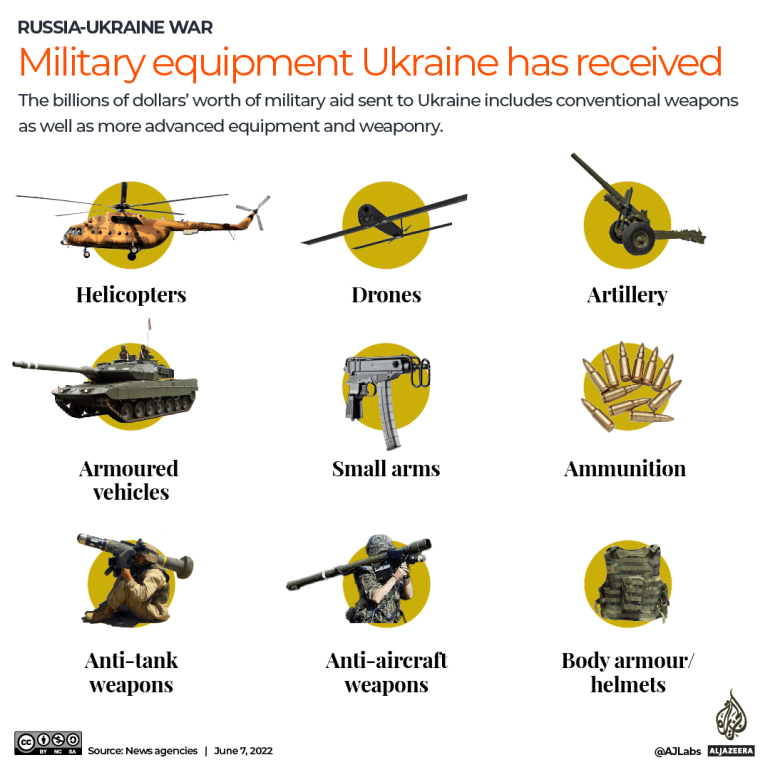
    Military aid sent to Ukraine includes conventional weapons as well as more advanced equipment and modern weaponry.

    The weapons include artillery, anti-aircraft weapons, anti-tank weapons, armoured vehicles, reconnaissance and attack drones, helicopters, small arms, ammunition and body armour. 


    INTERACTIVE-Types-of-weapons-Ukraine-is-receiving.png

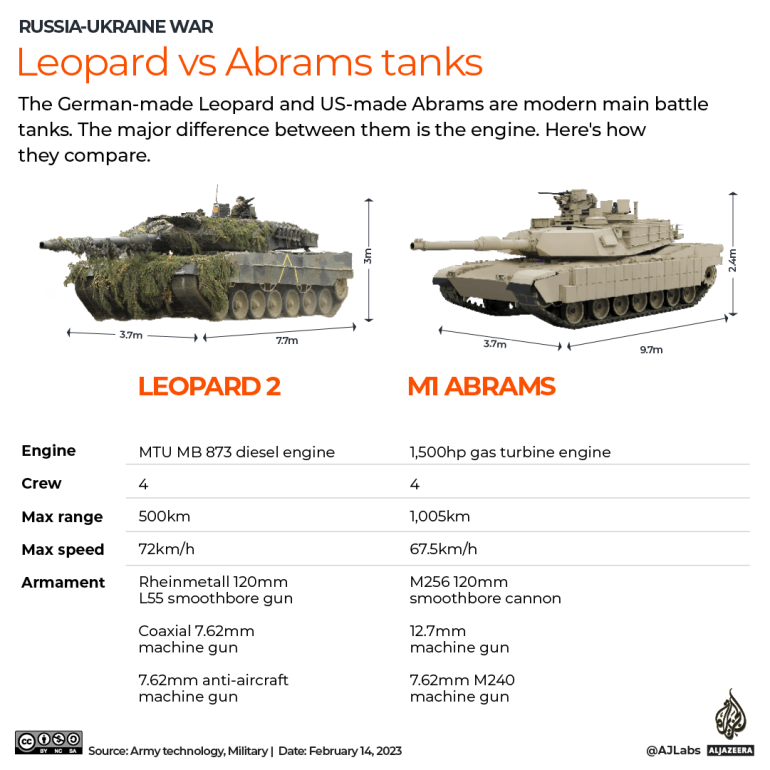
    In January, the US, UK and Germany pledged to send modern main battle tanks to Ukraine. The UK said it would deliver 14 of its Challenger 2 tanks, Germany agreed to send 88 Leopard tanks, and the US said it would send dozens of its M1 Abrams to bolster the country’s war effort.

    Analysts say the latest-generation main battle tanks are vital for Ukraine in order to punch holes in Russian defensive lines and retake territory that Moscow seized in the opening weeks of the invasion.

    NATO and its allies have also trained tens of thousands of Ukrainian troops, including special forces.

    INTERACTIVE_UKRAINE_LEOPARD_ABRAM_TANKS_JAN25

    Countries providing aid to Ukraine

    According to the Kiel Institute, 40 countries have committed at least 108bn euros ($115bn) in financial, humanitarian and military aid to Ukraine between January 24 and November 20, 2022.

    At 47.8bn euros ($51.2bn) in commitments, the US is Ukraine’s biggest contributor, with at least 22.9bn euros ($24.5bn) going towards military pledges, 15.05 billion euros ($16.1bn) in financial aid and 9.9 billion euros ($10.6bn) in humanitarian assistance.

    Humanitarian relief covers medical, food and other items for civilians, while financial assistance comes in the form of grants, loans and guarantees.

    European Union institutions including the EU Commission, EU Council and the European Investment Bank, are the second-highest contributors with 34.9bn euros ($37.3bn) pledged to Ukraine, while the UK is third at 7.1bn euros ($7.6bn).

    Since November 20, the US and other countries have pledged additional military packages to Ukraine. The chart below provides a detailed breakdown of how much each country has committed to Ukraine.

    Countries sanctioning Russia

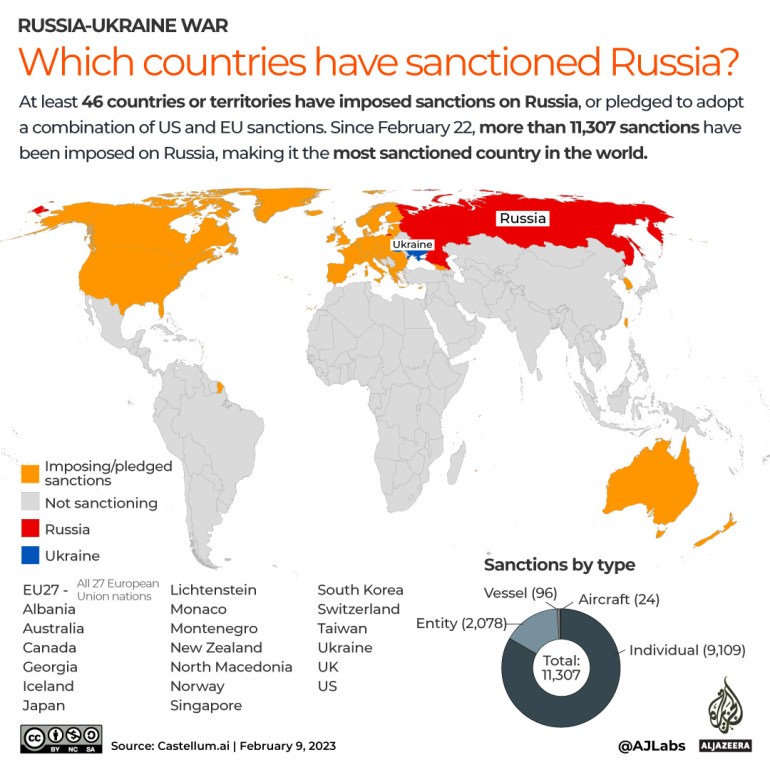
    At least 46 countries or territories have imposed sanctions on Russia, or pledged to adopt a combination of US and EU sanctions according to Castellum.ai, a global sanctions-tracking database. Since February 22, more than 11,307 sanctions have been slapped on Moscow, making Russia the most sanctioned country in the world.

    Eighty percent of all sanctions target individuals while 18 percent target entities. The remaining sanctions target vessels and aircraft.

    The US has imposed the most number of sanctions on Russia at 1,948 followed by Switzerland (1,777), Canada (1,590), the UK (1,414) and the EU (1,390).

    INTERACTIVE-Which-countries-have-sanctioned-Russia-Feb-9-2023
    (Al Jazeera)
    Source: Al Jazeera


    www.aljazeera.com

    Where does your country stand on the Russia-Ukraine war?

    Mohammed Haddad
    10 - 13 minutes

    "Since Russia’s invasion of Ukraine began nearly a year ago, the world has been broadly categorised into three camps – countries allied with Ukraine, those impartial to the conflict, and the nations that have defended Russia.

    While the United States and European Union states have provided military assistance just to Ukraine totalling more than $100bn, other countries have chosen to make their positions known by imposing sanctions on Russia or with their votes at the United Nations.

    In the following series of infographics, Al Jazeera breaks down the political, military and economic positions of various countries.

    Political stance

    ✓ One way of knowing where a country stands politically is by looking at how they vote at the United Nations.

    The United Nations General Assembly (UNGA) comprises 193 member states and is the most representative body of the UN system. Every member state is allowed an equal vote when deciding on resolutions.

    Resolutions passed by the UNGA are non-binding, which means they have no legal power. Rather, they are viewed as an expression of the will of the international community on a given topic.

    Following Russia’s invasion of Ukraine, the UN convened its first emergency session in 25 years. The 193-member assembly has since voted on four special resolutions addressing various concerns with regard to Ukraine.

    The map below summarises how these countries voted across these four special resolutions.

    Countries that voted in favour of all resolutions (102 countries):

    Note: An asterisk* means this country was absent from at least one vote.

    Afghanistan*, Albania, Andorra, Antigua and Barbuda, Argentina, Australia, Austria, Belgium, Benin*, Bosnia and Herzegovina, Bulgaria, Canada, Chad, Chile, Colombia, Comoros*, Costa Rica, Croatia, Cyprus, Czech Republic, DRC, Denmark, Djibouti*, Dominica*, Dominican Republic, East Timor, Ecuador, Estonia, Federated States of Micronesia, Fiji, Finland, France, Georgia, Germany, Greece, Grenada, Guatemala, Haiti, Hungary, Iceland, Ireland, Israel, Italy, Ivory Coast, Jamaica, Japan, Kiribati, Latvia, Lebanon*, Liberia, Libya, Liechtenstein, Lithuania, Luxembourg, Malawi, Malta, Marshall Islands, Mauritania*, Mauritius, Moldova, Monaco, Montenegro, Morocco*, Myanmar, Nauru, Netherlands, New Zealand, North Macedonia, Norway, Palau, Panama, Papua New Guinea, Paraguay, Peru, Philippines, Poland, Portugal, Romania, Rwanda*, Saint Lucia, Samoa, San Marino, São Tomé and Príncipe*, Serbia, Seychelles, Sierra Leone, Slovakia, Slovenia, Solomon Islands*, Somalia*, South Korea, Spain, Sweden, Switzerland, The Bahamas, Turkey, Tuvalu, Ukraine, United Kingdom, United States, Uruguay, Zambia*.

    Countries that voted in favour or abstained in at least one resolution (47 countries):

    Angola, Bahrain, Bangladesh, Barbados, Belize, Bhutan, Botswana, Brazil, Brunei, Cambodia, Cape Verde, Egypt, Ghana, Guinea-Bissau*, Guyana, Honduras, Indonesia, Iraq, Jordan, Kenya, Kuwait, Lesotho, Madagascar, Malaysia, Maldives, Mexico, Nepal, Niger, Nigeria, Oman, Qatar, Saint Kitts and Nevis, Saint Vincent and the Grenadines, Saudi Arabia, Senegal, Singapore, South Sudan, Suriname, Thailand, The Gambia, Togo*, Tonga, Trinidad and Tobago, Tunisia, United Arab Emirates, Vanuatu, Yemen.

    Countries that voted to abstain in all resolutions (16 countries):

    Armenia*, Cameroon*, El Salvador*, Equatorial Guinea*, Eswatini*, Guinea*, India, Mongolia, Mozambique, Namibia, Pakistan, South Africa, Sri Lanka, Sudan, Tanzania, Uganda.

    Countries that voted against or abstained in at least one resolution (19 countries):

    Algeria, Bolivia, Burundi, Central African Republic, Cuba, Eritrea, Ethiopia*, Iran*, Kazakhstan, Kyrgyzstan, Laos, Mali, Nicaragua, China, Republic of the Congo, Tajikistan, Uzbekistan*, Vietnam, Zimbabwe.

    Countries that voted against all resolutions (4 countries):

    Belarus, North Korea, Russia, Syria.

    Countries that were absent in all resolutions (4 countries):

    Azerbaijan, Burkina Faso, Turkmenistan, Venezuela.

    Gabon was the only country to vote in favour or against a resolution.

    A detailed breakdown of each of the resolutions is listed below:

    Emergency Session 1 – Demand that Russia withdraw its military forces from Ukraine

    In favour: 141   |   Against: 5   |   Abstain: 35

    On March 2, 2022, 141 countries voted in favour of a UN resolution demanding that Russia “immediately, completely and unconditionally” withdraw its military forces from Ukraine. The resolution needed a two-thirds majority of yes/no votes to pass.

    China, India, Iran and South Africa were among the 35 countries that abstained, while just five – Belarus, Eritrea, North Korea, Syria and of course Russia – voted against it. Twelve countries including Venezuela, which have been suspended for two years for failing to pay dues due to the UN, were absent from the vote.

    Interactive showing how countries voted.
    (Al Jazeera)

    Emergency Session 2 – Humanitarian consequences of the aggression against Ukraine

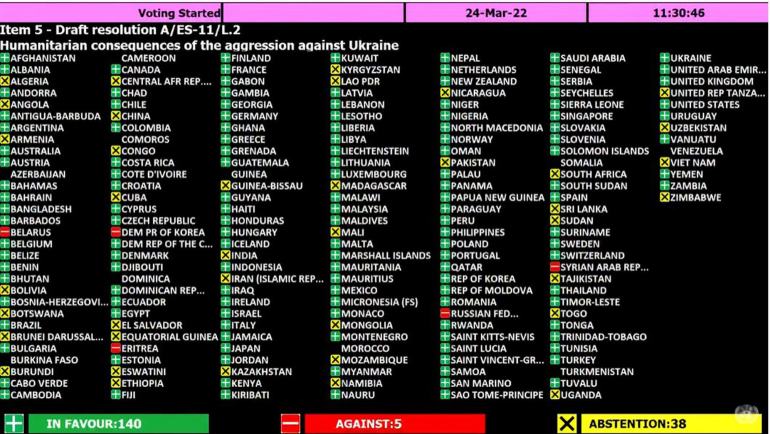
    In favour: 140   |   Against: 5   |   Abstain: 38

    In a second resolution adopted on March 24, almost three-quarters of the UNGA voted to demand aid access and civilian protection in Ukraine – and criticised Russia for creating a “dire” humanitarian situation.

    The resolution, which was drafted by Ukraine and its allies, received 140 votes in favour and five votes against by the same countries – Belarus, Eritrea, North Korea, Russia and Syria – while 38 countries abstained. Ten countries were absent from the vote.

    UN vote March 24

    Emergency Session 3 – Suspending Russia from the UN Human Rights Council

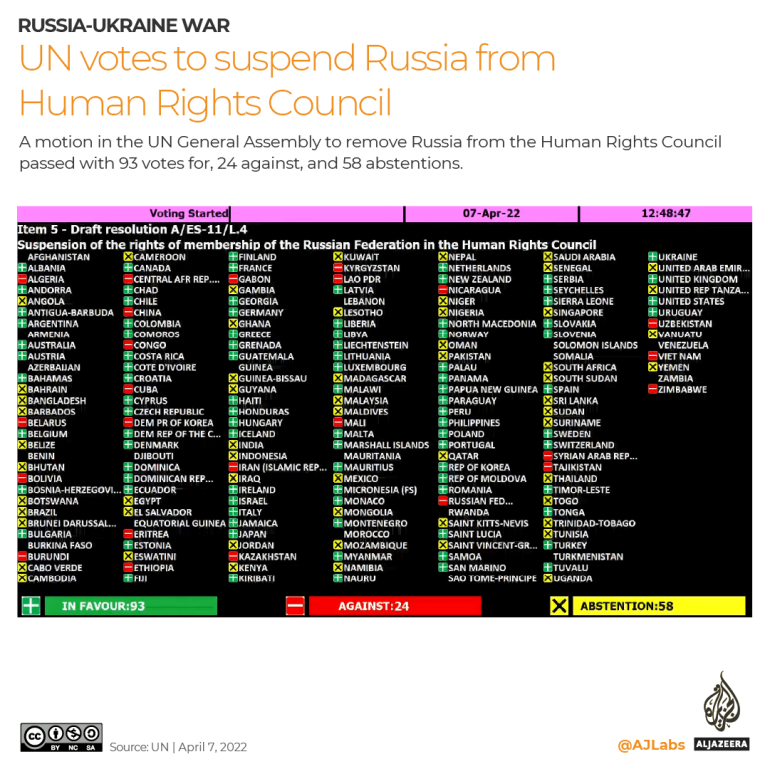
    In favour: 93   |   Against: 24   |   Abstain: 58

    On April 7, a US-sponsored resolution to suspend Russia from the UN Human Rights Council (UNHRC) was adopted with 93 votes in favour, 24 against and 58 abstentions. The resolution required a two-thirds majority to pass, not counting abstentions.

    The resolution came after the discovery of civilian bodies in the town of Bucha near Kyiv.

    The Russian delegation announced it had quit the Human Rights Council earlier that day in expectation of the vote. The UNHRC is responsible for promoting and protecting human rights globally.

    Interactive UNGA resolution vote to suspend Russia from Human Rights Council

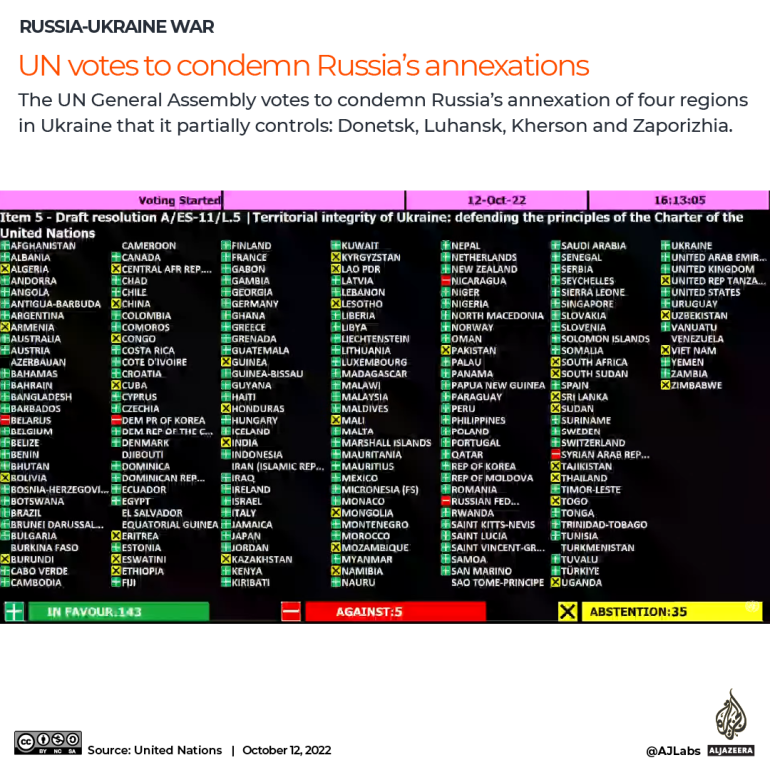
    Emergency Session 4 – Territorial integrity of Ukraine, condemning Russia’s move to annex parts of Ukraine

    In favour: 143   |   Against: 5   |   Abstain: 35

    In late September, Russia formally announced the annexation of four partially occupied provinces of eastern and southern Ukraine. Kyiv and its Western allies rejected the vote as meaningless and illegal.

    On October 12, the UN General Assembly voted to condemn Russia’s “attempted illegal annexation” of the four partially occupied regions in Ukraine and urged countries not to recognise the move. Three-quarters of the 193-member General Assembly — 143 countries — backed the resolution that also reaffirmed the sovereignty, independence, unity and territorial integrity of Ukraine within its internationally recognised borders.

    Four countries joined Russia in voting against the resolution – Belarus, Nicaragua, North Korea and Syria. Another 35 countries abstained from the vote, including China, India, Pakistan and South Africa. The rest did not vote.

    UN votes to condemn Russia's annexations
    Interactive: UN votes to condemn Russia’s annexations

    Countries arming Ukraine

    According to the latest data from the Kiel Institute for the World Economy, a German think tank, at least 32 countries have provided Ukraine with military assistance including weapons, equipment or financial aid for the army.

    Twenty-five of the 32 nations providing military assistance are part of NATO – the world’s largest military alliance with 30 member states. Notably missing from this list is Hungary, led by Prime Minister Viktor Orban, who has close relations with Russia.

    Countries which have supplied Ukraine with weapons and military equipment include: Australia, Austria, Belgium, Bulgaria, Canada, Croatia, Czech Republic, Denmark, Estonia, Finland, France, Germany, Greece, Italy, Japan, Latvia, Lithuania, Luxembourg, Netherlands, New Zealand, Norway, Poland, Portugal, South Korea, Romania, Slovakia, Slovenia, Spain, Sweden, Turkey, the United Kingdom and the United States.

    The list above does not include countries providing non-lethal aid or fuel. Some nations may have also kept their transfers secret.

    Military aid sent to Ukraine includes conventional weapons as well as more advanced equipment and modern weaponry.

    The weapons include artillery, anti-aircraft weapons, anti-tank weapons, armoured vehicles, reconnaissance and attack drones, helicopters, small arms, ammunition and body armour.

    INTERACTIVE-Types-of-weapons-Ukraine-is-receiving.png

    In January, the US, UK and Germany pledged to send modern main battle tanks to Ukraine. The UK said it would deliver 14 of its Challenger 2 tanks, Germany agreed to send 88 Leopard tanks, and the US said it would send dozens of its M1 Abrams to bolster the country’s war effort.

    Analysts say the latest-generation main battle tanks are vital for Ukraine in order to punch holes in Russian defensive lines and retake territory that Moscow seized in the opening weeks of the invasion.

    NATO and its allies have also trained tens of thousands of Ukrainian troops, including special forces.

    INTERACTIVE_UKRAINE_LEOPARD_ABRAM_TANKS_JAN25

    Countries providing aid to Ukraine

    According to the Kiel Institute, 40 countries have committed at least 108bn euros ($115bn) in financial, humanitarian and military aid to Ukraine between January 24 and November 20, 2022.

    At 47.8bn euros ($51.2bn) in commitments, the US is Ukraine’s biggest contributor, with at least 22.9bn euros ($24.5bn) going towards military pledges, 15.05 billion euros ($16.1bn) in financial aid and 9.9 billion euros ($10.6bn) in humanitarian assistance.

    Humanitarian relief covers medical, food and other items for civilians, while financial assistance comes in the form of grants, loans and guarantees.

    European Union institutions including the EU Commission, EU Council and the European Investment Bank, are the second-highest contributors with 34.9bn euros ($37.3bn) pledged to Ukraine, while the UK is third at 7.1bn euros ($7.6bn).

    Since November 20, the US and other countries have pledged additional military packages to Ukraine. The chart below provides a detailed breakdown of how much each country has committed to Ukraine.

    Countries sanctioning Russia TV

    At least 46 countries or territories have imposed sanctions on Russia, or pledged to adopt a combination of US and EU sanctions according to Castellum.ai, a global sanctions-tracking database. Since February 22, more than 11,307 sanctions have been slapped on Moscow, making Russia the most sanctioned country in the world.

    Eighty percent of all sanctions target individuals while 18 percent target entities. The remaining sanctions target vessels and aircraft.

    The US has imposed the most number of sanctions on Russia at 1,948 followed by Switzerland (1,777), Canada (1,590), the UK (1,414) and the EU (1,390).

    INTERACTIVE-Which-countries-have-sanctioned-Russia-Feb-9-2023