Thursday, May 04, 2023

MAXAR Now Gone Private -- $6.4B Deal (The company was acquired by the U.S. private equity firm Advent International and minority investor British Columbia Investment Management Corp.)


Satellite operator Maxar to go private in $6.4B deal with Advent

Kerry Flynn
Dec 19, 2022
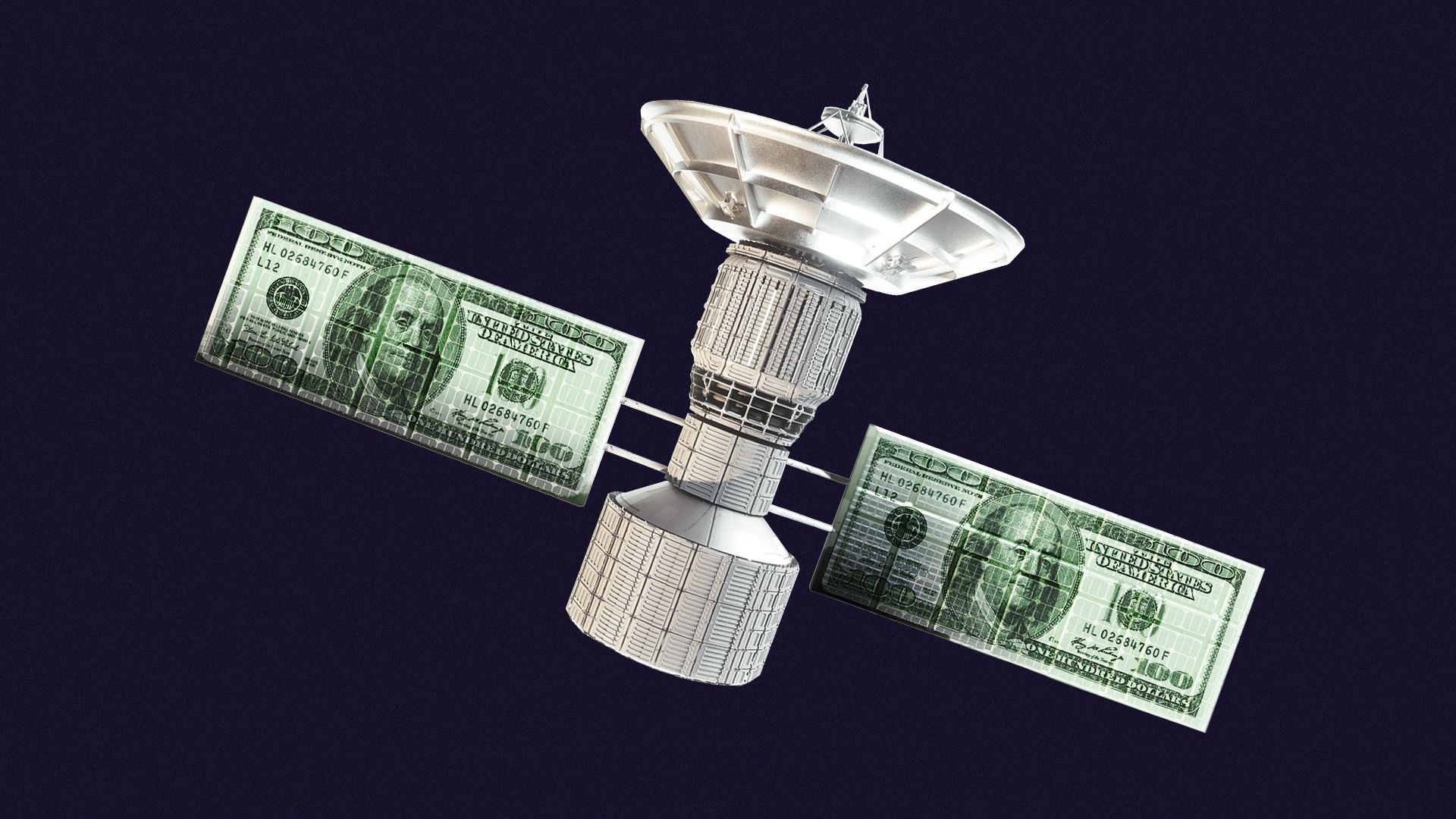
Illustration of a satellite flanked by hundred dollar bills for solar panels

Illustration: Annelise Capossela/Axios

Boston-based private equity firm Advent International's deal to buy Maxar Technologies is its latest investment in defense and cybersecurity businesses.

Why it matters: Private equity money has been funneling into health care, retail and tech. This deal to take a publicly traded, defense-focused telecom business private stands out.

Details: Advent said Friday it has agreed to acquire Maxar at $53 per share in cash, a 129% premium on Thursday's closing stock price. The deal is valued at $6.4 billion, including debt. . ."

READ MORE  https://www.axios.com/pro/media-deals/2022/12/19/maxar-technologies-advent-deal

Advent International Acquires Maxar Technologies for $6.4 Billion

Advent International Acquires Maxar Technologies for $6.4 Billion

Maxar stockholders to receive $53.00 per share in cash, a 129% premium to prior closing price

Maxar to remain U.S.-controlled and operated company following close

Advent brings 35+ year investment track record with significant experience in global security and defense

Transaction will support Maxar to accelerate investment in and development of the Company’s next-generation satellite technologies and data insights for its customers

WESTMINSTER, Colo. & BOSTON--(BUSINESS WIRE)-- Maxar Technologies (NYSE:MAXR) (TSX:MAXR) (“Maxar” or the “Company”), provider of comprehensive space solutions and secure, precise, geospatial intelligence, today announced that it has entered into a definitive merger agreement to be acquired by Advent International (“Advent”), one of the largest and most experienced global private equity investors, in an all-cash transaction that values Maxar at an enterprise value of approximately $6.4 billion. Advent is headquartered in the United States and has a demonstrable track record as a responsible owner of defense and security businesses. Following the close of the transaction, Maxar will remain a U.S.-controlled and operated company.

This press release features multimedia. View the full release here: https://www.businesswire.com/news/home/20221216005078/en/

Boston-based private equity firm Advent International and Canada-based British Columbia Investment Management Corp. have finalized their acquisition of Maxar Technologies in an all-cash transaction valued at approximately $6.4 billion, or $53.00 per share.1 hour ago

Satellite imaging giant Maxar to be acquired by private equity firm for $6.4 billion

Advent International to acquire Maxar in mid-2023. The satellite firm is a major provider of space-based imaging for the National Reconnaissance Office.
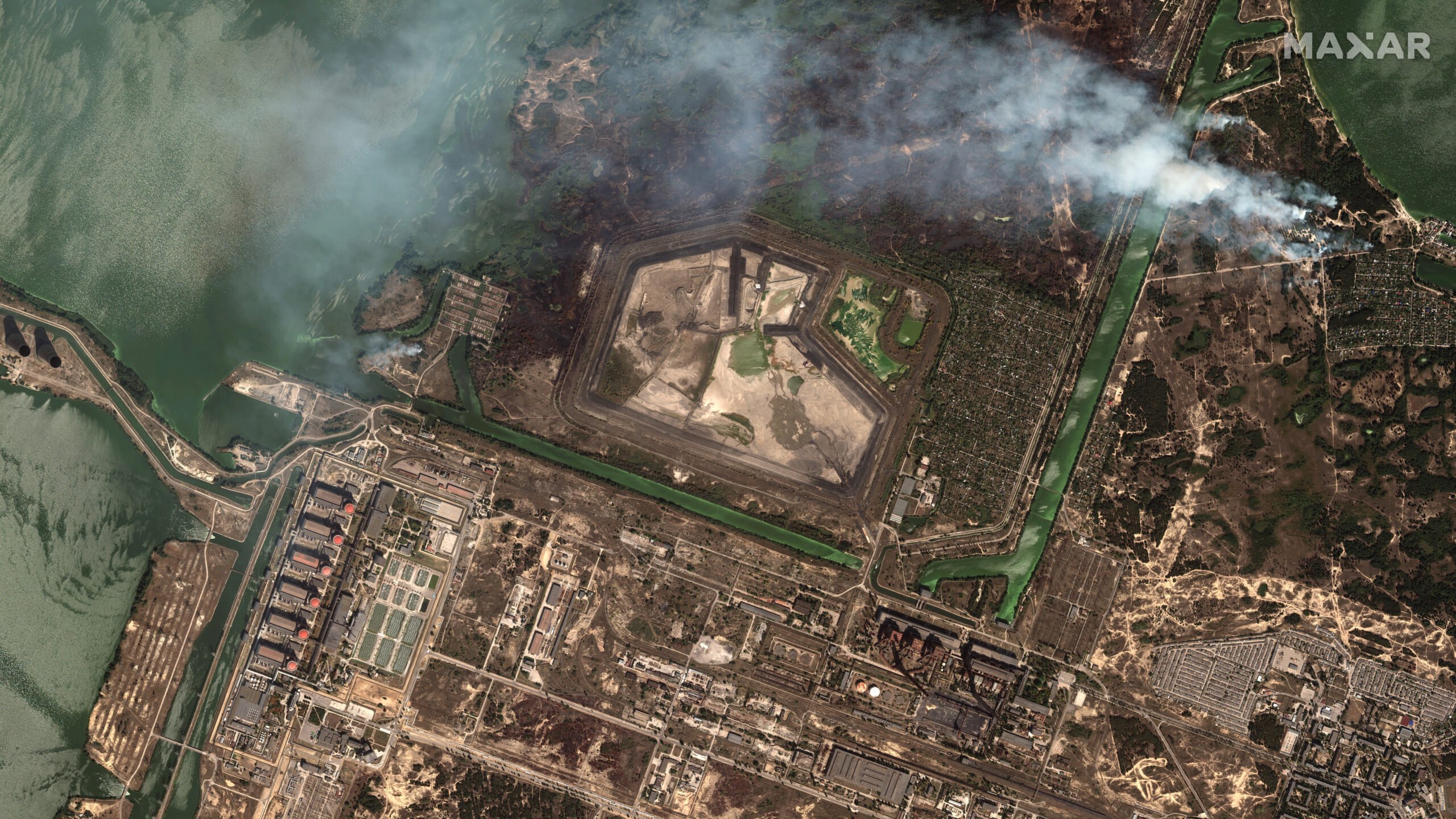
220916_maxar_satellite_ukraine_zaporizhzhia

Satellite imagery taken by Maxar Technologies on Aug. 29, 2022 shows the Zaporizhzhia nuclear plant in Ukraine. (Satellite image ©2022 Maxar Technologies)

WASHINGTON — Maxar, a major supplier of satellite imagery for American national security agencies, has entered into an agreement to be purchased by private equity firm Advent International for $6.4 billion, the company announced today.

One of the biggest players in providing commercial imagery, Maxar is the successor company to Digital Globe, which for a long time was the only commercial firm with a National Reconnaissance Office contract. Now one of three providers of imagery for NRO, it is believed — though impossible to confirm given how NRO does contracts — that Maxar remains the largest supplier. The firm has also built a public reputation through its Maxar News Bureau, which regularly makes public satellite photos of news events such as the war in Ukraine or massive wildfires.

In a statement announcing the deal, both sides pitched the move as something that would benefit Maxar long term.

“Maxar will be able to accelerate investments in next-generation satellite technologies and data insights that are vital to the Company’s government and commercial customers, as well as pursue select, strategic M&A to further enhance the Company’s portfolio of solutions,” per the statement.

“This includes supporting the successful delivery of the new Legion satellite constellation, accelerating the launch of Legion 7 and 8 satellites and further growing the Earth Intelligence and Space Infrastructure businesses through investments in next-generation capabilities, such as advanced machine learning and 3D mapping.”

Maxar is a publicly traded company on the New York Stock Exchange. Advent plans to pay out investors at $53 a share, which Advent notes is “129% over Maxar’s closing stock price of $23.10 on December 15, 2022, the last full trading day prior to this announcement, an approximately 135% premium to the 60-day volume-weighted average price prior to this announcement, and a premium of  approximately 34% over Maxar’s 52-week high.”

The deal is expected to close mid-2023, according to the announcement. Advent, which is based in Boston, claims $89 billion in managed assets. The company says it has “$28 billion invested across the defense, security and cybersecurity sectors in the last three years.” The firm’s highest-profile defense buy in recent years was the 2020 purchase of UK defense firm Cobham; within 18 months it had broken the company up and sold off pieces.

Commercial imaging has become increasingly important over the last decade, as advances in commercial technology have led to cameras that are on par, if not superior, to larger legacy US government systems.

“Today’s announcement is an exceptional outcome for stockholders and is a testament to the hard work and dedication of our team, the value Maxar has created and the reputation we have built in our industry,” Daniel Jablonsky, President and CEO of Maxar, said in a statement. “Advent has a proven record of strengthening its portfolio companies and a desire to support Maxar in advancing our long-term strategic objectives. As a private company, we will have enhanced flexibility and additional resources to build on Maxar’s strong foundation, further scale operations and capture the significant opportunities in a rapidly expanding market.”

“We have tremendous respect and admiration for Maxar, its industry-leading technology and the vital role it serves in supporting the national security of the United States and its allies around the world,” said David Mussafer, chairman and managing partner of Advent. “We will prioritize Maxar’s commitment as a core provider to the U.S. defense and intelligence communities, and allies, while providing Maxar with the financial and operational support necessary to apply its technology and team members even more fully to the missions and programs of its government and commercial customers.”
Advent, BCI Close Maxar Acquisition - GovCon Wire

Maxar completes $6.4B sale to private equity

Maxar Technologies, the satellite imaging and manufacturing company, has completed its $6.4 billion sale to private equity.

The company announced on Wednesday that it was no longer listed on the New York Stock Exchange following the closing of the acquisition by PE firm Advent International and minority investor British Columbia Investment Management Corporation. It will shortly be delisted from the Toronto Stock Exchange.

The entities announced their merger agreement in December, stipulating that outstanding Maxar shares would be acquired for $53 per share in an all-cash deal.

The Westminster, Colorado-based space company is the result of a 2017 merger between DigitalGlobe and MDA Holdings Company. The company later sold MDA’s assets for $1 billion CAD ($765 million). Maxar has had a series of highs and lows since then; it concluded 2018 with a $1.26 billion loss due to a bottomed-out stock price, in part due to the loss of a major imaging satellite.

But since then, the company has steadily recovered its stock price, ending 2022 with an estimated $2 billion in revenue. The company has scored major contracts from the U.S. government and defense, including a $3.2 billion contract from the National Reconnaissance Office last year. More recently, Maxar landed a contract from the National Geospatial-Intelligence Agency worth up to $192 million over five years. . ."

Private equity firm closes $6.4 billion deal to acquire Maxar Technologies

The company was acquired by the U.S. private equity firm Advent International and minority investor British Columbia Investment Management Corp.

Maxar's mobile access terminal for satellite imagery. Credit: SpaceNews Credit: SpaceNews

WASHINGTON — The $6.4 billion buyout of Maxar Technologies is complete and the company is now officially private. Its stock ceased trading on the New York Stock Exchange, the company announced May 3.

Maxar, based in Westminster, Colorado, operates a fleet of high-resolution imaging satellites and manufacturers satellites in Palo Alto, California, 

The company was acquired for $53 per share by the U.S. private equity firm Advent International and minority investor British Columbia Investment Management Corp. in a deal announced in December. 

“With the closing of the transaction, Maxar will remain a U.S.-controlled, owned and operated company,” the company said. Maxar’s common stock will also be delisted from the Toronto Stock Exchange. 

Maxar started trading on the New York Stock Exchange and the Toronto Stock Exchange in 2017. It officially became a U.S. corporation in 2020 when the company spun off the Canadian subsidiary MDA. MDA in 2012 had purchased the Palo Alto-based satellite manufacturer Space Systems Loral and in 2017 acquired the Westminster-based Earth-imaging firm DigitalGlobe. The combined companies were rebranded Maxar Technologies.

The company’s origin goes back to 1957. Western Development Laboratories, a division of Philco, was the first building block of what would eventually become Maxar. Western Development Laboratories launched its first communications satellite in 1960. The following year, Philco was purchased by Ford Motor Co. The combined Philco-Ford became Space Systems Loral in 1990.

x

SpaceX launches big Starlink batch from Florida, nails landing

"Empireland" : How Modern Britain is Shaped by its Imperial Past was published by Viking Books in 2021. . .

 ‘Let’s face it, imperialism is not something that can be erased with a few statues being torn down or a few institutions facing up to their dark pasts, it exists as a legacy and explains […] who we are as a nation’.

In Empireland: How Imperialism Has Shaped Modern Britain, Sathnam Sanghera offers a new critique of the history of the British Empire and its continuing impact on British society, drawing on secondary source material, personal experience and sharp enquiry. With an impressive bibliography, this candid and informed book is deserving of all the plaudits heaped on it, writes Ramnik Shah

Empireland: How Imperialism Has Shaped Modern Britain. Sathnam Sanghera. Viking. 2021.

Empireland is a fresh critique of the British Empire (hereafter ‘Empire’) from Sathnam Sanghera’s unique perspective as a UK-born child of Indian Sikh parents who migrated to Britain in the late 1960s. Sanghera is an accomplished journalist who has won many prizes for his writings in The Times and the Financial Times. He has also, among other things, twice been shortlisted for the Costa Book Awards, including for his memoir, The Boy with the Topknot, which was adapted for a BBC Drama production in 2017. Now his credentials as a public intellectual have received a further boost with this well-publicised study of Empire.

The publication of this book could not have been more timely, coinciding with Black Lives Matter and related movements which have brought into sharp focus the historical dynamics of Empire as well as its contemporary significance generally, and to Britain’s BAME communities in particular.

Until these recent happenings, however, it was no exaggeration to say that on its metropolitan home front, the Empire had more or less been forgotten, with little left by way of folk memory. While it did not much figure in our national conversation, the legacies of Empire have nevertheless remained visible in material and human terms, although largely unacknowledged.

As Sanghera puts it in the first chapter, Despite a recent surge of interest in British colonial history […] the effect of British empire upon this country is poorly understood (1). He attributes this to the failure of the UK education system to teach successive generations of schoolchildren about the subject. He returns to this topic in his last chapter, ‘Working Off the Past’, in the context of the demands for ‘decolonising’ curriculums. He suggests that campaigners might have a better chance of succeeding if they talked about widening rather than decolonising curriculums, essentially by inclusion of black and ethnic minority history, culture and migration in the syllabus. In this reviewer’s opinion, Sanghera’s own book would make a valuable contribution in that regard!

The second chapter, ‘Imperialism and Me’ is, as its title implies, a candid account of the author’s personal journey, both physical and metaphorical, of discovery and learning about Empire. Sanghera’s immigrant trajectory and Sikh heritage come alive on his many visits to India – as a child, as an adult and as a documentary-maker. He ends this chapter poignantly: ‘Having faced up to how Britain has shaped and defined my life in deep ways I had never realized, I can’t help but wonder how imperialism may have shaped modern Britain itself’ (29). This is the central theme of the book.

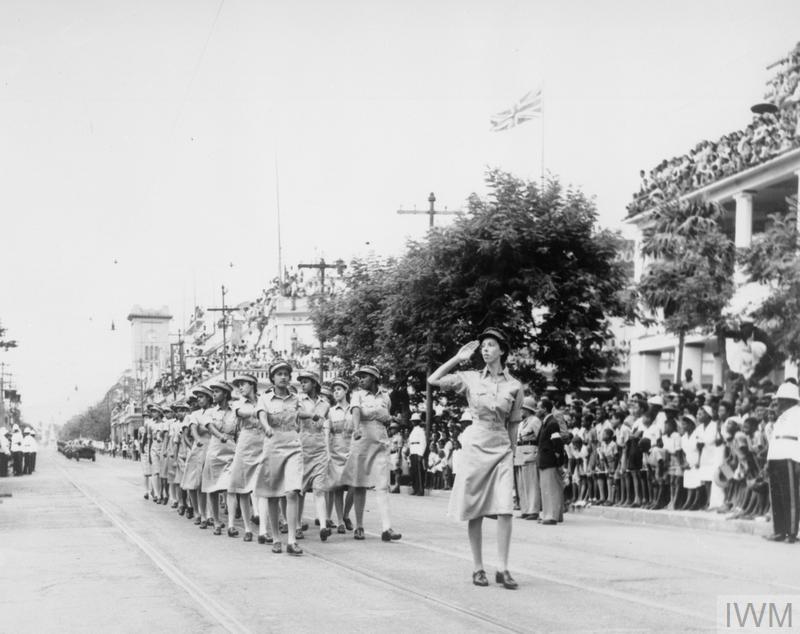
EMPIRE DAY IN JAMAICA, 24 MAY 1944 (K 7751) Picture taken during Empire Day celebrations in Kingston, Jamaica. Picture shows:- The Auxiliary Territorial Service (ATS) march past with junior commander Barbara Oakley in command. Copyright: © IWM. Original Source: http://www.iwm.org.uk/collections/item/object/205189706

In the third chapter, ‘Difficult History’, Sanghera advances five propositions as a guide to the fundamentals of Empire, with quotations from some of the numerous books listed in his extensive bibliography. Under the proposition that ‘Britain’s relationship with its colonies varied across the globe and over time’, for example, he discusses the early stages of Empire: ‘The first British empire, which ran from the seventeenth century to the 1780s, was founded on the development of sugar plantations in the West Indies and involved large numbers of settlers to the American colonies and the Caribbean. The second British empire was a more concerted power grab of India and Africa, at first dominated by the East India Company [EIC]’ (35). However, when the British state took over from the EIC in 1858, parts of the empire were still expanding in the 1870s (the Scramble for Africa was just beginning) when in other areas it was very old (the Caribbean) or had already collapsed (the USA)’ (36).

Next, under the proposition that ‘The tone and culture of empire varied wildly during its history’, we are given an overview of the extended period between 1660 and 1807 when Britain profiteered from the evils of the Atlantic slave trade, and ‘a long period when missionaries were [at first] discouraged […] but then […] encouraged […] as a civilizing mission (36). There were varying attitudes to cultural integration with the ‘natives’. By the start of the twentieth century, India [and indeed the rest of the Empire] was divided along racial lines, with Europeans living, working and socializing separately from the people they colonized. Yet, in the early days of the EIC, many of its employees had enthusiastically embraced their exotic new milieu, even including sexual relationships and intermarriages with the locals, though this stage did not last beyond the latter half of the eighteenth century (37).

The third, fourth and fifth propositions take us right to the heart of the matter: ‘Empire was never unanimous’. While of course there were those who supported it, there was not a single phase of empire when the enterprise was not being criticised [by] establishment voices of opposition. Fourth, ‘There are intense disagreements about what happened during empire and what it means’, raising the questions of when the first empire became the second and whether there was an overlap or even a third incarnation. Finally, ‘There was no clear motivation for the establishment and development of empire’, with Sanghera citing Sir John Seeley’s oft-repeated aphorism that the British empire was acquired in a fit of absence of mind (34-43). All through his extremely readable narrative of the British Empire – its formation, whether accidental or otherwise, its duration, vicissitudes and decline and, above all, its moral complexities – Sanghera makes a conscientious effort to present both or all sides of the conundrum with candour and balance.

Emotional Loot of Chapter Four is about how Britain’s museums and other collections were stocked and enriched with ‘looted’ artefacts of all descriptions from virtually every corner of the Empire. Sanghera gives countless examples of such wanton greed and plunder, often disguised as souvenir-hunting and even academic curiosity but with an underlying sense of racial entitlement.  However, while recording these colonial excesses, he also, as ever even-handed, notes that what happened with imperial loot was, in many cases, bitterly condemned at the time’. He notes that at the turn of the century a paradigm shift was on the horizon, with the Hague Convention of 1899 providing that ‘Private property cannot be confiscated’ and ‘Pillage is formally prohibited’ (57). Sanghera ends this chapter with a spirited discourse on the calls for the restitution and return of stolen artefacts and other material objects, for decolonising museums and universities, and he concludes that all these issues are now, at last, being seriously addressed.

Chapter Five, ‘We Are Here Because You Were There’, treads familiar territory and hardly needs any elaboration. Sanghera recounts the history of the black and brown presence in Britain over the centuries with many examples – freed or fleeing slaves from the West Indies, EIC-related traffic of servants of employees of the company, lascars and different varieties of migrants, temporary sojourners, students, doctors and other professionals, workers of all descriptions and, of course, princes and persons of independent means who set up first or second homes in Britain during the Empire and later. As Sanghera repeatedly points out, Empire was the reason why these people came or are here. Historically, all those born or naturalised in the UK or British territories overseas were British subjects and as such had the right of entry into the UK. That was confirmed by the British Nationality Act 1948 (which in subsequent years has watered down this right), and it was this that enabled colonial subjects from the West Indies, the Indian subcontinent and the African colonies to come and settle here in the UK.

While these ex-Empire incomers were characterised as ‘postwar migrants’ or immigrants, Britons living overseas (in places like Spain or Dubai) are usually referred to as ‘expats’, and those who have emigrated to countries such as Australia, New Zealand and Canada easily merge into their host societies as new citizens

Under Home and Away in Chapter Six, Sanghera quotes from a study that found that British expats ‘socialise mainly with fellow expats, and have no friends from their adopted country, with those living in Africa and the United Arab Emirates being the least integrated (91). Such aloofness is of course rooted in Empire, where the ruling establishment maintained separate clubs and observed rigid protocols of exclusion from the subject populations. Sanghera explores other aspects of the Home and Away phenomenon in depth – alcoholism, schooling, historical British resistance to foreign food’ (93) and the stress of reintegration on repatriation’ (95) of imperial Britons. As for travel, Empire might have made us permanently internationally minded, but it may have also made us insular and closed-minded once we get abroad (103).

In World Beating Politics (Chapter Seven), Sanghera addresses the sequels to the dismantling of the Empire (In the 1970s we had the dilemma of what to do about 60,000 Ugandan Asians and 23,000 Kenyan Asians – though in relation to Ugandan Asians, Britain was only concerned about UK passport holders and duly organised their evacuation, as a result of which some 28,000 were admitted to Britain, while the Kenyan Asian ‘exodus’ had taken place in 1967-1968 and was a somewhat different order). He makes pointed references to the Suez debacle of 1956, the 1982 Falklands War and the ‘war on terror’ in Afghanistan, Iraq and elsewhere as a legacy of the colonial past, leading to Brexit – now that [Brexit] has happened, it’s becoming clear how it falls into a wider pattern of British imperial exceptionalism’ (117). He even takes a critical look at how Britain has dealt with the first year of the COVID-19 crisis. Sanghera delves into and analyses the historical connections of Empire to almost every aspect of life in Britain today. ‘World beating’ this and that is a familiar British claim often bandied about in all kinds of global comparisons, but what we learn is that this is no more than an imperial hangover, hype and myth, with little substance in today’s world.

‘Dirty Money’ of Chapter Eight is an apt description of the colossal riches of the slave traders, plantation owners and those of the EIC ‘nabobs’ who amassed vast fortunes from their activities to fund lavish lifestyles back in Britain in the form of stately homes, art collections and other markers of high status. ‘Did slavery or money from India finance the Industrial Revolution or our railways?’ asks Sanghera, but, as always, he tries to be fair in presenting both sides of the argument: ‘Opinion is divided’! He adds: Was London mayor Sadiq Khan right when he declared […] that much of our city and nation’s wealth was derived from the slave trade? No, the claim isn’t true even of empire as a whole’ (140-41). However, in his Acknowledgements, he is emphatic in his view that slavery was a [crucial] aspect of the British empire.

Slavery also features heavily in ‘The Origin of Our Racism’ (Chapter Nine). Empire was, of course, built on the conquest and subjugation of ‘native’ or ‘other’ peoples who were seen as inferior because of the perception that they had failed or were unable to defend themselves. Over time, however, when resistance led to rebellions, acts of disobedience and worse, the reprisals were swift and ferocious, and there were countless episodes of brutality and suppression. Sanghera discusses what happened during or following the Indian Mutiny of 1857, the Morant Bay Rebellion of 1865 in Jamaica, the arrival of settlers in Tasmania in 1803 and the founding of Rhodesia by Cecil Rhodes around 1889. He sums it up by stating as British empire grew and peaked in the nineteenth and twentieth centuries, it morphed into nothing less than a wilful, unapologetic exercise in white racial supremacy.

In the next two aptly named chapters, ‘Empire State of Mind’ and ‘Selective Amnesia’, Sanghera continues with his reasoned take on the Empire as it was and as it has gradually faded out of public consciousness. He ends on a measured note in his last chapter, ‘Working Off the Past’: Sure, there is no consensus emerging on education, and British politicians generally resist public apologies’ (214) for past wrongs. He does state, however, that Britain has already apologized for some imperial events and even paid reparations of sorts’, referring to Tony Blair’s 1997 apology for the Irish Potato Famine. Sanghera also notes that in 2007 [Blair] said sorry for the British role in the transatlantic slave trade after meeting the then Ghanaian president, and further, in 2013 we paid £20 million to 5,000 elderly Kenyans who were tortured during the Mau Mau rebellion’ (215). Here, Sanghera fails to mention that this payment was the result of successful court proceedings brought by the victims against the UK government.

Towards the end of the book, Sanghera proffers a single piece of advice to campaigners […] to be positive. Of course, campaigning has resulted in some change: many Britons have learned more about imperialism during the subsequent debates than they did during years of schooling [but] tearing things down also provokes vigorous opposition [and] counter-campaigns’.  His recipe is ‘to create and build’, and he gives many instances of where this may be possible (215).

To conclude, Empireland is not an academic treatise but rather an informed commentator’s singular interpretation of the history of Empire and its continuing impact on British society, based largely on a reading of secondary source material, personal experience and a sharp enquiring mind.

 In addition to the impressive bibliography, the book contains cogent endnotes but, alas, lacks a comprehensive index. The blurb on the back cover neatly summarises its message: ‘Let’s face it, imperialism is not something that can be erased with a few statues being torn down or a few institutions facing up to their dark pasts, it exists as a legacy and explains […] who we are as a nation’. Empireland is deserving of all the plaudits heaped on it.


Note: This review gives the views of the author, and not the position of the LSE Review of Books blog, or of the London School of Economics and Political Science. 


Videos

X

PERFORMATIVE POLITICS: Zelenskyy holds Presser during Surprise Finland Visit (in English)


Ukraine’s Zelenskyy makes surprise visit to Netherlands: Media

Zelenskyy is expected to visit the International Criminal Court, which has issued an arrests warrant for Russian President Vladimir Putin on war crime charges.

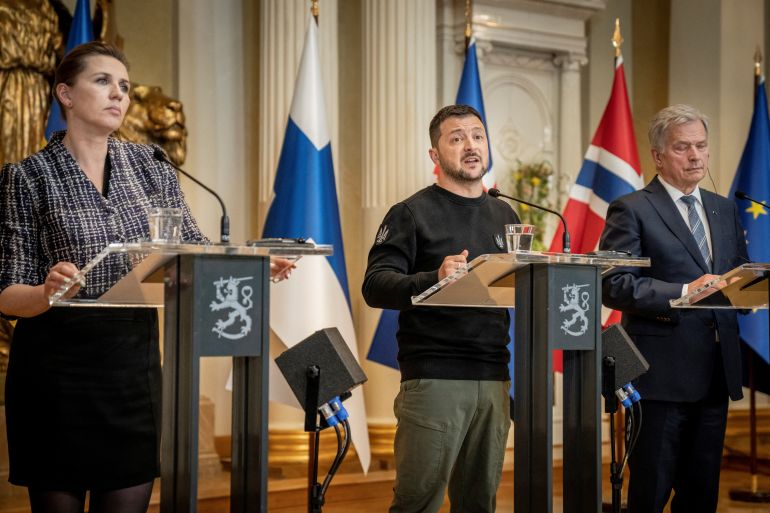
Danish Prime Minister Mette Frederiksen, Ukrainian President Volodymyr Zelenskiy and Finnish President Sauli Niinisto speak during a press conference with the Nordic heads of state during the Nordic-Ukrainian Summit, at the Presidential Palace in Helsinki, Finland, May 3, 2023. Ritzau Scanpix/Mads Claus Rasmussen via REUTERS ATTENTION EDITORS - THIS IMAGE WAS PROVIDED BY A THIRD PARTY. DENMARK OUT. NO COMMERCIAL OR EDITORIAL SALES IN DENMARK.

"Ukrainian President Volodymyr Zelenskyy has arrived in the Netherlands, local media reported, on an unannounced visit expected to include meetings at the International Criminal Court (ICC) and with Dutch Prime Minister Mark Rutte as well as members of the country’s parliament.

Dutch news agency ANP reported that Zelenskyy, making his first visit to the Netherlands, landed at Amsterdam’s Schiphol airport late on Wednesday after attending a Nordic summit in Finland’s capital Helsinki.

ANP published a dark photo of an aircraft, claiming it was the Dutch government plane likely carrying the Ukrainian leader. The Dutch government plane that reportedly transported Zelenskyy flew on Wednesday from a Polish airport to Helsinki, according to NOS.

Zelenskyy will visit the ICC, which is based in The Hague, the news agency said.

In March, the ICC issued an arrest warrant for Russian President Vladimir Putin on charges of responsibility for the “war crime of unlawful deportation of children” from occupied areas of Ukraine to Russia. Maria Lvova-Belova, commissioner for children’s rights in Putin’s presidential office, was also issued an arrest warrant by the ICC for alleged war crimes related to the transfer of Ukrainian children to Russia.

Russia, which is not a member of the ICC and rejects its jurisdiction, denies committing atrocities in Ukraine.

Zelenskyy is also expected to deliver a speech in The Hague entitled “No peace without justice for Ukraine”, according to public broadcaster NOS. A meeting with Dutch MPs is planned as well as talks with Prime Minister Rutte, ANP reported, citing unnamed sources.

Privacy Policy

Despite his country being in the throes of war, the Ukrainian leader has made unannounced visits to several foreign capitals including London, Paris and Washington, DC, since Russia’s February 2022, full-scale invasion.

Zelenskyy made a surprise visit to Finland earlier on Wednesday, where he promised that this year would be “decisive” in dealing with Russia.

“I believe that this year will be decisive for us, for Europe, for Ukraine, decisive for victory,” he told reporters during a joint press conference with his Finnish counterpart Sauli Niinisto.

‘As long as it takes’

Earlier in the day, Nordic countries attending the summit with Zelenskyy pledged their steadfast support for Ukraine in its war against Russia with Finland, Sweden, Norway, Denmark and Iceland promising ongoing “political, financial, humanitarian and military support”.

“As long as it takes” and for as long as is necessary were frequently used statements, both in the joint communique at the end of the summit and at a press conference with Zelenskyy, Niinisto and other Nordic leaders.

Zelenskyy also denied that his country had any role in what Russia said on Wednesday was an attempted drone attack on the Kremlin by Ukraine, intended to kill Putin.

“We don’t attack Putin or Moscow. We fight on our territory. We’re defending our villages and cities,” the Ukrainian leader said.

Ukraine’s presidential adviser, Mykhailo Podolyak, said Russia’s claims of an attempted attack on Putin could provide a pretext for Russia “to justify massive strikes on Ukrainian cities, on the civilian population, on infrastructure facilities”.

Zelenskyy also expressed confidence that future Ukrainian battlefield successes would prompt Western supporters to provide the advanced fighter jets Kyiv has long sought.

“I am very much sure about the warplanes because we are going to have a counteroffensive soon and I’m quite sure we’re going to get planes afterward,” Zelenskyy said at the press conference with Niinisto in Finland.

Niinisto expressed reservations, when asked, about Finland supplying the F/A-18 Hornet fighters in its military stocks, to which Zelenskyy replied with a smile: “But we like your aircraft, just for you to know, Mr President.”

Zelenskyy’s visit to the Finnish capital was kept secret until shortly before his arrival at Helsinki-Vantaa Airport.

Nordic countries have consistently provided substantial military and financial assistance to Ukraine since Russia’s invasion in February 2022.

Denmark on Tuesday announced it would donate a package of military equipment worth 1.7 bn Danish kroner ($252m) to help Ukraine’s expected counteroffensive.

SOURCE: NEWS AGENCIES