The Washington Post first reported on Trump pressuring Ducey on overturning the election results.
A Ducey spokesman said Saturday that the former governor “stands by his action to certify the election and considers the issue to be in the rear view mirror – it’s time to move on.”
Trump pressured Arizona governor after 2020 election to help overturn his defeat
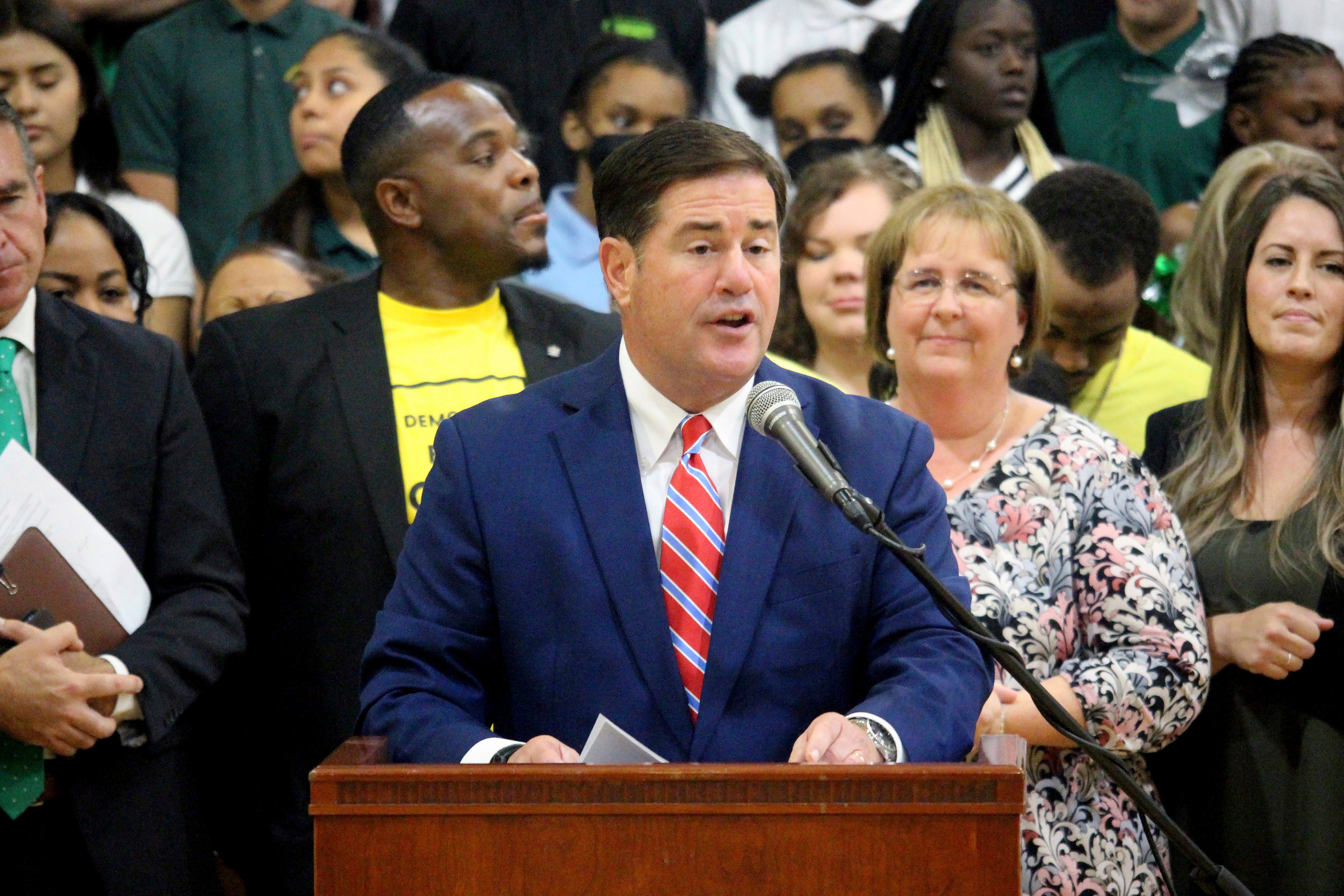
Former President Donald Trump and former Arizona Gov. Doug Ducey
AP/USA Today Network
CNN —
Following his defeat in the 2020 election, President Donald Trump spoke to Arizona Gov. Doug Ducey to discuss the results, a source familiar with the call told CNN.
Publicly, Ducey said at the time that the two Republican leaders had spoken, though he did not describe what they had talked about. Behind closed doors,
Ducey said that the former president was pressuring him to find fraud in the presidential election in Arizona that would help himoverturn his loss in the state, a source with knowledge said.
Trump narrowly lost Arizona toJoe Bidenby less than 11,000 votes.
There was no recording made of the call between Trump and Ducey, according to a source familiar with the matter.
Trump also repeatedly pressured his vice president, Mike Pence, to help him find evidence of fraud and overturn the 2020 election results. Pence told the governor that if there was hard evidence of voter fraud to report it appropriately, one of the sources said. . .
Trump is currently seen as the front-runner for the 2024 GOP presidential nomination as he seeks a return to the White House.
A Trump spokesperson said in a statement: “These witch-hunts are designed to interfere and meddle in the 2024 election in an attempt to prevent President Trump from returning to the White House to make this country great again. They will fail and President Trump will be re-elected.”
Before his fallout with Trump, Ducey had been seen as a formidable candidate for Senate in 2022, but he ultimately ruled out a bid to challenge Democratic Sen. Mark Kelly, who won reelection last year over a Trump-endorsed GOP nominee.
Ducey, who was term-limited as governor last year, endorsed Karrin Taylor Robson, a former member of the Arizona Board of Regents, in the race to succeed him.
However, Taylor Robson lost the primary to Trump’s pick, Kari Lake, a former television anchor who said she would not have certified Biden’s 2020 win had she been governor. Lake ended up losing the general election to Democrat Katie Hobbs and has continued to promote election falsehoods, including about her own race.
Ducey, a former CEO of Cold Stone Creamery, served a term as Arizona treasurer before winning two elections for governor.
He announced last month he would be leading Citizens for Free Enterprise, which describes itself as a “new national effort to promote and protect free enterprise.”
This story has been updated with additional information.
In a phone call with the Georgia's Republican secretary of state, Brad Raffensperger, President Donald Trump asks for more than 11,000 votes to be found that would flip the state to Trump. A string of ...
Scientists say it would take Hubble hundreds of years to complete the
same extra-galactic survey as Euclid, which will cover in a week the
same area of sky that Hubble has observed in its 33-year mission.
SpaceX launches groundbreaking European dark energy mission
SpaceX is filling in for ESA as European rockets face delays.
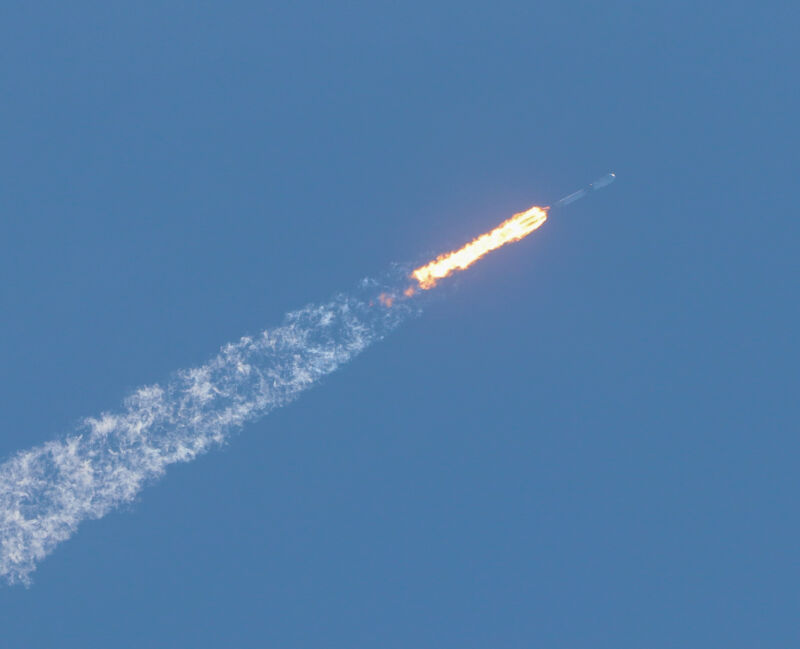
SpaceX's Falcon 9 rocket soars through the sky over Cape Canaveral with Europe's Euclid space telescope.
Stephen Clark/Ars Technica
A European Space Agency telescope launched Saturday on top of a
SpaceX Falcon 9 rocket from Florida to begin a $1.5 billion mission
seeking to answer fundamental questions about the unseen forces driving
the expansion of the Universe. The Euclid telescope, named for the
ancient Greek mathematician, will observe billions of galaxies during
its six-year survey of the sky, measuring their shapes and positions
going back 10 billion years, more than 70 percent of cosmic history.
Led by the European Space Agency, the Euclid mission has the
ambitious goal of helping astronomers and cosmologists learn about the
properties and influence of dark matter and dark energy,
which are thought to make up about 95 percent of the Universe. The rest
of the cosmos is made of regular atoms and molecules that we can see
and touch.
Stumbling in the dark
“To highlight the challenge we face, I would like to give the
analogy: It’s very difficult to find a black cat in a dark room,
especially if there’s no cat,” said Henk Hoekstra, a professor and
cosmologist at Leiden Observatory in the Netherlands. “That’s a little
bit of the situation we find ourselves in because we have these
observations … But we lack a good theory. So far, nobody has come up
with a good explanation for dark matter or dark energy.”
Hoekstra, who is part of the consortium of international scientists
eager to work with Euclid data, said the launch is a “very special day.”
“The launch of Euclid really changes cosmology into the future,” he
said. “It’s the first space mission designed to study dark energy.”
But Euclid will also provide a test of Einstein’s theory of
relativity and long-standing astrophysical models on cosmic scales.
“Maybe we’re completely wrong,” Hoekstra said. “We have to keep it in
the back of our mind that maybe gravity is wrong when we apply it to the
whole cosmos.”
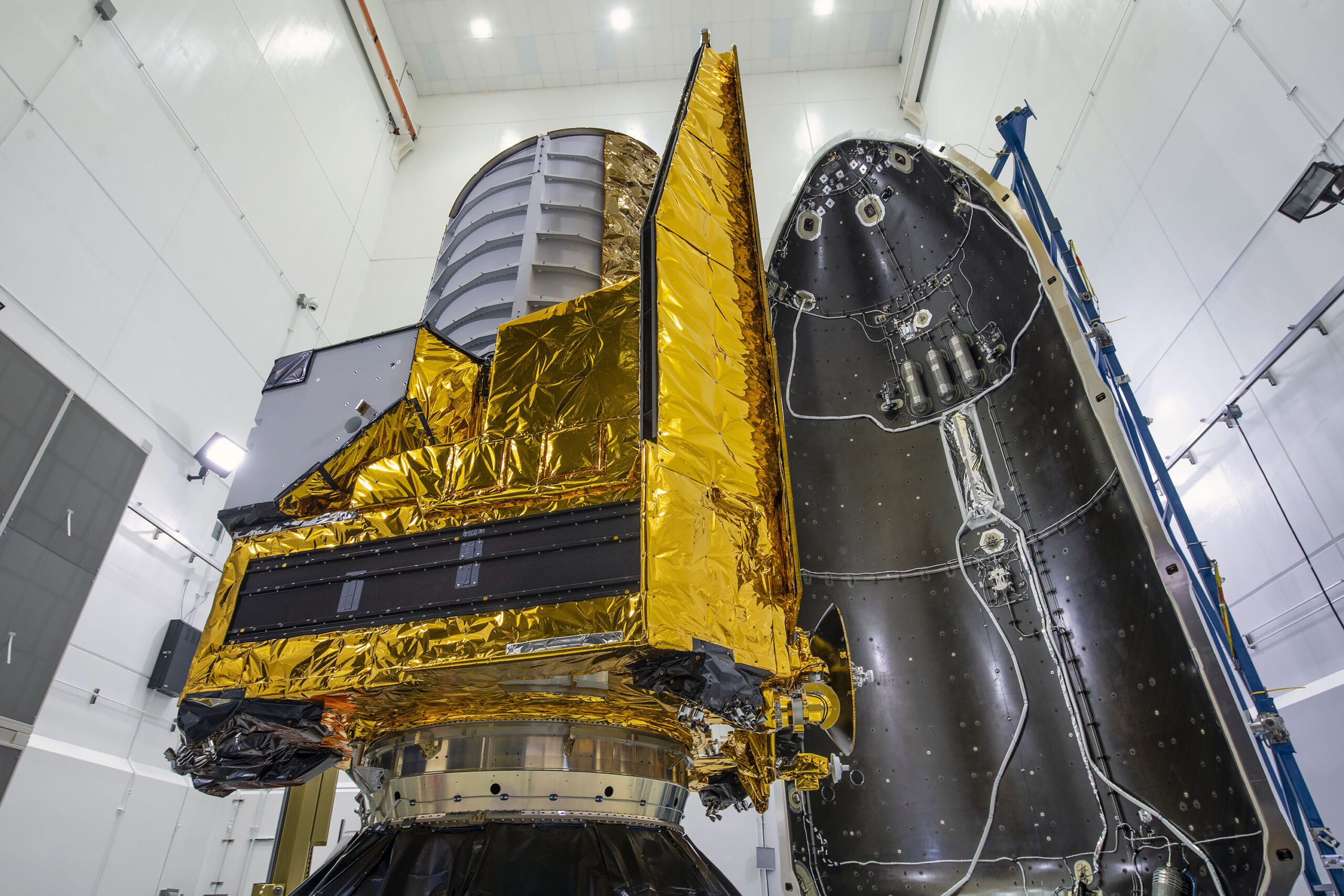
The spacecraft measures about 15.4 feet (4.7 meters) tall and carries a 600-megapixel visible light camera and a 64-megapixel near-infrared imager and spectrometer, which contains detectors provided by NASA.
Euclid is expected to downlink about 100 gigabytes of compressed data
every day, and over the course of its mission, will produce about 170
petabytes of information after automated processing at nine ground-based
data centers.
Enlarge/ A last view of Europe's Euclid spacecraft before encapsulation inside the payload fairing of SpaceX's Falcon 9 rocket.
“The required amount of data that will be analyzed and delivered
back, the numbers are absolutely staggering,” said Gaitee Hussain, head
of the science division at the European Space Agency. “This is what is
required in order to answer what is arguably the most fundamental
question in physics and cosmology today, which is what is the Universe
actually made of?”
After more than 15 years of design, development, and testing, the Euclid telescope lifted off from Cape Canaveral at11:12
am EDT (1512 UTC) aboard a Falcon 9 rocket. The launcher arced
downrange heading southeast from the Florida coastline, with nine
kerosene-fueled engines powering the Falcon 9 through the atmosphere in
the first two-and-a-half minutes of the flight.
The rocket’s reusable booster stage released to begin a descent to a
drone ship parked in the Atlantic Ocean, while the upper stage ignited
its engine two times to propel the roughly 2.1-ton Euclid spacecraft
onto a trajectory toward an orbit about a million miles (1.5 million
kilometers) from Earth.
It will take about a month for Euclid to cruise into its halo orbit
around the Sun-Earth L2 Lagrange point, a gravitational balance point
commonly used by space-based observatories, including the James Webb
Space Telescope.
Following three months of checkouts, first light, and calibration,
Euclid should be ready to start its operational science mission in
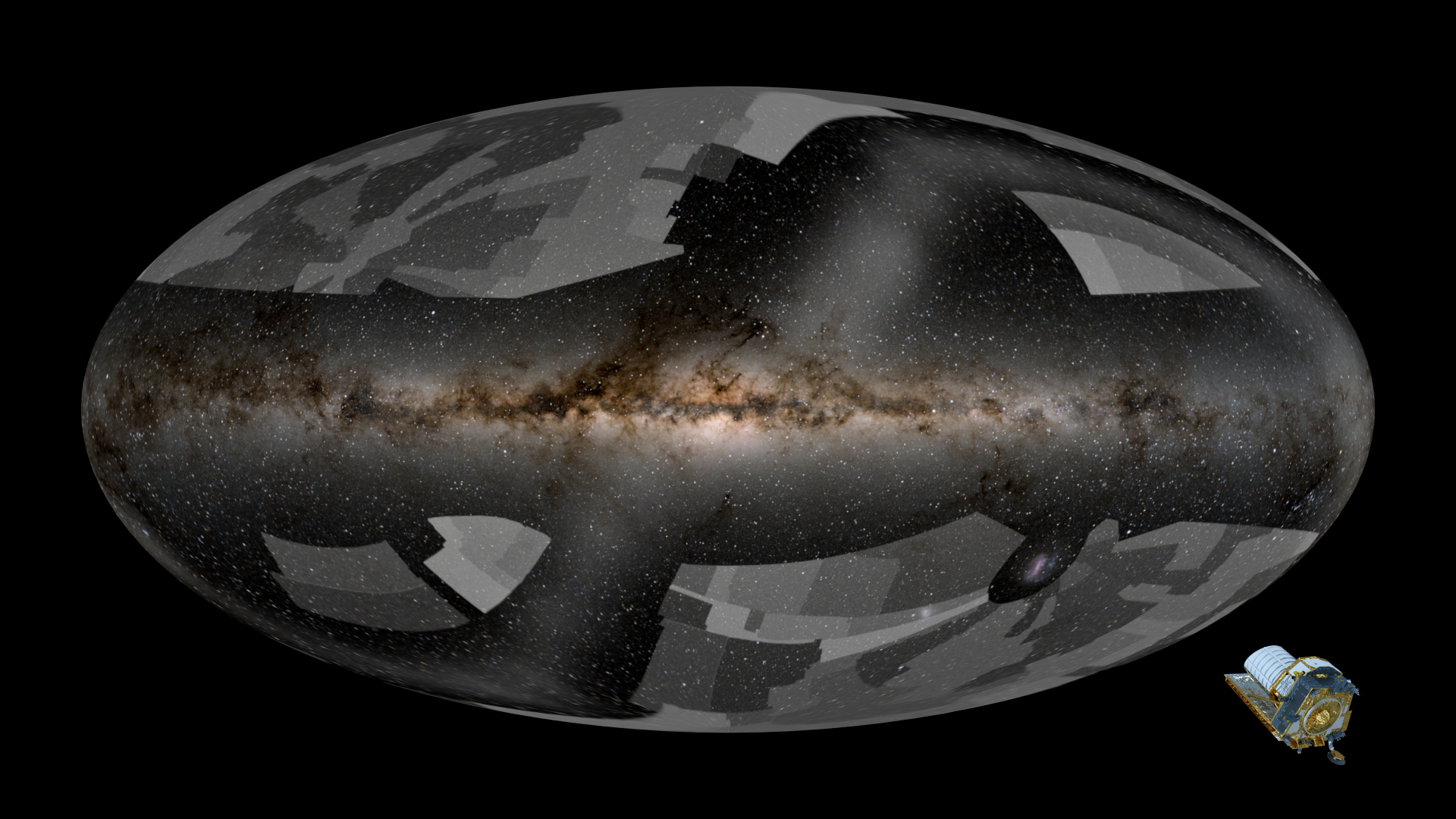
October. The telescope will scan about 15,000 square degrees of the sky
with its visible and infrared instruments, primarily in the northern and
southern sky, while avoiding brighter regions populated with light from
our own galaxy and Solar System.
Euclid to solve 'biggest embarrassment' in cosmology
Dark matter has never been directly measured, but scientists have
concluded that it makes up a little more than a quarter of the Universe.
Dark energy, on the other hand, constitutes about 70 percent of the
cosmos, and according to models, is responsible for accelerating the
Universe’s expansion.
Guadalupe Cañas, a research fellow at ESA, called the vacuum in
understanding the nature of dark matter and dark energy the “biggest
embarrassment that we have currently in cosmology.”
“We know that 95 percent of our Universe is something that is totally unknown to us,” she said.
Euclid’s 3.9-foot (1.2-meter) telescope is about half the size of the
primary mirror of the Hubble Space Telescope, or little less than
one-fifth that of the James Webb Space Telescope.
While that means Euclid won’t be able to study galaxies as old as
Hubble or Webb can see, Euclid has the benefit of seeing a broader swath
of the sky. Think of it as trading a telephoto lens for a wide-angle.
“If you want to observe the Universe in a cosmological way, you don’t
want to be restricted to particular areas,” said Giuseppe Racca, ESA’s
Euclid project manager. “You really want to observe a lot.”
Scientists say it would take Hubble hundreds of years to complete the
same extra-galactic survey as Euclid, which will cover in a week the
same area of sky that Hubble has observed in its 33-year mission.
Enlarge/ This illustration shows the regions Euclid will survey during its six-year mission, totaling about 36% of the sky.
After an initial period of cosmic expansion after the Big Bang (known
as inflation), the Universe’s growth decelerated until about five to
six billion years ago. Cosmologists have found that the expansion of the
Universe started accelerating at this point. Euclid’s observations will
cover the period of time before and after the start of the
acceleration.
Euclid will pursue signs of dark matter and dark energy using two methods.
One is called weak gravitational lensing, where astronomers will rely
on automated processing to detect minute changes in the shape of
galaxies caused by clumps of invisible dark matter on the line of sight
between the Euclid telescope and its distant targets.
Distortions in the shapes of faraway galaxies are easily observable
in close-up views taken by Hubble and Webb, but there should also be
subtle effects from dark matter—at least that’s what scientists think.
“Everything looks normal, but when you do the statistics of those,
you will find that actually, on average, these galaxies have acquired a
net preferred direction (due to dark matter). It’s just extremely
noisy,” Hoekstra said. “So this is why, with Euclid, we need
one-and-a-half billion galaxies to really beat down the noise because,
unfortunately, galaxies are not nice and round. If they were nice and
round, we could do an amazing measurement, but galaxies have all kinds
of shapes and sizes and that’s why we need all this data.”
Euclid will also help cosmologists study how barely perceptible
fluctuations in sound energy in the early Universe, called baryon
acoustic oscillations, led to the patterns of galaxy formation and
clustering that spread throughout the cosmos over billions of years.
Ultimately, scientists will compare what they learn from Euclid with their expectations based on model predictions.
“If these predictions, to a certain accuracy, are not fulfilled, then
we have something new in hand,” said René Laureijs, Euclid project
scientist at ESA. “Then we can say Euclid is so precise that the
predictions we have at the moment cannot be reconciled with our
observations, and then we have maybe something new in hand, in terms of
physics.”
SpaceX steps in to launch European space missions
The Euclid mission was originally slated to launch on a Russian Soyuz
rocket from the European spaceport in French Guiana, but that option
became unavailable after Russia’s invasion of Ukraine.
Euclid was already built and well into its final round of pre-launch
testing when ESA had to search for a new launch vehicle. The backup
option, a European Ariane 6 rocket, is still in development after years of delays.
European officials started discussions with SpaceX about one year
ago, and ESA member states approved the switch to a foreign rocket—a
thought that is anathema to ESA’s “buy European” policies—in October.
Otherwise, Euclid would likely have remained grounded until at least
2025, when officials hope the new Ariane 6 will be flying and will have
reached a level of reliability required to launch such a costly mission,
said Mike Healy, ESA’s head of science projects.
Enlarge/
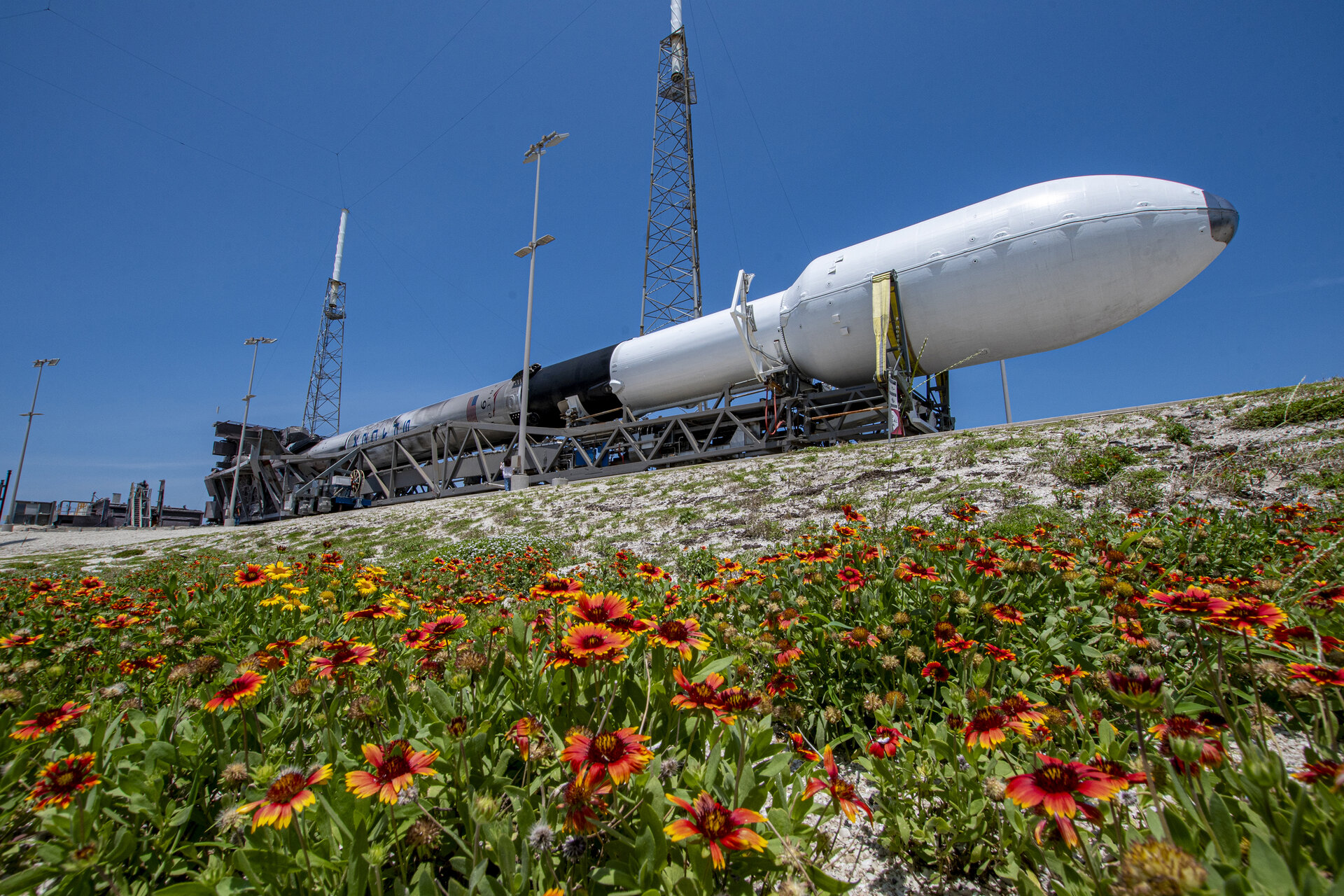
SpaceX's Falcon 9 rocket, with the Euclid telescope in its payload
shroud, rolls out to its launch pad at Cape Canaveral. The Falcon 9 flew
with a new payload fairing and a reused first stage booster.
SpaceX and ESA agreed on a contract to launch Euclid last December,
and the little more than six months before the target liftoff date. At
that time, officials hoped to launch Euclid at the beginning of July. It
turned out that Euclid launched right on time, despite an "incredibly
tense" period when there was uncertainty about how and when the mission
might get into space, Racca said.
Engineers performed additional checks to ensure Euclid’s sensitive
optics and telescope made of silicon carbide—which combine the
properties of metal and ceramics—could withstand the stronger vibrations
of SpaceX’s rocket.
SpaceX charged ESA about $70 million to launch Euclid, according to
Healy. That’s about $5 million above the standard commercial “list
price” for a dedicated Falcon 9 launch, covering extra costs for SpaceX
to meet unusually stringent cleanliness requirements for the Euclid
telescope. A grain of dust or a piece of hair on the telescope’s optics
could ruin the mission.
SpaceX also provided a brand new payload fairing for the Euclid
mission to reduce the risk of any contaminants falling onto the
telescope. Most launches employ a payload shroud reused from previous
missions.
Delays in the Ariane 6 rocket has also prompted ESA to agree to
launch the agency’s Hera asteroid probe on a Falcon 9 rocket from Cape
Canaveral in 2024. Earlier this week, ESA’s director general said an
Earth science satellite called EarthCARE will also have to launch on a
SpaceX Falcon 9 rocket due to problems with its European Vega C rocket.
And ESA, along with the European Union, is considering launching up
to four Galileo navigation satellites on two SpaceX Falcon 9 rockets
because European launchers are not ready.