Sunday, December 03, 2023


Oceans are the largest environment on Earth
Humans have an innate drive to overcome our natural limits – to fly like a bird, to reach outer space. Now, with the help of Deep, could humans learn to live in the depths of the ocean?
The idea of humans living underwater is not new. In the 1960s, the French ocean explorer Jaques-Yves Cousteau built an underwater village. Other projects followed – but none have so far resulted in a continuous human presence under the sea.
The final frontier? How humans could live underwater in 'ocean stations'

In 2026, a crew of six fully-trained aquanauts will be deployed to a new oceanic habitat system – beginning what promises to be the era of humanity's continuous presence underwater.
Deep's system of configurable, customisable and flexible subsea habitats will be self-sufficient, powered by renewable energy, with subsea bio-reactors to sustainably deal with waste, and be independent of the surface. The subsea habitats will allow scientists to live at depth for weeks rather than minutes. They will have access to the water through a moon pool (essentially a hole in the floor that leads out into the ocean), as well as dedicated wet and dry labs.

However, much like spaceflight, life aboard a submarine is widely recognised as one of the most stressful and psychologically demanding experiences. Subsea habitats are often cramped, and inhabitants have to deal with confinement, absence of day/night cues, lack of privacy, and isolation from the outside world.
"We'll be studying whether people can cope with being isolated in a remote place that you just simply cannot leave," says Short. This research lends itself to space travel too, he says. "If we're going to send people to Mars, that will be a three-year mission. It's important to understand how six people would cope with being trapped in a tin together for three years."
THE FEAR IS REAL >>> (AUKUS) --- U.S, UK AUSTRALIA Release New High-Tech to Counter China's Powers! #chinaeconomy #chinatechnology #china
8,799 views Dec 2, 2023 #chinaeconomy #chinatechnology #china
In this video, we delve deep into the escalating military presence of the United States, United Kingdom, and Australia in the South China Sea, a response to China's expanding economic and military might.
We analyze the reasons behind the West's growing concern over China's peaceful rise and its strategic advancements, particularly through the Belt and Road initiative and the expansion of its military powers in the region.
AUKUS launching new electronic warfare prize competition, other initiatives
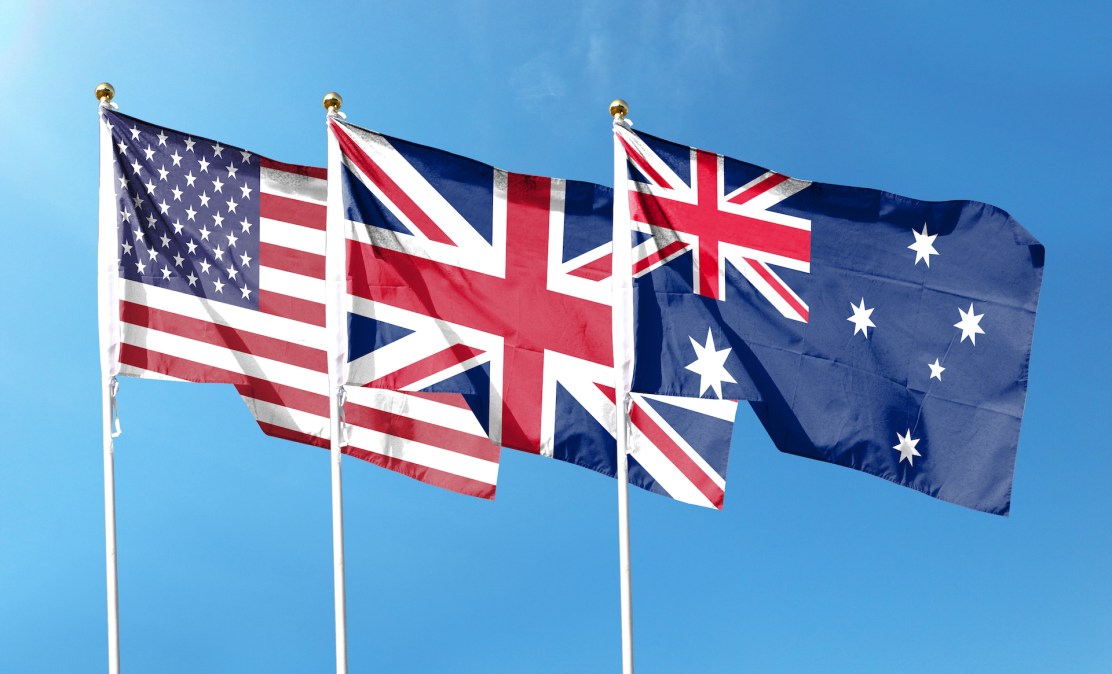
The AUKUS alliance will kick off a new innovation challenge series early next year with an initial focus on electronic warfare, defense leaders from the three nations announced Friday.
Australia’s Deputy Prime Minister and Minister of Defence Richard Marles, U.K. Secretary of State for Defence Grant Shapps and U.S. Secretary of Defense Lloyd Austin, met at the Defense Innovation Unit’s headquarters in Silicon Valley, where the primary focus of their discussions was on advancing Pillar 2 of the trilateral military partnership.
Pillar 2 of AUKUS is geared toward developing and fielding emerging technologies including artificial intelligence and autonomy, advanced cyber, hypersonics and counter-hypersonics, quantum tech, undersea warfare and electronic warfare.
The new innovation challenge falls under that umbrella.
- “We have innovation hubs, obviously, in the Defense Department … [that] run prize challenges from time to time, designed to facilitate collecting the best technologies and ideas from the commercial sector with the goal of leveraging those to enhance U.S. military capabilities,” a senior U.S. defense official told reporters on condition of anonymity during a background briefing at the Pentagon ahead of the trilateral meeting and official announcements.
- “What we’re going to be announcing is doing essentially a trilateral innovation challenge where … each country will release a common innovation prize challenge, and it will be eligible to companies from all three nations. So, it’s illustrative of the way that AUKUS is deepening our ability to innovate together and work together.”
The U.S. and other nations have been moving to boost their offensive and defensive EW arsenals to try to gain an edge and protect themselves against growing threats in the electromagnetic spectrum.
- “The first area that we’re focusing on [for the new innovation challenge] is electronic warfare, because we view enhancing our electronic warfare capabilities as critical from the perspective of all of our defense strategies. And it’s an area that we’ve been working together on in AUKUS,” the official told reporters.
- “I think for the innovation prize challenge, we were really focused on what are areas that our national defense strategies across all three countries identify as important, and … where we are working together in AUKUS, and where we see opportunities for further collaboration. And electronic warfare clearly fits into all three categories. You know, it’s clear that enhancing our capabilities in that arena will be essential on the 21st century battlefield.”
- They declined to reveal how much money will be up for grabs for the prize competitions.
- “We don’t have anything we’re ready to announce today on the specific dollar amounts involved, other than to say that we think that it will provide important incentives for industry partners from all three countries to contribute ideas to the first challenge focused on electronic warfare … The Defense Innovation Unit has been spearheading some of our efforts in the United States. And so our plan is for the release of the first prize challenge in early 2024,” the official told DefenseScoop at the briefing. . .
The official suggested the events could include tech that’s similar to what Task Force 59 under U.S. Navy Central Command has been using in the Middle East region. The task force has been using a variety of unmanned systems, sensors and artificial intelligence capabilities to create a “mesh network” for intelligence, surveillance and reconnaissance missions. The unit also recently successfully tested the ability of a robotic surface vessel to launch a loitering munition and hit its target. . .
🕒 Timestamps:
0:00 - Introduction
2:05 - China's Military Growth and Economic Might
4:30 - AUKUS Alliance and Its Implications
7:15 - The Technological Edge: Drones and Electronic Warfare
10:20 - The Naval Strategy: Submarines and Maritime Drones 1
1:45 - The Escalation of the Arms Race in the Indo-Pacific
12:10 - The Impact on Regional and Global Security
13:35 - Advanced Military Technologies: AI and Surveillance Aircraft
14:00 - The Diplomatic and Economic Fallout
14:15 - The Role of Cyber Warfare and Surveillance
15:10 - The Strategic Balance in the Indo-Pacific
15:25 - Conclusion and Discussion
MOZILLA
Blog
Mozilla’s blog features guides to making your online life better, stories from the movement, and critical analysis of issues around internet health.
A Nightmare Before Christmas: Mozilla Researchers Find Many Popular Tech Gifts Perform Worse on Privacy than Ever Before
Annual *Privacy Not Included holiday buyers’ guide reveals companies backsliding on privacy and security features, with children’s connected toys and gadgets among the worst offenders.

Mozilla


Listen to the trailer for season 7 of Mozilla’s podcast IRL
This season, we explore how to build responsible artificial intelligence. We talk to people who are building trustworthy alternatives and confronting today’s risks to help shape better AI for tomorrow.

Latest Blog Posts
-
 Advocacy Dec. 1, 2023
Mozilla Applauds Senator’s Letter to Automakers Demanding Strong Privacy Protections
Senator Ed Markey (D-MA) sent letters to Ford Motor Company and 13 other automobile manufacturers. The letters request answers to key questions about their data collection practices, and also urge strong privacy protections for consumers.

Ashley Boyd
-
 Fellowships & Awards Dec. 1, 2023
Mozilla Fellowship & Awards News: October-November 2023
Looking to learn more about or engage with Mozilla Fellows and Awardees around the world? Stay up-to-date with regular updates about these leaders and their work by reviewing the current and upcoming news and announcements below.

Justyna Nowak

The Ins-and-Outs of A Trampoline Workout | Vogue
Why You Should Consider a Trampoline Workout This Winter

All products featured on Vogue are independently selected by our editors. However, when you buy something through our retail links, we may earn an affiliate commission.
Like many who are on the hunt for new ways to exercise, trampoline workouts have piqued our interest as of late. Bridging the gap between recreation and exercise, these rebounding workouts are perfectly suited to life indoors and make working out easy for those of us who would prefer not to traverse outside our homes to burn calories. It’s far from a stand-in for other types of exercise—it’s a robust alternative; one that astronauts have used to help regain bone density and muscle mass after returning from space. Further proof of its effectiveness was a NASA study published in the Journal of Applied Physiology that found rebounding 68% more efficient than jogging. Even legendary actor Goldie Hawn shared her love for this form of exercising, writing: “Dance, jump, and twirl like nobody’s watching!” in the caption of one of her rebounding videos. (And, in Hawn, we always trust.)
Here, Colette Dong, cofounder of Tribeca trampoline-cardio studio The Ness, and Dr. Melissa Leber, MD, director of emergency department sports medicine at Mount Sinai Health System help explain the ins and outs of a safe and energy-boosting trampoline workout. Read on to learn more.
What is a rebounding workout?
Rebounding is a cardiovascular exercise typically performed on a mini trampoline. “Rebounders are usually smaller and firmer, which allows for a better bounce when compared to a larger trampoline you might see outdoors,” explains Dong, who insists that even though a trampoline is low-impact cardio, it’s not lacking in intensity. “It covers every single part of your body, and you can work up a massive sweat in just 30 minutes,” she says. “It’s efficient—but mainly, it’s fun.”
Believe it or not > This is severa degrees above the daily "normal" for summer temperatures...remainder of the week a degree or two warmer :)
US National Weather Service Phoenix Arizona t͏ o͏ r͏ o͏ S͏ d͏ n͏ p͏ e͏ s͏ 5͏ 3͏ 8͏ c͏ u͏ 5͏ a͏ 6͏ 1͏ t͏ f͏ 2͏ c͏ 6͏ m͏ g͏ 4͏ u͏ i͏ 1͏ 5͏...

-
 Flash News: Ukraine Intercepts Russian Kh-59 Cruise Missile Using US VAMPIRE Air Defense System Mounted on Boat. Ukrainian forces have made ...
 -
A nor’easter is about to hit the Northeast in May. That’s very unusual.

