Wednesday, May 01, 2024

Three US-supplied ATACMS Missiles Strike Russian Training-Ground near village Rogove, Luhansk region.


Three US-supplied ATACMS missiles strike Russian training ground near  village Rogove, Luhansk region.
Uploaded: May 1, 2024
r/UkraineWarVideoReport - Three US-supplied ATACMS missiles strike Russian training ground near village Rogove, Luhansk region.
__________________________________________________________________
It is unknown how many ATACMS, which come in both unitary and cluster warhead configurations, Ukraine has received. However, attacks in both Crimea and now Luhansk indicate that Ukraine feels it has enough to launch relatively large volleys over successive days.
How long these volleys will last, and how much they stem Russia’s increasing advancement across the front lines remains to be seen.

ATACMS Volley Strikes Mass Of Russian Troops Training In Eastern Ukraine

In a little more than 90 seconds, four ATACMS hit a concentration of Russian troops reportedly preparing to attack in the Kharkiv area.
BYHOWARD ALTMAN|
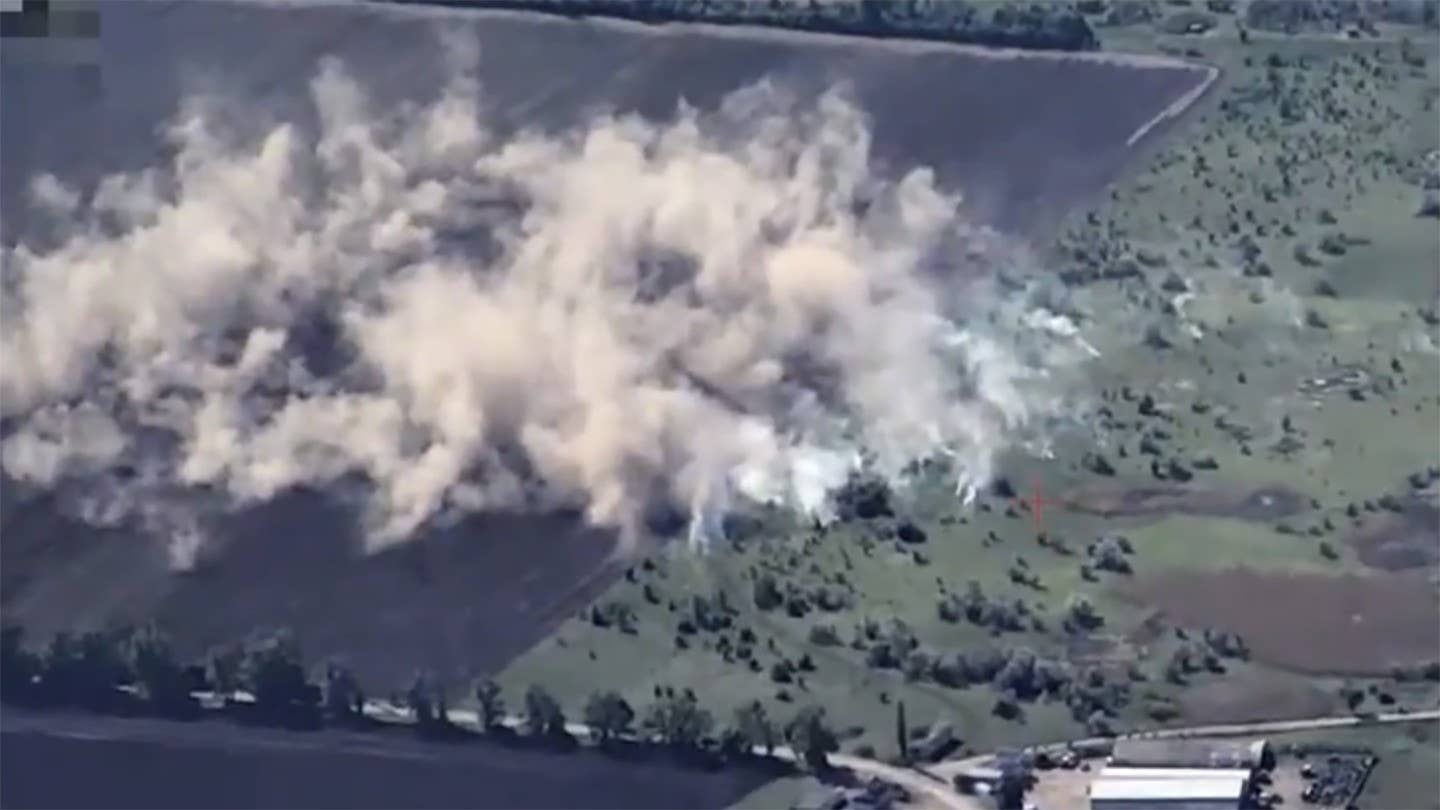
ATACMS cluster munitions struck a Russian training ground in Luhansk Oblast about 50 miles from Ukrainian lines.
Twitter screencap
A new video emerged on social media showing an apparent cluster munition-laden Army Tactical Missile System (ATACMS) short-range ballistic attack on a mass of Russian troops and equipment in Eastern Ukraine's Luhansk Oblast. 
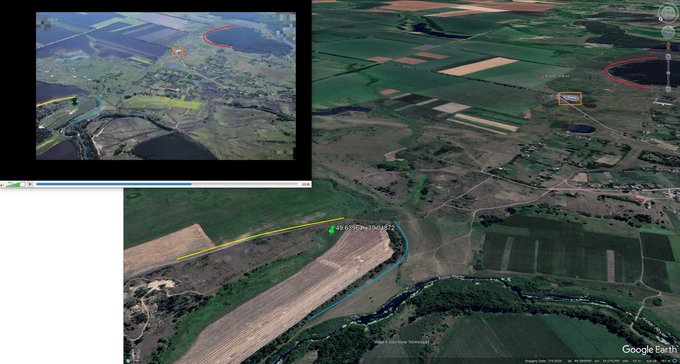
  • Drone video shows what appears to be a volley of four ATACMS striking over about 95 seconds on a Russian training and coordination center near the town of Kuban. That's located about 80 kilometers (50 miles) from Ukrainian lines. 

The drone video opens with an overview of the area.

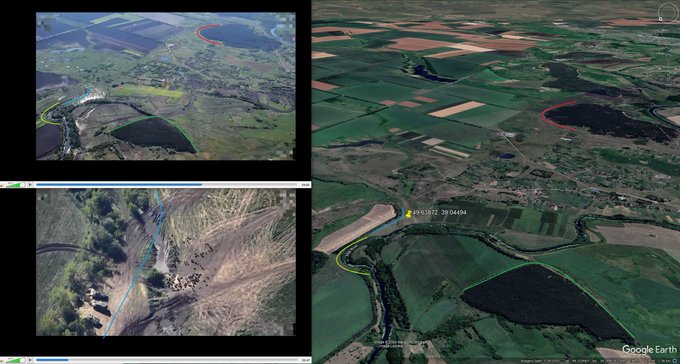
At the 37-second mark the surveillance drone zooms onto a concentration of Russian troops and at least three armored vehicles.
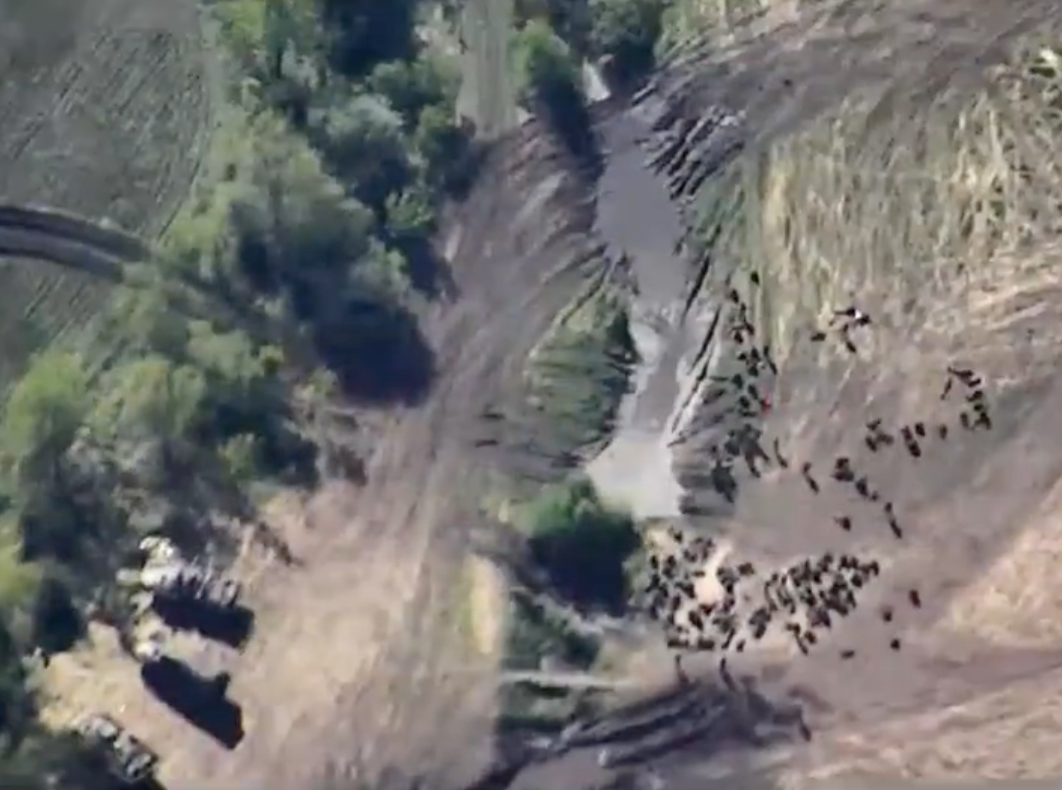
(Twitter screencap)
(Twitter screencap)

A little more than a minute later, what appears to be a dud or a spent dispenser landing in the general vicinity can be seen at the 3:50 mark.

(Twitter screencap)
(Twitter screencap)

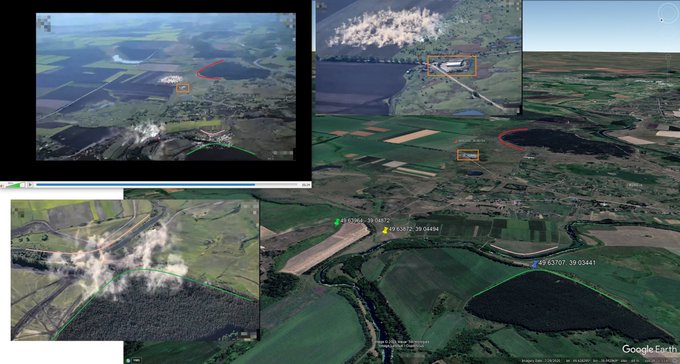
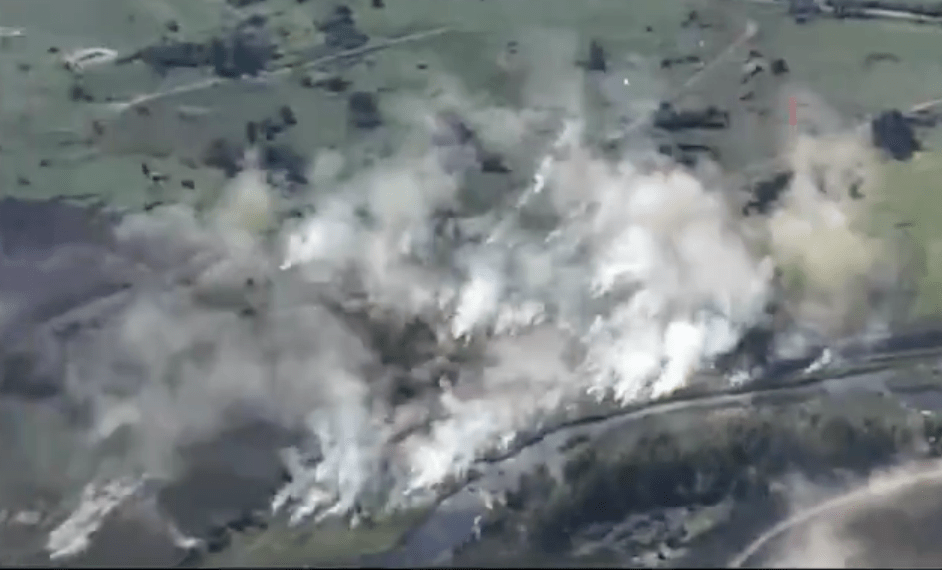
The first of three explosions that blanket the area, showing the tell-tale plumes of smoke from the submunitions being scattered and detonating, can be seen at about the 4-minute mark.

(Twitter screencap)
(Twitter screencap)

A little less than 90 seconds later, another explosion can be seen a short distance away at the 5:24 mark.
(Twitter screencap)
(Twitter screencap)

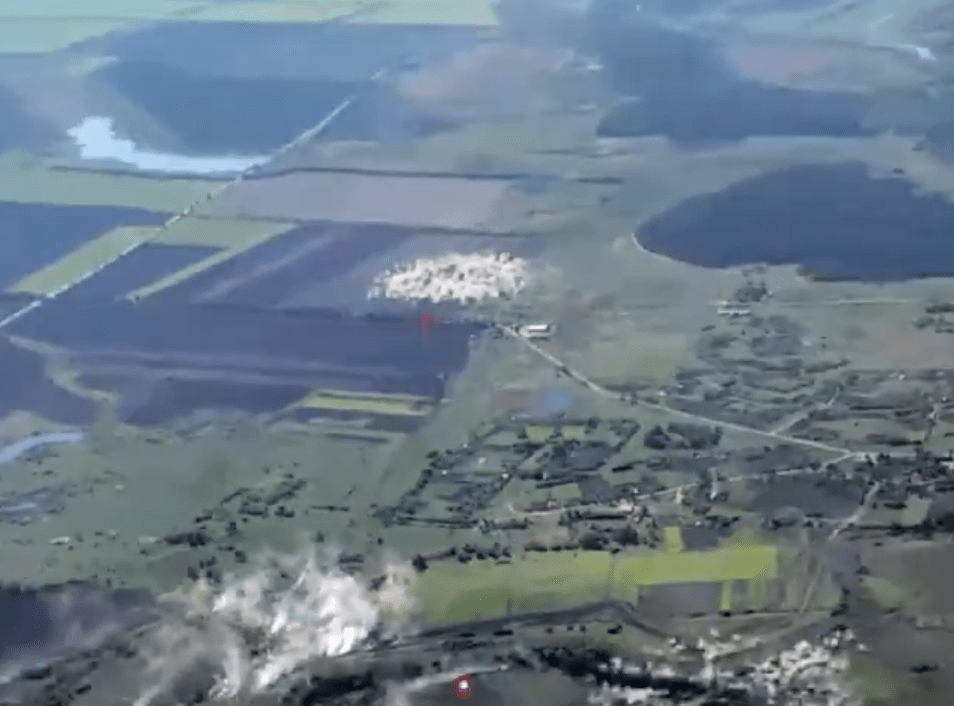
That was quickly followed by another strike in the area about second later, which you can see a short distance from the building in the photo below.
(Twitter screencap)
(Twitter screencap)

Ukrainian Telegram channels and open source intelligence (OSINT) Twitter accounts speculated that dozens of Russian troops were killed in the attack, but The War Zone cannot independently verify that.
The first tranche of about 20 ATACMS short-range variants arrived in Ukraine in October and were apparently mostly used during attacks on Russian-held airfields the same month. Ukraine has been using the limited number of these prized weapons it has received to devastating effect. 
  • Longer-range variants, which were just introduced, were used in a wave of attacks on air bases and air defense installations across the Crimean peninsula early Tuesday morning, according to the Kyiv Post.

Key Takeaways: Russian sources claimed that Ukrainian forces conducted a short-range MGM-140 ATACMS strike against targets in occupied Crimea on the night of April 29 to 30. (1/5)

Institute for the Study of War
@TheStudyofWar

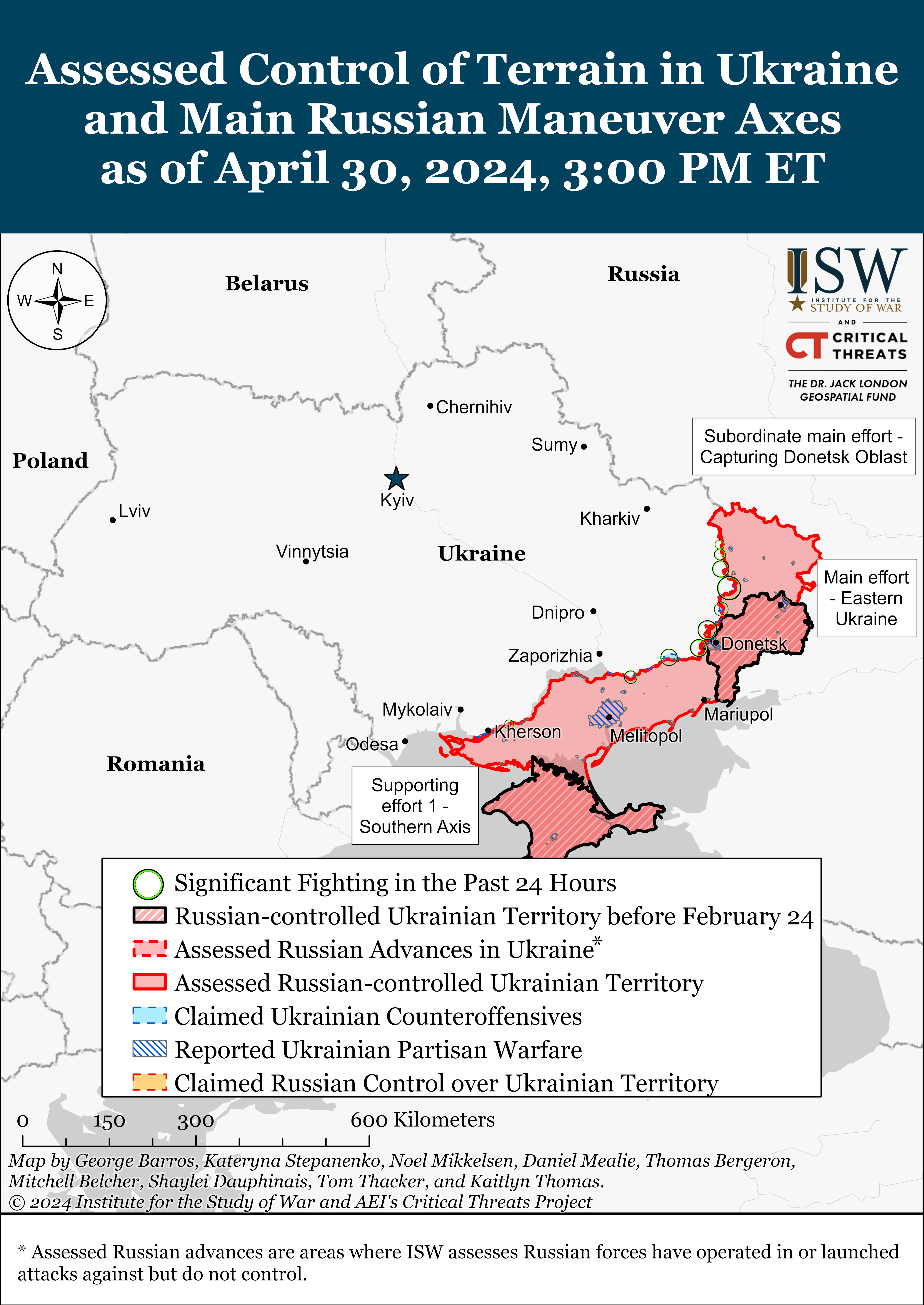
NEW: Russian forces did not make any confirmed advances in the Avdiivka area on April 30 for the first time in several days, while Ukrainian sources reported that Russian forces conducted several more attacks in the Bakhmut-Chasiv Yar direction than near Avdiivka.

Image
Image
194
Reply

This strike was designed to hit Russian troops preparing for an attack on the Kharkiv region, one Ukrainian military analyst posited.

"Such strikes in the Luhansk region are crucial,” said Oleksandr Musiienko, the head of the Ukraine’s Center for Military-Legal Studies, according to the Ukrainian RBC media outlet. “It's precisely in the territory of the northeastern part of the Luhansk region that Russia has been training and coordinating its units, which were specifically preparing for an escalation of hostilities in the Kharkiv region, where Russia plans to reinforce its advance," explained Musiienko.
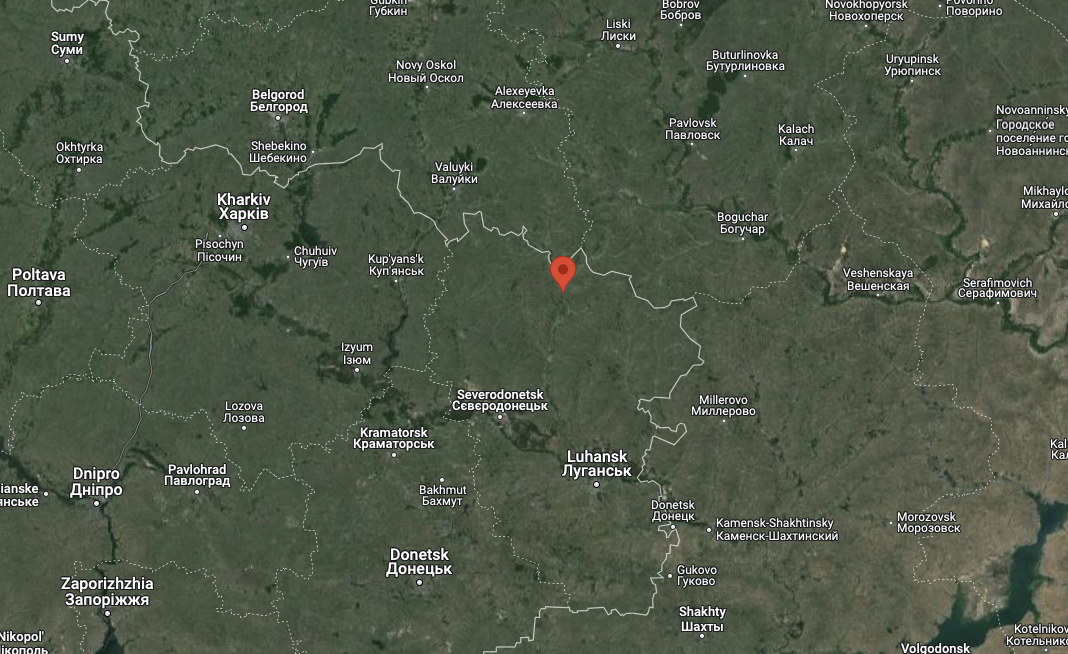
The ATACMS attack took place near the town of Kuban in Luhansk Oblast, about 50 miles from Ukrainian lines. (Google Earth image)

While Ukraine has recently concentrated ATACMS strikes on Crimea, Russian troops in the eastern part of Ukraine are not logistically dependent on the illegally occupied peninsula, requiring other targets to be hit.
"It's necessary to strike not only at Crimea, as the Russian troop formations in the East and in the Belgorod and Kursk regions are not dependent on the occupied Crimea,” Musiienko added. “Therefore, strikes specifically in the Luhansk region are extremely important.”.

The objective is to impede Russian advances.
"The goal is to slow down the enemy's offensive actions. Not allowing them to deploy into combat formations. While we await more advanced weaponry, it's crucial to use what we have, namely ATACMS, to strike the enemy in their rear and prevent them from advancing to the front line," he concluded.
Late last month, the Pentagon promised Ukraine an unspecified number of ATACMS, including longer-range variants that can hit targets up to about 186 miles away, as opposed to the short-range versions that can hit targets up to a distance of about 103 miles. Media reports said that longer-range variants had been in country since March.


Lara Seligman

FINAL INTERVIEW: Outgoing U.S. Indo-Pacific commander urges more action to counter China'...

Jane Harman on Ceasefire Talks, Saudi Arabia

A radar analysis reportedly found a ‘black hole’ caused by Vlad’s electronic weapons

Baltic leaders warned of a looming air disaster if the GPS jamming blamed on Moscow continues.
Almost 4,000 flights have experienced radar jamming in the area in recent months, according to a report by The Sun.

Tobol works by interfering with an aircraft’s wireless communications systems and using fake signals to trick pilots into believing they are in a different location.

“[These attacks] put an unnecessary risk on civilian aircraft and could potentially endanger people’s lives,” a defense source told Daily Mail Online.

Testing the Equipment?

Tobol is reportedly a large satellite dish strategically positioned at a Russian military site between Lithuania and Poland.

It is said to function as an invisible shield to protect Russian military bases from NATO’s satellite-guided missiles.

The EW system is designed to interfere with satellite signals and cause a weapon to miss its target.

Estonian Defense Forces Commander Martin Harem acknowledged the existence of such attacks but said he was unsure if Moscow wants to achieve something or is just testing its EW equipment.

Last month, the UK said a Royal Air Force plane carrying Defense Minister Grant Shapps had its signal jammed while flying near Russia.

Though the link to Tobol was not immediately established, the incident happened near Kaliningrad where the EW system is reportedly located.

A radar analysis reportedly found a  ‘black hole’ caused by Vlad’s electronic weapons
6
A radar analysis reportedly found a ‘black hole’ caused by Vlad’s electronic weapons
Is this where Putin is jamming hols flights from? Radar analysis finds 'black  hole' caused by Vlad's electronic weapons | The US Sun
Two Finnair planes had to turn back after having their GPS signals disrupted and struggled to land
6
Two Finnair planes had to turn back after having their GPS signals disrupted and struggled to land
6
This week, Finland’s national airline Finnair said that it would suspend flights to the Estonian city of Tartu for a month.
Two of Finnair's planes were forced to turn around last week after their GPS signals were disrupted and they were struggling to land.
However, the aircraft are just the latest victims of Putin's electronic attacks that have already affected tens of thousands commercial flights.

  • The electronic warfare can make satnavs useless, therefore pilots are unsure of routes and struggle to tell others where they are.
  • Bogus data also forces planes to swerve and dive to avoid phantom obstacles that were not really there.
Earlier this week, Baltic ministers Estonia, Latvia and Lithuania all separately warned that Russia's GPS jamming risked causing an air disaster.
Since Russia's full-scale invasion of Ukraine, electronic jamming has sharply increased in the Baltic region - but The Sun recently revealed it had spread across Europe.
Open-source analysts studying the positions of planes experiencing jamming believe it is originating from Kaliningrad, a Russian exclave wedged between Poland and Lithuania.

However, a new analysis suggests the black hole is elsewhere - mainland Russia.

Thousands of British flights have been hit by suspected Russian jamming in a major threat to air safety
By triangulating data collected by drone flights as well as the positions of the targeted aircraft, Markus Jonsson, a pseudonymous analyst, argued on X, it was coming from St Petersburg.
A source with access to private data confirmed to The Economist that their is clear evidence of Russian jamming in that area.
It also corresponds to the location of several known Russian military sites.
There are also reports a top secret Russian jamming weapon known as "Tobol" is behind GPS interference on NATO's eastern flank.
It's not known if Russia is directly trying to interfere with commercial flights.

A likely reason is that the jamming signals are attempting to protect Russian military targets from the threat of Ukrainian drone attacks and civilian flights are a byproduct.
However, The Sun last week revealed a worrying, widespread pattern.

Russian jamming shows Putin 'knows no end to evil,' says Shapps

BY Jerome Starkey & Iona Cleave


DEFENCE Secretary Grant Shapps told The Sun's brand new World at War show that Russia's electronic jamming was "evil".
Mr Shapps said he "utterly condemned" Russia's jamming of thousands of commercial European flights and argued it was "irresponsible" for Moscow "to block GPS knowing that you're blocking civilian airlines".
He said the spoofing and jamming was again a clear example that "Putin just knows basically no end to his own evil is my view."
In response to the now widespread issue, Shapps revealed that the UK is developing systems for aircraft that do not rely on GPS to tell them where they are.
When pressed on whether this was needed for civilian aircraft, Shapps firmly answered: "Yes."
He added: "I could confirm, actually, that defence research and development is at the cutting edge of doing even more with this.
"And I imagine that in years to come, probably all aircraft will have many alternative versions of navigation for exactly this reason."
Shapps speaking on The Sun's new World of War show with Jerome Starkey and Iona Cleave
6
Shapps speaking on The Sun's new World of War show with Jerome Starkey and Iona Cleave

Zelensky Calls for a European Army as He Slams EU Leaders’ Response

      Jan 23, 2026 During the EU Summit yesterday, the EU leaders ...