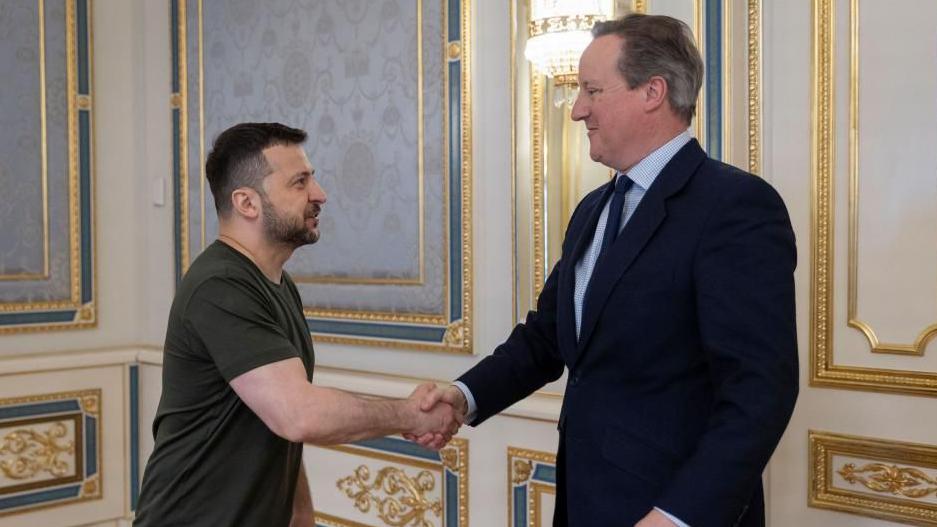
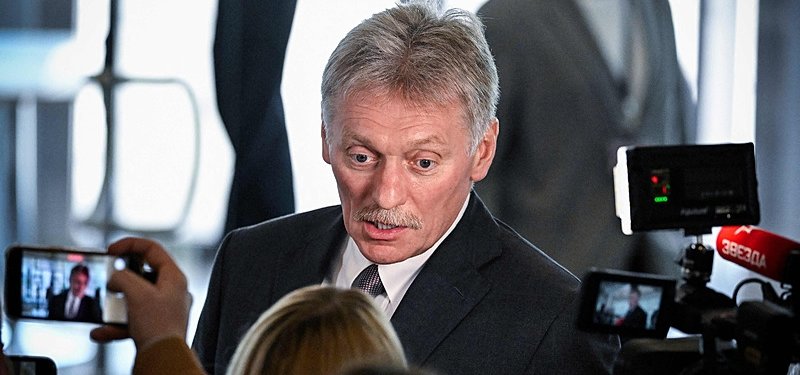
Recent statements made by French President Emmanuel Macron and British Foreign Secretary David Cameron are part of an ongoing “verbal escalation” by Western officials, Kremlin spokesman Dmitry Peskov told reporters on Friday. In an interview with The Economist this week, Macron set out two key conditions for sending French troops to Ukraine:
“If the Russians were to break through the front lines” and
if there was a “Ukrainian request.”
The French president also outlined his “strategic objective” of making sure Russia does not win in Ukraine, arguing that such a development would threaten European security.
Meanwhile, former UK Prime Minister and current Foreign Secretary David Cameron
told Reuters on Thursday that London will continue to send Kiev some $3 billion annually “for as long as it takes”
and suggested that Ukraine has every right to use British weapons to strike targets deep inside Russia.
Responding to these comments, Peskov said that the statements made by Macron and Cameron represent a “very dangerous trend” that could threaten security on the continent.
“France, represented by the head of state, continues to constantly talk about the possibility of its direct involvement on the ground in the conflict around Ukraine. This is a very dangerous trend, we are watching it closely,”the Kremlin spokesman stated.
As for Cameron’s assertion that Kiev can use British weapons to attack Russia, Peskov warned that such “verbal escalation” around the Ukrainian conflict could “potentially pose a danger to European security and the entire European security architecture.” Despite these “concerning” trends, the Kremlin spokesman insisted that Moscow will continue to carry out its special military operation in Ukraine until all of its goals are achieved.
Earlier this week, Peskov had also addressed the concerns being raised by a number of European leaders about a supposed attack from Russia once the Ukraine conflict is over.
The spokesman reiterated that Moscow has no plans or interest in targeting any European nations and dismissed the accusations as “horror stories” made up to distract people from domestic problems in their own countries.
“European capitals are escalating tension in every possible way… trying to fool their population with these horror stories about terrible Russians who will never stop and continue moving forward. That’s absolutely groundless,”Peskov said, adding that the officials pushing such claims may be trying to “compensate for the loss of their image, their rating.”
Similar statements were also made by Russian President Vladimir Putin in March, when he dismissed talk of a potential Russian attack on Europe as an attempt to scare local citizens in order to “extract additional money from people.”
Director of the International Monetary Fund Kristalina Georgieva speaks meets with Egypt’s Prime Minister Mostafa Madbouly in the presence of the Governor of the Central Bank and Minister of Finance. (IMF Director on X)
Egypt’s Outlook Raised by Fitch After $57 Billion Global Bailout
RIYADH: Egypt’s economy witnessed an uptick in ratings as S&P Global upgraded its outlook for the country to positive from stable. The US-based firm also affirmed Egypt’s debt rating at “B-/B,” according to a statement. This move is indicative of the fact that the country currently has the capacity to meet its financial obligations but faces ongoing uncertainties.
In a statement, the agency said: “We see the exchange rate liberalization, alongside Egypt’s stated commitment to stick to ambitious budgetary consolidation targets, as a key step in shoring up confidence and growth in Egypt’s economy and its debt sustainability.” However, S&P expects the country’s gross domestic product growth to dwindle to about 3 percent in the current fiscal year, driven by the limited foreign currency availability, high inflation, and tight monetary policy, but to rebound from 2025 onward to 3.8 percent. The agency also forecasted that increased foreign currency availability resulting in reduced restrictions on foreign exchange could also prompt an upgrade.
Earlier this month, the International Monetary Fund approved increasing a support program for the country from $3 billion to $8 billion following the liberalization of the exchange rate and the raising of interest rates. This also comes after the nation obtained an investment worth $35 billion from the UAE in February to develop a stretch of its Mediterranean coast.
The agreement with Abu Dhabi Developmental Holding Co., the smallest of the emirate’s three main sovereign investment funds, seeks to develop the Ras El Hekma peninsula, potentially attracting as much as $150 billion in investments, Egyptian Prime Minister Mostafa Madbouly said in press conference at that time.
Similarly, Egypt is set to receive €7.4 billion ($8 billion) in aid from the EU to support its economy until 2027 amidst conflicts in Gaza and Sudan, according to reports.
Egypt will receive the first tranche of an expanded loan agreement with the International Monetary Fund (IMF) next week, Prime Minister Mostafa Madbouly said during a press conference on Saturday. The expanded $8 billion financial support program enables the immediate release of $820 million, according to a statement by the IMF. Madbouly noted that he was following up with Central Bank Governor Hassan Abdullah on foreign currency flows, indicating that the first installment of the IMF loan will be received next week.
He also stressed that the government will work to ensure the completion of all reform paths and the return of dollar flows to normal.
The IMF had announced that its Executive Board had conducted the first and second review of Egypt’s economic program, and decided to increase the original agreement with Egypt by $5 billion. In a statement, the Fund said that Egypt can withdraw about $820 million immediately, indicating that implementing economic policies within the framework of the program is important to confront the macroeconomic challenges in this country.
It continued that the Ras Al-Hekma investment deal will ease financing pressures in the near term, stressing that external shocks and delayed policy adjustments affected economic activity in Egypt, which led to a slowdown in growth to 3.8 percent in the fiscal year 2022-2023.
“The difficult external environment generated by Russia’s war in Ukraine was subsequently aggravated by the conflict in Gaza and Israel, as well as tensions in the Red Sea. These developments increased the complexity of macroeconomic challenges and called for decisive domestic policy action supported by a more robust external financing package, including from the IMF,”the statement read.