The current jobless rate stands within a hair’s breath of doing that in Friday’s jobs report, and yet even the creator of the rule, former Fed economist Claudia Sahm, doesn’t expect a downturn right away.
The reason is that some of the expansion in the jobless rate could be created by growth in immigration, says Sahm, who currently serves as chief economist for New Century Advisors. Moreover, the unemployment rate is moving from a historic low to a more normal rate.
The Sahm rule is one of several recession indicators that no longer seem to be reliable in today’s postpandemic economy. The economy was distorted by supply-chain shutdowns, massive government stimulus, and soaring consumer demand that produced high inflation. Now, the economy is calming, but it still isn’t entirely normal.
None of this means that we should disregard growing unemployment rates. Indeed, Sahm says she’s now “more concerned” than she has been at any point in this cycle that the U.S. could be headed to another recession, though probably not this year.
More precisely, the Sahm rule signals a recession when the three-month moving average of the national unemployment rate rises by 0.5 percentage points or more, relative to its low during the previous 12 months.
The indicator hit 0.43 percentage points in June after the unemployment rate hit 4.1%, on the brink of the threshold.
While triggering the Sahm rule would require July’s jobless rate to hit 4.2%, economists surveyed by FactSet currently believe that the unemployment rate will remain steady at 4.1% this month. But a 4.2% rate is likely in the coming months as higher interest rates from the Federal Reserve continue to weigh on employers and their hiring plans. “I expect the unemployment rate to drift up further this year. I expect that the Sahm rule will trigger—we’re not very far from it,”says Sahm. “But it’s unlikely that come September or October, that the U.S. economy is in a recession.”
Sahm says the rule is likely broken this time around because the pandemic years haven’t followed the normal patterns of a recession and recovery business cycle.
There’s a high likelihood that some of the recent gains in unemployment is being driven by a labor force expansion, led by immigration, she says. That could be skewing the indicator’s effectiveness.
But it’s also just as clear that there’s some real “garden variety” unemployment increases occurring as well, Sahm says.
So rising unemployment cannot be shrugged off.
Sahm suspects that while the rule’s threshold is currently 0.5 or more, it may need to be shifted higher in this environment to account for the effects of the growing workforce. Whether that’s just a temporary break or a permanent shift remains to be seen. “The story is complicated,” Sahm says of the current labor conditions. “We’ve had this drifting up. It’s not just little blips in the data—this has been going on for a while. So what is it that makes it stop?”
Boeing has some work to do to find a long-term fix for safety issues on future Starliner missions
Boeing’s Starliner has cost at least twice as much as SpaceX’s Crew Dragon "Risk remains that we may record additional losses in future periods." Stephen Clark - 7/31/2024, 5:27 PM
Boeing's Starliner has cost at least twice as much as SpaceX's Crew Dragon | Ars Technica
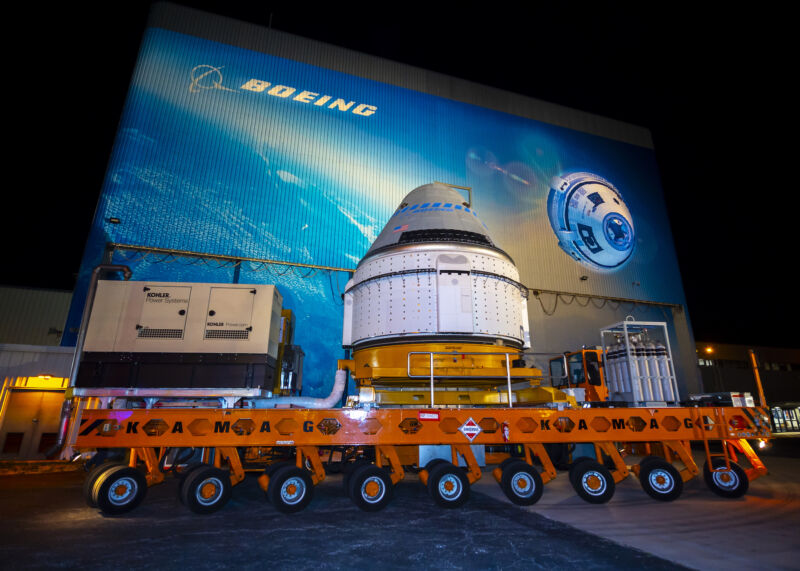
Boeing announced another financial charge Wednesday for its troubled Starliner commercial crew program, bringing the company's total losses on Starliner to $1.6 billion.
In its quarterly earnings report, Boeing registered a $125 million loss on the Starliner program, blaming delays on the spacecraft's still-ongoing Crew Flight Test, the program's first mission to carry astronauts into orbit.
This is not the first time Boeing has reported a financial loss on Starliner.
Including the new charge announced Wednesday, Boeing has now suffered an overall loss on the program of nearly $1.6 billion since 2016.
These losses have generally been caused by schedule delays and additional work to solve problems on Starliner. When NASA awarded Boeing a $4.2 billion contract to complete development of the Starliner spacecraft a decade ago, the aerospace contractor projected the capsule would be ready to fly astronauts by the end of 2017. It turns out the Crew Flight Test didn't launch until June 5, 2024.
In a separate announcement Wednesday, Boeing named Kelly Ortberg as the company’s CEO, effective August 8. He will replace Dave Calhoun, whose tenure as Boeing’s chief executive was marred by scandals with the 737 MAX passenger airplane. Ortberg was previously CEO of Rockwell Collins, now known as Collins Aerospace, a major supplier of avionics and other parts for the aerospace industry.
Boeing is on the hook When NASA selected Boeing and SpaceX to develop the Starliner and Crew Dragon spacecraft for astronaut missions, the agency signed fixed-price agreements with each contractor. These fixed-price contracts mean the contractors, not the government, are responsible for paying for cost overruns. . . .
Adweek is the leading source of news and insight serving the brand marketing ecosystem.
First published in 1979 and owned by Shamrock Capital since 2020, Adweek’s award-winning coverage reaches an engaged audience of professionals across platforms including print, digital, events, podcasts, newsletters, social media and mobile apps.
As a touchstone of the advertising and marketing community, Adweek is an unparalleled resource for leaders across multiple industries who rely on its content to help them do their jobs better.
No Soda Has Grabbed More Market Share in the Past 20 Years Than Coca-Cola Zero Sugar
One factor behind the brand's steady rise: a willingness to change
Since debuting in 2005, the sugar-free beverage has claimed 3.8% of the category.ADWEEK; Coca-Cola, Getty Images
With C-suite leaders from iconic brands keynoting sessions, leading workshops and attending networking events, Brandweek is the place to be for marketing innovation and problem-solving. Register to attend September 23–26 in Phoenix, Arizona.
After a stronger-than-expected second quarter, which saw net sales increase 3% to $12.4 billion, the Coca-Cola Company has raised its full-year outlook. “We are encouraged with our second quarter results, which delivered solid topline and operating income growth in an ever-changing landscape,” James Quincey, CEO of the Coca-Cola Company, said in a statement. Coca-Cola’s latest earnings success comes at a time when the soda business as a whole is in decline. Between 2004 and 2023, the volume of carbonated soft drinks bought and sold in America decreased 27%, according to trade publication Beverage Digest. Still, amid the category’s downward trajectory one brand has continued to rise, capturing more market share in the past 20 years than all the others. That brand: Coca-Cola Zero Sugar. Since debuting in 2005, the sugar-free beverage has grabbed 3.8% of the U.S. market, putting it in seventh place overall just behind PepsiCo’s Mountain Dew.
Pepsi Zero Sugar, which first showed up in America as Diet Pepsi Max in 2007, represents 0.8% of the category.
Duane Stanford, editor and publisher of Beverage Digest, noted that while Coca-Cola variations have come and gone over the years, none have performed as well as Coca-Cola Zero Sugar.
“It is by all measures a success,” he said.
One factor driving Coca-Cola Zero Sugar’s prosperity has been a willingness to change
Since appearing on store shelves, the brand has reconfigured its formula twice—once in 2017 and again in 2021—to get the taste as close to conventional Coca-Cola as possible. “Coca-Cola Zero Sugar is an ongoing example of how superior taste drives demand,”Quincey told analysts during an earnings call in February.
The beverage hasn’t shied away from altering its image, either.
Introduced as Coca-Cola Zero in 2005, the brand updated its name to Coca-Cola Zero Sugar in 2017.
Four years later, it redesigned its packaging to mimic traditional Coca-Cola, just with black font instead of white.
“The company wants its zero-sugar cola to benefit from 140 years of brand value,”said Stanford.
Coca-Cola Zero Sugar’s 2021 package redesign.
With 19.2% market share, classic Coca-Cola dominates the soda category. Dr Pepper comes next, followed by Pepsi.
Varchasvi Singh, a foodservice analyst at market research firm Mintel, explained the sweet spot for zero-sugar formulations is creating a product that “meets consumers’ dietary aspirations without requiring them to compromise on taste or change their brand loyalties.”