Tuesday, February 04, 2025
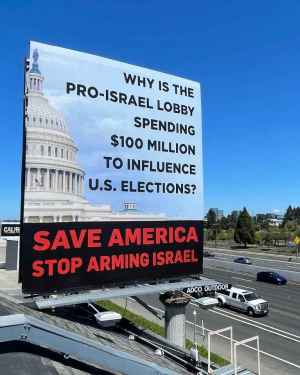
$100 million rebranding effort aimed at reversing negative perceptions and repositioning Israel on the international stage

Israel ranked last in 2024 Nation Brands Index, launches rebranding plan

- Only 40% of the countries ranked alongside Israel are democracies, suggesting that Israel’s democratic character is not perceived as a distinguishing advantage. . .
- For the first time, Brand IL, a private initiative, ensured Palestine was included in the rankings.
- Additionally, the NBI report highlights a broader trend in which conflict nations are penalized equally, regardless of the context.
Brand IL's $100 million rebranding campaign
In response to Israel’s deteriorating global image, the private initiative Brand IL has launched a $100 million rebranding effort aimed at reversing negative perceptions and repositioning Israel on the international stage.
The initiative seeks to establish a development financial institution, utilizing blended capital from governmental, business, and philanthropic sources. The focus will be on launching outreach programs in key target countries, particularly among younger demographics, to unlock new markets for Israeli technologies and innovations.
Israel in last place in Nations Brand Index

The report observes that there is a de facto boycott of Israeli products and that Israeli exports are at high risk, with a significant aversion to products labeled “Made in Israel.”
Israel is in last place in the Nation Brands Index, which was conducted in July-August 2024 by polling 40,000 people in 20 countries. The index ranks 50 countries and marks six aspects of country brand strength: policy and governance, culture, people and society, exports, migration and investment, and tourism.
- In first place was Japan followed by Germany, Italy, Switzerland and the UK.Bottom of the rankings was Russia, Ukraine, Kenya and Israel.
- Lower than Israel was Palestine, which is not officially a country.
Global perception does not recognize Israel’s democratic character as an asset
The report describes Israel as an anomaly and says, " Despite having high objective indicators (GDP per capita, life expectancy, education levels etc.), Israel ranks alongside countries with significantly lower economic and social metrics: Israel’s GDP per capita is 80% higher than the nations it is grouped with. Life expectancy in Israel (83 years) far exceeds the 72-year average of the lowest-ranked countries.
- Only 40% of countries ranked alongside Israel are democracies, meaning that global perception does not recognize Israel’s democratic character as an asset.
The study notes that Generation Z overwhelmingly rejects Israel, giving it the lowest possible scores across all parameters. The report also observes that there is a de facto boycott of Israeli products and that Israeli exports are at high risk, with a significant aversion to products labeled "Made in Israel."
Israel, the report finds, is associated with global instability and according to ranking sentiments, Israel is perceived as part of the "forces of chaos" rather than those contributing to global stability. Even Israel's innovative strength does not save it in this index, and it ranks below most developed European countries and even below the UAE.
- The survey was compiled and published by Anholt Nation Brands Index (NBI), which was hired as a consultant by Brands Israel Inc., a private initiative headed by Brands Israel founder Motti Scherf, which aims to promote Israel's brand worldwide.
- Israel's brand has been in a serious situation since the outbreak of the war.
Scherf said,
"Israel has lost its legitimacy in the international community and has been cast into the backyard of global affairs. It is time to acknowledge the failure of traditional public diplomacy and adopt innovative nation-branding models."
Published by Globes, Israel business news - en.globes.co.il - on February 4, 2025.

Rock bottom: Israel ranks last on Nation Brand Index, perceived as 'chaotic'

==
Nouriel Roubini on DeepSeek, AI's Impact on Jobs, Health, Stocks

SPECULATIVE DYNAMICS: Nouriel Roubini predicts another bitcoin bubble
- Roubini argues that Bitcoin lacks the basic characteristics of the currency or stable asset, which makes it prone to speculative laminations.
Volatile and speculative nature of Bitcoin
Roubini emphasizes that Bitcoin's extreme volatility undermines its usefulness as a reliable store of value or means of exchange. It points out that the value of cryptocurrency is driven primarily by speculative demand rather than intrinsic value, which leads to periodic bubbles and subsequent collapses.
Historical precedents
Refering to the past development of the Roubini market, it notes that Bitcoin has experienced significant cycles of boom and fall. For example, between 2017 and 2018, the price of Bitcoin rose from 1 000 USD to almost 20 000 USD, in order to fall to approximately $3 000 USD by the end of 2018. It suggests that similar patterns are likely to be repeated due to the speculative dynamics of the market.200+ likes


Nouriel
X (Twitter) · 2 days ago

My Bloomberg TV this morning on AI, Deep Seek and markets.
30+ likes
Nouriel
X (Twitter) · 4 days ago
In my modest opinion the DeepSeek surprise/shock is - counterintuitively - over time bullish for US and global stocks as it is another positive global aggregate supply shock that increases US/global potential growth and makes exponential AI even more exponential!

Trump Orders Use of Guantanamo Bay to House 30,000 Deported Migrants
- Around 150 Marines are at the Naval Station and have set up tents for around 1,000 migrants in the other part of the Naval Base.
- But those facilities with latrines and showers are not yet ready for an onslaught of 30,000 migrants as promised by Trump and Defense Secretary Pete Hegseth.
US military to fly migrants to Guantanamo Bay on Tuesday for first time


US military readies first migrant deportation flight to Guantanamo Bay


Trump Orders Use of Guantanamo Bay to House Migrants - WSJ
SOCIAL SCIENCES: The Dark Side of Ambition > New Reseach examines the "double-edged sword" of ambition
Ambition's dark side: Study reveals link to unethical behavior

Charles O'Reilly started his career in the military and probably would have stayed there but for one major problem: "I wanted more control over my life." Although he was ambitious, O'Reilly prioritized the freedom to pursue his interests over any status or impact he might achieve as an officer. He left the Army to pursue an academic career, trading external markers of success for the possibility of meeting his own intrinsic goals.
Now a professor of organizational behavior in Stanford Graduate School of Business, O'Reilly argues that those motivations and trade-offs matter.
His most recent paper, published in Personality and Individual Differences, examines the "double-edged sword" of ambition with his longtime colleague Jeffrey Pfeffer, Ph.D. '72, also a professor of organizational behavior at Stanford GSB.
- People who are more extrinsically motivated—those interested in fame, power, and money—are more likely to do unethical things to advance their careers.
- "The goals of ambition matter," O'Reilly says.
- "When the goals are extrinsic, potentially bad things can happen."
While previous research has linked ambition to career outcomes, no one had investigated how the motivations behind ambition might affect a person's ethical behavior. Ambitiousness doesn't fall neatly into the five broad categories of personality traits commonly studied by behavioral researchers. "Because of the enormous focus on the Big Five, I think ambition really did fall by the wayside as an important topic to be studied," Pfeffer says.
- To understand the effects of ambition, Pfeffer and O'Reilly devised a series of experiments based on six potential outcomes that might be targets of personal ambition.
- Three were extrinsic outcomes: status, power, and wealth.
- The other three were intrinsic: autonomy, challenge, and mastery.
- Next, the researchers tested participants' willingness to engage in different types of unethical behavior.
- In one experiment, they asked whether people would be willing to exaggerate their accomplishments or take credit for someone else's work in order to impress others.
- In another, participants were asked whether they would embellish their salary, responsibilities, or educational credentials on a resume or job application.
Comparing the results of these experiments, O'Reilly and Pfeffer found that even when they controlled for the Big Five personality traits as well as narcissism, ambition correlated with job success—a finding confirmed by previous studies.
But they also found a relationship between extrinsic drivers of ambition and unethical behavior. In other tests described in their study, O'Reilly and Pfeffer found that more extrinsically ambitious people were more likely to flat-out lie and cheat to get ahead.
Cheat codes
- In one test, participants played a dice-rolling game in which they had to report the results of each roll.
- They were told they would win a dollar for every five they rolled.
- Although the program made it impossible to roll a five, more extrinsically ambitious people were more likely to claim they'd rolled a five.
- Another test found extrinsically ambitious people were more likely to say they'd sell a car with a faulty water pump without telling the buyer.
- They were also more likely to say they would misrepresent a product to a coworker to make more money for themselves.
More significantly, the study relies on self-reporting. Although they were anonymous, participants were asked to admit to lying and cheating and may have lied or misrepresented themselves to look better. However, if that's the case, O'Reilly says it would not invalidate the findings. If anything, it would lead to an underreporting of the correlation between ambition and unethical behavior.
To O'Reilly, the connection between motivation, ambition, and unethical behavior is something of an obvious point. He gives examples like Enron, Theranos, and WeWork—companies whose executives were successful at gaining wealth and power but did so using unscrupulous, abusive, or illegal methods.
- O'Reilly hopes that their paper will encourage other researchers to consider the motivations behind ambition in future scholarship. He also hopes this lens could shape how corporate boards select executives. "We ought to be careful not to select leaders who are only in it for the money and the fame and the status," he says.Likewise, Pfeffer summarizes the findings in two words: "Motives matter."
- Yet unlike O'Reilly, he stops short of labeling extrinsic ambition as positive or negative. As a scholar of power, he notes that these findings describe reality but don't necessarily prescribe any kind of correction.
It's an argument the two have had throughout their four decades of friendship. Their disagreements are both fierce and respectful, filled with quick comebacks and compliments. While Pfeffer is more interested in understanding the environments that shape and reward leaders regardless of their morality, O'Reilly is interested in trying to steer or change those outcomes.
More information: Jung-Chun (Zaza) Kuo et al, Spatial preferences influence associations between magnitude and space in honey bees, Animal Behaviour (2025). DOI: 10.1016/j.anbehav.2024.123054
Journal information: Animal Behaviour
-
 Flash News: Ukraine Intercepts Russian Kh-59 Cruise Missile Using US VAMPIRE Air Defense System Mounted on Boat. Ukrainian forces have made ...

