The
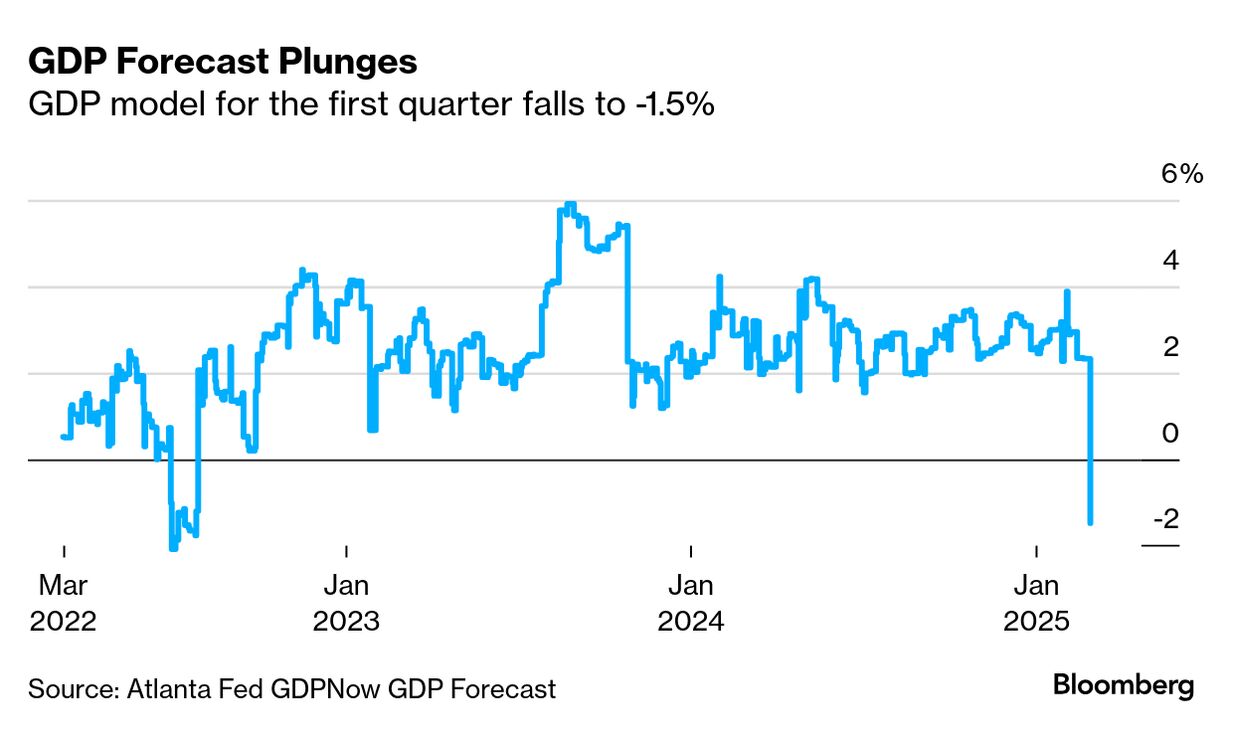
Atlanta Fed’s GDPNow tracker of incoming data is indicating that gross
domestic product is on pace to shrink by 1.5% for the first quarter.
While
the tracker is volatile through the quarter and typically becomes more
reliable much later in the quarter, it does coincide with some other
indicators showing a growth slowdown.
Early economic data for the first quarter of 2025 is pointing towards
negative growth, according to a Federal Reserve Bank of Atlanta
measure.
The central bank’s GDPNow
tracker of incoming metrics is indicating that gross domestic product
is on pace to shrink by 1.5% for the January-through-March period,
according to an update posted Friday morning.
Fresh
indicators showed that consumers spent less than expected during the
inclement January weather and exports were weak, which led to the
downgrade. Prior to Friday’s consumer spending report, GDPNow had been
indicating growth of 2.3% for the quarter.
While the tracker is
volatile and typically becomes a more reliable measure much later in the
quarter, it does coincide with some other measures that are showing a
growth slowdown.
“This is sobering notwithstanding the inherent
volatility of the very high frequency ‘nowcast’ maintained by the
Atlanta Fed,” Mohamed El-Erian, chief economic advisor at Allianz and
president of Queens’ College Cambridge, said in a post on social media site X.
The
gauge had pointed to GDP gains as high as 3.9% in early February but
has been on a decline since then as additional data has come in. . .
The implications of Hegesth’s guidance on the command’s personnel is uncertain.
Hegseth gave the order to the head of the command, Air Force Gen. Tim Haugh, in late February, the official said. It is unclear clear how long the order will last.
A senior U.S. defense official declined to comment on the decision "due to operational security concerns."
Defense Secretary Pete Hegseth orders a halt to offensive cyber operations against Russia
Russia
has intensified cyber operations against Ukraine and NATO countries,
according to previous U.S. intelligence and private sector reports.
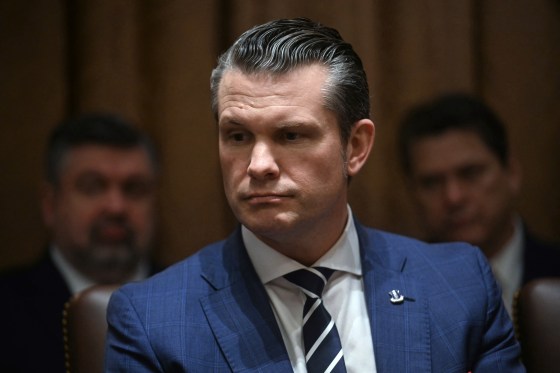
Defense Secretary Pete Hegseth has halted U.S. Cyber Command offensive operations against Russia.Jim Watson / AFP-Getty Images
Defense
Secretary Pete Hegseth has ordered U.S. Cyber Command to halt offensive
cyber operations and information operations against Russia, a U.S.
official familiar with the matter said.
Hegseth
gave the order to the head of the command, Air Force Gen. Tim Haugh, in
late February, the official said. It is unclear clear how long the
order will last.
A senior U.S. defense official declined to comment on the decision "due to operational security concerns."
“There
is no greater priority to Secretary Hegseth than the safety of the
Warfighter in all operations, to include the cyber domain,” the official
told NBC News.
The U.S. Cybersecurity and
Infrastructure Security Agency, which is housed in the Department of
Homeland Security, said in a statement that its "mission is to defend
against all cyber threats to U.S. Critical Infrastructure, including
from Russia. There has been no change in our posture."
Representatives
for U.S. Cyber Command did not immediately respond to a request for
comment. The Russian Embassy also did not immediately reply to a request
for comment.
President Donald Trump has sought to re-establish diplomatic channels with Russia in recent days, including by restoring embassy staffing, as his administration works to quickly end the war in Ukraine.
U.S. officials initiated peace talks with Russian negotiators last month in Saudi Arabia.
Trump's relationship with Ukrainian President Volodymyr Zelenskyy hit a standstill Friday after an Oval Office clash between
Trump, Zelenskyy and Vice President JD Vance. Trump after the meeting
chided Zelenskyy for his persistent criticism of Putin.
“He’s
got to say I want to make peace," Trump said before he departed the
White House on Friday.
"He doesn’t have to stand there and say about
'Putin this, Putin that,' all negative things.
He’s got to say I want to
make peace. I don’t want to fight a war any longer.”
Defense Secretary Pete Hegseth last week ordered U.S. Cyber Command to
stand down from all planning against Russia, including offensive digital
actions, according to three people familiar with the matter.
Hegseth gave the instruction to Cyber Command chief Gen. Timothy Haugh,
who then informed the organization's outgoing director of operations,
Marine Corps Maj. Gen. Ryan Heritage, of the new guidance, according to
these people, who spoke on the condition of anonymity because of the
matter’s sensitivity.
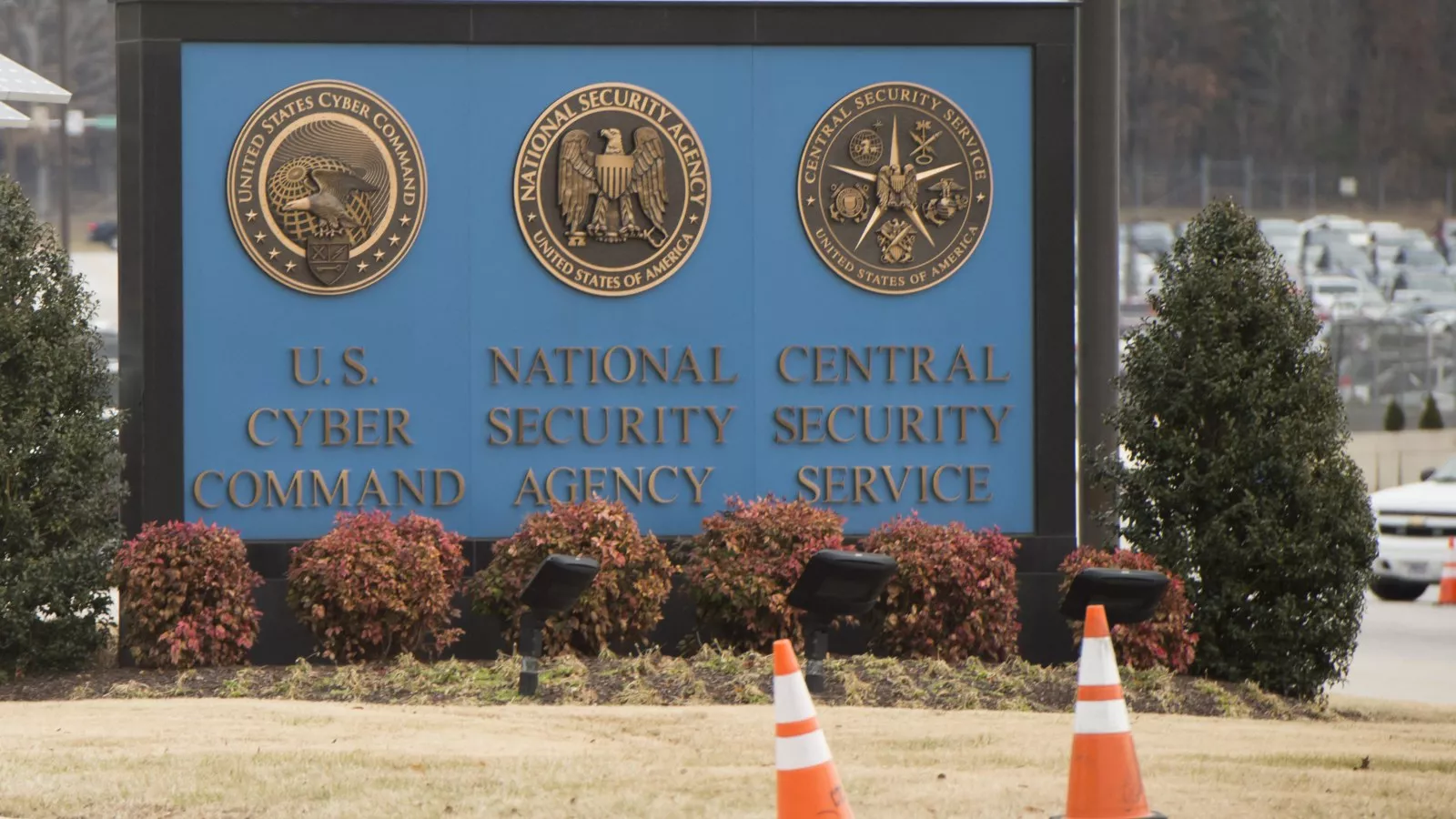
The order does not apply
to the National Security Agency, which Haugh also leads, or its signals
intelligence work targeting Russia, the sources said.
While the full scope of Hegseth’s directive to the command remains
unclear, it is more evidence of the White House’s efforts to normalize
ties with Moscow after the U.S. and international allies worked to
isolate the Kremlin over its 2022 invasion of Ukraine.
President Donald Trump has made a series of false statements and
demands that align him with Russian President Vladimir Putin, including
blaming Ukraine for the war and calling the country’s leader a
dictator.
Trump and Ukrainian President
Volodymyr Zelensky met in Washington on Friday to sign a deal that would
give the U.S. access to Ukraine’s mineral resources. However, the deal did not happen following an Oval Office shouting match between the two leaders.
The exact duration of Hegseth’s order is unknown, though the command
has been told the guidance will last for the foreseeable future,
according to sources.
Heritage, who is
expected to retire soon, knows all of the command’s mission packages and
whether they are in a planning or execution stage. He would be
responsible for contacting the relevant entities and telling them to
hold off. That task likely extends to the 16th Air Force (Air Forces Cyber), the outfit responsible for planning and conducting digital operations across U.S. European Command.
The sources said Cyber Command itself has begun compiling a “risk
assessment” for Hegseth, a report that acknowledges the organization
received his order, lists what ongoing actions or missions were halted
as a result of the decision and details what potential threats still
emanate from Russia.
The implications of
Hegesth’s guidance on the command’s personnel is uncertain.
If it
applies to its digital warriors focused on Russia, the decision would
only affect hundreds of people, including members of the roughly 2,000
strong Cyber National Mission Force and the Cyber Mission Force.
That is collectively made up of 5,800 personnel taken from the armed
services and divided into teams that conduct offensive and defensive
operations in cyberspace.
It is believed a quarter of the offensive
units are focused on Russia.
However, if the
guidance extends to areas like intelligence and analysis or capabilities
development, the number of those impacted by the edict grows
significantly. The command boasts around 2,000 to 3,000 employees, not
counting service components and NSA personnel working there. The
organizations share a campus at Fort Meade, Maryland.
Hegseth’s instruction comes at a time when Cyber Command is struggling
to staff up to target Mexican drug cartels, eight of which the
administration formally labeled as terrorist groups.
Trump officials have advocated for military action against cartel figures and infrastructure to stem the flow of drugs across the border.
A command spokesperson deferred a request for comment to the Pentagon.
Effects on Ukraine?
Outside of internal challenges, the order could derail some of the
command’s most high-profile missions involving a top U.S. digital
adversary, including in Ukraine.
The command
sent “hunt forward” teams to Kyiv in the run-up to the Kremlin’s assault
to harden its digital defenses. It has since paid close attention to
how Moscow uses its digital capabilities, especially for intelligence
purposes.
Russia is also a bastion for
cybercrime, with state-linked and criminal ransomware actors striking
targets around the globe.
The command has become a key player in
countering the malicious activity.
In
addition, the stand-down order could expose private sector entities in
the U.S. and around the world to greater risk if the command is not
keeping Moscow’s intelligence and military services, which both feature
notorious hacker groups, at bay.
Late last year Microsoft found Russia’s Foreign Intelligence Service (SVR) had targeted government employees and others in dozens of countries to gain access to their devices and systems.
Updated 5:27pm EST with a comment from a senior Defense official.
In the near future, all of us in Europe
will shape our common positions – the lines we must achieve and the
lines we cannot compromise on. These positions will be presented to our
partners in the United States.
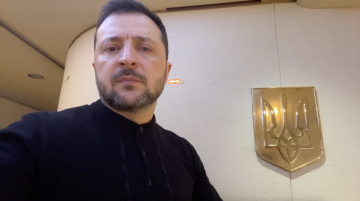
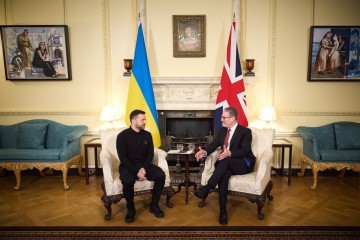
President of Ukraine Volodymyr Zelenskyy had
an audience with His Majesty King Charles III of the United Kingdom of
Great Britain and Northern Ireland.
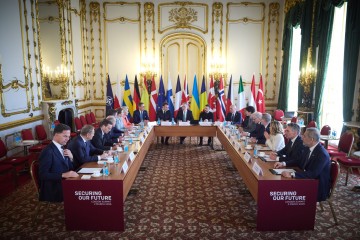
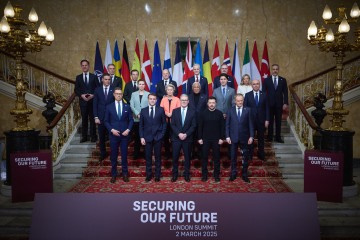
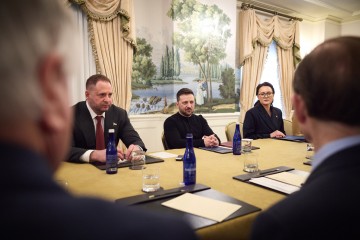
The London Summit on Ukraine brought together
18 heads of state and government, along with leaders of international
institutions. There is a clear consensus that strong security guarantees
must be the foundation of any potential ceasefire. The leaders also
discussed the importance of the U.S. role in ensuring sufficient support
and cooperation to end the war and maintain transatlantic unity.
The allies will coordinate their positions,
develop a joint action plan, and outline concrete steps toward ending
the war with a just peace and providing Ukraine with robust security
guarantees.
A separate focus was placed on providing
robust security guarantees for Ukraine and all of Europe. The leaders
discussed new formats for consultations between European countries and
the United States.
At Ukraine house in Washington, President of
Ukraine Volodymyr Zelenskyy met with the Ukrainian community and war
veteran Andrii Smolenskyi, who is undergoing treatment in the United
States.
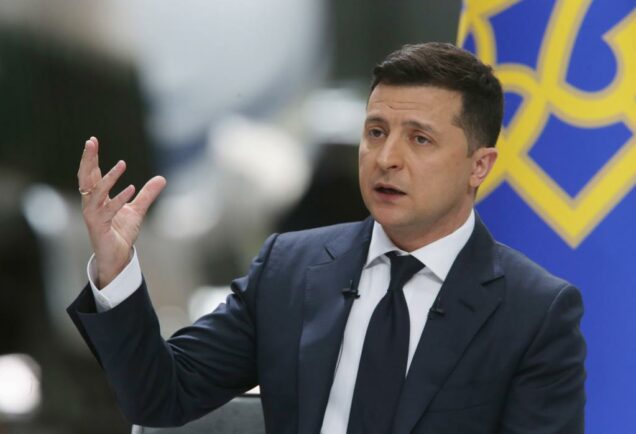
Volodymyr Zelenskyy outlined the joint
efforts of Ukraine and its partners in achieving a just and lasting
peace. He shared Ukraine’s vision for how the war should end and
stressed the importance of security guarantees.
". . .Narratives around such acute, local events detract from critical messages about the global challenges from extreme heat.
Make no mistake, maximum temperatures of 35°C or more are hot by
UK standards, but such conditions are familiar to around 80% of the world’s population.