US
President Joe Biden’s surprise visit to Kyiv earlier this week
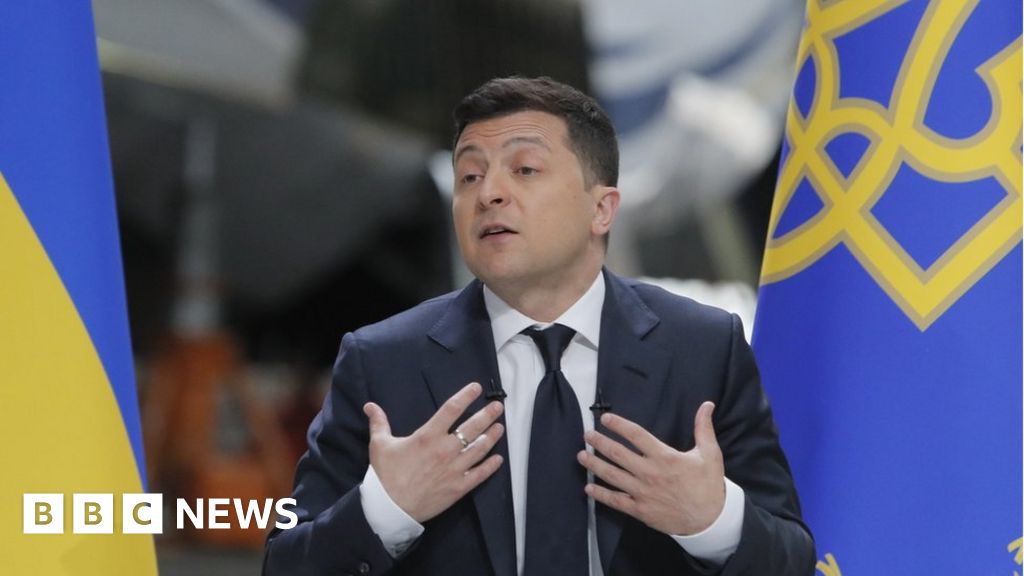
highlighted a new phenomenon in international politics: Volodymyr
Zelensky has become the most celebrated leader in the democratic world.
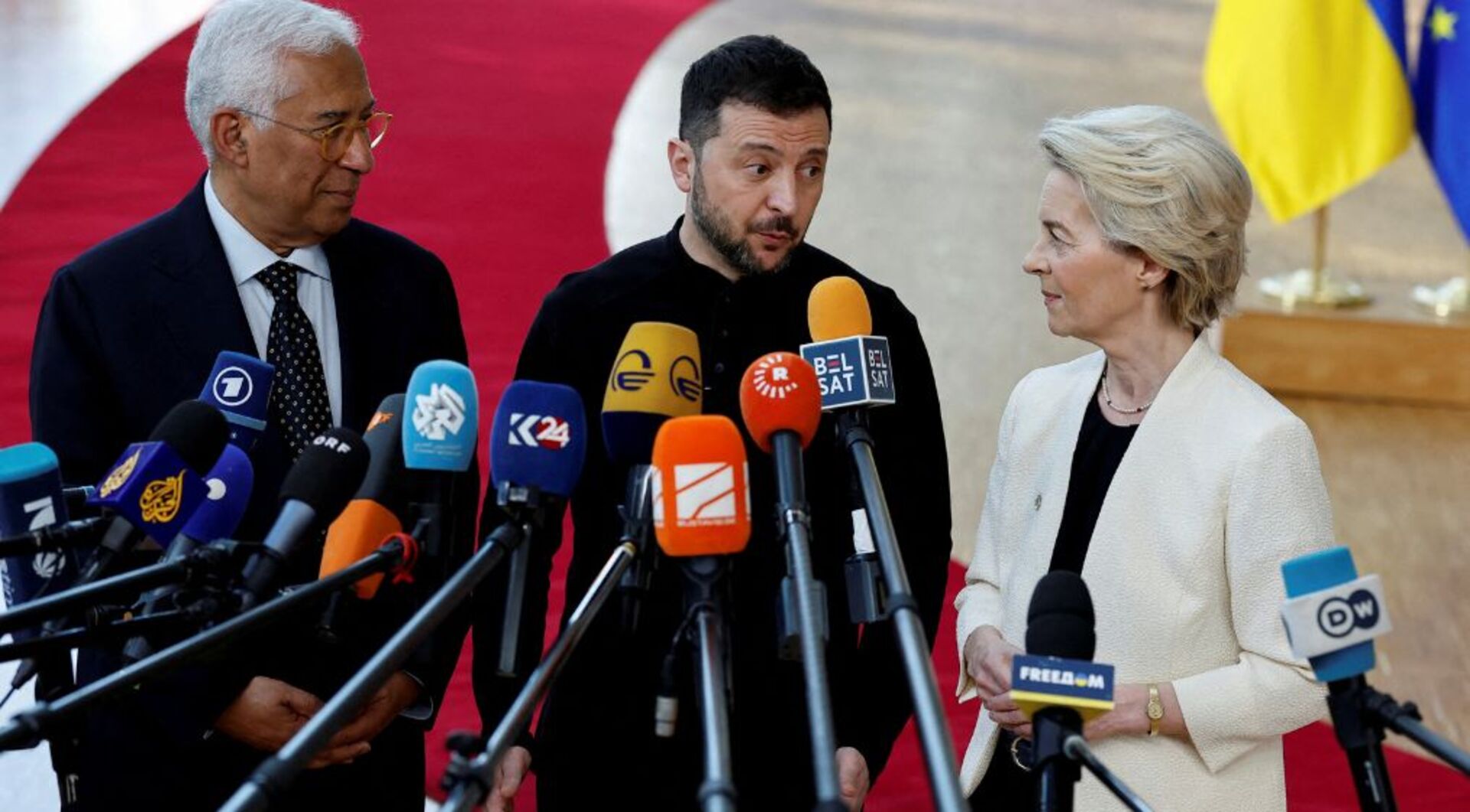
Biden’s visit was far from unique. Over the past year, since Russia widened its invasion of Ukraine
that began in 2014, Kyiv has hosted visits from a succession of world
leaders, including those from Poland, the Baltic States, France,
Germany, Canada, as well as two British prime ministers.
The
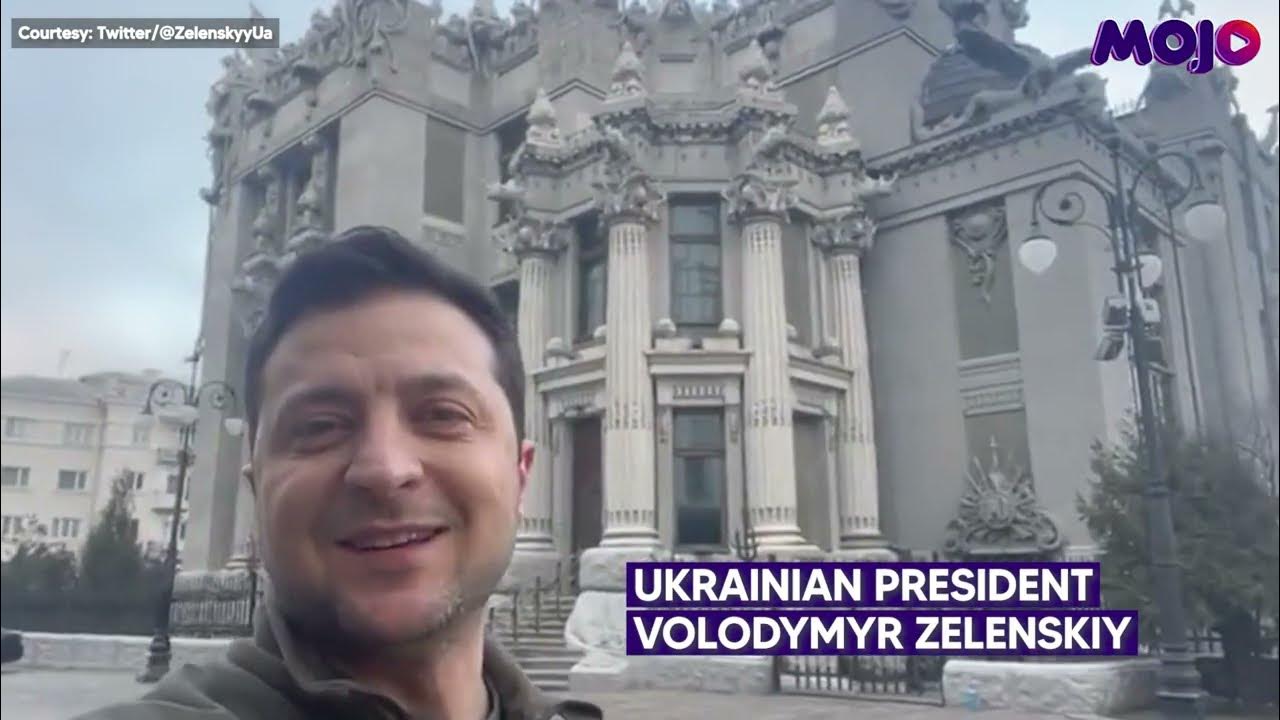
44-year old Ukraine president appeared invariably in his habitual olive
green shirt, combat pants, and boots.
Yet, just four years ago, Zelensky
was known in both Ukraine and Russia for quite different roles: those
of actor, comedian, producer, and founder of Kvartal-95, an
entertainment production company named after his neighbou\rhood in Krivyi
Rih, an industrial town in eastern Ukraine.
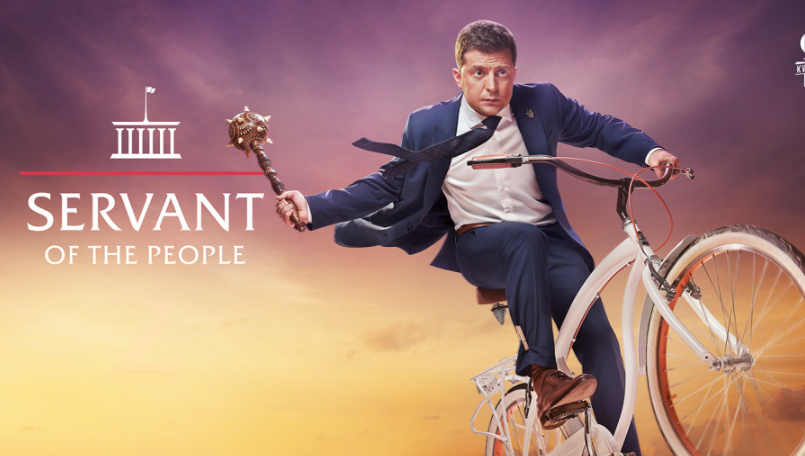
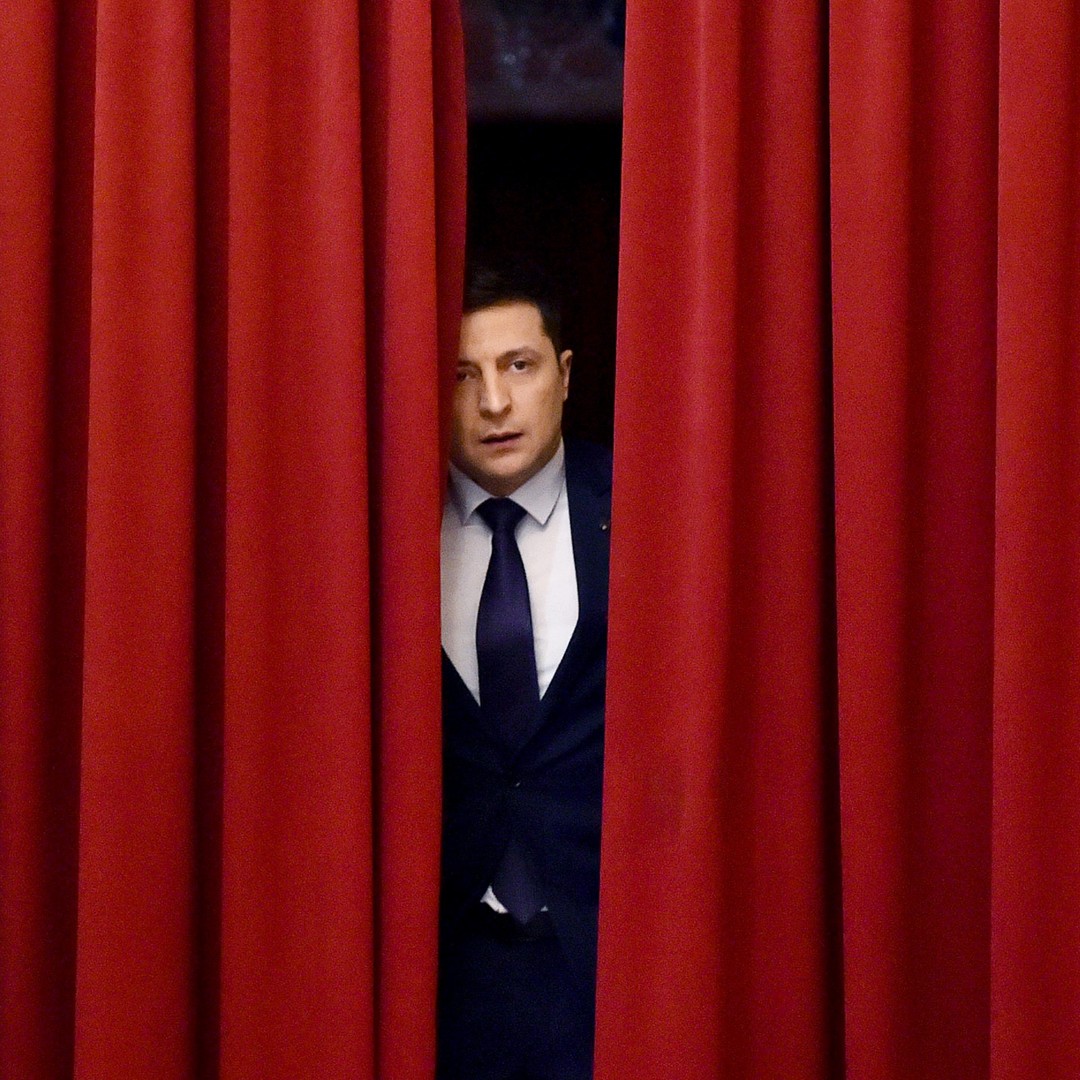
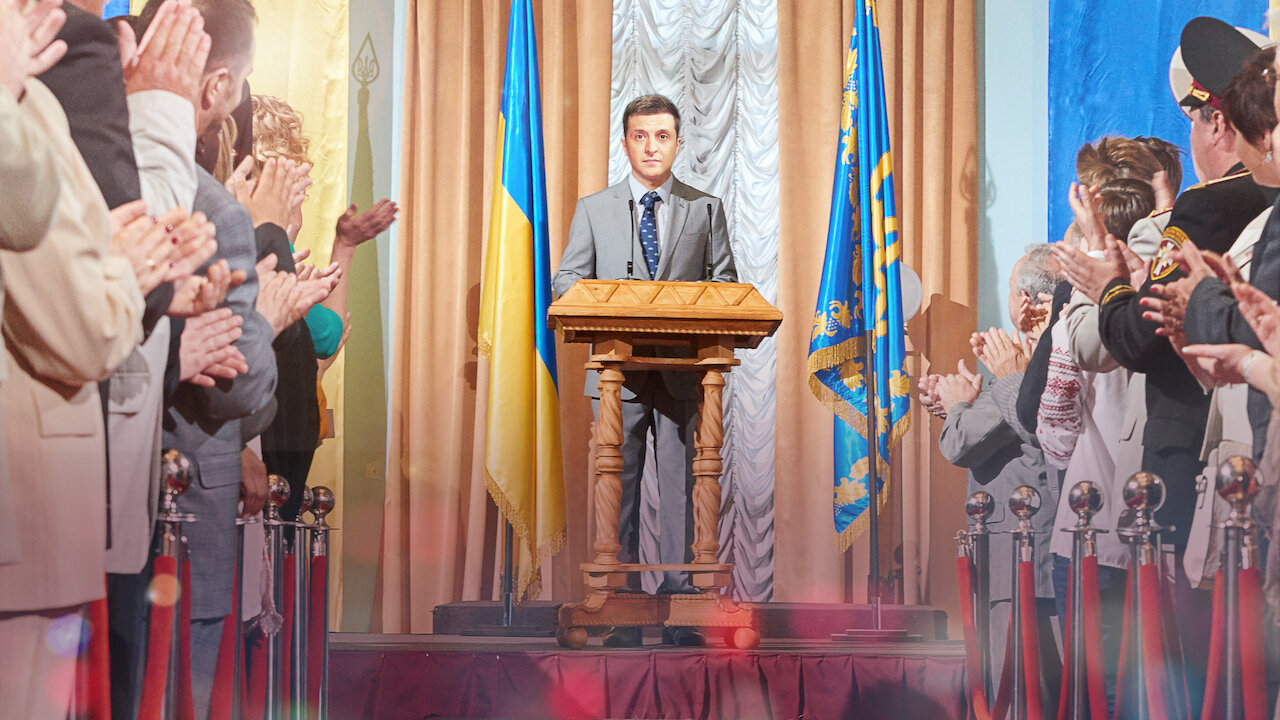
His comedy troupe more recently produced a popular television series, Servant of the People,
with Zelensky portraying a history teacher, Vasily Goloborodko, who
suddenly finds himself president of Ukraine after the release of a
videotape of him uttering profanities about corruption in his country.
The
series, which began in 2015, depicts his struggles to overcome
rapacious oligarchs.
- In 2019 it appeared to move from fiction to reality
when Zelensky emerged as the main challenger to the oligarch-president Petro Poroshenko, then seeking a second term based on a patriotic election platform of ‘Army, Church, Language’.
Zelensky
did not espouse a program.
- He presented no platform or principles,
avoided interviews, and communicated through Instagram and other media.
In their one public debate
at Kyiv’s Olympic Stadium in April, Poroshenko declared that Zelensky
was unfit for office and would not be able to stand up to Vladimir
Putin. Most of the stadium was filled with Poroshenko’s supporters. - Zelensky offered himself as the candidate of a new generation, reliant
on social media for communication, and an alternative to the corrupt and
unsuccessful leaders of the past who had brought Ukraine to poverty.
- While Poroshenko was in office during 2018, the IMF ranked Ukraine as
the poorest country in Europe, overtaking Moldova for this unwanted
prize.
In the final round, Zelensky won over 70% of the vote in a
landslide victory.
Servant of the People + path to the presidency
In
2013 Zelensky returned to Kvartal 95 as artistic director, but his
entertainment career would soon intersect with the seismic events
rocking Ukraine’s political landscape.
Uploaded: Apr 22, 2019 · 198K Views · 2.01K Likes
In
Ukraine, comedian Volodomyr Zelenskiy has won a landslide victory in
the presidential election. With the count almost complete, Zelenskiy
has taken 73 percent of the vote, while the incumbent Petro ...
Poroshenko actively and financially supported the Euromaidan protests between November 2013 and February 2014,[26] leading to an upsurge in his popularity, although[26] he did not participate in negotiations between then President Yanukovych and the Euromaidan parliamentary opposition parties Batkivshchyna, Svoboda and UDAR.[26]
- In an interview with Lally Weymouth, Poroshenko said: "From the beginning, I was one of the organizers of the Maidan.
- My television channel — Channel 5 — played a tremendously important role.
... At that time, Channel 5 started to broadcast, there were just 2,000
people on the Maidan. But during the night, people went by foot —
seven, eight, nine, 10 kilometers — understanding this is a fight for
Ukrainian freedom and democracy.
- In four hours, almost 30,000 people were there."[72]
- The BBC reported,
"Mr Poroshenko owns 5 Kanal TV, the most popular news channel in
Ukraine, which showed clear pro-opposition sympathies during the months
of political crisis in Kiev."[46]
Two months later,
- he initiated pre-term elections for
Ukraine’s parliament, and
- his newly-formed party, also called Servant
of the People, won a majority of seats,
- the first time in independent
Ukraine that a president had a majority in the assembly.
Some argued that Zelensky was indebted to another oligarch, former governor of the Dnipropetrovsk region Ihor Kolomoisky,
who allegedly defrauded his own PrivatBank of US$5.5 billion and was
put on the United States’ sanctions list in 2021. Kolomoisky had funded
Zelensky’s company and advised the presidential candidate on several
occasions. It seems probable that Russia also welcomed the
election of Zelensky, who had vowed to end the conflict in the Donbas.
- On paper, he was a welcome alternative to the nationalistic Poroshenko,
and a native Russophone who made frequent visits to Moscow.
- Indeed,
Zelensky began by initiating some exchanges of prisoners with the
Russian-backed separatists of the so-called national republics of
Donetsk and Luhansk.
He balked, however, at Russia’s insistence on adhering to the Minsk Accords,
an ill-fated armistice that brought a temporary halt to the most
serious fighting in the Donbas, with France and Germany as mediators. - Both Accords were signed after serious defeats for the Ukrainian army
(in September 2014 and February 2015), and demanded concessions of
autonomy for the Donetsk and Luhansk regions.
> In his early months in office, little seemed to go right for the neophyte president. By March 2020, Prime Minister Oleksii Honcharuk
had resigned, and a new Cabinet was installed under Prime Minister
Denis Shmyhal, an entrepreneur and former governor of the western region
of Ivano-Frankivsk. > Zelensky also ran into difficulties with US
president Donald Trump, who tried to tie arms exports to Ukraine with
efforts to uncover damaging information about his rival Joe Biden’s son
Hunter, who served on the board of the Ukrainian gas company Burisma.
- Though
he became more wary of Russia, Zelensky refused to believe the
likelihood of an invasion in February 2022, pleading for Western media
to cease such discussions since they undermined investment into Ukraine.
- When
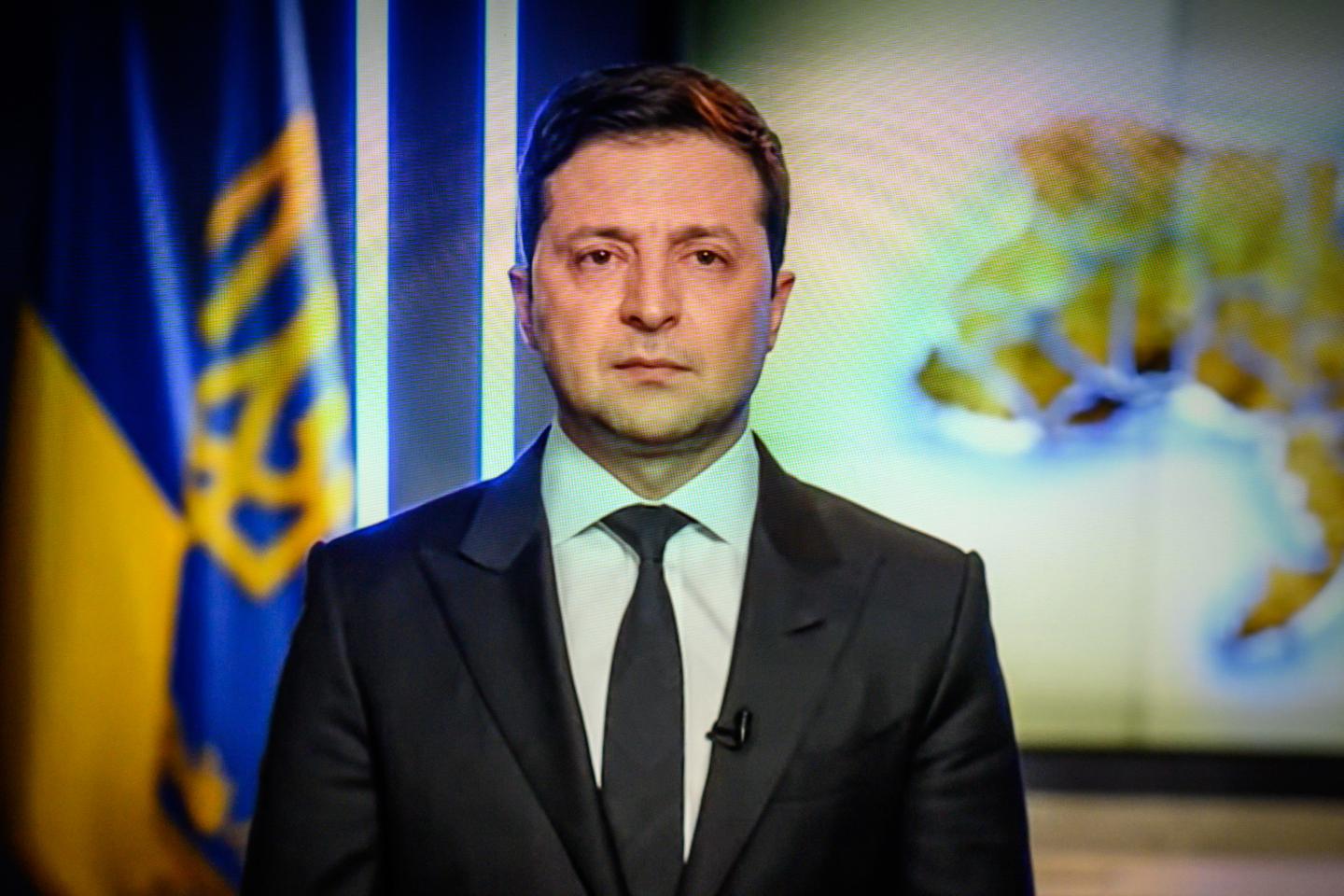
the war began, Zelensky’s popularity had fallen to less than 30%. His
governance seemed destined to be hailed as a short-term aberration.
Yet he had the basic tools for strong leadership.
He had already used them to
When
the invasion began, and Russia attacked on seven fronts, reaching the
outskirts of Kyiv within days, the United States offered to rescue
Zelensky.
Uploaded: Feb 26, 2022 · 109K Views
After the liberation of localities around Kyiv, Zelensky
first visited the sites of massacres at Izium and Bucha carried out by
the Russian troops. 
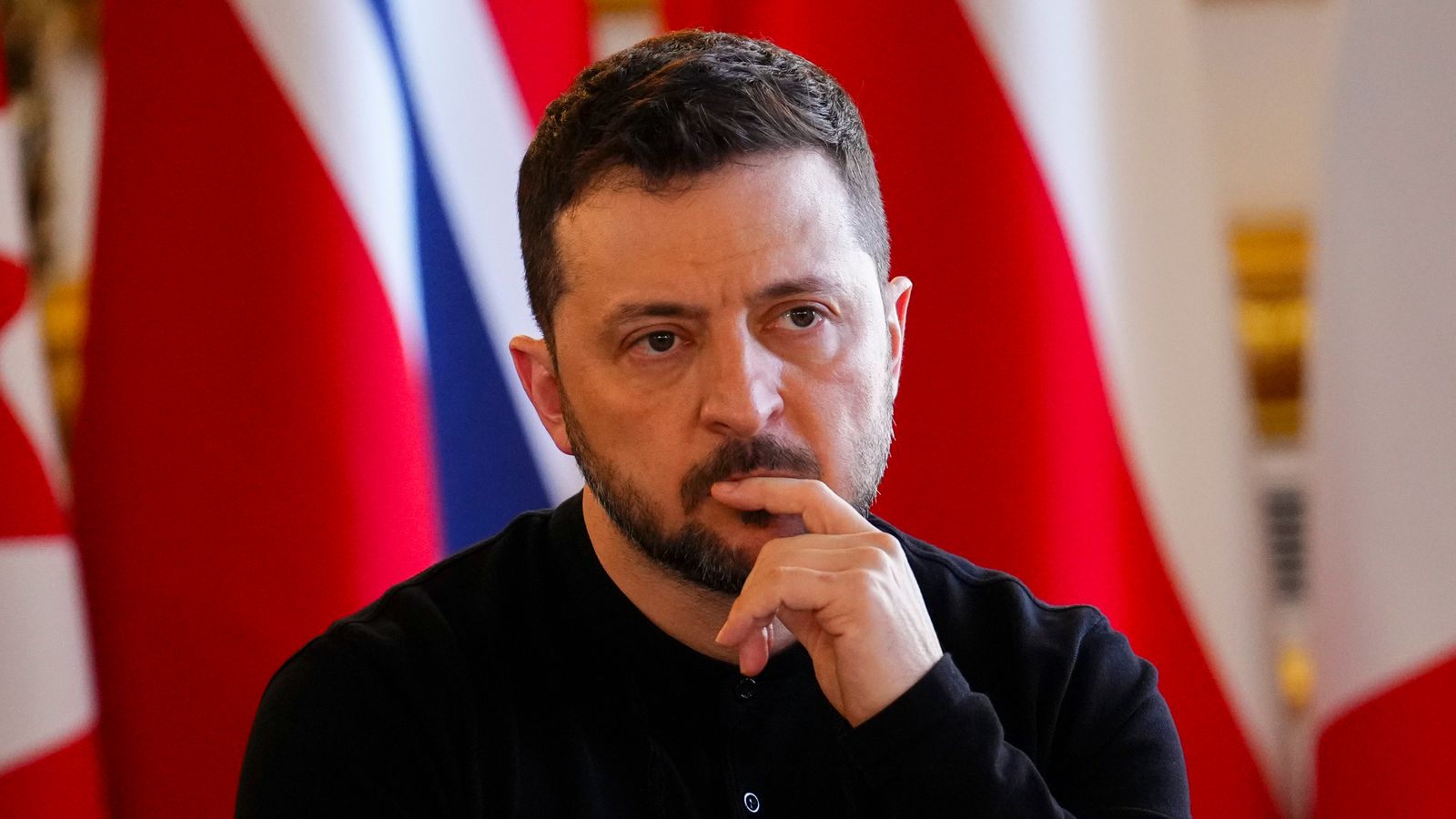
- It was an occasion that visibly aged and hardened
him.
- Thereafter, he refused to trust Putin or negotiate with the
Russians.
- He has maintained this resolve.
The war has enhanced his
natural ability to communicate in social media clips: familiar,
reassuring, and not only with his own people but with much of the world.
To the West, he has constantly demanded more weapons and aid, arguing
that he is fighting for democracy and the freedom of those countries
anxious to roll back the Russian tide.
The past problems of this
troubled state have been overshadowed by Russian war crimes, the heroism
of Uktraine’s defenders, and the suffering of its population.
Resistance is personified by the country’s leader.
Zelensky has become
Ukraine.
RELATED
Defying the lessons of history
February 15, 2025
Keith Lowe
After the failures at Yalta at the end of the Second World War, the
West finally learned not to trust the word of European dictators.
Negotiations to end the conflict in Ukraine risk a return to the
mistakes of the past.
/https%3A%2F%2Fengelsbergideas.com%2Fwp-content%2Fuploads%2F2025%2F02%2FYalta.jpg) British Prime Minister Winston Churchill, US President Franklin
Roosevelt and Soviet Dictator Joseph Stalin sit on the patio of Livadia
Palace, Yalta, Crimea. Credit: Associated Press
British Prime Minister Winston Churchill, US President Franklin
Roosevelt and Soviet Dictator Joseph Stalin sit on the patio of Livadia
Palace, Yalta, Crimea. Credit: Associated PressPresident
Trump announced this week that he had held a ‘lengthy and highly
productive’ phone call with Vladimir Putin, ending three years of
diplomatic silence between the White House and the Kremlin.
- Their
conversation, according to Trump, was an attempt to begin negotiations
to end the war in Ukraine.
- But it had taken place without any prior
consultation with the Ukrainian president, Volodymyr Zelensky.
We have been here before. In 1938, with the Munich Crisis, and in 1945, when Churchill and Roosevelt appeased
Stalin over the fate of Poland. - Both cases are instructive when it
comes to the psychological traps that lie in store for any
democratically-elected government attempting to negotiate with a
dictator.
The first thing that Trump and his team must keep in
mind is that they are not playing on a level playing field.
The US might
appear to be the more powerful party, but it is Putin who holds the
psychological advantage. . .










/https%3A%2F%2Fengelsbergideas.com%2Fwp-content%2Fuploads%2F2023%2F02%2FZelensky.jpg)