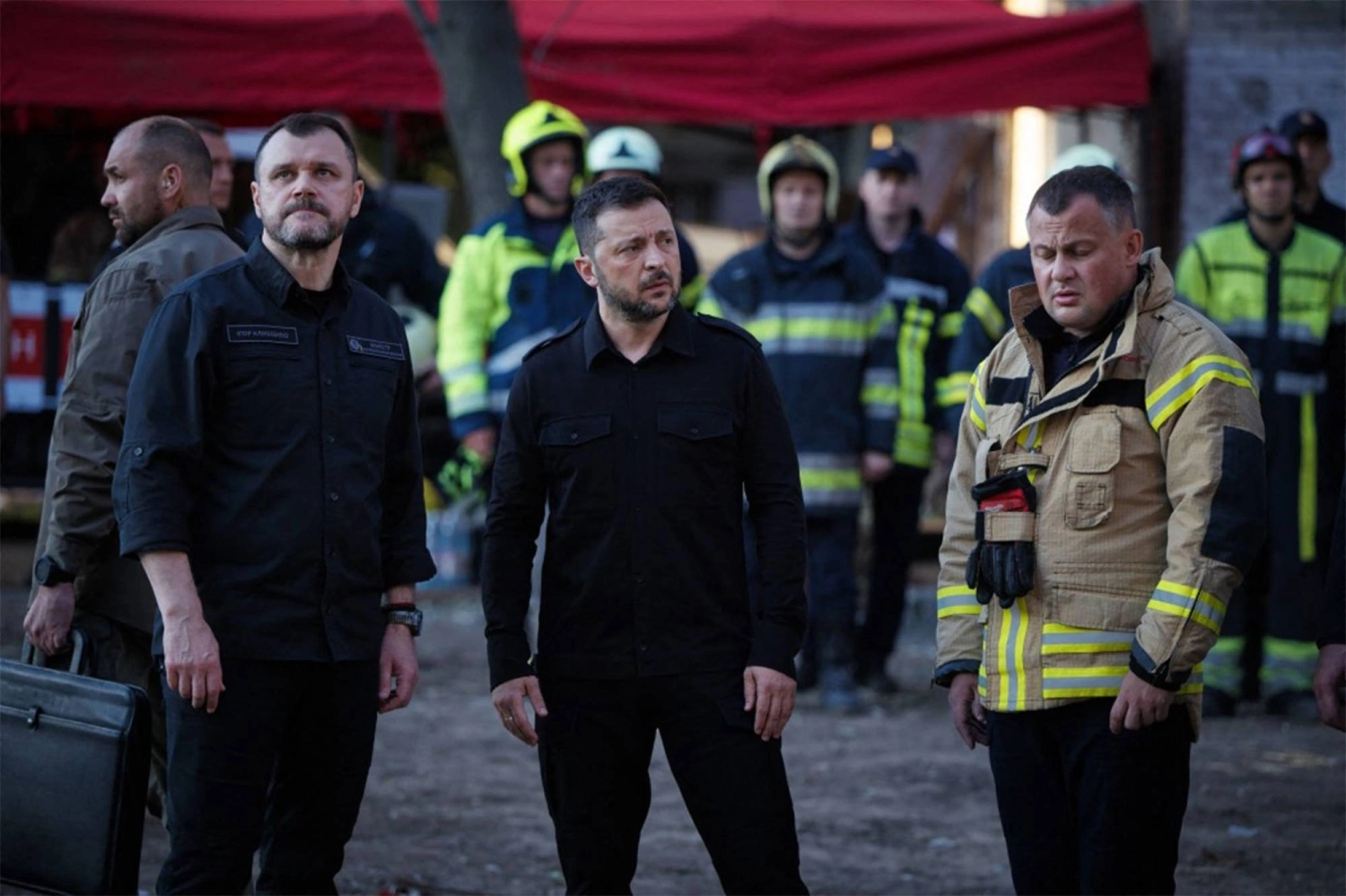
REUTERS/ Thomas Peter
Ukraine’s anti-corruption agencies
- In recent years, Ukraine has ranked among the most corrupt countries
in the world.
- Western partners of Kiev have consistently emphasized that
combating corruption and ensuring transparency in public spending are
prerequisites for their continued support.
During the 2014 Euromaidan uprising, anti-corruption rhetoric was
central to the opposition’s demands, alongside calls for
Eurointegration. The establishment of specialized anti-corruption bodies
was strongly advocated by Ukraine’s European allies and the
International Monetary Fund (IMF), who called these reforms conditional
to the country’s Euro-integration.
- In October 2014, President Petr Poroshenko (2014-2019) signed a
package of anti-corruption laws, including the creation of the National
Anti-Corruption Bureau of Ukraine (NABU).
- Launched in April 2015, the
bureau became operational by October 2015.
- It was meant for "preventing,
detecting, and prosecuting high-level corruption crimes that threaten
Ukraine’s national security."
- NABU was designed as an independent
agency, overseen by a parliamentary committee on organized crime and
corruption.
- In December 2015, the Specialized Anti-Corruption
Prosecutor’s Office (SAPO) was established as an autonomous unit within
the Prosecutor General’s Office, tasked with supervising NABU’s
pre-trial investigations in terms of adherence to the law. Both
institutions were shielded from interference.
According
to the National Anti-Corruption Bureau of Ukraine’s latest data, NABU
employees sent to court 69 indictments in cases with a total loss of
18.5 bln hryvnia ($440 mln) in January-June 2025 alone. Charges were
brought against 27 officials, including deputies, government members and
their deputies, heads of state agencies, state enterprises, and top
officials, in the reporting period. Seven persons belonging to this
category were convicted.
Among the most high-profile cases handled by the NABU and SAPO were
those of Pavel Vovk, head of Kiev’s District Administrative Court and
the son of former Interior Minister Arsen Avakov, as well as the
embezzlement schemes involving state-owned energy company Ukrnafta.
The
agencies also went after the ex-head of the State Property Fund, Dmitriy
Sennichenko, looked into the Defense Ministry army food supplies
procurement fraud case, and investigated corruption within the National
Guard.
In 2025, the case that garnered the most attention was the
investigation against Ukraine’s former deputy prime minister Alexey
Chernyshov, who used to be deputy prime minister and minister of
national unity for Ukraine.
- Chernyshov is considered a very influential
figure in Zelensky’s (elected as the president of Ukraine in 2019, with
executive powers officially expiring in 2024) inner circle.
- The charges
against the deputy minister, who vacated his post in July 2025, were
filed on June 23, 2025.
- On July 16, NABU reported that, on June 11, SAPO
opened a criminal case against former Deputy Prime Minister for
European and Euro-Atlantic Integration and former Justice Minister Olga
Stefanishyna (who was appointed Ukraine’s US Ambassador earlier in
July).
Government crackdown on NABU and SAPO, protests begin
On July 21, Ukraine’s Security Service (SBU) conducted 70 searches of
NABU employees and also raided SAPO. NABU officials stated that the
searches were carried out without court warrants. During the operation,
several anti-corruption officers were detained, including Ruslan
Magomedrasulov, head of NABU’s interregional detective unit.
On July 22, Ukraine’s parliament, the Verkhovna Rada, dominated by
President Zelensky’s "Servant of the People" party, voted to adopt
amendments to a law that effectively eliminate the independence of the
National Anti-Corruption Bureau and the Specialized Anti-Corruption
Prosecutor’s Office. A total of 263 lawmakers supported the amendments,
while 13 voted against them. Zelensky signed the law on that same day.
It came into force on July 23.
Under the law, the Specialized Anti-Corruption Prosecutor’s Office
was to be placed under the authority of the prosecutor general, who
would be able to influence the activities of the National
Anti-Corruption Bureau. Apart from that, the law lifted the ban on
transferring cases from the Bureau to other agencies, meaning the
prosecutor general could now reassign cases to other prosecutors.
Protests gain momentum
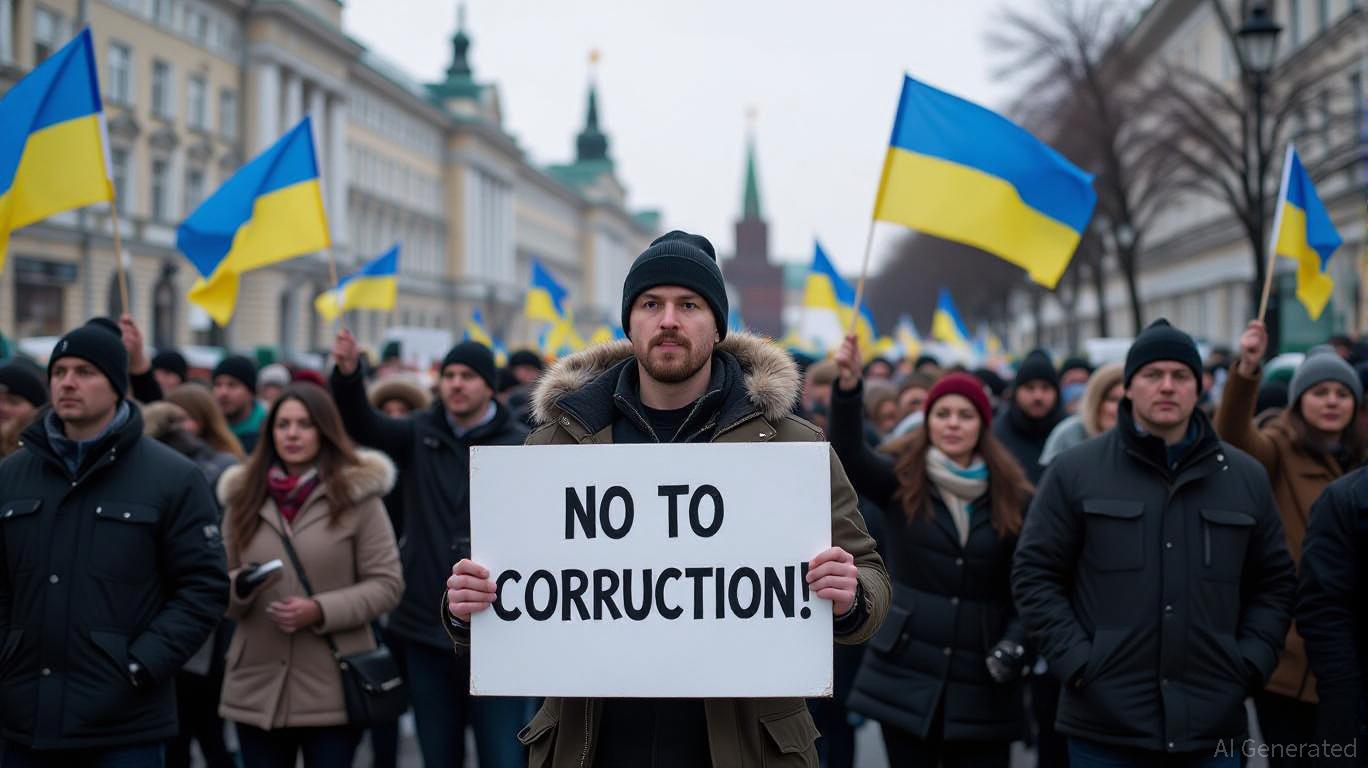
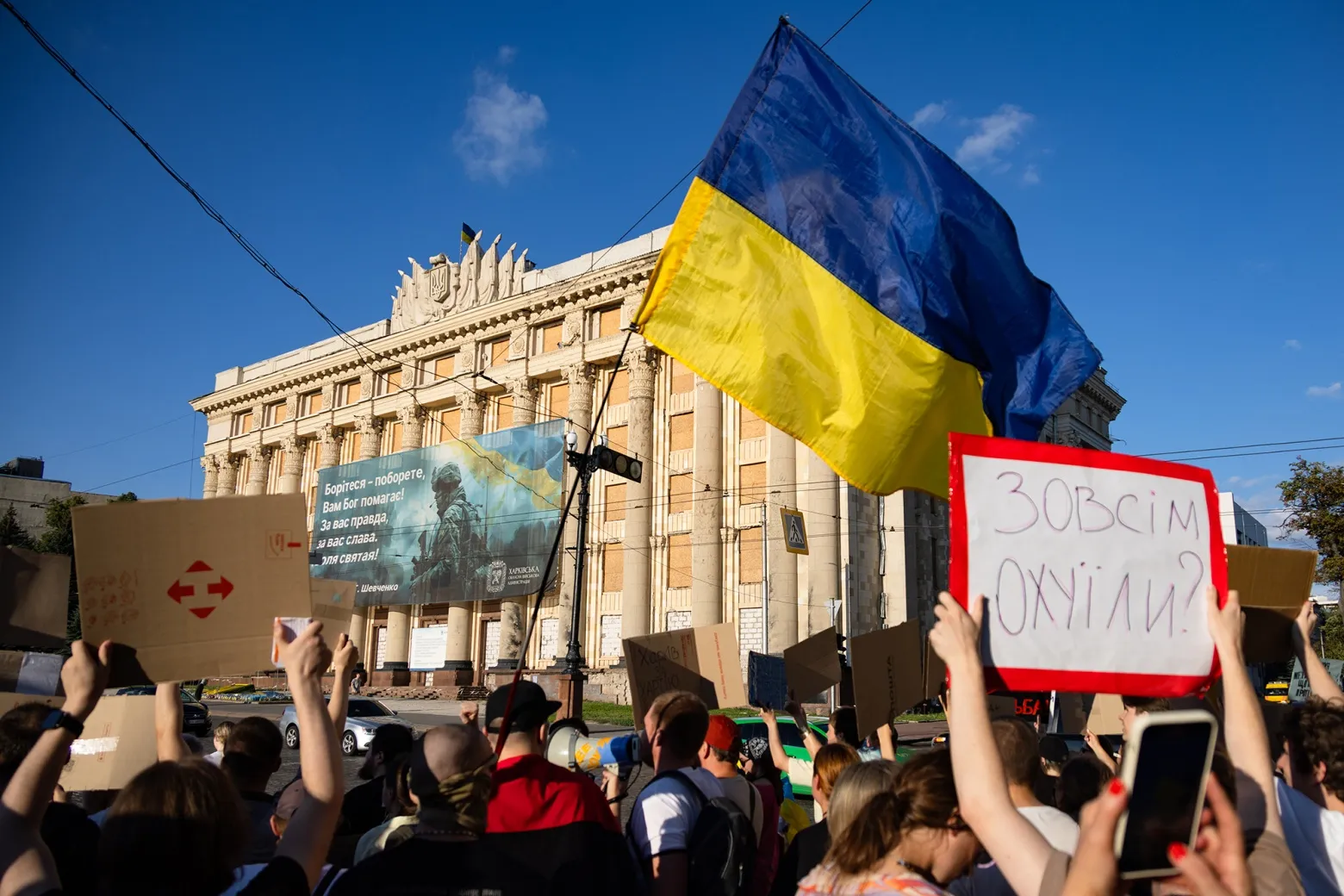
The anti-corruption crackdown sparked protests across Ukraine. On the
evening of July 22, nearly 2,000 people gathered in central Kiev,
demanding, among other things, the resignation of Andrey Yermak, head of
Zelensky’s office. Protests also took place in Dnepr, Lvov, Odessa,
Poltava, Rovno, and Ternopol.
On July 23, over 9,000 people protested in Kiev alone. The
demonstrators promised to continue protests every day if their demands
remained ignored.
On July 24, rallies were under way in 12 Ukrainian cities, according
to Ukrainian media. The protests were being held in Chernigov, Kiev,
Vinnitsa, Dnepr, Zhitomir, Lvov, Nikolayev, Poltava, Rovno, Ternopol,
Kharkov and Khmelnitsky. According to the Strana publication, the
protesters in Kiev held posters with the image of Zelensky and Yermak
accompanied by slogans like "Murderers of democracy are traitors of
Ukraine" and "Dictators."
Western backlash
Ukraine’s European allies, on whom Kiev has relied to provide €164.8
billion in aid since 2022, harshly condemned the decision.
1 On July 23,
2025, European Commission President Ursula von der Leyen demanded an
explanation from Zelensky, while European Commissioner for Enlargement
Marta Kos called for the law’s repeal. Polish Foreign Minister Radoslaw
Sikorski warned that without an independent anti-corruption system,
Ukraine’s EU hopes are slim.
2 On July 24, 2025 the spokesperson for the International Monetary Fund
Julie Kozack stated that Zelensky’s actions threaten Ukraine’s
macroeconomic stability and growth.
3 The same day, The Economist labeled the NABU-SAPO crackdown a
strategic error by Zelensky that risks halting international aid to
Ukraine.
New bill on NABU and SAPO
On July 24, amid mass protests, Zelensky submitted to the legislature
a bill on the so-called strengthening of the powers of the
anti-corruption agencies. The bill would require, among other things,
that officers of the Security Service of Ukraine subject the staff of
the two bodies, along with employees of the State Bureau of
Investigation, the Economic Security Bureau and the police who have
access to state secrets, to lie detector tests.
- The new law stipulates
that investigations will be conducted by NABU itself, rather than by the
Security Service of Ukraine (SBU).
- At the same time, NABU's internal
control unit must coordinate the methodology for lie detector testing of
its employees with the SBU.
- Yaroslav Zheleznyak, a member of Ukraine’s
parliament, stated on his Telegram channel that otherwise, the law
"reverses the undermining of NABU and SAPO’s independence and reinstates
all provisions repealed by the July 22 law."
At a morning press conference in Kiev on July 25, Zelensky said that
he respects "the views of [Ukrainian] society" and also admitted he
should have communicated with the public before acting on NABU and
SAPO’s status.
Verkhovna Rada deputies are expected to convene for an extraordinary session to review the new draft law on July 31, 2025.